TL;DR:
- The current consensus for endurance athletes is 1.6 to 2.0 grams of protein per kilogram of body weight per day, or about 0.75 to 0.9 grams per pound. That is double the RDA, and it is the number the newest studies in cyclists and runners keep producing.
- Eat 30 to 45 grams at a time, three or four times a day, with one of those meals in the first two hours after a ride. A big steak dinner is not wasted, but the spread is easier to hit.
- Protein will not make you faster on the day and will not replace carbohydrate. Riders who fuel properly during a ride gain nothing from protein in their bottles. The payoff comes later: faster repair, muscle kept through hard blocks and diets, and fewer sick days.
- Hard weeks, rest days after hard rides, fasted rides and dieting all push you toward the top of the range. So does being over 50 or eating mostly plants.
- Healthy kidneys do not care. A pooled analysis of 28 studies and more than 1,300 people found no harm at these intakes. The only real cost of too much protein is eating too little of everything else.
Pasta, a banana, and hollow legs
For most of cycling’s history, protein belonged to the weight room. Cyclists ate carbohydrate. The logic was tidy enough: riding burns sugar and fat, and the skinny guy winning on the climb has no use for muscle he has to drag uphill. Shakes were for the gym crowd, and riders were told to eat pasta.
That started to come apart around 2010. A new way of measuring protein needs showed that endurance athletes burn amino acids for fuel during long efforts, rebuild far more than leg muscle after a ride, and were never the people the official protein recommendation was written for. In 2025, a group led by Oliver Witard at King’s College London published the most thorough review to date of protein for endurance athletes, and the intake they recommended was higher than anything in the old guidelines.
If you have come home from a four-hour ride, eaten a plate of pasta and a banana, and wondered why your legs still felt empty two days later, this is for you.
Where the numbers come from
The US Recommended Dietary Allowance for protein is 0.8 grams per kilogram of body weight per day, about 0.36 grams per pound, or 62 grams for a 170-pound adult. It comes from nitrogen balance studies of sedentary people and marks the amount that keeps nearly everyone out of deficiency. It was never meant to describe what someone training 10 hours a week needs to recover.
Nitrogen balance also undercounts, because it is hard to collect every bit of nitrogen a body loses. In the early 2010s, researchers at the University of Toronto began using a more sensitive technique on athletes, called indicator amino acid oxidation, which feeds a person increasing amounts of protein and watches for the point where the body stops burning off a tracer amino acid. In 2016, Hiroyuki Kato and Daniel Moore used it on endurance-trained men the day after a 20-kilometer run. The average requirement came out at 1.65 grams per kilogram, and the intake that covered nearly everyone was 1.83, more than double the RDA.
Later studies pushed the number higher in the situations cyclists know well. In 2019, Arash Bandegan at Western University in Ontario measured requirements the day after a hard endurance session and found them above 2 grams per kilogram, because the muscle is still repairing itself the day after the big ride. The same year, Jenna Gillen at Toronto tested athletes who ran 10 kilometers on depleted glycogen and found a requirement of 1.95. When the sugar tank is low, more amino acids go into the fire. A 2023 study found the same elevated needs in women as in men, though the data on women is still thin.
The 2025 review gathered all of this and recommended about 1.8 grams per kilogram on normal training days and 2.0 on recovery days or during low-carbohydrate training. The two main US sports nutrition bodies overlap with the top of that: the International Society of Sports Nutrition says 1.4 to 2.0 for anyone training hard, and the joint position of the Academy of Nutrition and Dietetics, Dietitians of Canada and the American College of Sports Medicine says 1.2 to 2.0, with the higher end for heavy training or cutting weight.
So the range for a cyclist who rides with purpose is 1.6 to 2.0 grams per kilogram per day. A few easy hours a week puts you near the bottom. Structured training, racing, long back-to-back days or a weight-loss block puts you near the top.
Why riding burns protein
Cycling does not tear down muscle the way squats do, so the assumption is that it should not need much protein. That leaves out the amino acids burned as fuel on a long ride and everything a hard ride forces the body to rebuild afterward.
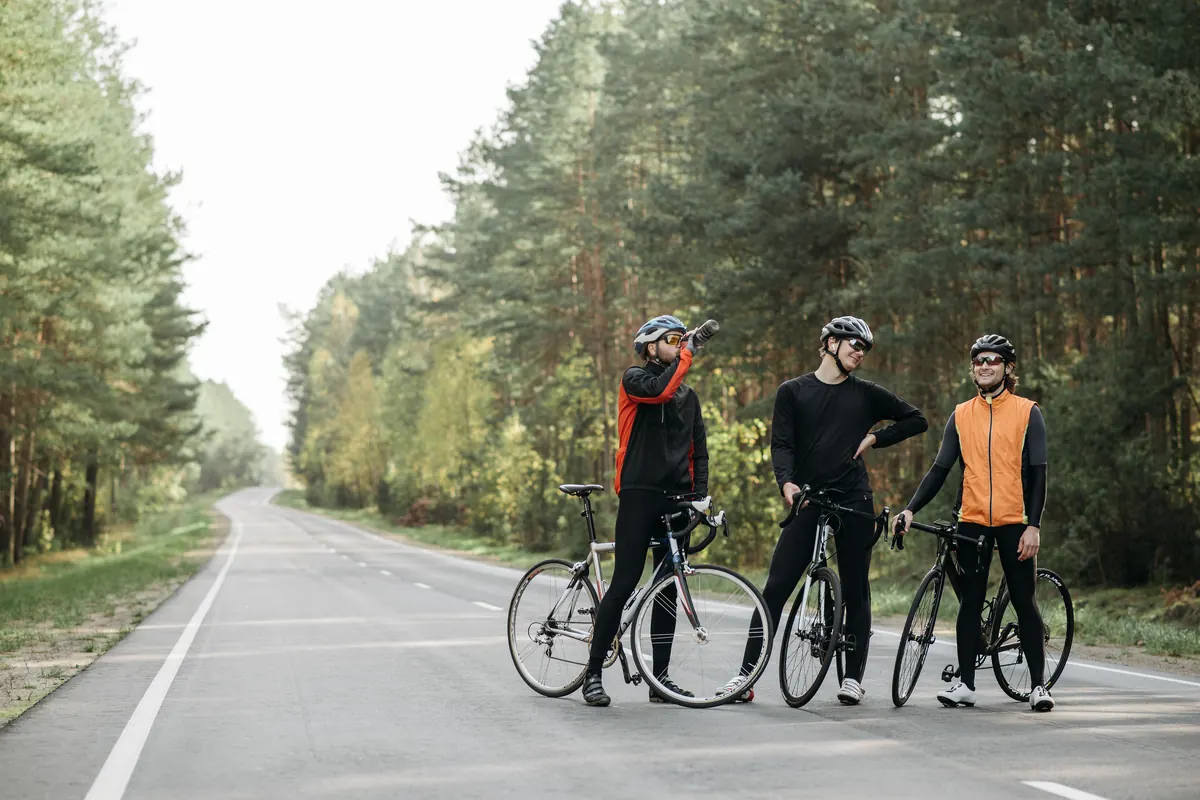
You burn some of it. On a long ride, especially after two or three hours once glycogen runs low, the body oxidizes branched-chain amino acids for energy. Protein covers something like 5% of total energy on a long ride, more if you went out underfueled. A 2018 study from Kato’s group found that the branched-chain amino acids are the first to run short in endurance-trained men, which explains why dairy and meat, both rich in them, show up so often in the recovery research.
You also rebuild more than legs. A hard ride damages muscle fibers that need repair, and it triggers the construction of new mitochondria, the structures inside muscle cells that make aerobic energy. Mitochondrial proteins are what turn you into a bigger aerobic engine, and they are made from amino acids. So are the enzymes that process fuel, the hemoglobin that carries oxygen, the plasma proteins that expand your blood volume as you get fit, and the tendons and connective tissue that take a beating on rough singletrack or six hours in the drops.
And the demand never shuts off. Protein turnover stays elevated for 24 to 48 hours after a hard session. Train five or six days a week and your body is almost never at rest, which is why the rest-day studies keep finding high requirements.
The number, in pounds
Most American riders think in pounds, so here is the range converted. The low end, 1.6 grams per kilogram or about 0.73 grams per pound, suits easy riding. The high end, 2.0 grams per kilogram or about 0.9 grams per pound, suits hard blocks, rest days after hard rides, fasted or low-carb riding, and dieting. Most riders belong in the middle column.
| Body weight | Easy riding (1.6 g/kg) | Everyday target (1.8 g/kg) | Hard blocks, rest days, fasted rides, dieting (2.0 g/kg) |
|---|---|---|---|
| 130 lb | 95 g | 105 g | 120 g |
| 150 lb | 110 g | 120 g | 135 g |
| 170 lb | 125 g | 135 g | 155 g |
| 190 lb | 140 g | 150 g | 170 g |
| 210 lb | 150 g | 170 g | 190 g |
If you carry a lot of extra body fat, these numbers run high, because fat tissue needs very little protein. Calculate from a realistic goal weight instead of the scale.
How much per meal
For years the rule was 20 to 25 grams per sitting, with anything beyond that supposedly wasted. That rule came from lifting studies in young men and does not hold for cyclists.
In 2020, researchers at Maastricht University in the Netherlands, led by Tyler Churchward-Venne, gave endurance-trained men a range of protein doses after a cycling session and tracked where the amino acids went. Thirty grams was enough to max out repair of the contractile muscle fibers. A larger dose, though, pushed more of the amino acids into mitochondrial protein, the stuff that makes you faster over long distances. That is why the post-ride target for cyclists runs a little higher than the one for lifters, around 35 to 40 grams for a 170-pound rider.
Then in 2023 the same lab, this time led by Jorn Trommelen, fed men a 100-gram dose after a workout and measured muscle building for 12 hours instead of the usual four or five. The big dose produced a bigger response that lasted the whole 12 hours. Nothing was burned off or flushed out. The body took longer to work through it, and did.
So aim for 30 to 45 grams per meal, three or four times a day. If dinner ends up at 70 grams because you ate a big steak, you lost nothing. But most riders find it far easier to reach their daily total across four sittings than by cramming it into two, and the steady supply keeps muscle building through the day instead of in one surge.
When and what to eat
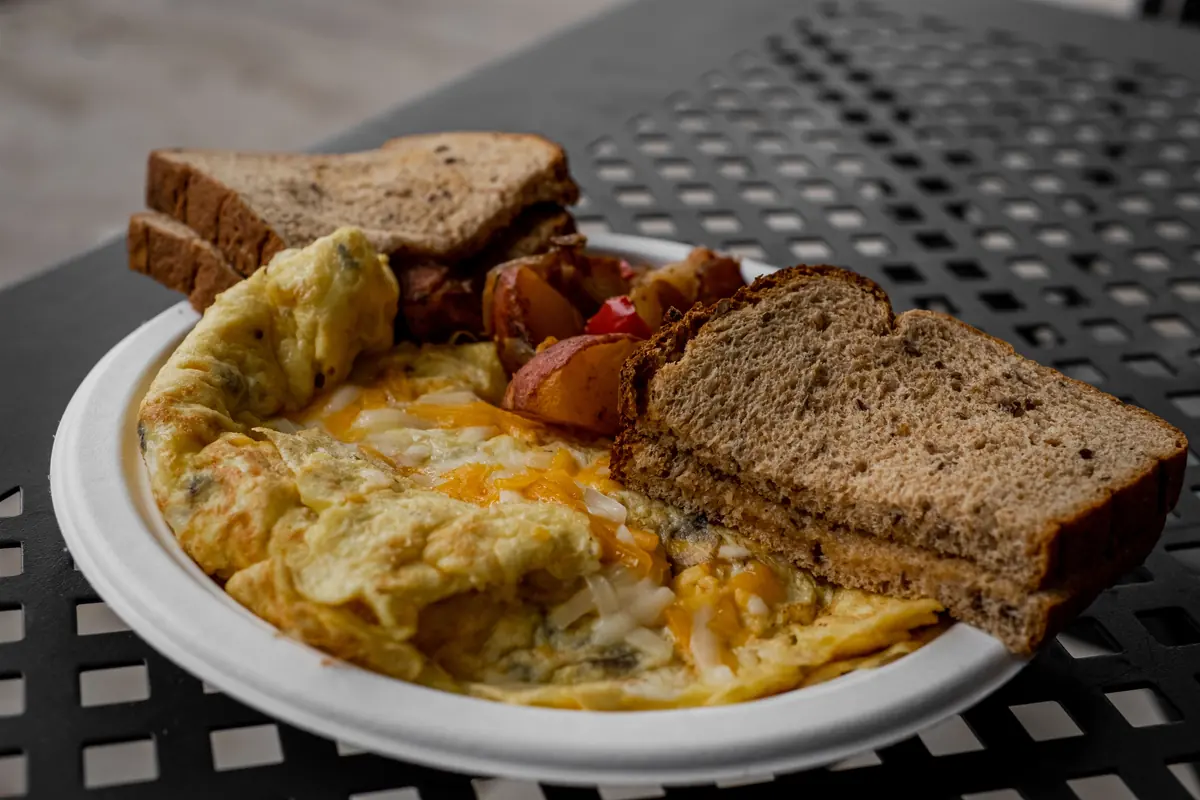
After the ride. Muscle is most responsive to protein in the first few hours after exercise. You do not have to down a shake in the parking lot, but your next meal should carry 30 to 45 grams of protein alongside plenty of carbohydrate, ideally within two hours of unclipping. A chicken burrito, a couple of eggs on toast with a glass of milk, a tuna sandwich, or a bowl of rice with salmon all get you there. If a real meal is a long way off, a whey shake or a bottle of chocolate milk on the drive home fills the gap.
During the ride. As long as you are eating enough carbohydrate, which means 60 to 90 grams per hour on a long ride, protein in your bottles or bars does nothing for performance. The products that promise otherwise are solving a problem you do not have. Carbohydrate is still what you need on the bike, and we cover how much is reasonable in our guide to gels, sports drinks and blood sugar.
The exceptions are deliberately low-carb rides and very long days. On a low-carb ride, 10 to 20 grams of protein before and during the session, say a cup of Greek yogurt beforehand and a small bag of jerky in the jersey pocket, limits muscle breakdown without canceling the training effect you went low-carb to get. On efforts past six hours, where total intake inevitably falls behind, a little protein along the way helps keep the muscle from being used as fuel: a peanut butter and jelly sandwich, a protein bar, a cheese stick, or a handful of nuts at the aid station.
Refueling glycogen. Protein helps restock glycogen only when carbohydrate is short. With a short turnaround, say a stage race or two hard days in a row, load carbohydrate in the first hours after the ride, think rice, potatoes, bread, fruit and sports drink, and add protein to the mix only if you cannot stomach that much sugar. A recovery drink with a 3-to-1 or 4-to-1 carb-to-protein ratio, or chocolate milk, covers both.
Before bed. Slow-digesting protein before sleep keeps the muscle supplied through the night, when a lot of the repair from the day’s ride happens. A big glass of milk, a bowl of Greek yogurt or cottage cheese, or a casein shake 30 to 60 minutes before bed does the job. Count it inside your daily total.

Special cases
Losing weight for climbing season. Cut calories and the body will burn muscle along with fat, and for a cyclist that means losing the engine you were trying to lighten. Push protein to the top of the range, 2.0 grams per kilogram or a bit more, and keep the deficit moderate: past roughly a 30% cut, no amount of protein will save the muscle. Get the extra protein from lean sources that do not cost many calories, like chicken breast, white fish, egg whites, nonfat Greek yogurt, cottage cheese and whey, and trim fat and junk calories before you trim carbohydrate, because a rider who diets away the carbs cannot train.
Riders over 50. Older muscle responds less to protein, and inactive people in their 60s need far more per meal to get the same muscle-building effect as a 25-year-old. Riders who train regularly mostly dodge this, but the margin for error shrinks, and masters athletes consistently eat less protein than younger riders doing the same work. Treat 1.8 grams per kilogram as your floor, make sure every meal has a real protein source rather than toast and coffee for breakfast, and do not skip the bedtime serving of milk, yogurt or cottage cheese. Our articles on cycling and longevity and weight training for cyclists cover why holding onto muscle after 50 is as much about health as speed.
Plant-based riders. Plant proteins carry less leucine, the amino acid that switches on muscle building, and digest a little less completely, but vegans eating enough of them build muscle just as well as meat eaters. The job is getting enough. Aim for about 2.0 grams per kilogram, lean on the dense sources (tofu, tempeh, seitan, lentils, edamame, soy milk), and mix sources through the day so the amino acid profile fills itself in. A soy or pea protein powder makes the post-ride and bedtime servings far easier to hit.
Riders who also lift. The needs do not stack. Lifting tops out around 1.6 grams per kilogram, which already sits inside the cycling range, so 1.8 to 2.0 covers both. Creatine pairs well with a lifting block, and we have a separate guide to creatine for cyclists.
Big training blocks. During a training camp, a stage race or any week where the volume jumps, cyclists on high protein hold their power better and get sick less often than those on a moderate intake. In a hard week, protein is cheap insurance on the fitness you are working for, so this is the time to run at the top of the range and to be strict about the post-ride meal, even when you are too tired to cook. Rotisserie chicken, canned fish, eggs, jerky and milk all work with no prep. The signs that you are not recovering are covered in our piece on overtraining syndrome.
Can you eat too much?
The kidney worry comes up most, and the evidence does not support it in healthy people. In 2018, Michaela Devries and Stuart Phillips at McMaster University pooled 28 studies covering more than 1,300 participants and found that higher-protein diets, defined as 1.5 grams per kilogram or more, did not reduce kidney function. Filtration rate was slightly higher, if anything. The exception is narrow. If you have diagnosed kidney disease, protein intake is a conversation with your nephrologist, and if you have never had your kidney function checked, it shows up on a standard blood panel. We have a guide to the blood panel every cyclist should ask for.
Bone loss and dehydration are the other old worries. Neither has held up in controlled research on healthy, active adults.
The real cost of very high protein is what it crowds out. A 2005 study of runners found that an extreme intake of 3.6 grams per kilogram blunted the muscle’s response during recovery compared with 1.8 grams, and a rider eating 250 grams of protein a day is almost certainly eating too little carbohydrate to train well. There is no evidence of extra benefit past about 2.2 grams per kilogram for anyone outside a deep cut or an extreme training block.
What it looks like on a plate
Here is a day that lands around 140 grams for a 170-pound rider, built from ordinary food. Scale the portions to your weight.
- Breakfast: three eggs scrambled, a cup of Greek yogurt on the side, oatmeal. About 40 grams.
- Post-ride or lunch: a chicken breast or a can of tuna on a big sandwich or a bowl of rice. About 35 to 40 grams.
- Dinner: a 6-ounce piece of salmon or lean beef, or two cups of lentils, with vegetables and potatoes. About 35 to 40 grams.
- Before bed: a cup of cottage cheese or a tall glass of milk. About 20 to 25 grams.
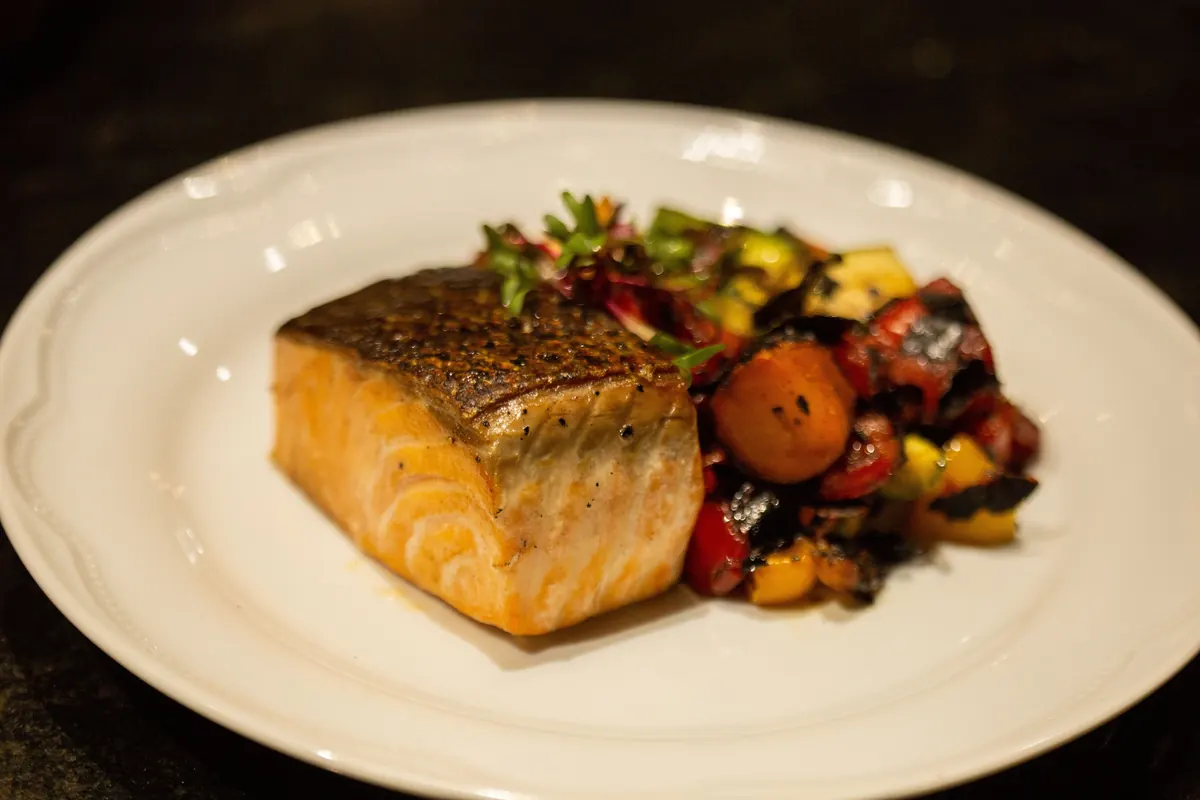
For reference, a palm-sized portion of meat or fish runs 25 to 35 grams. One egg is 6. A cup of Greek yogurt is 15 to 20, a cup of cooked lentils 18, a cup of milk 8. A block of firm tofu is about 40. A scoop of whey or pea protein is 20 to 25.
Whole food should do most of the work, because it brings iron, zinc, calcium, B vitamins and the fat and carbohydrate you need along with the protein. Powder is a convenience. It helps in the post-ride window when you are not hungry yet, at bedtime, and on travel days when the hotel breakfast is a muffin. Whey, casein, milk protein, soy and well-formulated pea blends all performed about the same in the recovery studies, so buy whichever one you tolerate and can afford.
Does it make you faster?
Not during the ride. In every trial where cyclists got enough carbohydrate, adding protein to the ride itself did nothing for time-trial performance. Protein is not a fuel the way carbohydrate is.
What the research does show is that protein protects the work you are already doing. Riders who eat enough of it recover faster between sessions, keep more muscle through hard blocks and weight loss, build more of the mitochondria that raise their aerobic ceiling, and get sick less often during heavy training. Over a season that adds up to more quality training days, which is the only way anyone gets faster. For a 170-pound rider, the whole thing comes down to about 135 grams a day, split across four meals, with one of them inside two hours of the ride and one before bed.
Frequently Asked Questions
- How much protein should a cyclist eat per day?
- The current consensus is 1.6 to 2.0 grams per kilogram of body weight, or roughly 0.75 to 0.9 grams per pound. A 170-pound rider should aim for 125 to 155 grams a day, with the higher end during hard training, on rest days after hard rides, and in any weight-loss phase.
- Should I drink a protein shake right after my ride?
- You do not need a shake specifically, but your first meal after riding should include 30 to 45 grams of protein with carbohydrate, ideally within two hours. A shake is a convenient way to get there if you are not hungry yet.
- Do I need protein in my bottles during a long ride?
- No, as long as you are eating enough carbohydrate, which is 60 to 90 grams per hour on rides over two hours. Protein during the ride only helps on ultra-distance efforts or on deliberately low-carb training rides.
- Is 20 to 25 grams per meal the most my body can use?
- No. That rule came from strength-training studies and has since been overturned. Research in cyclists shows 30 to 45 grams after a ride is better, and a 2023 study showed the body uses even 100 grams over the following 12 hours. Spreading intake across three or four meals is still the practical way to hit your daily total.
- Will a high-protein diet hurt my kidneys?
- Not if your kidneys are healthy. A pooled analysis of 28 studies and more than 1,300 people found no decline in kidney function at intakes of 1.5 grams per kilogram or more. If you have existing kidney disease, follow your physician’s guidance.
- Can I get enough protein as a vegetarian or vegan cyclist?
- Yes. Vegans and omnivores eating the same amount of protein build the same muscle in controlled trials. Aim for about 2.0 grams per kilogram and rely on soy, pea, lentils, beans, tofu and seitan. A plant-based protein powder makes the post-ride and bedtime doses easier.
- Do older cyclists need more protein?
- Active riders over 50 largely keep the muscle sensitivity of younger athletes, but the margin for error is smaller. Treat 1.8 grams per kilogram as a floor, aim for at least 0.4 grams per kilogram at each meal, and eat something protein-rich before bed.
Policy terms, coverage limits and availability vary by state. This article is for general information and is not insurance, medical or nutritional advice. Talk to a physician or registered dietitian before making major changes to your diet, especially if you have kidney disease, diabetes or another medical condition.
Sources
- Witard, Hearris and Morgan, King’s College London and Manchester Metropolitan University, “Protein Nutrition for Endurance Athletes: A Metabolic Focus on Promoting Recovery and Training Adaptation,” Sports Medicine, 2025.
- Kato, Suzuki, Bannai and Moore, University of Toronto, “Protein Requirements Are Elevated in Endurance Athletes after Exercise as Determined by the Indicator Amino Acid Oxidation Method,” PLOS ONE, 2016.
- Bandegan, Courtney-Martin, Rafii, Pencharz and Lemon, Western University, “Indicator amino acid oxidation protein requirement estimate in endurance-trained men 24 h postexercise exceeds both the EAR and current athlete guidelines,” American Journal of Physiology, Endocrinology and Metabolism, 2019.
- Gillen and colleagues, University of Toronto, “Low-Carbohydrate Training Increases Protein Requirements of Endurance Athletes,” Medicine & Science in Sports & Exercise, 2019.
- Williamson and colleagues, University of Toronto, “Protein Requirements Are Increased in Endurance-Trained Athletes but Similar between Females and Males during Postexercise Recovery,” Medicine & Science in Sports & Exercise, 2023.
- Kato and colleagues, University of Toronto, “Branched-Chain Amino Acids Are the Primary Limiting Amino Acids in the Diets of Endurance-Trained Men after a Bout of Prolonged Exercise,” Journal of Nutrition, 2018.
- Jäger and colleagues, “International Society of Sports Nutrition Position Stand: Protein and Exercise,” Journal of the International Society of Sports Nutrition, 2017.
- Thomas, Erdman and Burke, “Position of the Academy of Nutrition and Dietetics, Dietitians of Canada, and the American College of Sports Medicine: Nutrition and Athletic Performance,” Journal of the Academy of Nutrition and Dietetics, 2016.
- Churchward-Venne and colleagues, Maastricht University, “Dose-response effects of dietary protein on muscle protein synthesis during recovery from endurance exercise in young men: a double-blind randomized trial,” American Journal of Clinical Nutrition, 2020.
- Trommelen and colleagues, Maastricht University, “The anabolic response to protein ingestion during recovery from exercise has no upper limit in magnitude and duration in vivo in humans,” Cell Reports Medicine, 2023.
- Trommelen and colleagues, Maastricht University, “Pre-sleep Protein Ingestion Increases Mitochondrial Protein Synthesis Rates During Overnight Recovery from Endurance Exercise: A Randomized Controlled Trial,” Sports Medicine, 2023.
- Margolis and colleagues, US Army Research Institute of Environmental Medicine, “The Effect of Consuming Carbohydrate With and Without Protein on the Rate of Muscle Glycogen Re-synthesis During Short-Term Post-exercise Recovery: a Systematic Review and Meta-analysis,” Sports Medicine - Open, 2021.
- van Essen and Gibala, McMaster University, “Failure of protein to improve time trial performance when added to a sports drink,” Medicine & Science in Sports & Exercise, 2006.
- Betts, Williams, Duffy and Gunner, University of Bath, “The influence of carbohydrate and protein ingestion during recovery from prolonged exercise on subsequent endurance performance,” Journal of Sports Sciences, 2007.
- Koopman and colleagues, Maastricht University, “Combined ingestion of protein and carbohydrate improves protein balance during ultra-endurance exercise,” American Journal of Physiology, Endocrinology and Metabolism, 2004.
- Hector and Phillips, McMaster University, “Protein Recommendations for Weight Loss in Elite Athletes: A Focus on Body Composition and Performance,” International Journal of Sport Nutrition and Exercise Metabolism, 2018.
- Moore, University of Toronto, “Protein Requirements of Master Athletes: Do They Need More Than Their Younger Contemporaries?” Gatorade Sports Science Institute, Sports Science Exchange 219, 2021.
- Doering and colleagues, Bond University, “Comparison of Postexercise Nutrition Knowledge and Postexercise Carbohydrate and Protein Intake between Australian Masters and Younger Triathletes,” International Journal of Sport Nutrition and Exercise Metabolism, 2016.
- Hevia-Larraín and colleagues, University of São Paulo, “High-Protein Plant-Based Diet Versus a Protein-Matched Omnivorous Diet to Support Resistance Training Adaptations: A Comparison Between Habitual Vegans and Omnivores,” Sports Medicine, 2021.
- Witard and colleagues, University of Birmingham, “Effect of increased dietary protein on tolerance to intensified training,” Medicine & Science in Sports & Exercise, 2011.
- Rowlands and colleagues, Massey University, “Effect of high-protein feeding on performance and nitrogen balance in female cyclists,” Medicine & Science in Sports & Exercise, 2008.
- Flakoll and colleagues, Vanderbilt University, “Postexercise protein supplementation improves health and muscle soreness during basic military training in Marine recruits,” Journal of Applied Physiology, 2004.
- Devries and colleagues, McMaster University, “Changes in Kidney Function Do Not Differ between Healthy Adults Consuming Higher- Compared with Lower- or Normal-Protein Diets: A Systematic Review and Meta-Analysis,” Journal of Nutrition, 2018.
- Bolster and colleagues, University of Connecticut, “Dietary protein intake impacts human skeletal muscle protein fractional synthetic rates after endurance exercise,” American Journal of Physiology, Endocrinology and Metabolism, 2005.
- Morton and colleagues, McMaster University, “A systematic review, meta-analysis and meta-regression of the effect of protein supplementation on resistance training-induced gains in muscle mass and strength in healthy adults,” British Journal of Sports Medicine, 2018.