No Liability Coverage
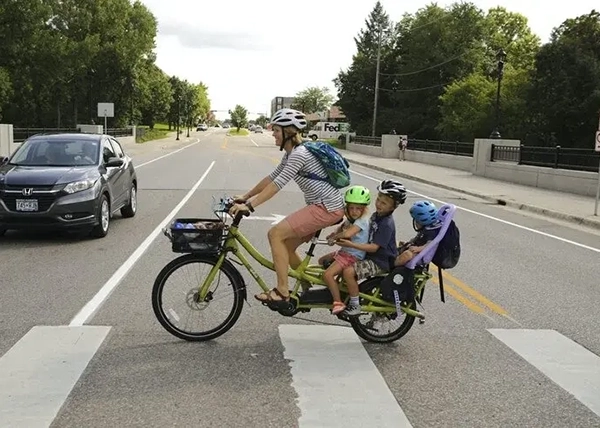
BikeInsure contains no third-party liability module. A cyclist who causes bodily injury or property damage to another person has zero coverage for legal defense costs or damages. Given that liability claims against cyclists can reach five or six figures, this is a material omission for any rider who shares roads or paths with pedestrians and other cyclists.
No Medical Payments Coverage
BikeInsure does not cover the rider's own medical expenses following a crash. Ambulance, emergency room, surgery, and hospital costs are entirely out of pocket unless the rider carries separate health insurance, and that insurer agrees to cover cycling injuries.
No Uninsured Motorist coverage
BikeInsure provides no coverage for injuries sustained when a cyclist is struck by a motor vehicle, including hit-and-run situations where the driver is never identified. Velosurance's Uninsured Motorist coverage responds directly to this scenario.
Permissive Use Restricted to Household
BikeInsure defines an "insured" as the named insured, their spouse, and household relatives only.* Velosurance defines an insured as "you and any person, firm, corporation or legal entity that may be operating the insured bicycle with your prior permission."† Lend your bike to a friend, a teammate, or your kid, and under Velosurance they are covered exactly as you are, and the optional coverages you've purchased, liability, medical payments, and Uninsured Motorist, ride along with them. Under BikeInsure, whether the bike's damage is covered when someone else crashes it, the policy doesn't say: nothing extends coverage to a borrower, and nothing excludes the damage, so the owner's claim rests on the absence of an exclusion rather than on any promise in the policy. The borrower themselves has no protection of any kind, and because BikeInsure sells no liability coverage at all, no one is protected if a borrower injures someone. One caution that applies to both policies: theft committed by the person you entrusted the bike to is excluded under either policy, an industry-standard limitation, not a difference between the two.‡
* Great American Spirit Insurance Company, Common Policy Provisions, form EIP-GN-0002, §B.2 (12/21 ed., SERFF PERR-133140434; 12/25 ed., SERFF GACX-134839028).
† The Markel Cyclist Policy, form MCY1001-0612, Definitions ¶11 (“Insured means you and any person, firm, corporation or legal entity that may be operating the insured bicycle with your prior permission”).
‡ Great American Spirit Insurance Company, Bicycle Theft Coverage, form EIP-GN-0201A (12/25), §C.2; The Markel Cyclist Policy, form MCY1001-0612, Physical Damage Exclusions ¶13.
Physical Damage Caps: $10,000 on Pre-2026 Forms
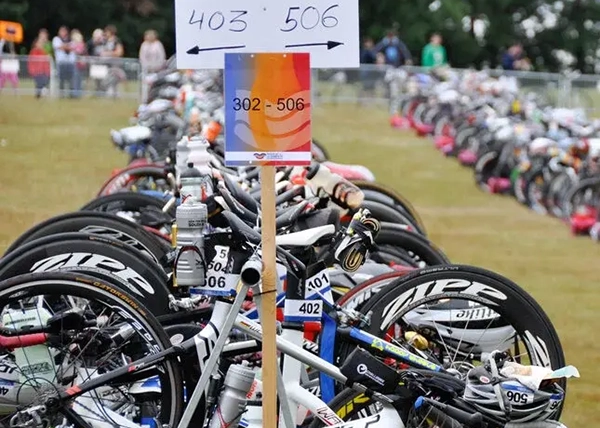
Policies on BikeInsure's pre-2026 forms carry a hard $10,000 annual aggregate limit per bicycle, printed on the declarations page.* Any bike worth more than that, which now includes most performance road, triathlon, and eMTB builds, is underinsured by definition. The 2026 revision removes the aggregate cap, settles claims per occurrence, and accepts bikes to $50,000, but only in states where it is approved, and existing riders stay capped at $10,000 until their policy renews onto the new forms. Velosurance insures every bike at its full declared value, with no cap, in every state.
* Great American Spirit Insurance Company, Equipment Insurance Policy Declarations, form EIP-GN-0001 (12/21), Coverage(s) and Limits (“$10,000.00 per Bicycle (Annual Aggregate)”); Bicycle Physical Damage Coverage, form EIP-GN-0201 (12/21), §D Limits of Insurance; Bicycle Theft Coverage, form EIP-GN-0201A (12/21), §D Limits of Insurance; SERFF PERR-133140434.
Higher Theft Cost for E-Bikes
Under BikeInsure's 2026 rate structure, in states where it is approved, e-bike theft coverage costs 3.5 times the standard rate: $4.20 per $100 of value per year versus $1.20 for a conventional bike, while the damage rate stays the same, so the penalty falls entirely on theft.* On a $5,000 e-bike that is about $210 a year for theft alone, versus roughly $60 for a non-e-bike of the same value, and the surcharge rises with the bike's value. BikeInsure's older flat pricing had no e-bike surcharge, but it is being retired as states approve the revision.
* Great American Spirit Insurance Company, Equipment Insurance Policy Rate Manual, Section 01, Premium (12/25), SERFF GACX-134839028.
Renewal alert for BikeInsure e-bike owners
Still paying BikeInsure's flat $24 a month ($288 a year) for e-bike damage plus theft? That pricing is going away, and not just for new customers: BikeInsure's own renewal rule moves existing policies to the premiums in effect on the renewal date,* so as each state approves the 2026 rates, e-bike policies re-price at their next renewal.
At the new rates (single bike, damage plus theft, before fees and discounts), a $3,500 e-bike runs about $339 a year, up 18%. A $5,000 e-bike runs about $402, up 40%. An $8,000 e-bike runs about $624, up 117%. Only e-bikes under roughly $2,300 stay near the old price, because the policy minimums take over.
Velosurance rates Class 1, 2, and 3 e-bikes like any other bike of the same value, in every state. If your BikeInsure renewal is coming up, get a quote before you auto-renew.
* Great American Spirit Insurance Company, Equipment Insurance Policy Rule Manual, Rules 0107-0108 (renewal subject to forms and premiums in effect at renewal), SERFF PERR-133140434 / GACX-134839028.
How a Damaged Bike Is Repaired or Replaced
On the core question of how a damaged bike is settled, the two policies are practically the same. Both pay to repair or replace the bicycle with like kind and quality, less the deductible, up to the insured value, and on an ordinary repairable claim the payout is much the same. Velosurance is modestly stronger on wording: it pays the amount necessary to repair or replace with like kind and quality, with no “least of” clause, whereas BikeInsure pays the least of the repair cost, a like-kind replacement, or the scheduled amount. In practice that wording edge rarely changes the dollars on a typical claim.
The one substantive difference in this area is an exclusion: BikeInsure’s physical-damage form does not cover “bicycle parts covered by a manufacturer warranty,” and Velosurance’s has no equivalent carve-out, which can create a coverage dispute on a high-end carbon frame that a Velosurance policyholder does not face. The larger differences between the two policies lie elsewhere: Velosurance is primary rather than pro-rata, and applies a single deductible per loss rather than separate physical-damage and theft deductibles.