TL;DR:
- The pro peloton abandoned the skin-and-bones look of the mid-2000s. Today’s riders are as lean as ever but carry more muscle, on purpose.
- The reason is durability, how much of your power is left after three hours. Riders who lift and fuel properly fade less.
- Chasing a lower number on the scale costs most amateurs more than it earns, because lost muscle takes watts with it.
- If you need to lose weight, go slow: about 0.7% of body weight a week, in the base season, with plenty of protein. Athletes who lost weight at that pace gained lean mass; those who lost it faster gained none.
- The pro gym method: lift moderate weights, and end each set as soon as a rep comes up noticeably slower than the one before, instead of grinding to failure. Same strength as heavy lifting, far less damage to tomorrow’s ride.
How the peloton changed shape
In the 2007 Tour de France, Michael Rasmussen, the Danish climber who wore yellow for most of the race, was known as The Chicken, for arms and legs so thin they barely looked able to hold a bike up. He was not an outlier. The 2000s general classification was full of riders dieted down to whatever weight still let them pedal.
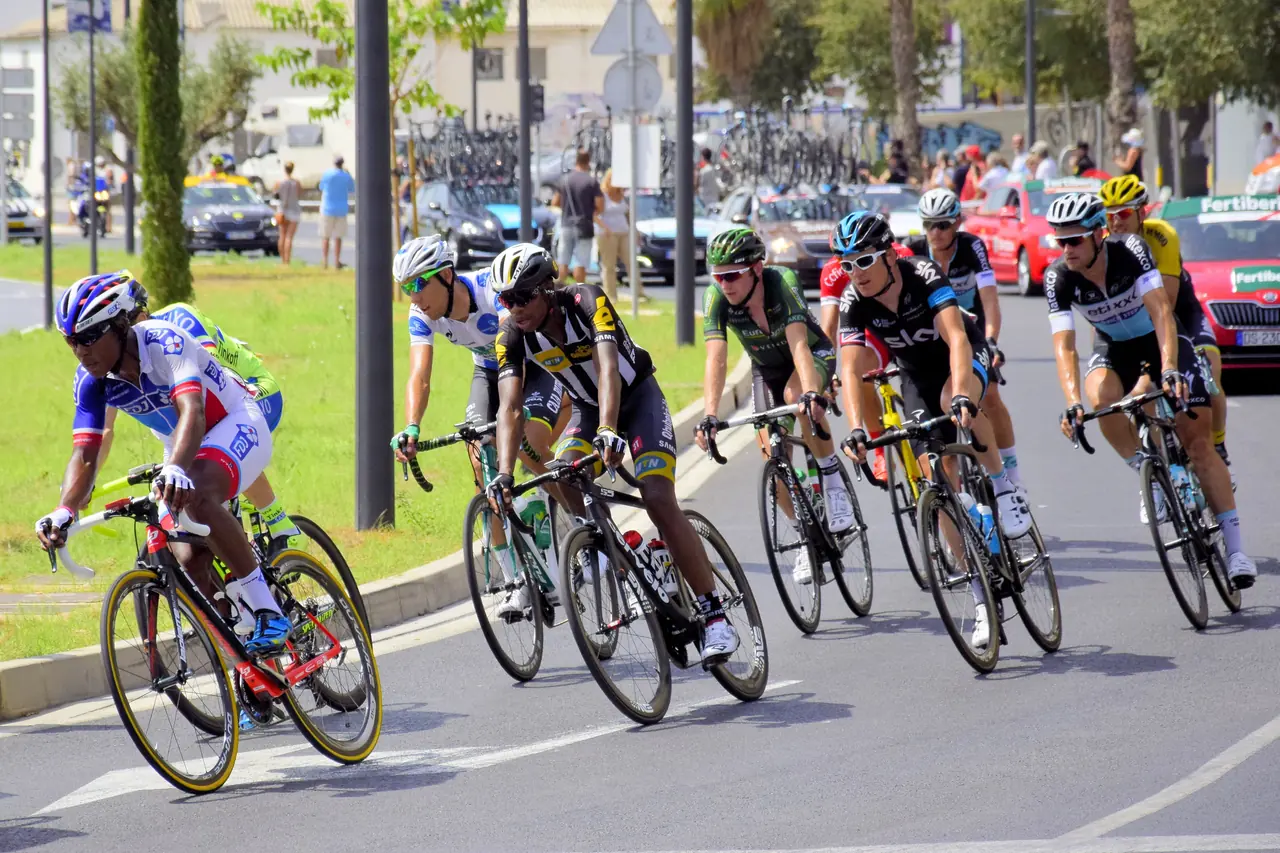
Tadej Pogačar, winning his latest Tour at 5 feet 9 inches and about 146 pounds, is light, but there is visible muscle on him, and on the riders around him. Coaches describe the shift the same way: as lean as ever, more muscle, and faster for it.
Mikel Zabala, a Granada University professor who coached Alejandro Valverde and Nairo Quintana at Movistar, calls it a silent revolution. When he joined that team in 2013, none of the riders lifted. Within a few years all of them did, and across the WorldTour lifting went from token winter sessions to year-round work. But the pros did not simply add squats. They changed what they were optimizing for, and the gym only paid off once fueling and recovery changed too.
You know the amateur version: the scale goes down in March and by May you are slower on the same climb at a lower weight than the year before. That contradiction is the one the peloton spent the last decade solving.
The number the scale cannot show you
Every rider knows watts per kilogram. Far fewer know the word the pros now use as often: durability, how much of your power is still available after a lot of work. The rider who holds 340 watts for five minutes after three hours beats the one who was stronger fresh but is down to 300.
Bent Rønnestad, now head of exercise physiology at Tom Pidcock’s team, ran the study that made coaches pay attention. In 2011 he had well-trained cyclists add two heavy lower-body sessions a week for 12 weeks while a second group just rode, then tested everyone with 185 minutes of steady pedaling on a lab ergometer followed by a five-minute all-out effort. On that final effort the lifters’ power rose from 371 to 400 watts over the 12 weeks; the riders who only rode did not improve. During the last hour of steady riding, the lifters’ heart rate, blood lactate and perceived effort all dropped more than the non-lifters’.
James Spragg, a sport scientist with Tudor Pro Cycling, took the idea into real races. Comparing under-23 riders with professionals across a five-day stage race, he found their fresh power about the same, but under-23 riders began to fade between 1,000 and 3,000 kilojoules into a stage while general classification riders showed no drop even past 3,000. Across a full season, the only riders who improved their durability were the ones who increased training volume.
In a 2024 lab study of 12 elite road cyclists, six-minute power fell from 415 to 375 watts after four hours of intermittent riding, even on 100 grams of carbohydrate an hour, and the riders still burning the most carbohydrate in the fourth hour kept the most sprint.
Leanness helps on the first climb. Muscle, fueling and volume decide the last one. Starve off four pounds and lose muscle doing it, and you are slightly faster at the start and noticeably slower at the end, the wrong trade on anything longer than a 10-minute hill climb.
Where the race weight math goes wrong
The arithmetic behind weight obsession is correct as far as it goes. On a steep climb nearly all your power fights gravity, so a 165-pound rider who drops to 160 while holding the same watts goes about 3% faster uphill, close to a minute on a 30-minute climb.
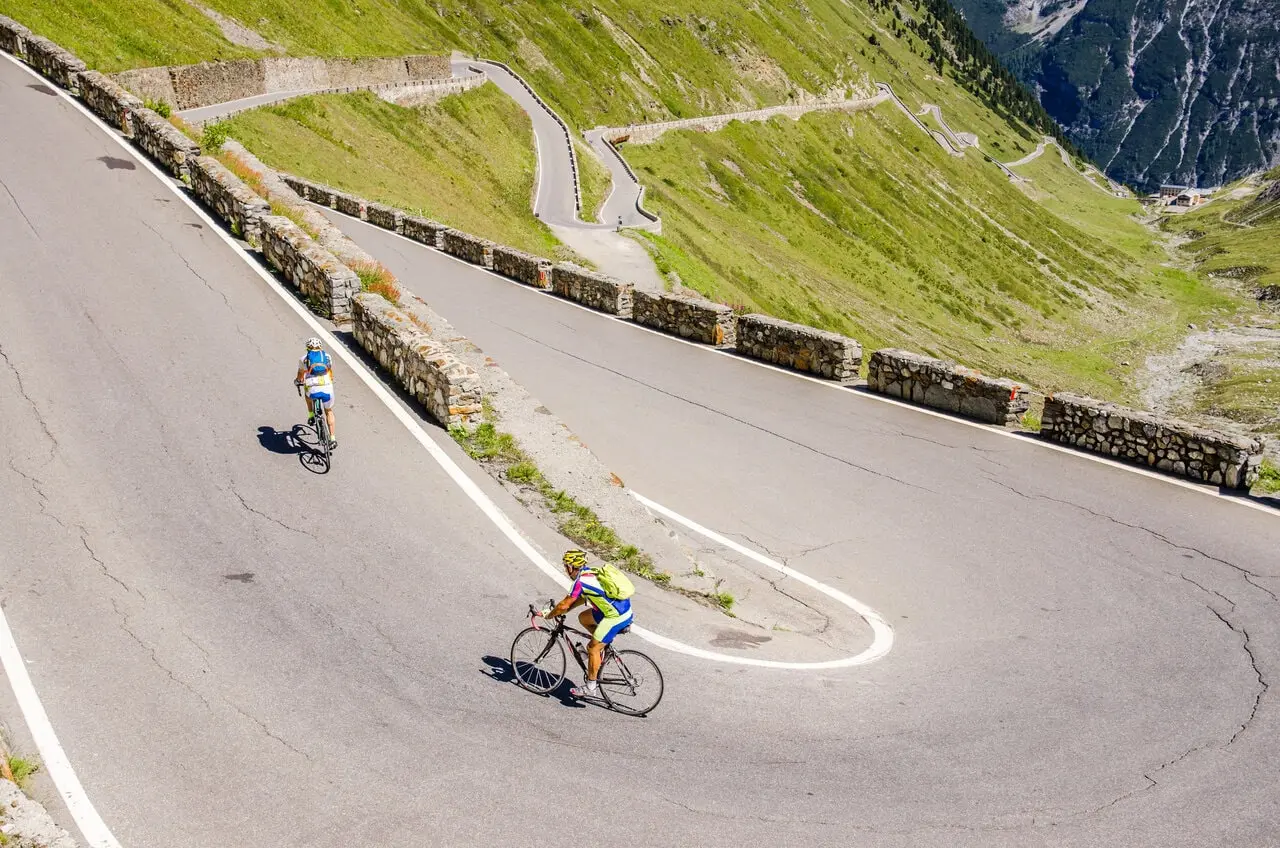
The problem is “while holding the same watts.” Muscle is metabolically expensive, and when you eat too little for too long the body sheds it; cycling, a low-load sport, gives your legs no reason to keep it. Lose five pounds the fast way and some of it is the muscle you were counting on, so the ratio moves far less than the scale suggests and your durability gets worse.
Underfueling also damages health, more slowly. Sports medicine calls it relative energy deficiency in sport, or REDs, and the International Olympic Committee’s 2023 consensus statement lists lower strength, reduced endurance, slower recovery, more illness and injury, weakened bones and lower motivation among the consequences, at a prevalence of 15% to 80% depending on the sport. Only about 20% of the studies behind it included men, who may show symptoms at a lower threshold than women; low libido and fewer morning erections are flagged as early signs.
Sebastian Weber, the German coach behind the INSCYD performance software, recalls how Italian teams handled race weight when he started: if you had pounds to lose, eat an apple. That culture produced The Chicken, and many amateurs still train in a gentler form of it, a hard block in April doubling as a diet block. We have covered how often “overtrained” means underfed in our article on overtraining syndrome. If your form and your eating went backward together, fix the fueling first.
If you do need to lose weight, do it the way the research says
Some riders do carry 15 or 20 pounds that is doing nothing for them, and one study answers how to lose it.
In 2011, Ina Garthe and colleagues at the Norwegian School of Sport Sciences split 24 elite athletes into two groups. One lost about 0.7% of body weight a week; the other, told to go twice as fast, managed about 1%. Both strength trained throughout and both lost about 5.5% of body weight. The slow group lost 31% of its fat mass and gained 2.1% lean mass. The fast group lost 21% of its fat mass, gained no lean mass despite lifting, and improved less in jump and bench press testing. For a 170-pound cyclist, 0.7% a week is about 1.2 pounds.
The pro teams add three rules of their own:
Lose it in the base season, never in a hard block. Weight loss and high-intensity training both demand recovery, and asking for both at once is how riders end up flat in May. The pros adjust body composition in winter, then hold it.
Eat enough protein to tell your body which tissue to keep. Athletes in a deficit need noticeably more than the general recommendation, spread across the day; we have a guide on how much protein cyclists need.
Periodize your carbohydrate rather than cutting it. This gets the least attention of any pro nutrition practice and does the most for body composition. Riders eat more carbohydrate before and during hard or long sessions and less on easy days; Spragg’s team uses an app that shows a green, amber or red reading for the day’s fueling, and a notebook does the same job. A 1,200-calorie easy day and a 3,500-calorie long day are both “eating right.”
The gym method that made lifting stick
Our weight training guide covers the research on heavy lifting, which makes trained riders more efficient and powerful without adding weight. What it does not cover is the problem Zabala hit when Movistar first put riders in the gym: strength went up and the riding went down, because riders arrived at key sessions with legs still wrecked from Tuesday’s squats.
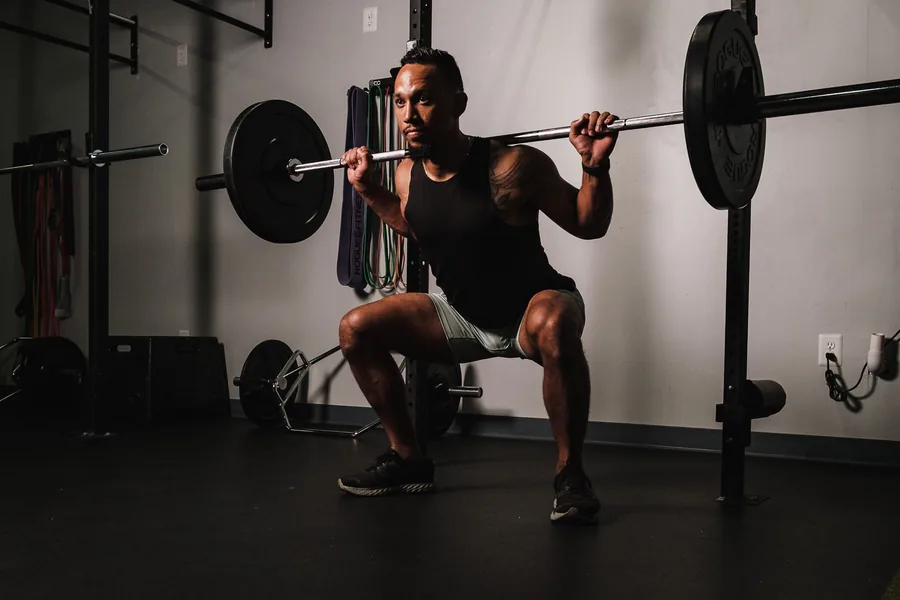
What fixed it was velocity-based training, the most useful thing an amateur can borrow from the pro gym. You lift a moderate weight, pushing each rep up as quickly as you can with good form, and end the set as soon as a rep comes up noticeably slower than the one before. The pros use a sensor on the barbell to measure that slowdown; your eye works too. The reps you skip are the slow, grinding ones at the end of a set, which produce most of the soreness and little of the strength gain.
In 2021, Jaime Gil-Cabrera, Alejandro Lucia and colleagues in Madrid ran a randomized trial with 20 professional cyclists. For eight weeks, twice a week, one group lifted at a set percentage of one-rep max and the other did “optimum power load” training, where the load was whatever produced the most power and sets ended when power fell off. The power-load group trained at a much lower average intensity, yet both groups gained the same strength and power, improved their eight-minute time trial equally, and gained muscle and lost fat with no change in body weight. A six-week trial in competitive female cyclists, with sets stopped at 90% of best rep power, found the same.
To run it without a sensor, pick a squat, a hinge like a deadlift or hip thrust, and a single-leg movement like a split squat. Load each to around 60 to 70% of max and move every rep with intent. When one rep is clearly slower than the one before, usually around rep 6 to 8, rack it. Rest two to three minutes, do three or four sets per lift, and leave in 35 to 40 minutes.
Twice a week, this gives strength gains in the range of heavy lifting, and you can do intervals the next day. That is how the riders got bigger without getting slower.
Fuel more to weigh less
Riders now eat up to 120 grams of carbohydrate an hour on the bike, double the ceiling of 15 years ago, and they are leaner for it.

A 2020 study by Aitor Viribay and colleagues in Spain gave elite mountain marathon runners 120 grams an hour during a race and found less muscle damage afterward than at lower intakes. Fueling the ride protects the muscle that makes the power, and a rider who finishes with intact muscle and glycogen recovers faster, trains harder the next day, and does not arrive at dinner so depleted that he eats everything.
Getting there takes gut training. Start at 60 grams an hour on long rides, add 10 to 15 grams every couple of weeks, and mix glucose and fructose sources, which use different transporters in the gut. Most riders reach 90 grams an hour within two months; the riders who need 120 are racing five hours a day.
Recovery is where the muscle gets built
The modern teams spend as much effort on sleep as on the gym, and that part costs nothing. Spragg’s team sets race hotel rooms to 61 to 64°F and 40 to 50% humidity, prescribes a hot shower before bed so core temperature is falling as the rider lies down, and allows caffeine only on days when a rider’s role demands it; a sprinter in the grupetto on a mountain stage does not get an espresso. Strength is built in the hours after the gym, and a body short on sleep and calories does not build it. Add two lifting sessions and change nothing else, and the lifting gets blamed for flat legs when the culprit is a 6-hour night.

A week that looks like the new peloton
For an amateur with 8 to 10 hours a week:
- Two 35-minute gym sessions, squat, hinge and single-leg, ending every set at the first slow rep, on days away from the long ride.
- One hard interval day, fueled the day before and during, never in a deficit.
- One long ride that ends hard, with real efforts in the last 30 to 45 minutes, fueled at 60 to 90 grams of carbohydrate an hour from the start.
- Easy days eaten lighter, with carbohydrate scaled down to match.
- Weigh yourself once a week at most, and track your power in the last hour of long rides, not just your best fresh effort. If that number is rising, you are becoming the rider the sport now rewards, whatever the scale says.
This article is general information and not medical, nutritional or training advice. Talk to a physician or registered dietitian before starting a weight-loss program, especially with a history of injury, bone density concerns or disordered eating.
Frequently Asked Questions
- Will lifting twice a week make me heavier?
- In the cycling studies it did not; the pros gained muscle, lost fat and finished at the same weight. A pound or two of muscle over the long run is paid back by extra power and fatigue resistance.
- What is a healthy race weight for a cyclist?
- There is no universal number. If dropping weight has cost you training quality, sleep, recovery or late-ride power, you are below it.
- Should I lift during the season?
- Yes. Once a week holds what you built; riders who stop in April lose most of it by midsummer.