

Optional Medical Coverage That Pays Your Deductibles and Co-pays
When a ride ends in the ER, this coverage steps in where your health insurance leaves you hanging.
Solo Crash
Your e-bike is worth to us what it’s worth to you. We do not depreciate your e-bike so in case of a total loss you can get yourself a bike of similar value
Hit By a Car
Your e-bike is covered if it’s damaged in a crash. On a road or trail, a group ride or a race, if it’s damaged in an accident, it’s covered.
Race Crash
If your e-bike is stolen from your home, car, workplace or any other secure location, it’s covered.
High-deductible Health Plans Leave Many Cyclists Paying Thousands After an Injury

Cycling is more popular than ever, whether for commuting, racing, fitness, or simply enjoying fresh air on two wheels. But with growing participation comes growing risk: more traffic exposure, faster bikes, more riders, and more opportunities for injury.
And while most cyclists assume health insurance will protect them in an accident, the reality is far more complicated. Traditional health policies often leave painful and expensive gaps. Specialty bicycle insurance can close those gaps and protect riders from both immediate medical bills and long-term financial consequences.
Health insurance often leaves cyclists exposed to significant out-of-pocket costs after an accident, especially with today’s high deductibles, co-insurance requirements, and separate emergency room fees. Even routine post-injury care like imaging, specialist visits, or physical therapy can become unexpectedly expensive before coverage fully kicks in. For many riders, these gaps mean that a single accident can create a financial burden long before health insurance provides meaningful help.
Causes of Cycling Injuries
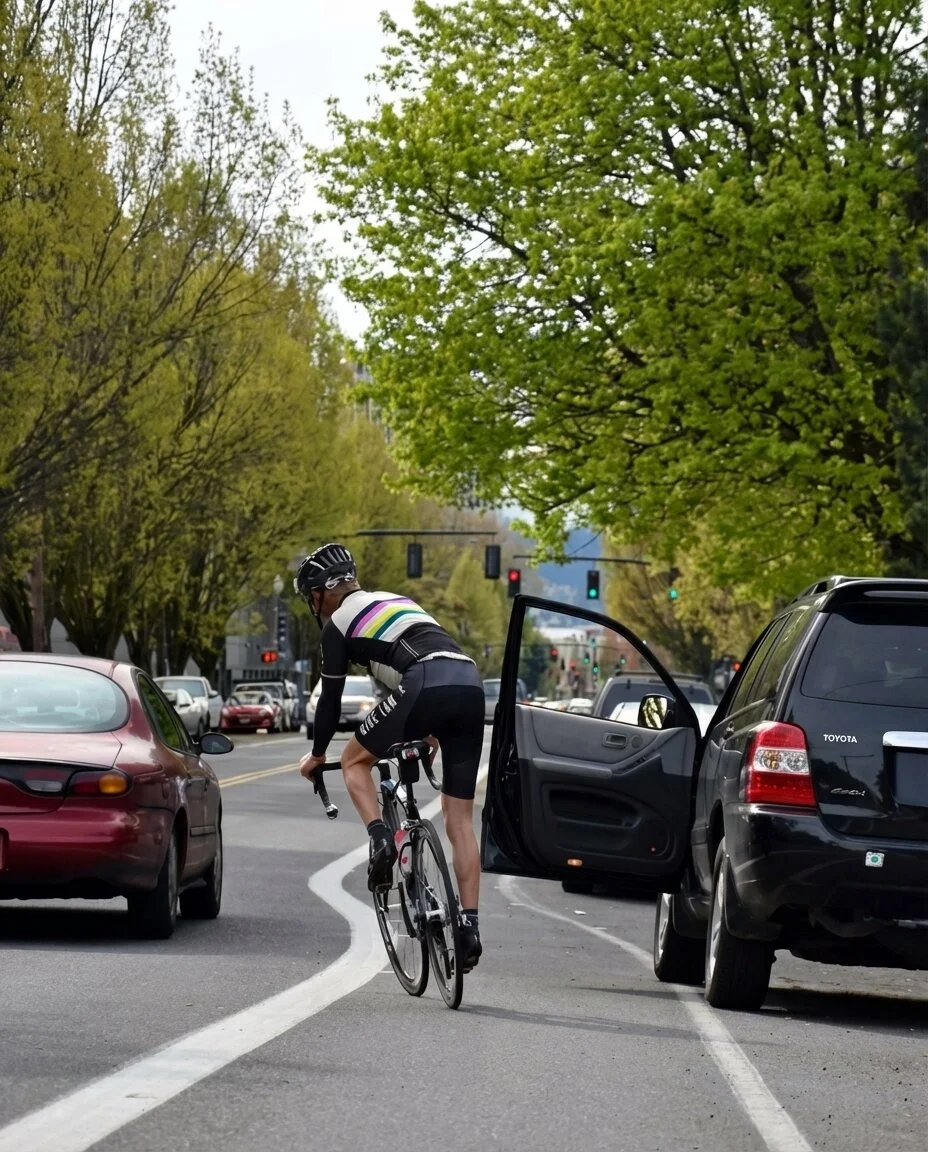
Many cycling injuries stem from unexpected interactions with cars and their drivers, which remain one of the most significant risks riders face. Drivers may misjudge a cyclist’s speed, fail to yield, or become distracted, creating dangerous situations in an instant. Even experienced cyclists can be injured when sharing the road with drivers who don’t anticipate or respect their presence.
Solo crashes are another leading cause of injuries and often happen without warning. A momentary loss of control, an overcooked turn, or a slippery patch of pavement can send a rider to the ground. These crashes may seem minor, but they frequently result in fractures, concussions, and other serious injuries that require medical attention.
Mechanical failures and road hazards also play a significant role in cycling-related injuries. Sudden issues like tire blowouts, broken chains, or malfunctioning brakes can cause an immediate loss of control, leaving the rider with little time to react. Add in unpredictable hazards such as potholes, debris, loose gravel, or uneven pavement, and even a routine ride can quickly turn into a crash with serious medical consequences.
Common Injuries
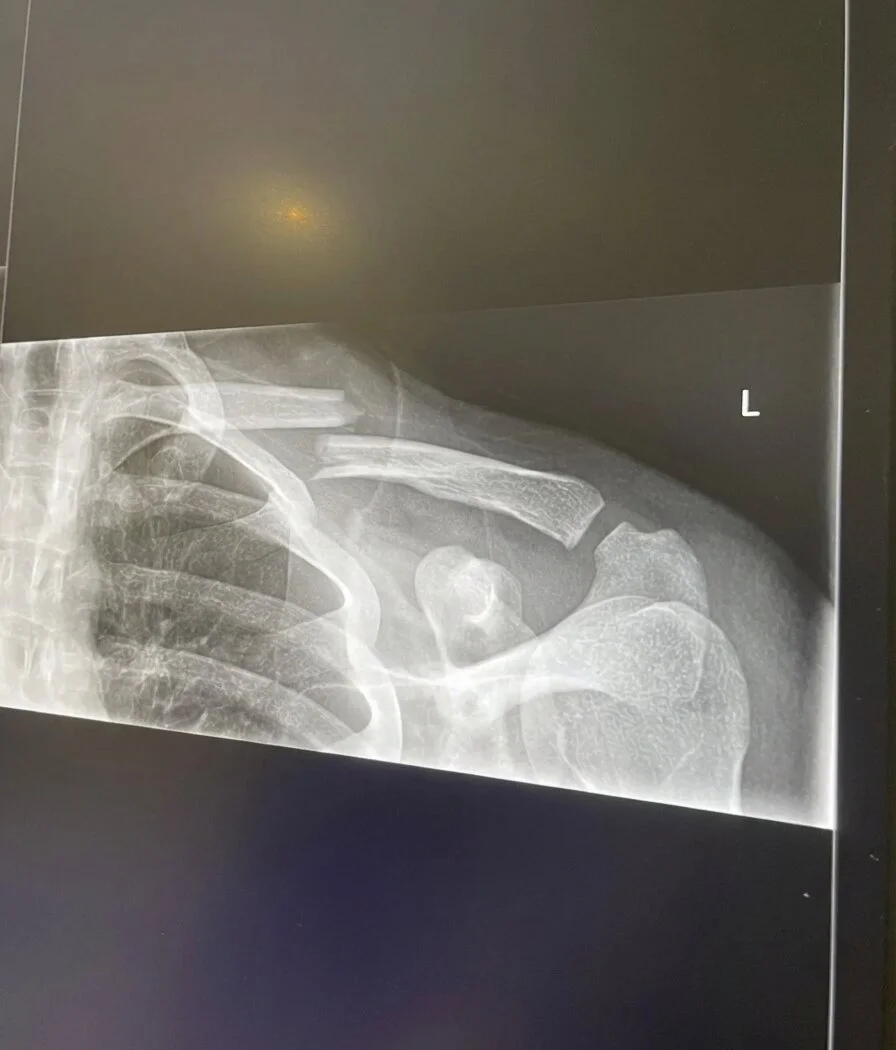
Fractures and dislocations are among the most common injuries cyclists experience during accidents. The combination of speed, impact, and the instinct to brace with an outstretched arm often results in broken wrists, collarbones, and shoulders. These injuries typically require imaging, immobilization, and follow-up care, which can quickly become costly without adequate coverage.
Head injuries are also a significant concern, even for riders who wear high-quality helmets. A sudden impact can lead to concussions, traumatic brain injuries, or lingering symptoms that affect daily functioning long after the accident. Medical evaluation, monitoring, and potential rehabilitation make these incidents both medically and financially serious.
Soft-tissue injuries, including muscle tears, ligament damage, and deep abrasions, are another frequent outcome of cycling accidents. Road rash alone may require wound care, antibiotics, or even specialty treatment if the skin damage is severe. Combined with the need for physical therapy or extended recovery time, these injuries often carry long-term costs that traditional health insurance doesn’t fully address.
Treatment Costs
Below is an illustrative list of the top 10 cycling-injury types and estimated treatment costs, excluding ambulance costs. These are approximate values meant for planning and perspective. Actual costs vary widely based on location, severity, and care required.
| Injury Type | Estimated US Cash Treatment Cost Range (USD) |
|---|---|
| Broken collarbone | $2,000 – $18,000 |
| Wrist/hand fracture | $1,500 – $10,000 |
| Concussion / mild traumatic brain injury | $4,000 – $10,000 |
| Fractured femur or tibia | $15,000 – $35,000 |
| Road rash / deep abrasions | $1,000 – $5,000 |
| Knee ligament or meniscus tear | $5,000 – $30,000 |
| Shoulder dislocation / rotator cuff tear | $5,000 – $50,000 |
| Spinal vertebrae fracture / back injury | $5,000 – $30,000 |
| Dental/facial fracture or trauma | $1,000 – $10,000 |
| Multiple fractures + soft-tissue trauma | $20,000 – $80,000+ |
Where Health Insurance Falls Short
Today’s health plans often come with deductibles of $2,500 to $7,500 per person, and many high-deductible plans reach $10,000 or more before insurance pays anything. As a result, ER visits, imaging, specialists, and follow-up care after a crash are often paid entirely out of pocket. Copays and co-insurance add further costs, with riders still responsible for 20% to 40% of the bill even after meeting their deductible.
Cycling injuries can also generate separate charges that aren’t always obvious, including ER facility fees, imaging center fees, out-of-network providers, ambulance transport, and additional specialist visits. Combined, these expenses can easily push the personal financial cost of even a moderate crash into the thousands before health insurance provides meaningful relief. The table below shows how much of this care typically becomes an out-of-pocket responsibility for cyclists.
| Plan tier | Typical Deductible (Individual) | Typical Deductible (Family) | Typical Co-Insurance After Deductible |
|---|---|---|---|
| Bronze | $6,000 – $9,500 | $12,000 – $19,000 | 30% – 50% |
| Silver | $3,500 – $6,500 | $7,000 – $13,000 | 20% – 40% |
| Gold | $1,000 – $3,000 | $2,000 – $6,000 | 10% – 30% |
How Medical Gap Coverage Works
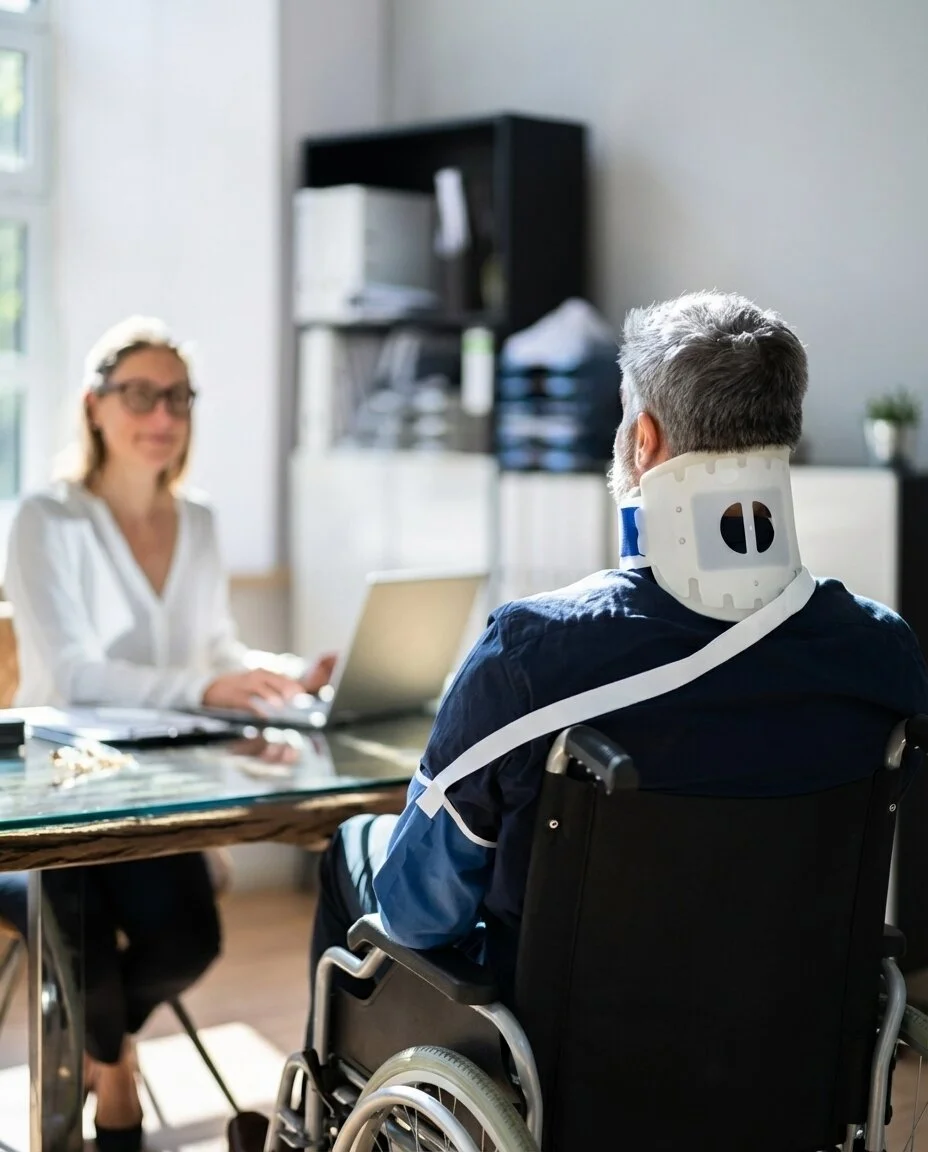
Medical gap is optional coverage designed to step in where your health insurance leaves off by helping cover the out-of-pocket medical expenses that follow a cycling accident. Instead of waiting until you meet a high deductible, often several thousand dollars, this coverage can reimburse you directly for eligible costs such as ER visits, imaging, specialist evaluations, and follow-up treatment related to the injury. It acts as a financial bridge, making sure you are not responsible for the full cash price of care before your primary health plan begins paying. In short, it helps cover the expenses your health insurance applies to your deductible or co-insurance.
Using it is straightforward. After a cycling accident, you receive medical treatment and allow your health insurance to process the claim as usual. Once you receive the explanation of benefits or the bill showing your out-of-pocket responsibility, you submit that documentation to us for reimbursement. We process most claims within two weeks, so you’ll have a check in hand before the bill from your health insurance is due. And best of all, because this is a standalone policy, a claim against it does not affect your health, home, or auto insurance rates, giving you a simple and reliable way to reduce the financial burden of an unexpected injury.
Racing Coverage
Racing introduces a level of risk far beyond everyday riding, and most traditional insurance policies exclude competitive events entirely. High speeds, tight group dynamics, unpredictable course conditions, and the intensity of competition all make crashes more likely and injuries more severe. Even if the accident isn’t your fault, you may be left with significant medical bills and no coverage if the event is considered “organized competition.”
Specialty bicycle insurance is one of the few options that protects both you and your bike during races. When you indicate “competitive use” on your policy, coverage extends to training races, sanctioned events, charity rides with timing chips, and virtually any environment where riding at the limit increases the chance of an accident. Adding the optional racing coverage to your bicycle insurance policy provides protection in the highest risk category that isn’t avialable from conventional insurance.

Uninsured Motorist Coverage

One of the biggest risks cyclists face is being hit by a driver who has little or no insurance. Even in states where auto insurance is required, many drivers carry only minimum limits, leaving cyclists exposed to high medical bills, lost income, and long-term rehabilitation costs after a collision. Health insurance may cover some treatment, but it rarely addresses the full financial impact of being struck by an underinsured driver.
Uninsured motorist coverage fills this gap by helping pay for medical care, physical therapy, mental health support, and lost wages when the driver at fault cannot. For anyone who rides near traffic—commuters, road cyclists, or early-morning and evening riders—this protection provides essential financial security, ensuring your recovery is not limited by someone else’s lack of insurance.
Coverages and Features
Velosurance offers must-have protection such as accidental damage, theft, or loss in transit. Each policy can be customized by adding additional coverages such as liability protection, uninsured motorist, and medical payments.
Bicycles are very easy to steal and equally difficult to recover, and even a hefty U-lock doesn’t guarantee your bike is still there when you return. Velosurance provides peace of mind if it is stolen or damaged in the process.
Bike theft insurance →Our policy will pay to replace your ride if it is accidentally damaged and beyond repair, including damage that occurs while being carried on or in your vehicle. If it can be repaired, we will pay all the costs associated with the bike's repair, including tax, labor, and shipping, minus the deductible. Cosmetic damage that does not affect safety is excluded.
Bicycle crash insurance →Our policy optional coverage purchase will protect and defend you from your personal liability (injury, sickness, death, or damage to property, including fire damage) that you are found legally liable for. Coverage limits offered: $25,000, $50,000, $100,000, $300,000 or $500,000 per occurrence.
E-bike liability insurance →If you’re hurt and require medical attention, our optional medical gap will take care of your medical bills, up to the selected limit. The payments are paid directly to you to supplement the deductible of your personal health insurance policy.
Medical gap insurance →Depreciation is a hidden deductible that increases every year and is applied if the bicycle is stolen or totaled. No one is ever happy with an Actual Cash Value insurance settlement: the bike is first devalued, and then a deductible is applied, resulting in a reimbursement that is far less than the cost of a replacement. We reimburse without depreciation, for the cost of a replacement that is of like, kind, and quality similar to your totaled bike.
One of the scariest things that can happen to a cyclist is getting hit by a car. This coverage will pay for medical expenses, physical therapy, mental health services, lost wages, and other expenses that arise from a bicycle-car accident.
Uninsured motorist insurance →We cover all electrically assisted Class 1, 2, and 3 bikes with a maximum assisted speed of 28 mph. All protections available for conventional bicycles also apply to electric ones.
E-bike insurance →Bikes often get damaged in transit by personal vehicles, airlines, or courier services. Filing a claim with the airlines and courier services is a notoriously difficult process with a questionable outcome. We cover the insured bicycle for loss or damage while it's on its way to or from your destination by air or road. Even if it falls off a vehicle rack or is hit in a rear-end accident, it is covered, no arguments.
Bicycle travel coverage →If you go down in a crash, we cover your ride as well as your apparel, such as helmet, shoes, glasses, or riding kit that are torn up, and pay up to $500 per accident and $1,000 per term. Spare parts that are not installed, such as a spare wheelset, are also covered up to $500 per loss and $1,000 per year.
Our policy does not piggypack on any coverage you may already have, such as homeowners policies. Filing a claim won’t impact your rates with other carriers. With home insurance premiums rising each year in the U.S., it’s wise to reserve that policy for major incidents, because no matter how valuable your bike is, it’s still a lot cheaper than a kitchen fire or a flooded basement.
We cover the insured bike at all times, anywhere in the USA and Canada, and can be extended worldwide on request. There are no exclusions on the time of day or limitations on how long it can be stored away from home. 24/7/365 means every minute of every day, no matter where or when.
In the heat of a race, the focus on speed often outweighs concerns for safety, leaving little margin for error. If you go down in a crash, this optional coverage takes care of repairs or replacement. If you use your bike in a competitive environment, this is a no-brainer because it offers protection in the highest-risk category.
Bicycle racing insurance →If your travels take you beyond the USA and Canada, for a small additional premium, this option extends the physical loss and damage protection, including loss or damage caused by an airline, to any country in the world.
International coverage →You can lend it to anyone you choose, and it will be covered. The bike and the person riding it are covered as if it were you riding it‚ this includes theft and crash damage as well as any purchased optional coverages.
We do not dictate what type or brand of lock must be used to protect your ride from theft – you are welcome to use any lock that you trust. The best security is provided by metal locks combined with a high-quality chain. Securing your ride to a solid and immovable object, such as a bike rack, with a high-quality lock will send the thief onto the one secured with a more vulnerable lock.
Why Velosurance is best for your E-bike
Not all types of insurance are created equal. Velosurance levels the playing field by offering stand-alone bicycle coverage, where claims won’t affect your homeowner's or renter’s policy premiums.
| Policy Coverage |  | Homeowner/Renters Policy |
|---|---|---|
| Insured at Full Value | Yes | Possibly |
| Crash Damage | Yes | No |
| Theft Coverage | Yes | Limited |
| Theft by Force | Yes | No |
| Theft of Accessories | Yes | Limited |
| Theft Away From Home | Yes | Possibly |
| Uninsured Motorist | Yes | No |
| Personal Liability | Yes | Possibly |
| Permissive Use Policy | Yes | No |
| Replacement Rental | Yes | No |
| Event Fee Return | Yes | No |
| Cycling Apparel Coverage | Yes | No |
| Medical Payments | Yes | Possibly |
| Racing Coverage | Yes | No |
| E-bikes | Yes | No |
| Coverage in-transit | Yes | No |
| USAC, USAT and IMBA Member Discount | Yes | No |
| FREE INSTANT QUOTE |
Not all insurance policies provide the same level of protection, and many people only discover gaps in their coverage after filing a claim. We’ve done the hard work of reviewing the fine print. To see how plans compare, check out our insurance comparison.
Client satisfaction is our #1 goal. Here's what our clients say about Velosurance


Velosurance really stepped up and put me at ease. The claim was fast and easy. I am insuring all my bikes now.

Check out Velosurance reviews to see what people are saying about us.
Frequently Asked Questions
- What is medical gap insurance for cyclists?
- Medical gap is optional coverage that reimburses the out-of-pocket medical costs left over after your health insurance processes a cycling accident claim: your deductible, copays, and co-insurance share. It applies to eligible expenses such as ER visits, imaging, and follow-up treatment, and must be in place before the accident. It bridges the gap between what your health plan pays and what the accident actually costs you.
- How does a medical gap claim work?
- You receive treatment and let your health insurance process the claim as usual. Once you have the explanation of benefits or the bill showing your out-of-pocket responsibility, you submit that documentation for reimbursement. Most claims are processed within two weeks, so you have a check in hand before the bill is due.
- How much can a cycling injury cost out of pocket?
- Enough to plan for: today's health plans carry deductibles of $2,500 to $7,500 per person, many high-deductible plans reach $10,000 or more, and co-insurance leaves riders responsible for 20% to 40% of the bill even after the deductible is met. Treatment costs stack up fast, with a broken collarbone running $2,000 to $18,000 and multiple fractures with soft-tissue trauma reaching $20,000 to $80,000 or more. Separate ER facility fees, imaging center fees, out-of-network providers, and ambulance transport push the total higher still.
More than most riders expect. Employer plans now average nearly $1,900 in deductibles plus 20% co-insurance beyond that, while bronze marketplace plans carry deductibles averaging nearly $7,500, some as high as $10,600 (2026), with co-insurance up to 40%. A single crash can max out either plan: shoulder surgery with rehab can run $15,000 to $40,000, before ambulance transport and separate ER and imaging fees. - How much medical gap coverage should I buy?
- Match the limit to your health plan: carry enough to offset your out-of-pocket deductible plus the emergency room and facility copays your plan charges. A rider on a Bronze plan with a $6,000 to $9,500 individual deductible needs a higher limit than one on a Gold plan with a $1,000 to $3,000 deductible, so check your plan documents before choosing.
- Does medical gap coverage apply in races?
- Yes, when competitive use is elected on your policy. Coverage then extends to races, sanctioned events, charity rides, and virtually any environment where riding at the limit increases the chance of an accident. That matters because most traditional insurance policies exclude organized competition entirely, so racing is where specialty coverage earns its keep.
- Does medical gap coverage apply to solo crashes?
- Yes. Solo crashes are a leading cause of cycling injuries, and the coverage applies whether you were hit by a car or went down on your own. A momentary loss of control, an overcooked turn, a slippery patch of pavement, a tire blowout, or a pothole can all put you on the ground, and the frequent results, fractures and concussions among them, are exactly the injuries this coverage helps pay for. There is no fault requirement: if the crash happened on a ride, the eligible out-of-pocket costs qualify.
- Am I covered if the driver who hit me has little or no insurance?
- Yes. Your medical bills don't depend on the driver's insurance: medical gap coverage reimburses your out-of-pocket costs for treatment, including physical therapy and mental health care, regardless of who hit you or what coverage they carry. For losses beyond medical expenses, such as lost wages, optional uninsured motorist coverage steps in when the at-fault driver cannot pay. For either coverage to apply, it must be elected before the accident.
- What happens to my other insurance rates if I file a claim?
- Your rates stay put. Medical gap is a coverage on your standalone bicycle policy, so a claim against it does not affect your health, home, or auto insurance rates. You use your health insurance first, the gap coverage reimburses your share, and the claim history stays on the bicycle policy alone.
America's Best Bike Insurance
No matter where your adventures take you, protect your e-bike and yourself from the unexpected with America's best e-bike insurance.