TL;DR:
Push hard for long enough without recovering and training stops making you faster and starts making you slower. Sports medicine calls the far end of that road overtraining syndrome (OTS), and it can shut a cyclist down for six months or more. The encouraging part is that your body sends warnings for weeks before things get serious, and most of them show up plainly in numbers cyclists already track: falling power at the same effort, a resting heart rate that keeps creeping up, ruined sleep, and a mood as flat as your legs. This article walks through how normal fatigue turns into overreaching and then into full-blown OTS, why cyclists are unusually good at riding themselves into this hole, what recovery looks like at each stage, and the handful of habits that keep you out of it.
Fitness Is Built on Rest Days
A workout does not make you fitter. It makes you tired. The fitness arrives afterward, while you eat, sleep, and spin easy, as your body repairs the damage and rebuilds itself slightly stronger than before. Physiologists call this supercompensation, and it is the entire basis of training: stress, recover, adapt, repeat. Coaches often compress it into a simple equation: training equals workout plus recovery. Skip the second half often enough and the curve bends the wrong way. Instead of adapting, your body accumulates damage, and the training that should be building you up starts tearing you down.
This is not a rare, elites-only problem. A survey of American athletes after the 1996 Atlanta Olympics found that 28 percent felt they had overtrained in the buildup and paid for it with worse performance at the Games. These were athletes with coaches, doctors, and every incentive to get it right. The amateur with a full-time job, a family, and a Strava account has fewer safeguards, not more.
Tired, Overreached, or Overtrained?
Sports scientists describe overtraining as a continuum, formalized in a 2013 joint consensus statement from the European College of Sport Science and the American College of Sports Medicine. The stages differ mainly in how deep the hole is and how long it takes to climb out.
Functional overreaching is the productive kind. You bury yourself on purpose during a hard block or a training camp, performance dips for a few days to two weeks, and after a proper recovery period you rebound stronger than before. Every well-designed training plan uses this deliberately.
Nonfunctional overreaching is where it goes wrong. The fatigue lingers for weeks or months instead of days, the rebound never comes, motivation drains away, and all that extra work buys you nothing. You lose training time and gain no fitness. Recovery typically takes anywhere from two to six weeks of significantly reduced riding, sometimes longer.
Overtraining syndrome is the far end: a performance decline lasting months, accompanied by hormonal disruption, immune suppression, sleep and mood disturbances, and a fatigue that rest weeks do not touch. Recovery is measured in months, commonly six to twelve, and some athletes never return to their previous level. Studies estimate that around 10 percent of elite collegiate endurance athletes experience it in a given season, that roughly a third of non-elite runners deal with it at some point, and that endurance sports, cycling among them, are affected far more often than power sports.
The most useful dividing line for a self-coached rider is the rest test. Functional overreaching responds to a rest week: back off, absorb the work, feel the snap return. If a real rest week, taken seriously, does not bring your legs and your motivation back, you are no longer dealing with the productive kind.
Why Cyclists Dig This Hole So Well
Runners who overdo it usually get stopped early by their bodies. Shins, knees, and Achilles tendons break down under impact long before the deeper systemic damage sets in. Cycling has no such circuit breaker. The bike is famously gentle on joints, which means a motivated cyclist can pile on volume and intensity for months with nothing forcing a stop until the whole system gives out.
Modern cycling culture removes the natural brakes, too. Indoor platforms have erased the off-season; you can do intervals in a snowstorm at 6 a.m. in your garage. Strava turns every commute into a race against a segment leaderboard, and virtual racing makes it possible to compete hard all twelve months of the year. None of this is bad on its own. Together, it makes restraint the rarest skill in the sport.
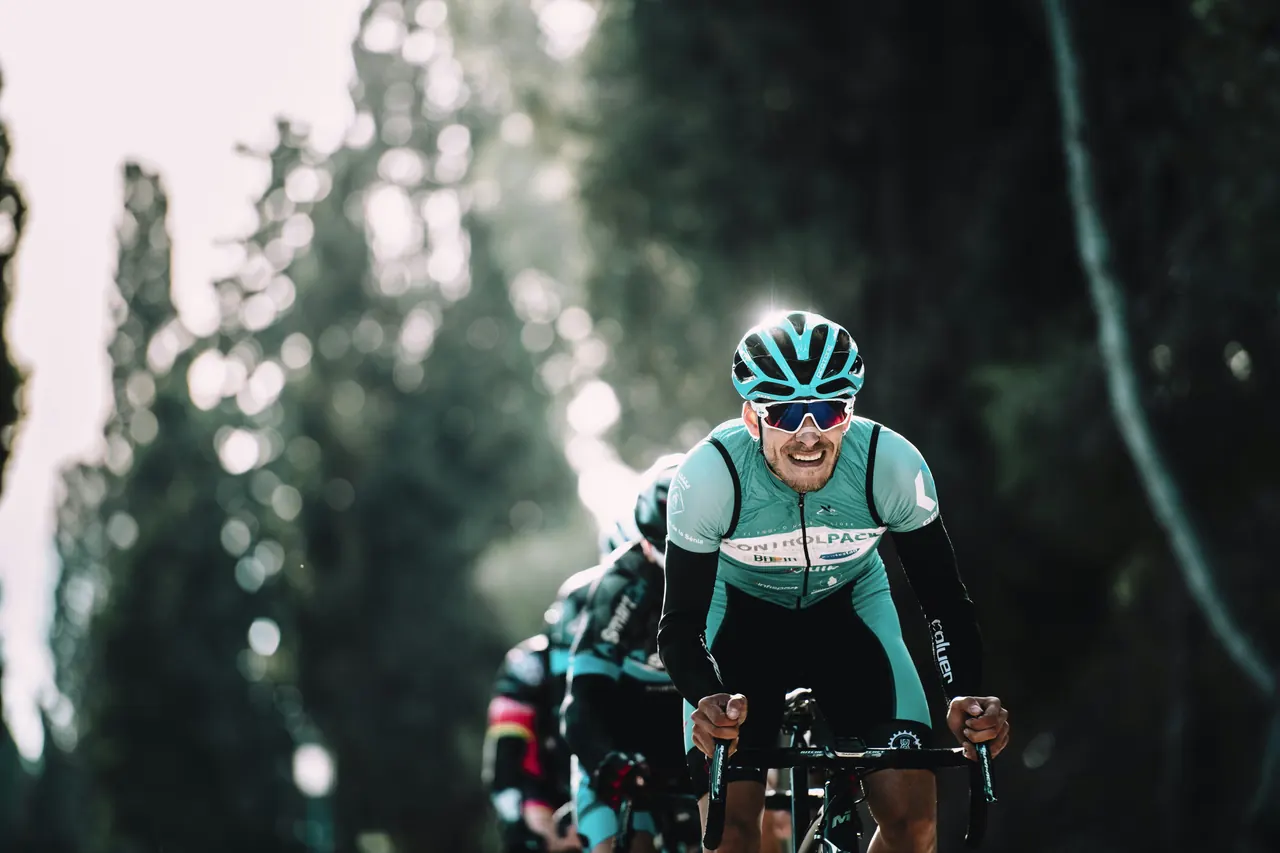
There is also the question of who amateur cyclists tend to be. Many riders chasing big fitness are in their 40s and 50s, an age where recovery is slower to begin with, and they are stacking training on top of careers, kids, mortgages, and six hours of sleep. Your body does not keep separate ledgers for training stress and life stress. A brutal week at work draws from the same recovery budget as a brutal week of intervals, and the combination can push a rider into trouble on a training volume that looks modest on paper.
Finally, there is the intensity trap. Riders with limited time tend to ride their easy days too hard and their hard days too easy, living in a grinding middle zone that generates plenty of fatigue and comparatively little adaptation. It is one of the most common roads into chronic overreaching.
The Warning Signs, On and Off the Bike
The clearest performance signal is power falling at the same perceived effort. If the Zone 2 ride that used to hold 210 watts now produces 195 at the same heart rate and the same feeling in your legs, and that gap persists for more than a week, fatigue has accumulated beyond the normal range. A related sign: you cannot get your heart rate up during intervals no matter how hard you push. The legs and the will are there, but the engine will not rev.
Resting heart rate and heart rate variability (HRV) tell the same story from the other side. A resting heart rate that stays 5 to 10 beats above your normal for a week, or an HRV trend that keeps sliding for 10 to 14 days, points to a nervous system under siege. Single odd readings mean very little; a bad night of sleep or a glass of wine can produce one. Trends over one to two weeks are what count.
Off the bike, the signs are just as telling. Sleep gets worse precisely when you are most exhausted, which is one of the crueler paradoxes of the condition. Mood goes flat or irritable. Motivation for rides you normally love evaporates. You catch every cold going around. Legs stay heavy no matter how long you rest them. Appetite and libido dip, tracking the underlying hormonal disruption.
One nuance worth knowing: in endurance athletes, overtraining usually shows up as the quiet kind. Rather than being wired and restless, the overtrained cyclist tends to be flat, lethargic, and low, with a suppressed heart rate rather than a racing one. That presentation is sneaky, because from the inside it feels like laziness, and the instinct of every serious rider confronted with laziness is to train harder. It is exactly the wrong move.
The Underfueling Shortcut
There is a faster way to arrive at the same destination: do not eat enough. Sports medicine calls it low energy availability, and the resulting condition RED-S (relative energy deficiency in sport). When your intake persistently fails to cover the cost of your training plus the cost of simply running your body, systems start shutting down to save energy: hormone production, bone maintenance, immune function, recovery itself. Lab studies have measured hormonal disruption within about five days of insufficient fueling.

The overlap with overtraining is substantial, and plenty of riders who believe they are overtrained are more precisely under-fueled, often while chasing race weight through a hard block, which is the worst possible timing. Cyclists carry an extra vulnerability here: because the sport does not load the skeleton, bone loss progresses silently, with no impact injuries to raise an alarm. One analysis found male cyclists showing roughly three times the rate of osteoporosis of the general population. If your training is going backward and your diet has been going backward too, fix the fueling before you blame the fitness. Carbohydrate around hard sessions is not a weakness; it is what pays for the workout. The opposite habit, fueling every easy ride like a Tour stage, carries its own risks, which we cover in Gels, Sports Drinks, and the Prediabetic Cyclist: How Much Sugar Is Too Much?.
What a Doctor Will Check
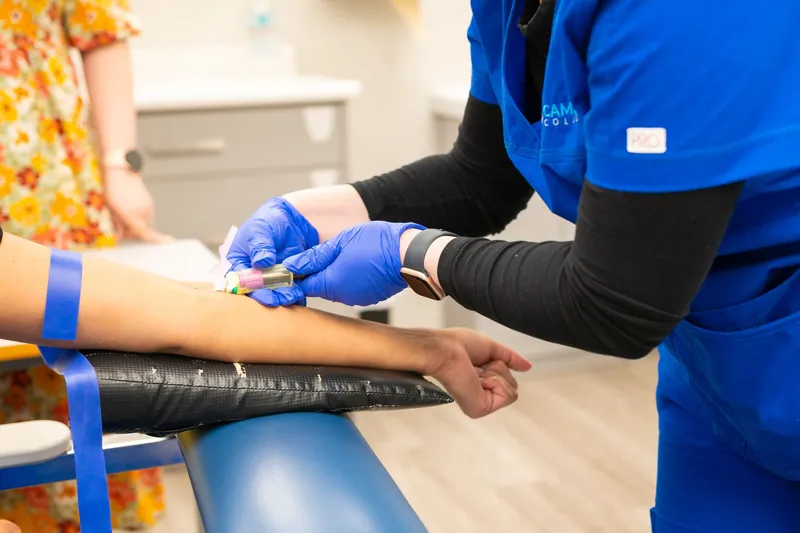
Expect the workup to start with a blood test. Not because one exists that can confirm overtraining syndrome, but because bloodwork is how a doctor rules out everything else that produces the same picture: thyroid problems, iron deficiency and anemia, infections such as mononucleosis or Lyme disease, asthma, diabetes, and RED-S. Overtraining syndrome is a diagnosis of exclusion, reached only after those possibilities come back clean. If you have been flat for several weeks despite real rest, that workup is worth doing, and the panel typically includes thyroid function, ferritin and iron, a complete blood count, testosterone, and cortisol. Some of those conditions are easily treatable, and finding one is a far better outcome than six months of forced rest. The usual caveat applies: this article is general information, not medical advice, and persistent unexplained fatigue belongs in front of a physician.

The Way Out
Caught early, in the overreaching stage, the fix is refreshingly simple. Cut training volume roughly in half for one to two weeks, keep whatever riding remains strictly easy, eat properly with no restriction, and protect sleep. If it was functional overreaching, performance does not just return, it often rebounds above where you started. That is the supercompensation you were owed all along.
If a rest week or two changes nothing, you are likely in nonfunctional overreaching, and the answer is to step away from structured training for two to six weeks. Ride only if and when you want to, keep it short and easy, and skip every interval and every race. The riders who lose the least time are, counterintuitively, the ones who stop the most completely. Training through this stage is how a six-week problem becomes a six-month one.
Full overtraining syndrome is a different matter. Recovery is measured in months, it should involve a sports medicine physician, and the only treatment with solid evidence behind it is rest. When you do return, at any stage, bring volume back first and keep intensity out until your mood, sleep, and motivation have been normal for a while. Psychological recovery is part of the diagnosis; if the thought of your bike still produces dread, you are not done.
Staying Out of the Hole
Prevention is mostly a matter of doing the unglamorous things on schedule. Plan a genuine recovery week every three to four weeks and take it even when you feel strong, because feeling strong at the end of a block is precisely the sign the plan is working. Keep your easy rides embarrassingly easy so your hard days can be actually hard. Count life stress as training stress and cut the week's load when work or family life blows up. Sleep at least seven hours. Fuel the work you do.
This is where a health and fitness tracker earns its keep. A bike computer sees only the ride; a wrist-worn tracker sees the other 22 hours of the day, and the night, which is where the early warnings of overtraining live. Worn around the clock, current bands and watches break down your sleep stages and score each night, measure HRV and resting heart rate while you sleep, when conditions are most consistent, and roll it all into a readiness or body-battery style estimate of how much recovery you have banked. While they differ in design, approach, sensors and price, the latest generation of trackers aim to do the same thing: quietly log sleep, stress, HRV, and training readiness. The leading brands are Garmin, Whoop, Oura, and Apple (watch). Treat the scores as a second opinion rather than a verdict: trends over one to two weeks are what earn your attention, and no algorithm knows your job blew up this week unless you tell it.

If you would rather not wear a tracker, a simple log does the same work. Morning resting heart rate or HRV, plus a one-line note on mood, sleep, and motivation, takes thirty seconds and turns vague unease into a visible trend. And if you can, put another set of eyes on your training, whether a coach or an experienced riding partner. The riders who end up deepest in the hole are reliably the ones most convinced that the answer to slowing down is to train more. Someone outside your own head will spot the spiral weeks before you do.
Frequently Asked Questions
- How do I tell normal training fatigue from overtraining?
- By duration and by response to rest. Normal fatigue clears within about 48 to 72 hours, or after a proper rest week at the end of a block. If power stays down at the same effort, resting heart rate stays up, and motivation stays flat after a rest week you took seriously, you have moved beyond normal fatigue.
- Should I keep riding while I recover?
- In the early stages, yes, at sharply reduced volume and strictly easy intensity. In nonfunctional overreaching, ride only when you want to, short and easy, with no intervals or racing. In full overtraining syndrome, extended time off with medical guidance is the evidence-backed path. At every stage, stopping sooner means returning sooner.
- How long does recovery take?
- Functional overreaching resolves in a few days to two weeks. Nonfunctional overreaching typically needs two to six weeks of drastically reduced training. Overtraining syndrome commonly takes six to twelve months, which is the strongest argument for catching it early.
- Will HRV catch it in time?
- It helps, but it is not a diagnosis. A downward HRV trend over 10 to 14 days is a meaningful warning, while any single reading is nearly useless. HRV works best combined with the other cheap signals: power at a given effort, resting heart rate, sleep quality, and honest notes on mood and motivation.
- Can I overtrain on six hours a week?
- Yes. Overtraining is a mismatch between total stress and recovery, not a raw hour count. Six hard hours stacked on a stressful job, short sleep, and too little food can dig the same hole as twenty hours on a pro's schedule. That is also why the fix is never just about the bike.