TL;DR:
The old worry that lifting weights will make you slow and bulky has not survived the research. For trained cyclists, two heavy strength sessions a week improve pedaling efficiency, sprint power, and the ability to hold hard efforts longer, without harming your endurance and without turning you into a bodybuilder. The bigger prize for most everyday riders is off the bike entirely: cycling does almost nothing for bone density and muscle mass, both of which fade with age, and lifting is the most reliable way to protect them. The recipe is simple. Lift heavy for low reps (roughly 4 to 8), build the habit in the off-season when riding is light, and keep one session a week going once racing or big miles resume. You do not need a fancy program, just squats, deadlifts, and a few supporting movements done consistently.
Why cyclists have avoided the weight room
For decades the conventional wisdom held that cyclists should stay out of the gym. The reasoning went that endurance is about your engine, not your muscles, that extra muscle is dead weight to haul uphill, and that time spent lifting is time stolen from riding. There was also the fear of the so-called interference effect, the idea that strength and endurance adaptations fight each other when you train both at once.
Each of these concerns contains a grain of truth, which is why they stuck around. But when researchers actually tested them in trained cyclists, the picture that emerged was close to the opposite. Carefully programmed strength work does not blunt endurance, does not add meaningful bulk, and makes riders measurably faster over the efforts that decide races and hard group rides. Coaches who follow the evidence, such as Dylan Johnson, whose video-length review of the research is worth watching, now treat lifting as a standard part of a cyclist's year rather than an optional extra.
What the science actually shows

The clearest way to understand the benefit is to look at what strength training changes in a cyclist's body, because it is not what most people assume.
Better cycling economy
Cycling economy is how much oxygen and energy you burn to hold a given power. Improve it and you go the same speed for less effort, or more speed for the same effort. A landmark review by Rønnestad and Mujika (2014) concluded that heavy strength training improves cycling economy in well-trained and elite cyclists, and a 2025 systematic review with meta-analysis reached the same conclusion across the accumulated evidence. This is arguably the most important finding for endurance riders, because economy gains carry over directly to how a long ride or time trial feels.
More power when it counts
Strength work reliably raises maximal and repeated sprint power, and it improves performance on shorter, high-intensity efforts and end-of-ride sprints. Studies have also reported an additive effect on time-trial performance in well-trained cyclists, meaning riders who added lifting to their normal training beat those who only rode. The practical translation is closing a gap to the group up the road, powering over a short steep pitch, and still having a kick left in the final kilometers.
Fatigue resistance and durability
Several mechanisms explain the gains: stronger, stiffer muscle-tendon units transfer force more efficiently, a lower percentage of your maximum is needed for each pedal stroke so you delay recruiting the less efficient fast-twitch fibers, and heavy training nudges some of those fast fibers toward a more fatigue-resistant profile. Together these help you hold power deeper into a long day, which is often what separates finishing strong from fading.
The benefit that matters most for everyday riders: bones and aging
If you never pin on a race number, there is still a compelling reason to lift, and it may be the strongest one. Cycling is a non-weight-bearing sport. Your bones never take the impact that running or jumping delivers, and without that mechanical stress they do not maintain density well. Studies have repeatedly found that dedicated cyclists carry lower bone mineral density than their fitness would suggest, sometimes low enough to raise real osteoporosis concern later in life.
Lifting loads the skeleton and signals it to stay strong. It also fights sarcopenia, the age-related loss of muscle and strength that begins in earnest after about 50 and hits fast-twitch fibers first, which are exactly the fibers cycling neglects. Preserving muscle protects your pedaling power, your balance off the bike, and how quickly you recover between rides. For a masters rider, the weight room is less about winning sprints and more about staying capable and injury-resistant for decades. This is general information rather than medical advice, so if you have existing bone or joint conditions, check with your doctor before starting a heavy program.
Addressing the two big fears
"Won't I get bulky and slow?"
No. Building large amounts of muscle requires high training volume, a calorie surplus, and a focus on size, which is the opposite of how cyclists lift. Training heavy for low reps builds strength largely through neural adaptations, your nervous system learning to recruit muscle more forcefully, with modest changes in muscle size. Two sessions a week aimed at strength will make you more durable, not heavier. Any small amount of added muscle is easily offset by the performance gains, and on flat and rolling terrain a couple of extra kilos matter far less on a bike than they would running.
"Won't the gym wreck my endurance?"
The interference effect is real in the lab but largely disappears when strength and endurance are programmed with a little care. Controlled studies of cyclists who lift twice a week and ride several times a week do not show them losing aerobic fitness to the gym. The keys are keeping strength sessions heavy and brief rather than high-rep and exhausting, separating hard lifting and hard riding when you can, and eating enough protein and total calories to recover. Fuel the work and the two adaptations coexist comfortably.
How to program it through the year
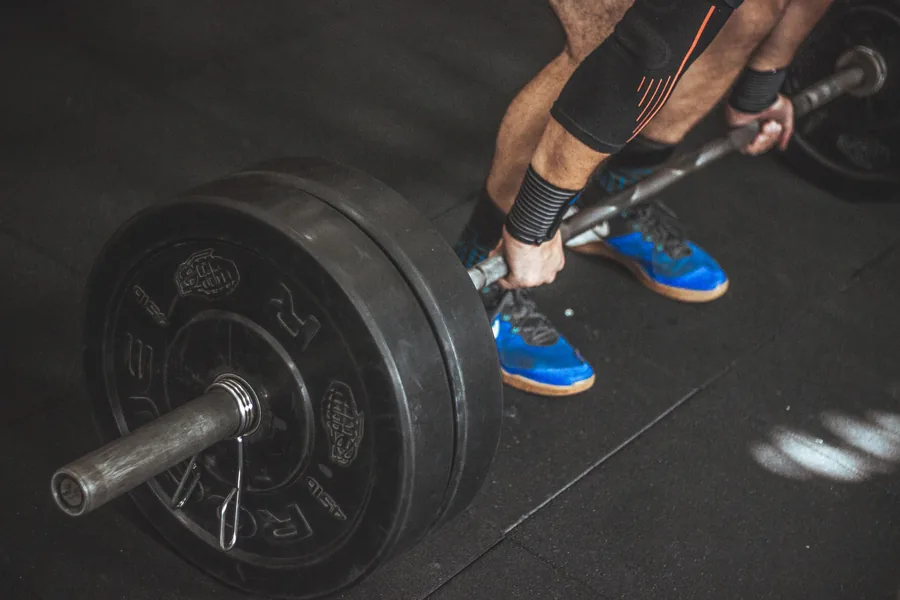
Periodizing your lifting around your riding is what makes it sustainable. The goal is to build strength when the bike demands least and to protect that strength when the bike demands most.
Off-season: build the base (roughly November to January)
This is when you do the real work. Training load on the bike is low, so you can tolerate the soreness of heavier lifting. Start with a few weeks of lighter, higher-rep work (around 3 sets of 8 to 12) to groove technique and toughen connective tissue, then progress to heavier loading. Aim for two to three sessions a week. Mountain bikers get a trail-specific version of this block, with pushing, pulling, grip and core work added, in How to Become a Stronger Mountain Biker Over Winter.
Pre-season and in-season: maintain (spring into summer)
Once your riding volume and intensity climb, you do not need to keep adding strength, you need to keep what you built. This is where many cyclists make a mistake and quit lifting entirely, then watch their gains erode. Research by Rønnestad and colleagues found that a single heavy session per week during the competitive season preserved the strength and muscle built in the off-season, while stopping altogether led to losses, especially in strength and anaerobic power. One short session a week is a small price to protect months of work.
A simple, cyclist-focused routine
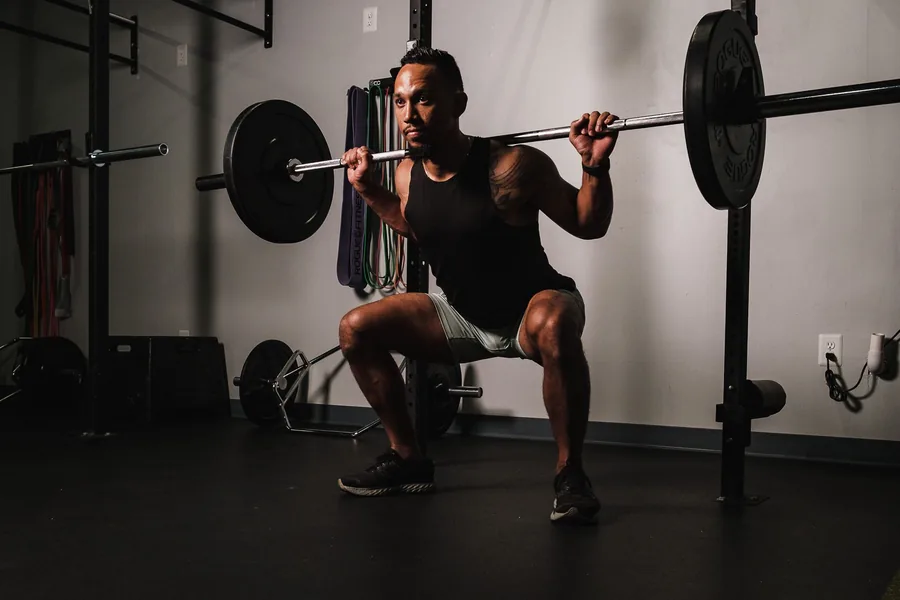
You do not need machines or a complicated split. A handful of compound, lower-body-dominant movements covers the vast majority of the benefit. The exercises below reflect the staples that strength coaches and cycling resources such as GCN's beginner strength guide return to again and again.
- Squat (back or goblet) - the foundational movement for cycling strength, training the quads, glutes, and the whole posterior chain that drives the pedal stroke.
- Deadlift or Romanian deadlift - builds the glutes, hamstrings, and lower back, the muscles behind a powerful, stable hip drive.
- Lunge or split squat - single-leg work that mirrors the alternating nature of pedaling and irons out left-right imbalances.
- Step-up or leg press - a joint-friendly way to add lower-body loading, useful if squatting deep is uncomfortable.
- Core work (plank, dead bug, side plank) - a stable core lets your legs push against a solid platform instead of wasting energy through a rocking torso.
- A pulling movement (row or lat pulldown) - balances the body and supports posture over long hours on the bars.
Pick three or four of these per session. For strength, work in the range of roughly 4 to 8 reps with a weight that leaves a rep or two in reserve, doing 3 to 4 sets with full recovery (2 to 3 minutes) between them. Add a little load or a rep when the last set feels manageable. A full session takes 45 minutes to an hour, and two of them a week is enough to change how you ride.
The bottom line
Strength training is one of the few interventions that makes you faster on the bike and healthier off it at the same time. It sharpens your economy and your sprint, it defends your bones and muscle against the years, and it does none of the damage the old myths warned about. Build it in the off-season, hold it with one weekly session when the riding gets serious, keep the movements simple and the loads honest, and let the consistency do the work. Your legs, and your skeleton, will thank you.
Frequently Asked Questions
- How often should I lift as a cyclist?
- Two sessions a week is the sweet spot during the off-season when you are building strength. Once your riding gets serious in spring and summer, drop to one session a week to maintain what you built. More than two is rarely necessary and starts eating into recovery you need for the bike.
- Will strength training make me heavier and slower on climbs?
- Very little. Training heavy for low reps builds strength mainly through neural adaptations rather than large gains in muscle size, so meaningful weight gain is unlikely. Any small increase is usually outweighed by better pedaling efficiency and power. On sustained climbs where every gram counts, the efficiency and durability gains generally still come out ahead.
- Should I lift on the same day as hard rides or rest days?
- When possible, separate your hardest lifting from your hardest riding so neither effort is compromised. A common approach is to pair a heavy gym session with an easy or rest day on the bike, or to lift after an easy ride rather than before a key workout. If you must combine them on one day, do the priority session first while you are fresh.
- Do I need a gym, or can I train at home?
- You can accomplish a lot at home. A pair of adjustable dumbbells or a kettlebell covers goblet squats, Romanian deadlifts, lunges, and step-ups, and bodyweight movements handle your core work. A barbell and squat rack let you load heavier as you progress, which is useful long term, but a lack of one is no reason to skip strength training entirely.
- How long until I notice a difference on the bike?
- Expect the first four to six weeks to feel like learning and adaptation, with strength climbing steadily. Most riders start to notice the on-bike payoff, holding power longer and sprinting harder, after about eight to twelve weeks of consistent training. This is exactly why the off-season is the ideal time to build the foundation.