



Washington rewrote its e-bike definition in ESSB 6110, effective June 11, 2026. Class 1, Class 2, and Class 3 e-bikes with pedals and 750 watts or less stay bicycles: no...
Find out if you qualify for a tax credit or rebate
Click/hover on your state to find out more about its rebates. Green states offer state-wide or regional rebates, while gray states do not offer rebates at the moment
Your State-by-state Guide to US Electric Bike Rebates & Tax Credits
E-bikes outsell electric cars in the United States, and the incentive map has been redrawn since the first wave of rebate programs launched in 2022. Some pioneers ran out of money: California's statewide program concluded in December 2025, Minnesota's is closed for good, and Vermont's is waiting on funding that hasn't come. Others are alive and well: Colorado still discounts every resident's e-bike at the register, Washington runs a statewide lottery through March 2027, and Rhode Island pays rebates first come, first served.
The other big shift: cities and utilities now hand out more rebate money than most states. Portland's $20 million program is the largest in the country, and Denver, Austin, Atlanta, Tampa, New Orleans, Raleigh, and central Arkansas all run programs of their own. Rebates typically cover 20-75% of the purchase price, with caps running from $150 utility rebates to $2,350 for cargo bikes in Portland. Income-qualified buyers almost always get the bigger number.
The E-BIKE Act Never Passed
There is no federal e-bike tax credit. The E-BIKE Act, introduced in February 2021, proposed a refundable credit of 30% of an e-bike's price, up to $1,500, on bikes costing less than $8,000. It died in committee. Reintroduced in March 2023, it died in committee again. The closest it came to law was a spot in a larger spending bill that passed the House in November 2021 and stalled in the Senate.
As of August 2026, no version of the credit has been refiled. Every dollar of e-bike incentive money in the United States flows from state, city, and utility programs.
https://www.congress.gov/bill/118th-congress/house-bill/1685
Regional Programs Do the Heavy Lifting
City and utility programs are no longer pilots; they are the backbone of e-bike incentives in America. They are funded by city climate funds, federal environmental grants, and municipal utilities, and they share one trait: demand crushes supply. Utah's 2,000 vouchers were claimed within 8 hours. Minnesota's 2024 portal drew a queue of more than 61,000 people and closed in 18 minutes. If a program opens near you, apply the day the window opens.
Which E-bikes Qualify?
Every program writes its own rules, but the same criteria show up almost everywhere:
- A new e-bike, usually bought from a participating local retailer. Used bikes and bikes purchased before approval rarely qualify.
- A Class 1, Class 2, or Class 3 e-bike with a functioning set of pedals and two or three wheels.
- A motor of 750W or less, not gasoline-powered.
- Increasingly, a UL 2849 or EN 15194 battery safety certification.
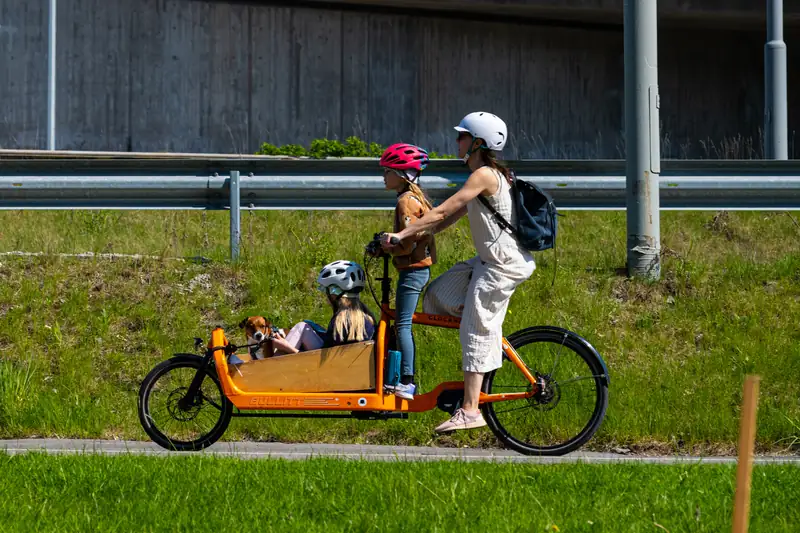
- Cargo and adaptive e-bikes qualify in most programs, often for a larger amount.
How to Apply
Most programs now run short application windows and pick winners by lottery rather than first come, first served; the crashed portals of 2024 taught administrators that lesson. Winners receive a voucher redeemed at a participating bike shop, where the discount comes off at the register and the shop files the paperwork. A few programs, including Hawaii, Rhode Island, and the utility rebates, reimburse you after purchase instead.
Read the rules before you buy. Nearly every program excludes bikes purchased before approval, so apply first and shop second.
Which States Offer Rebates?
Here is the full state-by-state picture as of August 2026.
Alabama
Alabama has no state-wide or regional incentive/rebate for e-bikes.
Alaska
Alaska has no statewide program. The one incentive on the books is small and local: Alaska Power & Telephone customers in its Southeast and rural service areas can claim 10% back, up to $200, on a new Class 1, Class 2, or Class 3 e-bike. Apply with the receipt and proof of ownership; funds are first come, first served.
https://aptalaska.com/power/incentives/
Arizona
Arizona has no statewide incentive, and its one utility program is gone: Tucson Electric Power's e-bike rebate ($100 standard, $600 for low-income customers) accepted its final submissions on December 31, 2025 and no longer appears in the utility's rebate lineup.
Arkansas
Arkansas went from nothing to one of the biggest e-bike incentive operations in the country. The Arkansas Tri-Region E-Bike Incentive Program, funded by a federal climate grant, is distributing at least 5,844 vouchers across the Little Rock-North Little Rock-Conway, Fayetteville-Springdale-Rogers, and Fort Smith metro areas: up to $700 for any resident 18 or older, up to $1,200 for households below 200% of the Federal poverty level. Registration opened July 6, 2026, selections are randomized, and the program runs into 2027.
Bentonville runs its own city program with monthly drawings: $800 standard or $1,200 income-qualified for a regular e-bike, and $1,200 or $1,600 for cargo and adaptive models, redeemed at participating Bentonville retailers.
https://www.nwarpc.org/bicycle-and-pedestrian/ebike-ar/
California
California's statewide program is over. The California E-Bike Incentive Project closed in December 2025 after distributing 2,246 vouchers, worth up to $1,750, or $2,000 for priority applicants, and committing its full $12.97 million budget: every voucher went to lower-income priority applicants. No renewal was funded for 2026.
Regional programs carry on. Central Coast Community Energy's Electrify Your Ride pays 50% of the price up to $500, or 75% up to $1,000 for income-qualified customers. WestLight Energy (formerly Peninsula Clean Energy) offers up to $1,000 in San Mateo County and is expected to reopen its paused rebate in late 2026.
https://ww2.arb.ca.gov/our-work/programs/california-e-bike-incentive-project
Colorado
Colorado still has the most reliable deal in the country, though it shrank in 2026. Every Colorado resident gets an instant discount on a qualifying e-bike once per calendar year: $225 as of January 1, 2026, down from the original $450 after a state budget cut. The discount comes off at the register at a participating retailer, requires only proof of a Colorado address, and runs through 2032. Qualifying bikes must be new, UL-certified, with a motor of 750W or less; Class 1, Class 2, and Class 3 all qualify.
Denver's city rebate stacks on top for income-qualified residents: a $675 voucher released in rounds through 2026, worth up to $900 off when combined with the state discount.
https://energyoffice.colorado.gov/ebike-tax-credit
Connecticut
Connecticut's voucher program is out of money. Two rounds of the Connecticut eBike Incentive Program, offering $500 standard vouchers and up to $1,250 with the income-qualified Voucher+, sold out in 2023 and 2024, and no third round has been announced. The state suggests joining the program's mailing list. Last round's requirements: a bike under $3,000 MSRP with a one-year warranty and UL 2849 or EN 15194 certification, buyers 18 or older.
https://portal.ct.gov/deep/air/mobile-sources/cheapr/electric-bicycles
Delaware
Delaware has no state-wide or regional incentive/rebate for e-bikes. The state's clean transportation rebates cover electric cars and chargers only.
Florida
Florida has no statewide incentive and no serious bill in motion. The action is in Tampa: the city's eBike Voucher Program came back in 2026 with 248 vouchers worth $1,000, $2,000, or $3,000 depending on household income. The February 2026 application window is closed; watch for the next round.
Georgia
Georgia has no statewide program, but Atlanta is coming back for a second round. The city's 2024 rebate, worth up to $500 standard or $1,500 income-qualified (more for cargo e-bikes), drew more than 11,000 applications and ran dry. In February 2026 the city council approved $1 million for a new round in fiscal year 2027; applications have not opened yet.
https://atlantaregional.org/what-we-do/mobility-services/atlanta-e-bike-rebate-program/
Hawaii
Hawaii's statewide rebate still takes applications, but its funding is on borrowed time. The program pays 20% of the purchase price, up to $500, and you apply after purchase, within one year. To qualify you must be 18 or older and either not own a car, be enrolled in a low-income assistance program, or be enrolled in a school, college, or university. The appropriation behind the program lapsed on June 30, 2026, so confirm funds are still available before counting on the check.
https://hidot.hawaii.gov/hawaii-electric-bike-and-moped-rebate/
Idaho
Idaho has no state-wide or regional incentive/rebate for e-bikes.
Illinois
Illinois has no active program. Illinois Senate Bill 1521, which would add e-bikes to the state's electric vehicle rebate act at $400 standard and $1,200 for low-income buyers, stalled in committee in May 2026.
Indiana
Indiana has no statewide incentive. Bloomington runs a small income-qualified voucher program, now worth up to $2,000 per voucher, but the budget covers only a handful of bikes a year and 2026 applications closed on February 2.
https://bloomington.in.gov/sustainability/e-bike-vouchers
Iowa
Iowa has no statewide incentive. Members of the Eastern Iowa Light & Power Cooperative can claim 25% of an e-bike's cost, up to $150, under the co-op's outdoor battery equipment rebate; submit an itemized receipt within 180 days.
https://www.easterniowa.com/rebates
Kansas
Kansas has no state-wide or regional incentive/rebate for e-bikes.
Kentucky
Kentucky has no state-wide or regional incentive/rebate for e-bikes.
Louisiana
Louisiana has no statewide program, but New Orleans launched a real one. Funded by a $3 million federal climate grant, the city's E-Bike Incentive Program pays $600 for any resident 18 or older and $1,200 for income-qualified applicants, with at least 3,000 rebates budgeted over five years and 2,000 of them reserved for income-qualified buyers. The first application window ran February 1-21, 2026; the city is evaluating results before announcing the next round.
https://nola.gov/next/sustainability/transportation/e-bike-incentive-program/
Maine
Maine wrote e-bikes into its electric vehicle rebate law in 2023, then implemented it only as a small pilot through housing authorities, not a consumer rebate. The real money is in Portland: the city's Electrify Bikes! program covers 60% of an e-bike and accessories, up to $2,500, for residents earning up to 80% of area median income, with winners drawn by lottery and vouchers redeemed at participating local shops. South Portland's earlier program has ended.
Maryland
Maryland has nothing on the books. Bills to create a state e-bike rebate died in committee two years running: Maryland House Bill 1008 in 2023 and Maryland House Bill 156 in 2024. No funded successor has appeared.
Massachusetts
Massachusetts ran its long-awaited statewide program for exactly one season. The MassCEC e-bike voucher program issued income-qualified vouchers from April to September 2025: up to $800 for households under 400% of the Federal poverty level, up to $1,200 under 225%, plus $150 for gear. The program is closed, and the state says it is not expected to reopen in 2026.
https://goclean.masscec.com/renters/electric-bicycles/
Michigan
Michigan's statewide incentive never became law: Michigan House Bill 4491 passed the House in December 2024 and died in the Senate days later. Ann Arbor picks up some of the slack through its A2ZERO rebate: 50% of the cost up to $250, or up to $1,000 for income-qualified residents, on UL-certified e-bikes with motors of 750W or less.
Minnesota
Minnesota's rebate is finished. The 2024 launch collapsed under demand: more than 61,000 people entered the online queue and the portal closed in 18 minutes. The restructured 2025 lottery, paying 75% of the price up to $750 for lower-income riders, allocated every certificate. The Department of Revenue now states the program is closed with no future application periods, and the Legislature did not renew funding for 2026.
https://www.revenue.state.mn.us/electric-assisted-bicycle-e-bike-rebate
Mississippi
Mississippi has no state-wide or regional incentive/rebate for e-bikes.
Missouri
Missouri has no state-wide or regional incentive/rebate for e-bikes.
Montana
Montana has no state-wide or regional incentive/rebate for e-bikes.
Nebraska
Nebraska has no state-wide or regional incentive/rebate for e-bikes.
Nevada
Nevada has no state-wide or regional incentive/rebate for e-bikes.
New Hampshire
New Hampshire has no state-wide or regional incentive/rebate for e-bikes.
New Jersey
New Jersey offers no purchase incentive, and the bill that would create one, New Jersey Assembly Bill A1487, has not moved. The state's big 2026 e-bike news cut the other way: the law signed in January 2026 requires e-bikes to be registered and insured, with no rebate attached.
New Mexico
New Mexico has no program. New Mexico Senate Bill 343, which proposed an e-bike tax credit, died in 2023 and has not returned.
New York
New York still has no statewide program, only momentum. The Ride Clean Act (New York Senate Bill S1047), which would fund rebates of 50% of the price up to $1,100 for all three e-bike classes, passed the Senate but has not cleared the Assembly. In February 2026 the state's energy authority declined to fund a proposed New York City rebate pilot, and the city's separate trade-in program for delivery workers wrapped up in September 2025 after swapping 402 uncertified e-bikes for safe ones.
https://www.nysenate.gov/legislation/bills/2025/S1047
North Carolina
North Carolina has no statewide incentive, but Raleigh's program is real and recurring. Launched in October 2024, it awards vouchers by lottery: $500 for any city resident, $1,500 for income-qualified households, redeemable at participating local shops within 60 days. The May 2026 round is done, and a sustainability grant will fund roughly 60-80 more vouchers; continuation beyond that is undecided.
North Dakota
North Dakota has no state-wide or regional incentive/rebate for e-bikes.
Ohio
Ohio has no statewide program, and Columbus's pilot has gone quiet. The city's income-tiered subsidy, worth $500 to $2,500 in its August 2024 round, has not opened a window since; the program site offers an interest survey for future cycles.
https://www.columbusebikes.com/
Oklahoma
Oklahoma has no incentive. A $200 refundable e-bike tax credit has been proposed twice, most recently as Oklahoma Senate Bill 51 in 2025, and stalled in committee both times.
Oregon
Oregon's statewide rebate died in the Legislature: the 2025 transportation package that carried it failed, and the special-session replacement zeroed out e-bike funding. Portland built its own instead, and it is the largest city program in the country. Portland Rides launched April 6, 2026 with $20 million over five years, paying income-qualified residents up to $1,600 for a standard e-bike, $2,350 for a cargo bike, and $8,500 for an adaptive bike, plus up to $300 in accessories, as point-of-sale discounts. The 2026 window closed July 24; the program runs through 2029. Eugene's municipal utility paused its own e-bike rebate in June 2026 after a demand spike.
https://portlandebikerebate.com/
Pennsylvania
Pennsylvania has no e-bike incentive. The state's alternative fuel vehicle rebate covers registered electric motorcycles and scooters; e-bikes do not qualify.
Rhode Island
Rhode Island runs the rare statewide program you can still use today. The Erika Niedowski Memorial Electric Bicycle Rebate pays the lesser of $350 or 30% of the price, or $750 or 75% for income-qualified residents, on new Class 1, Class 2, Class 3, and cargo e-bikes, with a limit of two rebates per household. Buy from a Rhode Island bike shop, apply within 180 days, and don't dawdle: funding is limited and first come, first served.
https://drive.ri.gov/erika-niedowski-memorial-electric-bicycle-rebate-program
South Carolina
South Carolina has no state-wide or regional incentive/rebate for e-bikes.
South Dakota
South Dakota has no state-wide or regional incentive/rebate for e-bikes.
Tennessee
Tennessee has no state-wide or regional incentive/rebate for e-bikes. A Nashville rebate proposal was shelved in 2023 and never revived.
Texas
Texas has no statewide program; its municipal utilities do the work. Austin Energy's E-Ride rebate pays $200 to $600 depending on the bike's price, and $300 to $1,300 for customers in its assistance program; buy from an approved dealer and apply within 60 days. Denton's municipal utility covers 50% of the price up to $750 for fiscal year 2026, with funds that reset each October.
https://austinenergy.com/green-power/plug-in-austin/more-ways-to-go-electric/e-ride-rebate
Utah
Utah's new program proved the demand: all 2,000 vouchers were claimed within 8 hours of opening on June 1, 2026. The state's air quality division offers $400, or $800 for income-qualified applicants, to residents 18 or older in Davis, Salt Lake, Tooele, Utah, and Weber counties, redeemed at participating local stores. Applications are closed; the division's newsletter is the channel for any next round.
https://deq.utah.gov/daq/e-bike
Vermont
Vermont pioneered the statewide e-bike incentive and then ran out of money; the state program will not resume without new funding. Utility rebates fill part of the gap: Green Mountain Power pays $200 on e-bikes costing $500 or more, valid on purchases through December 31, 2026, and Burlington Electric offers its own rebate to city customers.
https://greenmountainpower.com/rebates-programs/electric-vehicles/electric-bike-rebate/
Virginia
Virginia has no statewide program; a 2024 rebate bill died in a House subcommittee. Two local programs are live. Charlottesville draws 36 winners a quarter across three tiers: $500 for any city resident, $1,000 below 80% of area median income, $1,500 for households on assistance programs; the next window opens October 1, 2026. Arlington ran a single round in 2025, at $600 standard and $1,650 income-qualified, and has not announced another.
https://www.charlottesville.gov/CivicAlerts.aspx?AID=2599
Washington
Washington's WE-Bike program is live and statewide. Rebates are $300, or $1,200 for lower-income residents, redeemed instantly at participating bike shops, and Class 1, Class 2, and Class 3 e-bikes all qualify. Apply once and you are entered into monthly drawings; the current application round runs through March 29, 2027, backed by $7 million for the 2025-2027 budget cycle.
https://wsdot.wa.gov/travel/bicycling-walking/bicycling-washington/e-bike-rebate-program
Washington D.C.
Washington D.C.'s incentive program is alive and annual. The February 2026 round offered income-qualified residents up to $1,500 toward an e-bike, helmet, and lock: 300 vouchers awarded by lottery from a three-week application window. The program's statute allows up to $2,000 for cargo e-bikes and smaller amounts for other residents, and more than 600 residents have been served across rounds.
West Virginia
West Virginia has no state-wide or regional incentive/rebate for e-bikes.
Wisconsin
Wisconsin has no state-wide or regional incentive/rebate for e-bikes.
Wyoming
Wyoming has no state-wide or regional incentive/rebate for e-bikes.
Updated on: August 7, 2026
Frequently Asked Questions
- Which states have an active statewide e-bike rebate in 2026?
- Five programs operate statewide or district-wide in 2026: Colorado's $225 instant discount at the register, Washington's WE-Bike rebates of $300 or $1,200, Rhode Island's rebate of up to $350 or $750, Hawaii's 20% rebate up to $500, and Washington D.C.'s annual voucher rounds. One thing to watch: budgets move fast, so confirm funding on the official program page before you buy.
- Is there a federal tax credit for buying an e-bike?
- Every dollar of e-bike incentive money in 2026 comes from state, city, and utility programs, and many of them pay more than the proposed federal credit would have. The federal E-BIKE Act, which proposed a 30% credit up to $1,500, was introduced in 2021, reintroduced in 2023, and died in committee both times without becoming law.
- How do e-bike rebate programs usually work?
- Most programs run short application windows and select winners by lottery, then issue a voucher you redeem at a participating local bike shop, where the discount comes off at the register. A few, like Hawaii and Rhode Island, reimburse you after purchase instead. The caveat worth knowing: nearly every program excludes bikes bought before approval, so apply first and shop second.
- Do Class 1, Class 2, and Class 3 e-bikes all qualify for rebates?
- Most programs accept all three classes: Class 1 pedal-assist e-bikes with help up to 20 mph, Class 2 models that add a throttle up to 20 mph, and Class 3 bikes with pedal assistance up to 28 mph. Programs typically also require a new bike, a motor of 750W or less, functioning pedals, and increasingly a UL 2849 or EN 15194 battery safety certification.
- How can I get an e-bike rebate if my state has no statewide program?
- City and utility programs now award more rebates than most statewide ones, so check your city hall and your electric utility first. Portland, Denver, Austin, Atlanta, Tampa, New Orleans, Raleigh, Charlottesville, and the Arkansas Tri-Region program all run their own incentives, and utilities from Vermont to Alaska pay smaller rebates with far less competition.