TL;DR:
- Aerobic fitness carries over between sports, but unevenly. Running and cross-country skiing transfer to cycling well. Swimming barely transfers at all. Cycling-specific fitness still has to come from the bike.
- The biggest payoff from cross-training is in the things cycling cannot give you: bone loading, an upper body, a core that works, hips that move, and a few months a year when you are not staring at a trainer screen.
- Cross-training is also how a cyclist’s body repairs itself. It restores blood flow to tired legs, wakes up the glutes, hip stabilizers, upper back and deep core that months of pedaling leave dormant, and breaks the single repeated movement pattern behind most overuse injuries.
- Cross-country skiing is the closest thing to cycling on snow. Running is the most time-efficient option and the one that fixes cyclists’ bone problem, but it has to be started slowly.
- Yoga and Pilates will not raise your FTP. They will keep your hips, back and neck from falling apart over a long riding career, which is the reason the pros do them.
- Cross-training replaces easy bike volume, never your one or two hard bike sessions a week. One weight-bearing session a week should stay in the plan all year.
Why riders cross-train
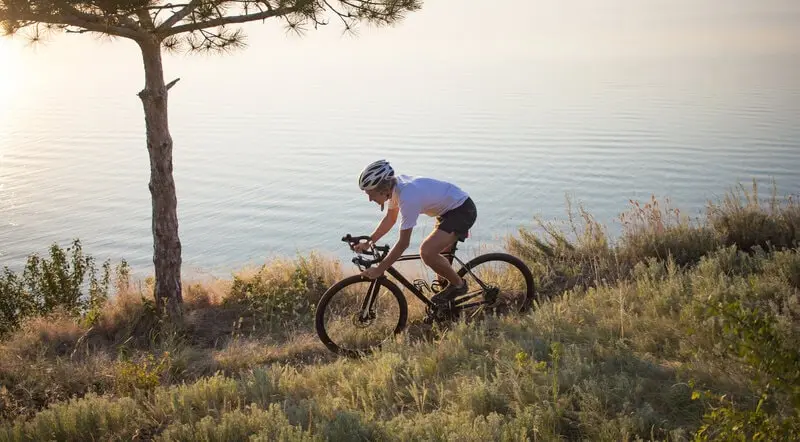
Cycling is a strange sport for the body. You sit in one position for hours, your legs move in one plane, your weight is held up by a saddle instead of your skeleton, and your arms and trunk do little more than hold on. It builds an enormous engine and very little else. Riders who do nothing but ride tend to end up with tight hip flexors, weak glutes, a stiff upper back, a core that cannot stabilize anything, and bones that are thinner than their fitness would suggest. A 2010 study of 30 professional road cyclists found their bone density was about 9% lower than that of sedentary men of the same age, and 16 to 18% lower at the spine and hip. We covered the bone problem in detail in our article on weight training for cyclists, and lifting is the first fix. Cross-training is the second.
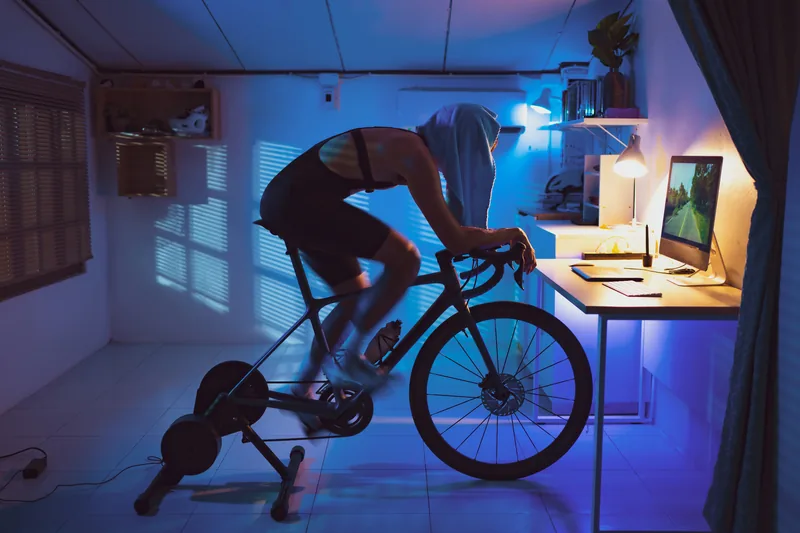
Winter is when cross-training makes the most sense, for a plain reason: for a lot of the country, riding outside is miserable or impossible for three or four months, and few riders can face five trainer sessions a week from November to March without their motivation collapsing somewhere in January. If you stop training entirely, the fitness you built over the summer disappears quickly. VO2max drops around 5% after a week off and 8 to 16% after a few weeks, and the fitter you are, the more you lose. Cross-training keeps the engine turning over while giving the body the rest and the repair that cycling never does.
Which activities carry over to the bike, and which are just exercise, has been studied, and the answer is more specific than “anything that gets your heart rate up.”
Cross-training as repair
A season of riding is one movement, repeated: at 90 rpm, a three-hour ride is about 16,000 pedal strokes per leg through the same arc. The quads and hip flexors get short and strong. The glutes, hip stabilizers, deep core and upper back go quiet, because the saddle and the bars do their jobs for them. That imbalance is behind the four most common rider complaints, knee pain, IT band irritation, low back pain and neck pain: a strong engine driving joints that drift under load. More riding will not fix it and rest only pauses it. Loading the body in other directions does. Skiing and skating fire the hip stabilizers, running and hiking put the glutes back to work, rowing and swimming open the chest and pull the shoulders back, yoga and Pilates restore hip range and the deep core.
Easy movement in a different pattern is also the best recovery there is. A swim, a walk or a gentle yoga class the day after a hard session brings blood to the legs without stressing the pattern they are tired from, and clears stiffness faster than a day on the couch. And a winter of learning something new restores the appetite for the bike. Riders who take the whole winter off come back rested but detrained; riders who grind the trainer come back fit but flat; riders who spend it on skis or in the pool come back with both.
The specificity rule
Fitness has two layers. The central layer is the heart, lungs and blood: how much oxygen you can deliver. The peripheral layer is the muscle doing the work: how many mitochondria, capillaries and trained fibers you have in exactly the muscles the sport uses, firing in exactly the pattern the sport demands. The central layer transfers between sports fairly well. The peripheral layer transfers poorly, and in some pairings not at all.
Hirofumi Tanaka, now at the University of Texas, reviewed the cross-training research in 1994 and reached two conclusions that still hold. First, aerobic fitness built in one sport does raise VO2max measured in another, but by less than the same training would in the target sport. Second, the transfer is lopsided: running improves cycling more than cycling improves running, because running recruits more muscle and loads the body harder. He also noted that cyclists’ quadriceps show far higher enzyme activity than runners’ do, which is the peripheral layer at work. The legs know what they have been trained for.
A 2002 study that followed four elite triathletes through a 40-week season put numbers on the same idea. Cycling training showed a measurable carry-over into running performance. Running and cycling training showed no carry-over into swimming at all, and the researchers called swimming “a highly specific activity.” And a 1993 study that had one group run and another group split their time between running and cycling found both groups improved their mile time and their VO2max by about the same amount, which is the useful finding for cyclists: swapping some sessions into a related sport did not cost anything.
Cross-training keeps and even builds the engine, it keeps the body healthy, and it does not replace the bike. The hard, specific work still has to happen on the pedals. Everything below is about what to do with the rest of your week.
The transfer scorecard
| Activity | Aerobic transfer to cycling | Bone loading | Upper body and core | Mobility | Injury risk |
|---|---|---|---|---|---|
| Cross-country skiing | High | Low | High | Moderate | Low to moderate (falls) |
| Ski touring / skimo | High | Low | Moderate | Low | Moderate (terrain, avalanche) |
| Running | High | High | Low | Low | Moderate to high for cyclists |
| Hiking and snowshoeing | Moderate | Moderate | Low (poles help) | Low | Low |
| Rowing (erg) | Moderate | Low | High | Moderate | Low |
| Swimming | Low | None | High | High (shoulders, upper back) | Very low |
| Skating (inline or ice) | Moderate | Low | Low | Low | Moderate (falls) |
| Team and racket sports | Low | Moderate | Moderate | Moderate | High |
| Yoga | None | None | Moderate | High | Very low |
| Pilates | None | None | High | High | Very low |
| Weight training | None | High | High | Moderate | Low with good form |
Costs run from a pair of shoes or a mat (running, hiking, yoga, mat Pilates) to a few hundred dollars (skis, a used rowing machine, skates, a gym membership) to four figures for a ski touring setup.
The aerobic options that carry over
Cross-country skiing
If you ride for the engine, cross-country skiing is the nearest thing to cycling you can do without a bike, and in one way it beats it. It is a sustained, rhythmic, mostly aerobic effort that goes on for hours, same as a long ride, but it uses the whole body. The highest VO2max values ever recorded belong to cross-country skiers: Bjørn Dæhlie and a handful of other Norwegians have tested at 92 milliliters per kilogram per minute or better, higher than any cyclist. Exercise physiologists attribute part of that to the sheer amount of muscle involved. Arms, shoulders, back and core all drive the poles, and the body responds by building a larger engine than legs alone can demand.
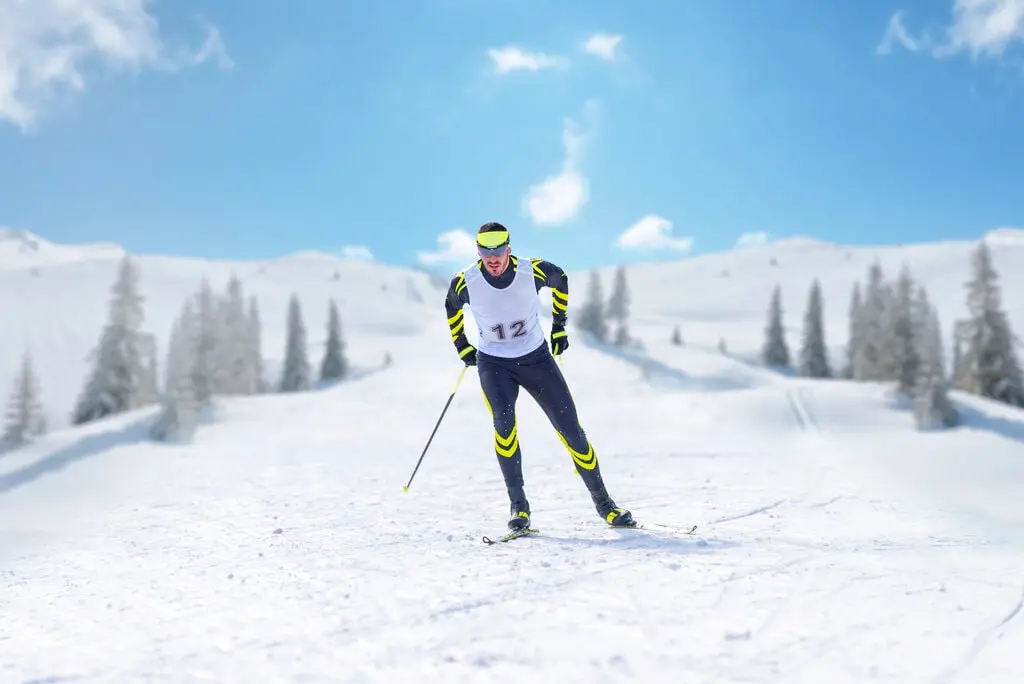
For cyclists, that means a ski session trains the heart and lungs as hard as a ride, builds the upper body and trunk that riding ignores, and does it with almost no impact. Skate skiing, the faster technique on groomed trails, uses a lateral push-off that lights up the glutes and the hip abductors, the muscles that tend to go quiet in riders. Classic skiing, the walking-style stride in groomed tracks where you push off one ski while planting the opposite pole (skiers call it the diagonal stride, after that arm-leg pairing, not the direction you travel), is easier to learn and closer to a steady Zone 2 ride in feel. Either one will leave you with sore triceps and lats the first few times, which is a sign of how much the bike has been leaving on the table.
Primož Roglič, a former ski jumper, cross-country skis in the off-season. Carlos Verona and Iván García Cortina of Movistar ski in Andorra on days when the roads are too bad to ride. The sport’s risk is the same as any sliding sport: falls. Edu Prades broke a femur skiing in the winter of 2021 and missed the start of his season. Start on gentle groomed trails, take a lesson for skate technique, and treat the downhills with the respect you would give a wet descent on the bike.
Ski touring and ski mountaineering
Ski mountaineering, or skimo, is the mountain version: you climb on skis with climbing skins on the base, then peel the skins and ski down. For riders in Colorado, Utah, the Sierra, the Wasatch or anywhere else with real mountains and real snow, the uphill half is the best long climb you will do all winter, an hour or two of steady Zone 2 to tempo work with your heart rate behaving exactly as it does on a mountain pass. Ski touring is simply the same thing done for fun rather than against a clock. GCN has covered it as winter cross-training for cyclists, and more than a few road and gravel pros who live in the Alps spend their January on skins.
The barriers are cost and consequence. A touring setup runs well over $1,000 before you buy a beacon, probe and shovel, and anything beyond resort uphill routes puts you in avalanche terrain. If you are new to it, take an avalanche safety course, go with experienced partners, and start with the uphill routes most ski areas now allow before dawn. Many resorts let you skin up a designated trail for a small fee, which is a 2,000-foot climb with none of the backcountry risk.
Running
Running is the most efficient cross-training there is: 30 minutes of running is a workout, where 30 minutes on the bike is a warm-up. It is weight-bearing, which is the one thing a cyclist’s skeleton is begging for, and it loads the legs eccentrically, with the muscles lengthening under tension as the foot lands, which pedaling never does. Runners carry more bone than cyclists at every site researchers have measured. Wout van Aert runs through the whole season, including during the Tour de France. Tom Pidcock runs. Remco Evenepoel ran a 1:16 half marathon at 16.
The problem is that a fit cyclist has the engine of a serious runner and the tendons of someone who has never run. You can hold a heart rate on foot that your calves, Achilles tendons, shins and knees are nowhere near ready for, and the usual result is an injury in week three. Cyclists who take up running get hurt more than beginners do, for exactly that reason.
The fix is to run far below what your lungs can handle. Start with 15 to 20 minutes, every other day at most, at a pace where you could chat. Soft surfaces (trail, dirt road, track) are kinder than pavement. Add about 10% a week and expect to spend six to eight weeks before you can run 45 minutes comfortably. Calf raises and the single-leg work in the weight room help the tendons catch up. If something hurts in a sharp or specific way, stop for a few days rather than running through it. Tendons and bone adapt in months, not weeks, and a stress fracture ends the winter.
Once the body is ready, two or three runs a week of 30 to 60 minutes will hold aerobic fitness through the winter, build bone, and give you a workout you can do anywhere in the dark with a headlamp and a pair of shoes.
Hiking and snowshoeing
Hiking is the low-skill, low-risk way to get weight-bearing Zone 2 time. A two-hour hike with some climbing is an honest endurance session, the impact is gentle, and nobody gets hurt learning. A pack adds load, and trekking poles bring in the arms and shoulders. Iván García Cortina spends part of every off-season hiking the Andorran mountains before the snow comes.
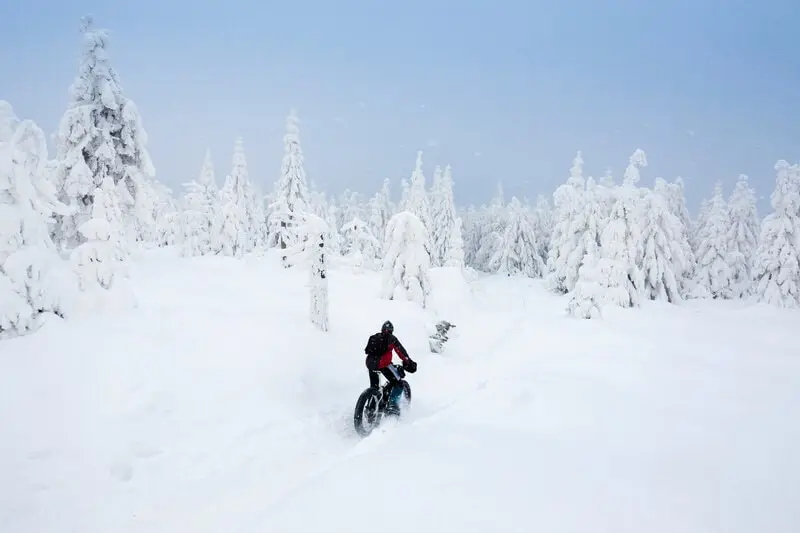
Snowshoeing turns the same hike into something much harder. Breaking trail in fresh snow is one of the highest-calorie activities you can do, the lifting motion works the hip flexors and quads, and poles make it a full-body effort. It is also the cheapest snow sport to start, with a decent pair of snowshoes costing less than a set of tires, and almost every trail you hike in summer becomes a snowshoe route in winter.
Rowing
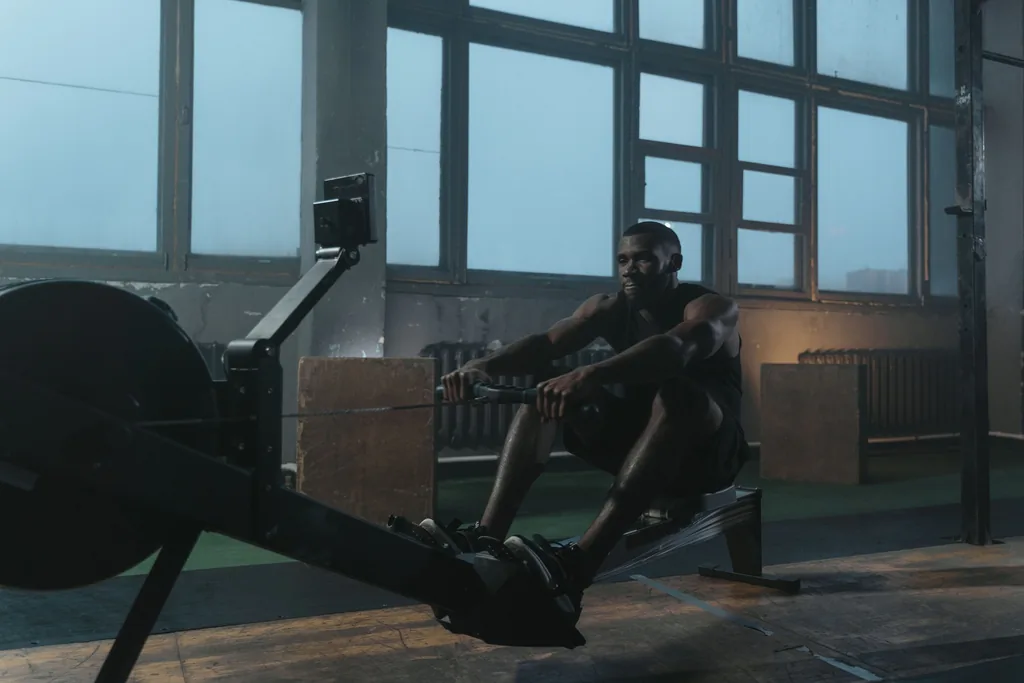
An indoor rowing machine is a low-impact, full-body session that burns about as many calories per minute as running. Done properly, most of the force comes from the legs, driving through the heels in a motion close to a leg press, with the back and arms finishing the stroke. That trains the posterior chain, the glutes, hamstrings and lower back, along with the upper back and the pulling muscles that keep a rider’s posture from collapsing over the bars by hour three. The catch is technique. A rowing stroke done wrong is a lower-back injury waiting to happen; the sequence is legs, then back, then arms on the drive, and arms, back, legs on the recovery. Watch a few technique videos or get someone at the gym to check your form before doing hard intervals. A used machine is a few hundred dollars and fits beside the trainer in the pain cave.
The options that carry over less, and why they still earn a place
Swimming
Swimming does almost nothing for cycling fitness. The muscles and the position are different, and the triathlete study found no carry-over from the bike into the pool and little the other way. Cyclists should swim for other reasons. It is the only activity here with no impact at all, which makes it the first choice for a rider nursing a knee, coming back from a crash, or carrying a running injury. It puts the body in the opposite shape from riding, extended and open instead of folded over the bars, and freestyle and backstroke rotate the trunk on every stroke, working the obliques and deep core the bike ignores. Each arm and leg has to pull its own share, so a stronger leg or a hip that sits crooked on the saddle shows up in the pool before it shows up anywhere else. Breathing against the water’s resistance carries over to how you breathe on a hard climb, and an easy 30-minute swim the day after a hard session loosens the legs better than a day on the couch.
Swimming is also the most technique-dependent sport on this list. A rider with a big engine and poor form is exhausted after four lengths. A few lessons or a masters swim group are the difference between a workout and a drowning drill.
Inline and ice skating
Skating and cycling overlap more than any other two sports here. Both are done in a crouch with the hips and knees bent to around 100 to 110 degrees, both are driven by a sustained push from the quads and glutes, and both come down to explosive starts, pacing and a reserve for the final sprint. National speed skating teams use the bike as their main summer training tool, and more than a dozen Olympic speed skaters have gone on to race cycling at world or Olympic level, including one who won medals in both sports in the same year.
The difference is the direction of the push. A pedal stroke goes straight down. A skating stroke goes out to the side, which loads the hip abductors and adductors, the inner and outer leg muscles that pedaling leaves almost untouched, along with the glute medius and the lateral stability that keeps a knee tracking straight. Inline skating in a dry climate or ice skating in a cold one burns calories at roughly the rate of running at the same effort, with a fraction of the impact. The risk is falls, and most of the damage lands on the wrists: a 1996 study of inline skating injuries found that skaters without wrist guards were about 10 times as likely to break or sprain a wrist as those wearing them. Wear a helmet, wrist guards and knee pads, and learn to stop before you learn to go fast.
Team and racket sports
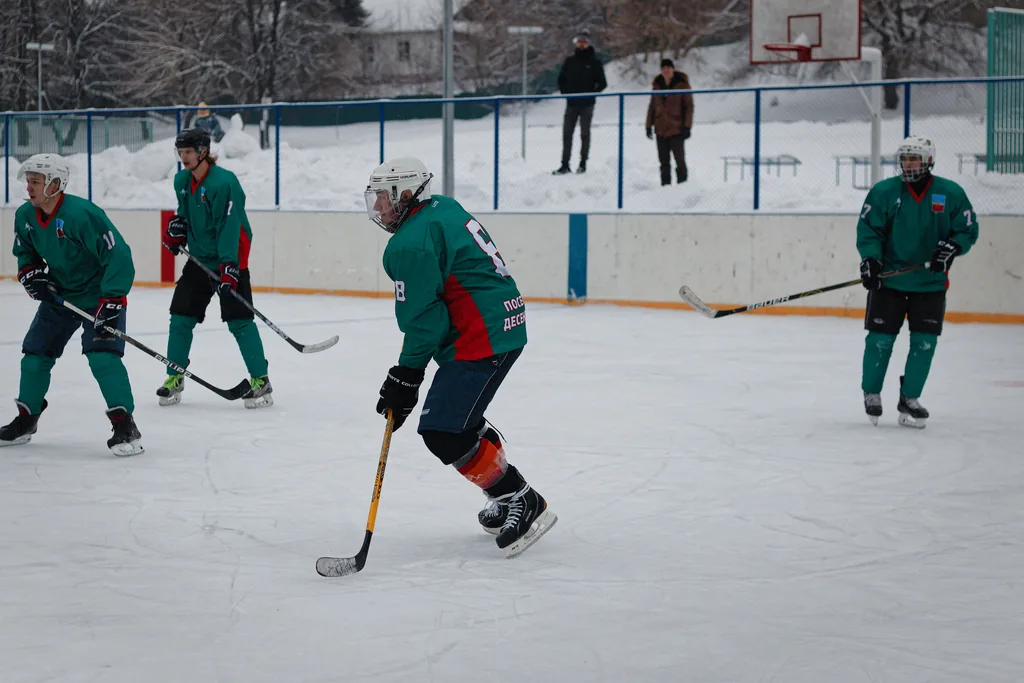
Basketball, soccer, pickleball, tennis, hockey: these build speed, agility, coordination and reaction time, none of which the bike develops, and they get you exercising with the friends and family who do not ride. They are also the most likely activity on this list to send you into spring with a sprained ankle or a torn something. If a sport is new to you or you have not played in a decade, treat it as fun, not training, and skip it in the last six weeks before an event you care about.
Strength, mobility and control
Weight training
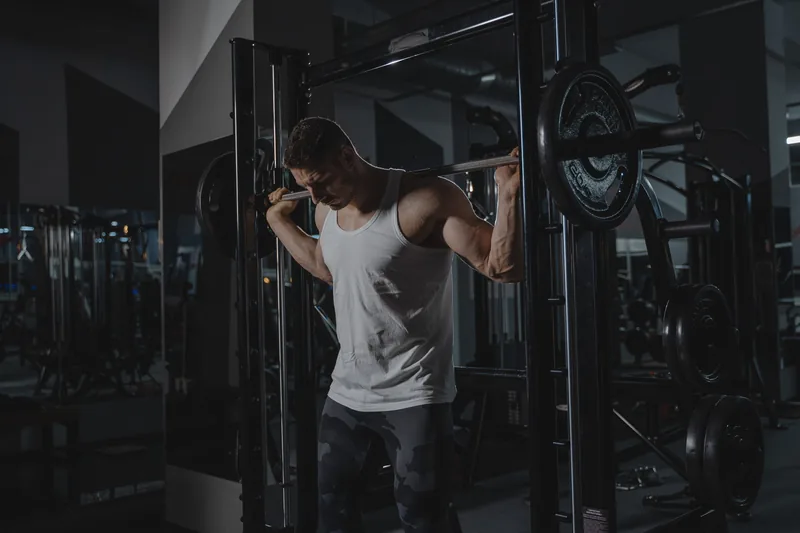
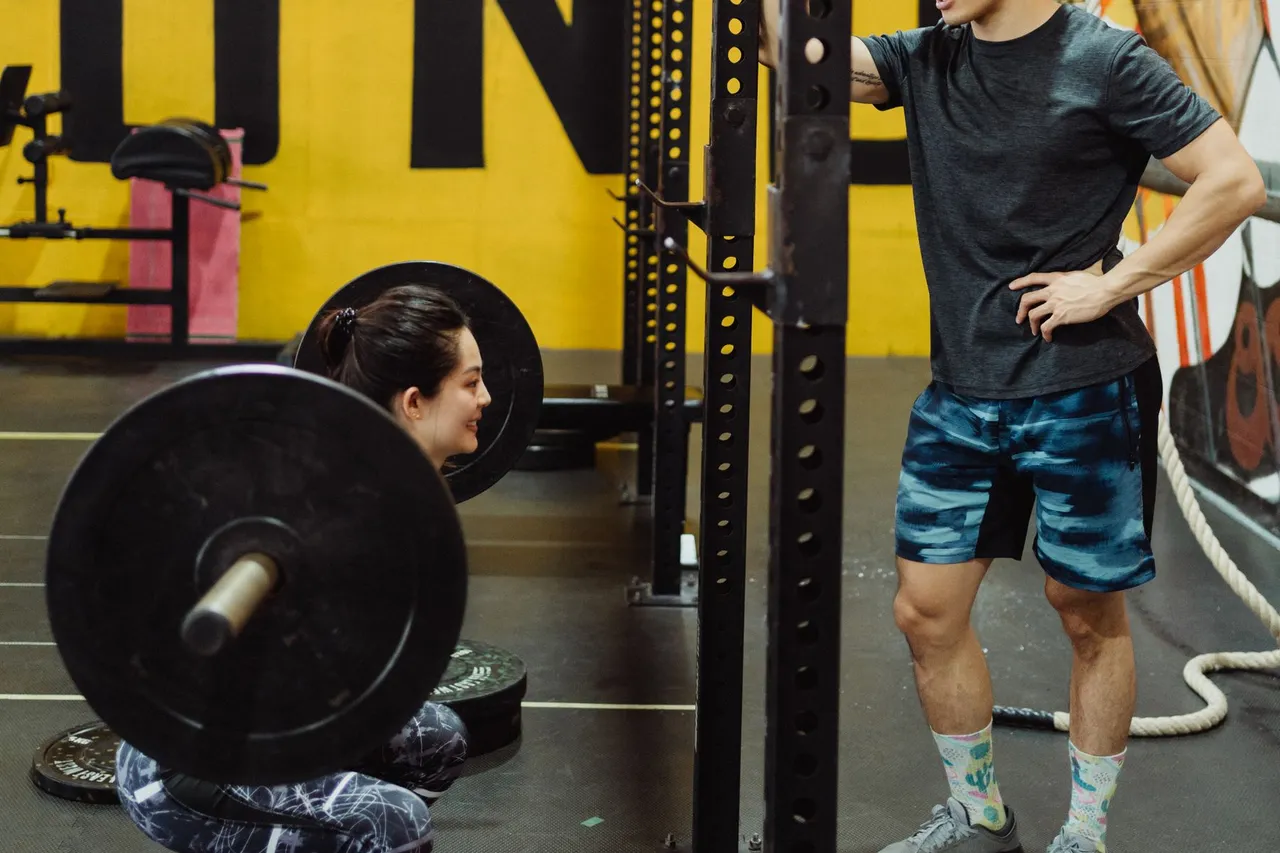
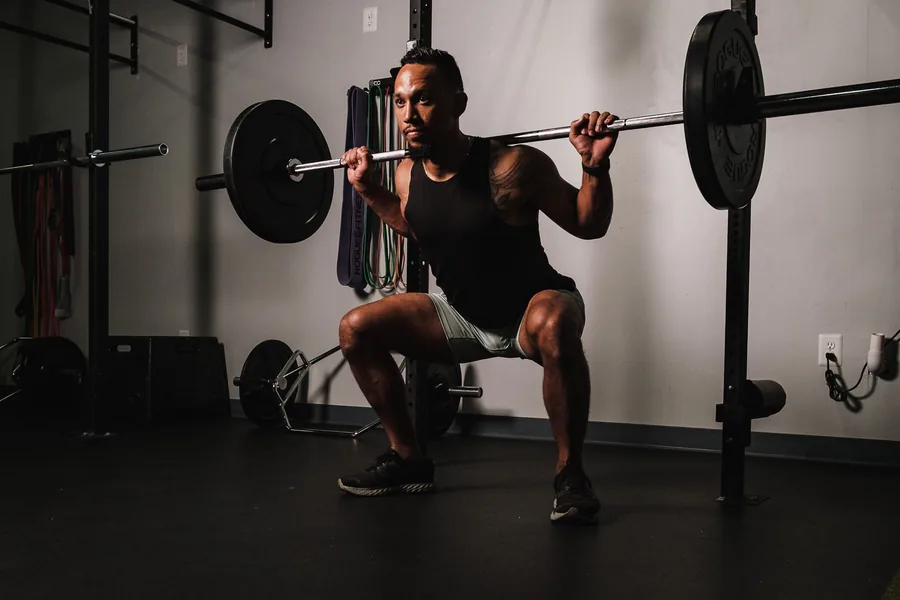
Lifting is not cross-training so much as a non-negotiable part of a cyclist’s year, and it belongs in the plan no matter what else you do in winter. Two heavy sessions a week in the off-season improve pedaling economy and sprint power without adding bulk, and they load the skeleton in a way no amount of riding can. We have a full guide to weight training for cyclists, and a trail-specific gym program in How to Become a Stronger Mountain Biker Over Winter. Pick one and do it. If a gym is not in the picture, a doorway pull-up bar and your own body weight cover more than most riders expect: pull-ups and chin-ups for the lats and upper back, dead hangs for grip and shoulder health, hanging leg raises for the core, push-ups and single-leg squats for the rest. It will not replace a heavy barbell for leg strength, but it builds the pulling muscles that hours over the bars leave weak, and the bar costs about $25.
Yoga
Yoga will not make you faster in any way a power meter can detect, and the honest research on it says as much: a 10-week study of college athletes in 2016 found yoga improved flexibility and balance, and that is about where the evidence ends. For a cyclist, flexibility and balance are not small things. The riding position shortens the hip flexors and hamstrings, rounds the upper back, and locks the neck into extension for hours. A regular yoga practice works directly on all of it: hips, hamstrings, thoracic spine, shoulders, and the breathing control that a long climb demands.
The style you pick decides what you get. Yin and restorative classes, with long passive holds, suit recovery days. Slower flow or hatha classes work as mobility sessions on easy days. Hot yoga and power yoga are workouts in their own right and should not land the day before a key session. A standard class runs 60 to 90 minutes, and one or two a week through the winter is enough to notice the difference in how you feel after a long ride. Riders who would rather skip the class can get part of the benefit from a short daily routine; our article on the 10 stretches every cyclist should be doing covers the same ground.
Pilates
Pilates is the pro peloton’s favorite form of core work, and it has a specific aim: pelvic and lumbar stability combined with hip mobility. Your legs push against your pelvis on every pedal stroke. If the pelvis rocks, power leaks; if it is locked still by a strong deep core, the power goes into the pedals. Tom Danielson devoted a section of his book Core Advantage to it, Trek-Segafredo riders have used it in winter prep, and Elisa Balsamo has talked about core work as the center of her off-season. Lynne Robinson, founder of Body Control Pilates, describes the goal for cyclists as “becoming stable while also mobilising the hip joints.”
The formal evidence is thin; what exists is expert opinion and the pros’ own results. The practical case is stronger than the research: riders with chronic low back pain on long rides tend to find Pilates helps more than anything else they try. Mat classes are cheap and widely available. Reformer classes, on the spring-loaded machine, add resistance and cost more. Either one, once or twice a week, is a reasonable use of a winter evening.
Plyometrics
Jumping takes five minutes, needs no equipment, and does two things cycling cannot: it loads bone harder than anything short of a barbell, and it converts strength into the fast, punchy power you need for a steep pitch or a sprint. Box jumps, jump squats, bounding and skipping rope all count. Two or three short sets at the end of a gym session, with full rest between them, is plenty. We go deeper on this in our guide to building explosive cycling power.
Fitting it into a winter week
The rule is simple: cross-training replaces easy bike volume, never your hard bike sessions. Cycling fitness is peripheral and specific, so the one or two sessions a week where you go hard, whether that is a Norwegian 4x4 on the trainer or a set of threshold intervals, stay on the bike. Everything else in the week is negotiable.
Here is what that looks like for three kinds of rider. The strength sessions follow the program in the lifting article.
Snow-country rider. Monday: strength. Tuesday: hard trainer session. Wednesday: 60 to 90 minutes of cross-country skiing or snowshoeing, easy. Thursday: strength, plus 10 minutes of jumps. Friday: easy trainer spin or yoga. Saturday: long ski, ski tour, or long trainer ride if the snow is bad, 2 to 3 hours easy. Sunday: hike, or rest.
No-snow rider. Monday: strength. Tuesday: hard trainer session. Wednesday: 30 to 45 minute easy run (once the body is ready for it). Thursday: strength, plus jumps. Friday: swim or yoga. Saturday: long outdoor ride if the weather allows, otherwise long trainer ride. Sunday: run or hike, 45 to 60 minutes, or rest.
Time-crunched rider. Four sessions a week: two hard trainer sessions of 45 to 60 minutes, one strength session with jumps at the end, and one weight-bearing session of your choice, a run, hike or ski, of about an hour. Mobility work fits in 10-minute pieces whenever you can; a yoga class is a fifth session if the week allows it. Our article on building cycling fitness in limited time covers how to get the most out of the trainer half.
Keep everything that is not a hard bike session or a heavy lift easy. The novelty of a new sport makes it tempting to go hard at it, and that is how you end up too tired for the Tuesday intervals that are doing the real work.
Transitioning back to the bike
From about late February, as riding intensity climbs toward the first events of spring, the cross-training should taper. Drop the second ski or run of the week first, keep the long weekend session until the weather lets you do it on the bike, and hold on to one thing all year: a single weight-bearing session a week, whether that is the gym, a run, or a hike. The Norwegian bone density study that compared elite cyclists with elite runners found that cyclists who lifted only in the off-season still had low bone density. Bone needs loading year-round, and a 40-minute run or a gym session a week in July is a small price for a skeleton that holds up at 60.

Common mistakes
Racing the cross-training. The temptation with a new sport is to find out how good you are at it. Tom Pidcock’s much-discussed fast 5K turned out to be a GPS error, but plenty of amateur cyclists have turned a winter of easy running into a half-marathon goal and arrived at spring with a stress fracture and no bike fitness. Cross-training is in service of the bike. Leave the PRs for the summer.
Going hard because it feels fresh. A ski, a run or a rowing session feels easier on the mind than the trainer, so riders push harder than they would on the bike and then wonder why the Tuesday intervals fall apart. Treat heart rate as the governor, and keep most of the cross-training in Zone 2.
Running too much, too soon. Covered above, but it is the single most common winter injury among cyclists who cross-train, so it bears repeating: 15 to 20 minutes to start, every other day, 10% a week, soft ground.
Dropping it entirely in March. The first warm week of spring is when everything but the bike gets abandoned. The strength and bone you built over the winter leave as fast as they came, and by June you are back to being a pair of legs on a saddle.
A note for riders over 40
Everything above applies with more urgency after 40, and especially after 50. Muscle mass and strength begin to drop in earnest around then, and fast-twitch fibers, the ones cycling neglects, go first. Bone density follows. Balance degrades, and a cyclist who has spent decades balancing on a bike can still be unstable on foot. Cross-training that puts you on your feet, loads your skeleton, and asks your body to move in more than one plane is the countermeasure, and the running, hiking, skiing and lifting in this article do more for a masters rider’s next decade than any interval session. We cover the longer view in Cycling Might Be the Closest Thing We Have to an Anti-Aging Pill.
Training recommendations in this article are general guidance and not a substitute for advice from a coach or physician. Policy terms, conditions, and exclusions apply to any insurance product mentioned; this article is not insurance or legal advice.
Frequently Asked Questions
- Does swimming make you a better cyclist?
- Not in any direct way. The research on fitness transfer between sports finds little carry-over between the pool and the bike in either direction. Swim because it is zero-impact, opens the shoulders and upper back, and works as active recovery, not because it will raise your FTP.
- How much running is safe for a cyclist?
- Start with 15 to 20 minutes every other day, add about 10% a week, and plan on six to eight weeks before you are running 45 minutes comfortably. Two or three runs a week of 30 to 60 minutes is a sustainable winter load for most riders. Your lungs will be ready long before your tendons; let the tendons set the pace.
- Is cross-country skiing better than the trainer?
- For aerobic fitness it is at least as good, and it adds upper body, core and hip work the trainer cannot. For cycling-specific fitness it is not a replacement. Keep your hard interval sessions on the bike and use skiing for the easy volume.
- Can I replace the trainer entirely with cross-training?
- You can keep the engine with cross-training alone, but you will lose cycling-specific fitness, the peripheral adaptations in exactly the muscles that pedal. Riders who do nothing on the bike all winter typically need four to six weeks in spring to get their legs back. One or two bike sessions a week, even short ones, prevents most of that.
- Can cross-training fix my knee, hip or back pain from riding?
- Often, yes, if the pain is the overuse kind rather than an injury from a crash. Most riding pain traces back to supporting muscles that have gone quiet (glutes, hip stabilizers, deep core, upper back) and a joint that drifts under load as a result. Activities that wake those muscles up, especially Pilates, yoga, skiing, skating and single-leg strength work, address the cause rather than the symptom. Pain that is sharp, swelling, or getting worse is a reason to see a physical therapist or sports doctor, not to train through it.