TL;DR:
The Norwegian 4x4 is a high‑intensity interval protocol developed at the Norwegian University of Science and Technology (NTNU) that asks you to ride four 4‑minute efforts at 90–95% of your max heart rate, with three minutes of easy spinning between each. Studies on the protocol have shown roughly 7–10% gains in VO2 max in about eight weeks when done two to three times per week. For cyclists, that translates into a bigger aerobic engine, a higher functional threshold, faster recovery between attacks, and a longer healthy riding life. It’s 16 minutes of hard work wrapped in a warm‑up and cool‑down, and it fits beautifully on a smart trainer, an indoor bike, or a quiet stretch of road.
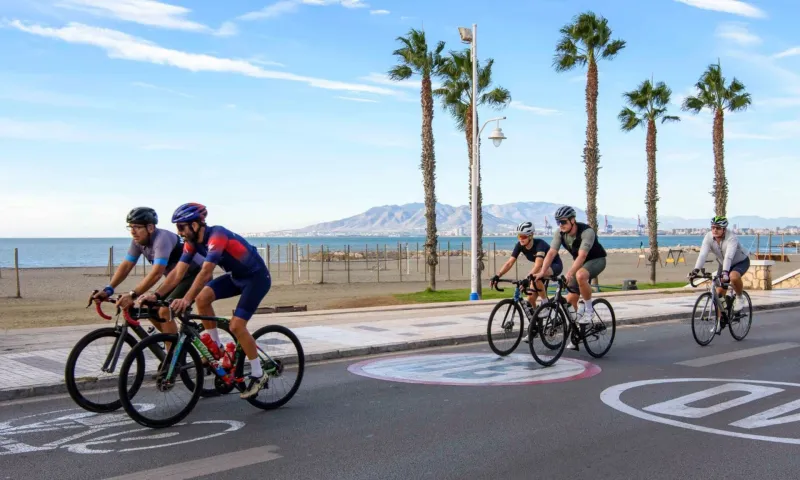
How to bring cave pain to a crit.
A short story before the science
Every spring I have the same conversation with myself. I had a great fall last year. I was lean, my legs felt long, my Tuesday group ride was a thing I looked forward to instead of survived. Then winter happened. The weeks got busy, the rides got shorter, and the hard ones disappeared first because hard rides are the easiest ones to skip. By April my legs feel like they belong to someone else and I’m watching the wheel in front of me roll away on the first real climb.
The reason I’m writing about the Norwegian 4x4 is that it’s the cleanest, most efficient antidote I know to that exact problem. It’s a protocol that takes very little time, it’s been studied to death, and it does the one thing most amateur cyclists desperately need: it raises the ceiling. Not your endurance for a long Sunday ride, but the size of the engine itself.
A Reddit post in r/immortalists called it “the gold standard of cardiac fitness,” and that’s not just enthusiasm. It’s a fair description of what the research community has been pointing to for years.
What the Norwegian 4x4 actually is
The protocol is simple enough to memorize on a coffee break.
- Warm‑up: 10 minutes of easy to moderate pedaling. Build gradually.
- Interval 1: 4 minutes at 90–95% of your maximum heart rate (or roughly an 8–9 out of 10 effort).
- Recovery 1: 3 minutes of easy spinning at about 60–70% of max heart rate.
- Repeat the 4‑on / 3‑off pattern three more times for a total of four work intervals.
- Cool‑down: 5 minutes of easy pedaling.
Total time, including warm‑up and cool‑down, is 30 to 40 minutes. Of that, just 16 minutes is at the hard intensity. That’s the whole workout. No fancy variations. No 30‑second sprints stacked inside the 4‑minute block. Just four hard, sustained, repeatable efforts that pin you near the top of your aerobic capacity.
The intensity target is the part most people get wrong. 90–95% of max heart rate is genuinely uncomfortable. You should be breathing hard enough that holding a conversation is out of the question. If you can answer your kid’s question about where the snack drawer is mid‑interval, you’re not there yet.
Why it was designed this way
The protocol came out of the cardiology and sports science work at NTNU in Trondheim, Norway, with researchers like Ulrik Wisløff. They were originally interested in the most efficient way to drive up VO2 max in cardiac rehab patients, and what they found generalized beautifully to athletes.
The four‑minute window is long enough that your cardiac output peaks and your heart spends real time at maximum stroke volume, which is the thing that actually drives VO2 max adaptations. Shorter intervals don’t pin the heart at the top long enough. Much longer intervals force the intensity down and you stop training the ceiling.
The three‑minute recovery is also deliberate. It’s long enough that you can hit the next interval hard, but short enough that your heart rate stays elevated and you’re not starting from cold. The whole session keeps the cardiovascular system under productive stress without crushing you for the rest of the week.

What this means for cyclists specifically
A lot of cycling content focuses on threshold, sweet spot, and endurance because those are the bread and butter of long rides. The Norwegian 4x4 sits above all of those. It’s a VO2 max workout, and VO2 max is the lever that pulls everything else up with it.
Here’s why a cyclist should care.
Your top end gets bigger, which makes everything else easier. When your VO2 max is higher, your threshold sits at a higher absolute power. The pace that used to feel hard now feels moderate. The climb you survived last year becomes a climb you ride.
You gain the ability to go hard, recover, and go hard again. Group rides and races are decided by repeated efforts. An attack out of a corner. A surge over a roller. A hard chase to close a gap. The 4x4 trains exactly that pattern, four hard pulls with imperfect recovery between them.
It’s protective for your long‑term health. This is the part that the cardiology research keeps emphasizing. Higher VO2 max is associated with lower risk of cardiovascular disease and lower all‑cause mortality. As cyclists, we already enjoy that benefit relative to sedentary peers, but the 4x4 stacks more on top of it. If you plan on riding into your 60s and 70s, the work you do at 40 to keep your aerobic ceiling high pays compounding interest.
It’s brutally time‑efficient. Two 35‑minute sessions a week is roughly 70 minutes. That’s less time than most of us spend in a single weekend ride driving to and from the trailhead. For dads, parents, shift workers, and anyone whose riding time has been chewed up by the rest of life, this is a very honest deal.
A Norwegian 4x4 cycling session, written out
Here’s the version I’d give a friend who asked me to plug this into their week. Numbers are heart rate based because that’s how the protocol was originally written, but I’ve added power equivalents for those who train with a meter.
Total time: ~37 minutes
- 0:00–10:00: Easy spin. Start at zone 1 and drift into zone 2 by minute 8. Add a couple of 30‑second openers in the last two minutes of warm‑up to wake the legs up.
- 10:00–14:00: Interval 1. Target 90–95% of max heart rate. If you train with power, this lands somewhere around 105–115% of FTP for most riders, but follow heart rate as the primary anchor. Cadence wherever it’s natural for the gear, usually 85–95 rpm.
- 14:00–17:00: Recovery 1. Easy spin. Heart rate will stay elevated, that’s fine. Focus on breathing back down.
- 17:00–21:00: Interval 2. Same target. This is usually the hardest one, because the legs are loaded but the head still remembers there are two more.
- 21:00–24:00: Recovery 2.
- 24:00–28:00: Interval 3. The middle of this one is where you’ll want to back off. Don’t. The adaptation lives in the last 90 seconds.
- 28:00–31:00: Recovery 3.
- 31:00–35:00: Interval 4. Going in, give yourself permission to bury this one. There is nothing after it but the cool‑down.
- 35:00–37:00: Cool‑down. Light pedaling, slow exhales, gratitude.
If you don’t have a heart rate monitor, use rate of perceived exertion. The work intervals should be an 8.5 to 9 out of 10. Hard but sustainable for the full four minutes. If you’re blowing up at minute 2:30, the target is too high. If you’re cruising at minute 3:30, it’s too low.
How often, and where it fits in a real week
The research used two to three sessions per week, but most cyclists who already ride a lot will get more out of two. Three is doable but only if your other rides are genuinely easy. The most common mistake is to bolt the 4x4 on top of a week that’s already full of moderate‑hard “gray zone” riding. That gives you the fatigue without the adaptation.
A reasonable structure looks like this.
- Tuesday: Norwegian 4x4 session, indoor or out.
- Wednesday: Easy spin or full rest.
- Thursday: Easy to moderate ride, zone 2.
- Friday: Optional second 4x4, or a shorter zone 2 ride. If you race or train hard on the weekend, skip the second 4x4 and go easy.
- Saturday/Sunday: Long ride, group ride, or whatever gets you out the door. Mostly endurance, with whatever’s natural.
Eight weeks of this is enough to feel a real change. You won’t necessarily set a power PR in week three. The first thing most people notice is that their old hard pace feels easier. Then somewhere around week six the actual numbers start moving.
Indoor versus outdoor
The 4x4 is one of those workouts that’s almost designed for the trainer.
Indoor advantages. Constant resistance, no traffic lights interrupting your interval, no descents wasting your recovery, and you can hold a precise heart rate target without thinking about it. A smart trainer paired with a structured workout app makes the execution as easy as starting the file and pedaling. Most cyclists I know find that they can hit higher quality on the trainer than on the road, especially when it’s cold or windy out.

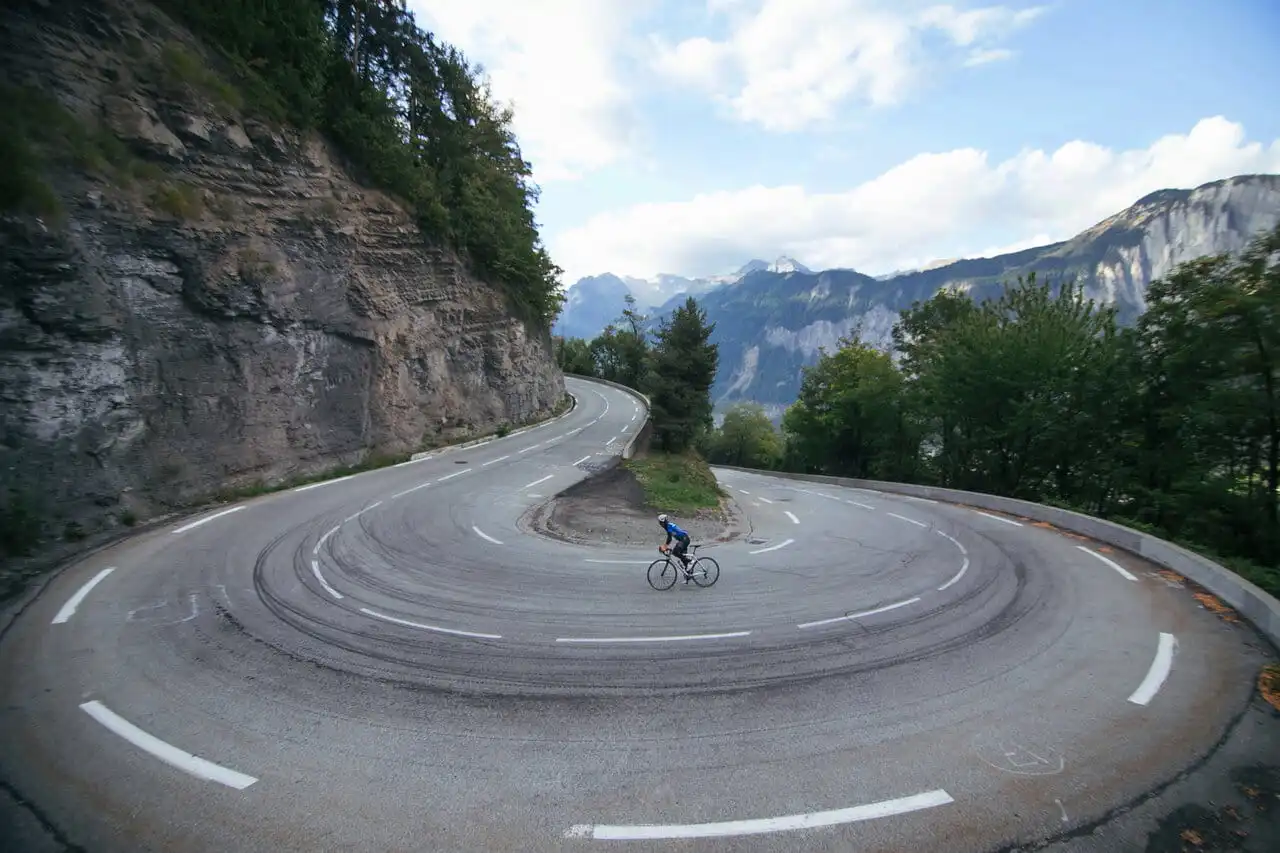
Outdoor advantages. A long, steady climb is the perfect outdoor venue for the 4x4. The grade does the heart‑rate work for you, you’re not babysitting numbers, and there’s something about the road that pushes you a little harder than the basement does. If you have a four to six minute climb near you, build the workout around it.
What you want to avoid is doing the 4x4 on a flat road through traffic. The recoveries get messed up by lights, the intervals get interrupted by everything from gravel to a kid on a scooter, and the heart rate work ends up being intermittent. Save the road for climbs or long uninterrupted bike paths.
Common mistakes I’ve made (so you don’t have to)
Going too hard in the first interval. It’s the freshest you’ll feel all session, and it’s tempting to throw down a number you’re proud of. Don’t. The 4x4 is a workout where the second half does the building. If you can’t repeat the first interval in the fourth, you went too hard.
Cutting the recoveries short. Three minutes feels like forever the first time, but those minutes exist for a reason. They let you actually hit the next interval at the right intensity. If you slash them to 90 seconds you’re doing a different, worse workout.
Stacking it on top of a busy training block. This is the big one. Two 4x4s in a week of otherwise moderate riding is plenty. Two 4x4s in a week of hard group rides plus a Saturday race is a recipe for either flat legs or an honest case of overtraining.
Skipping the warm‑up. The first interval is brutal if you walk in cold. Ten minutes is not optional, and a couple of 30‑second pickups at the end of the warm‑up will save you a lot of suffering in interval one.
Treating it as a sprint workout. It is not. It’s a sustained effort at the top of your aerobic range. If your power is spiking and dropping during the four minutes, you’re not on the protocol. Smooth, hard, repeatable.
What about cyclists with high mileage already?
The reasonable question from someone riding 8 to 12 hours a week is whether the 4x4 is even necessary. The answer in the cycling literature is that even well‑trained cyclists keep getting gains from VO2 max work. A frequently cited Australian study showed trained cyclists who added HIIT twice a week shaved meaningful time off a 40K time trial in eight weeks. The ceiling effect on VO2 max is real, but most amateur cyclists are nowhere near it.
If you’re already racing and your training plan is built around threshold and sweet spot, replacing one of those days with a 4x4 every couple of weeks is a small, safe, high‑leverage change.
A word on heart rate, sensors, and the watch on your wrist
Maximum heart rate is personal. The “220 minus your age” rule is a starting point, not a verdict. If you’ve never actually seen your real max, do a hard climbing test or use an all‑out 4‑minute effort to estimate it before you start prescribing percentages. The 90–95% range is what makes the protocol work, and if you’re calibrating off the wrong max, you’ll either be cruising or blowing up.
A chest strap is meaningfully more accurate than an optical wrist sensor for intervals like this. The wrist sensors lag and miss spikes, which is exactly the regime the 4x4 lives in. If you’re going to buy one piece of gear for this, make it a chest strap.

A note on what changes when the protocol works
The trainer is safe. The point of the 4x4 is what comes after — more miles, harder group rides, maybe a race. That’s where the real exposure is, and conventional insurance underdelivers: high deductibles, depreciated payouts, and a claim on your record. A specialty bicycle insurance policy covers the bike at agreed value and adds crash, transit, racing, medical gap, and uninsured motorist coverage. Worth a quote before the protocol puts you back outside.
Key Takeaways
- The Norwegian 4x4 is four intervals of four minutes each at 90–95% of max heart rate, separated by three minutes of easy pedaling.
- It was developed and popularized by researchers at NTNU and is widely cited as the most studied HIIT protocol for raising VO2 max.
- Two to three sessions per week for eight weeks has produced 7–10% VO2 max improvements in published research.
- Cyclists benefit specifically through a stronger heart, better lactate handling, and the kind of repeatable top‑end power that decides group rides and races.
- The session takes 30–40 minutes door to door including warm‑up and cool‑down, which makes it one of the most time‑efficient workouts a busy cyclist can run.
- It works on a trainer, on a climb, or on a flat stretch of bike path. The watts and heart rate matter more than the scenery.
The bottom line
The Norwegian 4x4 is not new, it isn’t fancy, and it isn’t secret. It’s a specific, repeatable, well‑studied way to spend 16 hard minutes per session that pays you back in a bigger aerobic engine, more repeatable top‑end power, and a stronger long‑term cardiovascular profile. For cyclists who don’t have endless hours, it’s about the highest‑leverage workout on the menu.
Two sessions a week. Eight weeks. Hold the intensity, don’t cheat the recoveries, and let the protocol do its job. By the time spring is in full swing, you won’t be the one watching the wheel in front of you roll away.
Frequently Asked Questions
- What is the Norwegian 4x4 workout?
- The Norwegian 4x4 is four 4-minute intervals at 90 to 95% of your maximum heart rate, each followed by three minutes of easy spinning. Add a 10-minute warm-up and a 5-minute cool-down and the whole session runs 30 to 40 minutes, of which just 16 minutes are at the hard intensity. It is widely cited as the most studied interval protocol for raising VO2 max.
- How often should you do the Norwegian 4x4?
- Two to three sessions per week delivers the gains seen in research, and most cyclists who already ride a lot get the most out of two. The thing to watch: it works best when your other rides stay genuinely easy. Stacking it on top of a week already full of moderate-hard riding gives you the fatigue without the adaptation.
- How hard should the intervals feel?
- Aim for 90 to 95% of your maximum heart rate, or about an 8.5 to 9 out of 10 effort that you can just hold for the full four minutes. If you train with power, that lands around 105 to 115% of FTP for most riders, though heart rate stays the primary anchor. A good sign you have it right: holding a conversation is out of the question, but you are not blowing up before the four minutes are done.
- Is the Norwegian 4x4 better done indoors or outdoors?
- Both work well, and the choice comes down to control. A smart trainer gives you constant resistance, uninterrupted recoveries, and a precise heart-rate target, which is why many riders hit higher quality indoors. Outdoors, a long steady climb is the ideal venue because the grade does the heart-rate work for you. The setup to avoid is a flat road through traffic, where lights and obstacles break up the intervals and recoveries.
- Do experienced cyclists with high weekly mileage still benefit?
- Yes. Even well-trained cyclists keep gaining from VO2 max work, and most amateurs are nowhere near their ceiling. Research on trained cyclists who added two HIIT sessions a week showed meaningful time saved in a 40K time trial over eight weeks. If your plan is built around threshold and sweet spot, replacing one of those days with a 4x4 every couple of weeks is a small, high-leverage change.