TL;DR:
- Velocity-based training uses bar speed to decide how heavy to lift and when a set is over. Push every rep up as fast as you can, and rack the bar as soon as the reps slow down.
- The grinding reps at the end of a set cause most of the soreness and add almost no strength. Lifters who stopped at a 20% slowdown gained as much squat strength as lifters who did 40% more reps, and jumped higher.
- In professional cyclists, eight weeks of this method at about 65% of max matched heavy traditional lifting at 85% for strength, power, 8-minute time trial and body composition.
- No sensor needed. Load 60 to 70% of your max, move every rep with intent, and stop when a rep is visibly slower than the one before, usually around rep 6 to 8. Have a training partner watch for the slow rep, or film the set on your phone and check the video.
- Two 35 to 40-minute sessions a week in the base season, one a week in season. A squat, a hinge and a single-leg lift. Intervals the next day are fine.
Why the pros changed how they lift
Ten years ago almost nobody in the WorldTour lifted. Mikel Zabala, the Granada University professor who coached Alejandro Valverde and Nairo Quintana at Movistar, has said that when he joined the team in 2013 none of the riders touched a barbell, even though the research telling them to was already a few years old. Bent Rønnestad had shown in 2011 that cyclists who added two heavy lower-body sessions a week for 12 weeks produced more power at the end of a three-hour ride, and the studies since have kept finding that heavy lifting improves cycling economy and time trial performance in trained riders. We cover that research in our weight training guide for cyclists.
When teams tried it, strength went up and the riding went down. Riders showed up to Thursday’s intervals with legs still wrecked from Tuesday’s squats. Traditional lifting prescribes a load as a percentage of your one-rep max and a fixed number of reps, and the last two or three reps of every set are the ones you grind through with a slow bar and a red face. Those reps produce the soreness. For a rider who has to do real work on the bike 48 hours later, that is an expensive way to get strong.
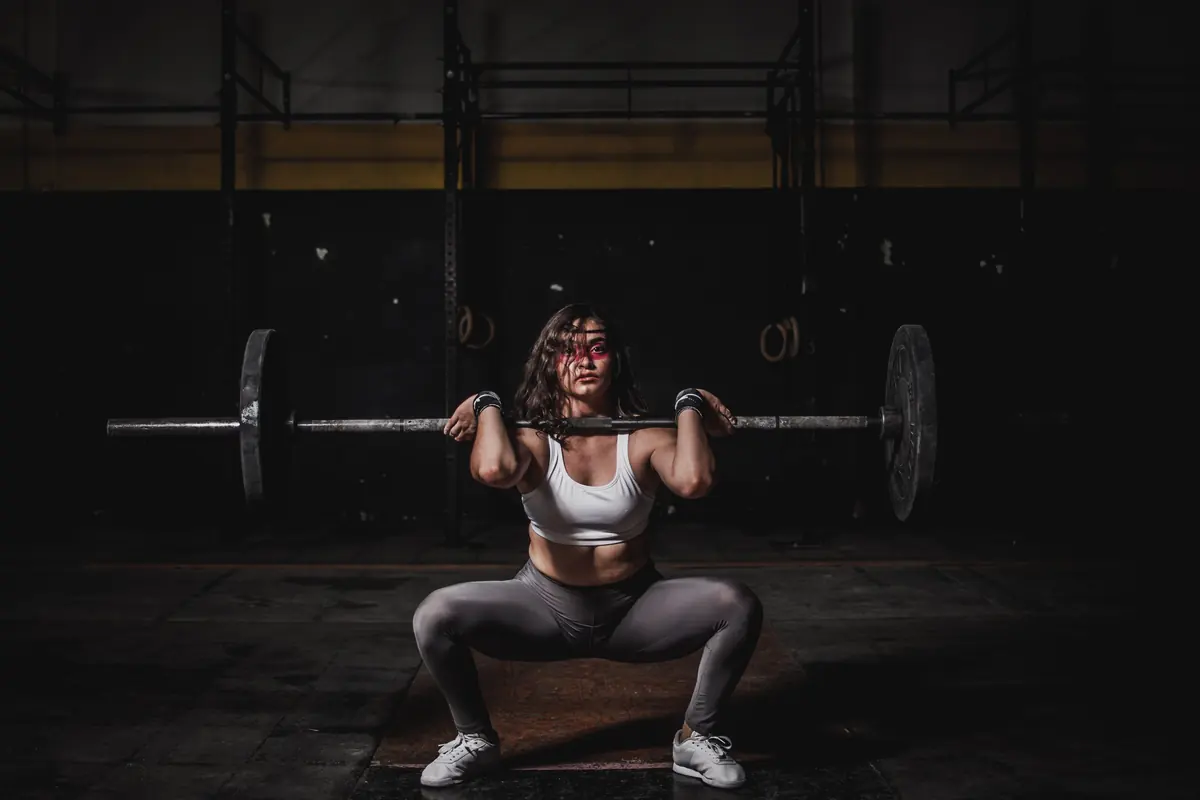
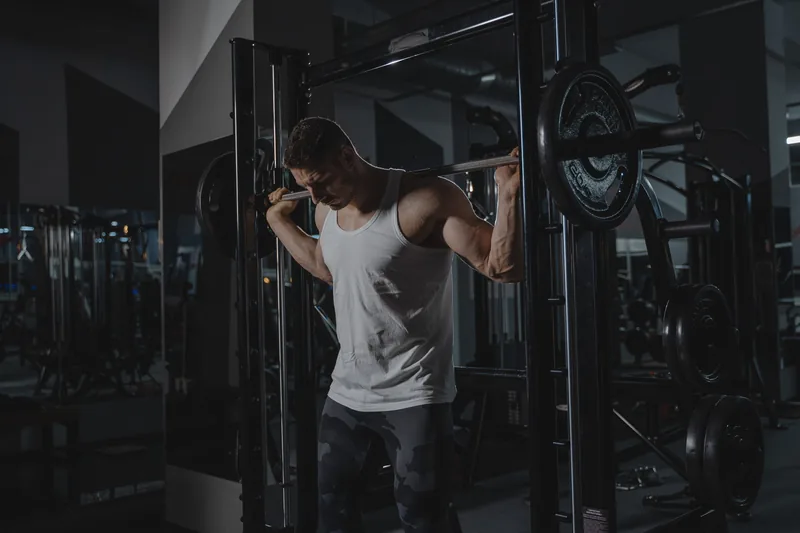
The fix came out of Spanish strength labs, where researchers had spent a decade measuring how fast a barbell moves. The approach is called velocity-based training, and it is now the standard way strength coaches at pro cycling teams run the gym. You lift a moderate weight, push every rep up as fast as you can, and stop the set the moment the bar slows down.
Most amateurs have run the same experiment on themselves. You read that cyclists should lift, you did a sensible 3 sets of 8 to failure on a Monday in November, and you could not walk down stairs until Thursday. By January the gym was gone from the schedule.
What bar speed tells you
Every load you lift has a speed attached to it. In 2010, Juan José González-Badillo and Luis Sánchez-Medina in Seville showed that the mean speed of a bench press rep tracks the percentage of your max so tightly that you can read one from the other, and later work found the same for squats and other lower-body lifts. A back squat at your one-rep max crawls up at about 0.3 meters per second. At 85% of max it moves at about 0.5 m/s, and at 65% around 0.7 m/s. The numbers shift a little from rider to rider, but the shape of the relationship holds.
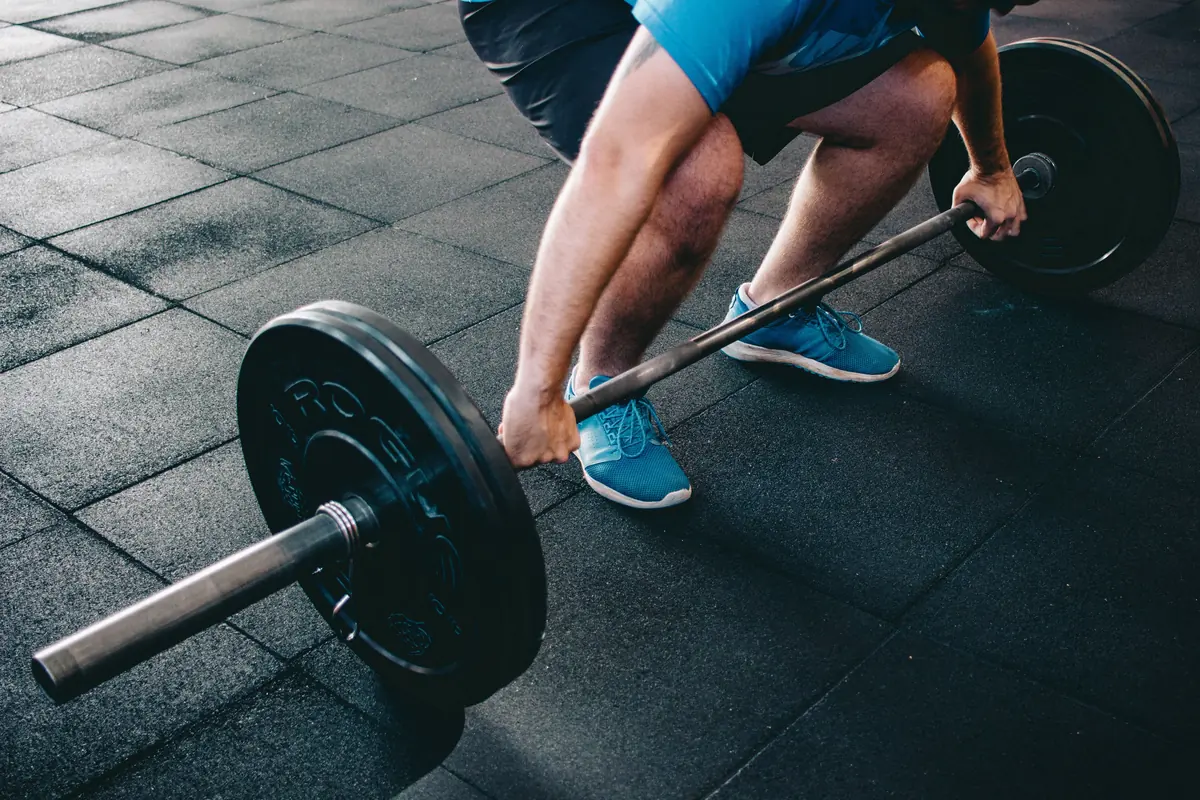
So bar speed tells you how heavy a weight is for you today. After a 5-hour ride and a bad night’s sleep, the same 185 pounds moves slower, which means it is a bigger share of what you have in you, and a percentage-based program written off a max you tested in October has no way of knowing that. A velocity-based one adjusts for it on every rep.
Speed within a set also measures fatigue. Your first rep at a given load is your fastest, each rep after it is a little slower as the muscle tires, and by the time the bar nearly stalls you are a rep from failure. The percentage drop from your fastest rep to your current one is called velocity loss. The whole method is built on it, because it tells you how deep into fatigue you are regardless of how fresh you started.
The loads are still heavy. Rønnestad and Iñigo Mujika’s 2014 review of strength training for cyclists and runners recommends heavy weights pushed up as fast as the lifter can manage. A heavy bar will not move fast no matter how hard you push, and that is fine, because the attempt produces the adaptation. In velocity-based training the attempt also makes the measurement work, since a rep you push lazily tells you nothing about fatigue.
The reps you skip
The research that made coaches take velocity loss seriously came from Fernando Pareja-Blanco and the Seville group. In a 2017 study, 24 men trained the squat twice a week for eight weeks at identical loads, which climbed from 70 to 85% of max. One group ended every set when bar speed had dropped 20% from the first rep. The other kept going to a 40% drop, which meant outright failure in more than half their sets.
The 40% group did 311 reps over the eight weeks and the 20% group did 186, about 40% fewer. Squat max went up 18% in the 20% group and 13% in the 40% group, a gap too small to be statistically meaningful, so the two came out equal. Vertical jump improved 9.5% in the 20% group and only 3.5% in the 40% group, and while the 40% group grew more muscle, it also lost a chunk of its fastest fiber type: the share of type IIX fibers fell by half, while the 20% group kept theirs.
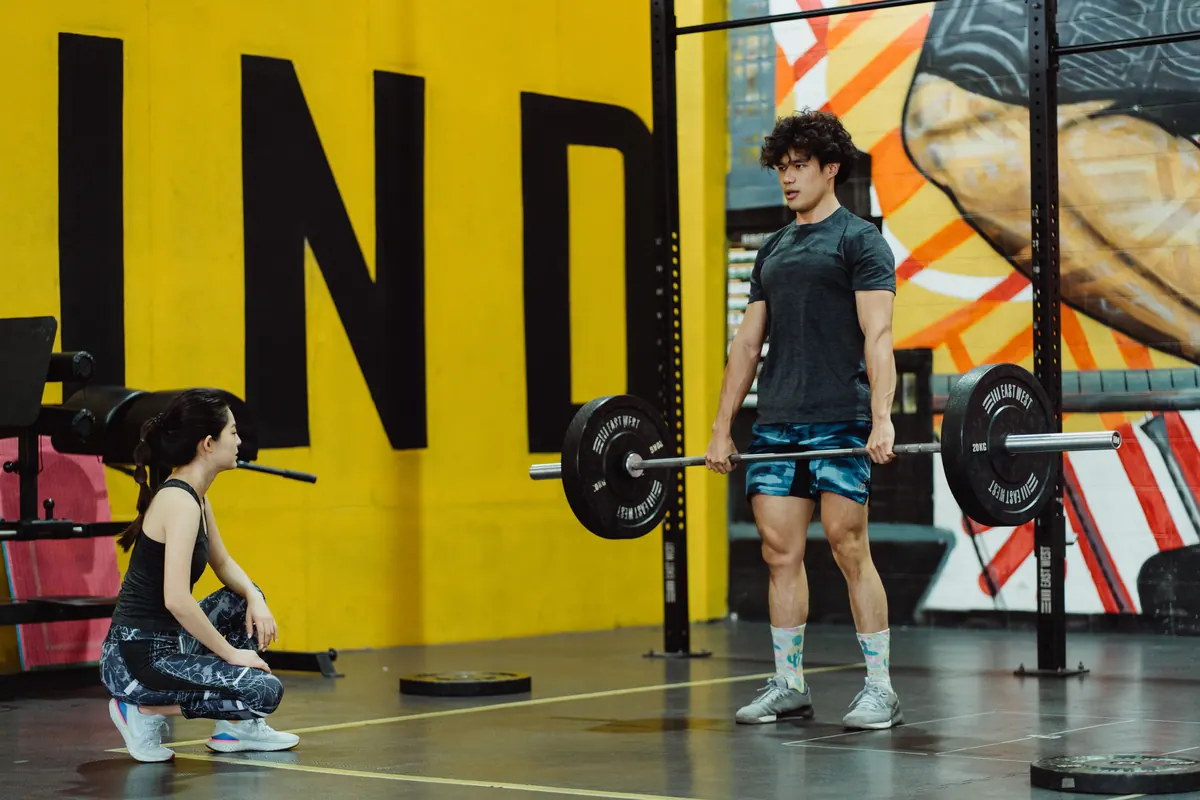
In 2020 the same lab ran it again with 64 trained men and four thresholds, 0, 10, 20 and 40% velocity loss. Strength gains did not differ between the groups despite enormous differences in total reps. The 20% and 40% groups built more muscle, and the 40% group also got slower at producing force early in a contraction, which is the quality you use when you jump on an attack. The authors recommended a moderate threshold, enough to build strength without blunting speed.
A 2023 review by Ivan Jukic and colleagues pooled 37 studies and reached the same conclusions. The velocity-loss threshold you train to has no effect on how much strength you gain. Higher thresholds build more muscle size, lower thresholds produce better jump and sprint improvements, and with every extra percent of velocity loss the reps, lactate, perceived effort and next-day fatigue climb.
A cyclist wants four of those five outcomes, and all four come with the lower threshold: strength, preserved fast-twitch fiber, rate of force development for attacks and sprints, and fatigue low enough to ride the next day. Muscle size is what a higher threshold buys you, and most riders are trying hard to avoid adding any.
What it did for professional cyclists
Two randomized trials from Madrid tested the idea on riders rather than students.
In 2021, Jaime Gil-Cabrera, Alejandro Lucia and colleagues put 20 young professional cyclists through eight weeks of lifting, twice a week, on top of their normal riding. Half lifted the traditional way, with fixed reps at heavy loads around 85% of max. The other half trained at the weight where each rider produced the most power on the squat, hip thrust and lunge, roughly two thirds of max, and ended each set as soon as power fell off. The lighter group gave up nothing. Both groups got stronger and more powerful, both gained muscle and lost fat at the same body weight, and both improved their 8-minute time trial by the same amount.
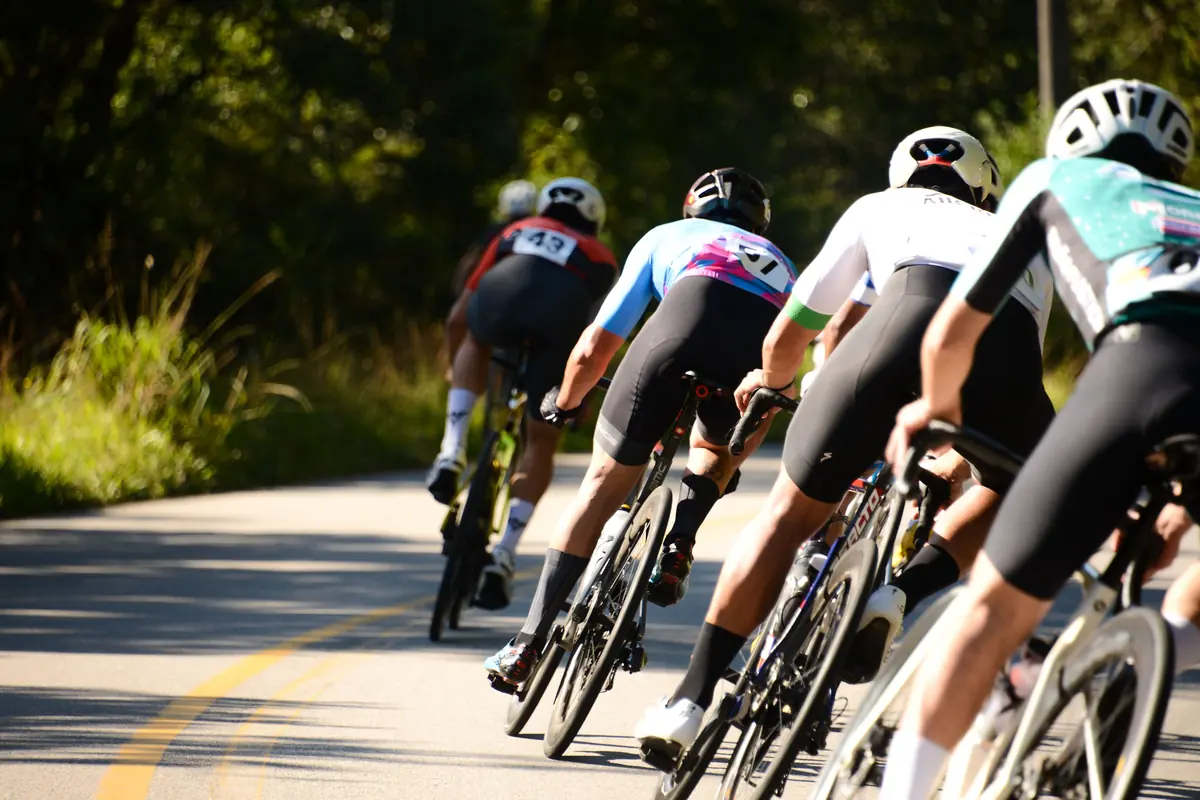
A second trial that year, led by Almudena Montalvo-Pérez with the same team, ran the comparison for six weeks in 17 competitive female cyclists. Again the velocity-based group lifted at about 65% of max against 85 to 90% for the traditional group, and again the two groups matched on squat strength and endurance. On the hip thrust the velocity group pulled ahead, adding about 85 pounds to its max against 50 for the traditional lifters. The authors called for more evidence before declaring the method superior. On their own numbers it matched heavy lifting everywhere and beat it in one lift.
Two studies on runners answered the question cyclists care about most, which is whether lifting gets in the way of endurance gains. In 2021, Spanish researchers added squats to an eight-week running program and stopped the sets at either a small velocity loss or a large one, with a third group that only ran. The large-loss group did more than twice as many reps. Both lifting groups got stronger than the runners, but only the small-loss group also improved its running speed at VO2max more than the runners did. A 2026 follow-up found the same pattern: the less velocity lost in the gym, the bigger the aerobic improvement. The authors concluded that fatigue from lifting can blunt endurance adaptation, and that stopping sets early keeps it out of the way.
The interference effect, the old fear that lifting makes you a worse endurance athlete, looks in these studies like a dose problem. The grinding reps cost you aerobic gains, and sets stopped early do not.
How to measure bar speed
Pro teams clip a sensor to the barbell and read the velocity off a tablet after every rep. The same readings are available at home at several price points, down to zero.
Linear position transducers. A small box sits on the floor with a tether that clips to the bar, and the box measures how fast the tether pays out. GymAware is the one you see in pro team gyms, and it costs as much as a decent bike. Vitruve and RepOne do the same job for a few hundred dollars. These are the most accurate consumer option and the reference standard in most validation studies.
Inertial sensors. Units like Enode and Flex strap to the bar and estimate velocity from an accelerometer. They are convenient, roughly the price of a power meter pedal, and accurate enough for the 10 to 20% velocity loss threshold you will be using, though they drift more than a tether unit.
Phone apps. Several apps use the phone camera to track the bar. A 2025 University of Vienna study filmed 20 powerlifters squatting, benching and deadlifting against a laboratory motion-capture system and found that one app, Qwik VBT, matched a commercial transducer to within 0.01 to 0.03 m/s and missed no reps. The others tested were less reliable, missing reps or drifting by 0.1 m/s or more on some lifts. A separate 2024 Australian validation of a camera app concluded its velocity error was too large to guide sets but that it counted reps well. If you go the app route, mount the phone squarely to the side of the bar at bar height, because accuracy falls off as the camera angle tilts.
The apps that report velocity, with US prices as of October 2026:
Qwik VBT (iPhone and iPad, also on Android). Free, with a one-time $27.99 upgrade for premium features. Reports mean and peak velocity, velocity loss across a set, an estimated one-rep max and bar path. The app that held up in the Vienna study.
Metric (iPhone, iPad and Apple Watch, also on Android). The free tier gives unlimited sets with mean velocity and range of motion, which covers everything this article asks for. Pro adds peak velocity, power, load-velocity profiles and cloud history for $10.99 a month or $79.99 a year. It also plays an audio cue when a set reaches a target velocity. The 2024 Australian validation tested an early version of this app.
My Jump Lab (iPhone, iPad and Android). From sport scientist Carlos Balsalobre, who built the earlier My Lift app. Seven-day trial, then $5.99 a month, $39.99 a year or $105.99 for life. Mean concentric velocity, load-velocity profiling, 1RM estimate and bar path.
WL Analysis (iPhone, also on Android). Free, with a one-time $8.99 unlock. Built for Olympic lifting and reports what it calls approximated velocity, power and force alongside the bar path.
RepSpeed (iPhone, iPad and Mac, also on Android). Free to try, about $1 a month for per-rep velocity and power. A small app with a small user base.
Iron Path and similar bar-path tracers draw the line the bar travels but do not report velocity, so they will not tell you when to rack the set.
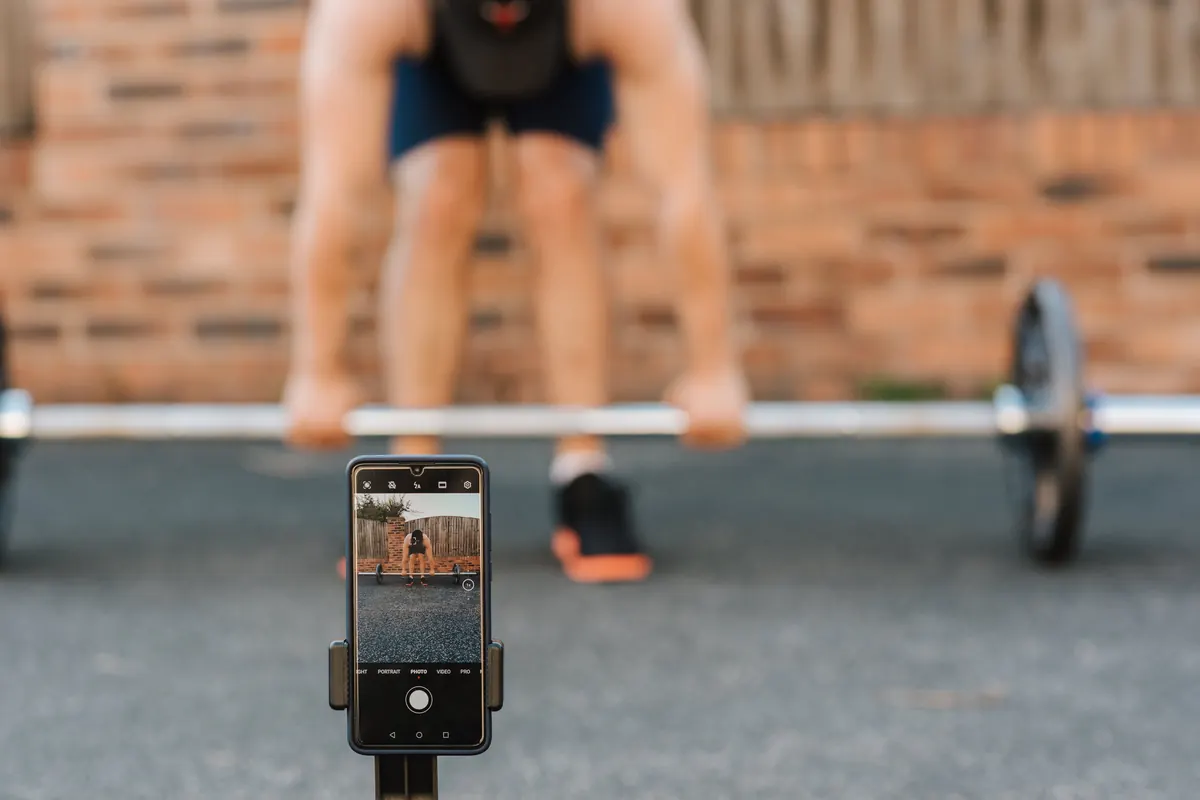
Your eyes. The threshold you are training to is a 10 to 20% slowdown, which is visible. A rep that takes a beat longer than the one before it has slowed 15% or more, and a training partner watching from the side will see it before you feel it. If you train alone, film the set on your phone and watch it back. The slow rep is easy to spot on video, and once you have seen it you know your rep count for next time. After two or three sessions most riders find the slow rep lands at the same count every time at a given load, usually rep 6 to 8 at 60 to 70% of max, and from then on they count instead of watch.
A sensor adds precision and a log, and seeing the numbers climb keeps people lifting through February, though the method itself needs none of it.
The program
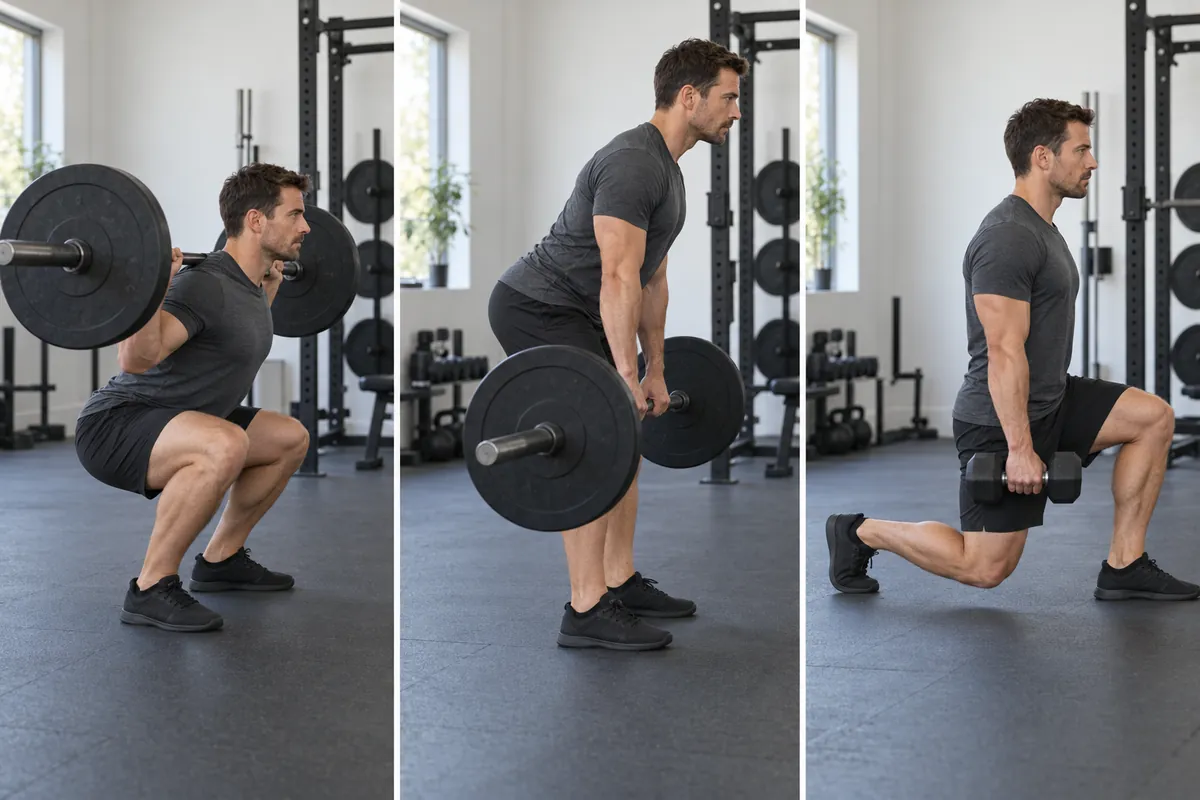
Pick three lifts. One squat pattern (back squat, goblet squat, leg press), one hinge (deadlift, Romanian deadlift, hip thrust) and one single-leg movement (split squat, step-up, lunge). The Madrid trials used squat, hip thrust and lunge or split squat, and that is a complete session for a cyclist. Add a plank or a row if you have five minutes.
Find the load. Target 60 to 70% of your one-rep max, the range where the Madrid cyclists produced the most power. If you have never tested a max, use a weight you could lift about 12 to 15 times if you went to failure. The bar should move fast on rep one and feel like real weight by rep five.
Lift every rep as fast as you can. Lower the weight under control, about two seconds, then drive up with everything you have. The intent builds the strength and makes the slowdown readable.
Rack it at the first clearly slower rep. With a sensor, that is 10 to 20% velocity loss from your fastest rep. Without one, it is the rep where the bar visibly loses pace, usually the sixth to eighth. Do not do one more to be safe, because the whole method depends on leaving the set with speed to spare.
Three or four sets per lift, two to three minutes between sets. The rest is where the quality comes from. A 60-second rest would turn the next set into a grind from rep two.
Twice a week in the base season, once a week in season. Rønnestad’s work shows one weekly session holds what you built, and riders who stop in April have lost most of it by midsummer. The Madrid pros lifted twice a week through normal training and racing with no drop in riding performance.
Progress by speed. When a load that used to slow at rep 6 is still fast at rep 10, add 5 to 10%. With a sensor, a rise of about 0.07 to 0.09 m/s at a fixed load corresponds to roughly a 5% gain in max strength, and that is your signal to load the bar.
A session looks like this:
| Lift | Load | Sets | Stop the set when | Rest |
|---|---|---|---|---|
| Back squat or leg press | 60–70% of max | 3–4 | A rep is clearly slower than the one before (10–20% velocity loss, about rep 6–8) | 2–3 min |
| Romanian deadlift or hip thrust | 60–70% of max | 3–4 | Same | 2–3 min |
| Split squat or step-up | 60–70% of max, each leg | 3 | Same | 2 min |
With ten minutes of warm-up, the session runs 45 to 50 minutes. Schedule it on a day away from your long ride, and in the first few weeks keep it off the day before your key interval session if you can. Once your legs adapt, a velocity-based session followed by intervals the next day is normal. That was the schedule for the professional riders in the trials.
Where riders get it wrong
Treating speed as permission to go light. Velocity-based training still needs a meaningful load. At 40% of max the bar is fast on every rep and never slows, so there is no signal and little stimulus. Stay in the 60 to 70% range.
Doing a slow eccentric for its own sake. A controlled lowering is good. A five-second lowering adds soreness without adding strength for a cyclist. Two seconds down, as fast as possible up.
Taking one set to failure “to see where you are.” That set leaves you flat for intervals. If you want to know your max, test it at the end of a recovery week rather than in the middle of a training block.
Adding sets because it felt easy. The session is supposed to feel like you had more in you. You did, and you are saving it for the bike.
Half-hearted reps. A rep pushed at 80% effort weakens the stimulus and corrupts the measurement at the same time. Every concentric is an all-out effort, even on a 95-pound goblet squat.
Filming from the wrong angle. With a phone app, square it to the side of the bar at bar height. Shot from the front or from a low angle, the velocity reading drifts.
Frequently Asked Questions
- Will this make me bigger?
- In the cycling trials it did not. Riders gained a small amount of muscle, lost fat and finished at the same body weight. Muscle growth is driven by the grinding end of a set, which this method cuts off, and the 2020 Seville study found that the groups stopping at 0 and 10% velocity loss built strength without measurable hypertrophy.
- Do I need to test a one-rep max?
- No. Pick a weight you could do 12 to 15 times, watch where it slows, and adjust from there. A max test helps for setting sensor targets, and the slowdown rule works without one.
- Can I do this at home without a barbell?
- The principle transfers to anything with a load: a heavy goblet squat with a kettlebell, a weighted step-up, a loaded hip thrust with a dumbbell across your hips. Bodyweight work with no load does not transfer, because you cannot generate a useful slowdown at a weight you could lift 40 times.
- Is this better than heavy lifting at 85 to 90%?
- The cycling trials say it is equal on every outcome and better on one, at lower loads with less recovery cost. Heavy lifting still works and some riders prefer it. If you have a coach who programs heavy sets and your riding is holding up, there is no reason to change. If your legs are flat two days after every gym session, switch.
- I am over 50. Does this apply?
- If anything it applies more. Moderate loads moved with intent are easier on tendons and lower backs than near-maximal sets, and masters riders recover more slowly from the grinding reps this method removes. Build up with lighter technique sessions for two or three weeks before loading, as you would with any new lifting program.
This article is general information and not medical or training advice. Talk to a physician before starting a strength program, especially with a history of back, knee or hip injury, and consider a few sessions with a qualified coach to learn the lifts.