TL;DR:
- BPC-157, the most popular “healing peptide,” has about 200 published papers behind it. More than 150 come from a single lab in Zagreb whose lead researcher holds patents on the molecule, and the entire human orthopedic literature is one uncontrolled study of 12 knees.
- The first real test, a 120-patient placebo-controlled trial in athletes with hamstring strains, only started enrolling in February 2026. Nobody will know the answer befo re 2027.
- None of these compounds is an FDA-approved drug. Despite headlines in 2026 that the FDA had “legalized peptides,” BPC-157 still cannot legally be compounded by a US pharmacy, and the vials sold online are labeled “not for human consumption” for a reason.
- If you hold a racing license, every peptide in this article is banned in and out of competition. Olympic road champion Samuel Sanchez lost two years of his career to one of them.
- The treatment that has passed randomized trials for tendon pain is heavy, slow strength work. It takes 12 weeks, it is boring, and 96% of patients in the best study were satisfied a year later.
The vial in the group chat
Somewhere in your riding group there is someone with a small glass vial in the refrigerator door, next to the mustard. It holds a white powder that came in a padded envelope, and the label says it is for research purposes only. Every few days they mix it with a little water and inject it under the skin near a knee that has hurt since March.
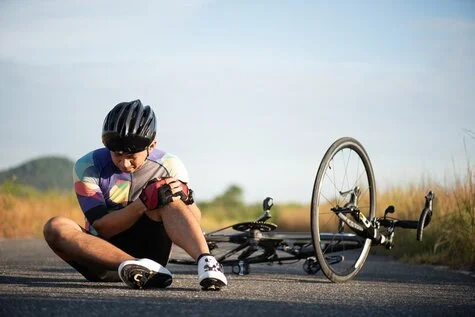
They are not fools. Cyclists in their 40s and 50s collect overuse injuries the way old bikes collect scratches. When Norwegian researchers surveyed 109 professional road riders in 2010, 58% had dealt with an overuse injury in the previous year, most often in the knee or lower back. Amateurs with desk jobs and less recovery time do not fare better. Patellar tendons, Achilles tendons, iliotibial bands and lumbar spines all break down slowly under 10 hours a week of the same motion, and they heal even more slowly. A compound that promises to speed that up is going to find an audience.
So this is a look at what is in that vial, what the research says it does, what the FDA and the anti-doping agencies say about it, and what to do about the knee instead.
First, what a peptide is
A peptide is a short chain of amino acids, the same building blocks that make up protein. String together two to about fifty of them and chemists call it a peptide; go longer and it becomes a protein. The distinction is mostly size. Insulin is a peptide (51 amino acids). So is oxytocin (9). The collagen in your tendons is a protein, thousands of amino acids long.
Your body makes hundreds of peptides, and most of them work as messengers. They circulate in the blood or sit in tissue and tell cells what to do: release a hormone, start dividing, migrate toward a wound, dial inflammation up or down. That is why the pharmaceutical industry likes them. Semaglutide, the drug in Ozempic and Wegovy, is a peptide that mimics a gut hormone. Several blood pressure and cancer drugs are peptides. A peptide drug can be very specific, hitting one receptor and leaving the rest of the body alone.
The catch is that peptides are fragile. Stomach acid and digestive enzymes chop them up, which is why most peptide drugs are injected rather than swallowed, and why the vials are shipped as freeze-dried powder that has to be mixed with water before use. Once mixed, they degrade within weeks even in the refrigerator. It is also why the oral BPC-157 capsules sold online face a steep question: how much of a 15-amino-acid chain survives the trip through your stomach intact?
The “healing peptides” in this article are all short chains that either copy a fragment of something your body already makes, or are designed to trigger a natural signal more strongly than your body would on its own. None of that is exotic chemistry. Whether a given chain does anything useful when injected near a sore tendon is a separate question, and it is the one the rest of this article is about.
Meet the four families
The healing-peptide world revolves around four groups of compounds, and they are less alike than the marketing suggests.
BPC-157 is the star. It is a 15-amino-acid fragment of a protein found in human stomach juice, and its name, “body protection compound,” was coined by the research group of Predrag Sikiric at the University of Zagreb, which has been studying it since the early 1990s. The pitch is that it revs up tendon cells, grows new blood vessels into damaged tissue, and gets fibroblasts (the cells that lay down collagen) moving toward the injury. It is sold as injectable powder, as capsules, and as a nasal spray.
TB-500 is sold as thymosin beta-4, a naturally occurring protein involved in cell migration and wound repair. Hold that thought, because what is in most vials is not actually thymosin beta-4.
GHK-Cu is a copper-carrying tripeptide isolated from human blood in 1973. Almost everything known about it concerns skin. It is now sold in injectable form for “systemic repair.”
The growth hormone secretagogues, ipamorelin and CJC-1295, are a different animal entirely. They do not act on the injury; they tell your pituitary to release more growth hormone, on the theory that more GH means more collagen and faster healing. That theory is the thinnest of the four.
The BPC-157 literature is big and strangely narrow
If you search PubMed for BPC-157 you will find around 200 papers, which sounds like a lot. Then you notice who wrote them. A February 2026 investigation by STAT and Undark counted more than 150 of those papers coming from Sikiric’s Zagreb group. A team of Polish reviewers told the reporters that the “vast majority” list either Sikiric or his colleague Sven Seiwerth as principal author. Sikiric is also named on BPC-157 patent applications going back to 1989, owns a company that sponsored a trial, and runs another that holds a patent on a stabilized version of the molecule. The reporters could not find those interests disclosed on the papers they reviewed.
None of that means the rat studies are wrong. It means almost nobody without a stake in the answer has tried to reproduce them.
And they are rat studies. The tendon papers people quote most often cut a rat’s Achilles tendon, or peeled it off the heel bone, treated the animal with BPC-157, and found it healed faster and stronger than in untreated rats. A group in Taiwan, one of the few independent teams, showed the peptide made tendon cells in a dish grow and migrate more vigorously. That is interesting biology. It is also a long way from a 52-year-old human whose patellar tendon has spent a decade quietly degenerating. Rats heal differently, and a surgically cut tendon is not tendinopathy.
So what about people? When the FDA reviewed BPC-157 for an advisory committee in July 2026, its scientists went looking for every study in which the compound had been given to a human. They found five. Two were enema studies for gut inflammation in about two dozen people each. One put it in the bladders of 12 patients with interstitial cystitis. One gave it intravenously to two volunteers. And one, by a Florida endocrinologist, injected it into the knees of 12 patients and reported that 7 felt better for more than six months. There was no control group.
A 2025 systematic review in HSS Journal searched the world’s medical databases for BPC-157 in orthopedic sports medicine and came back with 36 studies: 35 in animals, and that same 12-knee series. That is the entire body of human evidence for the thing your friend is injecting near his kneecap.
The FDA’s toxicologists added something the enthusiast sites leave out. In 28-day animal studies they saw “clinically relevant safety signals,” including changes in a blood-clotting measure and elevated liver enzymes. Whether those matter in humans is unknown, which is exactly the problem.
The trial that could change the story. In February 2026 a Chinese biotech called Hudson Biotech began enrolling 120 athletes with MRI-confirmed hamstring strains at Peking University Shenzhen Hospital. Half get two weeks of daily BPC-157 injections alongside standard rehab, half get placebo, and the researchers measure how fast each group returns to unrestricted sport. It is the first controlled human trial of the peptide for any musculoskeletal injury. Results are expected in 2027. Until then, BPC-157 for tendon pain is plausible in rodents and untested in people.
TB-500 is not what it says on the vial
TB-500 gets a pass from people who are skeptical of other peptides, because thymosin beta-4 has a legitimate clinical history. A company called RegeneRx ran real Phase 2 trials of it in the 2000s as a topical gel for chronic wounds. In its largest, a 72-patient study of venous leg ulcers, the middle dose healed 33% of wounds versus 24% on placebo. The difference was not statistically significant, and the low and high doses did worse than placebo. Nothing was approved, none of it involved tendons, and none of it was injected.
More to the point, thymosin beta-4 is a 43-amino-acid protein. What is sold as TB-500 is a synthetic 7-amino-acid snippet of it, sometimes chemically modified. When the FDA reviewed TB-500 in July 2026 it “did not find any information in the medical literature where TB-500 was administered to patients to treat any disease or condition.” Not one. The reviewers did find a lab study in which the fragment failed to promote wound healing in cultured cells, and no toxicity studies of it at all.
So the argument “thymosin beta-4 has human trials” is true and beside the point. The molecule with the trials is a different molecule, in a different form, for a different problem, and it did not clearly work.
GHK-Cu: a face cream in a syringe
GHK-Cu has a respectable body of research behind it as a skin ingredient. It stimulates collagen production in dermal cells, speeds wound closure in animals, and has been tested in cosmetic trials for wrinkles. A 2010 analysis suggested it shifts the expression of a striking share of human genes, which is the kind of finding that launches a thousand supplement labels.
What it does not have is a single study of injection for a tendon, ligament or joint. A peptide that is reasonably well characterized as a topical cosmetic becomes an unstudied drug the moment you draw it into a syringe, and the FDA said as much in 2023, noting “limited data in humans to inform safety-related considerations.”
The growth hormone route: real drugs, wrong question
Here, at least, the human pharmacology is solid. Placebo-controlled trials published in 2006 showed that a single injection of CJC-1295 raises growth hormone two- to tenfold for about a week and IGF-1 for up to eleven days, with no serious side effects in healthy adults. Ipamorelin was developed by Novo Nordisk in the 1990s, does what it says, and was abandoned as a drug candidate.
What nobody has ever done is the study that matters: give injured athletes a secretagogue or a placebo and measure whether their tendons heal faster. Growth hormone itself has been tested in athletes. A 2010 trial in Annals of Internal Medicine gave 96 recreational athletes eight weeks of GH and found no improvement in strength, power or endurance, a small bump in sprint capacity, and a lot of fluid retention and joint pain. Raising your GH is a measurable effect. Fixing a tendon with it is a hypothesis. And months of elevated IGF-1 is not a free lunch; it is also a lever on insulin sensitivity and on cell growth generally.
What the FDA actually did in 2026
In September 2023 the FDA put BPC-157, TB-500, CJC-1295, ipamorelin, injectable GHK-Cu and a handful of others on its list of substances that “may present significant safety risks” and cannot be used by compounding pharmacies. Telehealth clinics that had been prescribing them were told to stop. For BPC-157 specifically, the agency wrote that it “lacks sufficient information to know whether the drug would cause harm when administered to humans.”
Then, in February 2026, HHS Secretary Robert F. Kennedy Jr. announced a peptide “reclassification,” and in April the FDA quietly removed twelve peptides, BPC-157 and TB-500 among them, from that do-not-compound list. Headlines declared that the FDA had legalized peptides.
It had not. Being taken off the danger list is not the same as being put on the approved-for-compounding list, and the peptides landed in a legal no-man’s-land between the two. In July, an FDA advisory committee met to consider adding some of them. The agency’s own scientists opposed every one, calling the available studies “short in duration, small in sample size.” The committee voted 8 to 6 to recommend BPC-157 anyway, for ulcerative colitis, not for injuries, and STAT reported that most of the panelists voting yes had ties to the peptide industry. The vote is nonbinding. The FDA still has to write a proposed rule, take public comment, and finalize it, a process one regulatory law firm estimated would run to late 2026 “at the earliest, if it is finalized at all.”
Where that leaves you in September 2026: no peptide in this article is an approved drug for anything, and BPC-157 cannot legally be compounded by a US pharmacy. A clinic handing you a vial is operating in a gray zone. A website mailing you one is not selling a pharmaceutical at all.
“Not for human consumption”
Most riders using these compounds are not getting them from a clinic. They order freeze-dried powder from a website whose products are labeled “for research purposes only.” Everyone involved understands what the buyer intends. The label exists so the seller is not regulated as a drug company.
The buyers have responded by building their own quality control, which tells you how bad the baseline is. Enthusiasts pool money to ship vials to an independent lab in the Czech Republic for purity testing and post the certificates online, and vendors that do not publish batch results get named and shamed. That is rational behavior, and also a confession: the customer is doing the safety work that a manufacturer of any real medicine is legally required to do. A certificate showing 98% purity says nothing about sterility, bacterial toxins, protein clumping, or what the other 2% is. Those are exactly the risks the FDA flagged in 2023, warning that peptide impurities and aggregation can trigger immune reactions.
Then there is the injection itself. Someone with no training in sterile technique is drawing an uncharacterized substance through a rubber stopper at a kitchen counter and pushing it under their skin every day. Reports of allergic reactions to gray-market peptides are not hard to find. Matthew Fedoruk, chief science officer at USADA, put it plainly to STAT: “You don’t even know what you’re buying inside that bottle.”
If you race, stop reading here and don’t
There is no gray area on this part. If you hold a USA Cycling license, every compound in this article is prohibited at all times, in and out of competition, in every category from masters crits to gravel nationals.
BPC-157 was explicitly added to the World Anti-Doping Agency’s Prohibited List in 2022 under S0, the catch-all category for any substance not approved for human use by any government. TB-500, ipamorelin, CJC-1295 and the whole GHRP family sit under S2, peptide hormones and growth factors. GHK-Cu, unapproved as a drug, is S0. USADA’s guidance says a therapeutic use exemption for BPC-157 is essentially off the table, because approved alternatives exist and, in the agency’s words, it is “unknown if there is a safe dose.”
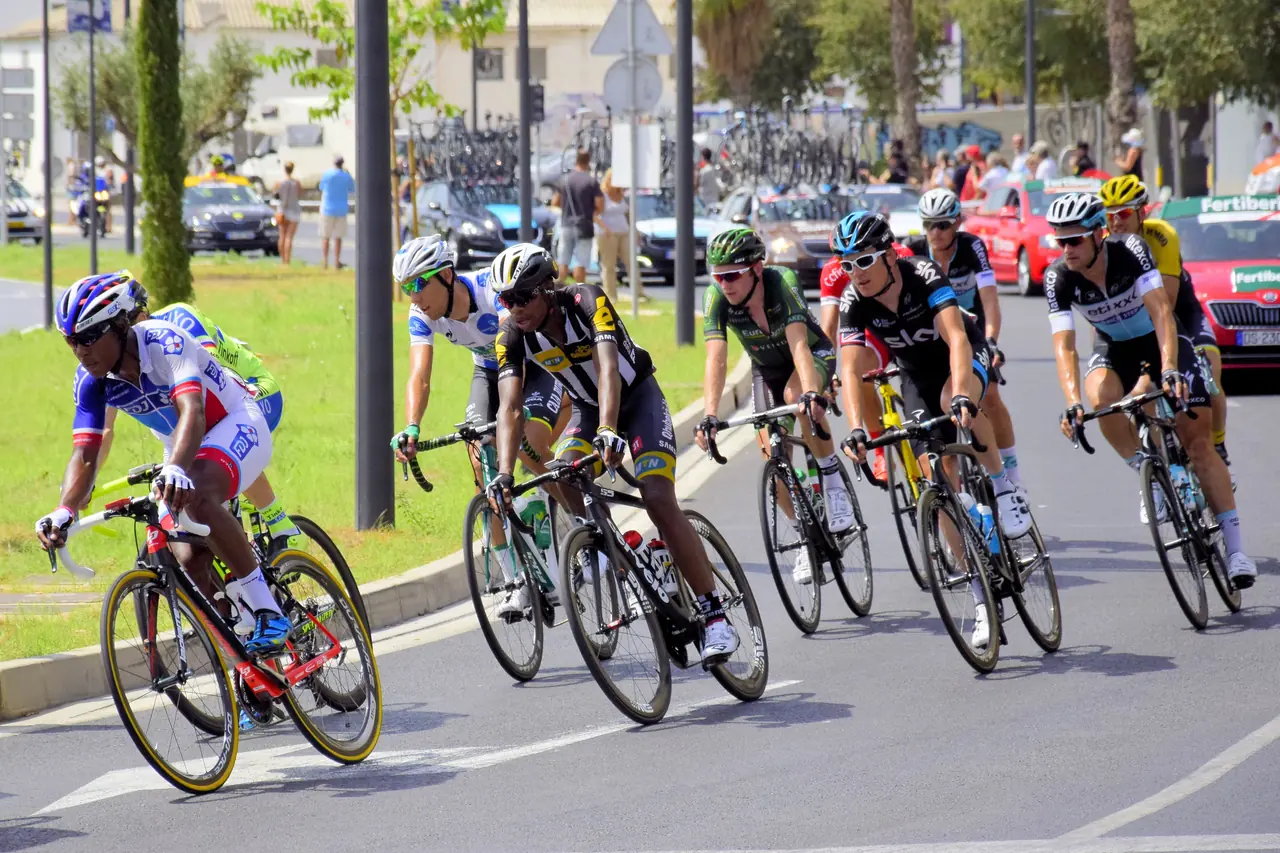
Cyclists have lost careers to this. Samuel Sanchez, the 2008 Olympic road race champion, tested positive for GHRP-2 two days before the 2017 Vuelta a España. BMC Racing fired him when the B sample confirmed, and he was banned for two years at age 39, which ended his career. The same year Stefano Pirazzi of Bardiani-CSF drew a four-year ban for a GHRP, and teammate Nicola Ruffoni was dismissed for a similar finding. In 2025, a Canadian university volleyball player received four years for BPC-157 and TB-500, a case built not from a urine sample but from information submitted to the anti-doping agency. If you think a short half-life protects you, you are betting your license on a guess, and the labs have had methods for detecting these compounds since 2011.
What actually fixes a cyclist’s tendon
The injuries that send riders shopping for peptides have treatments with real trials behind them. Almost all of them involve lifting something heavy, slowly.
Achilles and patellar tendons. The landmark study came from Sweden in 1998. Fifteen recreational athletes with chronic Achilles pain did heavy eccentric heel drops, three sets of fifteen, twice a day, for twelve weeks. All fifteen got back to their previous running level, with pain dropping from 81 to 5 on a 100-point scale. Every one of the fifteen comparison patients, treated the conventional way, ended up in surgery.
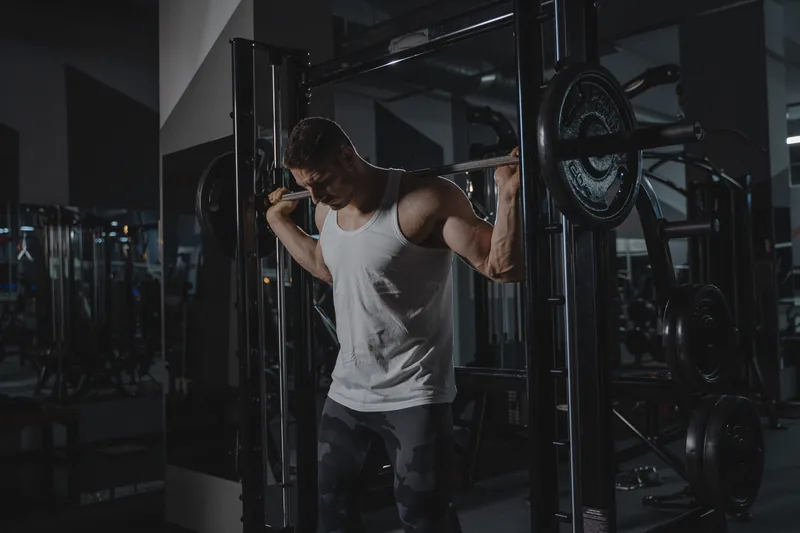
Danish researchers refined the approach over the next decade. A 2009 trial randomized 39 men with patellar tendinopathy to a cortisone shot, eccentric squats, or “heavy slow resistance” training. The injection worked fastest and had worn off by six months; both lifting groups kept their gains. In 2015 the same group compared eccentric drops directly against heavy slow resistance in 58 Achilles patients. Both worked at twelve weeks and both held at one year, but the heavy slow resistance group stuck with the program better (92% versus 78%) and 96% of them were satisfied a year out, against 76% for the eccentric group. Three gym sessions a week beat twice-daily heel drops on compliance, which for a working cyclist is the whole game. It also happens to be the strength work we recommend in our article on Weight Training for Cyclists.
IT band and front-of-knee pain. On a bike these are usually a fit problem before they are a tissue problem. A saddle that is too high loads the IT band and the back of the knee; too low or too far forward loads the kneecap; a rotated cleat changes how the knee tracks. A professional bike fit runs $200 to $400 and addresses the cause. A peptide, even if it worked, would be treating a symptom your bike reproduces on the next ride.
Low back. The compound’s reputation has outrun its data here entirely. There is no animal model, let alone a human study, of BPC-157 for mechanical low back pain. What does have evidence in riders is trunk endurance work, hamstring flexibility, hip hinge mechanics, and simply spending less continuous time locked in one position.
The honest catch. Loading programs are slow. Patients in the 2015 Achilles trial were still improving at 52 weeks, while the cortisone group in the 2009 study felt better within weeks. A rider six weeks from a target event will find “twelve weeks of heavy slow squats” a truthful but unwelcome answer. The appeal of peptides is mostly a reaction to how slowly adult tendon remodels. A compound that speeds that up would be worth a great deal, which is why the rat data is tantalizing and the absence of human data is so frustrating.
When to stop self-treating
Tendon pain that has not budged after six to eight weeks of modified training and loading, pain that wakes you at night, a sudden loss of strength or a gap you can feel in the tendon, or back pain that runs down a leg: these belong in front of a sports medicine physician or an orthopedic physiotherapist. A doctor can image the tendon, tell a cranky tendon from a partial tear, and check for systemic causes. Fluoroquinolone antibiotics, some statins and thyroid problems all weaken tendons. A cyclist who just finished a course of Cipro and has a sore Achilles has a drug problem, not a peptide deficiency.
What to do this week
Book the bike fit you have been putting off. If a tendon has hurt for more than six weeks, book a sports medicine appointment before you order anything. Riders who train hard and crash are why Velosurance policies carry optional Medical Payments coverage, which is a better use of $200 than a vial of unverified powder. The Shenzhen hamstring trial is scheduled to finish collecting data in February 2027; if BPC-157 does anything in humans, that is when the world will start to find out.
Policy terms, available coverages, and state laws vary and change; this article is general information, not insurance, medical, or legal advice. Talk to your physician before changing medication, supplements, or training.
Frequently Asked Questions
- Is BPC-157 legal in the US in 2026?
- It is not an approved drug for any use. It is not a controlled substance either, so possessing it is not a crime, but selling it for human use is unlawful, and as of September 2026 it cannot legally be compounded by a pharmacy despite the July 2026 advisory committee vote, which the FDA has not acted on. Online vendors get around this by labeling it “research use only.”
- Does BPC-157 show up on a drug test?
- It can. BPC-157 is named on the WADA Prohibited List, and accredited labs have detection methods for it. Sanctions can also come from evidence other than a test, as the 2025 Canadian case shows. For a licensed racer, detectability is beside the point: it is banned at all times.
- Is TB-500 the same as thymosin beta-4?
- No. Thymosin beta-4 is a 43-amino-acid protein that was tested in topical wound-healing trials. TB-500 as sold is a synthetic 7-amino-acid fragment. The FDA found no published case of TB-500 ever being given to a patient for any condition.
- Are there any human trials of BPC-157 for tendons or muscles?
- One is underway: a 120-patient, placebo-controlled Phase 2 study for acute hamstring strain at Peking University Shenzhen Hospital, enrolling since February 2026 with results expected in 2027. Before it, the only human orthopedic data was a 12-patient knee series with no control group.
- What does heavy slow resistance training for tendinopathy look like?
- In the 2015 Danish protocol: three exercises (squat, leg press and a heel-raise variant), three times a week, three to four sets each, moving about three seconds up and three seconds down, with the load progressing over twelve weeks from a weight you can lift 15 times to one you can lift 6 times. Some pain during the exercise is acceptable if it settles by the next morning. Have a physiotherapist set the loads.
- Can a masters racer get a therapeutic use exemption for BPC-157 or a GH peptide?
- Practically, no. USADA says a TUE is unlikely for BPC-157 because approved alternatives exist and it is not a licensed medicine anywhere. GH secretagogues would require documented pituitary disease and a prescription for an approved drug, which ipamorelin and CJC-1295 are not.
- Do peptides help cycling low back pain?
- There is no study, in animals or humans, of any of these peptides for mechanical low back pain. Bike fit, hip and trunk strength, and time out of the saddle have evidence. If the back pain comes with leg pain, numbness or weakness, see a physician.