TL;DR:
- Dirty 30s are 30-second efforts at 120% to 150% of FTP, separated by 60 seconds easy, done in two sets of four with a 4-minute break between sets. The whole session, warm-up and cool-down included, takes about 26 minutes.
- The workout targets something the Norwegian 4x4 does not: the ability to go hard, back off without stopping, and go hard again. That is the skill you need on rolling terrain, punchy singletrack and any ride where the pace keeps changing.
- Research on 30-second interval formats in trained cyclists shows larger gains in VO2 max, threshold power and time-trial performance than effort-matched 4- to 5-minute intervals, mostly because the short format lets you hold a higher power and accumulate more time near your aerobic ceiling.
- Pacing is the whole game. The goal is eight efforts that look nearly identical on the power meter. If the last two fall apart, the first two were too hard.
- One session a week is plenty alongside a VO2 max workout and your long ride. Two is the ceiling, and only for riders with a solid base who are not already doing other hard work.
Why 30 seconds
Most interval advice for cyclists is about raising your ceiling. The Norwegian 4x4, covered in our guide to the 16-minute VO2 max workout, does that with four long, steady efforts near maximum heart rate, and it is probably the best hard session a cyclist can add to a week.
But a bigger engine does not make you better at what drops most riders: the surge. A group ride where the pace jumps every time the road tilts up, even for a 20-second rise, and only settles once the strongest riders are over the top. A gravel race with 40 short climbs instead of two long ones. A singletrack loop where every switchback demands a stab of power and never gives you a flat section to recover on. In all of those, the limit is how quickly you get back under your ceiling after each effort, and how many times you can do it before the legs quit.
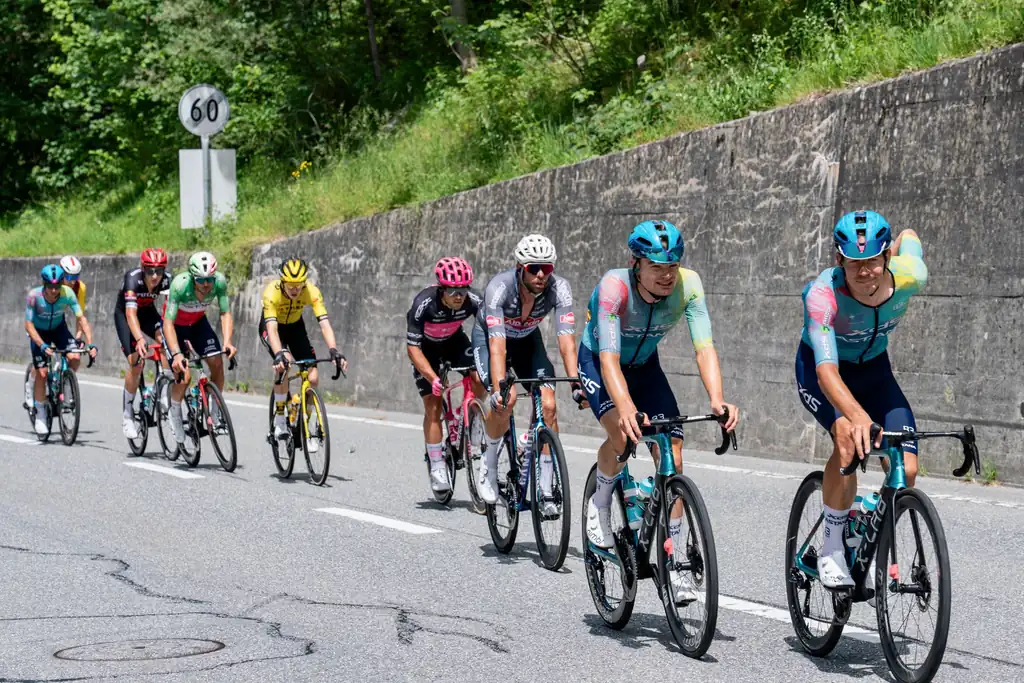
You have probably had the ride that proved it: fine on the long steady climb, then shelled on the rollers after it, because the recovery between them was 45 seconds of still-fast riding. The problem was repeatability, and repeatability is what Dirty 30s train.
Dirty 30s are a HIIT format, not a cycling invention. Runners use the same structure as 30-second hard strides with a jog between, and gym classes run it on bikes, rowers and jump ropes. The name is a rhyme and nothing more. What makes it interesting for cyclists is the research support 30-second intervals have picked up in the last ten years, most of it from studies on trained and elite riders.
The workout, written out
Warm up for at least 5 minutes, 10 if you can, with a couple of 10-second spin-ups near the end. Then two sets of 4 x 30 seconds hard (120% to 150% of FTP, RPE 9 to 10, seated, high cadence) with 60 seconds easy between efforts (under 55% of FTP, pedals turning, never a stop) and 4 minutes easy between sets. Cool down for 5 minutes. That is 26 minutes with four minutes of hard work in it, and the goal is for the second set of four to match the first.

A minute-by-minute version for the trainer
| Clock | What you are doing | Effort | Target |
|---|---|---|---|
| 0:00 to 5:00 | Warm-up, easy to moderate, two short spin-ups in the last minute | Easy | Under 55% FTP, RPE 2 to 4 |
| 5:00 to 5:30 | Effort 1 | Hard | 120% to 150% FTP, RPE 9 |
| 5:30 to 6:30 | Easy spin | Easy | Under 55% FTP, RPE 1 to 2 |
| 6:30 to 7:00 | Effort 2 | Hard | 120% to 150% FTP, RPE 9 |
| 7:00 to 8:00 | Easy spin | Easy | Under 55% FTP, RPE 1 to 2 |
| 8:00 to 8:30 | Effort 3 | Hard | 120% to 150% FTP, RPE 9 |
| 8:30 to 9:30 | Easy spin | Easy | Under 55% FTP, RPE 1 to 2 |
| 9:30 to 10:00 | Effort 4 | Hard | 120% to 150% FTP, RPE 9 |
| 10:00 to 11:00 | Easy spin | Easy | Under 55% FTP, RPE 1 to 2 |
| 11:00 to 15:00 | Recovery between sets | Easy | Under 55% FTP, RPE 1 to 2 |
| 15:00 to 15:30 | Effort 5 | Hard | 120% to 150% FTP, RPE 9 |
| 15:30 to 16:30 | Easy spin | Easy | Under 55% FTP, RPE 1 to 2 |
| 16:30 to 17:00 | Effort 6 | Hard | 120% to 150% FTP, RPE 9 |
| 17:00 to 18:00 | Easy spin | Easy | Under 55% FTP, RPE 1 to 2 |
| 18:00 to 18:30 | Effort 7 | Hard | 120% to 150% FTP, RPE 9 |
| 18:30 to 19:30 | Easy spin | Easy | Under 55% FTP, RPE 1 to 2 |
| 19:30 to 20:00 | Effort 8 | Hard | 120% to 150% FTP, RPE 9 |
| 20:00 to 21:00 | Easy spin | Easy | Under 55% FTP, RPE 1 to 2 |
| 21:00 to 26:00 | Cool-down | Easy | Under 55% FTP, RPE 1 to 2 |
Total: 26 minutes, with 4 minutes of hard work spread across 8 efforts.
How hard is 120% to 150% of FTP? For a rider with an FTP of 250 watts, 300 to 375 watts. The low end is roughly your five-minute power; the high end is what you could hold for about 90 seconds. Start at the bottom for your first few sessions. If all eight efforts land within 5% of each other and you finish with something left, move up next time.
If you do not have a power meter. Heart rate is nearly useless here: it lags by 20 to 30 seconds, so it reports the last rep, not this one. Go by feel. A hard effort is a 9 out of 10: ragged breathing and burning legs by the end, but not an all-out sprint, and repeatable a minute later. If you cannot repeat it, it was a 10, and a 10 is a different workout. Outdoors, speed over a consistent stretch of road or a short repeatable climb works the same way; consistency across reps is the goal.
What the research says about short intervals
The results on 30-second intervals point one way: short, hard efforts with incomplete recovery produce more adaptation per minute of suffering than longer intervals.
They let you hold more power. Researchers at Lillehammer University College in Norway ran a 10-week study in 2015 on trained cyclists, comparing two weekly sessions of 30-second efforts with 15-second recoveries against four 5-minute efforts with 2.5 minutes between. Work time was nearly identical, but the short-interval group averaged about 40 watts more during the efforts. After 10 weeks they improved VO2 max by 8.7% versus 2.6% for the long-interval group, peak power by 8.5% versus 1.6%, and a 40-minute all-out test by 12% versus 4%.
It holds in elite riders. The same group repeated the comparison in 2020 with 18 professional cyclists over three weeks. VO2 max did not move in either group, which is normal for athletes near their ceiling, but 20-minute power rose 4.7% in the short-interval group and fell 1.4% in the long-interval group, and power at a blood lactate of 4 millimoles per liter, a common stand-in for threshold, went up 2% versus down 2.8%.
They keep you near your ceiling longer. The likely reason is time spent at or above 90% of VO2 max, the stimulus physiologists agree drives aerobic adaptation. A 2016 Norwegian study put well-trained cyclists through three interval formats at the same power, and the 30-second format produced the most time above 90% of VO2 peak. French researchers led by Véronique Billat found the same in runners in 2000: a 30-on, 30-off session held athletes at VO2 max for nearly eight minutes, against under three for a continuous hard run.
Even a few sessions change the muscle. At McMaster University in Canada, Martin Gibala’s lab showed in 2006 that six sessions of four to six 30-second all-out sprints over two weeks, about 2.5 hours of training, produced the same gains in muscle oxidative capacity and 750-kilojoule time-trial performance as 10.5 hours of steady riding. A 2008 follow-up over six weeks found the same with 1.5 hours a week of sprints versus 4.5 hours of moderate riding. Those were all-out sprints, harder than Dirty 30s, but they established that 30 seconds is long enough to tell the muscle something.
Recovery between efforts is trainable, and it runs on your aerobic system. A 2001 review from the University of Victoria found that the fitter your aerobic system, the faster you restore phosphocreatine in the muscle after a burst and the better you hold power across repeated efforts. Dirty 30s train both halves at once: the 30-second effort pushes the top end, and the 60-second spin, done while the muscle is still restocking, trains the recovery itself.
Where Dirty 30s differ from the lab protocols. The 30/15 and 30/30 studies keep recovery equal to or shorter than the effort, which is what drives the time at VO2 max. Dirty 30s use 30 on, 60 off and four minutes between sets, so the base version is more a repeatable-power session than a pure VO2 max session. The third progression below closes the gap.
Progressions
Three ways to make it harder, one at a time, in this order, with two or three sessions on each before adding the next.
1. Add a set. Three sets of four instead of two, keeping the four-minute break. Session time grows to about 36 minutes. Four sets is the practical ceiling.
2. Add reps. Six per set instead of four. Two sets of six is six minutes of hard work; three sets of six is 18 efforts and a serious session.
3. Shorten the recovery. Drop the easy spin from 60 seconds to 30. This changes the physiology the most: oxygen uptake never fully drops between efforts, so each rep starts from a higher baseline and you spend more of the set near VO2 max. It is the format Billat studied and a half-step from the 30/15 the Norwegian studies used. Expect power on the hard efforts to come down a little; that is the tradeoff, slightly lower peak power for much more time at the ceiling.
Three sets of six at 30 on, 30 off is a 30-minute session with nine minutes above threshold, closer to the professional protocols than the starter version. Give yourself six to eight weeks to get there.
Where it fits in a week
Dirty 30s are a hard day. Two hard days a week is enough for almost anyone not racing professionally, and the second is better spent on the Norwegian 4x4 or a threshold session. A week for a rider with six to eight hours:
| Day | Session | Load |
|---|---|---|
| Monday | Off or easy spin | Rest |
| Tuesday | Dirty 30s. Short session, so it fits a lunch break or an early morning on the trainer | Hard |
| Wednesday | Endurance ride, 60 to 90 minutes, conversational | Easy |
| Thursday | Norwegian 4x4 or a threshold workout | Hard |
| Friday | Off or easy spin | Rest |
| Saturday | Long ride, group ride or trail day | Moderate to hard |
| Sunday | Easy to moderate ride, or off | Easy |
Put the 30s before an easy day, not before your long ride. The session does not flatten you the way a 4x4 does, but the neuromuscular load from eight to 18 hard accelerations shows up the next morning.
Short intervals look harmless on paper, and that is how riders talk themselves into a third hard day. If your numbers are sliding despite doing more work, we have a guide to overtraining syndrome and how to catch it early. If you are building around limited hours, see building cycling fitness when time is tight; Dirty 30s are one of the easiest sessions to fit into that kind of week.
Indoor or outdoor
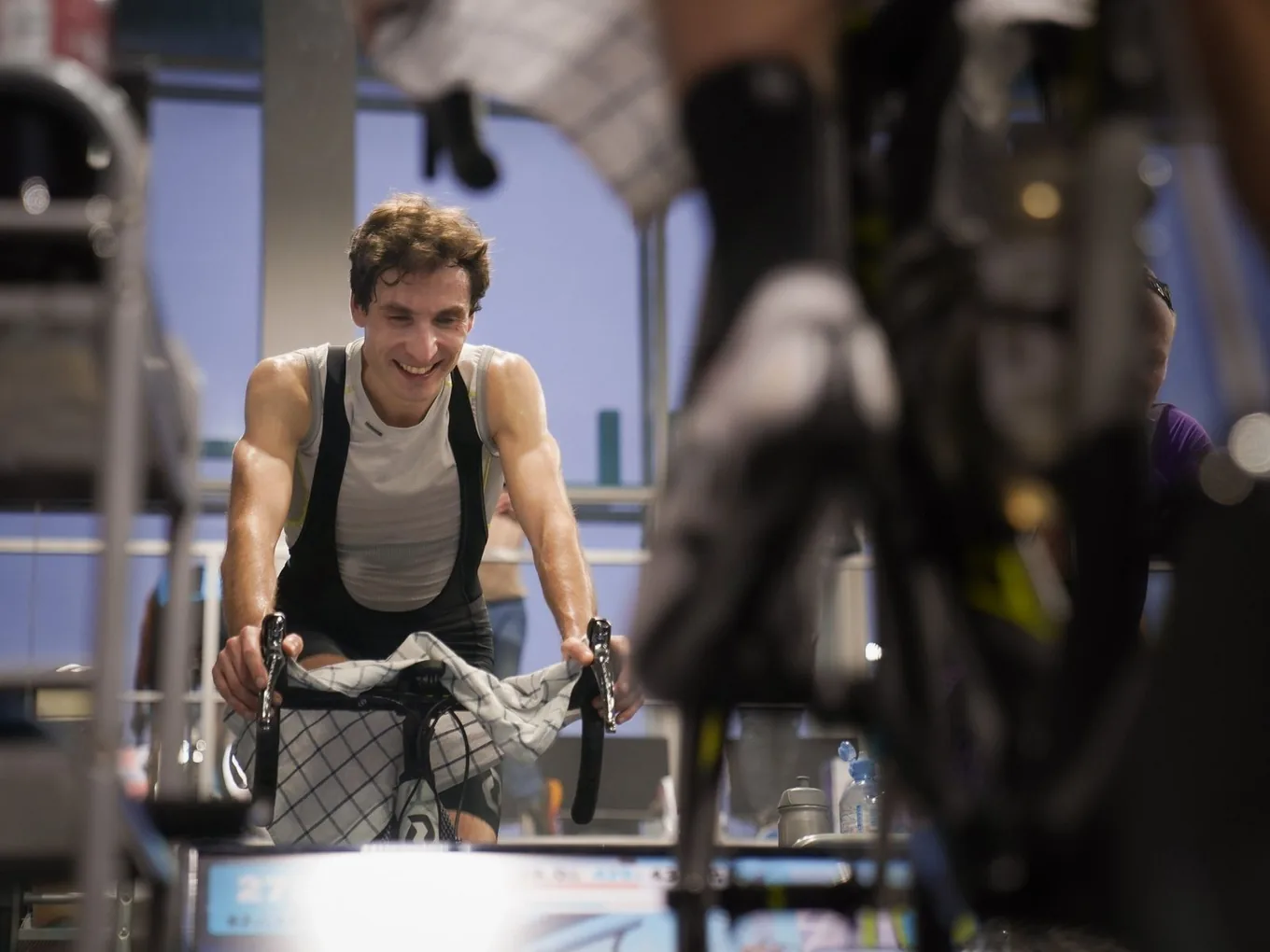
Trainer. Best for the first several sessions: ERG mode handles the targets, the clock is in front of you, no stop signs. One warning: in ERG mode, if cadence drops during a hard effort the trainer raises resistance to hold the wattage and you can bog down. Keep cadence at 90 to 100 RPM, or switch ERG off for the 30s and control effort with gears. If you are setting up indoors for the first time, we have a guide to building a pain cave on any budget.
Road. A flat or slightly uphill stretch with no intersections for two miles, or a short climb you can repeat. Start each effort from a rolling pace and time the 60 seconds strictly; outdoors it stretches to 90 while you coast or wait for the road to clear.
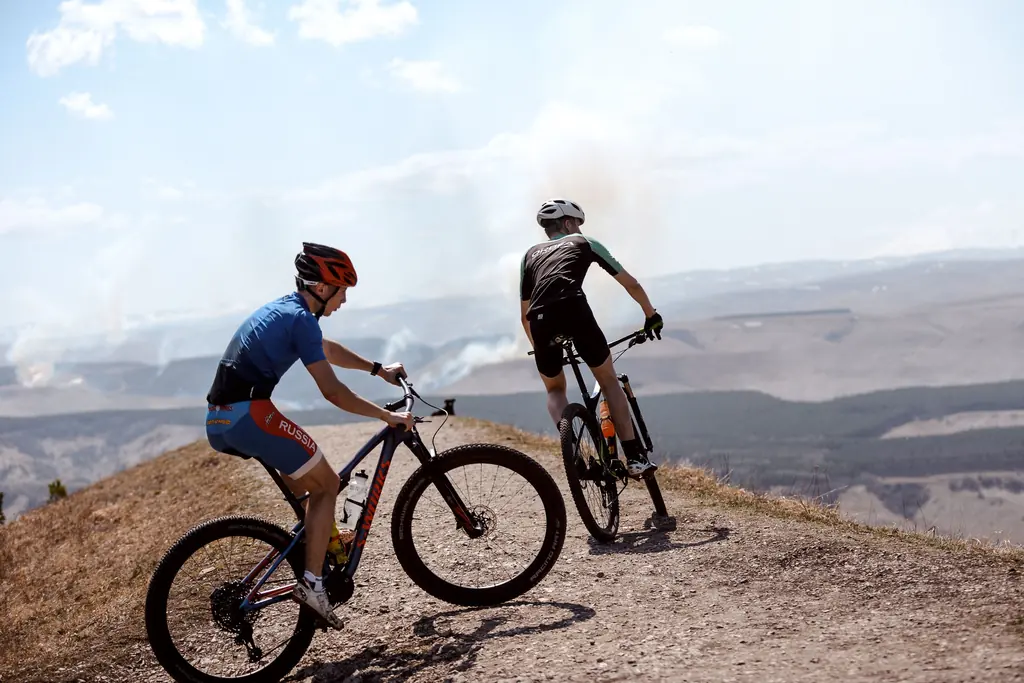
Trail. The demand matches a punchy trail, so this translates well to a mountain bike. A fire road or doubletrack climb with a steady grade is best; singletrack rarely gives a clean 30 seconds without a corner or root to manage. If you ride it on singletrack anyway, treat each short climb on a loop you know as one effort. The reps will be messier, but the training effect is the same.
Gravel. Same as road, with attention to the surface on the recovery sections. Loose gravel at easy pace is harder than it looks.
Common mistakes
Going out at 150% on the first rep. The number one error. If the first effort is a near-sprint, the fifth is a crawl. Start at 120%.
Stopping during the recovery. Coasting to a halt turns the session into eight separate sprints, which trains something different. Keep the legs turning.
Skipping the warm-up. A 26-minute session with a two-minute warm-up is how you strain something. Five minutes minimum, 10 if you are over 40 or riding in the cold.
Grinding at low cadence. Thirty seconds at 70 RPM in a big gear is a strength workout. Aim for 90 to 100 RPM so the load lands on the cardiovascular system.
Using heart rate as the target. For 30-second work, heart rate is a rearview mirror.

Adding all three progressions at once. Riders who jump to three sets of six at 30/30 in week two have a terrible session and decide the format does not work.
How this pairs with the rest of your training
Dirty 30s are not a replacement for the 4x4. If you have one hard session a week and want a bigger engine for long climbs and time trials, the 4x4 is the better pick, and our guide to becoming a better climber explains why sustained power rules on long ascents. If the goal is staying with a surging group, racing criteriums or cyclocross, or riding punchy trails without blowing up, the 30s address that directly.
For raw acceleration on top of repeatability, see the guide to building explosive cycling power. Gym work stacks well with all of it; lifting for cyclists covers how.
If you ride for health rather than racing, the same research applies: short, hard intervals raise VO2 max, one of the strongest predictors of longevity there is. See cycling and longevity and what endurance training does to your heart.
A word on where the risk is
Short intervals on a trainer are about as safe as cycling gets. The road and trail versions are not: a rider at 30 mph with ragged breathing and tunnel vision, or a fourth punchy climb on tired legs. In that moment a bad decision is easy to make: a late look over the shoulder before an effort, a corner taken on legs that have nothing left. One crash can derail a season you have spent months building, and the bike takes the hit along with you. A homeowners policy typically treats a bike as personal property with a low limit and no crash coverage. Specialty bicycle insurance covers theft and crash damage and can add medical and liability protection, the part that counts when you are doing intervals in traffic.
Policy terms, coverage limits and availability vary by state. This article is for general information and is not insurance, medical or legal advice. Talk to a physician before starting high-intensity training, especially if you have a heart condition or have been inactive.
Frequently Asked Questions
- What are Dirty 30s?
- A HIIT session built on 30-second efforts, used by cyclists and runners alike. The cycling version is two sets of four 30-second efforts at 120% to 150% of FTP, each followed by 60 seconds of easy spinning, with four minutes between sets. With warm-up and cool-down the session takes about 26 minutes.
- How hard should the 30-second efforts be?
- Hard but repeatable. On a power meter, 120% to 150% of FTP. By feel, a 9 out of 10, not an all-out sprint. The test is whether the eighth effort matches the first. If it does not, start easier next time.
- How often should I do Dirty 30s?
- Once a week for most riders, as one of two hard sessions. The other hard day is better spent on longer intervals such as the Norwegian 4x4. Doing the 30s twice a week only makes sense for riders with a solid base and no other high-intensity work.
- Are Dirty 30s better than the Norwegian 4x4?
- They do different jobs. The 4x4 is the stronger session for raising VO2 max and sustained climbing power. Dirty 30s are the stronger session for repeatable power and recovery between surges. Most riders benefit from doing both in the same week.
- Can I do Dirty 30s on a mountain bike?
- Yes. A fire road or doubletrack climb with a consistent grade is best. On singletrack, pick a loop with short climbs and treat each climb as one effort; the reps will be less precise but the training effect is the same.
- Do I need a power meter?
- No. Power makes pacing easier, but RPE works. Heart rate does not, because it lags too far behind a 30-second effort to guide it.