TL;DR:
Climbing well is mostly a physics problem wearing a fitness costume. On a steep road, gravity is the enemy, and the single number that predicts how fast you go up is your power-to-weight ratio, your sustainable watts divided by your body mass in kilograms. You improve it two ways: build the engine and lighten the load, ideally without wrecking one to chase the other. The fastest gains for most riders come from raising your sustainable power with high-intensity aerobic intervals, adding two heavy strength sessions a week to make each pedal stroke cheaper, pacing the climb evenly instead of attacking the bottom, and spinning a higher cadence rather than grinding a big gear. None of it requires talent you were born with. Climbing is trainable.
Why some riders float uphill and others suffer
Every cyclist knows the feeling. The road tilts up, the group eases away, and within thirty seconds your breathing is ragged and your legs are on fire. It is tempting to conclude that good climbers simply have something you do not. They are lighter, they are gifted, they were built for it. There is a grain of truth there, but it is a small grain. The larger truth is that climbing rewards a handful of specific, measurable qualities, and almost all of them respond to training.
This article walks through what actually determines how fast you climb, what the research says about improving each factor, and how to turn that into rides you can do this week. We will lean on physiology studies rather than folklore, because the folklore around climbing is unusually thick.
Start with the physics: climbing is a power-to-weight problem
On flat ground, most of the power you produce is spent shoving air out of the way. Aerodynamic drag rises steeply with speed, which is why on the flats a heavier, more powerful rider can be very fast. Point the road uphill and the equation changes. As the gradient increases your speed drops, air resistance fades into the background, and the dominant force you are fighting becomes gravity pulling your total mass back down the hill. Because that gravitational resistance scales directly with how much you and your bike weigh, a lighter rider needs meaningfully less power to hold the same speed on a steep grade.
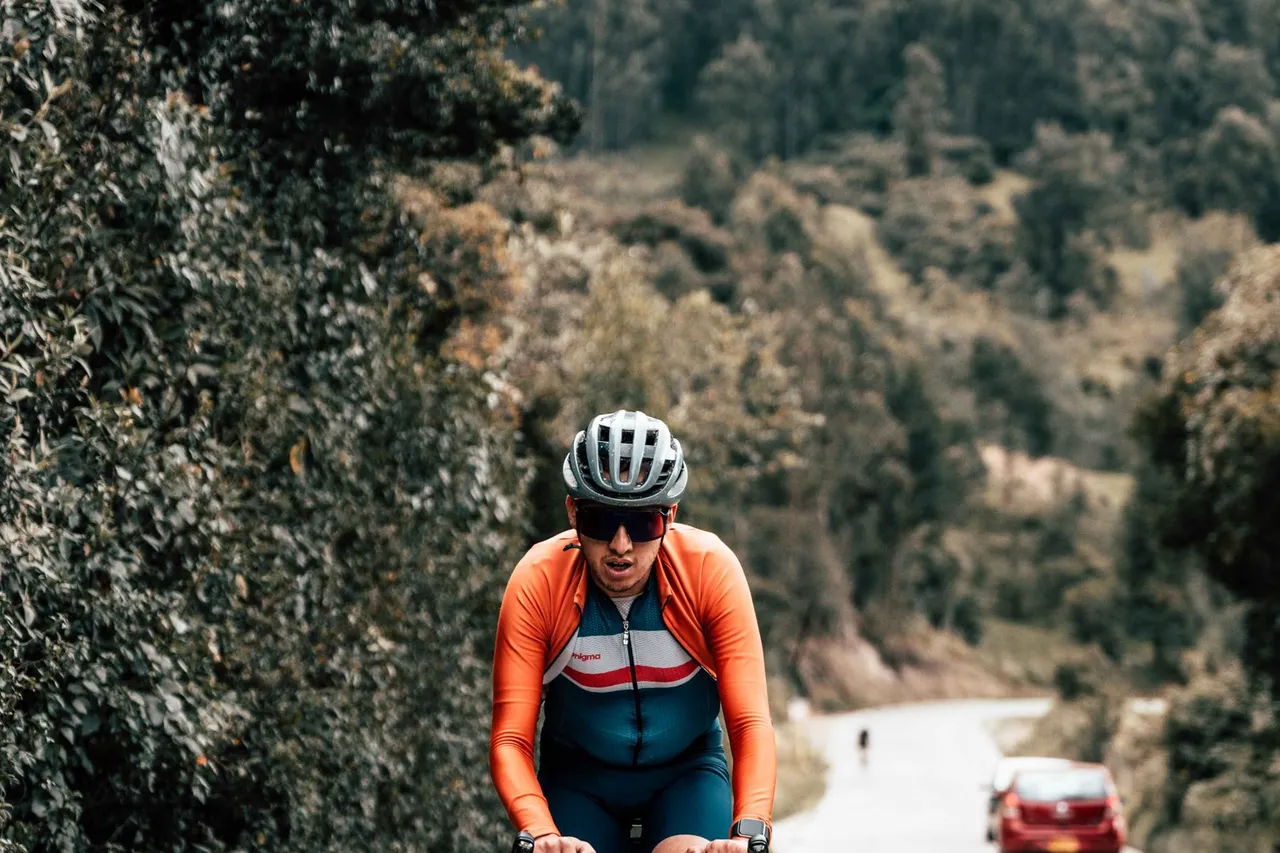
This is why climbing performance is best described not by raw watts but by watts per kilogram (W/kg): your sustainable power divided by your body mass. Two riders can produce identical power, but on a long climb the lighter one pulls away, and the gap widens as the road gets steeper. It is also why a big engine alone does not make a climber. A rider who can push 300 watts at 90 kg (3.3 W/kg) will be left behind by one pushing 250 watts at 62 kg (4.0 W/kg), even though the first rider is objectively more powerful.
What the numbers look like
Power-to-weight is usually quoted at threshold, the hardest effort you can sustain for roughly an hour, often called FTP. Published benchmarks put a novice rider below about 2.5 W/kg, a solid recreational rider around 3.2 to 3.7 W/kg, a strong amateur near 4 W/kg, and elite and professional climbers north of 6 W/kg. Those professional figures are the reason the best riders in the world seem to defy gravity on Alpine passes. You do not need to reach them. Moving from 3.0 to 3.6 W/kg is the difference between being dropped on every rise and hanging comfortably in the group, and that jump is very achievable in a season.
The engine: three physiological numbers you can grow
Behind your power-to-weight ratio sit three trainable physiological traits. The first is VO2max, the maximum rate at which your body can take in and use oxygen. It sets the ceiling on your aerobic power. The second is your threshold, the fraction of that ceiling you can hold for a long time before lactate accumulates faster than you can clear it. The third, and the most overlooked, is efficiency, or how much of the energy you burn actually turns into forward motion at the pedals. A more efficient rider goes faster on the same oxygen cost.
The encouraging part is that all three respond to specific training, and you do not have to guess which sessions move them.
Raise the ceiling with high-intensity aerobic intervals
If you want to lift VO2max, the evidence strongly favors hard aerobic intervals over easy volume. In a well-known controlled study, Helgerud and colleagues (2007) compared four training approaches matched for total work over eight weeks. The group doing four-by-four-minute intervals at 90 to 95 percent of maximum heart rate, with three minutes of recovery between efforts, improved VO2max by about 7.2 percent. The moderate, steady-intensity groups improved far less. The practical takeaway is blunt: to grow your ceiling, you have to spend time near it. A weekly session of four to five four-minute efforts up a steady climb, ridden just below all-out, is one of the highest-return workouts a climber can do. This exact protocol has a name, the Norwegian 4x4, and it is one of the most proven ways to raise VO2max. We break down how to run it and slot it into your training week in our dedicated guide, The Norwegian 4x4: The 16-Minute Workout That Could Be the Best Thing You Add to Your Cycling Year.
Push your threshold closer to the ceiling
Raising VO2max only helps if you can use a large share of it for the length of the climb. That is what threshold training builds. Sustained efforts of roughly eight to twenty minutes at or just below your one-hour power, repeated with short rests, teach your body to produce and clear lactate at higher intensities. Over weeks this raises the percentage of VO2max you can hold, which is often the difference between fading two-thirds of the way up a long climb and riding it through at an even effort.
The cheapest speed you are ignoring: efficiency and strength
Efficiency gets far less attention than VO2max, yet it may be the most cost-effective place for an experienced rider to find climbing speed, because it makes every watt cheaper without requiring a bigger heart or lungs. The clearest lever here is heavy strength training, which surprises many endurance cyclists who fear the barbell will make them bulky and slow.
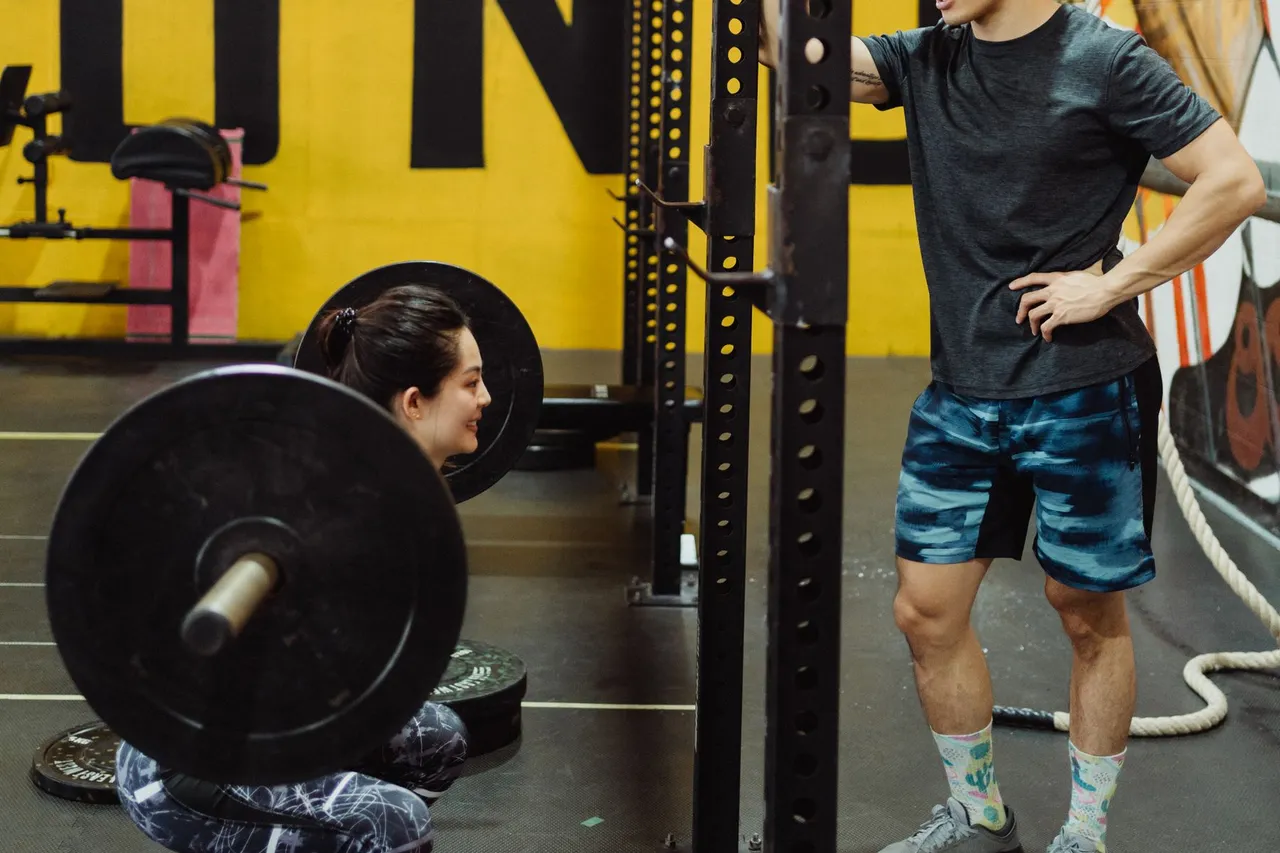
Sunde and colleagues (2010) had competitive road cyclists add heavy half-squats, four sets of four repetitions three times a week, to their normal riding for eight weeks. Cycling economy improved by about 4.8 percent and work efficiency by about 4.7 percent, while time to exhaustion at maximal aerobic power jumped by roughly 17 percent. Critically, the riders gained strength without gaining body weight and without any change in VO2max. In other words, they got faster uphill purely by making their pedaling cheaper, not by getting bigger.
This is not a single outlier study. A 2025 systematic review and meta-analysis by Llanos-Lagos and colleagues pooled data from more than 260 trained cyclists and found that heavy strength training reliably improved cycling efficiency, anaerobic and sprint power, and overall performance in time trials and time-to-exhaustion tests, again with no meaningful change in VO2max. The mechanism appears to be neuromuscular: stronger, better-recruited muscles operate at a lower relative effort for the same output, so submaximal climbing costs less. Two short, heavy lower-body sessions a week, built around squats, leg press, and similar compound lifts, is a defensible prescription for almost any climber.
Technique that actually matters: cadence, position, and pacing
Spin, do not grind
A stubborn myth says that muscling a big gear up a climb builds strength and saves energy. The physiology says the opposite. Swain and Wilcox (1992) had experienced cyclists ride up a 10 percent grade at the same speed using either a high cadence of 84 rpm or a low, grinding cadence of 41 rpm. The high-cadence effort was measurably more economical: lower oxygen consumption, lower heart rate, and lower ventilation for the identical workload. Grinding a huge gear loads the muscles harder, recruits more fast-twitch fibers, and burns through glycogen faster. The lesson is to gear down early and keep the legs turning. If your climbing cadence collapses into the 50s, you probably need easier gears, not more willpower.
When to sit and when to stand
Riders often assume standing is either a secret weapon or a waste of energy. The research says it is mostly neither. Millet and colleagues (2002) measured well-trained cyclists on level ground and on a 5 percent climb, seated and standing, and found essentially no difference in gross efficiency between the positions. Standing is not inherently wasteful, and on moderate grades it is not inherently more efficient either. What standing does give you is a burst of extra force for short, steep pitches and a chance to shift the load to different muscles and stretch your back.
That shifting turns out to be useful in its own right. A 2024 study in Frontiers in Sports and Active Living found that on a steep climb, alternating between seated and standing positions produced a lower blood-lactate concentration than holding either position continuously. The practical advice: stay seated and spinning as your default to conserve energy, stand to punch over the steepest ramps or to relieve your muscles, and treat regular seated-standing transitions as a way to spread fatigue rather than a way to go faster everywhere.
Pace the whole climb, not the bottom
The most common and most costly climbing mistake is starting too hard. The bottom of a climb feels easy, the group surges, ego takes over, and you cross your threshold in the first two minutes. Once you go too deep too early, lactate accumulates, your breathing spirals, and the back half of the climb becomes damage control. On long, steady climbs the fastest and least painful approach is a controlled, even effort just under threshold, holding something in reserve for the final third. On climbs with varying pitch there is a modest case for pushing a little harder on the steep sections and easing slightly on the shallow ones, but for most riders the bigger win is simply not blowing up in the opening minutes. Breaking a long climb into smaller mental segments and settling into a sustainable rhythm early beats heroics at the bottom every time.
The other half of the ratio: body weight, done sensibly
Because climbing speed is power divided by mass, shedding excess body weight can improve your ratio just as surely as adding watts, and for some riders it is the faster lever. But this is where enthusiasm turns dangerous. Aggressive dieting during hard training strips away muscle and glycogen along with fat, which lowers the power side of the ratio and can leave you weaker, not lighter and faster. Chronic underfueling also carries real health costs, from bone loss to hormonal disruption. The sound approach is a modest, gradual calorie deficit in your base and off-season periods, kept away from your hardest training blocks, with enough protein, roughly 1.2 to 1.6 grams per kilogram of body weight, to protect muscle. The goal is to lose the ballast without dismantling the engine. If pursuing weight loss ever starts to feel compulsive or your performance is falling, that is a signal to eat more and back off, not to push harder.
Fuel the climb itself
No amount of fitness saves you if you run out of fuel. Sustained climbing draws heavily on muscle glycogen, and a 2018 review in the journal Nutrients identified glycogen depletion as the central mechanism behind the dreaded bonk, that sudden hollow collapse where your legs simply stop answering. On rides longer than about 90 minutes, and certainly before a big climb, keep carbohydrate coming in steadily, on the order of 30 to 60 grams per hour for most riders and more for long, intense days. Arriving at the base of a climb well fueled is not a detail. It is often the difference between riding the climb and surviving it.
Breathing and the mind
Two smaller factors round out the picture. The first is breathing. Under climbing stress it is easy to fall into shallow, panicked breaths that make the effort feel worse than it is. Consciously keeping your breathing deep and rhythmic, matched to your pedal stroke, helps stabilize your effort and keeps you from tipping into a spiral. The second is framing. Riders who treat a climb as one enormous obstacle tend to overpace and demoralize themselves. Those who break it into segments, the next switchback, the next kilometer, the next landmark, pace better and suffer less. Climbing is uncomfortable by nature, and a large part of getting good at it is getting comfortable being uncomfortable, then trusting the training to carry you through.
Putting it together
If you want a simple plan, it looks like this. Build the engine with one weekly VO2max interval session and one threshold session, both of which you can do on your favorite local climb. Make every watt cheaper with two short heavy strength sessions a week, and do not fear the squat rack. On the bike, gear down and spin rather than grind, stay seated and settled as your default, stand to cover the steep pitches and share the load, and pace climbs evenly instead of attacking the bottom. Address the weight side of the ratio patiently and only when your training allows, protecting muscle with adequate protein and never starving your riding. And fuel properly so glycogen, not fitness, is never the thing that stops you. Do those things consistently for a few months and the climbs that used to break you will start to feel, if never easy, at least yours to conquer.
A quick note from Velosurance
Chasing better climbing usually means more time on the bike, harder efforts, and often a nicer, lighter machine underneath you. All of that is worth protecting. A dedicated bicycle insurance policy covers your bike against theft, crash damage, and more, at home and on the road, so the bike you have invested in, and trained so many hours on, is not a single bad day away from a painful replacement bill. It is a small thing to sort out before your next big climbing season.
Frequently Asked Questions
- What is the most important factor for climbing faster on a bike?
- Power-to-weight ratio: your sustainable power divided by your body mass in kilograms. On a steep climb the dominant force you are fighting is gravity, which scales with your total mass, so the rider with the better ratio climbs faster regardless of raw power. You improve it two ways: build the engine with training or sensibly trim excess weight, ideally both.
- What is a good watts per kilogram for climbing?
- Published benchmarks put a novice rider below about 2.5 W/kg, a solid recreational rider around 3.2 to 3.7 W/kg, a strong amateur near 4 W/kg, and elite and professional climbers north of 6 W/kg. You do not need professional numbers: moving from 3.0 to 3.6 W/kg is the difference between being dropped on every rise and hanging comfortably in the group, and that jump is very achievable in a season.
- Should you spin a high cadence or grind a big gear on climbs?
- Spinning is the more economical choice. Research on experienced cyclists riding the same 10 percent grade found that a high cadence of 84 rpm produced lower oxygen consumption, lower heart rate, and lower ventilation than grinding at 41 rpm for the identical workload. Grinding a huge gear loads the muscles harder and burns glycogen faster, so gear down early and keep the legs turning. If your climbing cadence collapses into the 50s, you probably need easier gears.
- How does strength training make you a better climber?
- Heavy lifting makes every watt cheaper. In an eight-week study, competitive cyclists who added heavy half-squats improved cycling economy by about 4.8 percent and lasted roughly 17 percent longer at maximal aerobic power, without gaining body weight and without any change in VO2max. A 2025 meta-analysis of more than 260 trained cyclists confirmed the effect. Two short, heavy lower-body sessions a week, built around squats and leg press, is a defensible target for almost any climber.
- When should you stand versus sit on a climb?
- Stay seated and spinning as your default to conserve energy, and stand to punch over the steepest ramps or to relieve your muscles. Gross efficiency is essentially the same seated or standing on moderate grades, so standing is neither a secret weapon nor a waste. One useful wrinkle: on a steep climb, alternating between seated and standing positions produced a lower blood-lactate concentration than holding either position continuously.
- What is the best way to pace a long climb?
- Ride it as a controlled, even effort just under threshold, holding something in reserve for the final third. The most common and most costly climbing mistake is starting too hard: the bottom feels easy, the group surges, and you cross your threshold in the first two minutes, which turns the back half of the climb into damage control. On climbs with varying pitch there is a modest case for pushing a little harder on the steep sections, but for most riders the bigger win is simply not blowing up in the opening minutes. Breaking a long climb into smaller mental segments helps you settle into a sustainable rhythm early.