TL;DR:
It depends on which question you ask. Mountain bikers crash more often, but road cyclists get hurt worse when they do. A 2025 study published in Scientific Reports found that mountain biking produced twice as many emergency room visits, while road cycling produced the more severe injuries, the worse head trauma, and the only death. National crash data helps explain why: the road cyclist's biggest risk factor is not the bike or the terrain. It is the two-ton vehicle passing at 50 mph.
A New Study Puts Numbers on an Old Debate
Every group ride has had this argument. Roadies point at rock gardens, drops, and gap jumps and wonder how mountain bikers walk away from any of it. Mountain bikers point at distracted drivers and ask how anyone survives a shoulder-less descent on 25 mm tires. Until recently, surprisingly little research compared the two disciplines head to head.
In 2025, researchers at Hospital Universitari Parc Tauli near Barcelona published a prospective study in Scientific Reports (a Nature Portfolio journal) that did exactly that. Over one full year, they tracked every injured cyclist who came through their emergency trauma department: 149 riders in total, with a mean age of about 45. Each patient was scored using the Injury Severity Score (ISS), a standard trauma metric that runs from 0 to 75, and researchers recorded the discipline, crash mechanism, helmet use, and outcome for every case.
The title of the paper gives away the headline finding: "Road cycling causes more serious injuries than mountain biking." But the details are more interesting than the title, and they cut both ways.
Crash Often vs. Crash Hard
The first result favors the roadies. Mountain bikers accounted for 100 of the 149 injuries, or 67 percent, more than double the 49 road cycling cases. If the question is "which discipline is more likely to put you in the emergency room," this dataset answers: mountain biking.
The second result favors the mountain bikers, and it is the one the researchers led with. When road cyclists did crash, they got hurt significantly worse. The median Injury Severity Score for road cyclists was 6, compared with 4 for mountain bikers, a statistically significant difference. Road cyclists had higher injury rates in nearly every body region except the upper extremities. Their head injuries were significantly more severe. And the single fatality in the study was a road cyclist who died of head trauma.
So the honest one-sentence summary is not "road is more dangerous" or "mountain is more dangerous." It is this: mountain biking generates more frequent, mostly moderate injuries, while road cycling generates fewer but more serious ones.
Why Road Crashes Hit Harder
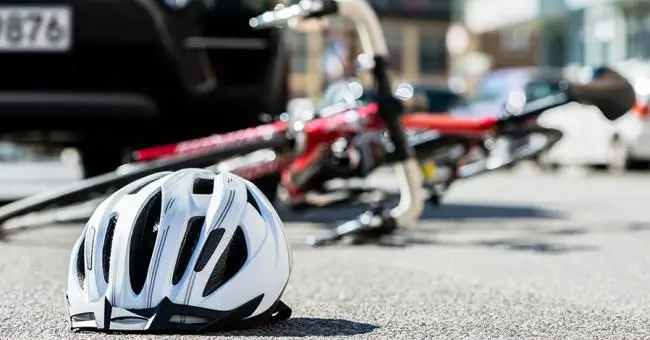
The Barcelona team found a clue in the crash mechanisms. Collisions with motor vehicles were significantly more common among road cyclists, while mountain bikers overwhelmingly got hurt in falls they caused themselves. That single difference explains most of the severity gap, and United States national data backs it up at scale.
According to the National Highway Traffic Safety Administration, 1,166 cyclists were killed in traffic crashes in the U.S. in 2023, the deadliest year on record, alongside roughly 50,000 traffic-related injuries. About 81 percent of those deaths occurred in urban areas, 53 percent happened in darkness, and light trucks and SUVs were the vehicle type most often involved. These are, almost by definition, road cycling deaths. A cyclist dying on singletrack from a fall alone is a genuine tragedy but a statistical rarity; a cyclist dying under a vehicle is, sadly, a weekly occurrence in every state.
Physics does the rest. Road crashes tend to happen at higher speeds on an unforgiving surface, often with a sudden, unbraced impact: a clipped wheel in a paceline, a car turning across a bike lane, gravel in a fast corner. Mountain bike crashes usually happen at lower speeds on dirt, and riders often see them coming a half second earlier, enough time to tuck, roll, or bail toward something softer than asphalt.
The Mountain Biker's Ledger
None of this makes mountain biking safe. It reliably produces more injuries per rider in study after study, and the injury list is dominated by upper-extremity damage: broken collarbones, wrists, shoulders, and plenty of lost skin. A 2025 systematic review of injuries across all competitive cycling disciplines found upper-limb injuries were the most common category in nearly every discipline, with lacerations and abrasions first and fractures second.
Discipline within mountain biking matters enormously. Cross-country trail riding sits at the tamer end of the spectrum. Gravity disciplines sit somewhere else entirely: a prospective study of elite downhill racers at the 2023 UCI World Championships recorded 7.6 injuries per 1,000 hours of riding, with concussions making up roughly a quarter of all injuries. BMX, for what it is worth, topped the systematic review's injury incidence rankings across all cycling disciplines. Comparing a mellow forest loop to a downhill race run is like comparing a neighborhood jog to rugby; the two share a label and almost nothing else, least of all a risk profile.

Age Changes the Math
One of the Barcelona study's most practical findings got the least attention: injury severity climbed with age in both disciplines, but more than twice as fast on the road. Each additional year of age added 0.20 points of ISS for road cyclists versus 0.09 for mountain bikers. NHTSA data rhymes with this: the highest cyclist fatality counts in the U.S. cluster between ages 55 and 64.
The likely explanation is a combination of factors: older riders gravitate toward road riding, bones become more fragile, and the high-speed vehicle impacts typical of road crashes punish fragility more than low-speed trail falls do. For riders in their 50s and 60s, the severity gap between the two disciplines appears to widen, not shrink.
The Honest Caveats
Objectivity requires admitting what this research cannot tell us. The Barcelona study came from a single region, drew 87 percent of its patients from one sex (male), ran during a period affected by COVID-19 restrictions, and, most importantly, had no exposure data. We do not know how many hours the local population spent on road bikes versus mountain bikes, so we cannot compute true per-hour risk from it. If far more people were riding trails than roads that year, mountain biking's 67 percent share of injuries could reflect popularity rather than danger.
Hospital-based studies also miss both ends of the spectrum: crashes too minor for the ER and riders who die before reaching one. And "mountain biking" and "road cycling" are each umbrella terms covering wildly different risk profiles, from rail trails to downhill runs, from protected bike paths to unlit rural highways. Any single verdict smuggles in assumptions about which version of each sport you actually ride.
So Which Is More Dangerous?
If "dangerous" means the odds of ending up in an emergency room this season, the evidence points to mountain biking. If "dangerous" means the odds of a life-changing or fatal injury, the evidence points to road cycling, and the difference is driven almost entirely by motor vehicles and speed, not by the bike itself.
That framing suggests different priorities for each rider. For road cyclists: route selection is the single biggest lever. Protected infrastructure, daylight hours, high-visibility gear, and lights address the urban, low-light, vehicle-involved crash profile that dominates the fatality data. For mountain bikers: ride within your skill progression, respect the jump from trail to gravity riding, and treat protective gear (and a modern full-face helmet where appropriate) as part of the sport. For everyone: the case for a quality helmet gets stronger with every head-injury statistic in every study, and the case for knowing how you are covered after a crash, medically and financially, gets stronger with age.
Both disciplines carry real risk. Both also carry enormous, well-documented health benefits that, by most published estimates, outweigh those risks for the average rider. The point of the data is not to scare anyone off either bike. It is to help you spend your caution where your discipline actually needs it. The financial side is the easy part to fix: road bike insurance is built for the vehicle-and-asphalt risk profile, and mountain bike insurance for the crash-often one.
Frequently Asked Questions
- Is mountain biking or road cycling more likely to injure me?
- Mountain biking, by frequency. Hospital data shows mountain bikers turning up in emergency rooms at roughly double the rate of road riders. Most of those injuries are moderate: fractures, dislocations, and abrasions, most often to the arms and shoulders.
- Which discipline causes more deaths?
- Road cycling, and it is not close. Nearly all of the roughly 1,200 annual U.S. cyclist deaths involve a motor vehicle on a road. Deaths from trail riding falls do happen, but they are rare by comparison.
- Does a helmet matter more for one discipline?
- It matters for both, but the stakes differ. Road crashes tend to produce more severe head injuries, while concussion accounts for about a quarter of injuries in elite downhill racing. Helmet standards and styles differ by discipline; what does not differ is that riding without one is the worst option in either sport.
- Does age make one discipline riskier than the other?
- The data says yes. Injury severity rose with age more than twice as fast for road cyclists as for mountain bikers, and U.S. cyclist fatalities peak between ages 55 and 64. Older riders on the road have the strongest case for prioritizing protected routes and daylight riding.
- Are the health benefits of cycling worth the risks?
- The published cost-benefit research consistently finds that the health benefits of regular cycling outweigh the crash and pollution risks for the average rider. The smarter response to the data is managing the specific risks of your discipline: traffic exposure for road riders, terrain and progression for mountain bikers, and good protective gear for both.