TL;DR:
- Every e-bike in New York City is capped at 15 mph, no matter what the class sticker says. The Department of Transportation rule took effect October 24, 2025 and also covers e-scooters and pedal-assist commercial bikes. Pedal bicycles are not covered by it.
- Since March 27, 2026, a red light or stop sign violation on a bike gets you the same traffic ticket a driver would get. The NYPD practice of writing criminal court summonses to cyclists, which began April 28, 2025, is over.
- If a car, truck or bus hits you, New York’s no-fault system pays up to $50,000 of your medical bills and part of your lost wages through the vehicle’s insurer, whoever caused the crash. You have 30 days to file the application. No-fault does not pay for your bike.
- No-fault only exists when a motor vehicle is involved. Hit a pedestrian, tangle with another rider or go down on a pothole and there is no insurer behind you unless you bought a policy yourself.
- Buy only UL-certified e-bikes and batteries. The city wrote UL 2849 and UL 2271 into law in 2023, the year battery fires killed 18 New Yorkers. In 2025 the number was one.
How the rulebook got rewritten
The electric bike changed New York faster than the city could write rules for it. App delivery workers adopted them first, Citi Bike added thousands to its fleet, and commuters followed once a motor could flatten the climb over the East River bridges.
Then came 2023. It was the deadliest year for cyclists since 1999, and most of the riders killed were on e-bikes. Fires from cheap lithium-ion batteries killed 18 people. That September a 69-year-old woman named Priscilla Loke was struck in Chinatown by a rider on an electric Citi Bike and died two days later, and her name went on a bill to put a license plate on every e-bike in the city.
City Hall answered with enforcement. In April 2025, under Mayor Eric Adams, the NYPD began sending cyclists to criminal court for running red lights. In June his administration cited an “emergency threat to life” and ordered Citi Bike to cut its e-bikes to 15 mph. In October the Department of Transportation applied the same cap to every e-bike in the five boroughs. A new mayor dropped the criminal summonses in March 2026 and left the speed limit in place.
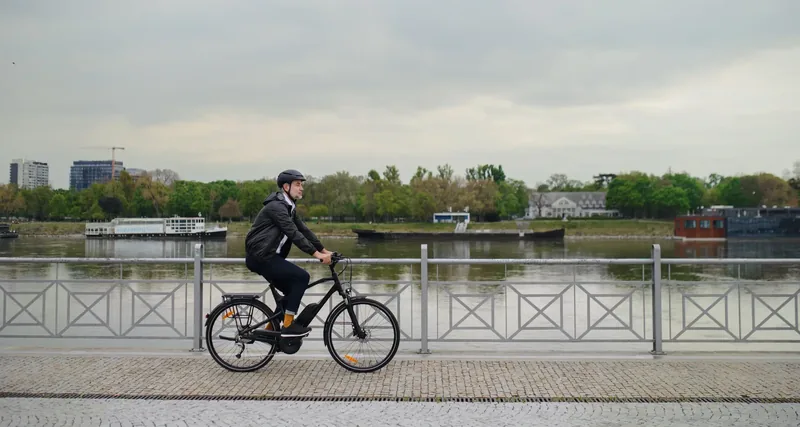
So picture a weekday morning under the rules as they now stand. A commuter rolls off the Williamsburg Bridge into Manhattan on a Class 1 e-bike she bought at a shop in Greenpoint. The sticker on the seat tube says the motor assists up to 20 mph. Her display reads 19. Under state law she is fine. Under city rules she is speeding.
Behind the traffic rules sits an insurance system built for cars. It treats you generously when a driver hits you and leaves you on your own in nearly every other kind of crash.
The rules every rider shares
State law gives a cyclist the rights and the duties of a driver. You ride with traffic, you stop at red lights and stop signs, and you yield to people on foot. The city layers its own rules on top, and a few of them surprise even longtime riders.
You can go on the walk signal. Since 2019, Local Law 154 has let cyclists cross with the pedestrian signal, including the few seconds of head start that pedestrians get before drivers see a green. The DOT’s shorthand is “go with the walk.” If a separate bike signal is posted, follow that instead. Pedestrians in the crosswalk always go first.
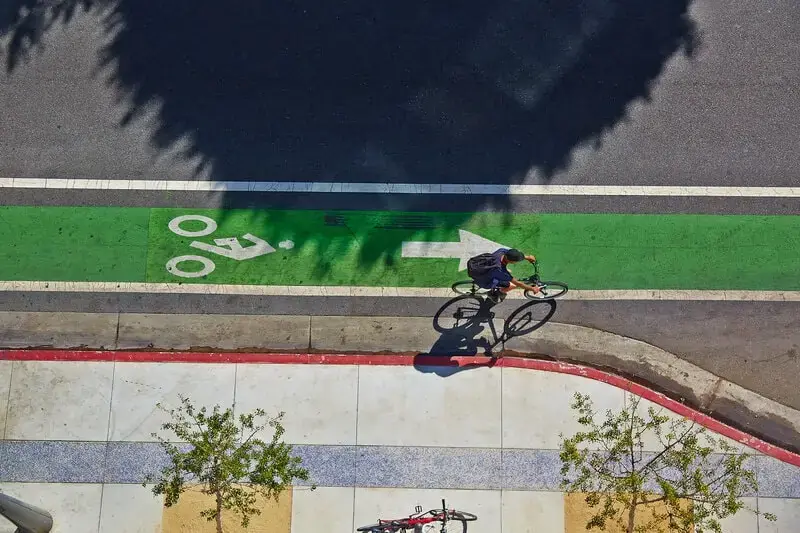
If there is a bike lane, you are expected to use it. Section 4-12(p) of the city traffic rules says so, with two exceptions: you may leave the lane to prepare for a turn, and you may leave it when it is blocked or unsafe. A delivery van parked in the lane counts. So does broken glass.
Sidewalks are for kids. Administrative Code 19-176 bans sidewalk riding for anyone over 12. A child 12 or younger may ride there on a bike with wheels under 26 inches. Police can confiscate an adult’s bike for riding on the sidewalk in a way that endangers people.
One earbud, not two. Vehicle and Traffic Law 375(24-a) allows a single earphone.
Your bike needs four things. Under VTL 1236: a white front light and a red rear light from dusk to dawn, a bell or horn that can be heard from 100 feet, working brakes, and reflectors. A missing bell is one of the easiest tickets an officer can write.
Helmets are required for some riders. Children 13 and under must wear one. So must anyone riding a bike for work, and the employer has to supply it. Riders of Class 3 e-bikes are required to wear one at any age. For every other adult the helmet is optional under the law, and a good idea on any street shared with box trucks.
What counts as an e-bike here
New York recognizes three classes. Class 1 assists only while you pedal and cuts out at 20 mph. Class 2 adds a throttle, with the same 20 mph ceiling. Class 3 is a throttle bike that can reach 25 mph, and state law allows it only in a city of a million people or more, which means only here.
You must be at least 16 to ride any of them. No license, registration or plate is required. All three classes may use bike lanes, parks and greenways, and streets with a posted limit of 30 mph or less. None of them may use the sidewalk.
If the machine has no working pedals, or it goes faster than 25 mph under power, the state does not consider it an e-bike. It is a moped, and a moped needs DMV registration, a plate and a driver’s license, and has no business in a bike lane or a park. A lot of what gets sold online as an “e-bike” falls on the wrong side of that line, and the rider is the one who pays for the confusion: tickets, seizure of the vehicle and, after a crash, an insurer with a ready reason to say no.
The 15 mph limit
On October 24, 2025, the DOT amended sections 4-01 and 4-06 of the traffic rules to set a single speed limit of 15 mph for e-bikes, e-scooters and pedal-assist commercial bicycles. The rule applies on streets, in bike lanes and on park paths. Citi Bike had already turned its electric fleet down to 15 mph that June.
The rule drew 849 public comments, most of them opposed. Riders pointed out that a cyclist on a carbon road bike can legally pass them at 22 mph, and that holding 15 in a travel lane next to drivers doing 25 or 30 creates its own hazard. The adopted text does not set out penalties, and few e-bikes ship with a speedometer an officer could hold you to.
None of that makes the limit optional. It is the law today, the mayor who took office in January 2026 has not repealed it, and it would be the first thing an opposing lawyer raised if you hit someone at 20.
Tickets, not court dates
Starting April 28, 2025, the NYPD stopped writing ordinary traffic tickets to people on bikes and began issuing criminal court summonses instead. The department listed six target offenses: running a red light, running a stop sign, riding the wrong way, riding recklessly, riding under the influence and riding on the sidewalk. A summons meant a mandatory appearance before a judge, and a missed date could become a warrant.
Streetsblog’s review of court data found 8,691 red light summonses to cyclists between April 28 and September 30, 2025, against 14 in the same stretch a year earlier. Riders reported summonses for things outside the list, including wearing two earbuds and, in cases NY1 documented, for crossing on the walk signal, which is legal.
Mayor Zohran Mamdani ended the practice effective March 27, 2026. “Every New Yorker on our roads, whether driving or biking, deserves to be treated fairly,” he said in announcing the change. Cyclists and e-bike riders now go through the same civil summons process as motorists.
A traffic ticket still costs money. Riding drunk or recklessly can still land you in criminal court, as it always could.
Where riders get hurt
Twenty-one cyclists were killed on city streets in 2025, according to Transportation Alternatives’ analysis of city data. That was three fewer than in 2024 and ten fewer than in 2023, the worst year for cyclists in more than two decades. Overall traffic deaths fell to 205, the lowest figure the city has recorded.
Brooklyn, which had averaged eight cyclist deaths a year, recorded one. Queens went from four to nine.
NYPD data reported by amNewYork showed e-bike collisions up 75% through mid-April 2026 compared with the same period in 2025, after the city logged 901 e-bike injuries across all of 2025. In one week in August 2026, hit-and-run drivers killed three cyclists in three days, two in Brooklyn and one in the Bronx. A manager at a business near the Jamaica Avenue crash told Streetsblog, “If there was a lane, maybe it wouldn’t have happened.”
For all the attention e-bikes get as a threat to people on foot, the city’s own figures put them at 37 of the 9,610 pedestrian injuries recorded in 2024, or 0.4%. Cars and trucks account for almost all the rest.
The door zone
A dooring happens when someone in a parked or stopped vehicle opens a door into your path. VTL 1214 puts the duty on the person opening the door: nobody may open a door on the traffic side until it is safe to do so, or leave it open longer than needed to get in or out. City rule 4-12(c) says the same thing, and taxis carry a sticker reminding passengers to look.
A violation of 1214 is strong evidence of fault, but the law is cold comfort from the pavement. Ride about four feet out from parked cars, even if it puts you on the left edge of a painted lane. Watch for brake lights, heads in driver’s seats and cabs pulling to the curb. If the choice is between the door zone and taking the travel lane for a block, take the lane; rule 4-12(p) allows it when the bike lane is unsafe.
Who pays your medical bills
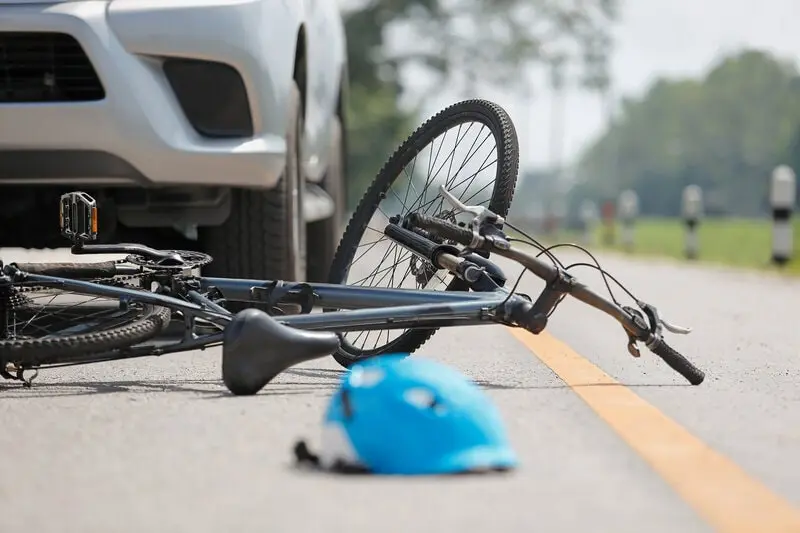
New York is a no-fault state. When a motor vehicle hits you, the insurer of that vehicle pays your medical expenses and part of your lost income up to $50,000, regardless of who caused the crash. You do not need to own a car or carry any policy of your own. Riders of bicycles and legal e-bikes both qualify.
- 30 days from the crash to file the no-fault application, form NF-2, with the insurer of the vehicle that hit you. Miss it and the insurer can deny everything.
- Lost wages are paid at 80% of what you were earning, to a maximum of $2,000 a month.
- If you live with a relative who owns an insured car, that policy may be the one that pays.
If the driver fled or had no insurance, the claim goes to the Motor Vehicle Accident Indemnification Corporation, a state-created fund. MVAIC expects a police report within 24 hours of a hit-and-run and a notice of claim within 90 days, so call 911 from the scene even if you think you can walk it off.
No-fault stops well short of making you whole. It does not pay for the bike, the wheels, the helmet or the phone that was in your jersey pocket. It does not pay for pain and suffering; for that you have to bring a claim against the driver, and New York only allows it when the injury meets the “serious injury” definition in Insurance Law 5102(d), such as a fracture or a significant limitation that lasts. And $50,000 goes fast in a Manhattan trauma center.
When no car is involved
No-fault is car insurance. If a motor vehicle did not hit you, it does not exist.
Go down on a steel plate on Flatbush Avenue and your own health insurance is all you have, deductible included. Collide with another cyclist and neither of you has an insurer to call. Hit a pedestrian who steps out between parked cars and you are personally responsible for that person’s medical bills and any lawsuit that follows. Homeowners and renters policies sometimes cover liability on a pedal bike. Most exclude motorized vehicles, and insurers read that to include e-bikes.
A City Council bill known as Priscilla’s Law, named for Priscilla Loke, a 69-year-old woman killed by an e-bike rider in Chinatown in 2023, would require license plates and registration for e-bikes. It drew committee hearings and never reached a floor vote. The state versions, S2599A and A339A, were still in committee as of mid-2026. For now nothing requires an e-bike rider in the city to carry insurance, which means most do not, and most pedestrians they injure have no one to collect from.
Insuring the bike and the rider
This is the gap a standalone bicycle policy is built for. Velosurance covers riders in New York, including Class 1, 2 and 3 e-bikes, and the pieces line up with the holes above:
- Theft and crash damage for the bike itself, at the value you insure it for. No-fault never pays for the bike, and a driver’s property damage coverage pays only if the driver was at fault and only after you prove it.
- Liability if you injure someone or damage property while riding. E-bike liability coverage also responds to damage from a battery fire.
- Medical Payments for your own injuries in the crashes no-fault ignores: the pothole, the other cyclist, the dog on a long leash in Prospect Park.
- Uninsured Motorist, where offered, for a driver who flees or carries too little insurance to cover what he did.
Bike Index’s 2025 report found that 59% of bike thefts happen at home, from hallways, basements, shared bike rooms and building courtyards, and that nearly half of victims lost their way to get to work. A $3,000 commuter e-bike locked in a Bushwick vestibule is a target every night of the year.
If you ride for a delivery app, ask any insurer directly whether commercial use is covered before you buy. Many personal policies exclude it.
Batteries
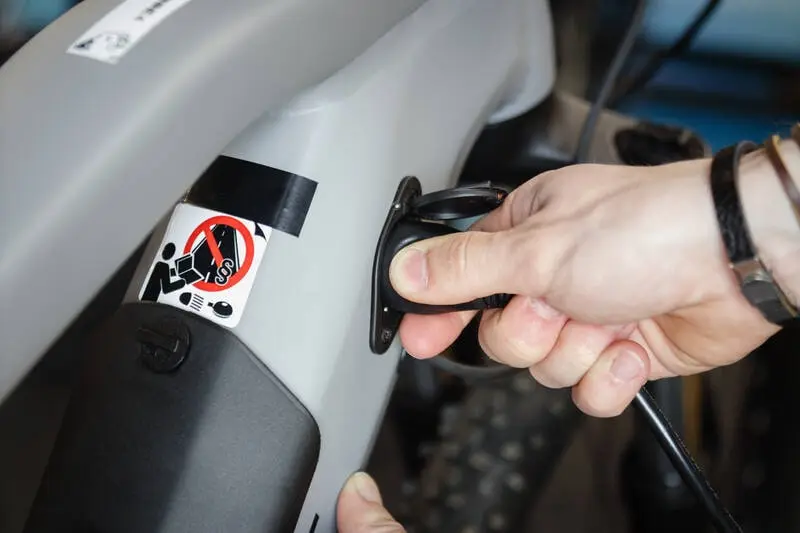
In 2023, lithium-ion battery fires killed 18 people in New York City. That September, Local Law 39 made it illegal to sell, lease or distribute an e-bike or battery in the city that is not certified to UL 2849 (the e-bike’s electrical system) or UL 2271 (the battery). The city followed with a trade-in program that let delivery workers swap uncertified bikes for certified ones, and a pilot of public charging and battery-swap stations.
In 2025 the FDNY counted one death, a 76-year-old woman caught in a fire that started with a device charging in a pizzeria.
Do not buy an e-bike or a replacement battery without a UL certification mark you can verify, and do not buy a rebuilt or “refurbished” pack from a repair stall at any price. At home, charge while you are awake and in the room, keep the bike out of the path to your door, and use only the charger that came with it. A UL Standards survey found 49% of e-bike owners charge in a spot that blocks their exit.
After a crash
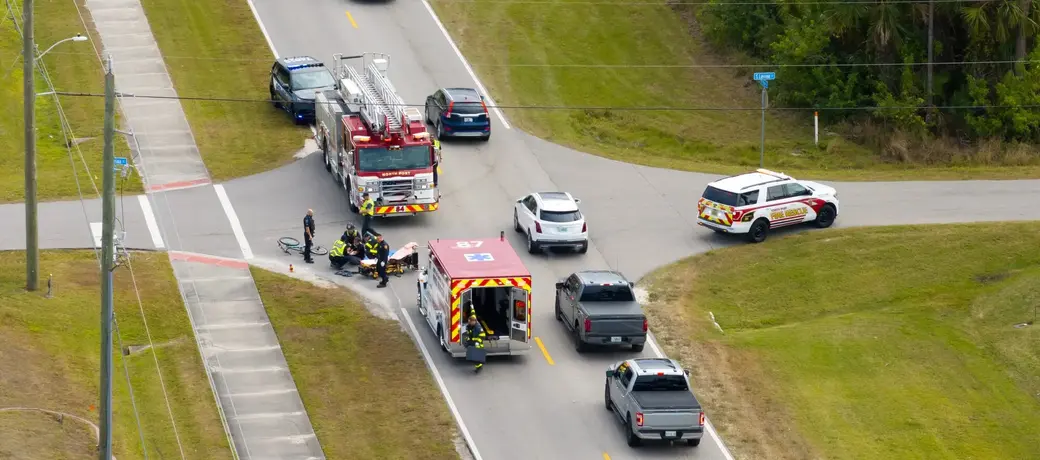
Call 911 and stay until police arrive. A police report is the foundation of a no-fault claim and a requirement for MVAIC.
Get the plate number before anything else. Photograph the vehicle, the driver’s license and insurance card, the street, the bike lane markings and your bike where it landed. Ask witnesses for a phone number; they will not wait around for an officer.
Go to an emergency room or urgent care the same day, even if you feel fine. Adrenaline masks concussions and fractures, and a gap in treatment is the first thing an insurer points to.
Do not repair or throw away the bike, helmet or clothing. They are evidence, and for a bike insurance claim they are the claim.
File the NF-2 within 30 days. Put the date in your phone before you leave the hospital.
Frequently Asked Questions
- Do I need a license or registration to ride an e-bike in NYC?
- No. Class 1, 2 and 3 e-bikes need neither. You must be 16 or older. Mopeds, which have no pedals or exceed 25 mph, need both plus a plate.
- Does the 15 mph limit apply to my regular road bike?
- No. The October 2025 rule covers e-bikes, e-scooters and pedal-assist commercial bicycles. A pedal bike is subject to the posted speed limit for the street, which is 25 mph on most city streets.
- Can I still get a criminal summons for running a red light?
- Not for an ordinary violation. Since March 27, 2026 you get a traffic ticket handled through the same process as a driver’s. Reckless or impaired riding can still be charged criminally.
- Can I ride an e-bike in Central Park and on the greenways?
- Yes. The DOT lists parks and greenways as open to all three classes, at 15 mph. Mopeds are banned from both.
- A driver hit me and it was partly my fault. Do I still get no-fault?
- Yes. No-fault pays medical bills and lost wages without regard to who caused the crash. Fault only comes into play if you sue the driver for pain and suffering, where New York reduces the award by your share of the blame.
- The driver’s insurer offered to pay for my bike. Should I take it?
- Get a written repair estimate or replacement quote from a shop first, including the parts a crash damages that nobody photographs: wheels, derailleur hanger, bars, saddle, helmet. Carbon frames need an inspection before anyone calls them fine. If you carry your own bike policy, you can claim there and let your insurer chase the driver’s.
- Does my renters insurance cover my e-bike?
- Often it does not. Many renters and homeowners policies exclude motorized vehicles from both theft and liability coverage, and sub-limits on bicycles can sit far below the price of an e-bike. Ask your agent in writing.
Policy terms, available coverages, and state laws vary and change; this article is general information, not insurance or legal advice.