TL;DR:
- If a car, truck, bus or taxi hits you while you’re on a bike or a legal e-bike in New York, no-fault insurance pays up to $50,000 toward your medical bills, 80% of your lost wages (capped at $2,000 a month) and up to $25 a day in other costs, no matter who caused the crash.
- The claim goes to the insurer of the vehicle that hit you. If the driver fled or had no insurance, it goes to the car insurer of anyone in your household, and if there is none, to MVAIC, the state’s fund of last resort.
- Three dates decide most claims: a police report within 24 hours of a hit-and-run, the no-fault application within 30 days, and the MVAIC notice within 90 days.
- A Class 3 e-bike does not cost you no-fault benefits. A machine that tops 25 mph or has no working pedals is a moped under state law, and insurers deny moped riders.
- Suing a driver for pain and suffering got harder in May 2026. The “90 of 180 days” injury category is gone, and a rider found more to blame than the driver now recovers nothing.
Why this keeps coming up
New York City has spent most of a decade arguing about bikes: speed limits, criminal summonses, battery fires, license plates for e-bikes. Almost all of it is about what riders do to other people, and far less attention goes to what happens after a driver hits a rider.
The city logged 901 e-bike injuries in 2025, and NYPD data showed e-bike collisions up 75% through mid-April 2026 compared with a year earlier. In one week this August, hit-and-run drivers killed three cyclists in three days. Every rider who survives a crash like that lands in a claims system written for cars, with deadlines measured in hours and days, and state rules passed in May 2026 changed what a rider can recover once the medical bills are paid.
Picture a weeknight on the Grand Concourse. A driver turning right clips your back wheel, you go down hard on your hip and elbow, and the car keeps going. The bike still rolls, so you ride home. Two days later your elbow is twice its normal size and an X-ray shows a fracture. By then the 24-hour window to report a hit-and-run to police has already closed.
How no-fault works when you’re on a bike
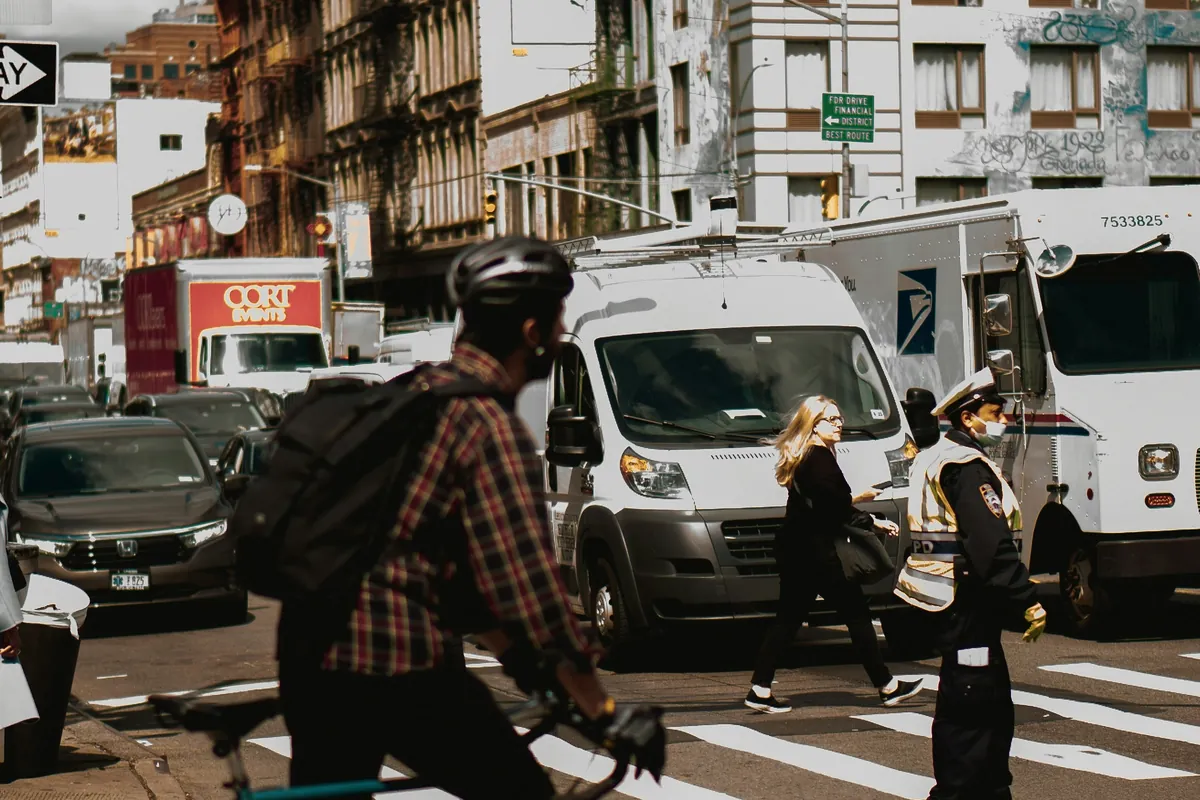
New York is a no-fault state. When a motor vehicle injures someone, an insurer pays that person’s medical bills and part of their lost income without anyone having to prove who caused the crash. That covers anyone a car hits who isn’t inside another motor vehicle, so on a pedal bike or a legal e-bike you’re treated like a pedestrian. You don’t need to own a car or carry any policy of your own to collect.
Fault plays no part in these benefits. A rider who rolled through a red light gets the same no-fault benefits as one who was stopped at it. Fault comes back only if you later sue the driver for pain and suffering.
No-fault pays the following, up to a combined $50,000 per person:
- Medical care, paid at state fee-schedule rates. A provider who accepts no-fault cannot bill you for the difference.
- 80% of your lost wages, capped at $2,000 a month, for up to three years.
- Up to $25 a day for a year in other necessary costs, such as rides to medical appointments.
- A $2,000 death benefit, on top of the $50,000.
If you or a relative you live with bought optional additional PIP on a car policy, ask whether it raises that ceiling for you as a rider.
No-fault does not pay for pain and suffering or for your bike, helmet or wheels. It also applies only when a motor vehicle is involved, so a pothole, another cyclist or a pedestrian stepping off the curb won’t open a claim.
Who you file with
Which insurer you deal with depends on what you know about the vehicle that hit you.
If you know the vehicle and it’s insured, you file with its insurer. Doorings generally count too, since opening a door into traffic is part of using the car.
If the driver fled or the car was uninsured, you file with the car insurer of anyone in your household: your own policy if you own an insured car, or the policy of a relative who lives with you.
If nobody in your household has car insurance, you file with the Motor Vehicle Accident Indemnification Corporation, known as MVAIC, which the state created to stand in when there’s no insurer. You have to be a New York resident (with narrow exceptions), have no household car insurance available, and not own an uninsured vehicle involved in the crash.
A household policy can do more than pay no-fault benefits. Every New York auto policy includes uninsured motorist coverage, and it generally protects the policyholder and resident relatives on foot or on a bike. After a hit-and-run that leaves you seriously hurt, it can pay for pain and suffering. We cover it in more detail in our guide to uninsured motorist coverage for cyclists.
Riders often hesitate to claim against a parent’s or partner’s policy for fear of the premium. Under New York’s Insurance Regulation 169, an accident surcharge applies when the insured car caused more than $2,000 in property damage, or was being driven by an insured driver who was at fault for an injury. When you’re hit on a bike, the household car wasn’t in the crash, so neither applies. The premium can still rise with base rate increases, and some insurers weigh claim history, so ask the insurer in writing before you file. If a surcharge appears anyway, ask for the reason in writing and take it to the state Department of Financial Services. Skipping the household policy is rarely an option, since MVAIC won’t take your claim while household car insurance exists.
The deadlines that sink claims
A missed deadline is the most common reason an insurer denies a no-fault claim.
| What | Deadline | Who it goes to |
|---|---|---|
| Police report after a hit-and-run | Within 24 hours | NYPD or local police |
| No-fault application (form NF-2) | Within 30 days of the crash | The insurer |
| Medical bills | Within 45 days of treatment | Sent by your providers |
| Proof of lost wages | Within 90 days of the crash | The insurer |
| MVAIC Notice of Intention, hit-and-run | Within 90 days | MVAIC |
| MVAIC Notice of Intention, known uninsured driver | Within 180 days | MVAIC |
Riders miss the 30-day application deadline most often, usually because they spent the first weeks in pain. An insurer can accept a late application with a written, reasonable explanation such as a hospitalization, but it doesn’t have to.
Once your claim is open, the insurer can schedule a medical exam with its own doctor or an examination under oath, a recorded interview about the crash. Go to both, because missing either is a legal reason to cut off benefits.
Hit-and-run: the 24-hour rule
After a hit-and-run, police often never come to the scene, because the driver is gone and nobody calls them. If no officer wrote a report, you or someone acting for you must report the crash within 24 hours. MVAIC treats that as a condition of payment, and household insurers look for it too. A later report can be accepted if you were too badly hurt, but you have to prove it.
In the Grand Concourse crash, riding home felt sensible, and the window closed before you knew anything was broken. Walk into a precinct house or call 911 the same day, even if you feel fine.
MVAIC pays the same no-fault benefits an insurer would. It can also pay up to $25,000 for pain and suffering if you show the unknown driver caused the crash and your injury meets the serious injury threshold below. For that injury claim, the hit-and-run car must have physically touched you or your bike, so leave the damaged bike as it is: paint transfer on the frame may be your only proof of contact.
E-bikes, Class 3 and the moped argument

An e-bike that meets the state definition is not a motor vehicle under New York law, and its rider gets no-fault benefits like someone on a pedal bike. That includes Class 3, but New York defines the class differently from most of the country. Elsewhere, a Class 3 e-bike is a pedal-assist bike that helps up to 28 mph. In New York, Class 3 means a bike that can have a throttle but whose motor stops helping at 25 mph, and it is legal only in New York City. A Class 3 bike built to the 28 mph standard is faster than New York’s definition allows.
Motorcycle riders are excluded from no-fault, and so are riders of the faster mopeds that need registration and insurance. A machine with no working pedals, or one that goes faster than 25 mph under power, is a moped under state law. Plenty of what’s sold online as an “e-bike” falls on that side of the line, and so do bikes that have been unlocked past their limit.
Insurers have started asking injured riders for photos of the bike and the original receipt, looking for proof it can top 25 mph. New York courts have held that top speed decides a vehicle’s class, and that manufacturer specs found online can be used as evidence. If your bike is a standard 28 mph Class 3 and its spec sheet says so, expect that number in a denial letter, even if the bike is sold as an e-bike everywhere else.
The city’s 15 mph limit for e-bikes, in force since October 24, 2025, is separate. Breaking it doesn’t cancel no-fault, but a driver’s lawyer will raise it if you sue. If you’re shopping, buy a bike with working pedals, a motor that cuts out at 20 or 25 mph, a class label and UL 2849 certification, and keep the receipt and spec sheet.
Pain and suffering, and what changed in 2026
Only a lawsuit against the driver can get you money for pain or a permanent injury, and New York allows one only if your injury meets the “serious injury” definition in Insurance Law 5102(d). Road rash and a few stitches don’t qualify.
The state budget passed in late May 2026 removed the old category for an injury that kept you from normal activities for 90 of the first 180 days, which is how many soft-tissue claims got through. For lawsuits filed since then, eight categories remain:
- Death
- Dismemberment
- Significant disfigurement
- A fracture
- Loss of a fetus
- Permanent loss of use of a body organ, member, function or system
- Permanent consequential limitation of use of a body organ or member
- Significant limitation of use of a body function or system
The same budget changed fault. New York used to let you recover even if you were mostly to blame, with the award cut by your share. Now, if your share of the blame is greater than the driver’s, you recover nothing. Juries decide fault first and consider serious injury only after that.
None of this touches no-fault benefits. It does mean evidence of how the crash happened counts for more: a helmet camera, a witness’s phone number or a photo of the bike lane can decide whether you have a case.
A lawsuit against a driver generally has to be filed within three years. A claim against the city, for a pothole or a defective bike lane, needs a notice of claim within 90 days. Our guide on when to hire a bicycle accident attorney covers what to look for.
What no-fault won’t pay for
No-fault never pays for the bike. You can claim it against an at-fault driver’s property damage coverage once you prove fault, but after a hit-and-run there’s nobody to claim against. We go through the details in does auto insurance cover bicycle accidents.
Crashes without a car aren’t covered either, so your health insurance, deductible included, pays for those injuries. The $50,000 can run out after a trauma unit stay and a few months of physical therapy. After a hit-and-run with no household car policy, MVAIC’s $25,000 is the ceiling for pain and suffering.
A bicycle insurance policy is built for those gaps. Velosurance covers riders in all 50 states, including New York riders on Class 1, 2 and 3 e-bikes. Theft and Accidental Damage repairs or replaces the bike after a crash whether or not anyone is found at fault. Medical Payments helps with injury costs in crashes no-fault ignores. Uninsured Motorist coverage helps when a driver flees or carries too little insurance, and Liability covers you if you injure someone else. Check your policy for conditions such as a police report and contact with the vehicle.
Your first 30 days after a crash
At the scene, call 911 and stay until police arrive. Get the plate number, then photograph the vehicle, the driver’s license and insurance card, the street and your bike. Ask witnesses for a phone number. Our guide on what to do when you’re hit by a car covers the scene in more detail.
Within 24 hours, if no officer took a report, file one at a precinct house and write down the number. Get seen at an ER or urgent care, since adrenaline hides fractures and concussions, and a gap in treatment is the first thing an insurer points to.
Within the first week, open a claim with the right insurer or MVAIC and give the claim number to every doctor and therapist so they bill no-fault instead of you.
Within 30 days, send the NF-2 by certified mail or the insurer’s portal and keep a copy. After a hit-and-run with no household policy, file the MVAIC Notice of Intention at the same time.
Until the claim is settled, keep the bike, helmet and clothing as evidence. Save pay stubs, an employer letter for the wage claim and receipts for rides to appointments, and go to every exam the insurer schedules.
Frequently Asked Questions
- Do I need my own car insurance to get no-fault benefits on a bike?
- No. If an insured vehicle hits you, its insurer pays your benefits. Your own car insurance, or a relative’s, comes into play only when the driver is unknown or uninsured.
- What if the crash was my fault?
- You still get no-fault benefits. Fault affects only a lawsuit for pain and suffering, and since May 2026 you can’t recover in that lawsuit if you were more to blame than the driver.
- I got doored by a passenger getting out of a taxi. Who pays?
- The insurer of the taxi. Opening a door into traffic is generally treated as use of the vehicle, so it’s a no-fault claim against that vehicle’s policy.
- Will claiming on my family’s car insurance raise their rates?
- It shouldn’t add an accident surcharge. New York allows surcharges only for crashes involving the insured car, and your bike crash didn’t involve it. Base rate increases and claim history can still nudge the premium, so ask the insurer in writing before you file.
- Does my health insurance pay instead?
- In a crash involving a motor vehicle, no-fault pays first and health insurers can refuse bills that no-fault should cover. Once the $50,000 runs out, health insurance picks up the remaining medical care.
- Will no-fault replace my bike?
- No. No-fault is injury coverage only. A bike claim goes against an at-fault driver’s property damage coverage or your own bicycle or homeowners policy.
- My e-bike is Class 3. Am I covered?
- Yes, if it meets New York’s definition: working pedals and a motor that stops helping at 25 mph. Many Class 3 bikes sold nationally assist up to 28 mph, which is over New York’s limit. If yours can go faster than 25 mph or has no pedals, an insurer can treat it as a moped and deny the claim.
- What if I didn’t report a hit-and-run within 24 hours?
- Report it as soon as you can and put your reason in writing, such as a hospital stay or a concussion. MVAIC can accept a late report with a good explanation, but it can also deny the claim without one.
- Does MVAIC cover me if I live outside New York?
- Usually not. MVAIC is for New York residents, with limited exceptions. Riders visiting from other states should check their own auto policy’s uninsured motorist and medical coverage first.
Policy terms, available coverages, and state laws vary and change; this article is general information, not insurance or legal advice.