TL;DR:
Connecticut kept the three-class system. A true Class 1, 2, or 3 e-bike still needs no license, registration, or insurance, but every rider needs a helmet at any age, and since October 2025 that rule carries a ticket. Bigger machines up to 3,700 watts need only a driver's license. Past that, it is a motorcycle with all the paperwork. And towns still add their own rules on top.
Connecticut rewrote its electric bicycle rules in two separate bills, which is the first reason the coverage has been so muddled. Governor Ned Lamont signed Public Act 25-159, the Department of Motor Vehicles omnibus carrying substitute House Bill 7160, on July 1, 2025. He had signed Public Act 25-65, the transportation omnibus carrying substitute Senate Bill 1377, on June 23. Both sets of provisions took effect October 1, 2025.
Neither act was introduced as an e-bike bill. The bill that was, House Bill 6862, cleared committee, reached the House calendar in April 2025, and never got a floor vote. Its substance was folded into the DMV package. That is why almost every summary you will find gets at least one material fact wrong, including two published by Connecticut town governments.
Connecticut also took a narrower approach than the states now pulling ordinary commuter e-bikes into the motor vehicle system. It left the bicycle category alone, drew its line at seat height and wattage, and put most of its new enforcement weight on manufacturers and sellers rather than on riders. Nearly a year in, that choice looks better than it did at signing. The gaps in it are real, though, and there are several.
What Triggered This Law
E-bike injuries reached Connecticut's emergency rooms years before they reached its statutes. Connecticut Children's in Hartford treated three e-bike injuries across May and June of 2024, and 25 across the same two months in 2025. Yale New Haven Children's Hospital counted 89 e-bike and e-scooter injuries over three years, nearly a third of them in the final year, with the fastest growth among adolescents.
The road numbers moved with the hospital numbers. By mid-August 2025, preliminary CTDOT data showed six bicyclist fatalities, more than any full year from 2021 through 2024, along with 21 serious injuries and 102 minor ones. AAA Northeast counted 144 e-bike and e-scooter crashes in Connecticut between 2021 and 2025, 124 of them causing injury and more than a quarter involving minors. "This is a crisis that demands immediate attention," CTDOT Commissioner Garrett Eucalitto said.
Behind the numbers sat a specific machine problem. Injury prevention researchers at Connecticut Children's pointed to factory speed limiters a rider can easily override, and retailers testified that machines meeting no e-bike definition were being sold under the e-bike label, often to teenagers. Meanwhile the statutes barely mentioned any of it. Sen. Christine Cohen of Guilford, co-chair of the Transportation Committee, described the problem as a market taking off with almost nothing on the books to govern it.
Unlike the states where a named teenager's death drove the bill, Connecticut built its case on aggregate data. No single fatality appears in the legislative record as the trigger.
The New Categories
Connecticut sorts electric two-wheelers into three buckets. Wattage matters, but so does something most coverage skips entirely: how high the seat sits.
Electric bicycle. Operable foot pedals plus an electric motor of fewer than 750 watts, and it must qualify as Class 1, Class 2, or Class 3. Class 1 assists only while you pedal and disengages at 20 mph. Class 2 can be propelled by the motor alone, which is what actually defines it, and disengages when you brake or at 20 mph. Class 3 assists only while you pedal and disengages at 28 mph. Dirt bikes and ATVs are excluded by name. Connecticut adopted this framework in 2018 and the 2025 acts left the class definitions untouched.
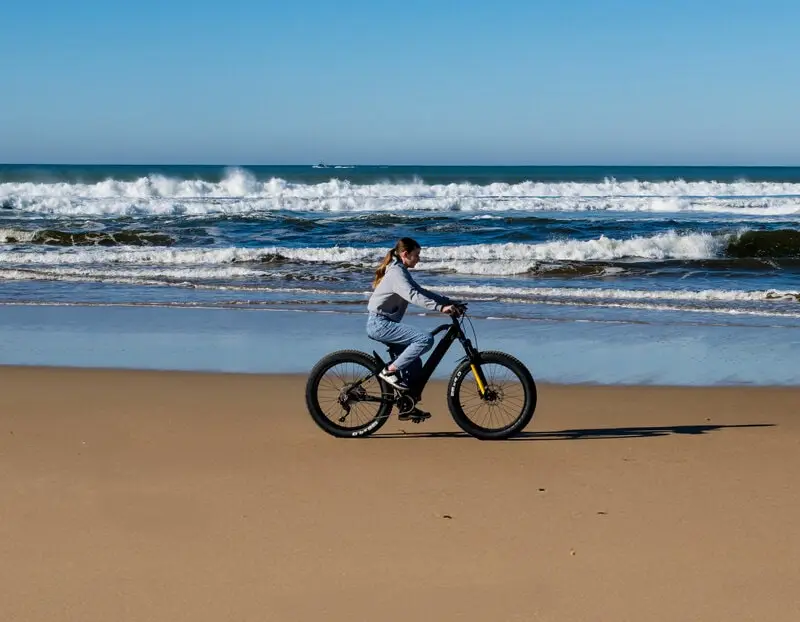
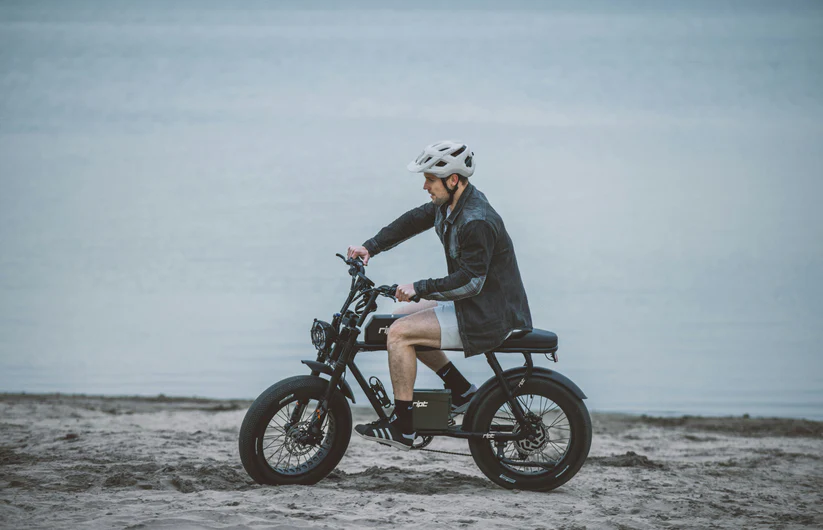
Motor-driven cycle. Two ways in. Any one-wheeled vehicle with a floorboard you stand on or foot rests, which captures the electric unicycle and is subject to no seat height or motor test at all. Or a motorcycle, motor scooter, or bicycle with an attached motor that has a seat height of not less than 26 inches and a motor under 50cc, or a wattage not exceeding 3,700 watts, or five brake horsepower or less. Electric bicycles and electric scooters are carved out. This is the bucket most e-motos land in.
Motorcycle. Anything above 3,700 watts falls out of the motor-driven cycle definition and lands here by default, because Connecticut's motorcycle definition explicitly excludes motor-driven cycles, electric bicycles, and electric scooters.
Where does 26 inches come from? The pocket bike era. Connecticut wrote the seat height test in 2005, when legislatures everywhere were scrambling to deal with cheap imported miniature motorcycles whose seats sat 15 to 20 inches off the ground, low enough to disappear below a driver's hood line. Seat height made a useful legal line for three reasons: a machine that low is invisible in traffic, it is toy-sized by construction rather than built to road vehicle standards, and an officer with a tape measure can settle the question at the roadside in ten seconds, which no one can do with watts. The 2025 act did not design a new framework. It grafted the 3,700-watt test onto that twenty-year-old chassis.
The seat height test cuts both ways, and this is the trap almost nobody sees coming. A machine whose seat sits lower than 26 inches also fails the motor-driven cycle definition, no matter how modest its motor, and it lands in the motorcycle category by the same default. That means registration, a motorcycle endorsement, and an insurance policy for a small-framed electric machine that looks nothing like a motorcycle. Connecticut does have a separate mini-motorcycle statute barring low-seat machines from highways and public sidewalks outright, but its engine test was written in 2005 as a piston displacement under 50cc, because nobody then imagined electric pocket bikes, so it does not apply to an electric one. If you are shopping for a compact e-moto, measure the seat before you assume anything.
If You Ride an Ordinary E-Bike
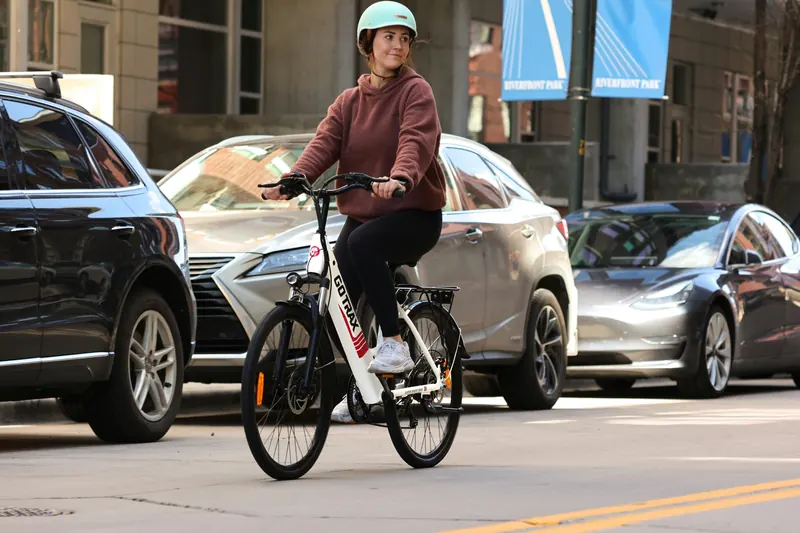
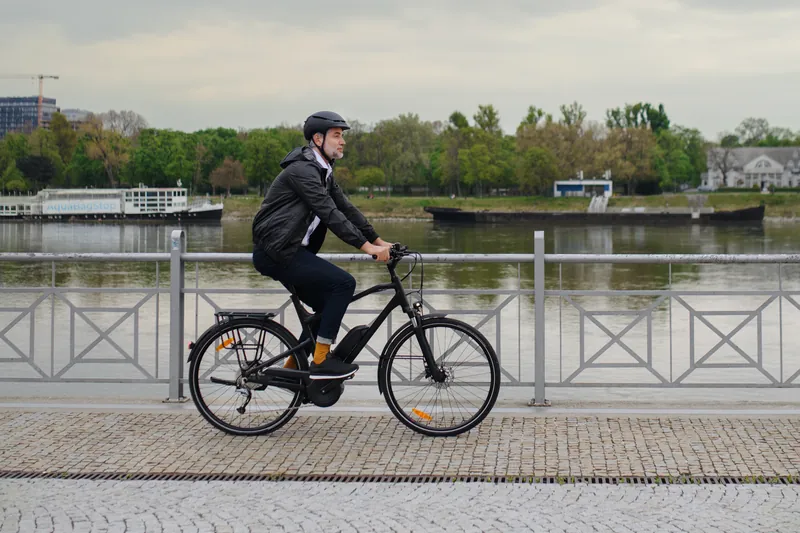
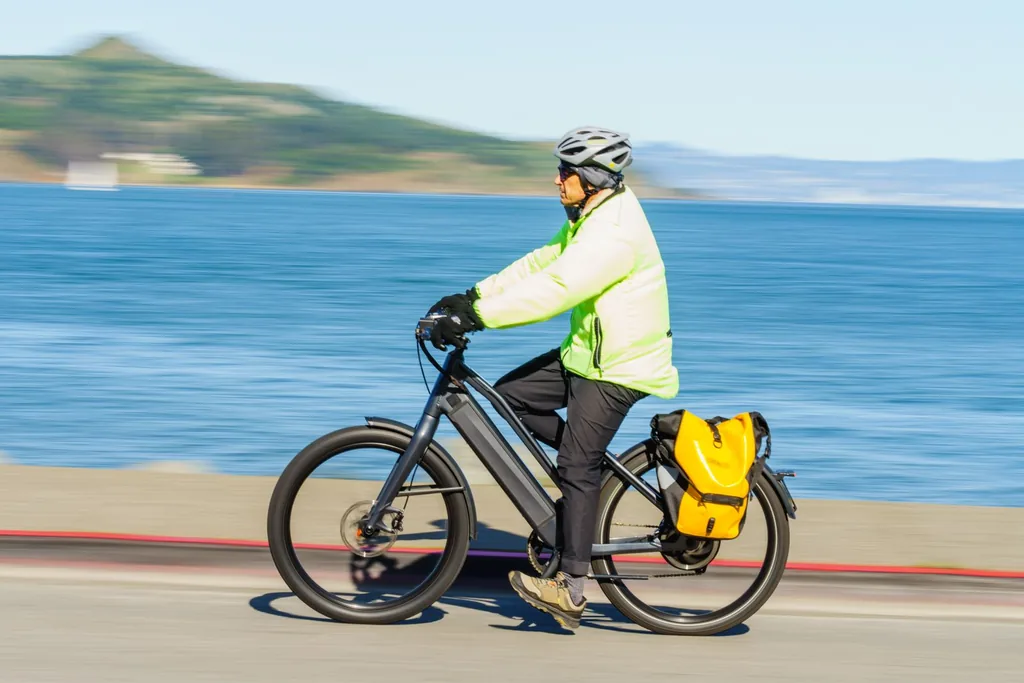
Class 1, 2, and 3 owners keep the legal simplicity of a bicycle. No driver's license, no registration, no title, no plate, no insurance mandate. Connecticut did not touch any of that.
Helmets, at every age: This is the requirement most Connecticut riders do not know they are under. State law bars anyone from riding or sitting as a passenger on an electric bicycle without protective headgear meeting ANSI, CPSC, ASTM, or Snell standards. There is no age cutoff. That rule has been on the books since 2018. What changed on October 1, 2025 is that violating it is now an infraction, where before there was no penalty specific to it and enforcement fell back on a general catch-all fine of up to $50. Several Connecticut towns cite $117 as the cost of a bicycle infraction ticket, though that figure comes from the Judicial Branch's schedule of infractions rather than from any statute.
One wrinkle. A separate statute covering children on bicycles says that failing to wear a helmet "shall not be a violation or an offense" and cannot be treated as contributory negligence, and it directs officers to issue a verbal warning to a parent instead. For a 16-year-old on an e-bike the two provisions point in opposite directions. The e-bike section is the specific one and carries the penalty, but if you are dealing with an actual ticket, that conflict is worth raising.
Minimum age: Only Class 3 has one. Nobody under 16 may ride a Class 3 e-bike, though a rider under 16 may sit as a passenger on a Class 3 built to carry one. Class 1 and Class 2 have no statutory age floor in Connecticut. Three things still constrain a young rider: the helmet rules, a prohibition on carrying a passenger unless the bike is equipped or designed for one, and a statute making it unlawful for a parent or guardian to authorize or knowingly permit a child to violate any of these provisions.
Where you can ride: E-bikes go where bicycles go, except as the statute or a local ordinance says otherwise. Class 3 bikes are barred from bicycle trails and paths and multiuse trails and paths. Class 2 bikes are barred from natural-surface trails, the kind cleared and graded from soil with no surfacing added, unless a local ordinance permits them. Class 1 bikes gained access to those natural-surface trails on October 1, 2025, which is the most rider-friendly thing in the whole package, though towns can still shut that access off by ordinance. REI urged exactly that change in testimony on the predecessor bill, and the enacted act made it word for word.
Sidewalks: Connecticut allows e-bikes and electric scooters on sidewalks and crosswalks, so long as you yield the right of way to pedestrians and give an audible signal within a reasonable distance before overtaking and passing one, and so long as your municipality has not banned it. Plenty have. Motor-driven cycles, by contrast, are barred from sidewalks outright.
Lights, brakes, and reflectors: This is the most-ignored part of Connecticut bicycle law and it applies to e-bikes and scooters too. After dark you need a white front lamp visible from 500 feet and a rear reflector or reflecting tail light lens visible from 600 feet, plus reflective material visible from 600 feet on both sides. Your brakes have to be able to stop you within 25 feet from 10 mph on dry, level, clean pavement. Sirens and whistles are prohibited. Violations are infractions.
One rule that works in your favor: a driver who fails to yield to a person riding a bicycle, e-bike, or e-scooter faces a 100% surcharge on the fine. Connecticut doubled the price of that particular mistake.
If You Ride an E-Moto
On e-motos, Connecticut diverges sharply from the states making headlines, and nearly every published summary gets it backwards. If your machine has a seat at least 26 inches high and a motor at or under 3,700 watts, it is a motor-driven cycle, and the requirements are short.
License: A valid driver's license, and nothing more. No motorcycle endorsement is required, and the license requirement effectively sets a floor of 16. There is a narrow exception allowing the DMV to issue a special permit to a person with a medically certified physical disability, expiring one year from issue.
Registration and insurance: None required, which surprises everyone. Connecticut's definition of "motor vehicle" expressly excludes motor-driven cycles, which keeps them out of the DMV registration system, and the motorcycle insurance mandate excludes them by name. The Office of Legislative Research states the registration point twice. If you have read that Connecticut now requires e-moto registration, you have read something wrong, including on at least one town's official website.
Helmets: Required for operators and passengers under 21, raised from 18 by Public Act 25-65, with a minimum $90 fine that has been on the books since 2014. Note the asymmetry: a 22-year-old on a 3,700-watt motor-driven cycle has no helmet requirement at all, while a 40-year-old on a 20 mph pedal-assist commuter does.
Where you can ride: Roads only. Motor-driven cycles are banned from sidewalks, limited access highways, and the turnpike. On roads posted above the machine's top speed, you have to stay in the right-hand lane or a usable shoulder.
The motorcycle line: Above 3,700 watts, or below 26 inches of seat height, the machine is a motorcycle. It needs registration, a license with a motorcycle endorsement, and insurance at Connecticut's minimums of $25,000 bodily injury per person, $50,000 per accident, and $25,000 property damage. Registration also means the machine has to be manufactured and certified as a road vehicle, which most high-powered electric two-wheelers sold online are not. They were built and sold as bicycles, with no VIN and no federal certification, and that is not something you can add with a bracket and a mirror.
The Rules That Landed on Sellers and Modifiers
The most aggressive part of Connecticut's law is not aimed at riders at all.
The label: Manufacturers must affix a conspicuous label to every e-bike listing its classification, maximum speed, and motor wattage in print no smaller than nine-point type, equip every Class 3 with a speedometer, comply with the federal bicycle safety regulations, and make sure the motor actually cuts out at the class speed.
Modification: This is where riders get caught. You may not modify an e-bike's speed capability or motor engagement so that it stops meeting the definition of an electric bicycle unless you remove that label, or so that it stops matching its labeled class unless you replace the label with an accurate one. Violations run up to $100 for a first offense and $100 to $300 for each one after. Practically, unlocking your bike changes what it legally is, and it puts an affirmative duty on you to relabel it. How anyone would prove a modification is a question the act leaves open: it establishes no testing procedure, no equipment, and no calibration standard, so enforcement leans on the label itself, on what an officer can observe, and on what surfaces after a crash.
What no longer counts as an e-bike: A vehicle is not an electric bicycle if it fails the definition as sold, or if it has a throttle and can exceed 20 mph on motorized propulsion alone in any operating mode, or if it can be unlocked past the limit by a mechanical switch or button, a software change, a mobile app, or any other means. Sellers may not market such a machine as an e-bike or label it Class 1, 2, or 3. This provision is entirely new law and the most useful thing in the act for consumers.
The required warning: Prior to the sale, and in any digital or print advertisement including social media, email, newspapers, magazines, brochures, and posters, the seller of such a machine has to provide this statement:
"This vehicle is not an 'electric bicycle' as defined in section 14-1 of the Connecticut General Statutes. It is instead a type of motor vehicle and subject to applicable motor vehicle laws if used on public roads or public lands. Your insurance policies might not provide coverage for accidents involving the use of this vehicle. You should contact your insurance company or agent for available property damage and liability insurance coverage in connection with your use of this vehicle"
Connecticut is one of very few states that has written an insurance warning directly into a point-of-sale disclosure. If you are handed that paragraph, treat it as the state telling you to make a phone call before you ride.
Where Your Current E-Bike Sits
Nothing in the law keys off purchase date. There is no registration deadline and no compliance window, because machines are sorted by what they are, not by when you bought them. That cuts both ways: a bike you bought in 2023 got no grandfather protection, and it needed none if it is what its label says.
A compliant Class 1 or Class 2. Your bike's legal status did not change. What changed is around it: the helmet rule now carries a ticket at any age, and Class 1 bikes gained natural-surface trail access statewide, subject to local ordinance. Ride on.
A compliant Class 3. Same standing, same non-requirements. The rider minimum of 16 and the ban on bicycle and multiuse trails both predate the 2025 acts. What is new is that violations are now enforceable as infractions rather than theoretical.
A bike sold as Class 1, 2, or 3 that can be unlocked. This is the gray zone the law created, and it is wider than most owners realize. The statute says a vehicle is not an electric bicycle if it can be unlocked past its limit by a mechanical switch or button, a software change, a mobile app, or any other means, and it does not say only once unlocked. Read literally, a bike that ships with a dormant off-road mode fails the definition while sitting in your garage, which would make it a motor-driven cycle: still legal to ride with a driver's license, but not by your 15-year-old, and not on the trails. The section's duties and penalties fall on sellers, and no enforcement against owners of factory-unlockable bikes has been reported, but the definitional language is what a prosecutor or an insurance adjuster would read after a crash. If your bike has an unlock mode you have never used, know that before someone else finds it.
A bike you have unlocked. No gray zone at all. It stopped being an electric bicycle, the modification statute requires you to remove or replace the factory label, and what remains is a motor-driven cycle needing a driver's license, or a motorcycle if the wattage is high or the seat is low. The practical advice is unglamorous: lock it back to spec, or treat it as the vehicle you turned it into.
What Changes on October 1, 2026
Public Act 26-24, signed May 27, 2026, carries two e-bike amendments that nobody has reported.
The first strikes the brake horsepower test from the motor-driven cycle definition. As of October 1, 2026, the category turns on 50cc or 3,700 watts only. The five brake horsepower alternative is gone. The 3,700-watt ceiling itself does not move. In practice this closes a side door that let a machine qualify on a horsepower rating rather than a wattage rating.
The second raises the weight limit for an electric scooter from 100 pounds to 110, which quietly brings a batch of heavier seated scooters back inside the scooter category.
Nothing else moved. The helmet rules, the three classes, the trail rules, the modification penalties, the registration exclusions, and the seller disclosure are all unchanged for 2026.
Your Town Still Makes Its Own Rules
Connecticut did not preempt local regulation. It did the opposite, and riders who assume state law settled the question are going to get tickets.
State law expressly authorizes every town, city, and borough to make ordinances governing bicycles, electric bicycles, and electric scooters within its borders, with penalties, so long as they are not inconsistent with the state operating and equipment statutes or the regulations of the Office of the State Traffic Administration. The authorization goes as far as permitting annual local licensing of bicycles and e-bikes and local registration of sales and ownership changes. The trail rules are written with local override built in from both directions: general e-bike access applies except where prohibited by local ordinance, and Class 2 natural-surface trail access applies except where permitted by one.
So the map is patchy. Greenwich bans e-bikes from playgrounds and bars sidewalk riding on stretches of Greenwich Avenue, Sound Beach Avenue, West Putnam, and East Putnam, and its reckless-riding ordinance makes parents liable for their children. New Canaan bars riders under 16 from Class 3 bikes on any street, highway, bike path, or pedestrian path, requires helmets for everyone on any e-bike, and keeps e-bikes off sidewalks, which is a local rule rather than the statewide default. Fairfield has no e-bike ordinance of its own, but its police department has published an enforcement ladder running from fines to youth diversion referrals to juvenile court to seizing the device, and Fairfield schools bar riding on campus.
Greenwich has also been working on a combined street-takeover and e-bike ordinance that would allow seizure and forfeiture of dirt bikes and modified e-bikes. Police Captain Patrick Smyth brought it to the Board of Selectmen on July 23, 2026. The second reading was scheduled for August 13 and was postponed. If you ride in lower Fairfield County, check where that stands before you assume it has not passed.
The practical upshot: a ride from Greenwich to New Haven can cross four or five ordinance regimes, and the state has no intention of flattening them.
Six Things Connecticut Coverage Keeps Getting Wrong
This law has been reported badly enough that two Connecticut town governments have published incorrect summaries. Here is what to disregard.
The threshold is 3,700 watts, not 3,500. The enacted text and the Office of Legislative Research both say 3,700. The 3,500 figure appears in statewide news coverage and on at least one town's official page, and it is wrong. The difference matters if your machine sits between the two numbers, because it decides whether you need a license or a license plus a registration, an endorsement, and an insurance policy.
A motor-driven cycle is not defined by lacking pedals. There is no pedal test anywhere in the definition. A bicycle with an attached motor is explicitly included in the category. What matters is seat height and motor output.
Motor-driven cycles do not require registration or insurance. They are excluded from the definition of motor vehicle, and the motorcycle insurance mandate excludes them by name. Only machines that qualify as motorcycles carry those requirements.
The $90 helmet fine does not apply to e-bikes. It attaches to the helmet rule for motorcycles and motor-driven cycles, applies only to riders and passengers under 21, and dates to 2014. E-bike helmet violations are infractions under a different section.
The all-ages e-bike helmet rule is not new. It has been law since 2018. The specific penalty is what arrived in October 2025.
There was no single e-bike act. Two public acts did the work, and the bill actually titled as the e-bike bill never passed.

What the Law Does Not Do
No adult helmet requirement on the fastest machines. Connecticut requires a helmet on a 20 mph pedal-assist bicycle at any age, and requires one on a 3,700-watt motor-driven cycle only until you turn 21. The exposure runs backwards to the risk.
No insurance requirement where the damage is. A motor-driven cycle can be ridden legally on Connecticut roads by a licensed adult with no financial responsibility of any kind behind it. If that rider puts someone in the hospital, there is no mandated policy to respond.
No DUI reach. Connecticut's operating-under-the-influence statute applies to motor vehicles, and extends that term only to snowmobiles and all-terrain vehicles. E-bikes, electric scooters, and motor-driven cycles are all outside the definition of motor vehicle, so the DUI statute does not reach any of them. Most riders assume the opposite. Reckless conduct charges and local ordinances are separate questions, and riding impaired remains a bad idea whatever the statute says.
No clarity on state parks. REI asked the Transportation Committee to write express Class 1 access to state parks and other public land into the statute. That language was not enacted. Park access now runs through the general e-bike provision plus whatever the Department of Energy and Environmental Protection does on land it manages, and DEEP has not published a clear current policy. Check before you load the car.
No funded crash data collection. Connecticut is regulating a category it is still measuring through hospital intake, a general cyclist crash file, and an auto club's dataset.
No renewed rebate money. Connecticut's e-bike voucher program, run through DEEP, offered $500 standard and up to $1,250 for income-qualifying applicants and residents of environmental justice communities and distressed municipalities, on bikes under $3,000 carrying UL 2849 or EN 15194 certification and a one-year warranty. Round 1 put 422 people on bikes. Round 2 closed in October 2024 with awards running through that December. DEEP budgeted $1.5 million over three years and allocated $750,000 to each of the first two rounds. Its program page has not been updated since February 2025 and announces no third round, whatever the affiliate blogs claim.
The Insurance Reality
Connecticut does not require you to insure an e-bike, and for most riders it never will. That has never been the reason to carry coverage. An e-bike is a $2,000 to $8,000 machine that spends half its life outside your house, and homeowners policies handle it badly: a low sublimit, a deductible that swallows most claims, little or nothing once the bike leaves your property, and very little liability protection, which is the part that actually ruins people. A rider who injures a pedestrian on a shared-use path is looking at a claim that can run past six figures, and the helmet-at-every-age rule means a plaintiff's attorney will ask what you were wearing. Velosurance writes dedicated e-bike policies covering theft, damage, and liability, with limits available well above anything a state currently mandates.
For motor-driven cycles the gap is wider and less obvious. There is no state mandate to insure one, but most homeowners forms exclude liability arising from motorized vehicles regardless of what the state demands, so a 3,000-watt machine sits uncovered from both directions. Connecticut conceded as much when it forced sellers to warn buyers in writing that their policies might not respond.
Above 3,700 watts the machine is a motorcycle and needs a policy, which requires a registrable vehicle, which brings back the VIN and federal certification question. A family that bought a high-powered machine online could hold something that cannot be registered, cannot legally be ridden on the road, and is not covered by anything they already own. Connecticut's motorcycle insurance statute also expressly allows a policy to exclude personal injury coverage for passengers, so if someone rides behind you, read that section of your policy rather than assuming.
Frequently Asked Questions
- Do I need a license or insurance for my Class 2 e-bike in Connecticut?
- No. Electric bicycles under 750 watts with operable pedals are bicycles under Connecticut law. No license, no registration, no plate, no insurance mandate. You do need a helmet, and that applies at every age.
- Do adults really have to wear helmets on e-bikes in Connecticut?
- Yes. Connecticut is one of the few states with an all-ages e-bike helmet requirement, and it has been law since 2018. Until October 1, 2025 there was no specific penalty attached. Now the violation is an infraction.
- How old does my child have to be to ride an e-bike here?
- There is no minimum age for Class 1 or Class 2 in Connecticut statute. Class 3 requires the rider to be 16, though a younger child may ride as a passenger on a Class 3 built to carry one. Local ordinances may be stricter, and several are. Parents should also know that state law makes it unlawful to knowingly permit a child to violate these provisions.
- My bike is 750 watts on the label but an app unlocks it past 20 mph. Where does that leave me?
- Outside the definition of an electric bicycle. Connecticut's seller statute specifically names software changes, mobile apps, mechanical switches, and any other unlocking method. If you modify the bike you are also required to remove or replace the manufacturer's label, and failing to do so runs up to $100 for a first offense and $100 to $300 after that.
- Does my e-moto need to be registered in Connecticut?
- Probably not. If it has a seat at least 26 inches high and a motor at or under 3,700 watts, it is a motor-driven cycle, and motor-driven cycles are excluded from the definition of motor vehicle. You need an ordinary driver's license to ride one. You do not need a registration or an insurance policy. Above 3,700 watts, or with a seat lower than 26 inches, it becomes a motorcycle and needs all of it.
- Can I ride an e-bike on the sidewalk in Connecticut?
- Under state law yes, if you yield to pedestrians and give an audible signal before overtaking and passing. But towns are allowed to ban it and many have, including on specific named streets. Check your municipality before assuming.
- Can I take my e-bike on the trails?
- Class 1 can now go on natural-surface trails statewide, which changed on October 1, 2025, unless a local ordinance says otherwise. Class 2 cannot unless a local ordinance permits it. Class 3 is barred from bicycle and multiuse trails and paths entirely. State park land is governed separately and the statute does not settle it, so check with the managing agency.
- My town has its own e-bike ordinance. Does state law override it?
- No. Connecticut expressly authorizes towns to regulate bicycles, e-bikes, and scooters, and the trail provisions are written so local ordinances can loosen or tighten them. Your town's rules apply on top of the state's.
- Can I get a DUI on an e-bike in Connecticut?
- Not under the state DUI statute, which reaches motor vehicles and extends only to snowmobiles and ATVs. E-bikes, scooters, and motor-driven cycles all sit outside that definition. Local ordinances and other charges are a separate matter.
- Will my homeowners policy cover my e-bike?
- Partially at best. Expect a low sublimit on the bike itself, a deductible that eats most of a claim, little or no coverage away from your property, and very limited liability protection. For anything classified as a motor-driven cycle or a motorcycle, expect the motor vehicle exclusion to apply and the answer to be no.
- What changes on October 1, 2026?
- One definition. The brake horsepower test drops out of the motor-driven cycle category, leaving 50cc or 3,700 watts as the only tests, and the electric scooter weight limit rises from 100 to 110 pounds. Nothing about helmets, classes, trails, registration, or seller rules changes.