TL;DR:
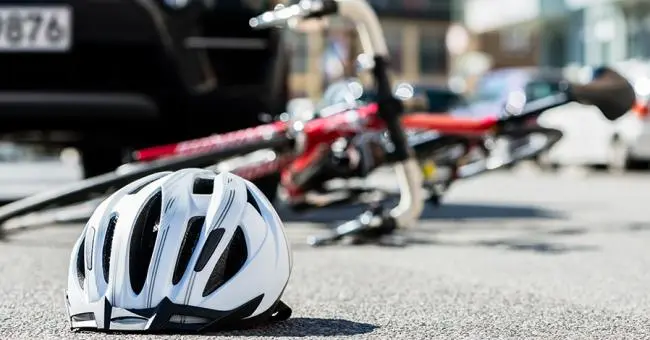
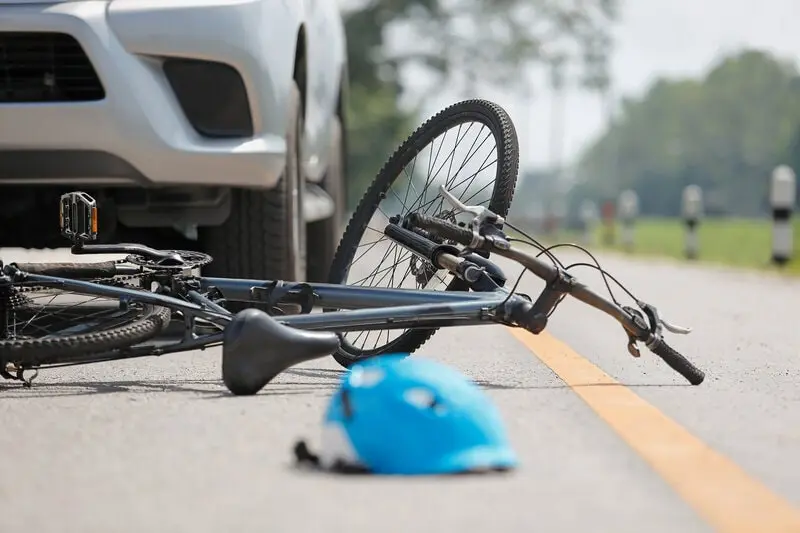
In 2023, the most recent year with final federal data, 1,166 cyclists were killed and nearly 50,000 injured in crashes with motor vehicles on American roads. When a car and a bike collide, the injuries land almost entirely on the rider, and the bills that follow can be staggering: emergency care, surgery, physical therapy, lost income, and a destroyed bike. The natural first question is who pays, and the answer usually starts with an insurance product designed around cars.
- If an at-fault driver hits you, their bodily injury and property damage liability coverage pays for your injuries and your bike. You don't need to own a car to make that claim.
- Your own auto policy follows you onto the bike: MedPay, PIP (in no-fault states), and uninsured/underinsured motorist coverage all apply to a cyclist struck by a car. UM/UIM is the coverage that saves you after a hit-and-run.
- Auto insurance never covers solo crashes, damage to your own bike on your own policy, or crashes you cause. Those fall to health insurance, homeowners or renters policies, or dedicated bicycle insurance.
- State law changes everything: 12 no-fault states pay PIP benefits first, and fault rules range from pure comparative negligence to four states where being even 1% at fault bars all recovery.
- Standalone bicycle insurance exists to fill the gaps: crash damage regardless of fault, theft, liability, medical gap coverage, cyclist-specific UM protection, e-bikes, and racing.
The short answer: auto insurance covers bicycle accidents far more often than most riders realize, but only in certain scenarios. Which policy pays, how much it pays, and whether you can recover anything at all depends on the type of accident and, to a surprising degree, on the state where you crash.
The driver's policy pays first, if the driver is at fault
When a driver hits a cyclist and the driver is at fault, the driver's auto liability insurance is the primary source of recovery. It has two parts, and both matter to a cyclist:
- Bodily injury liability pays for your medical bills, lost wages, and pain and suffering. “Injuries to others” includes cyclists and pedestrians, not just people in other cars.
- Property damage liability pays to repair or replace your bicycle, along with your helmet, computer, wheels, and anything else damaged in the crash.
You do not need to own a car, or any insurance of your own, to make this claim. It is a third-party claim against the driver's insurer, and it rises or falls on proof of the driver's fault and your damages. A police report, witness information, photos of the scene, and complete medical records are what carry it.
The catch is policy limits. State minimums can be shockingly low relative to the cost of a serious injury. If the at-fault driver carries a $25,000 or $30,000 bodily injury limit and your hospital bills run six figures, the driver's policy is exhausted long before you are made whole. That is where your own coverage comes in.
Your own auto policy follows you onto the bike
Here is the part that surprises most cyclists: several coverages on your personal auto policy protect you while you are riding your bicycle, because they follow the person, not the car.
- Medical payments (MedPay) pays your medical bills regardless of fault, whether you were hurt driving, walking, or riding a bike. Limits are modest, typically $1,000 to $10,000, and it never pays lost wages or bike damage.
- Personal injury protection (PIP) works similarly in the states that use it, and typically adds lost wages and replacement services. In no-fault states, a cyclist struck by a car is generally treated like a pedestrian and can claim PIP benefits (more on this below).
- Uninsured/underinsured motorist coverage (UM/UIM) is the big one. If the driver who hit you carries no insurance, fled the scene, or carries too little coverage to pay your damages, your own UM/UIM steps in and pays what the at-fault driver should have paid, including lost wages and pain and suffering. Roughly one in seven American drivers is uninsured, so this is not a theoretical risk.
These coverages typically extend to the named insured, a spouse, and resident relatives. A college student riding a bike while living at home is usually covered under a parent's policy. The flip side is a serious gap: a cyclist who owns no car and lives in a household with no auto policy generally has no MedPay, no PIP, and no UM/UIM at all. For car-free riders hit by an uninsured or hit-and-run driver, there may be nothing to claim against unless their state has a fund of last resort or they carry cyclist-specific coverage.
One thing your own auto policy will almost never do is pay for the bike itself. MedPay, PIP, and UM bodily injury coverage are injury coverages. If the at-fault driver is unknown or uninsured, the bike usually falls to a homeowners, renters, or standalone bicycle policy.
Different accidents, different answers
Hit by a moving car
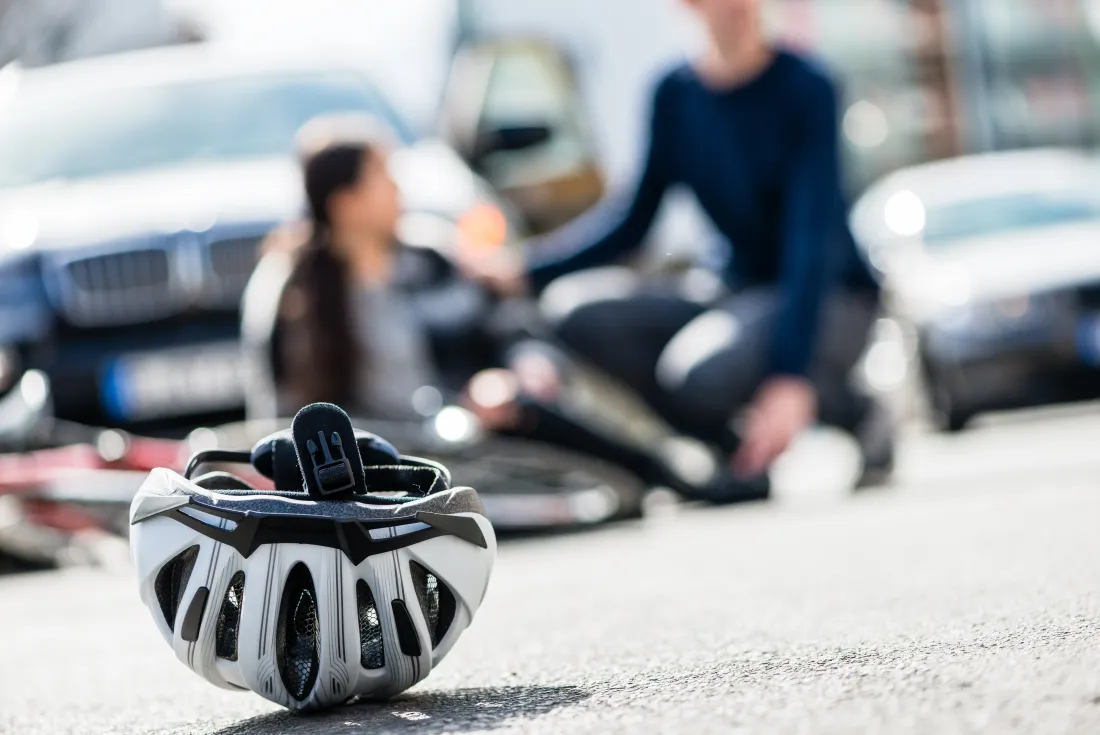
The cleanest scenario. The driver's liability coverage pays for your injuries and your bike, and your own MedPay, PIP, or UIM can stack on top if bills exceed the driver's limits. In no-fault states the order reverses: your own PIP pays first, and you pursue the driver for what PIP does not cover.
Hit-and-run
UM coverage treats an unidentified driver as an uninsured driver, so your own policy (or a household member's) pays for your injuries. Two procedural traps: nearly every state and policy requires a prompt police report, sometimes within 24 to 72 hours, and some states require actual physical contact between the vehicle and you or your bike. In California, for example, a cyclist forced off the road by a car that never touched them generally cannot make a UM claim, while Washington allows such “phantom vehicle” claims if reported to police within 72 hours. New York maintains a fund of last resort, MVAIC, for hit-and-run victims with no household auto policy.
Dooring
When someone flings a car door into your path, the person who opened it is generally liable, and the parked car's auto liability policy typically responds even though the vehicle was not moving. About 40 states have statutes requiring people to check for traffic before opening a door into it. Expect the insurer to argue you were riding too close to parked cars; that argument feeds directly into the fault rules discussed below.
You cause the crash
If you run a stop sign and dent a car, or collide with a pedestrian, your auto policy will not help you. Auto liability coverage follows your operation of a motor vehicle, not a bicycle. The policy that responds is the personal liability section of a homeowners or renters policy, which covers negligence away from home, typically with $100,000 to $300,000 in limits plus legal defense. Riders with neither policy are personally exposed, and e-bike riders should read their policy carefully: standard homeowners forms often exclude motorized vehicles, which can leave even a Class 1 e-bike without liability coverage.
Before filing, think about severity. A homeowners policy is the financial backbone of most households, and liability claims are the kind insurers weigh heavily. A scratched fender might not be worth exposing it: the claim goes on your record, premiums often rise at renewal, and a large payout, or a second claim within a few years, can prompt the insurer to non-renew the policy altogether, forcing you into a more expensive market. For minor damage, paying out of pocket may be the cheaper long-term move; save the homeowners policy for the serious injury claim it exists to absorb. A standalone bicycle policy with its own liability coverage avoids this trade-off entirely, since a cycling claim never touches your home insurance record.
Solo crashes
Crash in a pothole or on a slick descent with no car involved, and auto insurance is out of the picture entirely. No liability claim, no UM, and in most states no PIP. Health insurance pays for treatment, subject to deductibles and copays, and pays nothing for lost wages or the bike. If a road defect caused the crash, a claim against the responsible government agency is possible, but notice deadlines are brutally short, often 30 to 180 days. This gap matters more than most riders think: hospital studies have found that the large majority of bicycle injuries, roughly 70%, involve no motor vehicle at all.
Bike damaged on a car rack or stolen from your car
Your comprehensive and collision coverage protects the car, and usually the rack, but not the bicycle mounted on it. The bike is personal property, so damage or theft falls to a homeowners or renters policy, minus a deductible that can swallow much of the claim, and often subject to special limits on bicycles. If another driver hits your parked car with the bike on it, that driver's property damage liability should pay for the bike along with the car.
State rules: no-fault states change the playbook

Twelve states use a no-fault system for auto injuries: Florida, Hawaii, Kansas, Kentucky, Massachusetts, Michigan, Minnesota, New Jersey, New York, North Dakota, Pennsylvania, and Utah (Kentucky, New Jersey, and Pennsylvania let drivers choose). In these states, a bicycle is not a “motor vehicle,” so a cyclist struck by a car is treated like a pedestrian: PIP benefits pay medical bills and lost wages quickly, without any fault determination, and lawsuits against the driver are restricted unless the injury clears a statutory threshold.
The details vary widely, and they matter:
- New York: a cyclist hit by a car claims up to $50,000 in basic no-fault benefits from the insurer of the vehicle that struck them. Suing for pain and suffering requires a “serious injury,” and New York tightened that definition in May 2026, eliminating the category based on 90 days of disability.
- Florida: your own $10,000 PIP follows you onto the bike. Miss the 14-day deadline to seek initial treatment and benefits are forfeited.
- Michigan: injured cyclists claim through their own policy, then a household policy, then the state's Assigned Claims Plan, which since 2019 caps benefits at $250,000 for riders with no household coverage.
- Pennsylvania: a quirk in the cyclist's favor. The “limited tort” election that restricts many drivers' lawsuits does not apply to cyclists or pedestrians, so an injured rider keeps full rights to sue.
Separately, about 20 states plus Washington, D.C. require drivers to carry UM coverage, which directly benefits cyclists hit by uninsured or hit-and-run drivers. Florida, notably, does not require it. Wherever it is optional, it is inexpensive and worth buying at the highest limit you can afford; it may be the single most important line on an auto policy for someone who rides.
Assignment of fault: where you crash can decide whether you recover at all
Insurance pays according to fault, and states answer the fault question in fundamentally different ways. Most use some form of comparative negligence, which reduces your recovery in proportion to your share of the blame. A handful still use contributory negligence, under which any fault at all on your part is fatal to the claim.
| Fault rule | What it means for a cyclist | States |
|---|---|---|
| Pure comparative negligence | You can recover even if you were mostly at fault. Your award is reduced by your percentage of fault. | Alaska, Arizona, California, Kentucky, Louisiana, Mississippi, Missouri, New Mexico, Rhode Island, Washington. New York for most injury claims, but car crash suits filed after May 26, 2026 use a 51% bar. Michigan uses a hybrid rule. |
| Modified comparative, 50% bar | You recover a reduced award only if you were less than 50% at fault. At 50% or more, you get nothing. | Arkansas, Colorado, Georgia, Idaho, Kansas, Maine, Nebraska, North Dakota, South Carolina, Tennessee, Utah, West Virginia |
| Modified comparative, 51% bar | You recover a reduced award as long as you were not more than 50% at fault. A 50/50 split still pays half. | Connecticut, Delaware, Florida (since 2023), Hawaii, Illinois, Indiana, Iowa, Massachusetts, Minnesota, Montana, Nevada, New Hampshire, New Jersey, Ohio, Oklahoma, Oregon, Pennsylvania, Texas, Vermont, Wisconsin, Wyoming |
| Pure contributory negligence | Any fault on your part, even 1%, bars all recovery. | Alabama, Maryland, North Carolina, Virginia. Washington, D.C. follows this rule for drivers but exempts cyclists and pedestrians, who recover unless they were more than 50% at fault. |
| Slight/gross rule | You recover only if your negligence was slight compared to the driver's gross negligence. | South Dakota |
A concrete example shows how much the rule matters. Suppose a jury finds $100,000 in damages, with the driver 80% at fault and the cyclist 20% at fault for riding without a rear light at dusk. In every comparative negligence state, the cyclist recovers $80,000. In Alabama, Maryland, North Carolina, or Virginia, that same 20% of fault means the cyclist recovers nothing. Now make the cyclist 55% at fault: a pure comparative state still pays $45,000, while every modified and contributory state pays zero. And at exactly 50/50, a 51%-bar state like Texas or Illinois pays $50,000 while a 50%-bar state like Georgia or Colorado pays nothing.
Two recent changes are worth flagging. Florida abandoned pure comparative negligence in March 2023 and now bars recovery for anyone more than 50% at fault, while also shortening the deadline to sue from four years to two. New York, long the classic pure comparative state, adopted a 51% bar for motor vehicle injury suits filed on or after May 26, 2026. Washington, D.C. moved in the opposite direction: its Motor Vehicle Collision Recovery Act exempts cyclists and pedestrians from the contributory negligence rule that still binds drivers there.
Because fault percentages are argued, not measured, insurers work hard to pin blame on the rider. The recurring arguments: no lights or reflectors at night (a statutory violation almost everywhere, and a strong argument), riding against traffic, rolling a stop sign (though about a dozen states now legally allow cyclists to treat stop signs as yields), and not wearing a helmet. The helmet argument fails in many states, which bar helmet non-use as evidence of negligence, and no state requires adult cyclists to wear one, but insurers raise it anyway. Riding legally and lit is not just safety advice; in a contributory negligence state it can be the difference between full recovery and nothing.
Where auto insurance ends
Add it up and the pattern is clear. Auto insurance, yours and the driver's, does a reasonable job when an insured, identifiable, at-fault driver hits you. It does progressively worse as the facts drift from that script: an uninsured or hit-and-run driver with no UM coverage on your side, a solo crash, a damaged frame with no one to blame, a liability claim against you, or an e-bike that your home and auto policies both disclaim. Health insurance fills part of the injury gap, with deductibles. Homeowners and renters policies fill part of the property and liability gap, with deductibles, depreciation, special limits, racing exclusions, and e-bike exclusions.
When standalone bike insurance makes sense

Dedicated bicycle insurance exists precisely to cover what auto, home, and health policies leave behind: crash damage to the bike regardless of fault or vehicle involvement, theft away from home, transit damage on a car rack or in an airline case, medical gap coverage, coverage during organized events and races, and equal treatment for Class 1, 2, and 3 e-bikes. It also rebuilds the two protections cyclists otherwise borrow from other policies: liability coverage with limits up to $500,000 for injuries or damage you cause while riding, and uninsured motorist coverage written for cyclists rather than drivers, with limits you select, paying medical costs and lost wages after a hit-and-run or a crash with an uninsured driver. It is not for everyone; a casual rider on an $800 hybrid, with good health insurance, a car in the driveway, and high UM limits, is already reasonably covered. It earns its premium when one or more of these describes you:
- Your bike is worth more than your deductibles. A homeowners deductible of $1,000 to $2,500, plus depreciation and a possible bicycle sub-limit, can reduce a claim on a $4,000 bike to very little. Bike insurance replaces at the bike's insured value with a small deductible.
- You don't own a car. No auto policy in your household means no MedPay, no PIP, and no UM/UIM. A hit-and-run leaves a car-free rider with nothing to claim against; cyclist-specific vehicle contact coverage rebuilds that protection.
- You ride an e-bike. Standard homeowners forms often exclude motorized vehicles from both property and liability coverage, and auto policies want nothing to do with them. A dedicated policy covers all three classes like any other bike.
- You race or ride organized events. Competition is a common exclusion in homeowners policies. Bike insurance can cover crash damage in races and even reimburse entry fees.
- You want claims kept off your homeowners record. A stolen bike or a liability claim filed against a home policy can raise premiums or risk non-renewal. A standalone policy keeps cycling losses on their own ledger.
- You ride where drivers are uninsured or fault rules are hostile. In states with high uninsured rates, or the four contributory negligence states where partial fault bars recovery, first-party coverage that pays regardless of the fault fight is worth the most.
The bottom line
Does auto insurance cover bicycle accidents? Yes, when a motor vehicle is involved and someone insured is at fault, and partially even when they are not, through MedPay, PIP, and UM/UIM coverage that follows you onto the bike. But the coverage is scenario-dependent, state-dependent, and full of gaps that only show themselves after a crash. Three practical steps close most of them: buy the highest UM/UIM limits you can afford on your auto policy, confirm in writing how your homeowners or renters policy treats your bike and your e-bike, and consider standalone bicycle insurance for everything auto insurance was never designed to do.
Frequently Asked Questions
- Does my car insurance cover me if I'm hit by a car while riding my bike?
- In most cases, yes, provided that the limits you selected are sufficient to cover the extent of the claim. MedPay, PIP, and uninsured/underinsured motorist coverage follow the person rather than the car, so they typically apply when the policyholder or a resident family member is struck by a motor vehicle while cycling. The at-fault driver's liability coverage remains the primary source of recovery; your own policy fills in around it.
- What if the driver has no insurance or flees the scene?
- On a conventional bicycle, your uninsured motorist coverage generally treats a hit-and-run driver as an uninsured driver and pays what that driver should have paid, including lost wages and pain and suffering, up to the UM limits you selected. Two procedural traps can sink the claim: report the crash to police promptly, since many states and policies impose deadlines as short as 24 to 72 hours, and be aware that some states require actual physical contact between the vehicle and you or your bike; a rider forced off the road by a car that never touched them may have no claim at all.
- Does uninsured motorist coverage apply if I was riding an e-bike?
- This is where the answer gets genuinely murky. Many auto policies exclude UM coverage for injuries sustained while occupying a motorized vehicle you own that isn't insured under the policy, and most policies never define “motor vehicle.” Whether an e-bike counts is unsettled: a Class 1 or 3 pedal-assist bike has a strong argument that it is not a self-propelled motor vehicle, a throttle-driven Class 2 is a harder case, and courts are only beginning to sort it out. New Jersey's Supreme Court has already held that a low-speed e-scooter rider is not a “pedestrian” for PIP purposes, a reasoning insurers may try to extend. Before relying on UM coverage for an e-bike, get your carrier's answer in writing, or carry cyclist-specific uninsured motorist coverage from a bicycle insurer that covers e-bikes explicitly.
- What if I don't own a car?
- You can still make a liability claim against an at-fault driver's insurance; that requires no policy of your own. But MedPay, PIP, and UM/UIM protection all require access to an auto policy, either yours or one belonging to a spouse or relative in your household. A car-free cyclist in a household with no auto policy has no UM coverage at all, so a hit-and-run or uninsured driver can leave them with nothing to claim against. This is the single biggest insurance gap for car-free riders, and cyclist-specific coverage from a bicycle insurer is the most direct way to close it.
- Will auto insurance pay for damage to my bicycle?
- Only the at-fault driver's property damage liability will. Your own auto policy, including UM and PIP, covers injuries but not the bike. If no insured driver is responsible, the bike falls to a homeowners or renters policy, subject to a deductible, depreciation, and possible sub-limits, or to a standalone bicycle policy that covers crash damage and theft at the bike's insured value.
- Who pays if I crash with no car involved?
- Auto insurance is out of the picture entirely. Health insurance covers your treatment after deductibles and copays, and nothing covers lost wages or the bike unless you carry bicycle insurance. If a road defect caused the crash, a claim against the responsible government agency is possible, but notice deadlines can be as short as 30 days. Studies suggest roughly 70% of bicycle injuries involve no motor vehicle, so this is the most common crash type and the least insured.
- Does it matter if the crash was partly my fault?
- Enormously, and the answer depends on your state. In comparative negligence states, your recovery is reduced by your percentage of fault. In modified comparative states, crossing the 50% threshold eliminates it. In Alabama, Maryland, North Carolina, and Virginia, any fault at all, even 1%, bars recovery completely. Riding with lights, with traffic, and by the rules is the best insurance argument you can make for yourself.
Insurance policies and state laws vary and change; this article is general information current as of mid-2026, not legal advice. For questions about a specific crash, an attorney licensed in your state is the right resource.