TL;DR:
- Just over half of all trips Americans take are under three miles, and most riders don’t notice how many they drive until an e-bike replaces them.
- A new car costs $12,863 a year, per AAA’s September 2026 report: about 410 hours of work at the median wage, or the first eight hours of every workweek. An e-bike costs about 33 hours a year.
- Keep the car and move short trips to the bike: three workdays a year back. Go from two cars to one: close to a workday every week.
- The bike rarely loses on the ride. It loses on the ten minutes around it: parking, charging, weather, weight, and habit.
- Each of those has a fix. The two problems a routine can’t solve, theft and crashes, are what insurance is for.
The two-mile problem
The pharmacy is two miles away. So is the grocery store, and the friend who borrowed your floor pump. For years you drove to all of them without it feeling like a decision. Then you bought an e-bike to drive less, and the first thing it taught you was how many of those trips there were.
You are typical. The Bureau of Transportation Statistics, using national phone location data, found that 52% of all trips in 2021 were under three miles and 28% under one. The 2017 National Household Travel Survey found 59% of vehicle trips were under six miles.
Those are also the miles a car does worst. An engine takes several miles to warm up, so a three-mile trip runs cold most of the way; fueleconomy.gov puts the penalty at up to 24% worse fuel economy on short cold-weather trips, and 25% to 45% for hybrids.
So the e-bike worked. Then you found the part nobody warned you about: the riding was fine, and the problem was everything around it. The store with no rack, the evening you forgot to charge, the week of rain, the bike’s weight on three front steps, the road with no shoulder. That is why the car keeps winning, one errand at a time. Each has a fix. First, though, what the car is costing you, in a unit you feel more sharply than dollars.
The car costs you a workday a week
On the trip itself, an e-bike usually ties or beats a car door to door under about five miles once you count parking. Five to six miles is close to even; beyond that the car wins unless traffic is bad. One Los Angeles rider has beaten rush-hour traffic from downtown to the Santa Monica pier.
The bigger number is the time you spend paying for the car.
AAA’s Your Driving Costs report, released September 15, 2026, puts the cost of owning and running a new vehicle at $12,863 a year, or $1,072 a month. The median full-time worker earned $1,251 a week in the second quarter of 2026, per the Bureau of Labor Statistics, about $31 an hour. At that wage the car costs 411 hours of work a year. Ten full workweeks. The first eight hours of every week go to the car.
An e-bike costs about $1,000 a year to run: $300 to $500 in maintenance, under $20 in electricity (a 500-watt-hour battery holds about nine cents of power and goes 25 to 40 miles), and about $500 in depreciation on a $2,500 bike over five years. At the same wage, 32 hours a year. Under 40 minutes a week.
The gap is 379 hours, about seven hours a week: a full workday, every week. How much of it you get back depends on what happens to the car.
You keep the car and move short trips to the bike. Insurance, registration, depreciation and the loan payment do not shrink because the car is parked. Only per-mile costs drop, and AAA puts fuel, maintenance and tires at about 24 cents a mile. Move 3,000 miles of errands to the bike and you save about $720, or 23 hours of work: three workdays a year. Modest, real, and the tier most readers are in.
Two cars become one. One full car cost disappears, replaced by the e-bike plus the occasional rideshare. Net of the bike’s costs, that is close to the full seven hours a week, and the point at which the e-bike stops being a hobby and becomes a vehicle.
Car-free with an e-bike. The full 411-hour swing, less transit and rideshare. Transportation is 17% of household spending, per the 2024 BLS Consumer Expenditure Survey, so a household that eliminated it could, in theory, work four days a week at the same standard of living. Almost nobody does; treat it as the ceiling.
Whichever tier you are in, write down every car trip for one week and mark the ones under five miles with no passengers and no load bigger than two grocery bags. Those are the trips the rest of this article is about.
Nowhere to park it
The plan breaks first at the store. Warehouse clubs and many grocery chains have no bike rack, and riders end up locking to a cart corral. It works, but it feels improvised, and improvised is what sends people back to the car.
The fix is a lock routine you don’t have to think about. Carry two locks of different types, a U-lock and a folding or chain lock, because a thief equipped for one usually isn’t equipped for the other. Lock the frame and rear wheel in view of the entrance and ideally a camera. For a five-minute errand, the U-lock alone is fine where people are walking past; thieves work empty lots, not the front door of a busy store at noon.
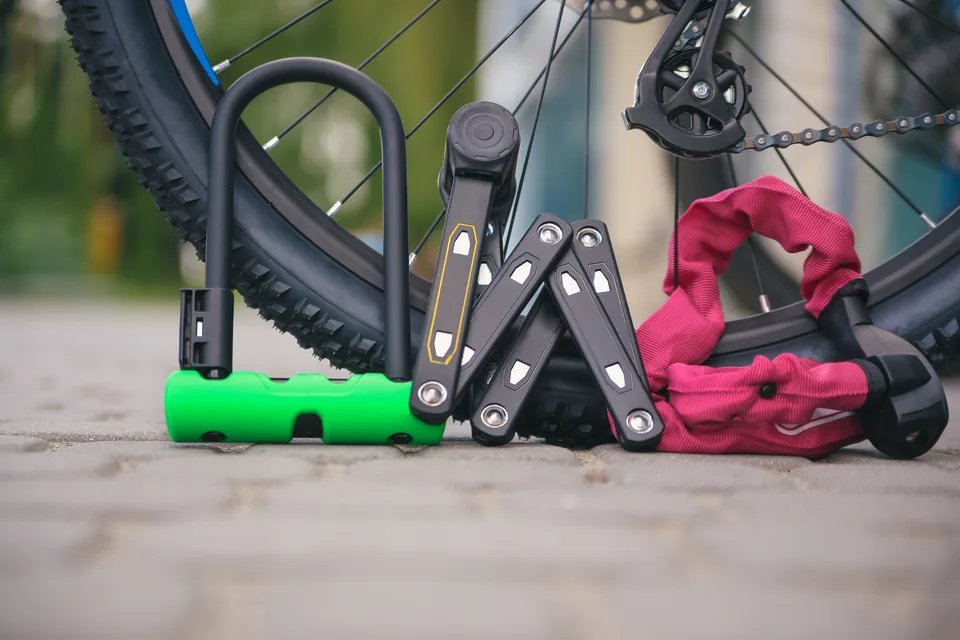
For the racks that don’t exist yet, ask; several national chains have a customer-request process for bike parking. For lock types, mounting, and what to do when the only rack is a wheel-bender, see our guide to bike locks and our piece on why an AirTag will not keep your bike from being stolen.
The battery you forgot to charge
Forgetting to charge is easy because arriving by bike has more steps than arriving by car, and somewhere between the panniers, the lights, the helmet and the lock, the battery is still at 12% while you make dinner. Riders who never forget have attached charging to something they already do: the battery comes off when the helmet comes off, and the charger lives in one spot by the door. A second charger at work turns a 20-mile round trip into two 10-mile legs.
Learn your real range, too. Manufacturer claims assume a light rider on flat ground at the lowest assist. Add hills, cold, or the habit of riding in turbo, and a bike sold as “up to 50 miles” is a 20-mile bike. That is normal.
Charge indoors on a hard, non-flammable surface where you can see it, never in a hallway you need to exit through, and only with the charger that came with the bike. Do not buy, or keep, an e-bike whose battery is not certified to UL 2849 or UL 2271; battery fires are rare and almost entirely a problem of uncertified packs. New York City had 18 deaths from these fires in 2023, passed Local Law 39 that year requiring UL certification for any e-bike sold in the city, and recorded one death in 2025.
Weather
Ask a room of e-bike owners how many ride in the rain and the hands go up slowly. Ask about snow and you get two hands, and those two will tell you it is fine. The difference is gear: full-length fenders, a rain shell that does not look like race kit, waterproof gloves, boots they don’t mind soaking, and below freezing, studded tires and a personal cutoff. A family of three in a northern city rides all year down to 5°F; below that the car comes out.

You do not need a special bike. Most e-bikes already have hydraulic disc brakes and wide tires, which handle wet pavement far better than rim brakes and skinny tires. Drop the pressure a few PSI when it rains, and slow down over wet leaves and painted crosswalk lines.
“I don’t ride in ice” still leaves 300 days a year. Pick your cutoff and ride every day that clears it. Our guide to riding in wet weather covers the gear.
It’s heavier than you expected
A commuter e-bike weighs 50 to 65 lb, a fat-tire cruiser can pass 75, and a conventional hybrid weighs 25 to 30. The extra weight is the motor, battery and wiring, not the tires. You never feel it while riding. You feel it on the front steps, on the car rack, or squeezing past the lawnmower in the shed, and riders who quit often quit here, because the bike ended up somewhere it had to be carried every time.
So store it at ground level with nothing in front of it, and pull the 7 lb battery before carrying. Check your car rack’s rating; most tray racks made before about 2020 top out at 35 to 45 lb per bike. If you are still shopping, a 35 to 40 lb road-style e-bike does everything a 70 lb cruiser does for someone with stairs.
The weight has an upside: a bike that carries a 250 lb rider up a hill carries groceries. A pair of panniers holds a week of food for two, and a small cargo trailer holds a warehouse-club run.
The route
Ask riders who have stuck with it what stops other people, and the answer they give most often is the road: no shoulder, a blind curve, traffic at 45 mph.
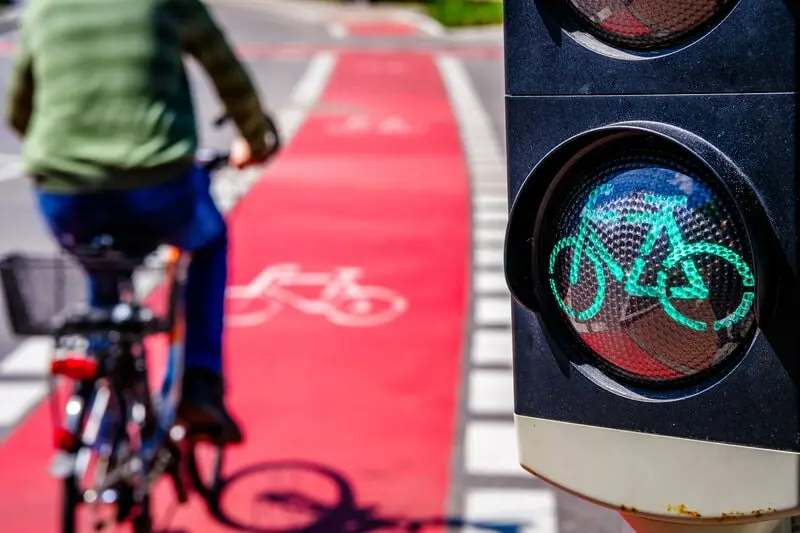
Find out whether it is true. Map apps have a cycling layer, and local advocacy groups publish route maps that are often better. Ride the candidate route on a Sunday morning before trying it on a Tuesday at 5:30, and take the route a mile longer if it is protected the whole way. Our commuting tips for beginners walk through the trial run in more detail. Where no safe route exists, replace the trips that do have one and keep driving the rest; half your short trips on the bike is a real change. Then ask for the route: city bike plans have public comment periods, and employers add bike parking when someone asks.
Making the bike the default
The riders who got the hours back share one rule. The bike is the default, and the car needs a reason.
It works because it removes the daily decision. If every trip starts with “should I bike this one?”, the car wins whenever you are tired or late, which is most days. If the bike is the default unless there is a passenger or the distance is over ten miles, the car sits.
Make it the easy choice physically: keys, lock, helmet, charger and panniers in one spot by the door, so getting the bike out takes the same 90 seconds as getting into the car. One rider who spent about $4,500 on an e-bike to replace a car keeps all of it in a basket next to the bike and logged more than 600 miles in the first five months.
Give it 30 days. Move every trip on your audit list to the bike for a month, keeping score, and you will know whether tier two is within reach.
Watch what happens to the car. Three weeks without being started. A street-cleaning ticket because it never moved. One rider’s auto insurer asked for an odometer photo to confirm his mileage had dropped as far as he claimed. Take that as a cue: most auto insurers discount low-mileage drivers, and telling them is the one way a tier-one rider recovers some fixed cost without selling anything.
The two problems a routine can’t solve
The first is theft. Locks delay a thief; they do not stop a motivated one with an angle grinder. A stolen $3,000 e-bike is a hit most people have not budgeted for, and it usually ends the experiment, because most people do not buy a second one.
Check what you have. Homeowners and renters policies often cap bicycles at a few hundred dollars, apply the full deductible, and some exclude motorized bikes outright. Ask your agent, in writing, whether a Class 1 to 3 e-bike is covered for theft away from home, at what limit, and with what deductible. A rider who insured his family’s three bikes put it this way: if one is stolen, it is a pain, not a financial hit, and that is a different feeling when you are locking up outside a store.
The second is a crash. The more trips you move to the bike, the more miles you ride next to cars, and the drivers have not changed. A bicycle policy that covers crash damage and carries Liability, Medical Payments, and Uninsured Motorist coverage does the job a routine cannot. Velosurance’s e-bike insurance covers theft, crash damage, and the rider for e-bikes up to Class 3, and it is the part of the switch you set up once.
Once that is in place, the bike stops being a decision. Go get the milk.
Frequently Asked Questions
- Is an e-bike faster than a car for errands?
- Under about five miles, usually yes once you count parking. Beyond six miles the car is faster unless traffic is heavy.
- How far can I go on one charge?
- Less than the box says. Expect 40% to 60% of the advertised figure with hills, cold, a heavier rider, or high assist.
- Can I leave the battery on the bike overnight?
- Indoors, yes, as long as it is not charging unattended. Bring it inside if the bike sits below freezing or above 100°F.
- Do I need special insurance for an e-bike?
- Check your homeowners or renters policy first; many cap bicycles at a few hundred dollars and some exclude motorized bikes. A standalone bicycle policy covers theft and crash damage at full value and adds Liability, Medical Payments, and Uninsured Motorist coverage.
- Will switching to an e-bike lower my car insurance?
- Often, yes. Most auto insurers offer a low-mileage discount; report your new annual mileage.
Policy terms, coverage limits, and availability vary by state. This article is for general information and is not insurance or legal advice. Refer to your policy documents or contact Velosurance for details about your coverage.