TL;DR:
Fat bikes were built for places where a normal tire sinks. Riders in Alaska and the desert Southwest pieced them together in the 1980s and 1990s to cross snow and sand, and for years they stayed a winter toy for mountain bikers.
- 'Fat tire' covers two different things: true 4-inch tires and the 2.3 to 3-inch 'plus' tires that many commuter e-bikes now wear. Most of what you read lumps them together.
- A 4-inch tire adds roughly 15 to 20 watts of rolling drag per bike at 18 mph compared with a good touring tire, which works out to roughly 8% to 15% less range from the same battery.
- Fat tires help on snow, sand, loose gravel and broken pavement. On smooth bike lanes and packed paths they add weight, make the steering sloppy and make the bike less fun to ride.
- A typical 4-inch e-bike weighs 65 to 75 pounds, which is a problem for stairs, elevators, bus racks and many car racks.
- For most riders who commute on pavement, a 2.2 to 2.8-inch e-bike-rated tire with a puncture belt gives most of the comfort with a fraction of the penalty.
Then cheap e-bikes came along. A 4-inch tire at low pressure soaks up bumps that would otherwise call for a suspension fork, and it makes a heavy bike look stable in a product photo, so manufacturers put them on everything from $999 folding bikes to $2,500 mid-drive commuters. Along the way the word "fat" started showing up on tires barely wider than a trail bike's.
Which leaves you in a shop, or three tabs deep in product pages, looking at a commuter on balloon tires that looks cool, but makes you wonder if it's actually what you need. The answer depends on the roads you ride, the length of your commute and where you keep the bike.
Two kinds of "fat"
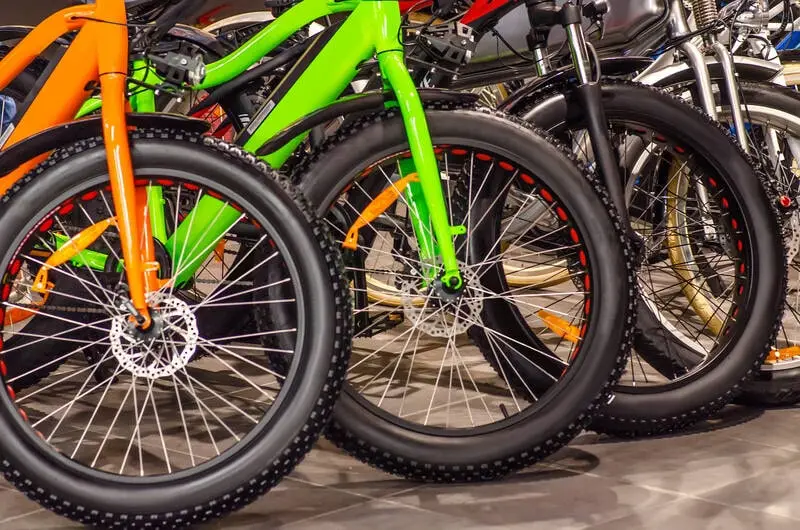
Read the sidewall first. True fat tires measure 4 inches or more, usually in 20 x 4.0 or 26 x 4.0 sizes, and sit on rims 65 to 80 mm wide at anywhere from 5 to 30 PSI. E-bike versions get a heavier casing and often a puncture liner from the factory.
Plus tires run about 2.3 to 3 inches wide at 20 to 40 PSI, and plenty of bikes sold as "fat tire commuters" use them, from 20 x 3.0 folding bikes to mid-drives on 2.4-inch rubber. On the road they behave like mountain bike tires.
At 30 PSI a 2.4-inch tire stays planted over rough asphalt. Drop a 4-inch tire to 15 PSI and the bike floats like a lounge chair, with about the same eagerness to accelerate. So when a review promises "fat tires," check which kind it's talking about.
Where fat tires help
They smooth out bad pavement
Most of the harshness you feel on a bike is vibration, the constant buzz of chip seal plus the jolts from potholes and expansion joints. In 2012 German engineers wired bikes with acceleration sensors and found that road surface, speed and tire pressure all changed how much vibration reached the frame and fork, while swapping wheelsets barely registered. Lower pressure is where the comfort comes from, and a wide tire lets you run less of it without pinch flats or the rim bottoming out on a pothole.
On an e-bike with a rigid fork, a 4-inch tire at 15 to 20 PSI works like a spring without a damper. It swallows a single pothole or expansion joint, then springs back, and over a long stretch of cracks or washboard at 18 mph the bike can start to bounce and wander in a way a suspension fork with rebound damping would settle. Researchers who reviewed tire width and comfort in 2024 said the hard evidence is thinner than the marketing claims.
More rubber on the ground
A tire's contact patch is roughly the load divided by the pressure. Put 150 pounds on a rear tire at 60 PSI and about 2.5 square inches of rubber touches the road. At 20 PSI, which a wide tire handles easily, that grows to about 7.5 square inches.
On dry asphalt you don't need most of that. Grip on a hard surface comes from how hard the rubber presses on the road and how sticky the compound is, and the size of the patch barely enters into it, which is why a road bike on 1-inch tires can corner and brake harder than most riders dare. A 2.4-inch commuter tire at 30 PSI puts about 5 square inches down, and that already covers hard braking, wet corners and a loaded rack. The extra rubber from a 4-inch tire starts paying off only when the surface itself gives way. In loose gravel, sand, mud and snow, the bigger footprint keeps the bike from digging in and washing out, and on a packed crushed-stone rail trail a 2.4-inch tire already has all the grip you need. Grip in the rain still comes down to rubber compound and tread, and wet paint is slick on any width.
Snow and sand

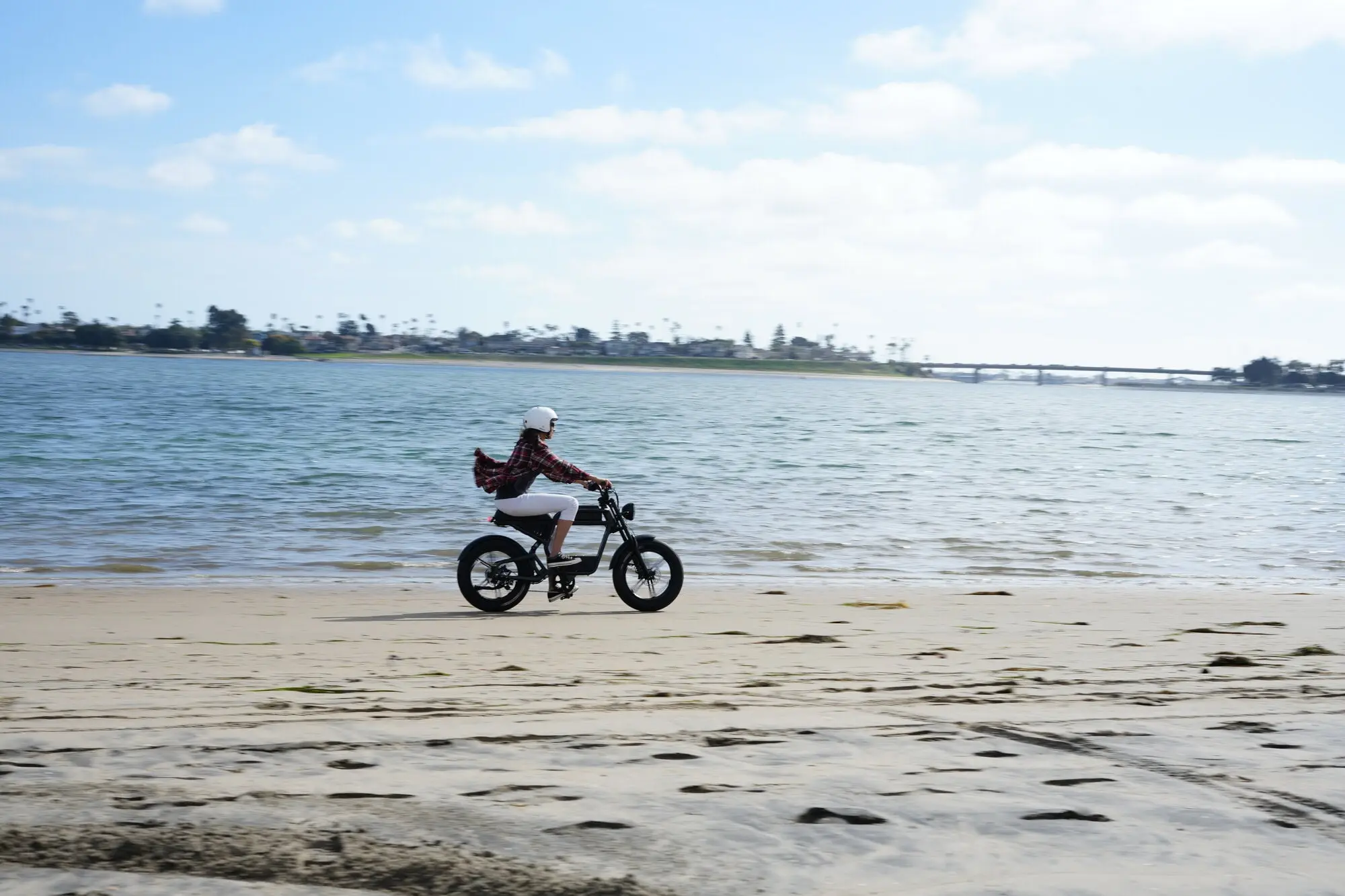
On fresh or packed snow a 4-inch tire at 8 to 12 PSI stays on top while a narrow tire cuts in and stalls, which counts for a lot if your route crosses unplowed paths. Width does nothing on glare ice, where only studs help. We also have a guide to riding safely in snow and slush that covers clothing, lights and braking.
They make up for a cheap frame
A lot of budget e-bikes skip suspension or fit a spring fork that barely moves. Fat tires do that job instead, which is one reason they sell so well at the low end of the market, and on a short, rough commute that trade makes sense when the bike offers no other way to absorb bumps. A tire is still a poor substitute for suspension, because it has no damping. The part you want is a decent suspension fork with adjustable rebound, since the front wheel hits every bump first and the fork keeps it tracking straight while the tire is still bouncing. Rear suspension is rarely useful on a commuter. It adds weight, cost and pivots to service, and a suspension seatpost softens most of what reaches the saddle for a fraction of that. A 2.4 to 2.8-inch tire on a bike with a suspension fork gives more comfort and far better control than 4-inch rubber on a rigid fork, and it skips the weight and storage headaches.
Where fat tires hurt
Rolling resistance and range
Soft, wide tires flex as they roll, and flexing burns energy. In lab tests on a steel drum at 18 mph, with 94 pounds on a single tire, two well-regarded 4-inch fat tires used about 35 to 38 watts at 12 PSI. A popular puncture-resistant e-bike touring tire about 1.5 inches wide needed 27 watts at 60 PSI. Let that touring tire down to 30 PSI and it climbs to about 35 watts, right into fat-tire territory, so pressure explains much of the gap.
Count both wheels and a fat setup draws roughly 15 to 20 watts more than a good narrow commuter tire. Those drum numbers describe smooth pavement, though. On chewed-up streets a hard, narrow tire shakes the whole bike and rider, and that vibration wastes energy too, so the gap shrinks and can close entirely on a bad enough road.
At 18 mph an upright rider pushes something like 180 to 200 watts through the air alone, so the extra tire drag adds about 8% to the total load. At 12 mph the tires take a bigger share, because air drag falls off steeply with speed while tire drag drops only in proportion, so the penalty climbs closer to 15%. Those are our estimates from the test numbers and leave out wheel weight. One reviewer who measured a 26 x 4.0 e-bike got about 28 miles at full assist and 50 at the lowest setting, so your thumb on the assist button moves range far more than tire width does. On a long commute you'll still charge more often, and the battery will go through its charge cycles faster.
Weight
A 26 x 4.0 tire alone weighs 1,100 grams or more, and the wide rims and long spokes add more. Complete 4-inch e-bikes commonly land between 65 and 75 pounds, and one popular model weighed 73.4 pounds on a reviewer's scale.
With the motor running you barely notice the weight. Then comes the day you haul 70 pounds up to a third-floor walkup or wedge it into a small elevator, and that's usually when fat-tire owners start rethinking the purchase.
Storage, racks and transit
Plenty of wall hooks, floor stands, hitch racks and bus racks weren't designed for 4-inch tires. Some car racks need fat-tire trays or longer straps, and every rack maker lists a maximum tire width and weight limit in the manual. Some bus racks take fat tires and 75-pound bikes, and many don't, because fat-tire trays are an option that transit agencies buy separately. If a bus or train is part of your commute, look up your agency's rules on tire width and e-bike weight before you buy.
Tires wear out and cost more
Replacement 20 x 4.0 e-bike tires start around $60 each, and premium 26 x 4.0 tires run well past $100. Low pressure on pavement wears them faster, knobby ones especially, so budget for a fresh pair every couple of seasons.
Flats are a bigger job
A fat tire holds so much air that a slow leak can go unnoticed for days. When it finally goes flat on a rear hub-motor wheel, you're dealing with axle nuts, a motor cable and a heavy wheel at the roadside. In a garage that takes 20 minutes. At 6 p.m. in the rain, with traffic going by, it takes a good deal longer. A puncture liner or sealant cuts most of that risk, and many fat e-bike tires ship with a liner already inside.
Sloppy handling
Very wide tires at low pressure steer slowly, flop into corners and like to follow road crown and grooves on their own, so you spend the ride correcting a bike that never feels settled. Flick a 2.4-inch commuter through a gap in traffic and it goes where you point it. Try the same move on 4-inch rubber and the bike lags, then wallows. Knobby fat tires hum and squirm once you pass 20 mph, which you'll notice on a Class 3 bike that assists to 28 mph. If you plan to ride fast, pick a smoother tread with an e-bike speed rating on the sidewall.
The right width for most commuters
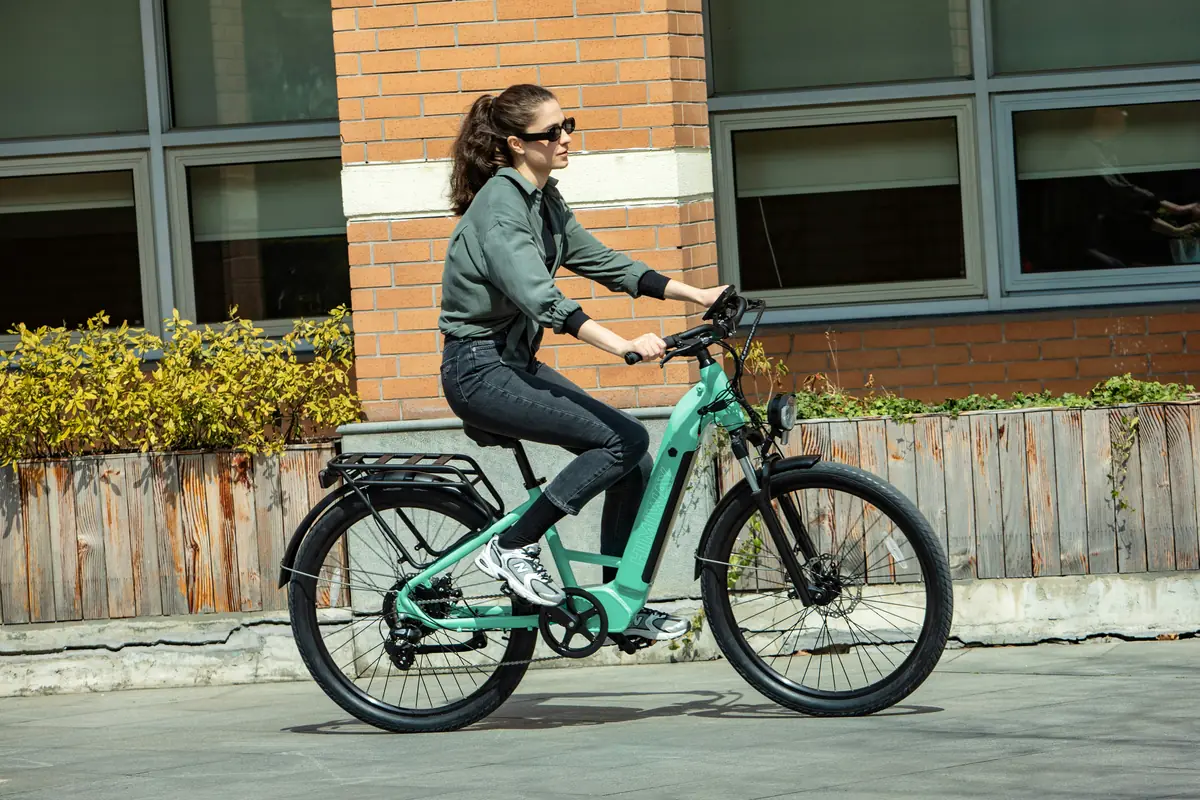
For most pavement commuters the right width is 2.2 to 2.8 inches. You keep a big share of the comfort and grip and lose most of the weight and drag. Go to 3 inches if your route mixes in loose gravel, dirt paths or badly broken streets.
Look for a smooth or lightly treaded center with small side knobs, since full knobbies belong on trails. Pay for a puncture belt or liner, because a roadside flat on a heavy e-bike costs you more than a few grams ever will. Make sure the tire is built for e-bike weight and carries a speed rating that covers your bike's top assisted speed. If the bike has a decent suspension fork, you can go narrower without giving up much comfort.
Already own a 4-inch bike and ride mostly pavement? A smoother fat tire pumped near the top of its range closes some of the gap in drag and sharpens the steering a little.
Who should buy a true fat-tire commuter

A 4-inch e-bike makes sense when your commute runs through snow, sand, loose gravel or seriously broken pavement and the trip is short, roughly under 8 miles each way, so range never worries you. It helps if the bike lives on the ground floor or in a garage, if you're happy cruising at moderate speeds and don't mind vague steering, and if you're a heavier rider or carry cargo and want a tire that handles the load.
Pick a plus-tire or standard commuter if you ride 10 miles or more each way on paved roads and bike lanes. The same goes if the bike has to climb stairs, ride an elevator or go on a bus or train. Riders who want to run a Class 3 bike near 28 mph and get the most range out of each charge should skip the 4-inch tires too.
Setting tire pressure for the road
A road tire at 80 PSI that loses 2 PSI hasn't changed much, but the same loss on a fat tire at 20 PSI is a 10% drop you'll feel in the steering. Check pressure weekly with a gauge that reads accurately down low, because many floor-pump gauges get vague below 20 PSI.
For pavement, start 4-inch tires near the top of the range printed on the sidewall, often 20 to 30 PSI, and drop to 8 to 12 PSI for snow or sand. Plus tires around 2.4 to 3 inches usually settle between 20 and 35 PSI on the road, depending on your weight. Never go past the maximum on the tire or the rim, whichever is lower.
Protecting a heavier, pricier bike
Seventy pounds won't slow down a thief with a van. Lock the frame to something solid with a good U-lock or chain, record the serial number and keep receipts and photos. Homeowners and renters policies often cap or exclude e-bikes, and a crash on a bike this heavy can damage a lot more than the rider. We also have a guide to bike and e-bike insurance in 2026 covering replacement value, e-bike liability and how coverage works, plus a look at switching to an e-bike after 50 if comfort is the main reason you're shopping.
Frequently Asked Questions
- Are fat tire e-bikes harder to pedal?
- With the motor off, yes. The extra rolling drag and weight make a 4-inch e-bike feel sluggish without assist. With the motor on, most riders do not notice until they check the battery.
- Do fat tires reduce e-bike range?
- Yes. Based on lab rolling resistance tests, expect roughly 8% to 15% less range at commuting speeds compared with a narrower commuter tire, before counting the added weight. Assist level, speed, hills, rider weight and cold weather all affect range more.
- Are fat tires safer in the rain?
- Somewhat. They help on loose and uneven surfaces and give a bigger contact patch, but they do not turn wet paint, metal plates or leaves into good grip. Tread and rubber compound count for more than width, and so does slowing down and braking earlier.
- Can I put narrower tires on a fat tire e-bike?
- Some bikes can, within limits set by the rim. A wide fat-bike rim can't safely hold a much narrower tire, so check the rim maker's approved tire sizes. Some 20 x 4.0 folding e-bikes accept 20 x 3.0 tires, but most won't take a 2-inch road tire.
- Do fat tire e-bikes need a special bike rack?
- Many do. Check the rack's maximum tire width and per-bike weight limit. Many hitch racks need fat-tire trays or longer straps, and many hooks and stands do not fit 4-inch tires.
- Are fat tires good for winter commuting?
- They are on snow, where a 4-inch tire at low pressure floats and holds traction while a narrow tire bogs down. On ice, width does not help, and you need studded tires.
Policy terms, conditions and exclusions vary. This article is for general information only and is not insurance or legal advice. Check your policy documents and local laws for the details that apply to you.