


Wisconsin cycling in numbers
50%
Bike ownership
1,700+
Miles of trails
50
State parks
72
Bike friendliness score
Wisconsin from a cyclist's perspective
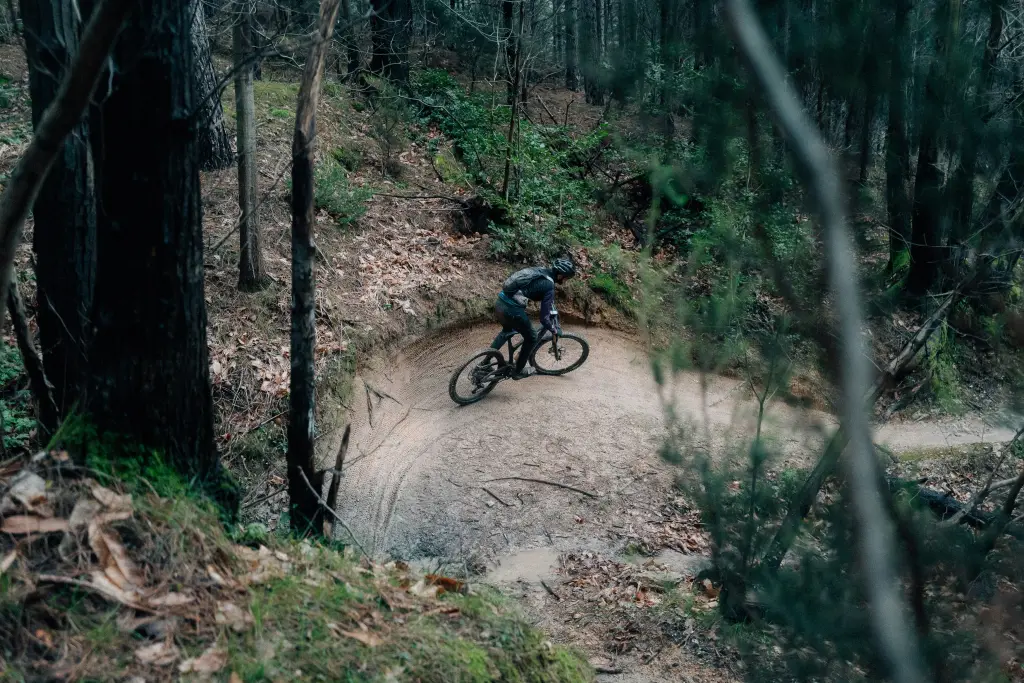
Wisconsin invented the American rail-trail. When the state bought an abandoned rail corridor between Elroy and Sparta for $12,000 and opened it to bicycles in 1967, it created the first rail-to-trail conversion in the country — and then kept going. Today the state trail system counts 44 trails covering more than 1,700 miles, and the Rails-to-Trails Conservancy tallies nearly 2,000 miles of rail-trail across 101 corridors. PeopleForBikes rates Wisconsin's cities the third-best statewide average in the nation. This is a place where the bike network came first and the reputation is still catching up.
Rail-trails are the backbone. The Elroy-Sparta State Trail runs 32.5 miles of crushed limestone through three hand-cut rock tunnels, the longest of them three-quarters of a mile of dripping darkness that riders walk through by headlamp. From Madison, the Military Ridge, Badger, and Glacial Drumlin trails fan out toward Dodgeville, the Illinois line, and Waukesha — the Glacial Drumlin alone covers 52 miles and crosses a quarter-mile trestle over Rock Lake. A state trail pass ($25 for the year, $5 for the day) covers every rider 16 and up, and it may be the best money in Midwest cycling.
Mountain bikers head north. The Chequamegon Area Mountain Bike Association maintains more than 135 miles of purpose-built singletrack around Cable, Seeley, and Hayward — the self-proclaimed Singletrack Capital of the Midwest, and the numbers back the claim. Forty-four of those miles now link Hayward to Cable in the longest continuous singletrack connection in the region, and each September the Chequamegon 40, run since 1983, sends thousands of racers across the Birkebeiner ski trail. Closer to the cities, the Kettle Moraine's John Muir loops serve up the Midwest's classic rocky, rooty glacial singletrack, and Levis Mound adds sandstone cliffside trails in the middle of the state. When winter comes, CAMBA grooms 70 miles for fat bikes rather than conceding the season.
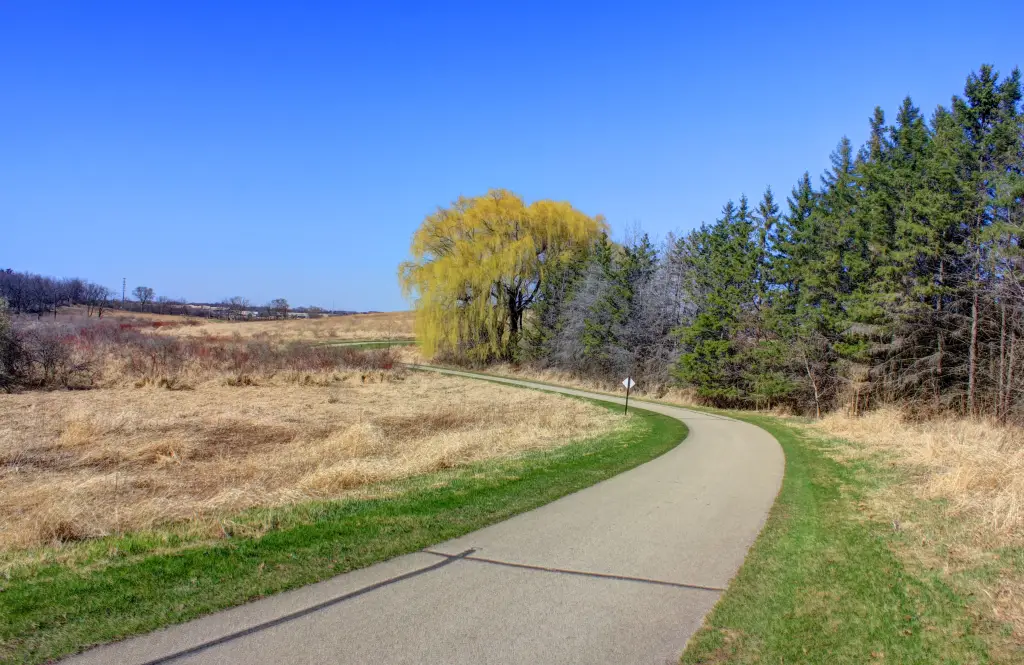 City riding centers on Madison, one of only five Platinum-level Bicycle Friendly Communities in the United States. The capital threads more than 200 miles of bikeways between its lakes and runs the nation's first all-electric bike share, with 525-plus BCycle e-bikes at more than 100 stations. Milwaukee answers with the Oak Leaf Trail, a 135-mile loop around the county, and the Hank Aaron State Trail running from Lake Michigan to the county line. The industry lives here too: Trek builds its headquarters campus in Waterloo, a short spin off the Glacial Drumlin, and Saris and Planet Bike call Madison home.
The honest ledger: the League of American Bicyclists ranks Wisconsin 27th, weighed down by thin infrastructure spending and rural highways with narrow shoulders — this is a trails state more than a roads state, and in 2017 it became the only state ever to repeal its Complete Streets policy. Winter shortens the season to roughly April through October for everyone without a fat bike. But point your wheels at the Driftless Area in the southwest — unglaciated ridge-and-valley farm country stacked with 10 percent pitches and empty gravel — and Wisconsin makes its case as convincingly as any state in the Midwest.
Wisconsin E-bike Laws
Three classes, no license, no registration — and a state-trail quirk that leaves Class 2 throttles behind. Here is where Wisconsin stands on e-bikes.
Wisconsin adopted the three-class, 750-watt framework in 2019 Wisconsin Act 34 and kept the rulebook light: no license, no registration, no insurance, no title for any compliant class. The rule that surprises riders is on the state trails — Class 1 and Class 3 are welcome at 15 mph, but a Class 2 under throttle power is not.
The motor assists only while the rider is pedaling and cuts off at 20 mph (Wis. Stat. 340.01(15ph)).
The motor may propel the bike on throttle alone; assistance ends at 20 mph.
Assistance only while pedaling, up to 28 mph — no throttle, and a speedometer is required equipment (Wis. Stat. 347.489(3m)).
Wis. Stat. 346.806(2) exempts e-bike riders from the operator's license chapters for every class.
No registration, no title, no plate — the same statute exempts e-bikes from all of it.
Wisconsin imposes no financial-responsibility mandate on Class 1, Class 2, or Class 3 — coverage is on you.
No one under 16 may operate a Class 3, though they may ride as passengers on one built for it (Wis. Stat. 346.806(4)); no age floor for Class 1 or Class 2.
Wisconsin has no bicycle or e-bike helmet law for any class or age; local ordinances can add one.
Where You Can Ride
- Roads & bike lanesAll three classes carry the same rights and duties as bicycles wherever bikes ride (Wis. Stat. 346.806(1)).
- Bikeways & shared-use pathsOpen to all classes under power by default; DNR rules and local ordinances under Wis. Stat. 349.18(4) may restrict specific classes.
- SidewalksWisconsin bars vehicles from sidewalks unless the local authority permits it (Wis. Stat. 346.94(1)) — sidewalk rules are a city-by-city question.
- State trails & parksClass 1 and Class 3 ride many DNR bicycle trails at a 15 mph limit; Class 2 stays off under motor power. A state trail pass ($25 annual / $5 daily) covers riders 16 and up, and most natural-surface MTB trails remain closed to motors.
- Out-of-class e-motosOver 750 watts or no operable pedals means the machine is not an electric bicycle — Wisconsin moped or motorcycle rules apply, license and registration included.
Effective November 22, 2019 under 2019 Wisconsin Act 34. Statutes: Wis. Stat. 340.01(15ph), 346.806, 347.489(3m), 349.18(4), 346.94(1). Cities and park districts can add their own path and trail restrictions — check signage where you ride. Last reviewed July 2026.
Wisconsin Cycling Weather
Wisconsin riding runs April through October: warm, green summers built for long trail days, bookended by crisp shoulder seasons and a winter that belongs to fat bikes.
Sunny days a year
Riding season
Apr - Oct
Wisconsin Cycling Destinations
Elroy-Sparta State Trail
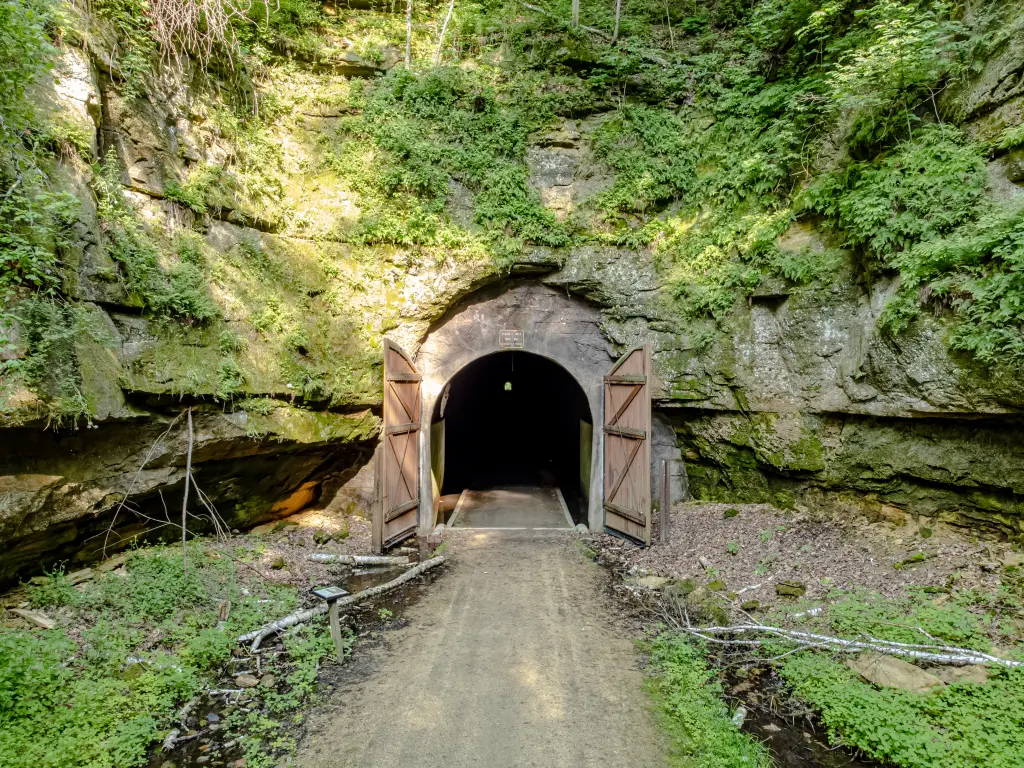
This is where the American rail-trail began, and it still rides like a piece of history. The 32.5-mile crushed-limestone corridor links five small towns — Sparta, Norwalk, Wilton, Kendall, and Elroy — with grades that never exceed the gentle 2 to 3 percent a steam locomotive could handle. The signature moments are the three rock tunnels, hand-cut more than 140 years ago: the two shorter bores run about a quarter mile each, while Tunnel No. 3 stretches three-quarters of a mile of pitch-black, dripping stone that riders walk through with lights. Sparta calls itself the Bicycling Capital of America and connects onward to the La Crosse River State Trail, while Elroy links to the 400 State Trail for riders building a multi-day tour. The tunnels close November through April, and a state trail pass covers every rider 16 and up. Families and touring cyclists own this trail, and it rewards them with farm-country scenery that has barely changed since the rails came out in 1965.
CAMBA Trails
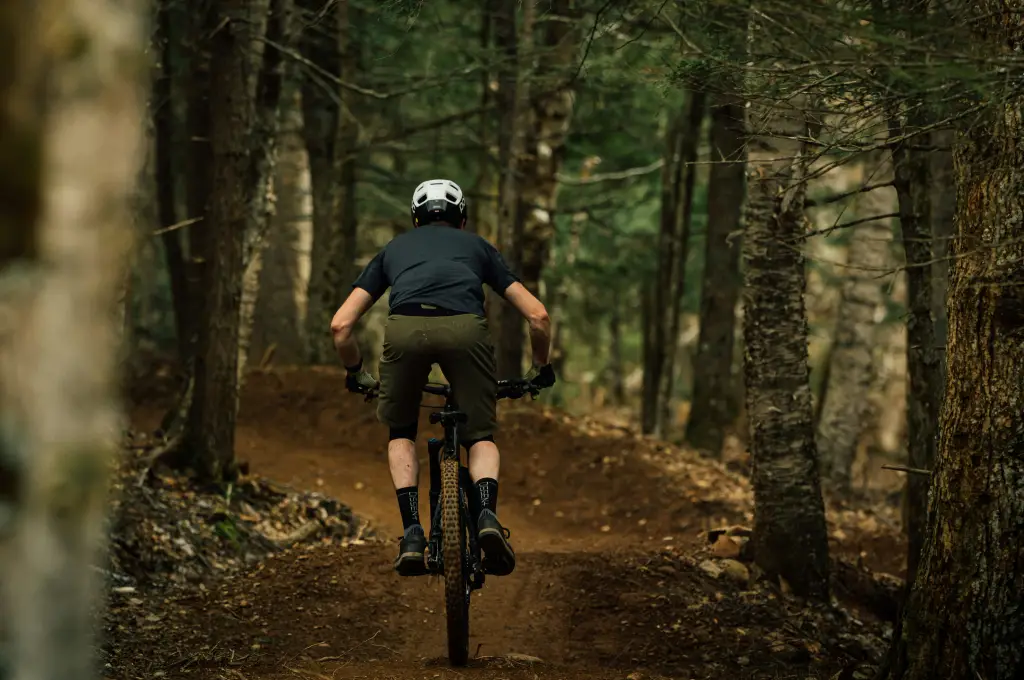
The Chequamegon Area Mountain Bike Association has spent decades building the Singletrack Capital of the Midwest, and the claim holds up: more than 135 miles of purpose-built singletrack spread across clusters around Cable, Seeley, Hayward, and Lake Namakagon, inside nearly a million acres of county forest and the Chequamegon-Nicolet National Forest. The riding is fast, flowy, and machine-built over rolling glacial terrain — berms and rollers rather than sustained climbs — with technical old-school options like Rock Lake for riders who want their roots and rocks unsanded. Forty-four continuous miles now connect Hayward to Cable along the Makwa and Seeley Pass corridor, the longest unbroken singletrack link in the Midwest. There is no trail fee; the system runs on donations and memberships. Come September the woods fill for the Chequamegon MTB Festival, and when the snow falls, 70 miles of groomed fat-bike trail keep the season alive.
Peninsula State Park
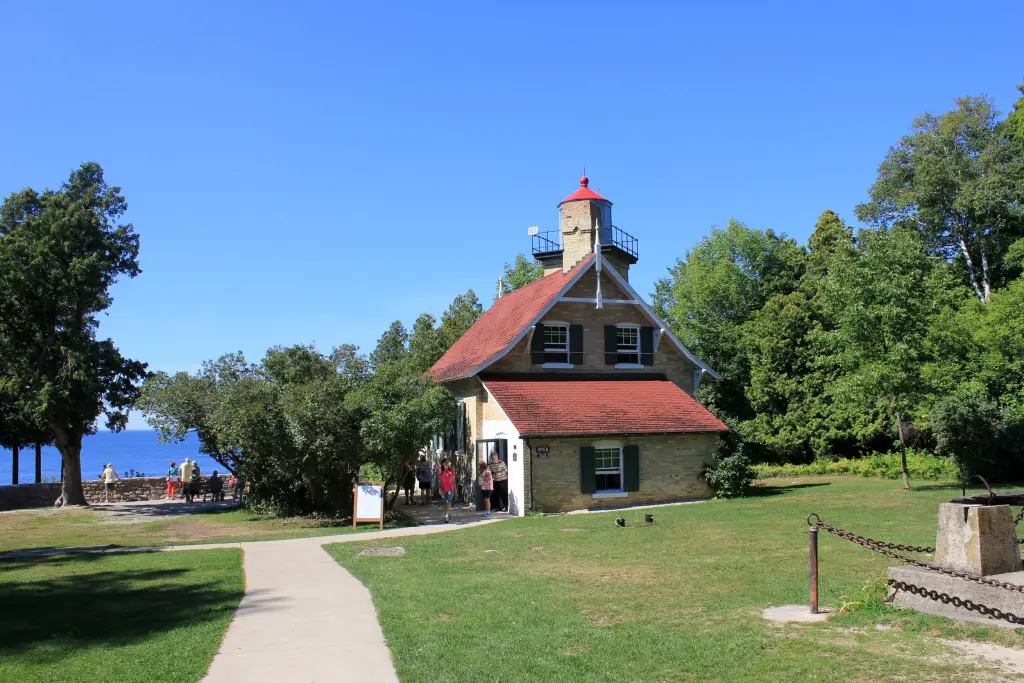
Door County's flagship park packs the peninsula's best riding into a few unhurried miles. The Sunset Bike Route rolls 9.6 miles of fine gravel past Weborg Marsh, through cedar and maple forest, and along limestone cliffs with Green Bay spread out below; the 0.75-mile Hidden Bluff spur cuts across to the nature center and Nicolet Bay. Eagle Tower and the 1868 Eagle Bluff Lighthouse anchor the scenery, and the shore roads continue north through Ephraim and Sister Bay for riders who want to turn a park loop into a coastal day. The park added something new in 2024 and 2025: 20 miles of purpose-built mountain bike singletrack — the first public system in Door County — running from green flow loops to technical blue lines off Highland Road in Ephraim. A vehicle admission sticker gets you in, and riders 16 and up need a state trail pass. It is the rare destination that works equally well for a family on cruisers and a rider chasing new singletrack.
Glacial Drumlin State Trail
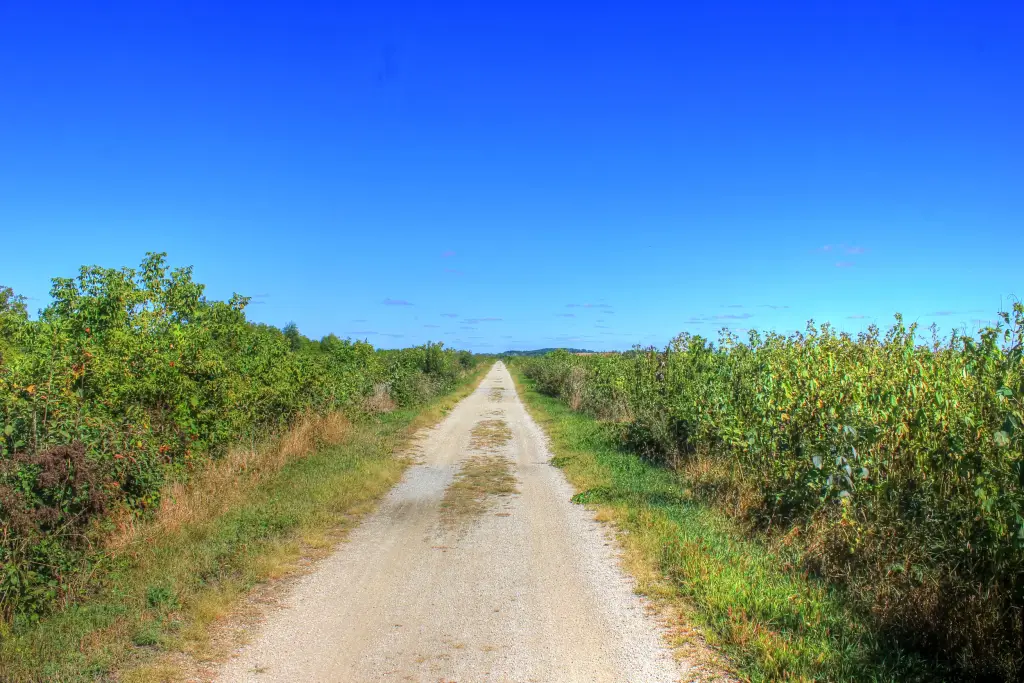
The Glacial Drumlin is southern Wisconsin's cross-country ride: 52 miles from Cottage Grove, ten miles east of Madison, all the way to Waukesha at the edge of metro Milwaukee. The western 38 miles run crushed limestone and the eastern 14 are paved, threading more than ten towns — Deerfield, Lake Mills, Jefferson, Dousman, Wales — past the namesake drumlins the glaciers left behind. The showpiece is a quarter-mile trestle across Rock Lake near Lake Mills, one of several wooden bridges carrying the trail over wetlands and rivers, with ancient Aztalan State Park a short detour away. One signed 1.5-mile road gap at Jefferson is the only interruption. At the eastern end the trail feeds Waukesha's Fox River Sanctuary and the New Berlin Trail toward Milwaukee, making a two-city traverse genuinely practical. It is flat, honest, family-friendly riding, and with a $25 annual trail pass it may be the cheapest 52-mile adventure in the Midwest.
John Muir and Emma Carlin Trails
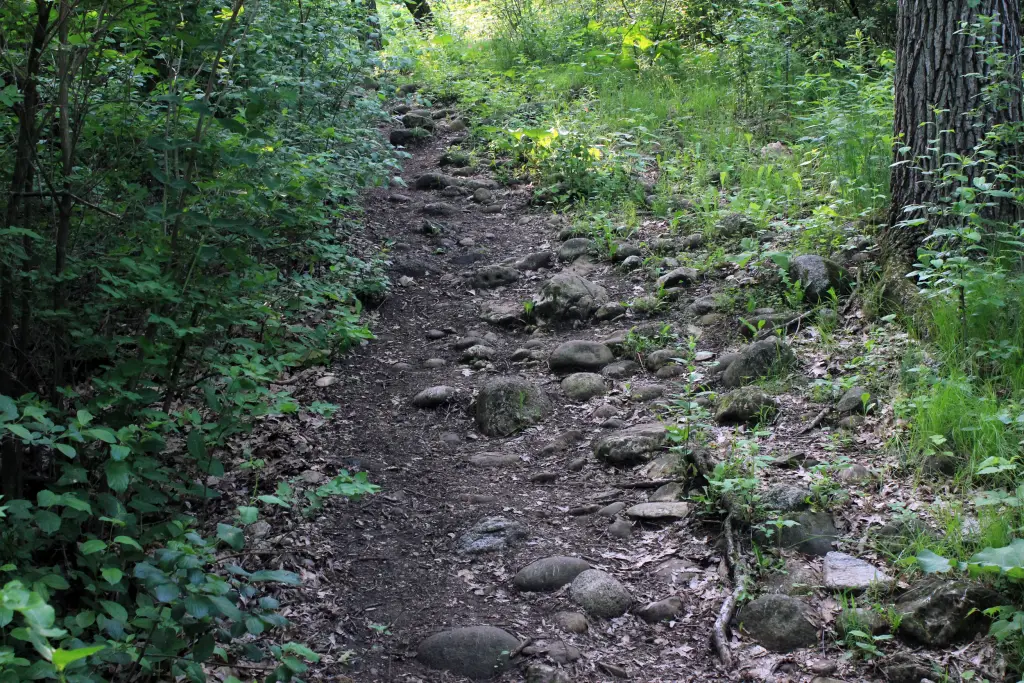
An hour from both Milwaukee and Madison, the Kettle Moraine State Forest's Southern Unit holds the Midwest's classic old-school singletrack. The John Muir system stacks five loops from 1.25 to 12 miles, and the 12-mile Blue loop is the marquee ride: rocky, rooty, fast glacial terrain with punchy climbs that arrive in relentless succession. Connector trails link north to the Emma Carlin system's dozen slightly mellower miles, and the full Muir-to-Carlin out-and-back builds a 25-mile day with roughly 1,500 feet of accumulated climbing — kettle-and-kame country never stops rolling. The trails are hand-built, directional, and maintained with the Southern Kettles Off Road Riders, running through oak forest and prairie openings that turn gold in October. Riders 16 and up need a state trail pass, and the trails close when wet to protect the tread. This is where southeastern Wisconsin learned to mountain bike, and it still sets the standard.
Blue Mounds and the Driftless Hills
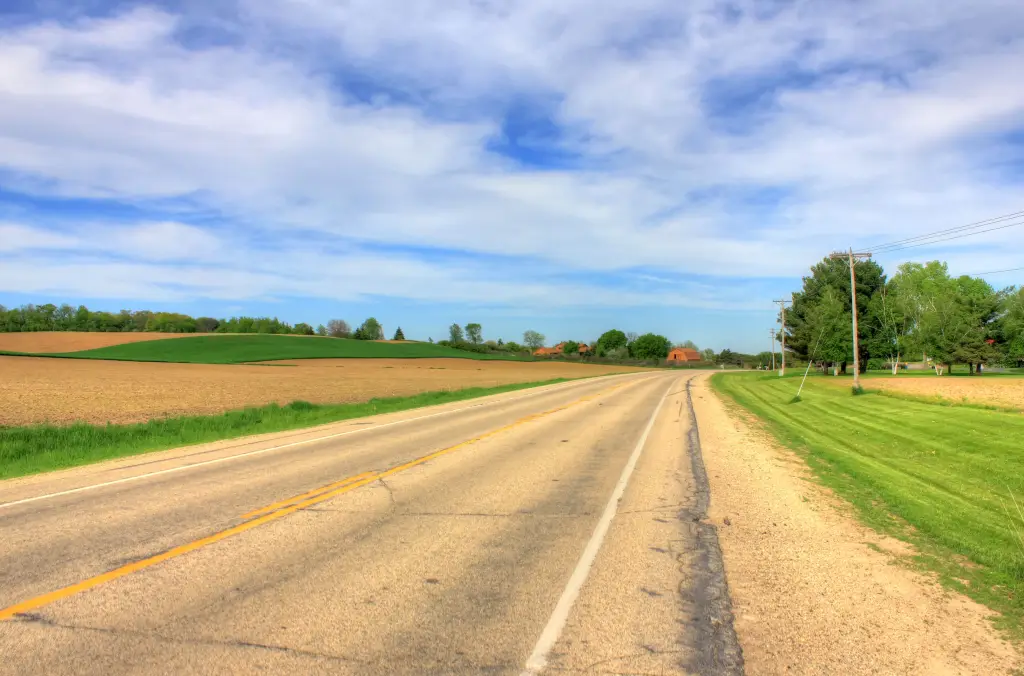
Southwestern Wisconsin never met a glacier, and the roads prove it. The Driftless Area's ridge-and-valley terrain around Blue Mounds serves up the state's hardest riding: steep wooded coulees, ridge-top farm lanes, and repeated pitches above 10 percent through Dane and Iowa counties near Mount Horeb and Barneveld. The benchmark route is the Horribly Hilly Hundreds 100K course — 66.5 miles with 5,700 feet of climbing, published as GPS files by the Friends of Blue Mound State Park — while the full 200K piles up 10,700 feet and finishes with a 910-foot grind to the top of Blue Mound, the highest point in southern Wisconsin. The event runs one June Saturday a year, but the paved public roads ride all season for anyone with low gears and self-support discipline; the small towns sit far apart out here. The Military Ridge State Trail passes through Blue Mounds for an easy-day alternative, and the surrounding gravel network is the best in the state. Strong road riders will find nothing flat and nothing boring.
Wisconsin Cycling Events
From the Chequamegon 40's mass start in the Northwoods to the original century in Door County, Wisconsin's events deliver premier supported riding across the state's forests, farmland, and lakeshores.
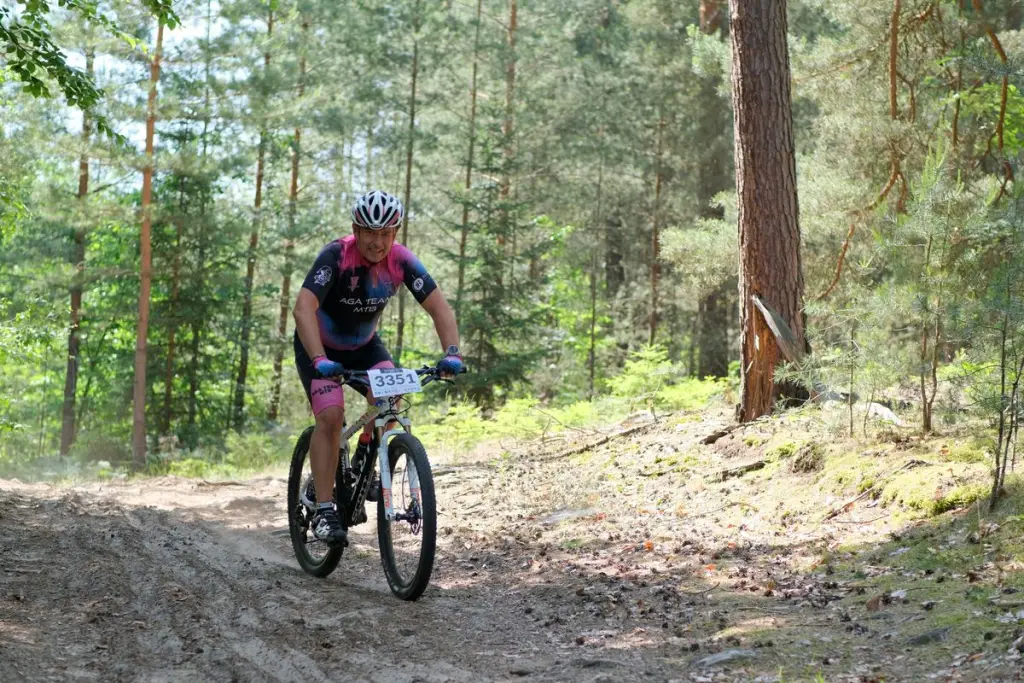
Chequamegon MTB Festival
The Chequamegon 40 started in 1983 with 27 riders and grew into the Midwest's signature mountain bike race: a point-to-point mass start from downtown Hayward to Cable, run over the famed American Birkebeiner ski trail, forest roads, and rolling glacial terrain of the Northwoods. The field now numbers in the thousands, with the 16-mile Short and Fat giving newer riders the same big-event experience at half the distance. Now produced by Life Time, the September weekend includes kids' races and a finish festival, with CAMBA's singletrack network as the backdrop for a full trip north. It is fast, it is festive, and it sells out — the closest thing Wisconsin has to a cycling holiday.
Event website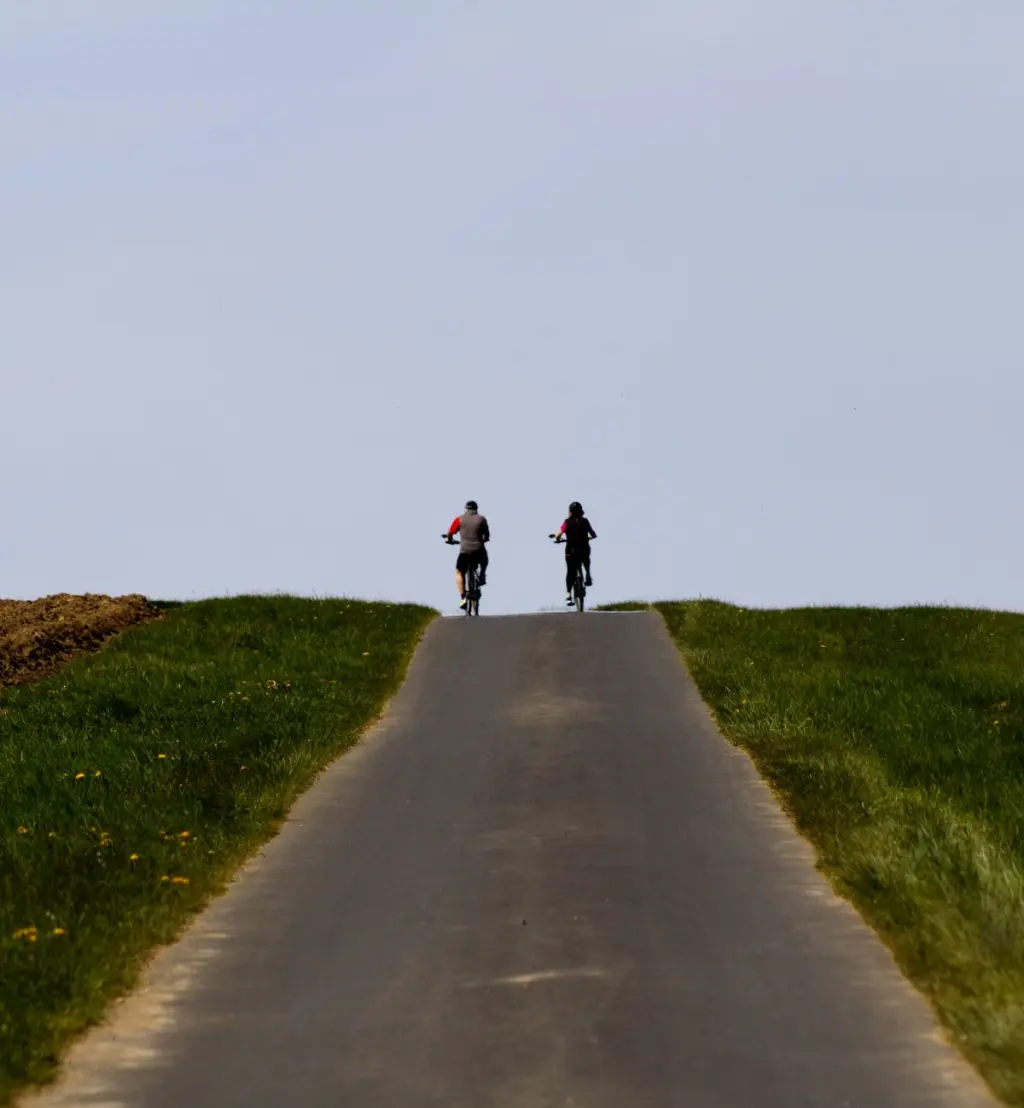
Horribly Hilly Hundreds
The name undersells it. One June Saturday a year, nearly 1,000 riders roll out of Blue Mound State Park to take on the Driftless Area's steepest ridge roads, with 100K, 150K, and 200K options — the longest stacking 10,000 feet of climbing into 124 miles before a final 910-foot ascent back up Blue Mound. Run since 2003 as the flagship fundraiser for the Friends of Blue Mound State Park, it has earned its billing as one of the Midwest's toughest one-day challenge rides, and registration sells out months ahead every year. Aid stations and course support take the logistics off your plate; the hills remain entirely your problem. Bring low gears and a healthy respect for southwestern Wisconsin.
Event website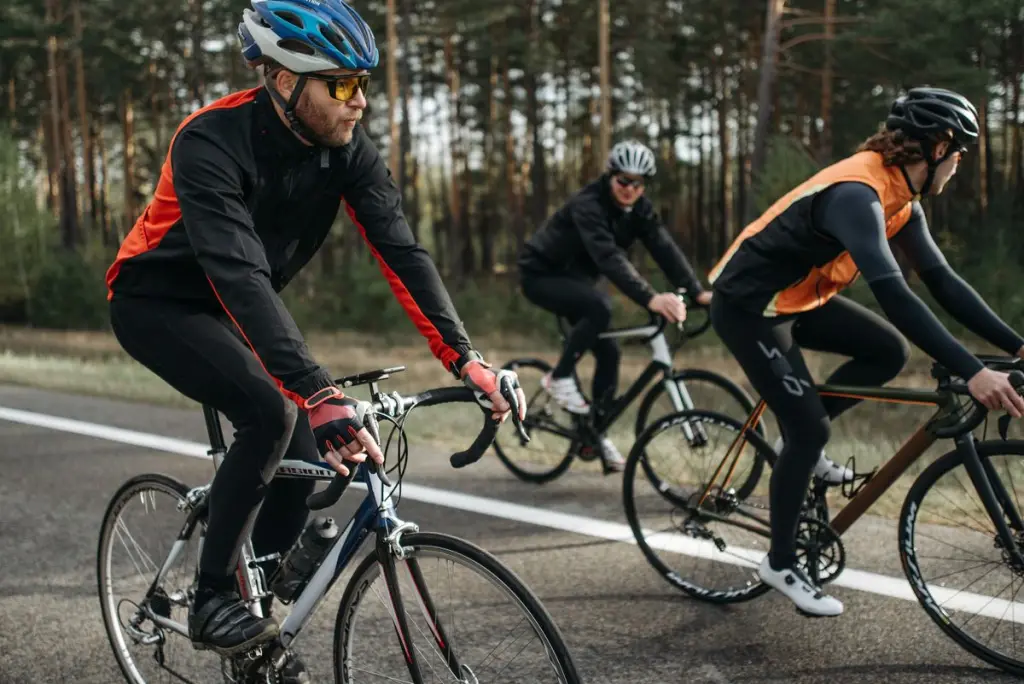
Ride Across Wisconsin
RAW is the Wisconsin Bike Fed's signature fundraiser, and its tagline — Epic, Hard, Worth It — is an accurate course description. The marquee 175-mile route starts and finishes on the riverfront at Phoenix Park in Eau Claire, rolling through Chippewa Valley farmland and small towns, with 100-mile, 60-mile, and family-friendly 10-mile options sharing the same start. First run in 2015, the ride draws cyclists from around the country and funds the Bike Fed's statewide advocacy and education work. Support is the selling point: marked routes, staffed rest stops, bike patrol, and certified mechanics on course, so the only thing left to manage is your own pacing across one very long summer day.
Event website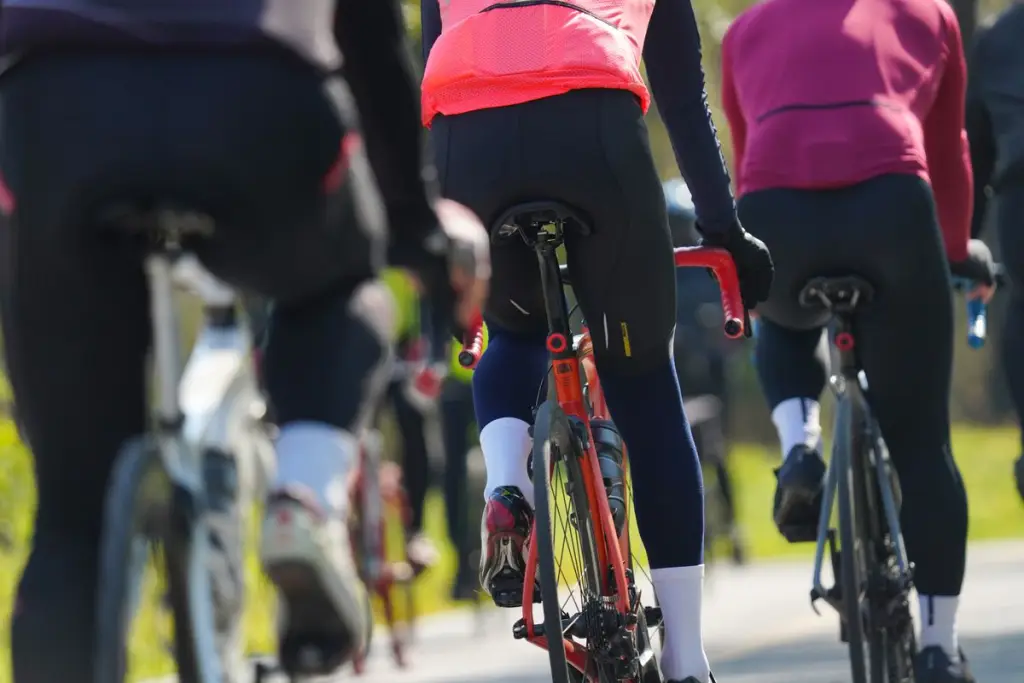
Trek 100 Ride for Hope
Few rides start from a more storied driveway: the Trek 100 rolls out of Trek Bicycle's global headquarters in Waterloo, where the company was founded in a barn in 1976. Since 1990 the event has raised more than $23 million for the MACC Fund's childhood cancer and blood disorder research, making it the fund's largest annual fundraiser. Riders choose 20, 33, 66, or 100 miles through the rolling farm country of Jefferson and Dane counties, with famously well-stocked rest stops and Trek-certified technicians minutes away at every point on course. The cause is serious, the atmosphere is not, and the HQ start line gives every rider a look inside one of American cycling's landmark companies.
Event website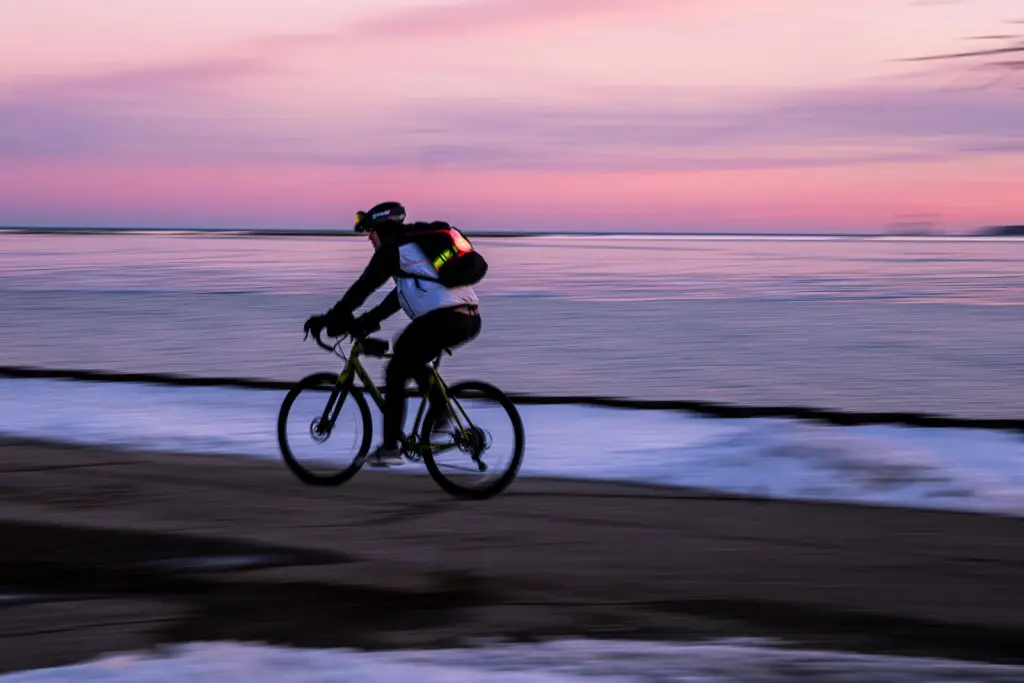
Race the Lake
Race the Lake asks one clear question: can you get all the way around Lake Winnebago in a day? Since 2005, riders have started pre-dawn at Lakeside Park in Fond du Lac — first wave at 5:45 a.m., fat bikes leading it out — and traced the 89-mile circumnavigation north through Oshkosh, Neenah, Menasha, and Appleton to High Cliff State Park at the halfway mark, then home down the quieter eastern shore through Calumetville and St. Peter. The course is mostly flat with one real climb at High Cliff, which makes it a popular first century-scale challenge, and the timed format attracts everyone from racers to bucket-listers. Five rest stops, bottle exchanges, on-course support vehicles, and a post-race meal at the finish round out one of the Midwest's few true around-the-lake races.
Event website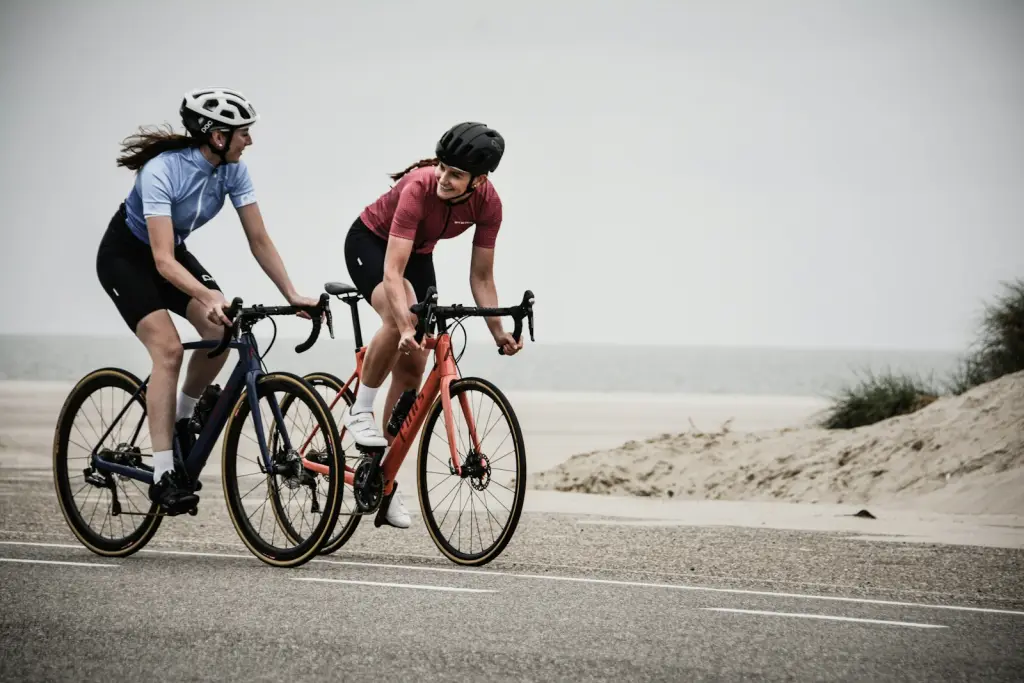
Door County Century
Founded in 1979 by Green Bay's Bay Shore Bicycle Club, the Door County Century bills itself as the original century-distance cycling event, and nearly five decades on it remains the classic. Capped at 3,000 riders, the September date sends riders 30, 50, 70, or 100 miles over scenic back roads past limestone bluffs, cherry and apple orchards, and long stretches of the peninsula's 300 miles of shoreline — and lets you switch routes mid-ride when the legs vote differently than the plan. It is emphatically not a race: up to six rest stations serve unlimited food and drink, and the wristband includes a post-ride dinner and two beverages at the finish in Sturgeon Bay. Harvest-season Door County is the payoff, and it never disappoints.
Event websiteWisconsin E-bike Law and Insurance FAQ
- What are the e-bike laws in Wisconsin?
- Wisconsin adopted the three-class, 750-watt framework through 2019 Wisconsin Act 34, effective November 22, 2019. Wis. Stat. 346.806(2) exempts every class from driver licensing, registration, title, and financial responsibility, so a compliant e-bike carries zero paperwork. Riders must be 16 to operate a Class 3, which is pedal-assist only and needs a speedometer, and there is no statewide helmet law for any class or age.
- Do Class 1, Class 2, and Class 3 e-bikes need insurance in Wisconsin?
- Insurance is your choice in Wisconsin. Class 1 assists only while pedaling and cuts off at 20 mph, Class 2 may run on throttle alone with assistance ending at 20 mph, and Class 3 is pedal-assist only up to 28 mph with a required speedometer. The state imposes no financial-responsibility mandate on any of the three. A standalone Velosurance policy covers what the state does not, starting around $9 per month.
- What does bicycle and e-bike insurance cover in Wisconsin?
- A standalone Velosurance policy covers theft, accidental and crash damage, and damage in transit, with optional liability and medical payments coverage. Wisconsin mandates no e-bike coverage, so a stolen bike in Milwaukee or a crash on a rural highway is otherwise your bill alone. Policies start around $9 per month.
- Which e-bike classes can ride Wisconsin state trails?
- Class 1, pedal assist only to 20 mph, and Class 3, pedal assist only to 28 mph, ride many DNR bicycle trails at a 15 mph limit. Class 2, the throttle bike capped at 20 mph, stays off under motor power. A state trail pass, $25 annual or $5 daily, covers riders 16 and up, and most natural-surface mountain bike trails remain closed to motors.
Wisconsin e-bike laws explained: classes, age limits, and what changes next.

Why Velosurance is best for your bicycle
Not all types of insurance are created equal. Velosurance levels the playing field by offering stand-alone bicycle coverage, where claims won't affect your homeowner's or renter's policy premiums.
| Policy Coverage |  | Homeowner/Renters Policy |
|---|---|---|
| Insured at Full Value | Yes | Possibly |
| Crash Damage | Yes | No |
| Theft Coverage | Yes | Limited |
| Theft by Force | Yes | No |
| Theft of Accessories | Yes | Limited |
| Theft Away From Home | Yes | Possibly |
| Uninsured Motorist | Yes | No |
| Personal Liability | Yes | Possibly |
| Permissive Use Policy | Yes | No |
| Replacement Rental | Yes | No |
| Event Fee Return | Yes | No |
| Cycling Apparel Coverage | Yes | No |
| Medical Payments | Yes | Possibly |
| Racing Coverage | Yes | No |
| E-bikes | Yes | No |
| Coverage in-transit | Yes | No |
| USAC, USAT and IMBA Member Discount | Yes | No |
| FREE INSTANT QUOTE |
Not all insurance policies provide the same level of protection, and many people only discover gaps in their coverage after filing a claim. We’ve done the hard work of reviewing the fine print. To see how plans compare, check out our insurance comparison.
Client satisfaction is our #1 goal. Here's what our clients say about Velosurance


Velosurance really stepped up and put me at ease. The claim was fast and easy. I am insuring all my bikes now.

Check out Velosurance reviews to see what people are saying about us.
Wisconsin's best bicycle and e-bike insurance
No matter where your adventures take you, protect your bicycle and yourself from the unexpected with America's best bike insurance.