
TL;DR:
- Wisconsin is a fault state with a 51% bar: at 50% negligent you recover half, and once your negligence is greater than the driver's you recover nothing.
- Minimum auto liability limits are $25,000 per person, $50,000 per accident, and $10,000 for property damage, a figure many bikes exceed.
- You have three years to sue for injuries or bike damage, two years for a wrongful death claim from a motor vehicle accident, and 120 days to give notice to a local government or a state employee.
- Every Wisconsin auto liability policy must include uninsured motorist coverage; a no-contact crash qualifies with an independent witness, a report within 72 hours, and a sworn statement within 30 days.
- Drivers must leave at least three feet when passing, section 346.94(20) bans opening a car door into traffic, and Wisconsin has no statewide bicycle helmet law.
Who Pays After a Crash in Wisconsin
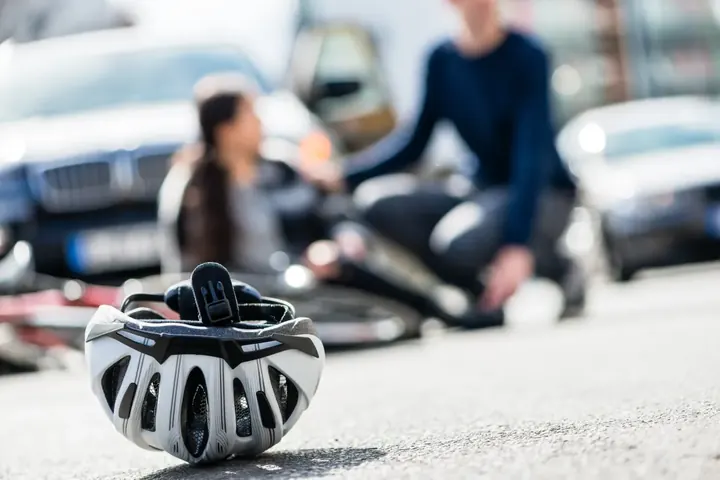
Wisconsin is a fault state. The driver who caused the crash pays, through the liability policy that section 344.62 of the Wisconsin Statutes requires for every motor vehicle operated on a highway. There is no personal injury protection and no injury threshold to clear first.
Section 344.33 sets the required limits at $25,000 for one person's injuries, $50,000 for two or more people hurt in the same accident, and $10,000 for property damage. The section was last amended in 2011, and no increase is scheduled.
Shoulder surgery with rehab costs $15,000 to $40,000, so one operation can outrun a minimum policy. The $10,000 property limit is less than many road, gravel, and electric bikes cost, and it has to cover your gear as well.
Under section 632.32, every auto liability policy must include medical payments coverage of at least $1,000 per person unless the named insured rejected it. The statute defines that coverage as protection for people using the insured motor vehicle, so whether yours pays when you are hit on a bike depends on the policy wording. Ask your auto insurer in writing.
If nobody in your household insures a car, that leaves the driver's liability coverage, your health plan, and whatever you carry on the bike itself.
Fault and How It Reduces a Claim

Section 895.045 is Wisconsin's comparative negligence statute. You recover as long as your negligence "was not greater than" the negligence of the person you are claiming against, and the award is cut by your percentage. A rider found 50% negligent for a $100,000 loss collects $50,000. At 51%, the same rider collects nothing.
The statute also says your negligence is measured separately against each negligent person. If a jury puts 40% on you, 35% on one driver, and 25% on another, your share is greater than each of theirs taken alone, which on the statute's wording bars recovery from either. A defendant found 51% or more negligent is jointly and severally liable for the whole award; one below 51% owes only its own share.
Section 346.02 gives a person riding a bicycle on a roadway or shoulder the rights and duties of a vehicle operator, and an insurer will look for a rule you broke. The usual candidates:
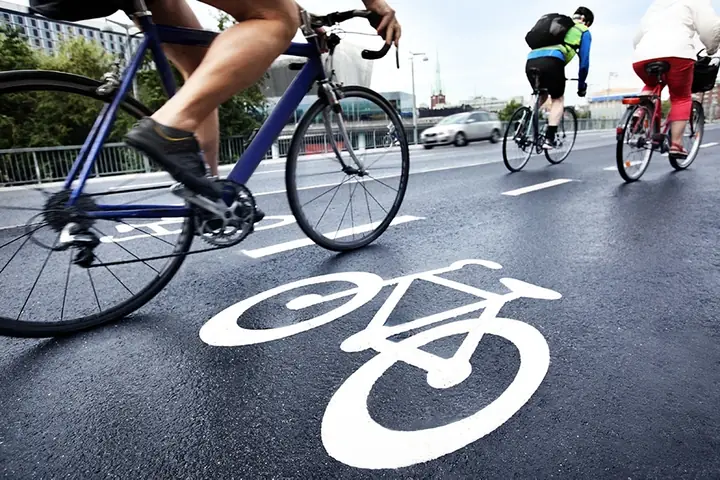
- Lane position. Section 346.80 requires a rider slower than traffic to keep as close as practicable to the right-hand edge, with exceptions for passing, left turns, and unsafe conditions, including parked vehicles and a "substandard width lane" too narrow to share side by side.
- Lights. After dark, section 347.489 requires a white front lamp visible from 500 feet and a red rear reflector or light.
- Red lights. Section 346.37 lets a cyclist proceed cautiously through a red signal after stopping for at least 45 seconds, when no other vehicle is present to trigger it.
Helmets are an open question. Wisconsin has no bicycle helmet law, and section 895.049, which stops a missing helmet from reducing a claim, names motorcycles, all-terrain vehicles, and snowmobiles but not bicycles.
Hit-and-Run and Uninsured Drivers

Section 632.32 requires every auto liability policy on a vehicle registered or principally garaged in the state to include uninsured motorist coverage, at limits of at least $25,000 per person and $50,000 per accident. The same section refers to an injured person "who was not using a motor vehicle at the time," so confirm with your auto insurer that your policy treats you as insured on a bike.
The statute counts an unidentified hit-and-run vehicle as uninsured. A "phantom motor vehicle," one that forces you down without touching you and is never identified, also qualifies when three conditions are met.
- Corroboration. The facts must be backed by competent evidence from someone other than you or another person claiming on the coverage.
- 72 hours. The crash must be reported to police or to the Department of Transportation.
- 30 days. A sworn statement that you have a claim against an unidentified person must reach your insurer.
Two limits apply. A vehicle owned by a governmental unit is never an "uninsured motor vehicle," and the coverage pays for bodily injury only, so it does not replace the bike.
Underinsured motorist coverage is optional. An insurer must tell you in writing that it is available, and if you buy it the limits start at $50,000 per person and $100,000 per accident. A policy may subtract what the at-fault driver's insurer paid, so $50,000 of coverage against a driver carrying the $25,000 minimum adds up to $25,000.
Two things to check in a bike insurance policy: whether it offers uninsured motorist coverage of its own, and whether crash damage is covered no matter who hit you.
Dooring and Passing Laws
Section 346.94(20) is Wisconsin's dooring statute. No person may open any door of a motor vehicle on a highway without first taking due precaution to ensure that the act will not interfere with the movement of traffic or endanger any other person or vehicle. It says "person," so it reaches passengers, and a second paragraph makes the driver responsible for a door opened by a passenger under 16. The forfeiture is $20 to $40 for a first offense; the statute's worth is in the civil claim.
Section 346.80 requires due care from you when passing a parked vehicle, and lets you leave the right-hand edge to avoid one.
Passing is governed by section 346.075. A driver overtaking a bicycle must leave a safe distance, "in no case less than 3 feet," and hold that clearance until safely past. A first violation carries a forfeiture of $25 to $200. Lack of room is a weak excuse: section 346.09 allows crossing the center line in a no-passing zone, with care, to pass a vehicle traveling at less than half the speed limit.
E-bikes
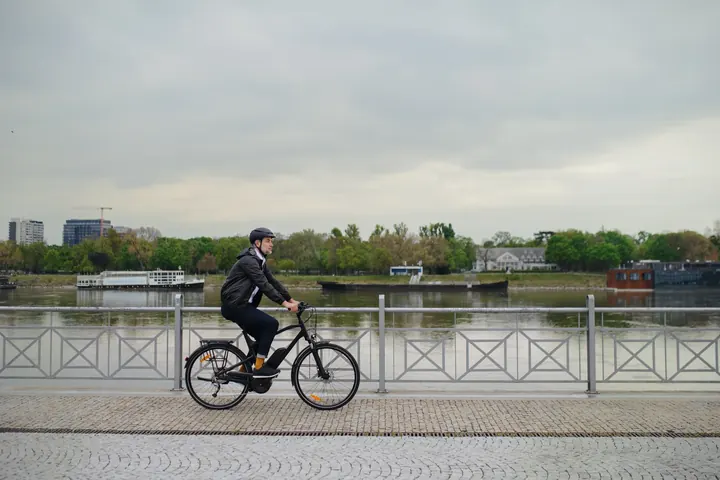
Section 340.01(15ph) defines an electric bicycle as a bicycle with fully operative pedals and an electric motor of 750 watts or less. Class 1 assists only while you pedal and stops at 20 mph. Class 2 can be powered by the motor alone and stops assisting at 20 mph. Class 3 assists only while you pedal and stops at 28 mph.
The same section says a motor vehicle "does not include an electric bicycle." Under section 346.806, an e-bike rider has the rights and duties of any cyclist and is exempt from the financial responsibility, license, registration, and title chapters. In a crash, the same 51% bar and three-year deadline apply.
Class 3 has two rules of its own. Nobody under 16 may operate one, and section 347.489 requires a speedometer. Wisconsin sets no helmet requirement for any class.
That section also requires a permanent label showing the class, the speed at which assistance stops, and the motor's wattage. Modify the bike so its class changes and you must fix a revised label to it. A machine with a motor above 750 watts is outside the definition, and the exemptions in section 346.806 are written for electric bicycles only.
One question has no answer in the statutes or the state insurance commissioner's consumer guide: whether an auto policy's uninsured motorist or medical payments coverage follows you onto an e-bike. Get your insurer's position in writing, and check that a bike insurance policy covers your e-bike's class.
Deadlines

Wisconsin gives you three years to sue a driver, but a claim that involves a government vehicle or a government employee can be lost in 120 days.
- At the scene
Notify Police Immediately
Section 346.70 requires immediate notice to police, the sheriff, or the State Patrol of any accident involving an injury or $1,000 or more in damage to one person's property.
- 72 hours
Report a No-Contact Crash
A crash with an unidentified vehicle that never touched you must be reported to police or the Department of Transportation within 72 hours to keep an uninsured motorist claim alive.
- 10 days
Written Crash Report to WisDOT
When no law enforcement agency files a report, section 346.70 requires the operator of a vehicle involved to send the Department of Transportation a written report, the Driver Report of Crash (DT4002), within 10 days. Section 340.01 defines a bicycle as a vehicle, so ask the officer to file at the scene.
- 30 days
Sworn Statement to Your Insurer
The sworn statement to your own insurer in a no-contact uninsured motorist claim.
- 120 days
Notice to a Local Government
A claim against a city, village, town, county, school district, or its employee falls under section 893.80. Signed written notice of the circumstances must be served within 120 days of the crash, and an itemized claim with your address goes to the clerk. A claim not acted on within 120 days is treated as disallowed. Once a notice of disallowance is served, you have six months to sue.
- 120 days
Notice of a Claim Against a State Employee
If the driver was a state employee on duty, section 893.82 requires written notice served on the attorney general within 120 days, stating the time, date, location, and circumstances and naming the employee. It must be sworn and served in person or by certified mail, and the statute demands strict compliance.
- Two years
Wrongful Death From a Motor Vehicle Accident
Section 893.54 sets two years, not three, for a wrongful death claim that arises from an accident involving a motor vehicle.
- Three years
Injury and Bike Damage Lawsuit
Section 893.54 gives you three years to sue for injuries, and section 893.52 gives the same three years for bike and gear damage from an accident involving a motor vehicle.
Late notice to a local government survives only if the body had actual notice and you show the delay did not prejudice it. Recovery is also capped. Section 893.80 limits tort damages against a local body to $50,000, section 345.05 raises that to $250,000 when the claim arises from the negligent operation of a municipal motor vehicle, and section 893.82 caps a claim against a state employee at $250,000.
For a rider under 18 on the day of the crash, section 893.16 allows the lawsuit to be filed within two years after the 18th birthday. Do not assume that extension reaches the 120-day notices.
Evidence to Preserve
With a 51% bar, evidence in Wisconsin does one job above all: it keeps your percentage below the driver's.
- The police report number and the agency: city police, the county sheriff, or the Wisconsin State Patrol.
- An independent witness. Name, phone number, and a short recorded account. In a no-contact crash, that witness is a condition of the uninsured motorist claim.
- Lane width and parked cars, photographed. They show whether section 346.80 let you ride away from the right-hand edge.
- Your front lamp and rear reflector, photographed, if the crash happened after dark.
- Your auto policy's declarations page, showing the uninsured motorist limit and whether underinsured motorist and medical payments coverage are on the policy.
- Who owned the vehicle. A city, county, or state vehicle means a 120-day notice, so keep certified mail receipts.
- The damaged bike, unrepaired, with receipts for the bike, upgrades, and gear.
Coverage for Wisconsin Riders
Wisconsin law leaves a rider exposed in four places: a driver whose policy stops at $25,000 for injuries and $10,000 for property, uninsured motorist coverage that exists only if your household insures a car, a health plan deductible that comes due long before any settlement, and a fault rule that turns one percentage point into the whole claim. The Velosurance policy offers the coverages discussed above.
Uninsured Motorist covers losses beyond medical bills, such as lost wages, when the at-fault driver cannot pay. It does not depend on owning a car.
Medical Payments covers the deductible and out-of-pocket costs your health plan leaves. Choose a limit close to your plan's out-of-pocket deductible.
Liability is for the day the percentages run against you. If you are blamed for a crash, it covers injury to other people and damage to their property, including the cost of defending a covered lawsuit, with limits from $25,000 to $500,000.
Crash damage to the bike is part of the policy itself. The bike is insured at stated value with no depreciation, subject to the deductible, whoever caused the crash. Class 1, Class 2, and Class 3 e-bikes are covered like conventional bikes.
For any of these coverages to apply, it must be on the policy before the crash. Get a quote before your next ride.
Bicycle Accident Attorneys in Wisconsin
Velosurance legal partners who represent injured cyclists in Wisconsin.
-

Griessmeyer Law - Milwaukee Bicycle Accident Lawyer
230 West Wells Street - Suite 706
Milwaukee, WI 53203 -
Griessmeyer Law - Madison Bicycle Accident Lawyer
5976B Executive Drive
Fitchburg, WI 53719
Frequently Asked Questions
- How does the 51% rule work in a Wisconsin bicycle accident claim?
- You recover damages in Wisconsin as long as your negligence is not greater than the driver's, and the award is reduced by your percentage. A rider found 50% negligent for a $100,000 loss collects $50,000. The caveat worth knowing: at 51% the recovery is zero, so the evidence that sets your percentage decides the claim.
- How long do you have to file a bicycle accident claim in Wisconsin?
- You have three years to file a lawsuit in Wisconsin for injuries and for damage to your bike. One thing to watch: a claim against a city, county, or other local body, or against a state employee, needs written notice within 120 days, and a wrongful death claim arising from a motor vehicle accident must be filed within two years.
- What does the at-fault driver's insurance pay after a bike crash in Wisconsin?
- The at-fault driver's liability policy pays for your injuries and for your bike and gear, with no injury threshold to clear first. The required limits are $25,000 for one person's injuries, $50,000 for two or more people, and $10,000 for property damage. The caveat worth knowing: one surgery can outrun a minimum policy, and $10,000 is less than many bikes cost.
- How does uninsured motorist coverage help a Wisconsin cyclist after a hit-and-run?
- Uninsured motorist coverage, which every Wisconsin auto liability policy must include at $25,000 per person and $50,000 per accident or more, treats an unidentified hit-and-run vehicle as uninsured. A crash with no physical contact also qualifies when someone other than you corroborates it, you report it within 72 hours, and your insurer receives a sworn statement within 30 days. With one wrinkle: it pays for bodily injury only, so confirm that your policy covers you on a bike and insure the bike separately.
- How are Class 1, Class 2, and Class 3 e-bikes treated after a crash in Wisconsin?
- Wisconsin treats Class 1, Class 2, and Class 3 e-bikes as bicycles, so the same 51% bar and three-year deadline apply. Class 1 is pedal assist that stops at 20 mph, Class 2 can be powered by the motor alone and stops assisting at 20 mph, and Class 3 is pedal assist that stops at 28 mph, with a speedometer and an operator 16 or older. The caveat worth knowing: a motor above 750 watts puts the bike outside the definition.
Sources
- Wisconsin Statutes section 895.045 (comparative negligence, 51% joint and several liability)
- Wisconsin Statutes section 895.049 (protective headgear and recovery: motorcycles, ATVs, UTVs, snowmobiles)
- Wisconsin Statutes sections 344.01(2)(d), 344.33, and 344.62 (minimum liability limits, mandatory liability insurance)
- Wisconsin Statutes section 632.32 (uninsured motorist, underinsured motorist, and medical payments coverage)
- Wisconsin Statutes sections 893.16, 893.52, and 893.54 (minors, property damage and injury filing deadlines)
- Wisconsin Statutes section 893.80 (claims against governmental bodies: 120-day notice, damages limit)
- Wisconsin Statutes section 893.82 (claims against state employees: notice to the attorney general)
- Wisconsin Statutes section 345.05 (municipal liability for motor vehicle accidents)
- Wisconsin Statutes sections 346.02(4), 346.37, 346.80, and 346.806 (bicycle rights and duties, red signals, lane position, electric bicycles)
- Wisconsin Statutes sections 346.075, 346.09, and 346.17 (three-foot passing, no-passing zones, penalties)
- Wisconsin Statutes sections 346.94(20) and 346.95(10) (opening vehicle doors, penalties)
- Wisconsin Statutes section 346.70 (duty to report an accident)
- Wisconsin Statutes sections 340.01(5), 340.01(15ph), and 340.01(35) (bicycle, electric bicycle, motor vehicle definitions)
- Wisconsin Statutes section 347.489 (bicycle lamps, e-bike labels and speedometers)
- Wisconsin Office of the Commissioner of Insurance, Consumer's Guide to Auto Insurance (PI-057, revised October 2026)
- Wisconsin Department of Transportation, crash reporting and the Driver Report of Crash (DT4002)
- Wisconsin Department of Transportation, rules for riding bicycles on the road
This guide is general information about Wisconsin law as of the review date above. It is not legal or insurance advice, and it does not create an attorney-client relationship. Laws change and every crash turns on its own facts: talk to a licensed Wisconsin attorney about your situation.