


Minnesota cycling in numbers
55%
Bike ownership
4,000+
Miles of trails
64
State parks
86
Bike friendliness score
Minnesota from a cyclist's perspective
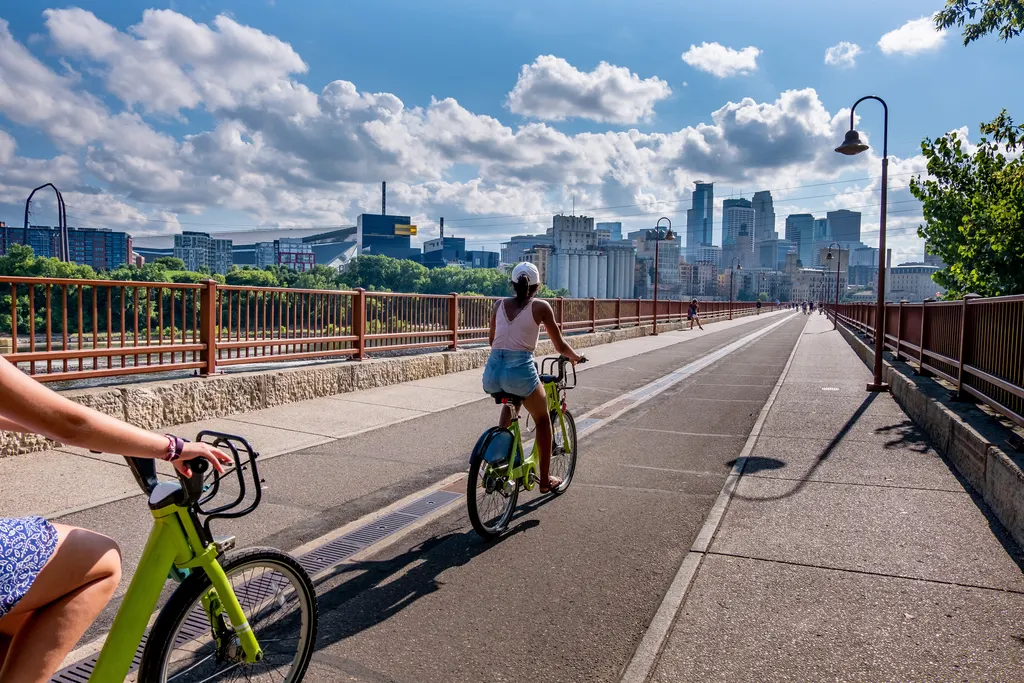
Minnesota has more miles of paved rail-trail than any other state, and the numbers back the bragging: 25 state trails totaling more than 1,500 developed miles, roughly 647 of them paved, plus a web of regional trails that pushes the paved total past 4,000 miles. The League of American Bicyclists ranked Minnesota fifth in the nation in 2024, and it has placed as high as second. About half of Minnesotans ride at least once a season, and roughly one in four rides weekly. Glaciers left the state flat and threaded with abandoned railroad grades; Minnesotans paved them.
The rail-trail heritage runs deepest in three regions. In the southeast, the Root River State Trail drops through the unglaciated Driftless bluff country, 42 paved miles of river crossings and 300-foot limestone walls anchored by the restored mill town of Lanesboro. In the central lakes, the Paul Bunyan State Trail runs 115 miles from Crow Wing State Park to Lake Bemidji, the longest continuously paved rail-trail in the country, and crosses the Heartland State Trail, a 1974 conversion that was among the first in the nation. On the Iron Range, the Mesabi Trail links 28 mining towns across more than 160 finished miles, from Grand Rapids to the edge of the Boundary Waters near Ely, past open-pit overlooks other states simply do not have.
Mountain bikers get two destinations most states would build a tourism campaign around. Cuyuna Country State Recreation Area carved 50-plus miles of purpose-built singletrack into reclaimed iron-mine land near Crosby: rust-red dirt that drains fast and grips, wrapped around turquoise mine-pit lakes. Duluth answered with the 42-mile Duluth Traverse, a purpose-built spine linking more than 110 miles of trail inside city limits, plus lift-served downhill at Spirit Mountain — an IMBA Gold-Level Ride Center. Winter closes neither: both systems groom singletrack for fat bikes, which is fitting, since Minnesota invented the modern fat bike. Bloomington's Surly shipped the Pugsley frameset in 2005 and the first mass-produced complete fat bike in 2010.
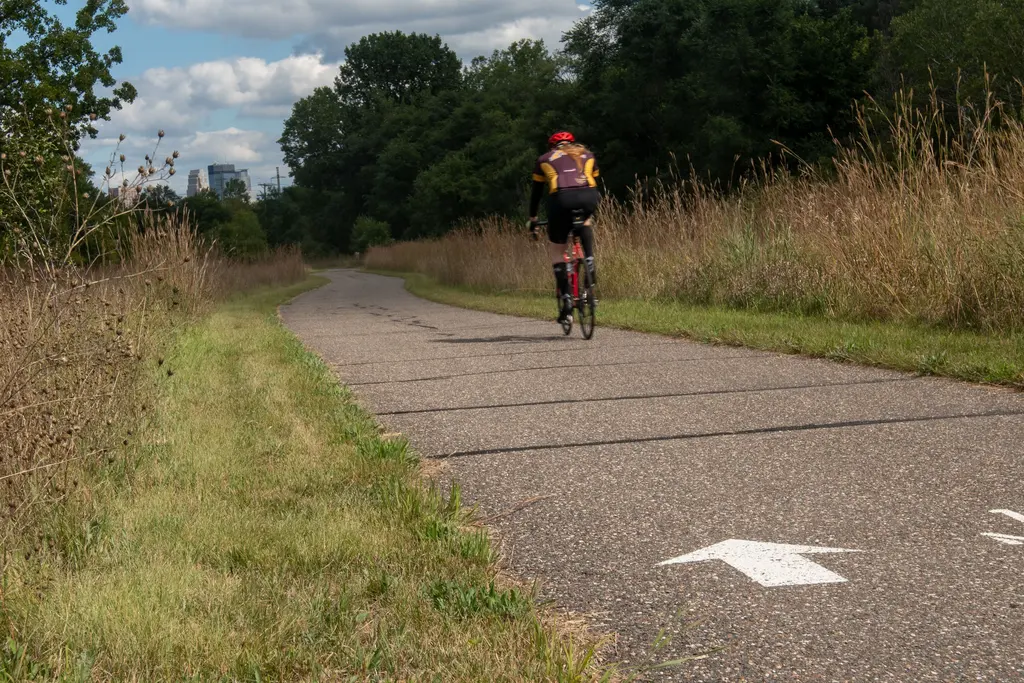 City riding is where Minnesota surprises people. Minneapolis was Bicycling magazine's #1 US bike city in 2010, the first ever to unseat Portland, and PeopleForBikes scored it 72 out of 100 in 2025 — the second-best large city in the country. The Grand Rounds National Scenic Byway loops 51 miles of parkways and car-separated paths around the Chain of Lakes, Minnehaha Falls, and the Mississippi riverfront, while the Midtown Greenway runs like a bike freeway through south Minneapolis, plowed and lit year-round. The industry noticed long ago: Quality Bicycle Products, one of the largest bike parts distributors in the US and parent of Surly and Salsa, runs its operation from Bloomington.
The honest caveats are seasonal. Winter is long and real; the reliable riding window runs April through October, and November through March belongs to fat bikes and the committed. The prairie west and south is open and windy, and a flat rail-trail offers no shelter from a 20 mph headwind. North-woods mosquitoes earn their reputation from June through August. Riders chasing sustained climbs will find punchy Driftless bluffs and Duluth's hillside, not mountains. Plan around those, and Minnesota delivers more car-free riding than anywhere else in the country.
Minnesota E-bike Laws
Three classes, a 750-watt cap, and zero paperwork. Here is where Minnesota stands on e-bikes and what the 2024 update changed.
Minnesota runs the standard three-class, 750-watt framework and treats a compliant e-bike as a bicycle: no license, no registration, no insurance. A 2024 update (Minnesota HF 5247) added a fourth "multiple mode" category for switchable bikes and banned out-of-class tampering, but left the paperwork at zero.
The motor assists only while the rider is pedaling and ceases at 20 mph (Minn. Stat. 169.011 subd. 15a).
The motor may propel the bike without pedaling; assistance ceases at 20 mph (subd. 15b).
Pedal assist up to 28 mph and no throttle - Minnesota Class 3 is pedal-assist only (subd. 15c). Multiple-mode bikes with a throttle are capped at 20 mph on motor power alone.
An e-bike is not a motor vehicle in Minnesota (Minn. Stat. 169.011 subd. 42), so driver-license rules never attach.
No plates, no title, no DVS visit for any compliant class.
Minnesota mandates no liability coverage for Class 1, Class 2, or Class 3 - protection is on you.
A person under the age of 15 must not operate an e-bike of any class (Minn. Stat. 169.222 subd. 6a).
No state helmet law for any class or age; a 2026 under-18 proposal (Minnesota SF 3236) died without a vote.
Where You Can Ride
- Roads & bike lanesAll three classes ride like bicycles - roads, shoulders, bicycle lanes, and bicycle routes (Minn. Stat. 169.222 subd. 6a).
- Paved & shared-use pathsClass 1, Class 2, and Class 3 may all ride paved trails with the motor engaged by default; an agency must act affirmatively to prohibit a class.
- SidewalksAllowed like bicycles outside business districts - yield to pedestrians and signal before passing (169.222 subd. 4).
- State trails & parksMN DNR allows all three classes on state trails wherever bicycles are allowed; natural-surface trails and bike parks are regulated by the managing authority.
- Out-of-class e-motosOver 750 watts or modified out of class means Minnesota moped or motorcycle rules: license or permit, under-18 helmet, and no bike paths.
Effective August 1, 2021 under Minnesota HF 10 (2021). Statutes: Minn. Stat. 169.011 subd. 27, 169.222 subd. 4 & 6a, 85.015, 85.018, 160.263. Cities and park districts can add their own path and trail restrictions — check signage where you ride. Last reviewed July 2026.
Minnesota Cycling Weather
Minnesota's riding season runs April through October: long, warm summer days, 198 sunny days a year, and a winter that belongs to fat bikes.
Sunny days a year
Riding season
Apr - Oct
Minnesota Cycling Destinations
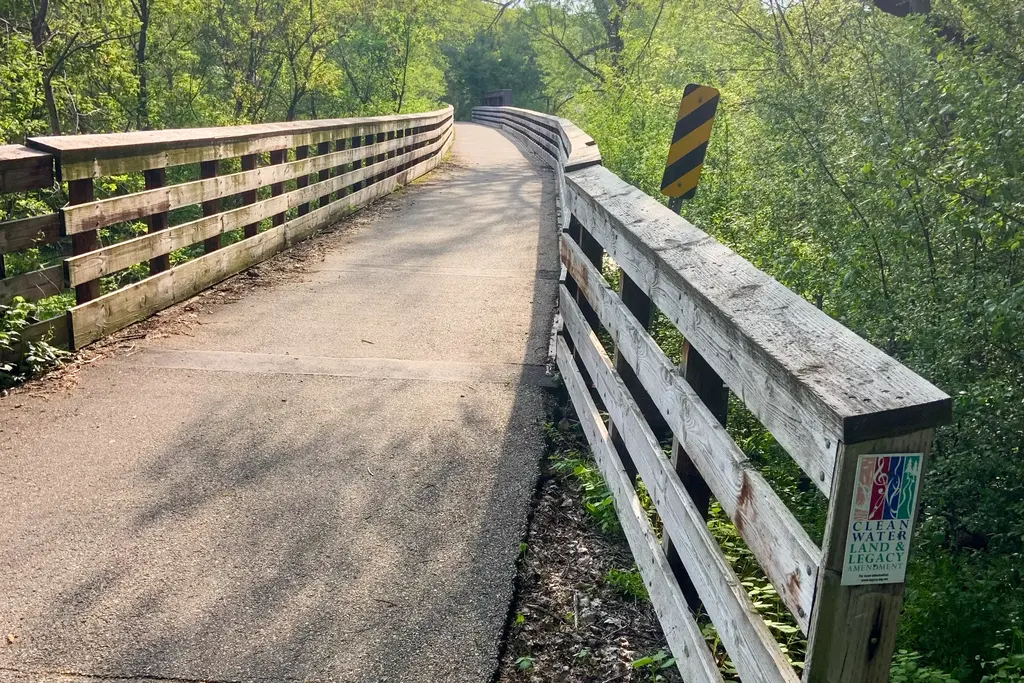
Root River State Trail
The Root River State Trail is the ride that sells southeast Minnesota. Forty-two paved miles follow the river from Fountain to Houston through Driftless bluff country the glaciers never flattened, crossing the water again and again on converted railroad bridges beneath 300-foot limestone walls. Lanesboro anchors the middle: a restored 19th-century mill town of B&Bs, outfitters, and pie shops that has organized itself around trail traffic. The grade is railroad-flat except for one honest half-mile pitch near Houston, and the connection to the Harmony-Preston Valley State Trail stretches the network past 60 paved miles. Summer weekends around Lanesboro get busy, but no Minnesota trail town matches its services — rentals, food, and lodging sit steps from the pavement.
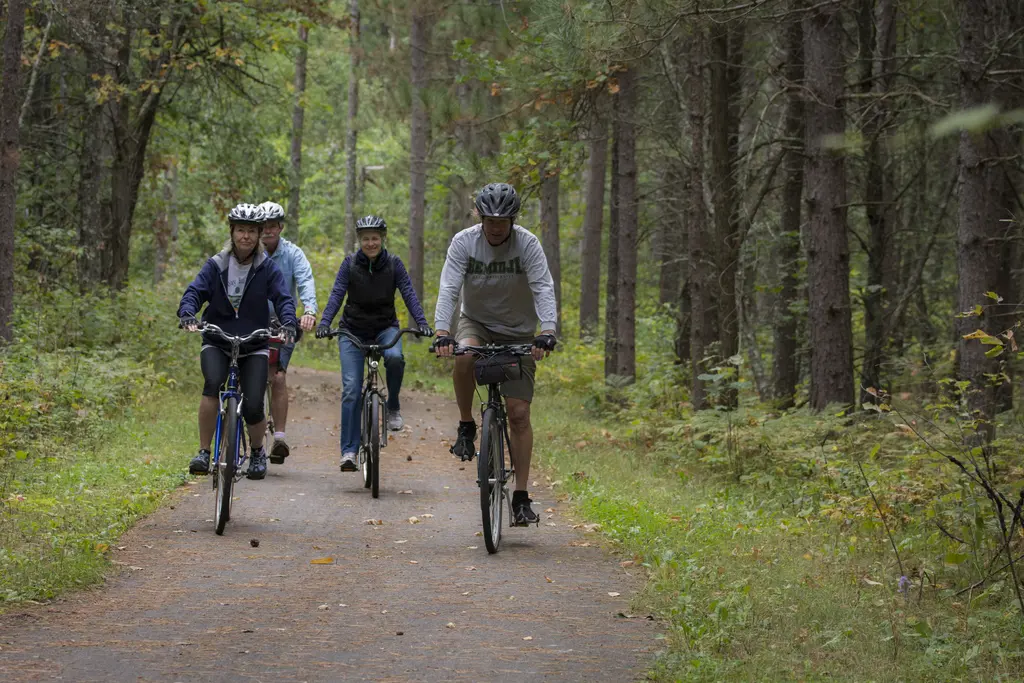
Paul Bunyan State Trail
At 115 paved miles from Crow Wing State Park to Lake Bemidji State Park, the Paul Bunyan is the longest continuously paved rail-trail in the country and a Rails-to-Trails Conservancy Hall of Fame inductee. It strings together the Brainerd Lakes resort towns — Baxter, Nisswa, Pequot Lakes, Pine River, Hackensack, Walker, Bemidji — with ice-cream stops and lake beaches spaced every 8 to 10 miles. The southern half is pancake-flat former Burlington Northern grade through pine and lake country; north of Hackensack the trail leaves the rail bed and starts to roll. Most riders tour it in two or three days, and the wide, smooth asphalt suits e-bikes, trailers, and loaded touring rigs equally well. It meets the Heartland State Trail at Walker and the Blue Ox Trail at Bemidji, so the network keeps going when the trail ends.
Cuyuna Lakes Mountain Bike Trails
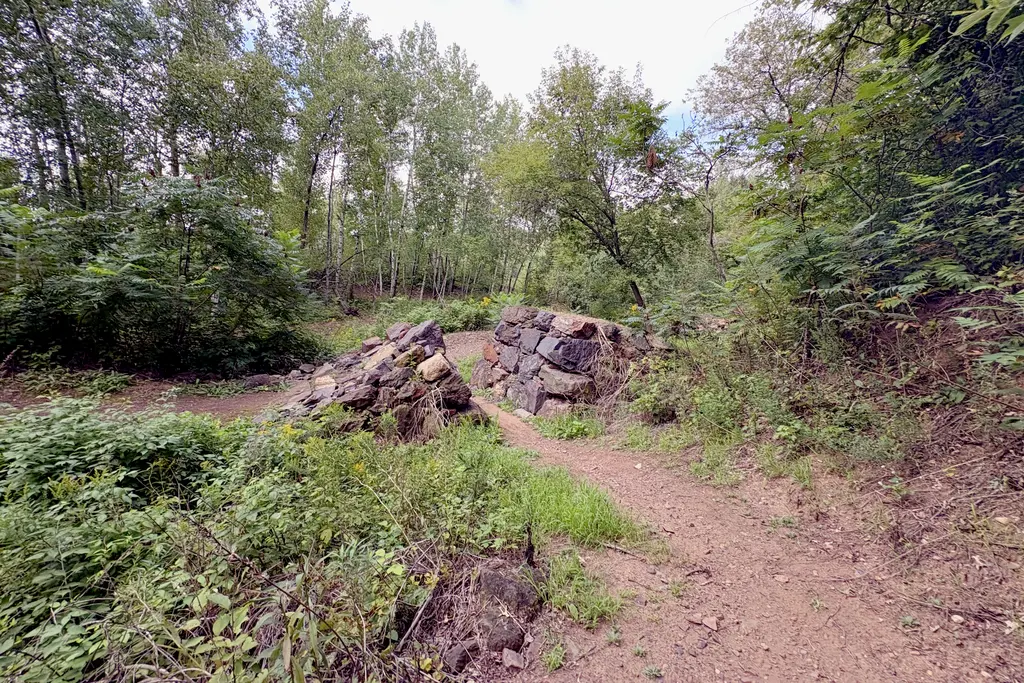
Cuyuna is what happens when a state hands 800 acres of played-out iron mines to trail builders. More than 50 miles of purpose-built singletrack — 30-plus named routes — wrap the mine dumps between Crosby and Ironton, fifteen minutes east of Brainerd. The dirt is crushed iron ore, a rust-red surface that drains fast and rides tacky, and the trails circle water-filled mine pits so clear they draw scuba divers. An IMBA Ride Center, the system runs from beginner flow on Sand Hog and Roly Poly to gravity lines like Bobsled, and the Complete Cuyuna Loop links four units into a 20-plus-mile day. Climbs are mine-dump scale — short and constant rather than long. Crosby has grown into a genuine trail town with shops, rentals, breweries, and lodging at the Croft Trailhead, and groomed winter routes make it a top fat-bike destination when the lakes freeze.
Mesabi Trail
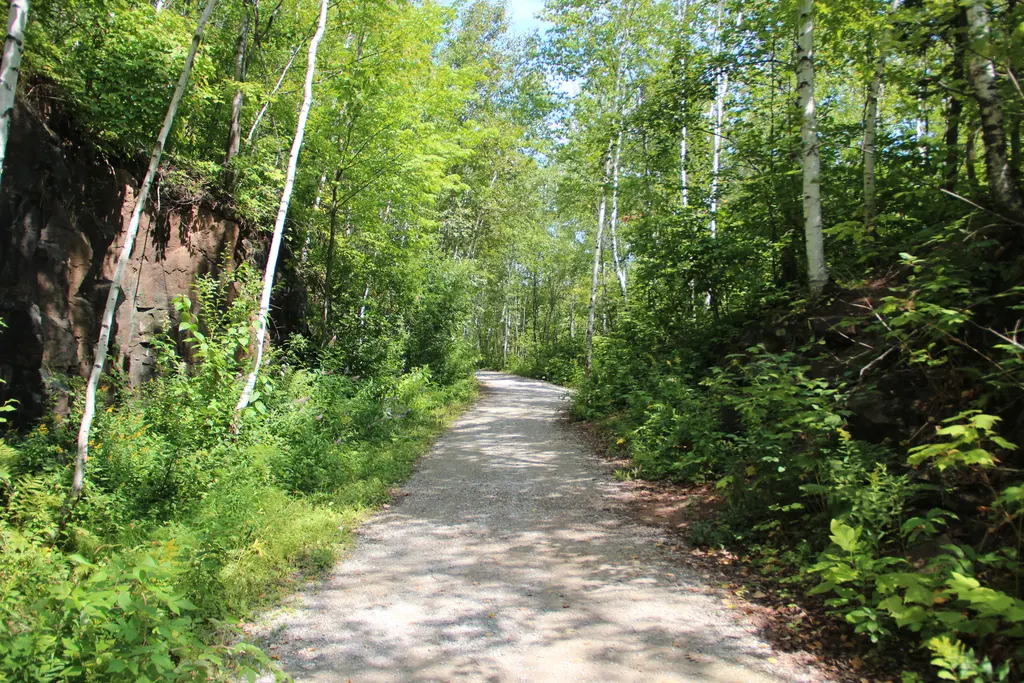
The Mesabi Trail crosses the Iron Range on more than 160 finished miles of asphalt between the Mississippi River at Grand Rapids and the edge of the Boundary Waters near Ely, built over old rail beds, abandoned highway grades, and mining roads that will link 28 communities when the last gap closes. It is emphatically not a flat rail-trail: grades run to 8%, and the Biwabik-to-Embarrass stretch is genuinely hard. The payoff is scenery no other trail in America has — the Hull-Rust Mahoning overlook at Hibbing, the high bridge over the Rouchleau pit at Virginia, and deep boreal forest rolling toward Ely. Full-service towns arrive at regular intervals, most tourers take two to four days, and crowds stay light compared with the state's marquee trails. One wrinkle: riders 18 and over need a Mesabi Trail Wheel Pass.
Gitchi-Gami State Trail
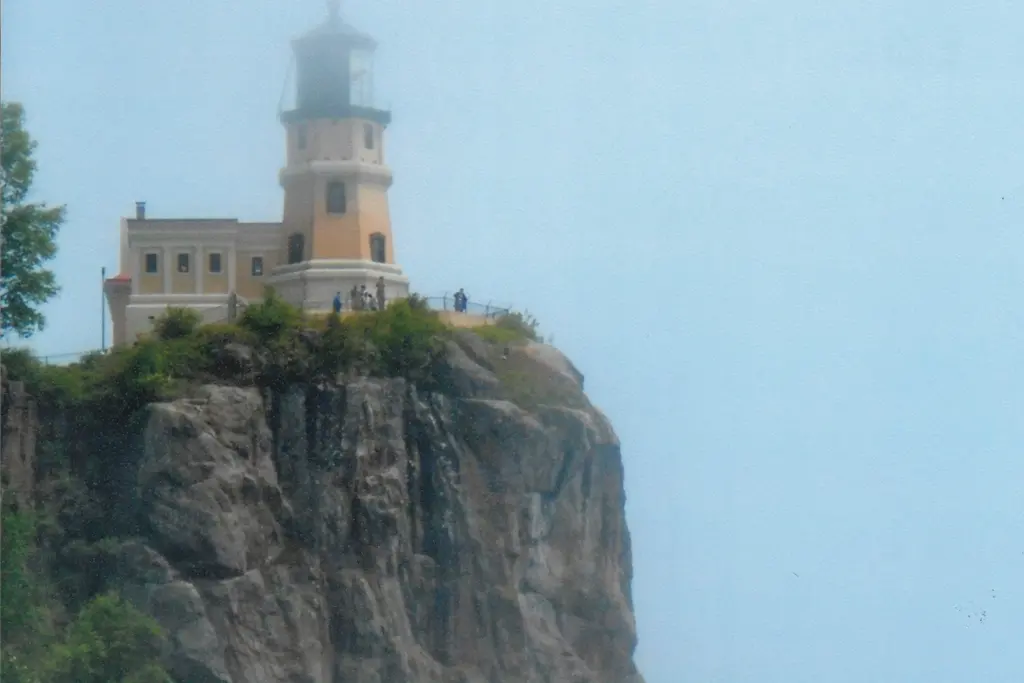
The Gitchi-Gami is Minnesota's Lake Superior trail, being built in segments along the North Shore between Two Harbors and Grand Marais — more than 36 miles are finished of a planned 86. The flagship piece is the continuous 17.3-mile run from Gooseberry Falls to Silver Bay, which threads through Gooseberry Falls and Split Rock Lighthouse state parks with the lake in near-constant view. This is no rail-grade cruise: the DNR itself flags the hills and curves as arduous for casual riders, and cool lake air and wind are part of the deal even in July. Ride it as an out-and-back from a state park lot and pair it with waterfall and lighthouse stops; services cluster in Two Harbors, Beaver Bay, Silver Bay, Tofte, and Grand Marais. Additional finished segments serve Schroeder-Tofte-Lutsen and Grand Marais at the trail's northern end.

Grand Rounds National Scenic Byway
The Grand Rounds is a 51-mile loop of paved, mostly car-separated paths circling Minneapolis — the only urban route in the country designated a National Scenic Byway. It links the Chain of Lakes, Minnehaha Falls, the Mississippi riverfront past the Stone Arch Bridge and St. Anthony Falls, and Theodore Wirth Park, with dedicated one-way bike paths running separate from walking paths around the lakes. The 5.5-mile Midtown Greenway, a below-grade former rail corridor with on-ramps, cuts the loop into shorter southern or northern circuits. Water, restrooms, rentals, and food are never more than a couple of miles away, which makes the full loop the best single-day sampler of why Minneapolis keeps ranking among America's top cycling cities. The Chain of Lakes segment crowds up on warm evenings; an early start earns you the whole loop at your own pace.
Minnesota Cycling Events
From the Lutsen 99er's mass start above Lake Superior to Saint Paul's car-free Classic, Minnesota's events run gravel-heavy and community-proud.
Lutsen 99er
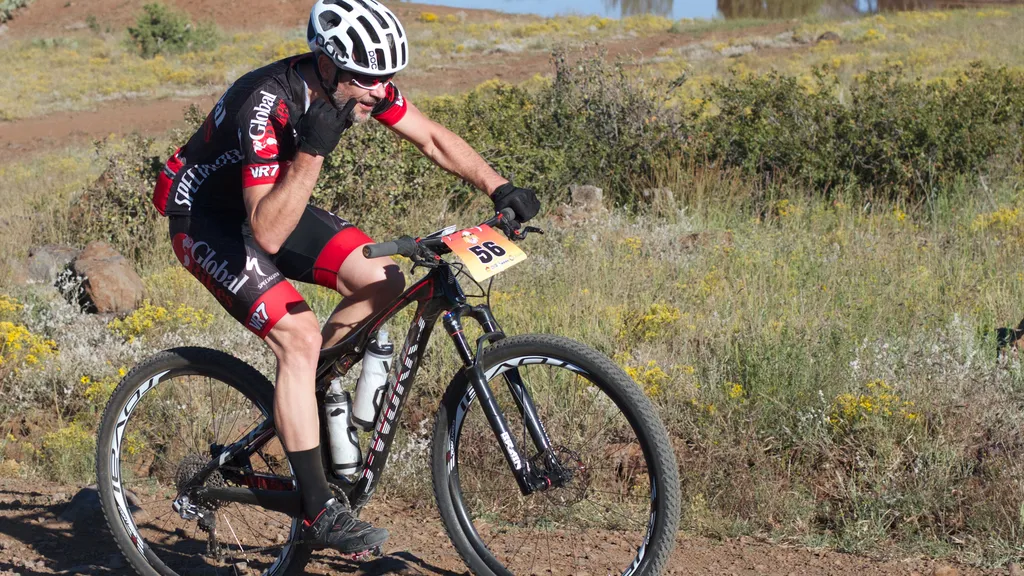
The Lutsen 99er is northern Minnesota's marquee off-road race: a mass start from Superior National Golf Course in the Sawtooth Mountains above Lake Superior, opening with a Category 3 climb over the ridgeline before rolling through glacially carved lake-and-stream country at the southern edge of the boreal forest. The 99-mile flagship is a surface sampler — 46% gravel, 30% two-track, plus pavement, ATV trail, and singletrack — with 29-, 45-, and 59-mile options sharing the venue. Six stocked aid stations with posted cutoffs keep the day honest, and the organizers say the course sees as much moose traffic as people traffic. Part of Life Time's national off-road series alongside Unbound and Leadville, it adds kids races and a non-competitive recreational route to make the weekend a family affair.
Event website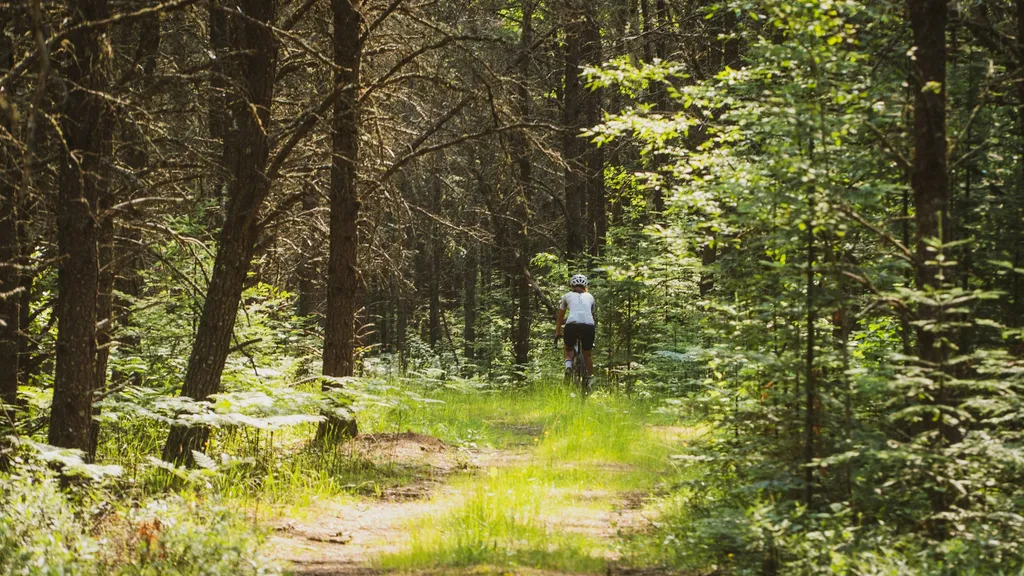
Le Grand du Nord Gravel Classic
Le Grand du Nord opens the North Shore gravel season from downtown Grand Marais, climbing away from Lake Superior into the Sawtooth Range on Forest Service and county gravel through country that borders the Boundary Waters. The 110-mile route earns its billing as one of the most spectacular gravel courses in the United States: remote roads past Devil's Track Lake, a rough five-mile two-track sector with a possible stream crossing, and a real chance of seeing moose or hearing wolves. Riders choose 110-, 54-, or 26-mile distances that start in waves and finish back at the harbor. The event sells out across all three distances, so registration is its own race. It shares a production house with the Heck of the North, bookending the season for North Shore gravel.
Event website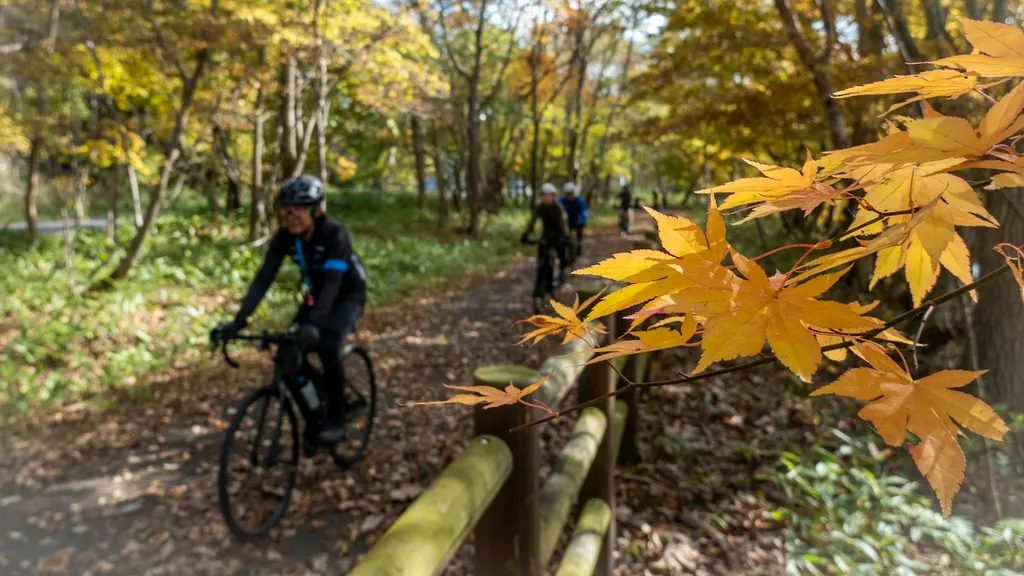
Heck of the North Gravel Classic
One of the Midwest's original gravel events, the Heck of the North runs its 18th edition in 2026 from Two Harbors' historic downtown. The 100-mile course is 80% unpaved — maintained gravel broken up by rough two-track sectors and a stretch of the North Shore State Trail snowmobile corridor — and the organizer recommends 40 to 50 mm tires, which tells you what kind of day it is. Fifty- and 20-mile routes share the fall-color scenery, two stocked aid stations anchor the long course, and riders 17 and under enter free with an adult. The field caps at 700 and historically fills within about a day of registration opening. The finish-line party next to Castle Danger Brewery makes the late-September date feel like a season closer, because for most of the North Shore it is.
Event website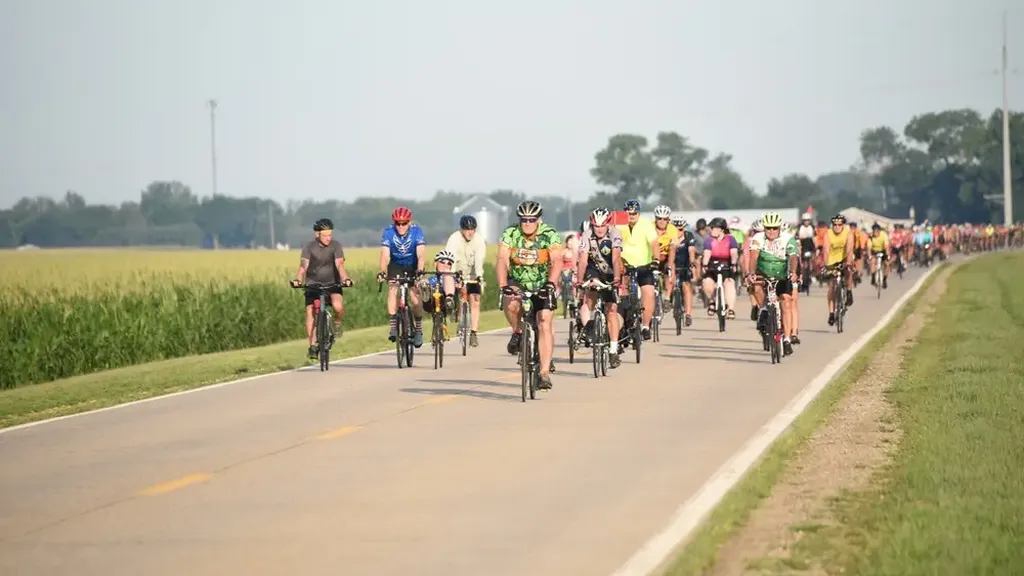
Tour de Tonka
Tour de Tonka is the Twin Cities' big community ride: roughly 2,300 to 3,500 riders and 400 volunteers fanning out from Minnetonka High School through some 21 west-metro communities around Lake Minnetonka — Tonka Bay, Orono, Mound, Delano — on a mix of trails and quiet roads. Routes run 16 to 58 miles, every bike is welcome including e-bikes, and rest stops come with food and live music rather than cutoff times. Organized by Minnetonka Community Education since its 819-rider debut in 2006, the ride now draws participants from more than 166 Minnesota cities and 40-plus states, and proceeds support the ICA Food Shelf and local youth programs. It is the rare event that works equally well as a family's first supported ride and a roadie's tempo day.
Event website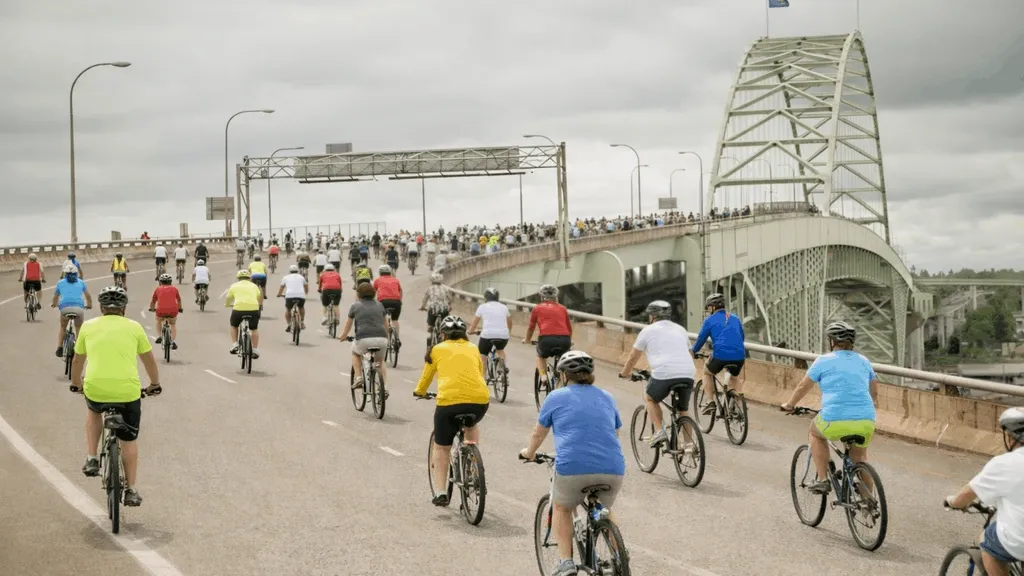
Saint Paul Classic Bike Tour
Founded in 1995 and once Minnesota's largest ride — 7,611 riders at its 2004 peak — the Saint Paul Classic tours the Grand Round, the 30-mile greenway linking all six of the city's regional parks by parkway and trail. The 32nd edition rolls from Como Lakeside Pavilion with route options from a 12.8-mile all-trail loop to the full 31- or 34-mile Grand Round, its river-bluff climbs included. Six live bands play along the course, more than 30 police officers manage the crossings, and rest stops at Lilydale, Lake Phalen, and a Mississippi River Gorge overlook keep the pace social. Now produced by the Friends of the Parks and Trails of St. Paul and Ramsey County with a 2,100-rider cap, it funds parks advocacy and stays firmly a ride, not a race: families, cruisers, and tandems are the norm.
Event website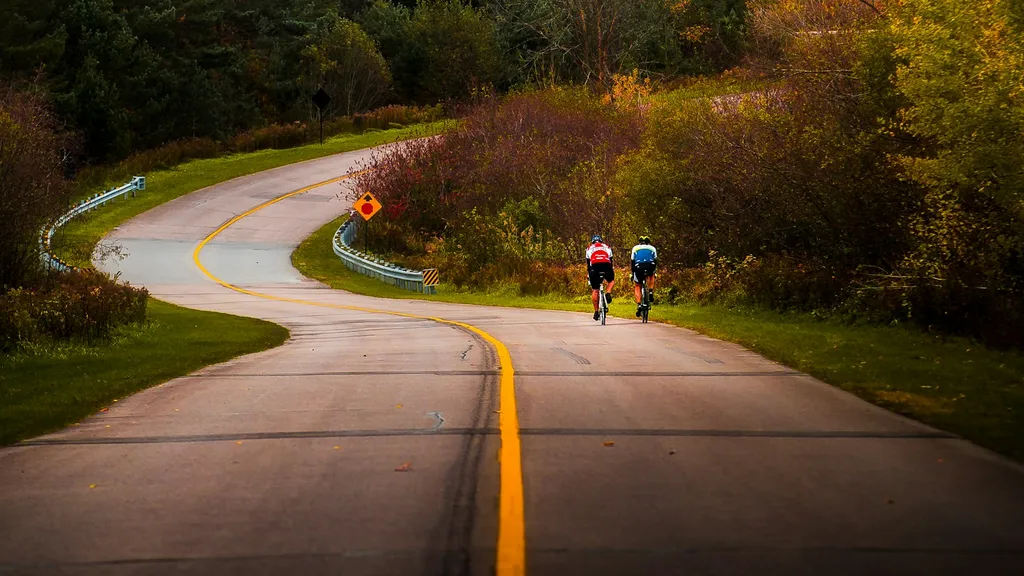
The Filthy 50
The Filthy 50 is a timed but deliberately unpretentious gravel event in the Driftless bluff country, born in 2013 as a ride-and-barbecue in the founders' Stewartville backyard and now based in Lanesboro. The course rolls out of downtown onto steep, scenic gravel — 3,200-plus feet of climbing in 50 miles, with a 25-mile option at 1,900 — timed for peak fall color in the Root River valley. It is unsupported by design: riders navigate by GPS files or printed cue sheets and carry their own supplies, which filters for exactly the crowd the organizers want. The pitch is simple: race it and set a record, or ride it and take in the beauty. The field caps at 1,000, and Lanesboro treats the day as a community festival.
Event websiteMinnesota E-bike Law and Insurance FAQ
- What are the e-bike laws in Minnesota?
- Minnesota runs the standard three-class, 750-watt framework under Minnesota HF 10 of 2021, effective August 1, 2021, and treats a compliant e-bike as a bicycle: no license, no registration, no insurance. A 2024 update, Minnesota HF 5247, added a multiple mode category for switchable bikes and banned out-of-class tampering. Riders must be 15 or older to operate any class, and there is no statewide helmet law.
- Do Class 1, Class 2, and Class 3 e-bikes need insurance in Minnesota?
- Insurance is your choice in Minnesota. Class 1 assists only while pedaling and ceases at 20 mph, Class 2 may propel the bike without pedaling up to 20 mph, and Class 3 is pedal-assist only up to 28 mph with no throttle. The state mandates no liability coverage for any of the three. A standalone Velosurance policy picks up that protection, starting around $9 per month.
- What does bicycle and e-bike insurance cover in Minnesota?
- A standalone Velosurance policy covers theft, accidental and crash damage, and damage in transit, with optional liability and medical payments coverage. Minnesota leaves e-bike protection entirely to the rider, so the policy handles a bike stolen in Minneapolis or damaged on a road trip to a state trail. Policies start around $9 per month.
- How old do you have to be to ride a Class 1, Class 2, or Class 3 e-bike in Minnesota?
- Fifteen is the floor for every class. Minn. Stat. 169.222 subd. 6a bars anyone under 15 from operating a Class 1, which assists only while pedaling to 20 mph, a Class 2, which can run on throttle to 20 mph, or a Class 3, which is pedal-assist only to 28 mph. Riders 15 and older face no further statewide age rule, and Minnesota adds no helmet requirement for any class or age.
Minnesota e-bike laws explained: classes, age limits, and what changes next.
Keep Riding: Nearby States
Cross a border and the trails, the weather, and the e-bike laws all change. See how Minnesota's neighbors compare.



Why Velosurance is best for your bicycle
Not all types of insurance are created equal. Velosurance levels the playing field by offering stand-alone bicycle coverage, where claims won't affect your homeowner's or renter's policy premiums.
| Policy Coverage |  | Homeowner/Renters Policy |
|---|---|---|
| Insured at Full Value | Yes | Possibly |
| Crash Damage | Yes | No |
| Theft Coverage | Yes | Limited |
| Theft by Force | Yes | No |
| Theft of Accessories | Yes | Limited |
| Theft Away From Home | Yes | Possibly |
| Uninsured Motorist | Yes | No |
| Personal Liability | Yes | Possibly |
| Permissive Use Policy | Yes | No |
| Replacement Rental | Yes | No |
| Event Fee Return | Yes | No |
| Cycling Apparel Coverage | Yes | No |
| Medical Payments | Yes | Possibly |
| Racing Coverage | Yes | No |
| E-bikes | Yes | No |
| Coverage in-transit | Yes | No |
| USAC, USAT and IMBA Member Discount | Yes | No |
| FREE INSTANT QUOTE |
Not all insurance policies provide the same level of protection, and many people only discover gaps in their coverage after filing a claim. We’ve done the hard work of reviewing the fine print. To see how plans compare, check out our insurance comparison.
Client satisfaction is our #1 goal. Here's what our clients say about Velosurance


Velosurance really stepped up and put me at ease. The claim was fast and easy. I am insuring all my bikes now.

Check out Velosurance reviews to see what people are saying about us.
Minnesota's best bicycle and e-bike insurance
No matter where your adventures take you, protect your bicycle and yourself from the unexpected with America's best bike insurance.