


Illinois cycling in numbers
50%
Bike ownership
6,000+
Miles of trails
300+
State parks
79
Bike friendliness score
Illinois from a cyclist's perspective
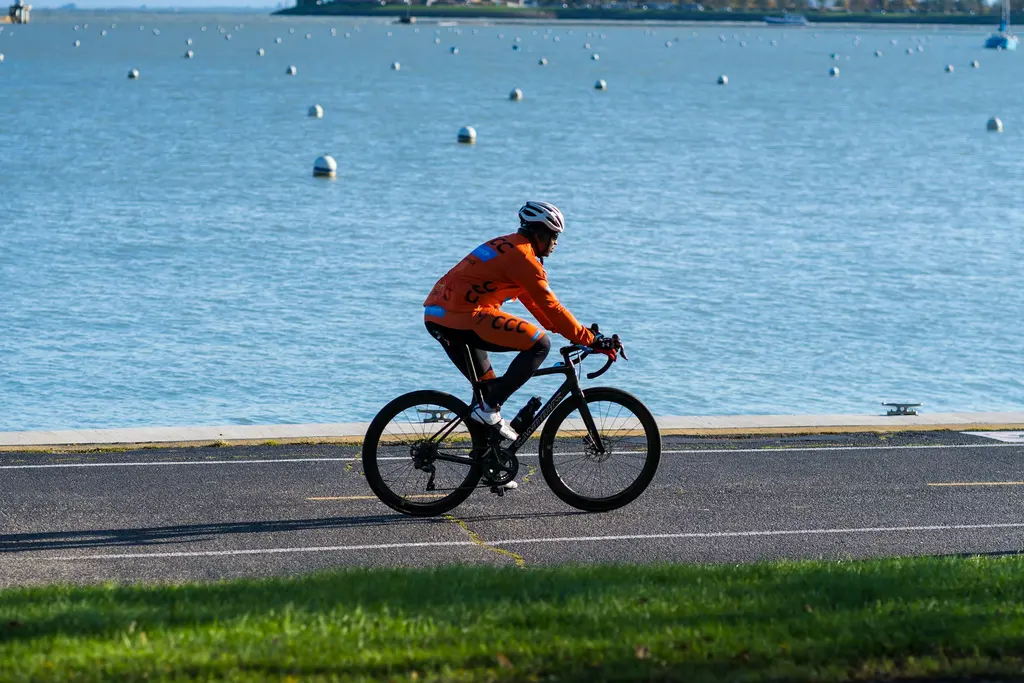
The American rail-trail was invented in Illinois. In September 1963, naturalist May Theilgaard Watts wrote a letter to the Chicago Tribune proposing a path on the abandoned Chicago, Aurora & Elgin electric railroad right-of-way; by 1966 volunteers were building the Illinois Prairie Path, and every rail-trail in the country descends from that letter. Six decades later, TrailLink counts more than 6,000 miles of trail across 224 routes in Illinois, over 1,000 of them converted rail corridor, and the League of American Bicyclists ranks the state 11th in the nation. Flat? Mostly. Short on riding? Not even close.
The long-distance network is the state's quiet superpower. The Grand Illinois Trail loops 535 miles from Lake Michigan to the Mississippi and back, stitching together the Fox River Trail, the I&M Canal State Trail's 61.5 miles along the 1848 canal, and the Hennepin Canal Parkway's 104.5-mile towpath. The Route 66 Trail runs 369 miles from Millennium Park to the Old Chain of Rocks Bridge over the Mississippi, tracing all three historic alignments of the Mother Road. Even the coast-to-coast Great American Rail-Trail leans on Illinois: 168 of its 193 miles across the state are already complete, most of them on the two canal towpaths.
The terrain has more range than the prairie stereotype suggests. In the northwest, Jo Daviess County escaped the glaciers entirely: the Driftless hills around Galena stack real climbing, the historic Stagecoach Trail road rolls 2,600 feet of gain past Charles Mound, the state's 1,235-foot high point, and gravel riders treat the region as a pilgrimage. Four hundred miles south, the Shawnee National Forest hill country carries the Tunnel Hill State Trail across 23 trestles and through its namesake 543-foot tunnel. Mountain biking is a smaller scene but a real one: the Palos Trail System packs roughly 50 miles of singletrack and widetrack into 15,000 acres of moraine ravines 20 miles from the Loop, and Kickapoo State Recreation Area carved about 20 miles of directional singletrack out of reclaimed strip-mine land near Danville.
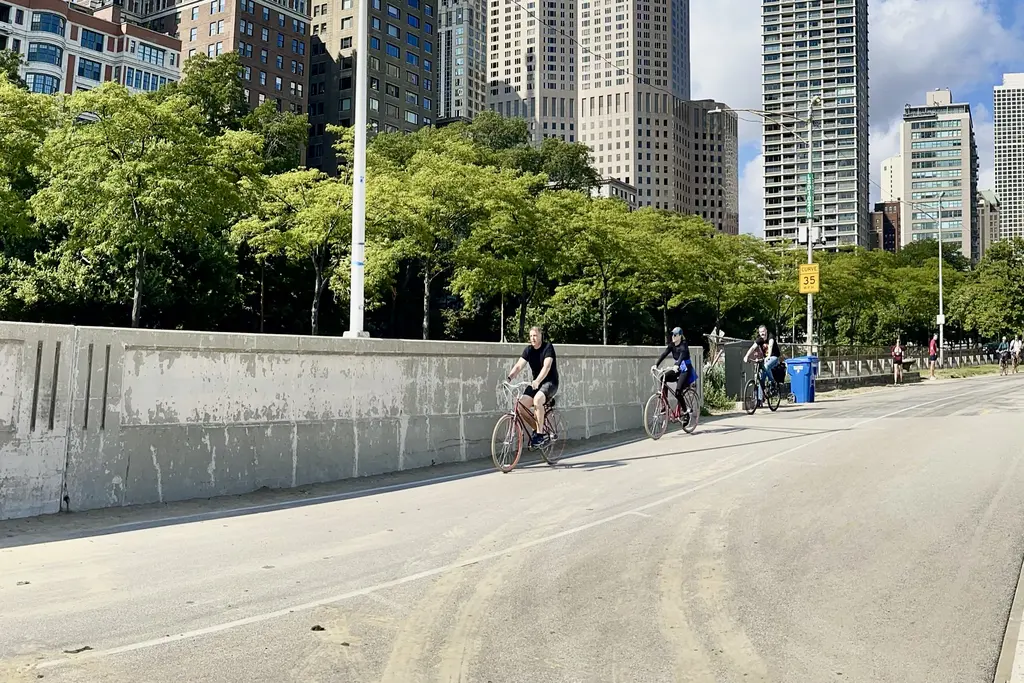 Chicago is the anchor. The Lakefront Trail runs 18.5 car-free miles along Lake Michigan, past Museum Campus, Soldier Field, and most of the city's beaches, and absorbs up to 70,000 users on a peak summer day. The 606 turns 2.7 miles of elevated rail line into a bike boulevard through Wicker Park and Logan Square. The street network now counts more than 500 miles of bikeways, roughly 70 of them protected after a record 2025 building season, and Divvy backs it all with one of North America's largest bike-share systems: 1,100-plus stations and 17,000 bikes. Bicycling magazine named Chicago America's best bike city in 2016, and the trail infrastructure still earns it.
The honest caveats are wind, winter, and shoulders. Prairie wind is the state's substitute for hills, and a flat 20 mph headwind between cornfields is a climb that never summits. The riding season effectively runs April through October; November through March belongs to fat bikes and the committed. Downstate rural two-lanes can be fast and shoulderless, so route selection matters more than fitness. Plan around those three, and Illinois delivers something few states can: a 535-mile loop, a world-class urban lakefront, and the trail that started it all.
Illinois E-bike Laws
Three classes, zero paperwork, one hard sidewalk ban - and a sweeping micromobility bill on the Governor's desk. Here is where Illinois stands on e-bikes.
Illinois adopted the three-class framework on January 1, 2018 through Illinois HB 1784 (Public Act 100-0209) and treats a compliant e-bike - fully operable pedals, motor of less than 750 watts - as a bicycle: no license, no registration, no insurance. The one statewide hard line is sidewalks, where e-bikes are banned outright.
The motor assists only while the rider is pedaling and ceases at 20 mph (625 ILCS 5/1-140.10); legal for all ages.
The motor may propel the bike on throttle alone but cannot assist past 20 mph; legal for all ages.
Assistance only while pedaling, up to 28 mph - and a speedometer displaying mph is required equipment (625 ILCS 5/11-1517).
Compliant Class 1, Class 2, and Class 3 e-bikes are regulated as bicycles, not motor vehicles (625 ILCS 5/11-1517).
No state registration, title, or plate for any compliant class - the statute leaves e-bikes out of the motor vehicle system.
Illinois mandates no liability coverage for Class 1, Class 2, or Class 3 - protection is on you.
No one under 16 may operate a Class 3, though they may ride as passengers on one designed to carry them (625 ILCS 5/11-1517); no age floor for Class 1 or Class 2 today.
Illinois has no helmet law for any bicycle or e-bike rider of any age - local ordinances are the only rules to check.
Where You Can Ride
- Roads & bike lanesAll three classes ride any highway, street, or roadway open to bicycles, including bike lanes (625 ILCS 5/11-1517).
- Bike & shared-use pathsOpen to all three classes statewide unless the municipality, county, or local authority with jurisdiction says otherwise - and the big ones do: Cook County and DuPage forest preserves admit Class 1 and Class 2 only, and the Chicago Lakefront Trail excludes Class 3.
- SidewalksState law flatly prohibits riding a low-speed electric bicycle on a sidewalk, no exceptions (625 ILCS 5/11-1517); Chicago separately bars riders 12 and older from sidewalks except on designated routes.
- State parksOn IDNR property, e-bikes ride vehicle roads, parking lots, and trails posted for bicycles (17 Ill. Adm. Code 110.165) - posted signage controls.
- Out-of-class e-motos750 watts or more, or no operable pedals, means Illinois moped or motor-driven cycle rules - license and registration to match - and Illinois SB 3484 would make 750-8,000W machines full motor vehicles.
The Micromobility Framework Awaits a Signature
Illinois SB 3484 passed both chambers in June 2026 and sits on the Governor's desk. If signed, it takes effect January 1, 2027: a new minimum age of 15 for Class 1 and Class 2 (Class 3 stays 16), passenger limits for riders under 18, and e-bikes over 28 mph or 750 to 8,000 watts reclassified as motor vehicles - license, title, registration, insurance, and banned from bike lanes and paths. Low-speed Class 1, Class 2, and Class 3 e-bikes remain exempt from registration and insurance.
Effective January 1, 2018 under Illinois HB 1784. Statutes: 625 ILCS 5/1-140.10, 5/11-1517; 17 Ill. Adm. Code 110.165; Chicago MCC 9-52-020. Cities and park districts can add their own path and trail restrictions — check signage where you ride. Last reviewed July 2026.
Illinois Cycling Weather
Illinois rides April through October: warm lake-tempered summers, 189 sunny days a year, and a winter that hands the trails to fat bikes.
Sunny days a year
Riding season
Apr - Oct
Illinois Cycling Destinations
Tunnel Hill State Trail
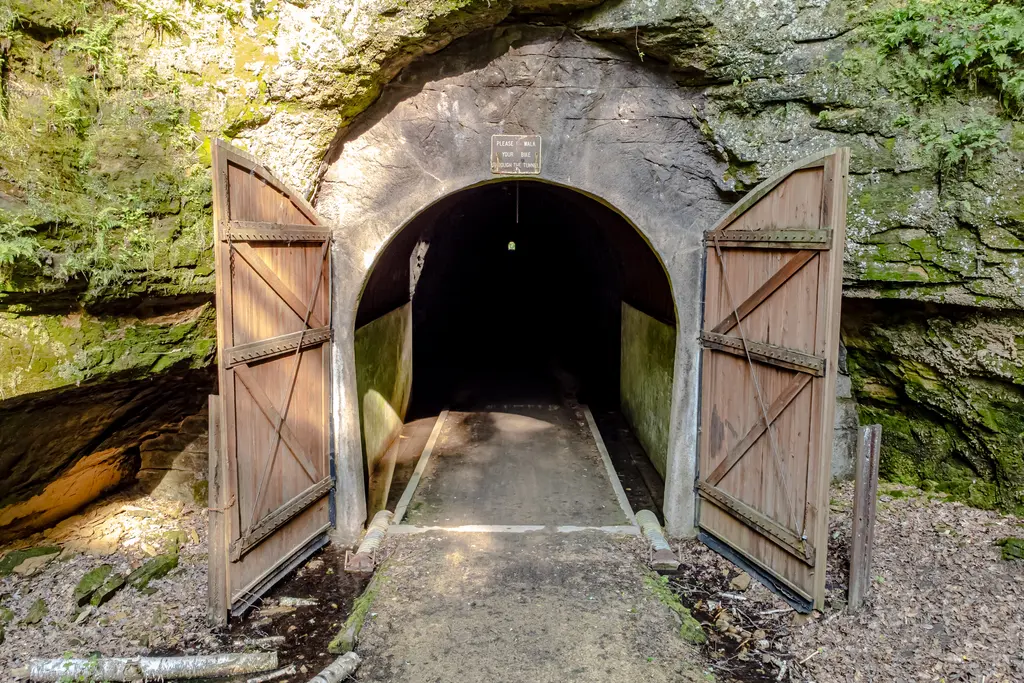
Tunnel Hill is the ride that breaks the flat-Illinois stereotype in a single afternoon. The crushed-limestone trail follows an old Norfolk Southern grade 45 miles from Harrisburg to Karnak through Shawnee National Forest hill country, crossing 23 restored wooden trestles over rocky ravines and climbing at a steady 2% to the 543-foot tunnel that gives the trail its name: pitch dark in the middle, so bring lights. This is a rail-trail with an actual summit, cresting at 680 feet before easing down toward the Cache River wetlands, where a southern extension reaches bald cypress stands a thousand years old. Services cluster in Vienna and Harrisburg with long, remote stretches between, so carry water and spares. Gravel and hybrid tourers get the state's most scenic long trail; everyone else gets a reason to drive south.
Chicago Lakefront Trail
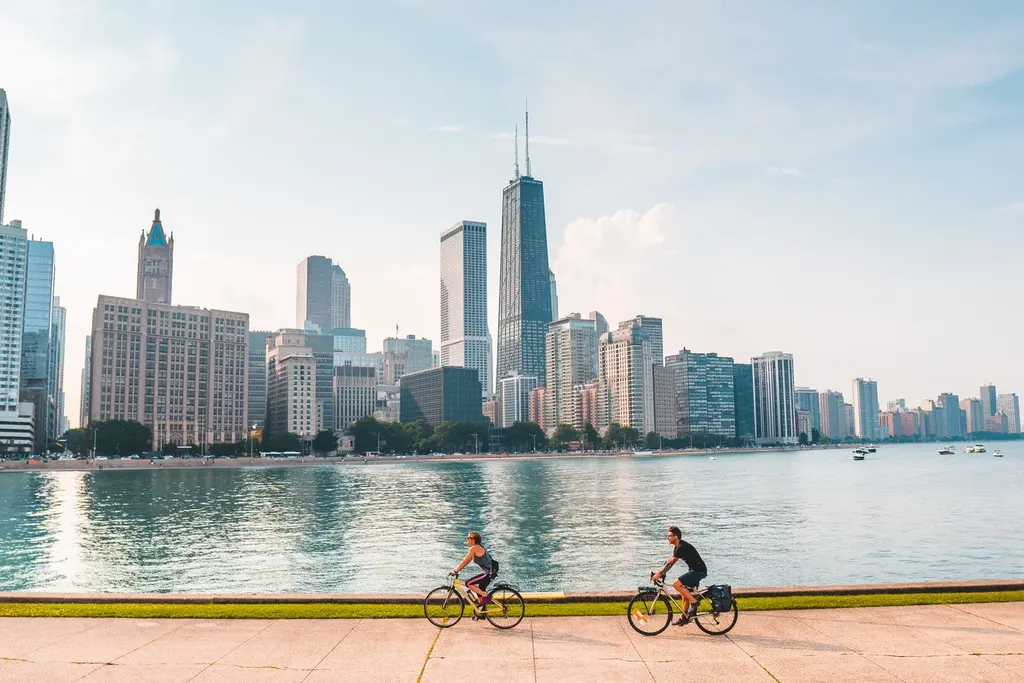
The Lakefront Trail is 18.5 miles of car-free pavement wedged between Lake Michigan and one of the world's great skylines, running from the South Shore Cultural Center to Edgewater's Osterman Beach. Separated bike and pedestrian lanes cover most of the route since the 2018 Trail Separation Project, and the Navy Pier Flyover carries riders over the Chicago River without a single street crossing. The trail threads Lincoln Park, Grant Park, Burnham Park, and Jackson Park, passing Museum Campus, Soldier Field, McCormick Place, and nearly every public beach and harbor in the city. It is open 24 hours and absorbs up to 70,000 users on a peak summer day, so ride at dawn or in the shoulder seasons for clear pavement. As urban cycling real estate goes, nothing else in the Midwest comes close.
Illinois Prairie Path
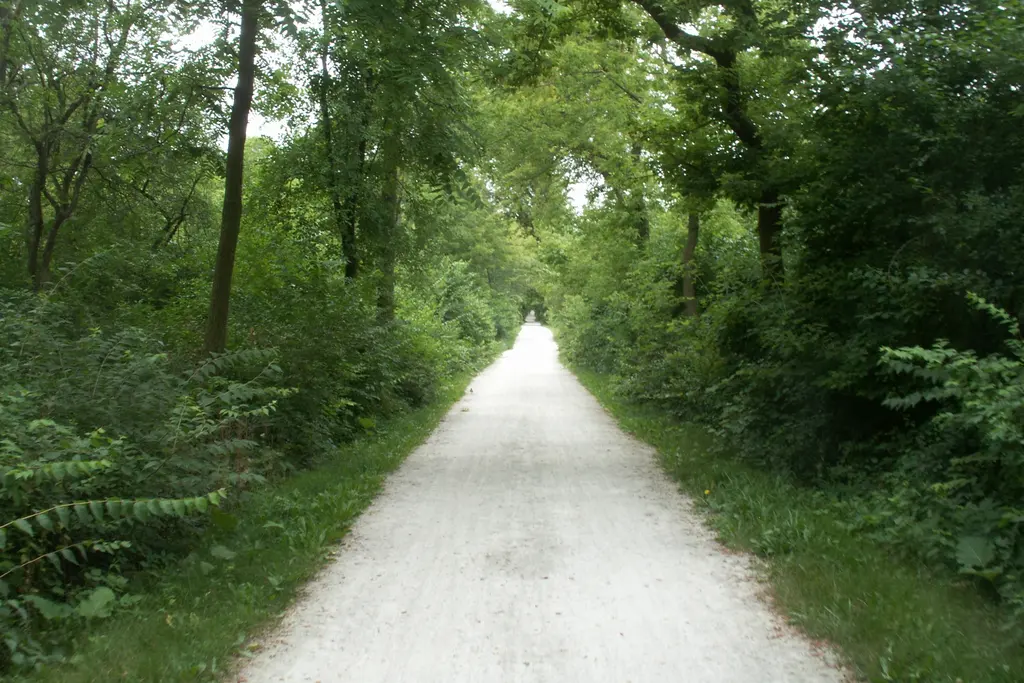
This is where the rails-to-trails movement began. Built from 1966 on the abandoned Chicago, Aurora & Elgin electric railroad, the Illinois Prairie Path was the first successful rail-trail conversion in the United States, the first Illinois trail named a National Recreation Trail, and a charter member of the Rail-Trail Hall of Fame. The Y-shaped network radiates 61 miles from downtown Wheaton: a Main Stem east to Forest Park, branches northwest to Elgin and southwest to Aurora, and spurs to Geneva and Batavia that tie into the Fox River Trail for bigger loops. The surface is hard-packed crushed limestone that drains fast after rain, the grades are rail-flat, and the corridor rolls through restored prairie, wetlands, and the restored 1910 Villa Park depot. Dozens of access points sit within reach of Metra stations, which makes it the rare destination trail you can ride to from the city.
Hennepin Canal Parkway State Trail
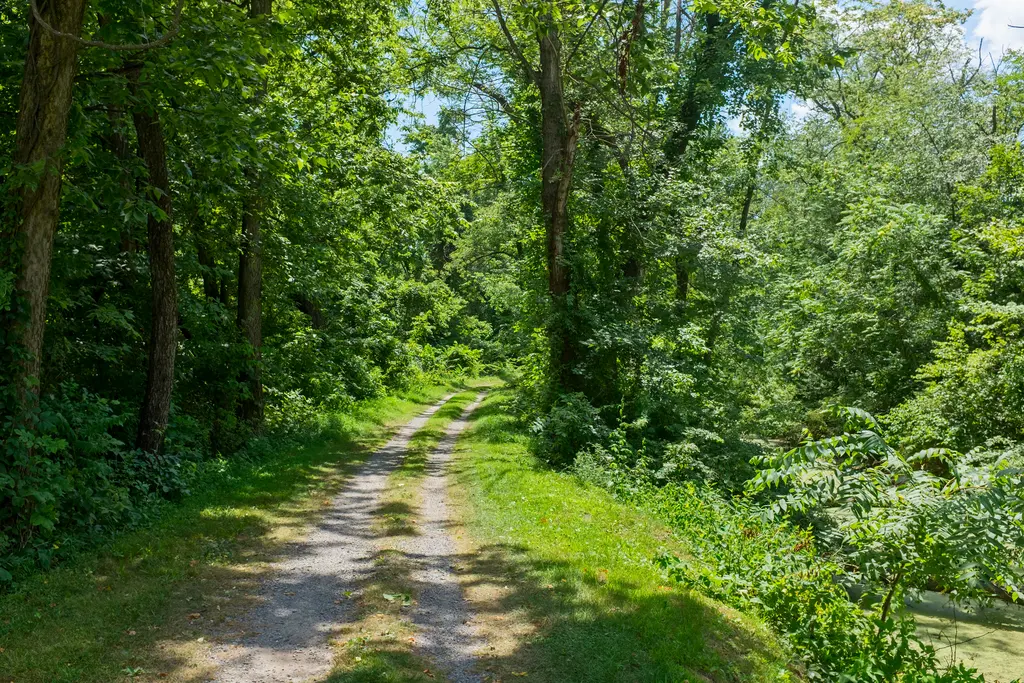
The Hennepin Canal Parkway is a 104.5-mile linear state park along the first American canal built entirely of concrete, opened in 1907 and obsolete almost immediately - which is exactly why it survives intact for cyclists. The towpath runs from the Illinois River near Bureau Junction west to the Rock River at Colona, with a 29-mile feeder branch running arrow-straight north to Rock Falls, on a mix of asphalt, packed gravel, and limestone screenings. Thirty-two historic lock sites, lift bridges, and six surviving aqueducts carry the canal over rivers and creeks while the trail rides alongside. Traffic is nearly nonexistent, wildlife is everywhere, and towns sit off-trail, so provision like a tourer. It is the state's best flat bikepacking corridor and a designated segment of the Grand Illinois Trail: ride it in day sections or string the whole thing into a two-day out-of-time experience.
Palos Trail System
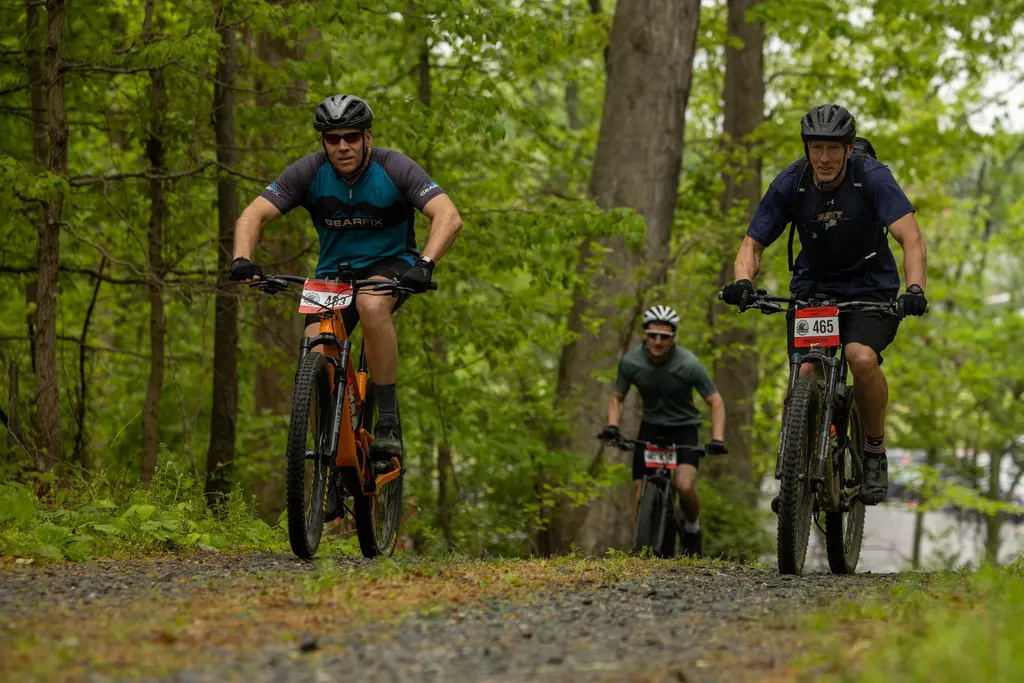
Palos is the answer to "there's no mountain biking in Chicago." The largest holding in the Forest Preserves of Cook County spreads 15,000 acres of glacial moraine hills, deep ravines, and sloughs just 20 miles from the Loop, laced with roughly 50 miles of singletrack and widetrack. The purpose-built singletrack - flowy sections, tight twisty lines, rocky technical pitches, and fast descents - is built and maintained in partnership with CAMBr, the local IMBA chapter, and concentrated in the western half of the preserves. The Maple Lake staging area in Willow Springs is the hub, with trailhead parking and access to almost 40 miles of unpaved trail; the signature Maple Lake singletrack loop packs more than 700 feet of climbing into under 10 miles, which counts as vertical in Cook County. Color-coded loops sort novices from experts, and gravel riders use the wide track for real off-pavement miles without leaving the metro.
Stagecoach Trail
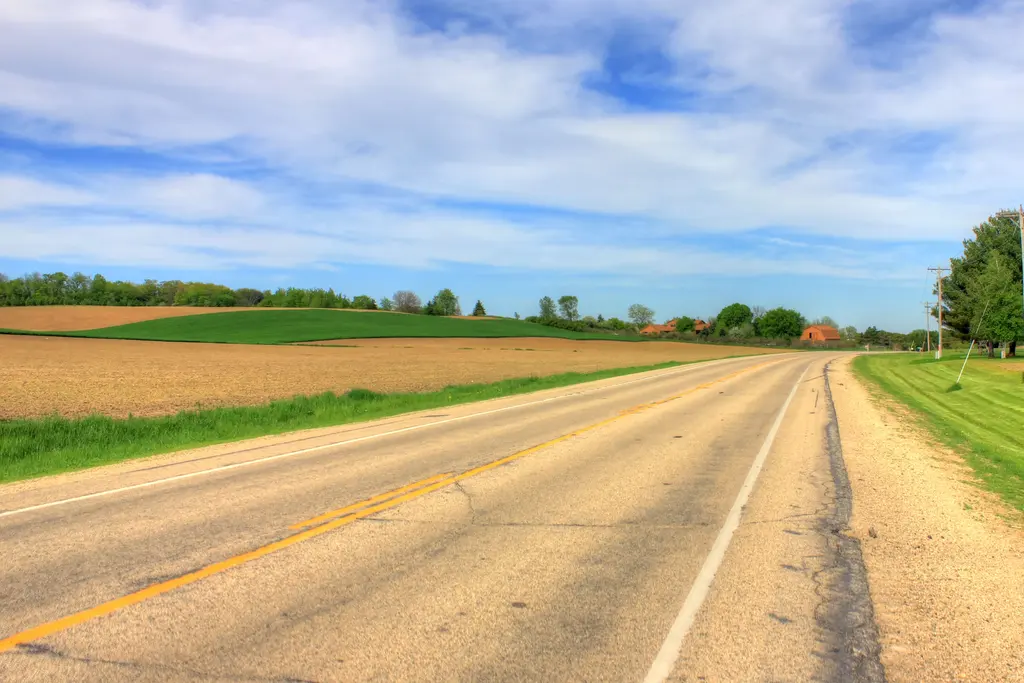
The Stagecoach Trail is a paved road, not a path - a rolling two-lane tracing the 1830s Galena-to-Chicago stagecoach route through the Driftless Area, the unglaciated corner of Illinois where the hills never got flattened. The classic out-and-back from Galena to Warren logs 44 miles and roughly 2,650 feet of climbing through constant curves, ridge-top views, and river-valley cuts, passing near Charles Mound, the state's 1,235-foot high point, and linking the old lead-mining and dairy towns of Scales Mound, Apple River, and Warren. Rural traffic is light, though summer weekends bring motorcyclists drawn by the same curves. Galena anchors the ride with lodging, food, and the flat Galena River Trail for a recovery spin, and Galena Country Tourism publishes curated road routes on Ride with GPS. For road riders and climbers, this is the closest thing Illinois has to hill country - because it is hill country.
Illinois Cycling Events
From Bike the Drive's car-free morning on DuSable Lake Shore Drive to 10,000 feet of Driftless gravel at Ride Ten Thousand, Illinois events run from mass community rides to genuine sufferfests.
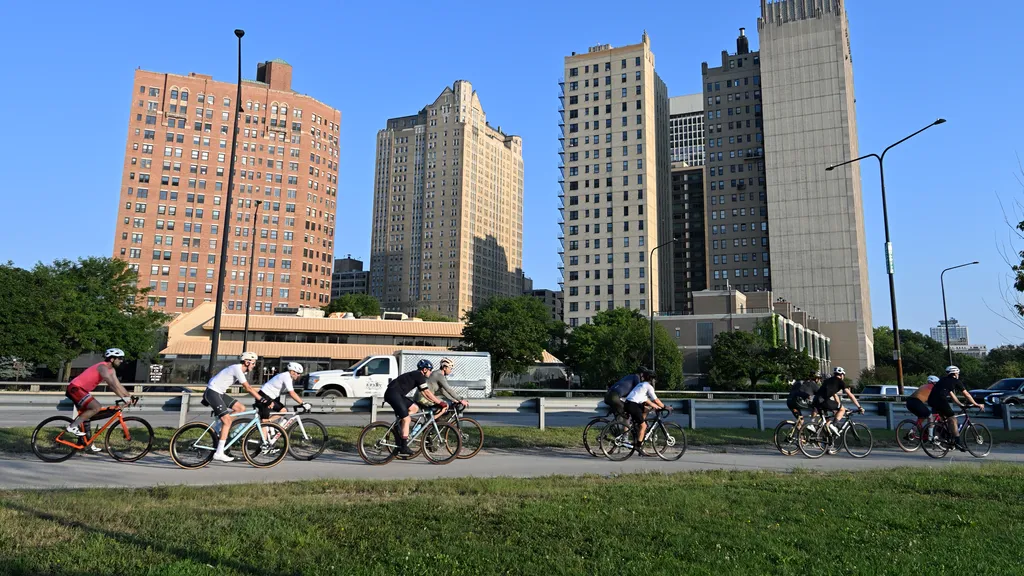
Bike the Drive
For one morning a year, Chicago closes DuSable Lake Shore Drive to cars and hands it to bikes. The 25th annual Bike the Drive gives riders a 30-mile car-free loop along Lake Michigan between the Museum of Science and Industry and Bryn Mawr Avenue, starting and ending at Butler Field in Grant Park, with start times from 6:30 to 10:30 a.m. and turnaround points for shorter rides. Mechanics offer free safety checks, hundreds of volunteers and SAG vehicles line the route, and a post-ride festival fills Grant Park. It is the flagship fundraiser for the Active Transportation Alliance, Chicagoland's walking, biking, and transit advocacy nonprofit, and it draws thousands of riders of every age. It is a rolling city holiday, not a race.
Event website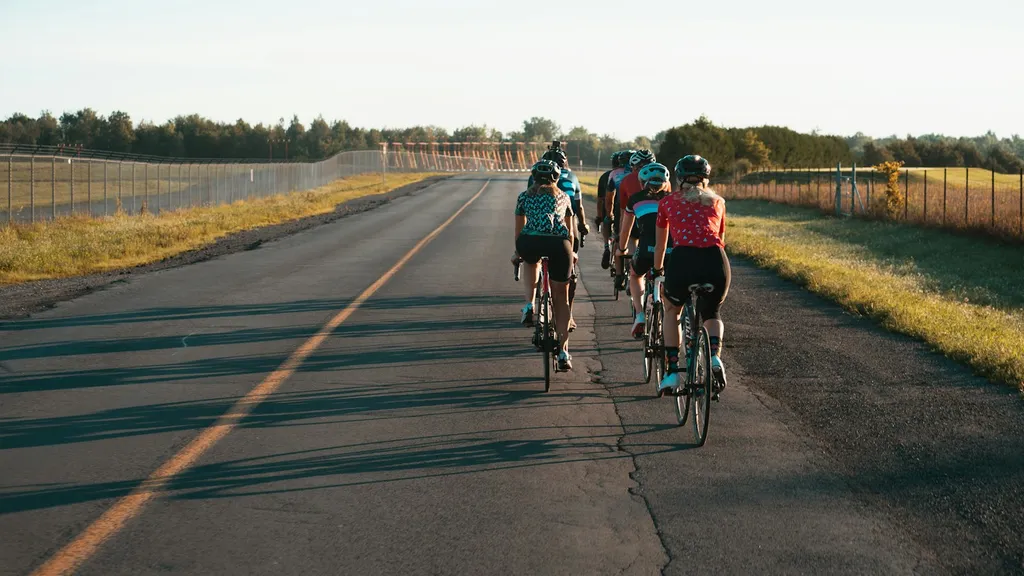
North Shore Century
The Evanston Bicycle Club's North Shore Century has been Chicagoland's marquee club century since 1986, and the 41st edition rolls from a new home base at Gillson Park on the Wilmette lakefront. Riders choose on ride day: a gentle 25-mile loop to Glencoe, a 50-mile half century, a 62-mile metric, or the full 100 miles up the North Shore into Wisconsin, all flat to rolling. The century route carries five rest stops stocked with food - including brownies and cookies baked by club members - with mechanical support from local bike shops at every stop and SAG on course. More than 150 volunteers staff the day, capacity runs to 2,400 riders, and the whole event has the unhurried confidence of a club that has done this for four decades.
Event website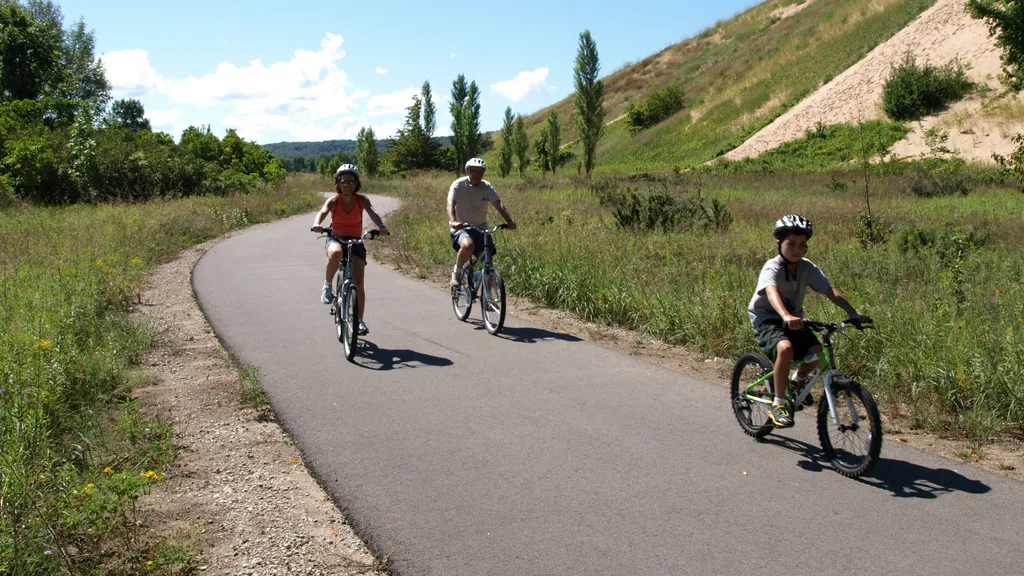
Grand Illinois Bike Tour
Ride Illinois' Grand Illinois Bike Tour - the 23rd annual successor to the beloved GITAP - is a six-day supported loop with hotel beds instead of tents. The 2026 route works the Metro East and Mississippi River country out of Litchfield, with overnights in O'Fallon, Edwardsville, and Alton, river views, and the region's trail network under wheel. Each moving day offers a basic and a long option - up to 81 miles and 1,762 feet on day one - with layover-day loop rides in between, totaling up to roughly 256 miles for the week. Support is comprehensive: SAG, refreshment stops, luggage transport, hotel breakfasts, bike repair, and Ride with GPS navigation with printed cue sheets. It is the largest annual fundraiser for Ride Illinois, the statewide advocacy nonprofit, and a three-day option gets the time-crunched in the door.
Event website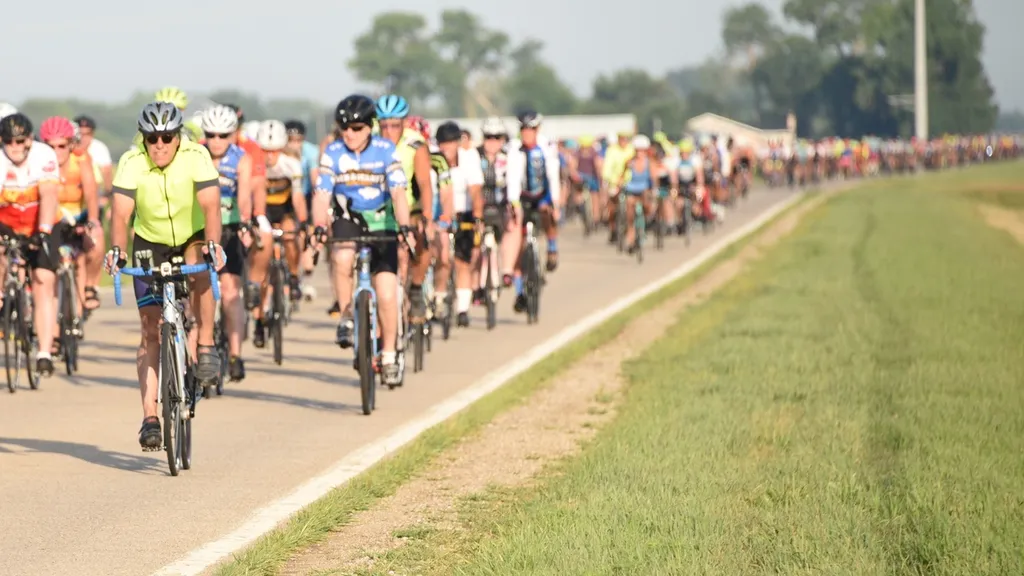
Bike MS: Tour de Farms
The National MS Society's Tour de Farms is the Chicago area's biggest MS fundraising ride, a two-day event rolling out of Kuipers Family Farm in Maple Park through the flat, open farmland of Kane County. Day one offers 25-, 62-, and 100-mile routes; day two runs 25 and 62, all with rest stops every 10 to 12 miles, bike mechanics, medical support, ride marshals, and SAG vehicles on course. The DeKalb-area Tour de Farms tradition goes back decades, and the mission-driven atmosphere makes it a popular first century: minimal hills, long stretches of corn and sky, and a $300 fundraising minimum that turns every mile into research money. Helmets are required and the minimum riding age is 12.
Event website
Swedish Days Ride
The Swedish Days Ride is one of Illinois' longest-running invitationals: the Fox Valley Bicycle & Ski Club has hosted it for 56 years, and the format is built for choice. Six routes from 12 miles to the signature 133-mile Double Metric Century roll out of Harter Middle School in Sugar Grove as colored loops riders can combine into custom distances through western Kane County farmland. The support is distinctive - a centralized, air-conditioned indoor rest stop stocked with food, morning mechanical support on site, and roaming SAG patrols - with 75-plus volunteers and around 1,000 riders on the road. Every dollar of proceeds goes to organizations promoting safe cycling, education, advocacy, infrastructure, and adaptive cycling.
Event website
Ride Ten Thousand
Ride Ten Thousand is northwest Illinois' cult gravel event, held every Memorial Day weekend since 2015 in the Driftless region - the unglaciated corner of the state where "Illinois is flat" goes to die. The name is the elevation profile: the full course stacks roughly 10,000 feet of climbing onto relentless gravel rollers and B-roads, with 100-, 80-, and 40-mile options for mortals. Courses are unmarked, conditions are variable, and support is minimal by design; it is a free, no-frills challenge ride, not a race, born out of the Freeport Bicycle Company and now presented by riders and volunteers with Black Saddle Bike Shop, Comrade Cycles, and Driftless Cycling Tours. Bring low gears, spare tubes, and no illusions.
Event websiteIllinois E-bike Law and Insurance FAQ
- What are the e-bike laws in Illinois?
- Illinois adopted the three-class framework on January 1, 2018 through Illinois HB 1784, also known as Public Act 100-0209. A compliant e-bike, with fully operable pedals and a motor of less than 750 watts, is regulated as a bicycle: no license, no registration, no insurance. Riders must be 16 to operate a Class 3, there is no statewide helmet law, and sidewalks are off limits to e-bikes statewide.
- Do Class 1, Class 2, and Class 3 e-bikes need insurance in Illinois?
- Insurance is your choice in Illinois. Class 1 assists only while pedaling and ceases at 20 mph, Class 2 may run on throttle alone but cannot assist past 20 mph, and Class 3 is pedal-assist only up to 28 mph with a required speedometer. The state mandates no liability coverage for any of the three. A standalone Velosurance policy supplies that coverage, starting around $9 per month.
- What does bicycle and e-bike insurance cover in Illinois?
- A standalone Velosurance policy covers theft, accidental and crash damage, and damage in transit, with optional liability and medical payments coverage. Illinois mandates no e-bike coverage, so the policy handles a bike stolen from a Chicago rack or damaged in a crash on a suburban trail. Policies start around $9 per month.
- Where can you ride an e-bike in Illinois: roads, paths, or sidewalks?
- E-bikes ride any highway, street, or roadway open to bicycles, including bike lanes, plus bike paths statewide unless the local authority with jurisdiction says otherwise. The sidewalk is the one statewide hard line: 625 ILCS 5/11-1517 flatly prohibits riding a low-speed electric bicycle on a sidewalk, no exceptions, and Chicago separately bars riders 12 and older except on designated routes. Local trail managers can add their own restrictions, so posted signs control.
Illinois e-bike laws explained: classes, age limits, and what changes next.




Why Velosurance is best for your bicycle
Not all types of insurance are created equal. Velosurance levels the playing field by offering stand-alone bicycle coverage, where claims won't affect your homeowner's or renter's policy premiums.
| Policy Coverage |  | Homeowner/Renters Policy |
|---|---|---|
| Insured at Full Value | Yes | Possibly |
| Crash Damage | Yes | No |
| Theft Coverage | Yes | Limited |
| Theft by Force | Yes | No |
| Theft of Accessories | Yes | Limited |
| Theft Away From Home | Yes | Possibly |
| Uninsured Motorist | Yes | No |
| Personal Liability | Yes | Possibly |
| Permissive Use Policy | Yes | No |
| Replacement Rental | Yes | No |
| Event Fee Return | Yes | No |
| Cycling Apparel Coverage | Yes | No |
| Medical Payments | Yes | Possibly |
| Racing Coverage | Yes | No |
| E-bikes | Yes | No |
| Coverage in-transit | Yes | No |
| USAC, USAT and IMBA Member Discount | Yes | No |
| FREE INSTANT QUOTE |
Not all insurance policies provide the same level of protection, and many people only discover gaps in their coverage after filing a claim. We’ve done the hard work of reviewing the fine print. To see how plans compare, check out our insurance comparison.
Client satisfaction is our #1 goal. Here's what our clients say about Velosurance


Velosurance really stepped up and put me at ease. The claim was fast and easy. I am insuring all my bikes now.

Check out Velosurance reviews to see what people are saying about us.
Illinois' best bicycle and e-bike insurance
No matter where your adventures take you, protect your bicycle and yourself from the unexpected with America's best bike insurance.