


Indiana cycling in numbers
53%
Bike ownership
4,200+
Miles of trails
24
State parks
63
Bike friendliness score
Indiana from a cyclist's perspective
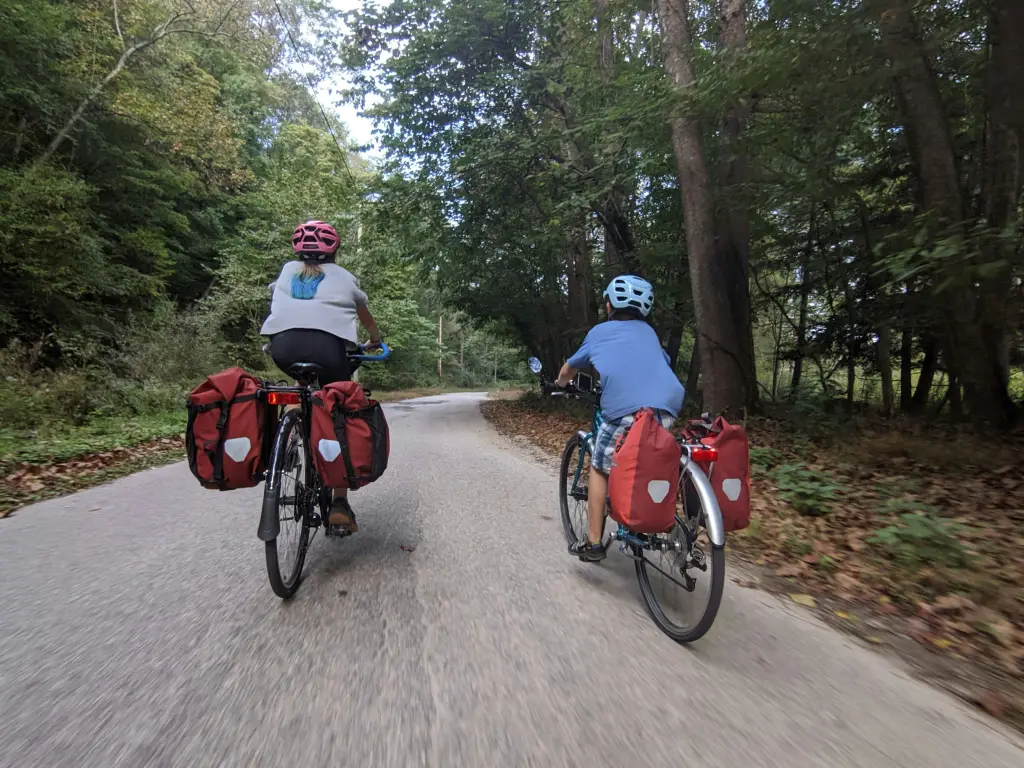
Indiana rewards cyclists who measure a ride in miles of trail rather than feet of elevation. The state holds more than 4,200 miles of public trails, and it keeps building: the Next Level Trails program put $180 million — the largest trail investment in state history — into 217 new miles across 58 counties. The payoff is a network where nearly every resident lives within a short drive of a paved path, and where a rider can link small towns for a full day without touching a highway.
The state divides cleanly into three riding regions. The north is glacial flatland and Amish farm country, where the Pumpkinvine Nature Trail threads Goshen, Middlebury, and Shipshewana through the third-largest Amish settlement in the country, and Fort Wayne's 25-mile Rivergreenway follows three rivers through 15 city parks. The center belongs to the Indianapolis metro network: the Monon Trail carries more than 1.3 million users a year from downtown through Broad Ripple into Carmel and Westfield, feeding the Cultural Trail loop in the city core. The south is the surprise — unglaciated hill country around Bloomington and Nashville where the roads pitch, the forests close in, and the Gravel Grovel packs 4,300 feet of climbing into 60 miles.
Mountain bikers already know the southern hills. Brown County State Park earned IMBA Epic status in 2011 and a Bronze-Level Ride Center designation in 2015 — one of a handful nationwide — for roughly 28 miles of purpose-built singletrack across ridges locals call the Little Smokies. Griffin Bike Park in Terre Haute adds 30-plus miles with jump lines, dual slalom, and a half-mile adaptive trail built as a veterans' memorial. Versailles State Park rounds out the scene with about 25 miles of volunteer-built flow; Nashville and Versailles were both named IMBA Trail Towns in 2026.
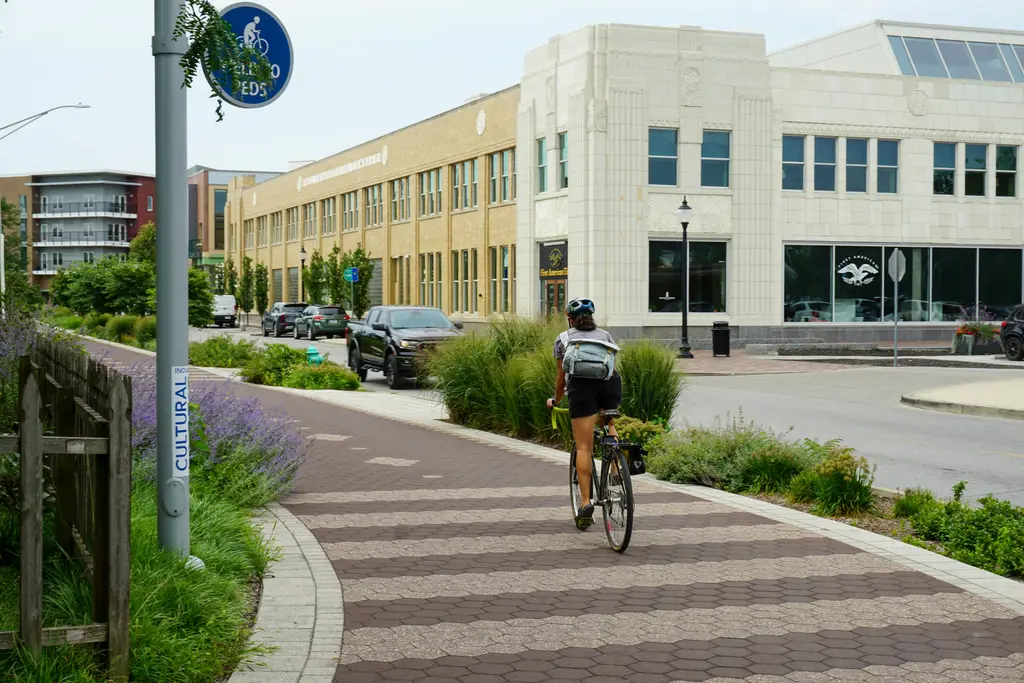 City riding is where Indiana punches hardest above its weight. The Indianapolis Cultural Trail — a $62.5 million, roughly 10-mile loop of fully separated, landscaped bike path expanded again in 2023 and 2024 — is studied by planners nationwide as the model for downtown bike infrastructure, and Pacers Bikeshare stations line its entire length. Carmel pairs its stretch of the Monon with a roundabout-rich street grid that keeps car speeds civil. Bloomington brings the B-Line Trail through downtown and a campus cycling culture anchored by Indiana University's Little 500.
The honest caveats: rural Indiana rides on chip-seal, shoulders are rare, and grain-truck traffic is indifferent to riders. There are no mountains — the state's high point is 1,257 feet — so northern wind substitutes for gradient. Summers run humid with a real thunderstorm season, freeze-thaw winters close the clay mountain bike trails, and the trail network, superb as it is, still has gaps like the missing link in the Cardinal Greenway between Marion and Muncie. Plan around those and Indiana delivers far more riding than the interstate stereotype suggests.
Indiana E-bike Laws
Three classes since 2019, no license, no registration, and one age rule that matters. Here is where Indiana stands on e-bikes.
Indiana adopted the three-class framework on July 1, 2019, and kept the rulebook one of the lightest in the Midwest. A compliant e-bike — fully operable pedals, motor of not more than 750 watts — is not a motor vehicle in Indiana: no license, no registration, no insurance, no title.
The motor assists only while pedaling and cuts off at 20 mph; legal for all ages (IC 9-13-2-26.6).
The motor may propel the bike on throttle alone but cannot assist past 20 mph; legal for all ages (IC 9-13-2-26.7).
Assist while pedaling up to 28 mph, no throttle (IC 9-13-2-26.8); Indiana skipped the model law's speedometer requirement.
An e-bike is not a motor vehicle, and operators are expressly exempt from Indiana's driver's license chapter (IC 9-21-11-13.1).
Compliant e-bikes are exempt from titling and BMV registration — no plate, no BMV visit.
Operators are exempt from Indiana's financial responsibility chapter for all three classes — protection is on you.
No one under 15 may operate a Class 3, though they may ride as passengers on one designed to carry them (IC 9-21-11-13.1); no age floor for Class 1 or Class 2.
Every Class 3 operator or passenger under 18 wears a CPSC- or ASTM-rated helmet (IC 9-21-11-13.1); no statewide rule for Class 1 or Class 2, though Carmel requires one under 16 on city paths.
Where You Can Ride
- Roads & bike lanesAll three classes ride wherever bicycles ride, with the same rights and duties (IC 9-21-11-13.1).
- Bike & multipurpose pathsClass 1 and Class 2 ride any path open to bicycles; Class 3 is barred unless the path runs within or adjacent to a highway or the local authority permits it.
- SidewalksNo statewide rule — cities decide, and Carmel caps e-bikes at 15 mph on its greenways.
- Trails & state parksIndiana DNR allows all three classes on park roads, Class 1 and Class 2 on hard-surface trails, and Class 1 only on natural-surface trails open to bikes.
- Out-of-class e-motosOver 750 watts or past class speeds means Indiana motor driven cycle rules: BMV registration, a license or endorsement, a 35 mph cap, and no sidewalks or interstates (IC 9-21-11-12).
Effective July 1, 2019 under Indiana HB 1236. Statutes: IC 9-13-2-49.2, 9-13-2-26.6 through 26.8, 9-21-11-13.1. Cities and park districts can add their own path and trail restrictions — check signage where you ride. Last reviewed July 2026.
Indiana Cycling Weather
Indiana serves a classic Midwest season: April through October brings warm, drying trails and 187 days of sunshine, with July and August the clearest months of the year.
Sunny days a year
Riding season
Apr - Oct
Indiana Cycling Destinations
Cardinal Greenway
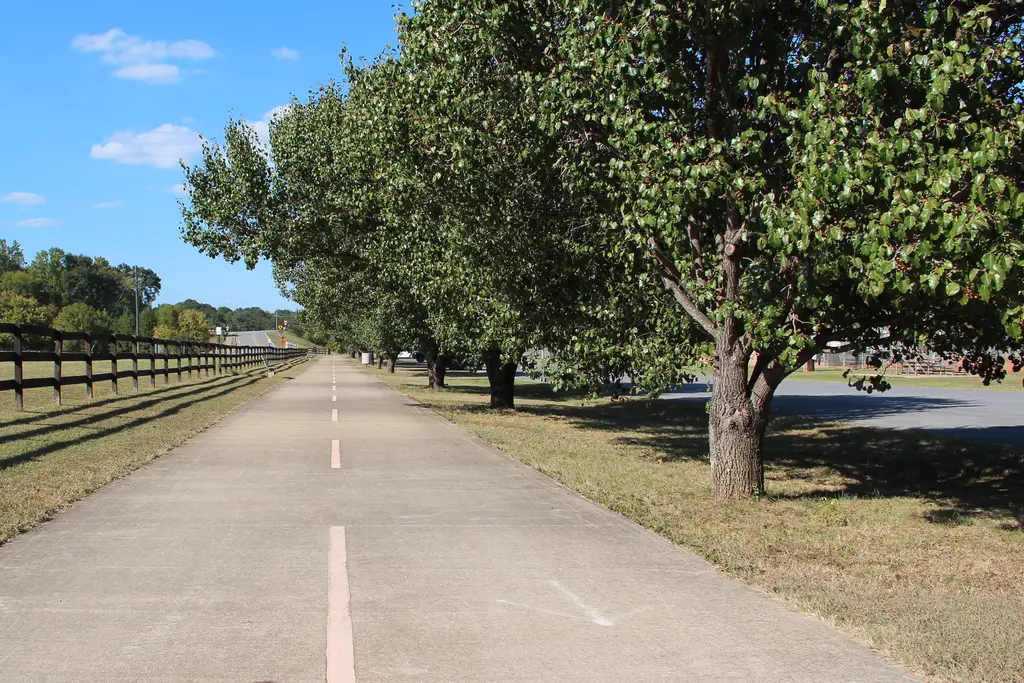
The Cardinal Greenway is Indiana's longest rail-trail: 62 paved miles down a former CSX corridor from Marion through Muncie to Richmond, inducted into the Rails-to-Trails Conservancy Hall of Fame in 2018. The route crosses nine bridges, marks its mileage in half-mile increments, and offers more than 20 trailheads, most with parking and restrooms; the restored 1901 Wysor Street Depot in Muncie serves as trail headquarters and links the greenway to the White River Greenway. The scenery is east-central Indiana at its most honest — corn and soybean fields, wooded corridors, and small towns like Gaston and Losantville rolling past at rail-grade gentleness. Ride it as two long segments: a still-unbuilt gap separates the Marion and Muncie sections, and services thin out between towns, so carry water.
Monon Trail
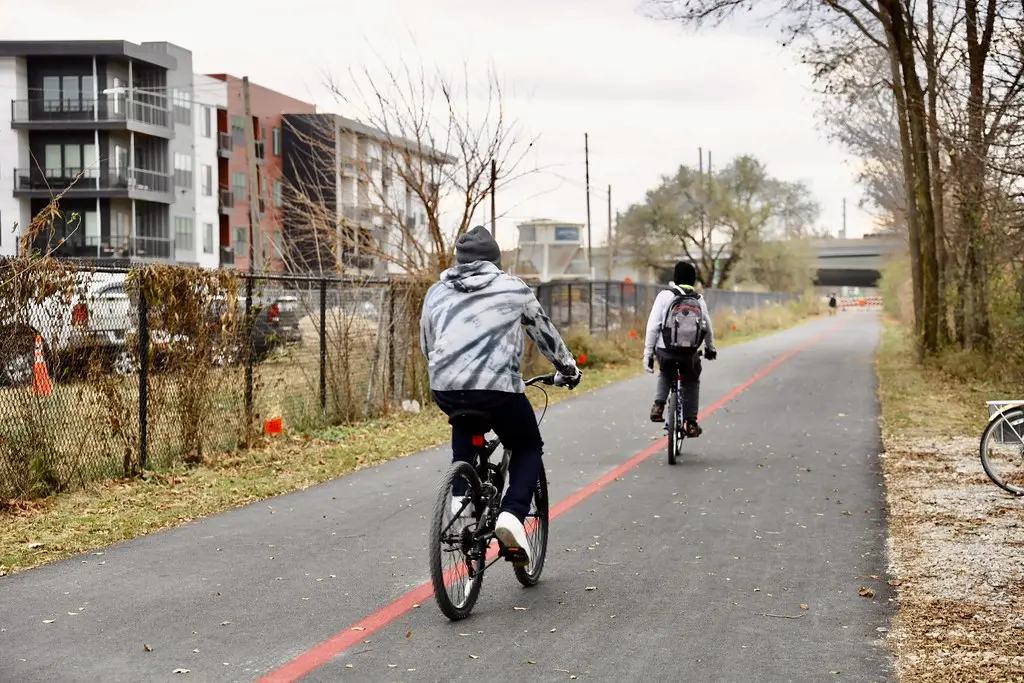
The Monon is the backbone of central Indiana cycling and one of the busiest rail-trails in America, drawing more than 1.3 million users a year. Paved end to end, it runs from 10th Street near downtown Indianapolis north through Broad Ripple's restaurant strip, then widens across the Carmel line into the Monon Greenway, with separated bike and pedestrian lanes through Midtown Plaza and the Arts and Design District, before continuing to Westfield's Grand Junction Plaza and rural Sheridan. Its south end connects directly to the Indianapolis Cultural Trail, so a rider can go from farm country to the city core without leaving dedicated infrastructure. Weekend congestion in Broad Ripple and Carmel is real — dog walkers, strollers, joggers — so treat it as a cruising trail and ride early if you want to hold pace.
Brown County State Park Trails
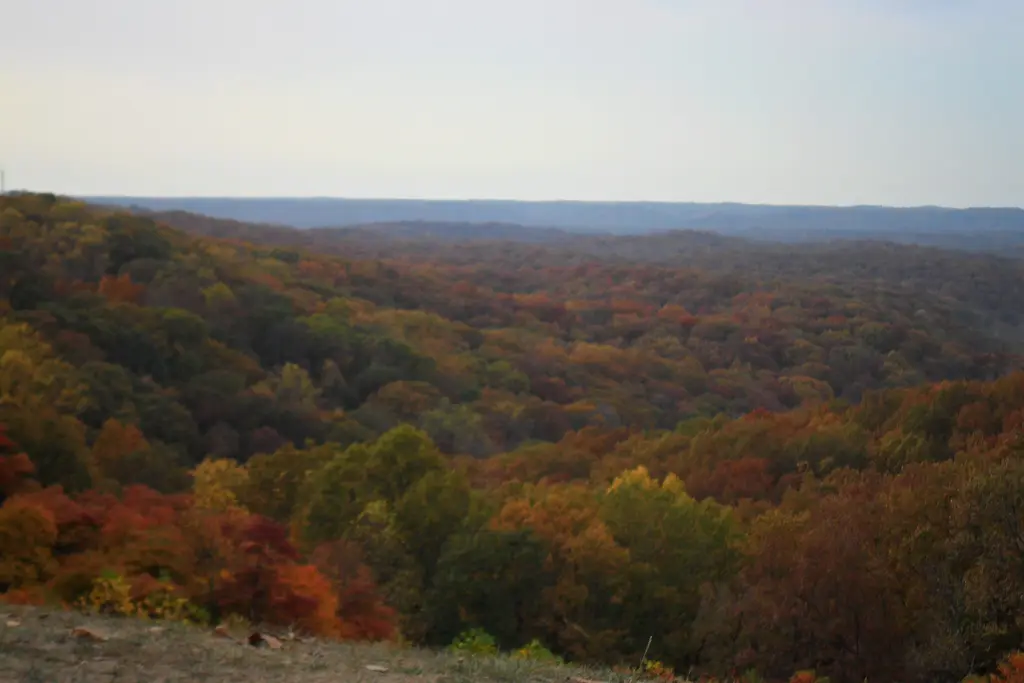
Brown County State Park is the Midwest's marquee mountain bike destination: an IMBA Epic since 2011 and a Bronze-Level Ride Center since 2015, with roughly 28 miles of professionally built singletrack ribboning across the steep wooded ridges of southern Indiana's Little Smokies. The menu runs from beginner-friendly Green Valley and Pine Loop to the technical rock of Schooner Trace and the modern flow and jumps of Hobbs Hollow, with the Hesitation Point overlook delivering the park's signature ridge-top view. Trailheads sit inside the park off SR 46, minutes from the galleries and breweries of Nashville, and the Brown County Epic festival draws riders from across the country every fall. The clay-loam holds water, so stay off the trails after rain, and budget for the park gate fee on the way in.
Indianapolis Cultural Trail
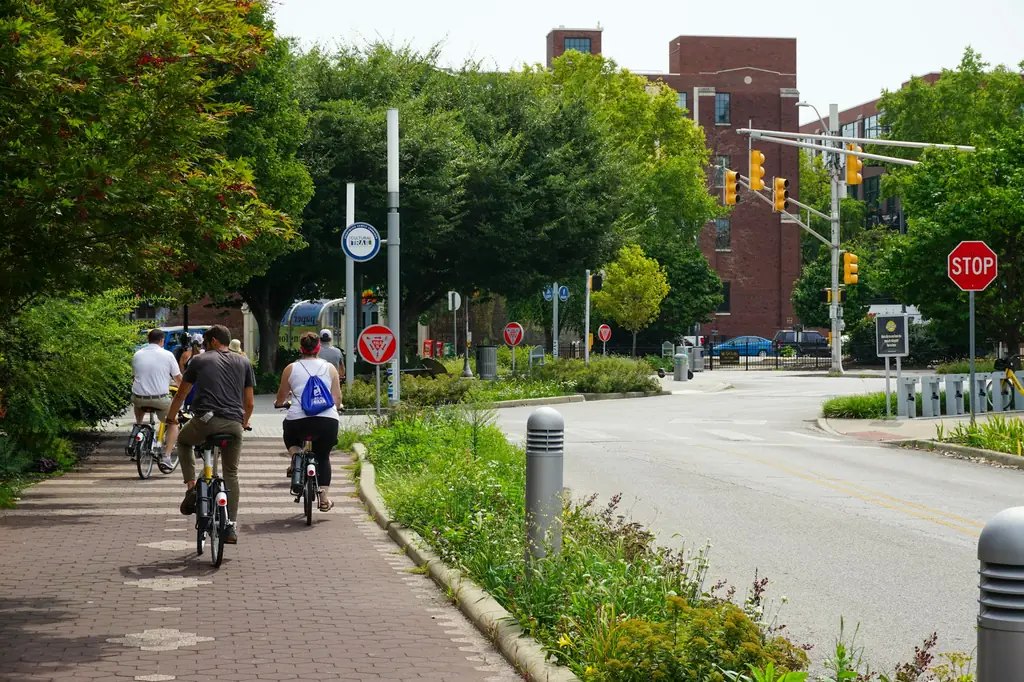
The Cultural Trail is the ride that changed how American cities think about bike infrastructure: roughly 10 miles of fully separated, landscaped path looping through downtown Indianapolis, built as a $62.5 million public-private project and extended in 2023 and 2024 with new legs on Indiana Avenue and South Street past Lucas Oil Stadium. It links all six of the city's cultural districts — Mass Ave, Fountain Square, the Canal and White River State Park among them — and connects to the Monon Trail for a straight shot to Broad Ripple. Public art, stormwater gardens, and dedicated signals make it feel more linear park than bike lane, and Pacers Bikeshare stations line the whole route, so it works without your own bike. It is a shared, signal-controlled city path: expect pedestrians and scooters, and ride it at sightseeing pace.
Pumpkinvine Nature Trail
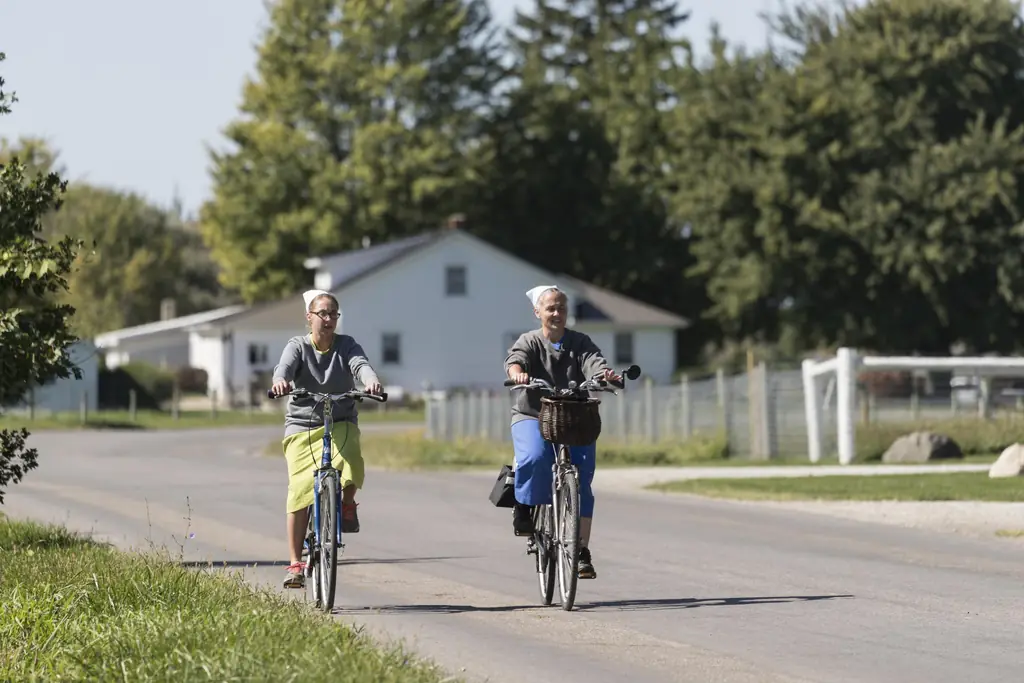
Northern Indiana's signature ride follows the abandoned Pumpkinvine railroad corridor from Goshen through Middlebury to Shipshewana, straight through the heart of the third-largest Amish community in the United States. Expect horse-drawn buggies at the road crossings, laundry lines over immaculate farmyards, and trailside stops for pie, cheese, and homemade ice cream, with Krider World's Fair Garden in Middlebury and Shipshewana's flea-market district anchoring the ends. The surface is asphalt for all but one short packed-limestone stretch northeast of Goshen, fine on narrow tires. The annual Pumpkinvine Bike Ride each June draws hundreds of riders; on summer weekends around Shipshewana, expect slow foot traffic and mind the frequent county-road crossings.
Nebo Ridge and the Hoosier National Forest
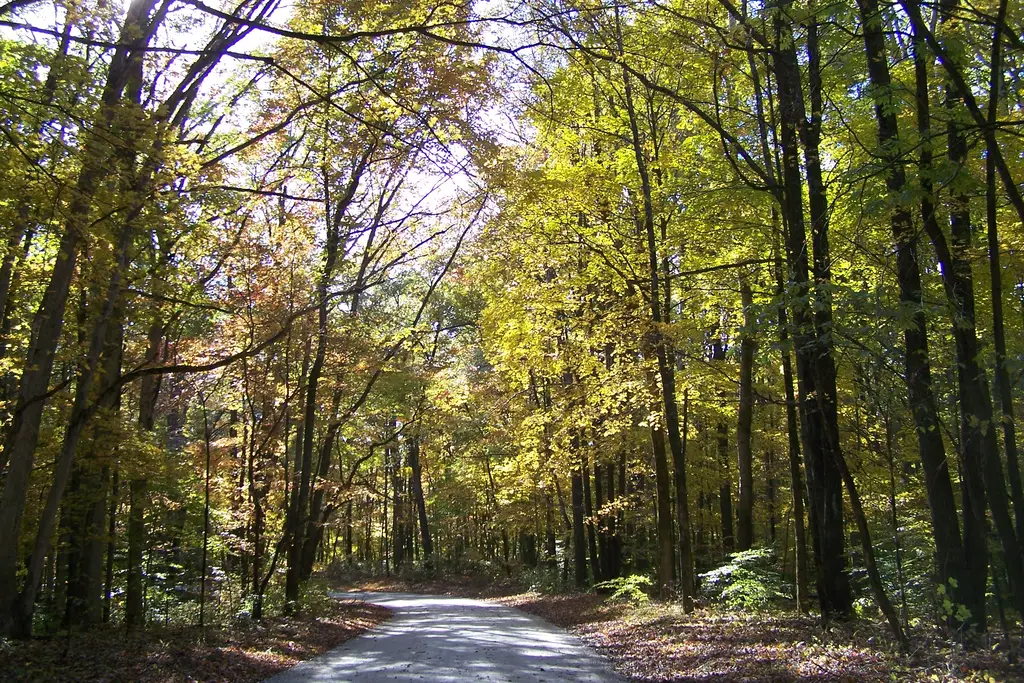
Indiana's best backcountry riding radiates from Story, a 19th-century ghost-town hamlet on the southern edge of Brown County. The Nebo Ridge Trail itself is 8.6 miles of flowing ridge-top singletrack open to bikes, reached by three miles of gravel from the Story Inn, and around it spreads a web of remote Hoosier National Forest gravel and fire roads threading hollows toward the Charles C. Deam Wilderness and Monroe Lake. This is the terrain of the Gravel Grovel, Indiana's original gravel race, and it feels nothing like the interstate stereotype: long sightlines, deep hardwood forest, and almost no traffic. Cell service is spotty, creek crossings run wet in spring, and the chunky gravel punishes anything under 38 mm — bring low gears, food, and a map, because services between Story and Norman are essentially zero.
Indiana Cycling Events
From the Hilly Hundred's half-century of October climbs to Thanksgiving gravel in the Hoosier National Forest, Indiana's ride calendar covers every discipline and season.
Hilly Hundred Weekend
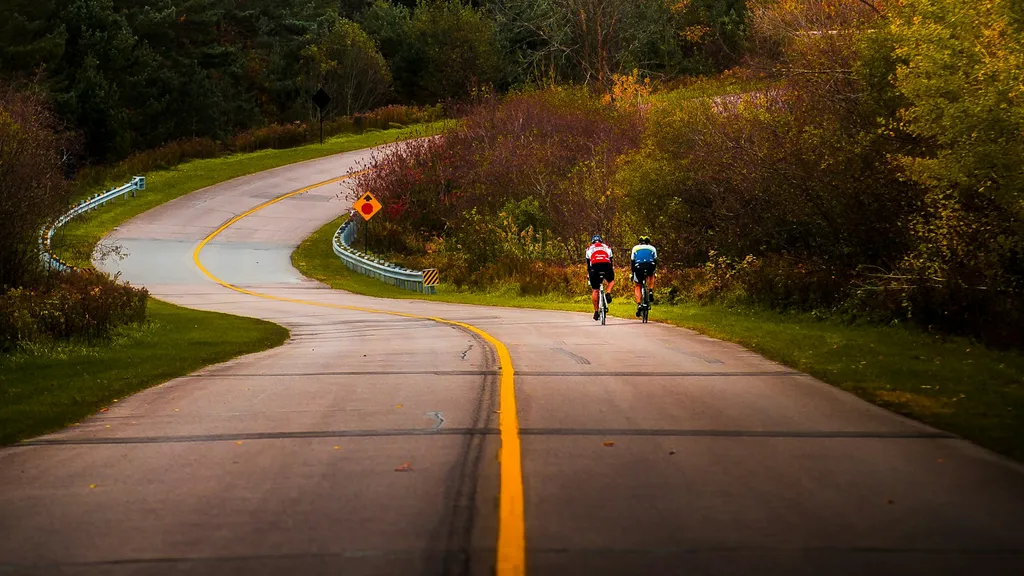
Running since 1968, the Hilly Hundred is one of the oldest and largest recreational bike tours in the country, drawing riders from more than 40 states for two days on the back roads of Monroe and Owen counties. Each day offers routes from 15 to 62 miles through exactly the terrain the name promises, with three stocked rest stops a day — doughnuts, apple cider, live musicians on the roadside. Registration includes the event's legendary fried chicken lunch, SAG support, and ice cream at the finish, with camping and indoor gym sleeping at Edgewood High School for the full-immersion crowd. Bicycling Magazine has recognized it for best overall event, longest running, and best entertainment.
Event website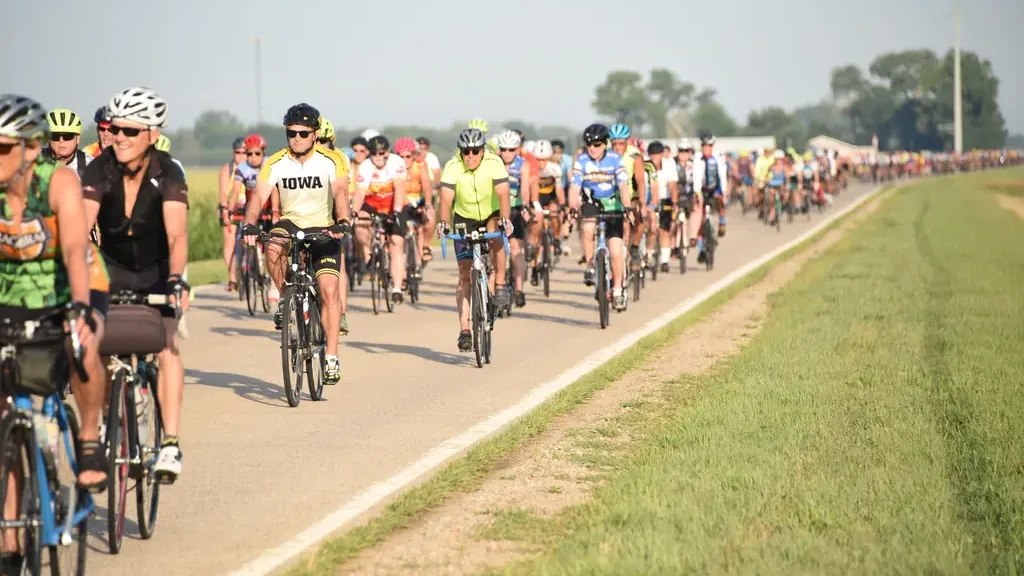
RAIN: Ride Across INdiana
In its 37th year, RAIN is Indiana's signature endurance test: the entire state, border to border, in a single day, from Fairbanks Park in Terre Haute to Earlham College in Richmond. The classic 168-mile course traces much of the historic National Road corridor, with recent editions shifted onto quieter county roads south of Indianapolis, and a 205-mile extended option for double-century hunters. Entry includes a numbered rider flag, five rest stops, lunch on course, and a finisher's medal for everyone in by 10 pm — organizers advise being able to hold a 14 mph rolling average for 12 hours. Terrain is flat to gently rolling, which is why the ride attracts everyone from pace-line racers to first-time double-digit-hour riders.
Event website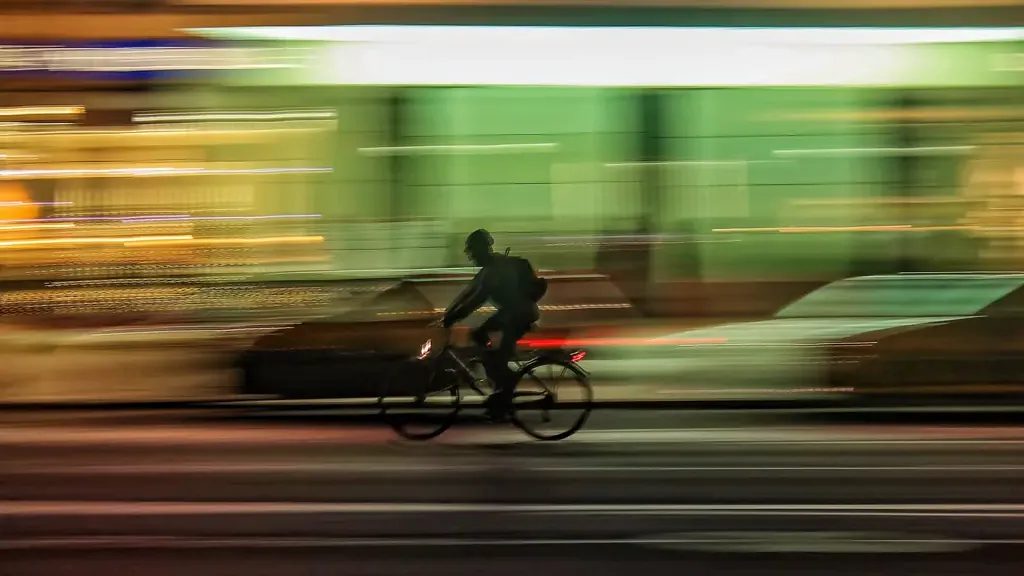
N.I.T.E. Ride
Indianapolis's after-dark slow-roll launches at 9:30 pm and tours downtown landmarks with police traffic control at the intersections, volunteer route guides, and a SAG vehicle sweeping the back. Now in its fourth decade, the full 20-mile route pauses at a mile-10 refreshment stop where more than a thousand riders regroup and relaunch together; a 6-mile loop serves beginners and families. Front and rear lights are required, and riders are encouraged to go overboard — holiday lights, light-up speakers, disco balls. Registration includes the escorted ride, entertainment, and pizza at the finish, which makes it the easiest gateway event in the state.
Event website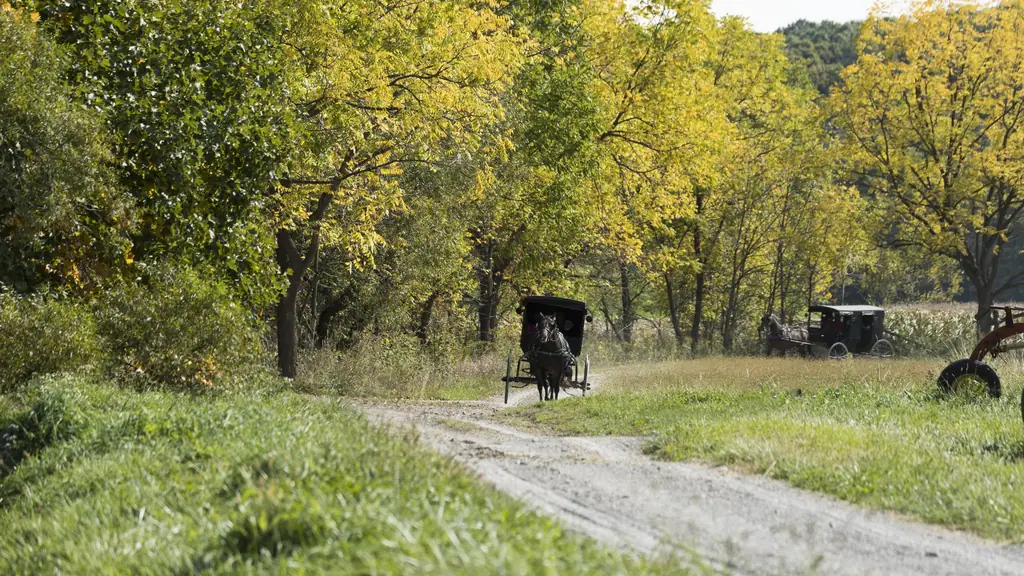
Amishland and Lakes Bike Tour
The Michiana Bicycle Association's two-day tour rolls through the Amish farm country and natural lakes of LaGrange County in Indiana's far northeast corner, based at the county 4-H Fairgrounds with camping from Thursday night on. Routes run 22 to 100 miles on Saturday and 23 to 50 on Sunday over smooth, quiet, tandem-friendly roads shared with horse-drawn buggies, past Amish bakeries and homemade ice cream parlors. SAG stops are stocked, and Saturday finishers get post-ride ice cream and pie. Its reputation as one of the friendliest rides in the Midwest draws families, women's groups, regional clubs, and a large tandem contingent.
Event website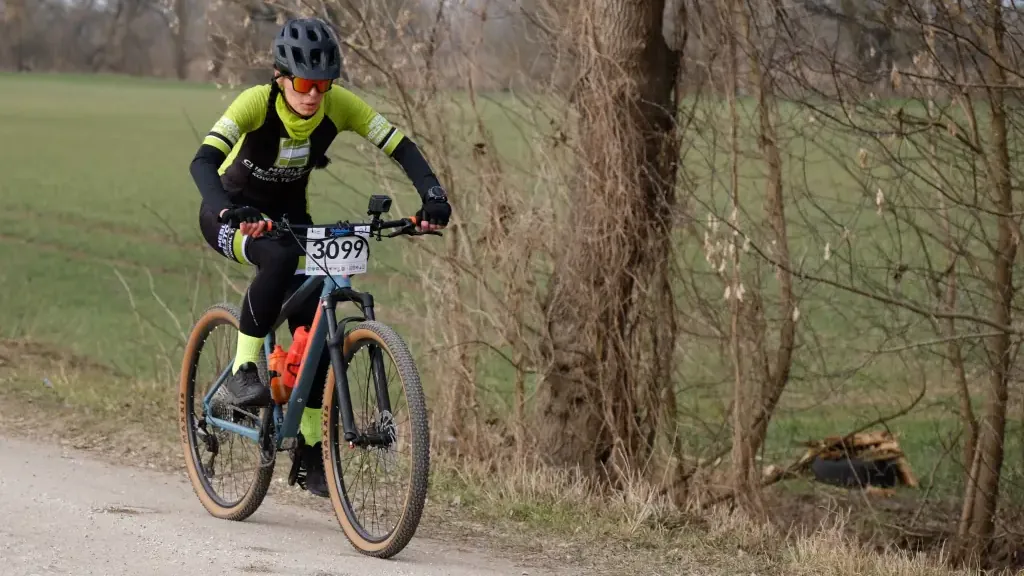
Gravel Grovel
Indiana's original gravel race closes the Midwest calendar each November in the hills around Norman and the Hoosier National Forest. The 100k course climbs about 4,300 feet on a mix of gravel, pavement, and a few miles of trail; the 42-mile route traverses the Charles C. Deam Wilderness, and 30-mile, relay, tandem, junior, and e-bike categories make it as approachable for first-timers as it is serious at the pointy end. Late-November weather — anything from sun to mud to snow — is part of the event's identity. Now produced by the long-running DINO race series, it remains the definitive way to sample southern Indiana's backcountry.
Event website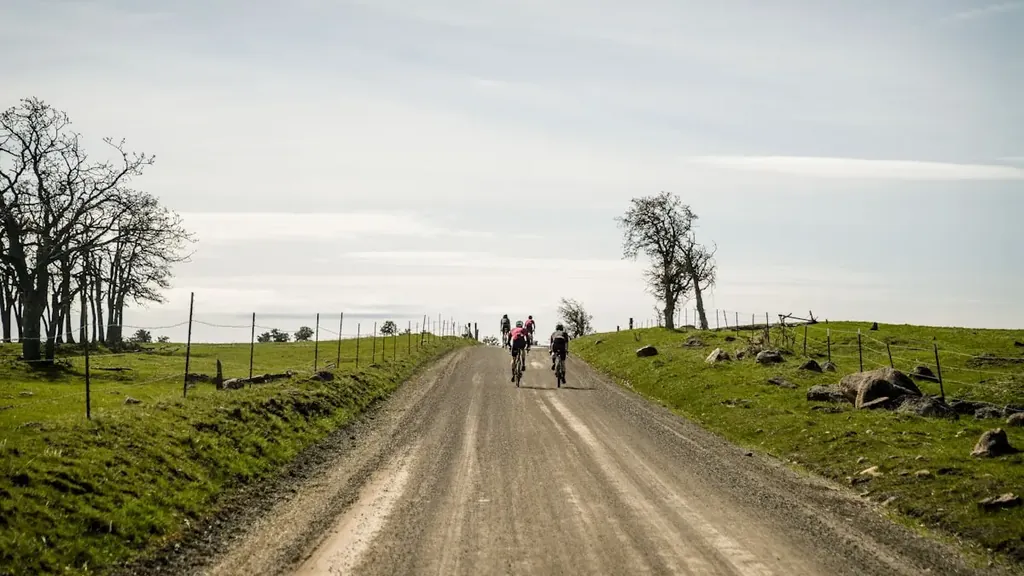
Dust Bowl 100
In year six, the Dust Bowl 100 has become Indiana's premier gravel race: capped at 1,400 riders, and the 2025 edition sold out in two days. Courses of 44, 63, and 100 miles roll out of tiny Eminence, 30 minutes west of Indianapolis, through farm fields, wooded creek valleys, and lightly traveled gravel backroads, crossing seven historic bridges including century-old covered spans. The full course packs about 60 miles of gravel and 3,500 feet of climbing, with two off-road adventure sectors for good measure. Zipp, the Indianapolis-based wheel maker, is the presenting sponsor, and the weekend opens with a free Friday-night kids race.
Event websiteIndiana E-bike Law and Insurance FAQ
- What are the e-bike laws in Indiana?
- Indiana adopted the three-class framework through Indiana HB 1236, effective July 1, 2019, and keeps one of the lightest rulebooks in the Midwest. A compliant e-bike, with fully operable pedals and a motor of not more than 750 watts, is not a motor vehicle: no license, no registration, no insurance, no title. Riders must be 15 to operate a Class 3, and Class 3 riders under 18 wear helmets.
- Do Class 1, Class 2, and Class 3 e-bikes need insurance in Indiana?
- Insurance is your choice in Indiana. Class 1 assists only while pedaling and cuts off at 20 mph, Class 2 may run on throttle alone but cannot assist past 20 mph, and Class 3 is pedal-assist only up to 28 mph with no throttle. Operators of all three classes are exempt from Indiana's financial responsibility chapter. A standalone Velosurance policy takes that job on, starting around $9 per month.
- What does bicycle and e-bike insurance cover in Indiana?
- A standalone Velosurance policy covers theft, accidental and crash damage, and damage in transit, with optional liability and medical payments coverage. Indiana requires no e-bike coverage, so the policy answers the risks the state leaves with you, from a bike stolen in Indianapolis to crash damage on a greenway. Policies start around $9 per month.
- What are Indiana's age and helmet rules for Class 3 e-bikes?
- Fifteen is the operating floor: no one under 15 may operate a Class 3, the pedal-assist-only class that assists up to 28 mph, though younger kids may ride as passengers on one designed to carry them (IC 9-21-11-13.1). Every Class 3 operator or passenger under 18 wears a CPSC- or ASTM-rated helmet. Indiana also skipped the model law's speedometer requirement, so a Class 3 needs no speedometer here.
Indiana e-bike laws explained: classes, age limits, and what changes next.



Why Velosurance is best for your bicycle
Not all types of insurance are created equal. Velosurance levels the playing field by offering stand-alone bicycle coverage, where claims won't affect your homeowner's or renter's policy premiums.
| Policy Coverage |  | Homeowner/Renters Policy |
|---|---|---|
| Insured at Full Value | Yes | Possibly |
| Crash Damage | Yes | No |
| Theft Coverage | Yes | Limited |
| Theft by Force | Yes | No |
| Theft of Accessories | Yes | Limited |
| Theft Away From Home | Yes | Possibly |
| Uninsured Motorist | Yes | No |
| Personal Liability | Yes | Possibly |
| Permissive Use Policy | Yes | No |
| Replacement Rental | Yes | No |
| Event Fee Return | Yes | No |
| Cycling Apparel Coverage | Yes | No |
| Medical Payments | Yes | Possibly |
| Racing Coverage | Yes | No |
| E-bikes | Yes | No |
| Coverage in-transit | Yes | No |
| USAC, USAT and IMBA Member Discount | Yes | No |
| FREE INSTANT QUOTE |
Not all insurance policies provide the same level of protection, and many people only discover gaps in their coverage after filing a claim. We’ve done the hard work of reviewing the fine print. To see how plans compare, check out our insurance comparison.
Client satisfaction is our #1 goal. Here's what our clients say about Velosurance


Velosurance really stepped up and put me at ease. The claim was fast and easy. I am insuring all my bikes now.

Check out Velosurance reviews to see what people are saying about us.
Indiana's best bicycle and e-bike insurance
No matter where your adventures take you, protect your bicycle and yourself from the unexpected with America's best bike insurance.