
TL;DR:
- Illinois is an at-fault state with a 51% bar: at 50% at fault you recover half, and at 51% you recover nothing.
- Minimum auto liability limits are $25,000 per person, $50,000 per crash, and $20,000 for property damage.
- You have two years to sue for injuries and five for bike damage, but only one year to sue a city, county, or park district or to file notice of a claim against the State.
- Every Illinois auto policy carries at least $25,000 per person of uninsured motorist coverage, and a minimum-limits policy carries no underinsured motorist coverage at all.
- Drivers must give at least three feet and change lanes when one is available; opening a door into traffic violates section 11-1407 of the Illinois Vehicle Code.
Who Pays After a Crash in Illinois
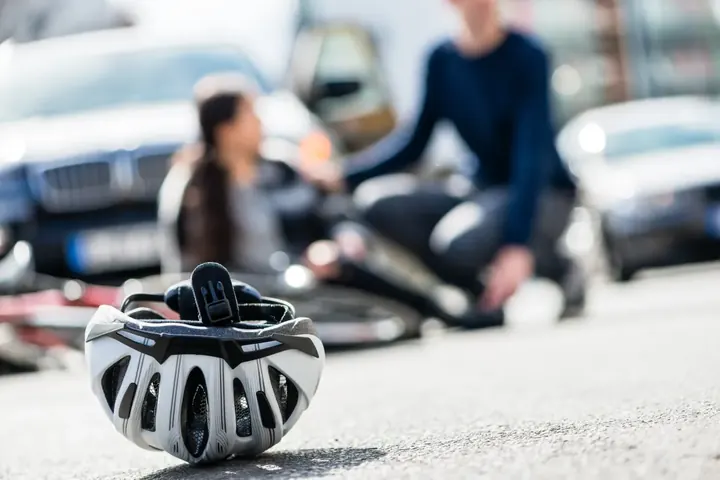
Illinois is an at-fault state. The driver who caused the crash pays, through the liability policy that section 7-601 of the Illinois Vehicle Code requires on every motor vehicle. There is no personal injury protection here and no injury threshold to clear before you can bring a claim.
Section 7-203 sets the minimums at $25,000 for one person's injuries, $50,000 for everyone hurt in the crash, and $20,000 for property damage. Shoulder surgery with rehab costs $15,000 to $40,000, so one operation can exhaust a minimum-limits policy before lost income enters the claim.
Your bike and gear are paid from the driver's $20,000 property limit and your injuries from the bodily injury limit, usually in one settlement after treatment ends. Until then your health plan pays, and you carry its deductible and copays.
Medical payments coverage on an Illinois auto policy is optional. The Illinois Department of Insurance describes it as covering you and your family members if struck by a vehicle while walking or while riding in another vehicle. Cycling is not named in that description, so ask your auto insurer in writing whether yours applies on a bike.
If nobody in your household insures a car, that leaves the driver's liability coverage, your health plan, and whatever you carry on the bike itself.
Fault and How It Reduces a Claim
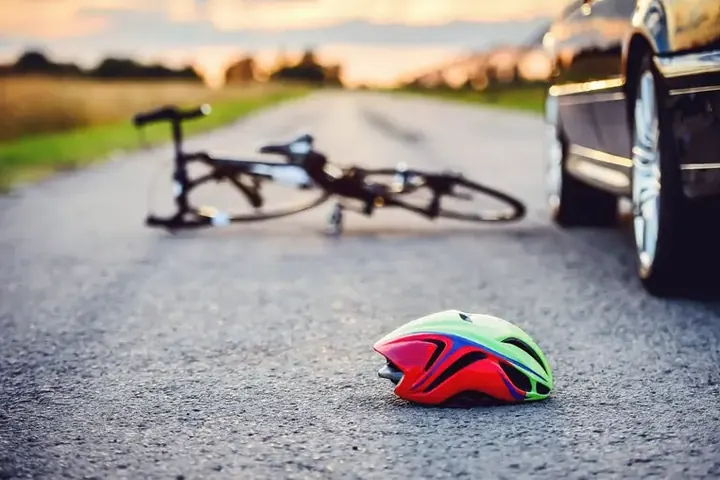
Illinois sets the line at 51%. Under section 2-1116 of the Code of Civil Procedure, you are barred from recovering if your fault is more than 50% of the cause of the injury. At 50% or less, your damages are cut in proportion to your share. A rider found 50% at fault for a $100,000 loss collects $50,000. At 51%, the same rider collects nothing.
Section 11-1502 of the Vehicle Code gives a cyclist all the rights and duties of a driver, and an adjuster will read the bicycle article looking for a duty you missed:
- Lane position. Section 11-1505 requires a rider slower than traffic to keep as close as practicable and safe to the right edge. The exceptions cover passing, left turns, hazards, and any lane too narrow for a bike and a vehicle to travel safely side by side.
- Lights. Section 11-1507 requires a white front lamp visible from 500 feet at night and a red rear reflector, or a red rear lamp visible from 500 feet.
The driver has a duty too: section 11-1003.1 requires every driver to exercise due care to avoid colliding with a person on a bicycle.
When more than one party caused the crash, section 2-1117 makes every liable defendant responsible for all of your medical expenses. For the rest of your damages, only a defendant carrying 25% or more of the total fault can be made to pay the full amount.
Helmets are an open question. Illinois has no statewide bicycle helmet law, and no statute says whether riding without one can be used to reduce your damages.
Hit-and-Run and Uninsured Drivers

Section 143a of the Illinois Insurance Code puts uninsured motorist coverage into every auto liability policy, at no less than $25,000 per person and $50,000 per crash. The minimum cannot be rejected. Under section 143a-2 the coverage matches your own bodily injury liability limits unless you turned down the higher amount in writing, so check the declarations page.
The statute protects insureds who are legally entitled to recover from the owner or operator of an uninsured or hit-and-run vehicle, and does not require that you be in a car. Who counts as an insured away from the car is set by the policy, so confirm that yours follows you onto a bike.
For a driver who flees, section 143a names hit-and-run vehicles but sets no physical contact condition and no reporting deadline for injury claims. Both are left to the policy, so read its hit-and-run definition and notice clause. The Department of Insurance tells policyholders to report a hit-and-run to police immediately and warns that an insurer could deny a claim without a police report.
Section 143a-2 requires underinsured motorist coverage only when your uninsured motorist limits are higher than the minimum, and it pays your limit minus what the at-fault driver's insurer paid. A policy at $25,000 and $50,000 carries none, and limits on two cars cannot be added together.
None of this pays for the bike. The property version of the coverage applies to the motor vehicle described in the policy, and it pays nothing when the driver cannot be identified. Two things to check in a bike insurance policy: whether it offers uninsured motorist coverage of its own, and whether crash damage is covered no matter who hit you.
Dooring and Passing Laws
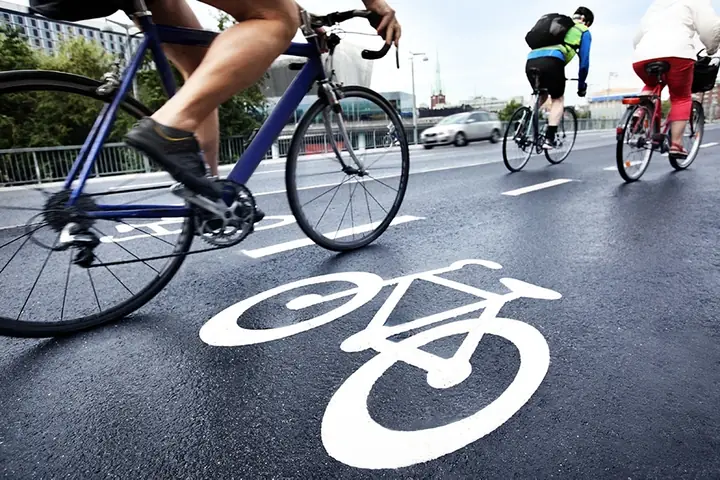
Section 11-1407 of the Vehicle Code is the dooring statute. No person shall open a vehicle door on the side available to moving traffic unless and until it is reasonably safe and can be done without interfering with other traffic, or leave that door open longer than necessary to load or unload passengers. It says "person," so it reaches a rideshare passenger as well as a driver.
Passing is governed by section 11-703, most recently amended by Public Act 104-260, effective August 15, 2025. A driver overtaking a bicycle must change into another lane going the same direction when one is available and the move is practicable, and in every case must leave a safe distance of not less than three feet until safely past.
The harshest provision is subsection (e). Driving unnecessarily close to, toward, or near a cyclist in a reckless manner is a Class A misdemeanor, and a Class 3 felony when it causes great bodily harm or permanent disability or disfigurement.
E-bikes
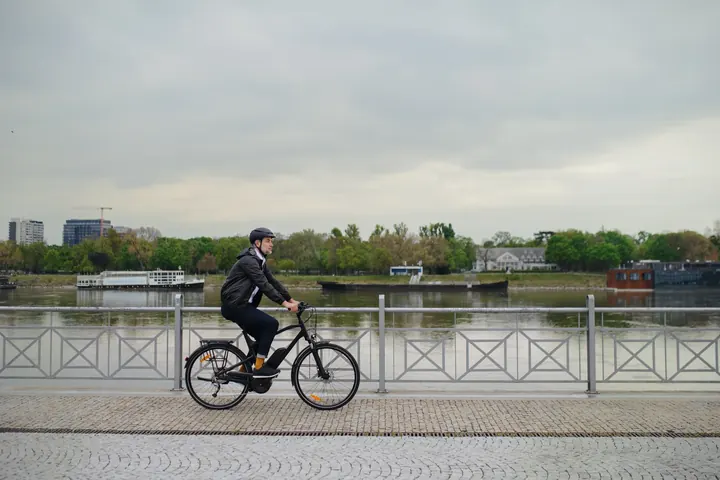
Section 1-140.10 of the Vehicle Code defines a low-speed electric bicycle as a bike with fully operable pedals and an electric motor of less than 750 watts. Class 1 assists only while you pedal and stops at 20 mph. Class 2 has a motor that can propel the bike without pedaling and cannot assist at 20 mph. Class 3 assists only while you pedal, stops at 28 mph, and must carry a speedometer.
Section 1-146 excludes a low-speed electric bicycle from the definition of a motor vehicle, and section 11-1517 applies the bicycle rules to it. In a crash you stand where any cyclist stands: the same 51% bar and the same deadlines. Three rules are specific to e-bikes. You may not ride one on a sidewalk. A Class 3 rider must be at least 16. And the bike must carry a permanent label showing its class, top assisted speed, and motor wattage.
The law changes on January 1, 2027. Public Act 104-854, signed August 26, 2026, sets a minimum age of 15 for Class 1 and Class 2 and takes most e-bike regulation away from cities and counties. It also draws a hard outer line: any electric bicycle that does not meet the low-speed definition becomes a motor driven cycle, which requires a valid driver's license and is barred from bike lanes and bike paths.
One question has no answer in Illinois statute or Department of Insurance guidance: whether an auto policy's uninsured motorist or medical payments coverage applies to you on an e-bike. Get your insurer's position in writing. In a bike insurance policy, check that your e-bike's class is covered and that the motor matches its label.
Deadlines

Illinois gives you two years to sue a driver, but a claim that involves a city, a county, a park district, or the State can be lost in one.
- At the scene
Notify Police Immediately
Section 11-407 of the Vehicle Code requires the driver in a crash involving injury or death, or more than $1,500 in property damage, to notify police by the fastest available means when no officer is present. Call yourself too, and get the report number.
- One year
Lawsuit Against a Local Government
If a city bus, a county truck, or a defect in a local street is involved, section 8-101 of the Local Governmental and Governmental Employees Tort Immunity Act requires the lawsuit itself to be filed within one year of the injury. The Act has no separate notice-of-claim step, so nothing short of filing suit stops the clock.
- One year
Notice of a Claim Against the State
A claim against the State of Illinois or a state university goes to the Court of Claims. Section 22-1 of the Court of Claims Act requires written notice, filed with both the Attorney General and the Clerk of the Court of Claims within one year. Miss it and section 22-2 bars the injury claim. Filing the claim itself within that year satisfies the notice rule.
- Two years
Injury or Wrongful Death Lawsuit
Section 13-202 of the Code of Civil Procedure gives you two years to sue for personal injury. A wrongful death action must be filed within two years of the death.
- Five years
Bike and Gear Damage Lawsuit
Section 13-205 allows five years to sue for damage to personal property, which covers the bike and gear. The one-year rule for local governments still applies to property claims against them.
Suing a local government over a road defect raises a second problem. Section 3-102 of the Tort Immunity Act limits the duty to maintain property to people the entity both intended and permitted to use it. In Boub v. Township of Wayne in 1998, and again in Alave v. City of Chicago in 2023, the Illinois Supreme Court held that a cyclist on a road the local government had not marked or signed for bicycle use was a permitted user but not an intended one, and was owed no duty. House Bill 2454, which would make cyclists intended users wherever they are allowed to ride, was sent back to the House Rules Committee in March 2026 and has not passed.
For a rider under 18, section 13-211 allows a personal injury lawsuit within two years after the 18th birthday. That section refers to the Code of Civil Procedure's own limitation periods, so do not count on it against a local government.
Evidence to Preserve
Evidence in Illinois has two jobs: keeping your percentage under 51% and identifying who owns the road or vehicle involved.
- The police report number and the department that took it.
- Lane width. A photo with a reference object shows whether the lane was too narrow to share side by side, the point at which section 11-1505 let you ride away from the right edge.
- The e-bike label showing class, top assisted speed, and wattage.
- Bike lane markings and bike route signs at the exact spot, if a pothole, grate, or other road defect caused the crash. They decide whether a local government owed you a duty.
- Who owns the road or vehicle. A city street and a state route mean different courts and different one-year requirements.
- Your auto policy's declarations page, showing the uninsured motorist limit and whether a higher limit was rejected.
- The damaged bike, unrepaired, with receipts for the bike and gear.
Coverage for Illinois Riders

Illinois law leaves a rider exposed in specific places: a driver carrying the $25,000 minimum, an auto policy whose uninsured motorist coverage stops at that same $25,000 and includes no underinsured coverage, a 51% bar that can turn a shared-fault crash into no recovery at all, and a bike that no uninsured motorist property coverage pays for. The Velosurance policy offers the coverages discussed above.
Uninsured Motorist covers losses beyond medical bills, such as lost wages, when the at-fault driver cannot pay.
Medical Payments covers the deductible and out-of-pocket costs your health plan leaves regardless of the driver's insurance. Choose a limit close to your plan's out-of-pocket deductible.
Liability is the coverage for the day the percentages run against you. If you are blamed for a crash, it covers injury to other people and damage to their property, including the cost of defending a covered lawsuit, with limits from $25,000 to $500,000.
Crash damage to the bike is part of the policy itself: stated value with no depreciation, subject to the deductible whoever was at fault. Class 1, Class 2, and Class 3 e-bikes are covered like conventional bikes.
For any of these coverages to apply, it must be on the policy before the crash. Get a quote and add them before your next ride.
Bicycle Accident Attorneys in Illinois
Velosurance legal partners who represent injured cyclists in Illinois.

Frequently Asked Questions
- How does the 51% rule work in an Illinois bicycle accident claim?
- You recover damages in Illinois as long as your share of the fault is 50% or less, and the award is reduced by that share. A rider 50% at fault for a $100,000 loss collects $50,000. The caveat worth knowing: at 51% the recovery is zero, so the evidence that sets your percentage decides the claim.
- How long do you have to file a bicycle accident claim in Illinois?
- You have two years to file an injury lawsuit in Illinois and five years to sue over damage to your bike. One thing to watch: a lawsuit against a city, county, or park district must be filed within one year, and a claim against the State needs written notice to the Attorney General and the Clerk of the Court of Claims within one year.
- How does uninsured motorist coverage help an Illinois cyclist?
- Every Illinois auto policy includes uninsured motorist coverage of at least $25,000 per person and $50,000 per crash, and it protects insureds hurt by uninsured and hit-and-run drivers. Report a hit-and-run to police immediately. With one wrinkle: whether the coverage follows you onto a bike, and what a hit-and-run claim requires, depend on your policy wording, so confirm both with your insurer in writing.
- What strengthens a claim against an Illinois city for a road defect that caused a bike crash?
- A road-defect claim against a local government is strongest where the street carries bike lane markings, bike route signs, or other physical signs that bicycles were intended there, so photograph them at the exact spot. The caveat worth knowing: on a street with no such markings, Illinois courts have treated cyclists as permitted but not intended users, which can defeat the claim, and the lawsuit must be filed within one year.
- How are Class 1, Class 2, and Class 3 e-bikes treated after a crash in Illinois?
- Illinois treats Class 1, Class 2, and Class 3 low-speed e-bikes as bicycles, so the same 51% rule and filing deadlines apply. Class 1 is pedal assist to 20 mph, Class 2 has a motor that can propel the bike by itself and cannot assist at 20 mph, and Class 3 is pedal assist to 28 mph for riders 16 and older. The caveat worth knowing: from January 1, 2027, an electric bicycle outside the low-speed definition is a motor driven cycle that requires a driver's license.
Sources
- 735 ILCS 5/2-1116 and 5/2-1117 (comparative fault, joint liability)
- 735 ILCS 5/13-202, 5/13-205, and 5/13-211 (limitations for injury and property damage, minors)
- 740 ILCS 180/2 (Wrongful Death Act, two-year limit)
- 745 ILCS 10/8-101 (Local Governmental and Governmental Employees Tort Immunity Act, one-year limitation)
- 745 ILCS 10/3-102, 10/1-204, and 10/1-206 (duty to intended and permitted users, definitions of injury and local public entity)
- 705 ILCS 505/22, 505/22-1, and 505/22-2 (Court of Claims Act: filing periods, notice)
- Boub v. Township of Wayne, 183 Ill. 2d 520 (1998)
- Alave v. City of Chicago, 2023 IL 128602
- Illinois House Bill 2454, 104th General Assembly, bill status (intended users of roadways)
- 625 ILCS 5/7-203 and 5/7-601 (minimum liability limits, required liability insurance)
- 215 ILCS 5/143a and 5/143a-2 (uninsured, hit-and-run, and underinsured motor vehicle coverage)
- 625 ILCS 5/11-407 (immediate notice of crash)
- 625 ILCS 5/11-703 (overtaking a bicycle, three feet, as amended by P.A. 104-260)
- 625 ILCS 5/11-1407 (opening and closing vehicle doors)
- 625 ILCS 5/11-1003.1 (drivers to exercise due care)
- 625 ILCS 5/11-1502, 5/11-1505, and 5/11-1507 (bicycle rights and duties, lane position, lights)
- 625 ILCS 5/1-140.10, 5/1-146, and 5/11-1517 (low-speed electric bicycles)
- Illinois Public Act 104-854 (Senate Bill 3484), effective January 1, 2027
- Illinois Department of Insurance, Auto Insurance Shopping Guide
- Illinois Department of Insurance, Filing a Claim with Your Own Insurance Company
This guide is general information about Illinois law as of the review date above. It is not legal or insurance advice, and it does not create an attorney-client relationship. Laws change and every crash turns on its own facts: talk to a licensed Illinois attorney about your situation.