


Missouri cycling in numbers
50%
Bike ownership
780+
Miles of trails
93
State parks
25
Bike friendliness score
Missouri from a cyclist's perspective
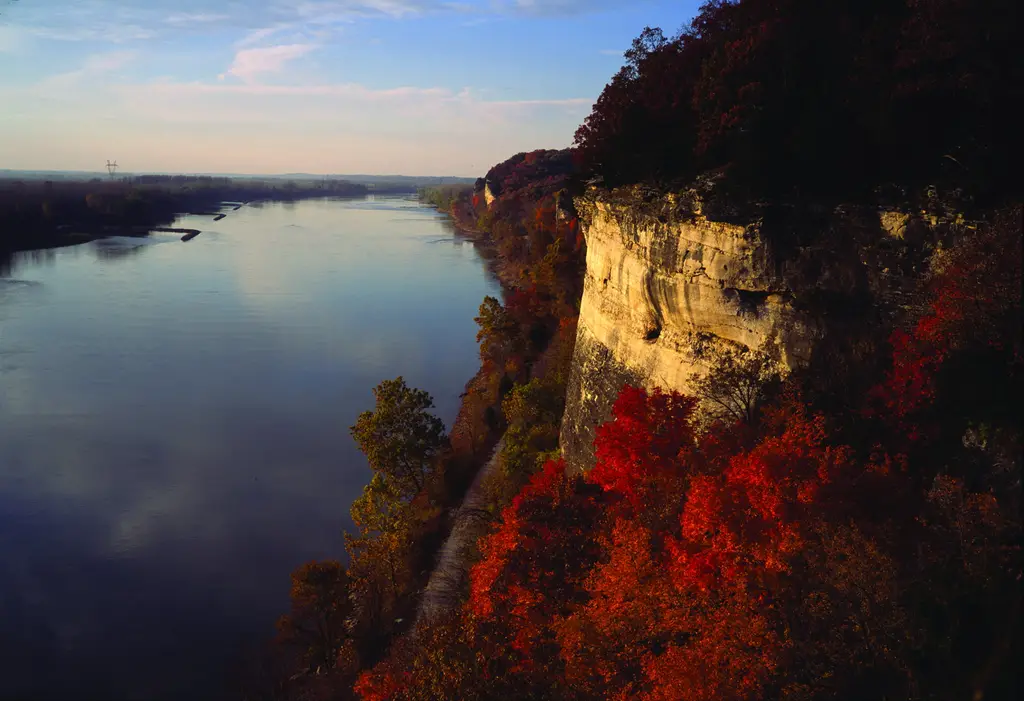
Missouri's cycling reputation rests on one ride: the Katy Trail, 240 miles of crushed limestone tracing the Missouri River from Machens to Clinton — the longest developed rail-trail in the United States. No other state owns anything like it. Roughly 400,000 people ride, walk, or tour some piece of it every year, and the small towns along the corridor have rebuilt their main streets around trail traffic. In a state that rarely tops cycling rankings, the Katy is a genuinely world-class asset.
The corridor rewards more than a single pass. The Rocheport tunnel — the only tunnel the MKT railroad bored on its entire 900-mile route — the 408-foot lift-span rail bridge at Boonville, and the wine towns of Augusta and Hermann give the trail a texture most flat rail-trails lack. To the west, the Rock Island Spur adds 47 miles from Pleasant Hill to Windsor, joining the Katy to form a 288-mile network; when the rest of the Rock Island corridor is developed, the combined system will run about 457 miles. Columbia's MKT spur means you can roll from a downtown coffee shop to the Katy without crossing a single street.
The Ozarks are the other Missouri. South of the river the land folds into cherty ridges and creek bottoms, and the riding turns serious: the Berryman Trail's 24-mile loop through Mark Twain National Forest is an IMBA Epic, Castlewood State Park stacks 16 miles of river-bottom flow and bluff-top tech half an hour from downtown St. Louis, and Two Rivers Bike Park near Springfield offers 14 purpose-built miles that are free to ride. Gravel riders may have it best of all — routes like the 250-mile Butterfield Stage Experience follow rural roads that see more turkeys than trucks.
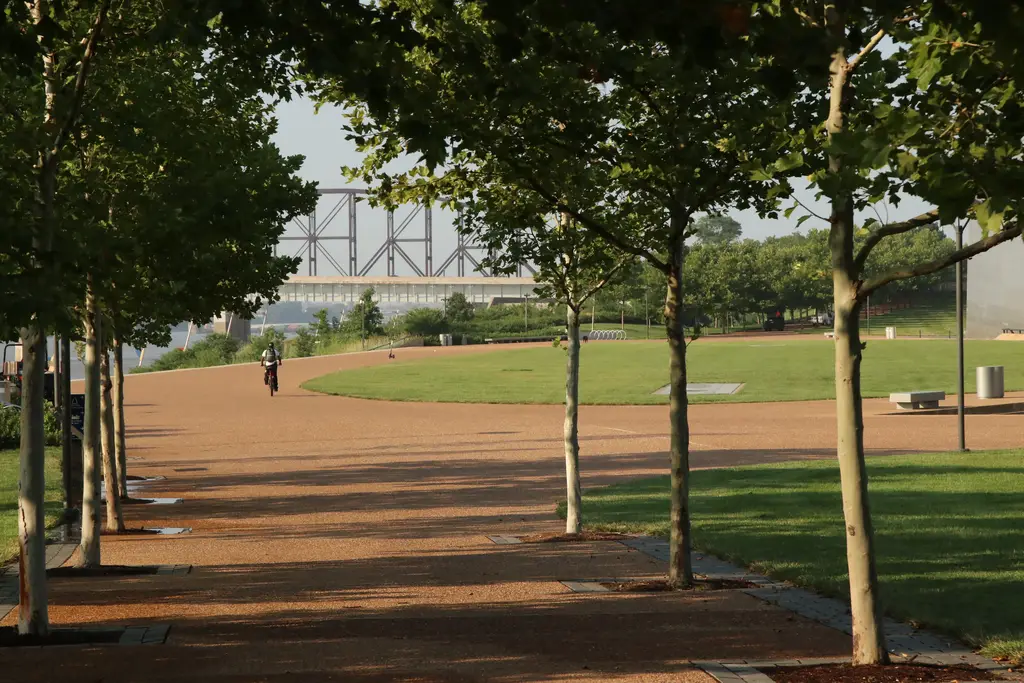 City riding is improving from a low base. St. Louis's Great Rivers Greenway has built 140 miles of greenways across 120 municipalities — the Gateway Arch grounds, the Riverfront Trail, and the car-free Old Chain of Rocks Bridge among them — on its way to a planned 600-mile network. Kansas City is adding bike lanes but still rides like a work in progress. Columbia is the standout: a League of American Bicyclists Silver-level community where the MKT corridor works as a genuine transportation spine, not a weekend amenity.
The honest caveat: the League of American Bicyclists ranked Missouri 49th of 50 states in 2024, and it remains one of five states without a statewide active-transportation plan. Rural shoulders are thin, drivers are fast, and July rides like a sauna — St. Louis heat indexes average around 102°F. Ride the river valleys early, save the Ozarks for fall, and Missouri gives you more world-class miles than its ranking will ever admit.
Missouri E-bike Laws
Three classes, zero paperwork, and one Katy Trail catch. Here is where Missouri stands on e-bikes.
Missouri adopted the standard three-class framework in 2021 and treats a compliant e-bike - fully operable pedals, motor of less than 750 watts - as a bicycle: no license, no registration, no insurance, no title. The rule that actually bites is in the state parks, where assist must cease at 20 mph - so the Katy Trail welcomes Class 1 and Class 2 but not Class 3.
The motor assists only while the rider is pedaling and ceases at 20 mph (RSMo 301.010(15)); legal for all ages.
The motor may propel the bike on throttle alone but cannot assist past 20 mph; legal for all ages.
Assistance only while pedaling, up to 28 mph - and a speedometer displaying mph is required equipment (RSMo 307.194).
RSMo 307.194 exempts e-bike riders from driver-license law by name for every class - that rule stays with gas mopeds.
No registration, no title, no plate - the same statute exempts e-bikes from all of it.
RSMo 307.194 exempts e-bikes from Missouri's financial-responsibility law - coverage is on you.
No one under 16 may operate a Class 3, though they may ride as passengers on one built for it (RSMo 307.194.8); no age floor for Class 1 or Class 2.
Missouri has no e-bike helmet law for any class or age; local ordinances add one in spots - Creve Coeur (all ages), St. Louis County parks (under 17), Columbia (15 and under).
Where You Can Ride
- Roads & bike lanesAll three classes carry the same rights and duties as bicycles wherever bikes ride (RSMo 307.194.1).
- Bicycle & multi-use pathsOpen to all classes where bicycles are permitted; a locality may bar Class 1 or Class 2 only for safety reasons after a public hearing, and may bar Class 3 outright.
- SidewalksAllowed like bicycles outside business districts where the Model Traffic Ordinance applies (RSMo 300.347) - yield to pedestrians and signal before passing; rules are city-by-city.
- State parks & Katy TrailPark trails open to bicycles admit e-bikes whose assist ceases at 20 mph - Class 1 and Class 2 ride the Katy Trail, Class 3 does not, and a 20 mph limit applies to everyone.
- Out-of-class e-motos750 watts or more, or no operable pedals, means the machine is not an electric bicycle - it defaults into motor-vehicle territory with license, registration, and insurance to match.
Effective August 28, 2021 under Missouri SB 176 (2021). Statutes: RSMo 301.010(15), 307.194, 307.180, 300.347; 10 CSR 90-2 (state parks). Cities and park districts can add their own path and trail restrictions — check signage where you ride. Last reviewed July 2026.
Missouri Cycling Weather
Missouri delivers a nine-month riding window: long, mild springs and falls bracket a hot, humid midsummer that is best ridden at sunrise.
Sunny days a year
Riding season
Mar - Nov
Missouri Cycling Destinations
Katy Trail State Park
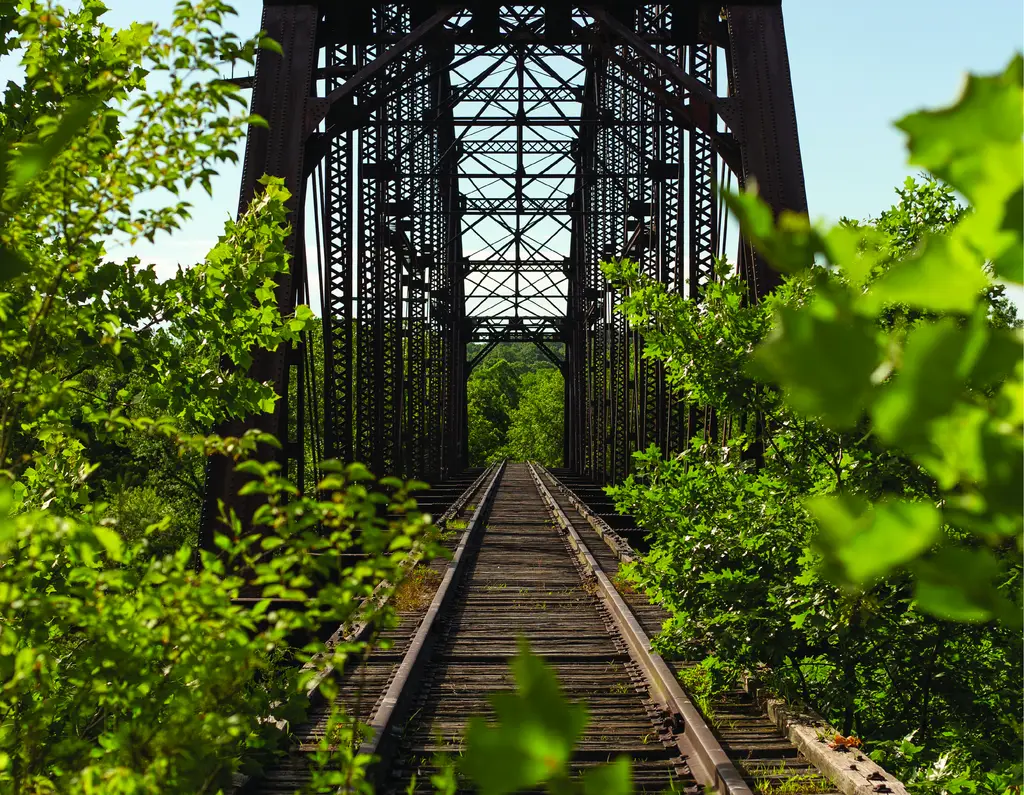
The Katy is the spine of Missouri cycling and the longest developed rail-trail in the country, running 240 miles on the old Missouri-Kansas-Texas railroad bed with 26 trailheads and four restored depots along the way. Most of the route hugs the Missouri River beneath towering limestone bluffs, and the man-made landmarks match the scenery: the 1892 Rocheport tunnel — the only one the MKT bored on its entire 900-mile route — and the 408-foot lift-span rail bridge at Boonville. Between Augusta and Hermann the trail threads the heart of Missouri wine country, where five wineries sit within reach of a single trailhead. More than 20 trailside towns keep B&Bs, cafes, and bike shops within an easy day's spacing, so riders can tour light. The grade never exceeds a gentle rail-line pitch, which makes the full end-to-end achievable for almost anyone with three to five days and a set of wide tires. Spring redbuds and October bluff color are the prime windows.
Rock Island Spur, Rock Island Trail State Park
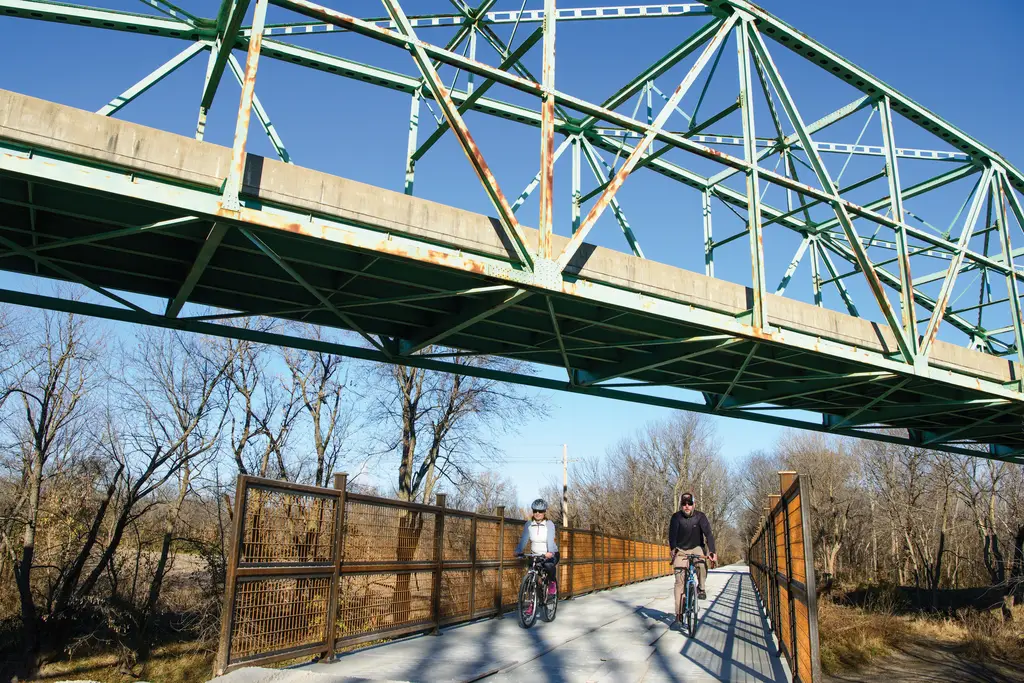
Opened in December 2016 on the former Chicago, Rock Island and Pacific corridor, the Rock Island Spur runs 47.5 miles of crushed limestone from Pleasant Hill — half an hour from Kansas City — to Windsor, where it meets the Katy Trail and turns two trails into a 288-mile network. The scenery is west-central Missouri at its most rural: open prairie-like stretches, farm fields, dense woodland, and a steady rhythm of stream crossings on rehabilitated railroad bridges. Trailheads at Pleasant Hill, Leeton, Chilhowee, and Medford break the ride into manageable segments, and the grade never exceeds 3 percent, so a gravel bike or hybrid handles it comfortably in a long day. The spur is also a designated piece of the American Discovery Trail, and it is the reason Kansas City riders can now pedal a continuous path most of the way across the state. Development continues on the corridor east of Windsor, which will eventually push the combined system to about 457 miles.
Berryman Trail
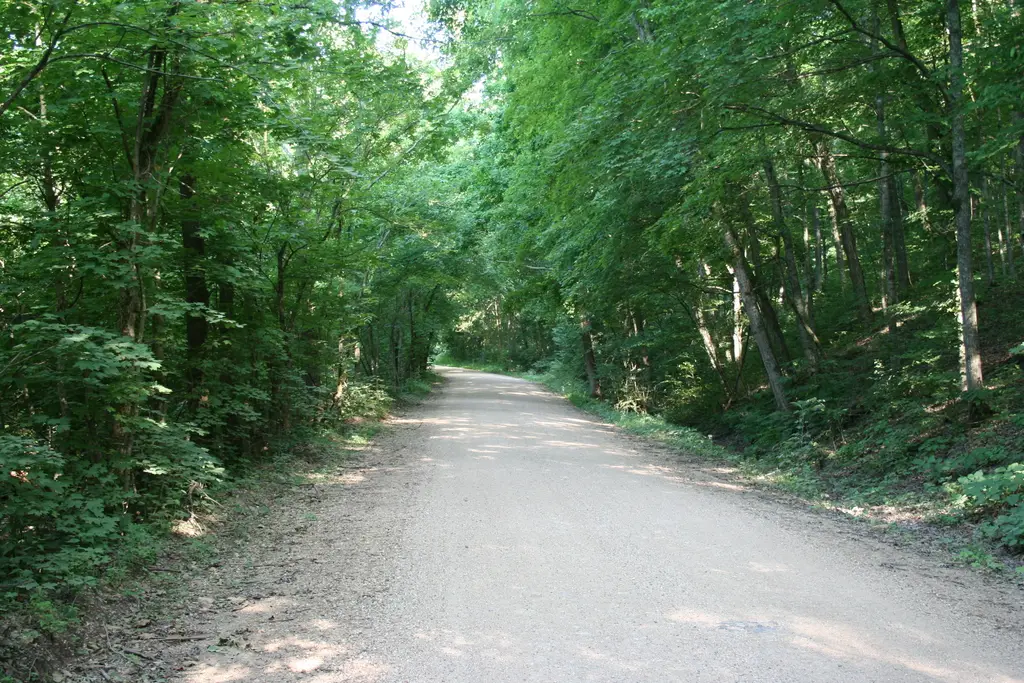
The Berryman is Missouri's marquee backcountry ride: a 24-mile singletrack loop through the Potosi Ranger District of Mark Twain National Forest and one of IMBA's designated Epics. The terrain is classic Ozarks — long sustained climbs and fast, rocky descents between creek bottoms and high cherty ridges, under a canopy of oak, pine, and bottomland hardwood. Elevation swings from 842 to 1,195 feet with grades that touch 16 percent, and riding clockwise buys the longer descents. The trailhead sits at Berryman Campground, the original site of a Civilian Conservation Corps camp that ran from 1937 until World War II, and its eight sites make an easy overnight base. The loop's western half doubles as part of the Ozark Trail's Courtois Section, so stronger riders can link it into much longer point-to-point days. The rocky sections shed light rain, but the dirt stretches dry slowly after storms — fall is the season to circle on the calendar.
MKT Nature and Fitness Trail
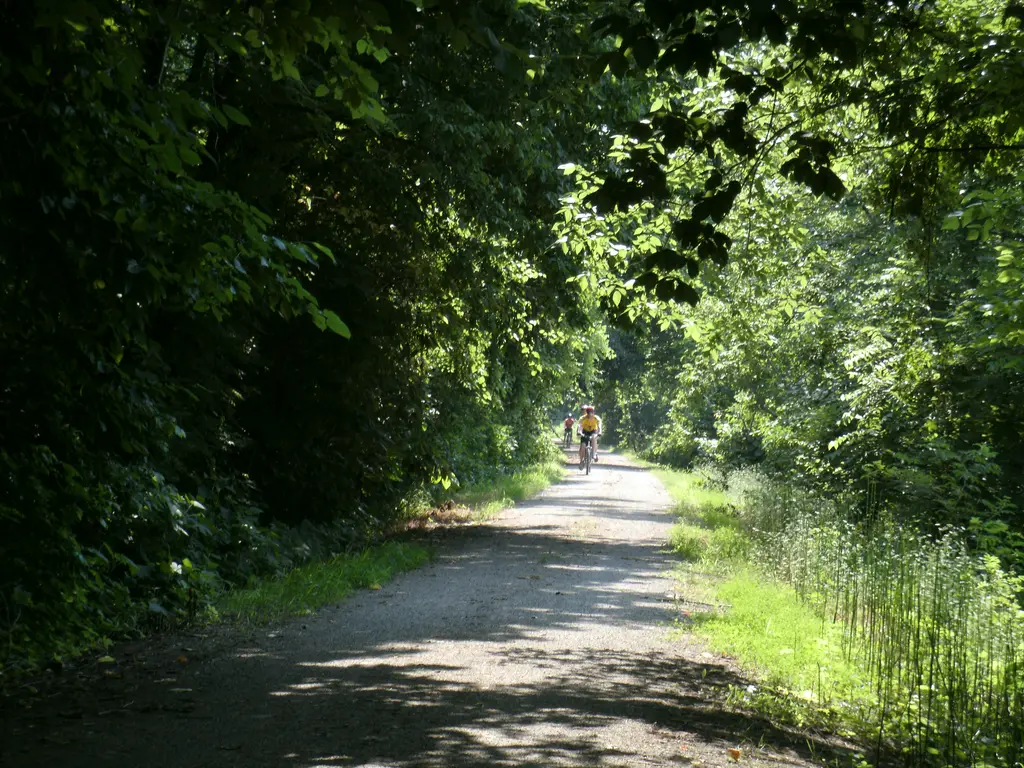
Columbia's MKT Trail is what happens when a college town takes a rail corridor seriously. The 10-foot-wide crushed-limestone path starts downtown at Flat Branch Park and runs 8.9 miles to the Katy Trail near McBaine — and thanks to grade separations funded by the city's park sales tax, riders cover the entire distance without crossing a single street. USA Today's 10Best readers ranked it second in the nation among urban trails in 2016, and it earns the reputation daily: the all-weather surface follows the wooded corridors of Flat Branch, Hinkson, and Perche creeks out of the city and into Missouri River floodplain country. For local riders it is a coffee ride, a commute, and a training loop at once; for visitors it is the launch ramp to Rocheport and the Katy's best bluff-and-river miles. Flat, shaded, and family-friendly, it is the easiest possible introduction to a 240-mile network.
Castlewood State Park
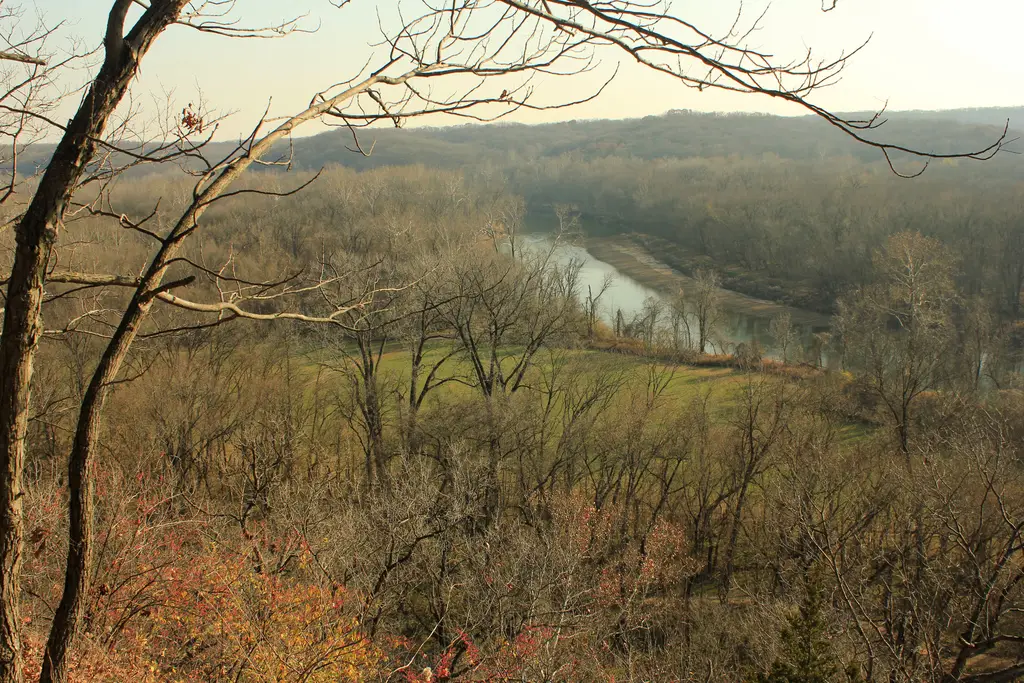
Castlewood is the St. Louis metro's flagship mountain-bike park, packing roughly 16 miles of trail into the Meramec River valley near Ballwin. The riding comes in two distinct flavors: fast, flat, flowy river-bottom singletrack on River Scene and Stinging Nettle, and punchy technical work up top on Grotpeter, Cedar Bluff, Lone Wolf, and the aptly named Rollercoaster. White limestone bluffs rise about 100 feet above the river and deliver the most dramatic overlooks in the region — the River Scene bluff section is one of Missouri's most-reviewed trails for a reason. Cedar Bluff carries the biggest climb in the park at about 550 feet of gain, a legitimate leg-tester half an hour from the Arch. In the 1920s and 30s this was a resort playground for thousands of St. Louisans; today it is the region's busiest after-work venue. River-bottom trails flood and close after heavy rain, so the bluff loops are the wet-season fallback, and connections to the Al Foster and Chubb trails extend the day.
St. Louis Riverfront Trail and the Old Chain of Rocks Bridge
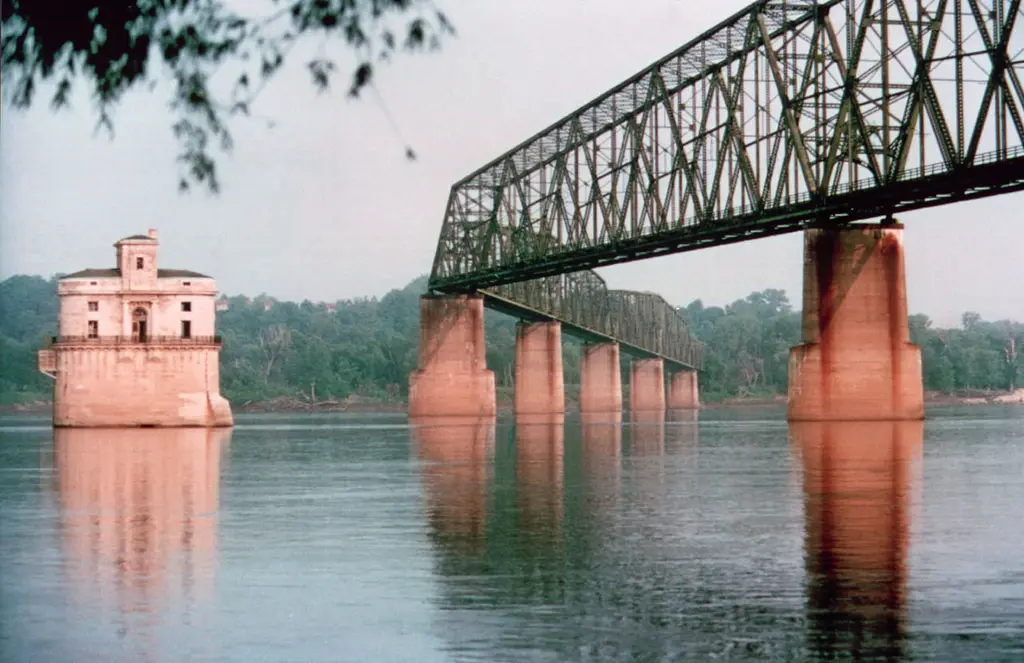
The Riverfront Trail runs about 12 paved miles up the west bank of the Mississippi from the Gateway Arch to the ride's real payoff: the Old Chain of Rocks Bridge, a mile-long 1929 span famous for its 30-degree bend mid-river and its years carrying Route 66 across the Mississippi. Closed to cars and open to bikes and pedestrians, the deck sits more than 60 feet above the water with views of the castle-like intake towers, the Chain of Rocks rapids below, and the downtown skyline behind. The out-and-back from the Arch grounds runs about 24 flat miles, making it the default fitness ride from downtown. This is urban-grit scenery unique among Missouri rides — flood walls, the Merchants rail bridge, and working riverfront — managed as part of Great Rivers Greenway's Mississippi Greenway. Cross the bridge and you connect straight into Illinois's Madison County trail network, which turns an afternoon spin into a two-state ride.
Missouri Cycling Events
From Big BAM's week on the Katy Trail to the Gateway Cup's Labor Day criteriums, Missouri events run from trailside music festivals to championship gravel.
Big BAM on the Katy
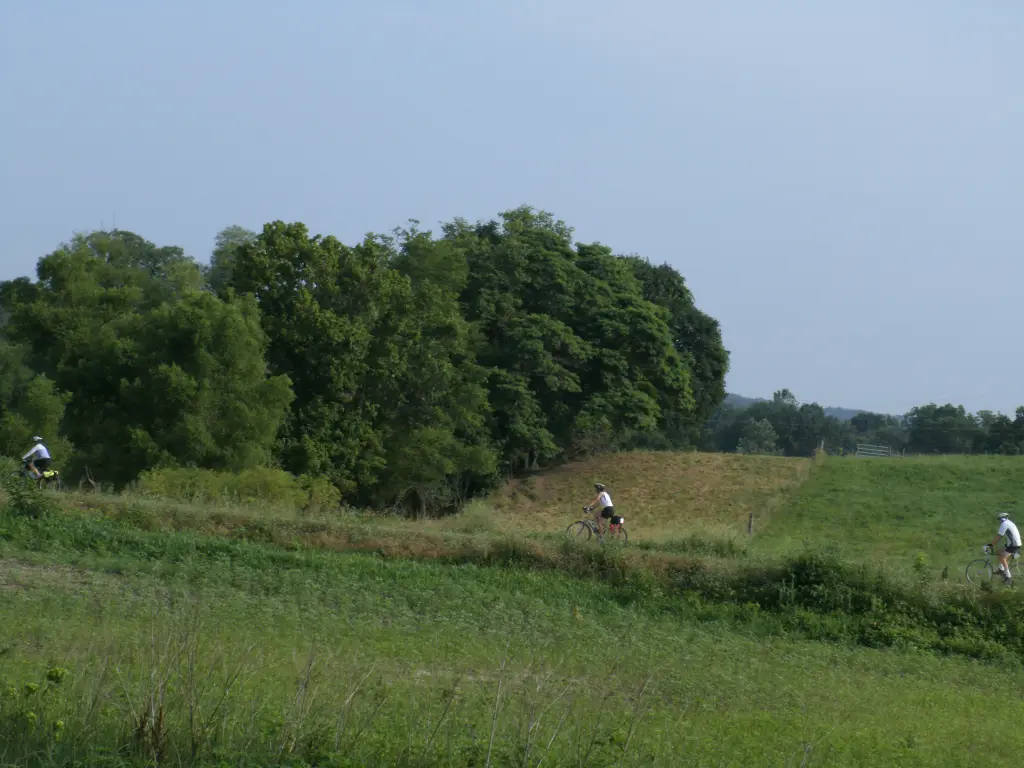
Big BAM — Bicycle Across Missouri — is the state's signature supported tour, founded in 2015 by Missouri Life magazine and now run twice a year along the full length of the Katy Trail. Daily stages of 27 to 48 miles string together the corridor's greatest hits: the Rocheport tunnel, the Boonville lift bridge, wineries, breweries, and restored MKT depot towns. Support is the draw — SAG at the trailheads, an on-course mechanic, gear transport, a shower trailer, and a live concert with a beer tent at every overnight stop. Riders can join for one day, three days, or the whole week, and e-bikes are welcome, which makes it as approachable for first-time tourers and families as for veterans chasing a full crossing of the state.
Event website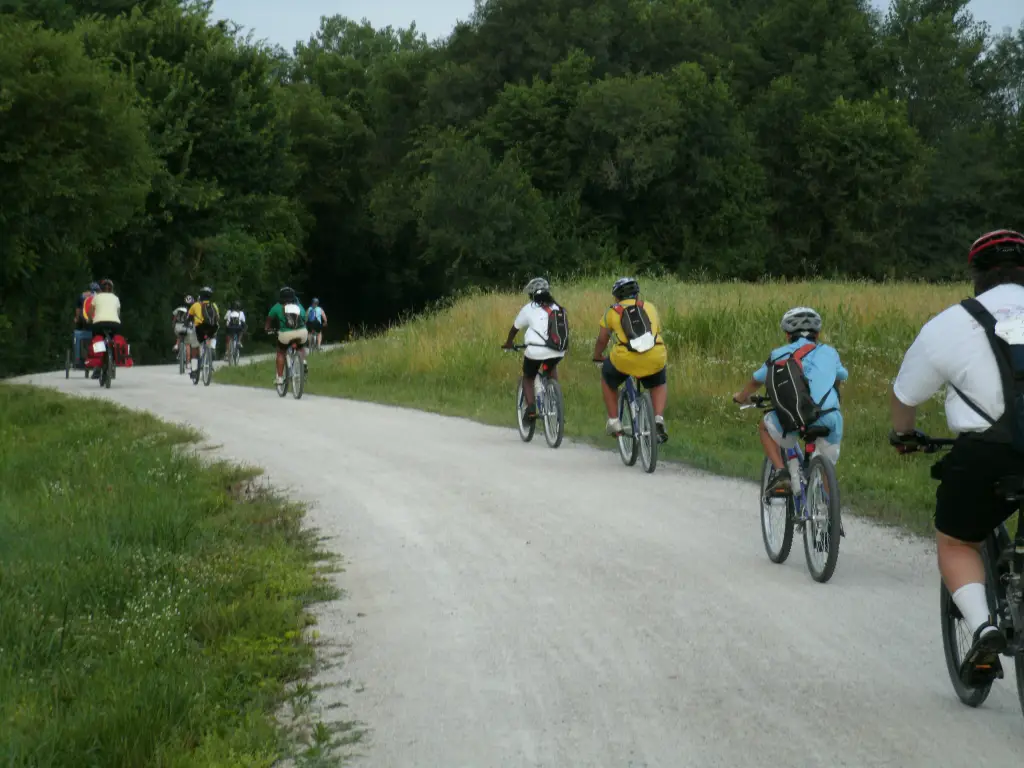
Pedaler's Jamboree
The Pedaler's Jamboree bills itself as a bicycle music festival, and the description is literal: every Memorial Day weekend, thousands of riders roll out of Columbia's Flat Branch Park and hop between live-music stages at the trailside stops of McBaine, Rocheport, and Franklin before the main-stage finale at Kemper Park in Boonville. The route covers 32.7 miles of MKT and Katy Trail each way — out Saturday, back Sunday — all of it flat, shaded, and family-friendly. The weekend rider pass includes gear transport, SAG support, camping at Kemper Park, and a Sunday pancake breakfast, and youth 18 and under ride free. Now approaching two decades of editions, it is mid-Missouri's biggest cycling party, and its founder went on to create Big BAM.
Event website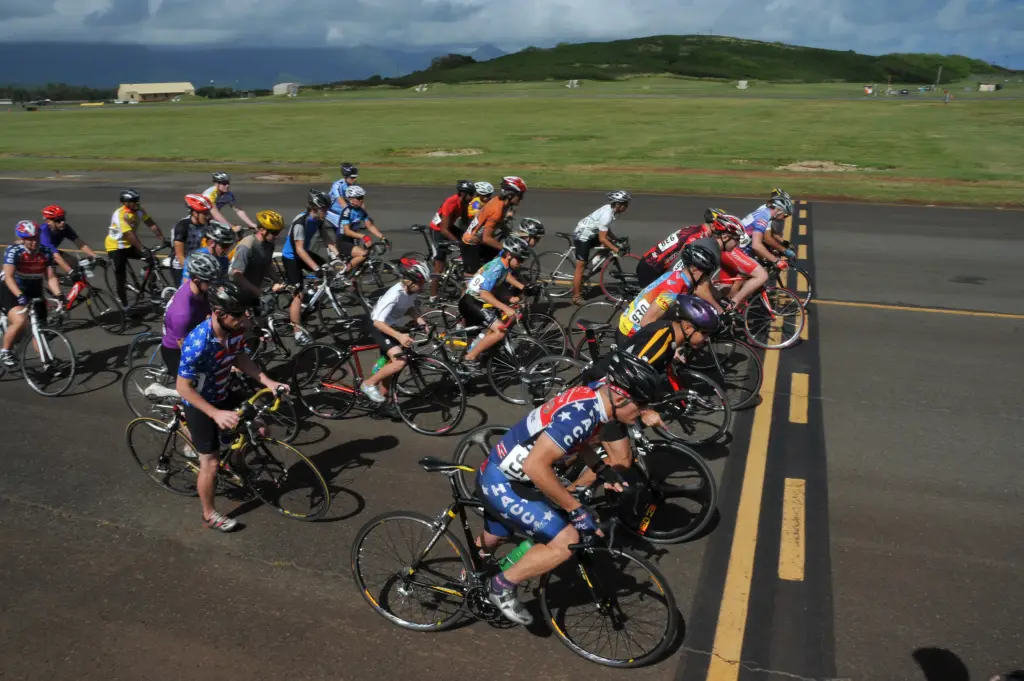
Gateway Cup
For four days over Labor Day weekend, the Gateway Cup turns St. Louis neighborhoods into closed racing circuits: the Tour de Lafayette under the Friday night lights, the Tour de Francis Park, the Giro della Montagna on The Hill, and the Tour de Florissant to close it out. The 2026 edition is the 40th, with nine races a day running from kids' events and Cat 5 novices up to pro fields that average close to 30 mph on one-mile laps. The purse tops $54,000 with equal prize money for the men's and women's pro races, and the Giro della Montagna doubles as the finale of the American Criterium Cup, the top professional criterium series in the country. Tens of thousands of spectators watch from sidewalk cafes and front porches — the biggest cycling weekend in St. Louis, whether you pin on a number or just bring a chair.
Event website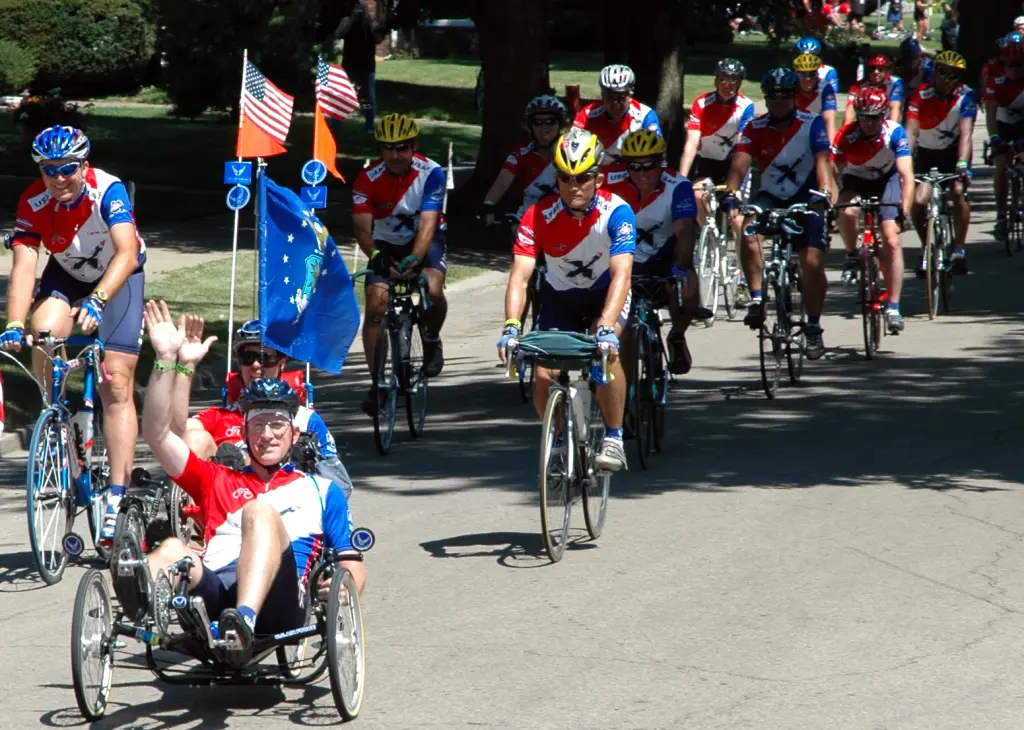
BikeMO
BikeMO is the annual fundraising ride of the Missouri Bicycle and Pedestrian Federation, held each year on the Saturday before Labor Day weekend and running since 2006 — every entry fee funds statewide advocacy for better riding conditions. Routes start and finish in Boonville and roll through the historic Missouri River Valley towns of Rocheport, Blackwater, and Arrow Rock. The ride comes in three flavors: a fully paved metric century with about 3,100 feet of climbing, a flat crushed-limestone Katy Trail option, and a guided history tour of Boonville, so racers, tourers, and families all have a lane. Rest stops in small historic towns and rural low-traffic roads give it a mixed road-and-rail-trail character few charity centuries can match.
Event website
Moonlight Ramble
The Moonlight Ramble is the world's original nighttime bike ride, born in 1964 when a hostel ride leader staged a midnight ride from Union Station and nobody showed up — he tried again the next year, and by the early 1970s thousands were riding. The 2026 edition is the 62nd. On a Saturday night near the August full moon, riders roll through closed St. Louis streets at 11 p.m., choosing a short 7-to-8-mile loop or the full 15-to-16-mile route, every one of them in the commemorative glow-in-the-dark T-shirt that comes with entry. A street festival with live music and food starts at 7 p.m., an after-party follows the finish, and costumes and decorated bikes are tradition. Proceeds benefit Trailnet, the St. Louis walking-and-biking advocacy nonprofit.
Event website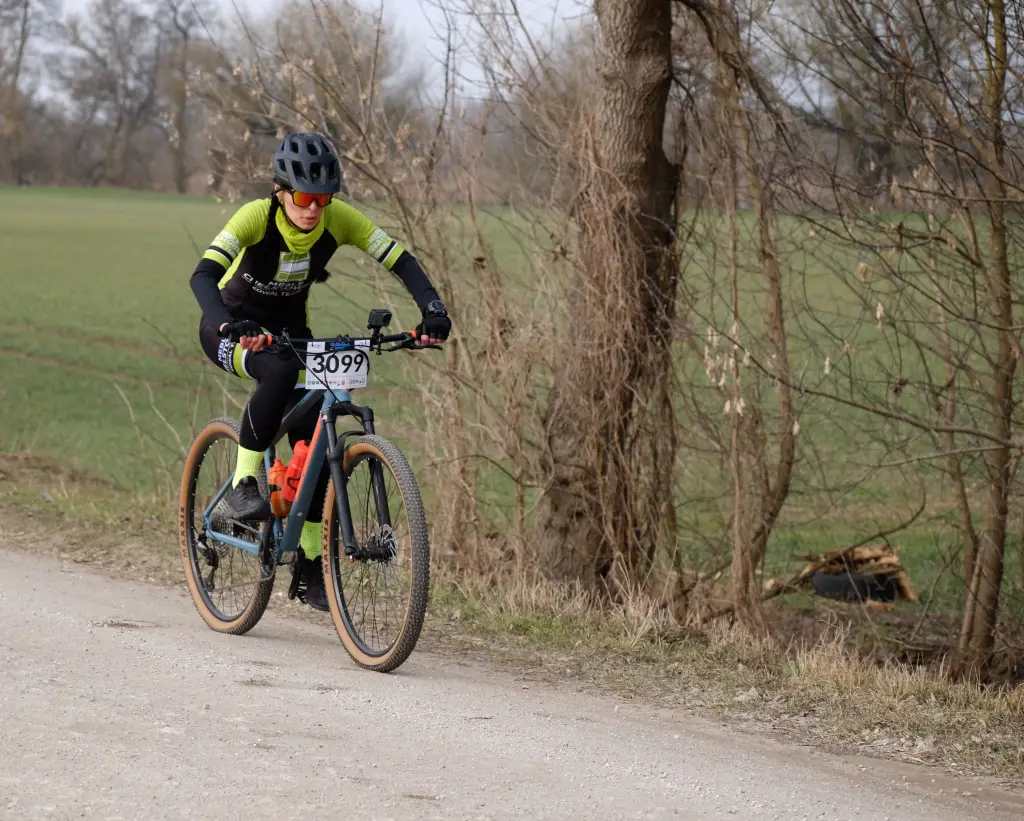
The Equalizer Gravel Race
The Equalizer is Missouri's official state championship gravel race and the finale of the SHO ME MO' GRVL series, run out of Marthasville in Katy Trail country west of St. Louis. The 100K covers 62 miles with about 3,800 feet of climbing and three creek crossings; a 43-mile 50K XL trims the distance without softening the surfaces, which span hard-packed crushed limestone, loose gravel, chunky Charette Creek river-valley rock, and stretches of smooth asphalt. USAC sanctioning brings championship categories from the 1-2-3 fields through Masters 60+, and the early-November date makes it the last big goal race on the Missouri calendar — cool air, bare trees, championship stakes. Free primitive camping near the start keeps it friendly for traveling racers.
Event websiteMissouri E-bike Law and Insurance FAQ
- What are the e-bike laws in Missouri?
- Missouri adopted the three-class framework through Missouri SB 176 of 2021, effective August 28, 2021. A compliant e-bike, with fully operable pedals and a motor of less than 750 watts, is a bicycle: no license, no registration, no insurance, no title. Riders must be 16 to operate a Class 3, which carries a speedometer, and Missouri has no statewide helmet law for any class or age.
- Do Class 1, Class 2, and Class 3 e-bikes need insurance in Missouri?
- Insurance is your choice in Missouri. Class 1 assists only while pedaling and ceases at 20 mph, Class 2 may run on throttle alone but cannot assist past 20 mph, and Class 3 is pedal-assist only up to 28 mph. RSMo 307.194 exempts all three from the state's financial-responsibility law. A standalone Velosurance policy takes over from there, starting around $9 per month.
- What does bicycle and e-bike insurance cover in Missouri?
- A standalone Velosurance policy covers theft, accidental and crash damage, and damage in transit, with optional liability and medical payments coverage. Missouri leaves e-bike protection to the rider, so the policy covers a bike stolen in St. Louis or damaged hauling it to the Katy Trail. Policies start around $9 per month.
- Which e-bike classes can ride the Katy Trail and Missouri state park trails?
- Class 1, which assists only while pedaling to 20 mph, and Class 2, which may run on throttle to 20 mph, ride the Katy Trail and any state park trail open to bicycles, because park rules admit e-bikes whose assist ceases at 20 mph. Class 3, pedal assist only to 28 mph, does not qualify. A 20 mph speed limit applies to everyone on park trails.
Missouri e-bike laws explained: classes, age limits, and what changes next.




Why Velosurance is best for your bicycle
Not all types of insurance are created equal. Velosurance levels the playing field by offering stand-alone bicycle coverage, where claims won't affect your homeowner's or renter's policy premiums.
| Policy Coverage |  | Homeowner/Renters Policy |
|---|---|---|
| Insured at Full Value | Yes | Possibly |
| Crash Damage | Yes | No |
| Theft Coverage | Yes | Limited |
| Theft by Force | Yes | No |
| Theft of Accessories | Yes | Limited |
| Theft Away From Home | Yes | Possibly |
| Uninsured Motorist | Yes | No |
| Personal Liability | Yes | Possibly |
| Permissive Use Policy | Yes | No |
| Replacement Rental | Yes | No |
| Event Fee Return | Yes | No |
| Cycling Apparel Coverage | Yes | No |
| Medical Payments | Yes | Possibly |
| Racing Coverage | Yes | No |
| E-bikes | Yes | No |
| Coverage in-transit | Yes | No |
| USAC, USAT and IMBA Member Discount | Yes | No |
| FREE INSTANT QUOTE |
Not all insurance policies provide the same level of protection, and many people only discover gaps in their coverage after filing a claim. We’ve done the hard work of reviewing the fine print. To see how plans compare, check out our insurance comparison.
Client satisfaction is our #1 goal. Here's what our clients say about Velosurance


Velosurance really stepped up and put me at ease. The claim was fast and easy. I am insuring all my bikes now.

Check out Velosurance reviews to see what people are saying about us.
Missouri's best bicycle and e-bike insurance
No matter where your adventures take you, protect your bicycle and yourself from the unexpected with America's best bike insurance.