


 +
+ 
About Guru
Tony Giannascoli started building bikes as a McGill engineering student in 1992 and founded Guru Cycles with Robert Pinazza in 1993 in Montreal, later moving the factory to Laval, Quebec. Guru built custom frames in carbon, titanium, aluminum, and steel in its own plant, about 2,000 bikes a year at its 2010 peak with 40 employees, and sold them through dealers who fitted each rider on Guru’s own motorized fitting bike. The market split roughly half triathlon and half road and cyclocross.
The signature product was the Photon, a 747 g carbon road frame introduced in 2010 as the first readily available frame under 800 g in most sizes. By 2013 the line ran three deep: the Photon R race frame under 800 g, the Photon SL under 750 g, and the custom-only Photon HL at a claimed 670 g, launched at NAHBS 2013 at $8,500 for the frame. Every Montreal-built frame came in stock or custom geometry, and complete bikes arrived in 2013, from $3,100 for a Flite with Ultegra to $15,500 for a custom Photon HL with Dura-Ace Di2.
Guru went into receivership in 2009 and was bought out of the bank by investor Ted Matthews, who ran it as CEO. In 2012 Dorel acquired the Guru trademark and fit technology and licensed the bicycle brand back to the company for $1. A factory move in early 2015 cost twice its budget and $300,000 to $400,000 in lost sales, and Guru filed for bankruptcy in Montreal in December 2015 with CA$1.1 million in debt. The remaining assets were auctioned in February 2016. Giannascoli went on to found T-Lab, which builds titanium frames in Montreal, and the Guru name stayed with Dorel’s bike-fit business.
Most popular Guru models
Guru’s last catalog, the 2013 to 2015 range, split into three road families and a triathlon line. The carbon road frames were the three Photons (HL, SL, and R) and the Flite, the entry carbon frame with aluminum dropouts. The metal road frames were the titanium Praemio for endurance riding and the Sidero in air-hardened chromoly steel. Framesets ran from $1,500 for a Flite to $8,000 and up for a custom Photon HL, with frame repair and refinishing done in-house.
The triathlon line was the CR.301, CR.701, and CR.901, the carbon descendants of the Crono that made Guru’s name with customizable aero frames in the mid-2000s. Roughly half of everything Guru sold went to triathletes, and those bikes are still racing a decade on. A Guru built for aero bars is insured at stated value with no depreciation, with racing coverage available on top, through our triathlon bike insurance.
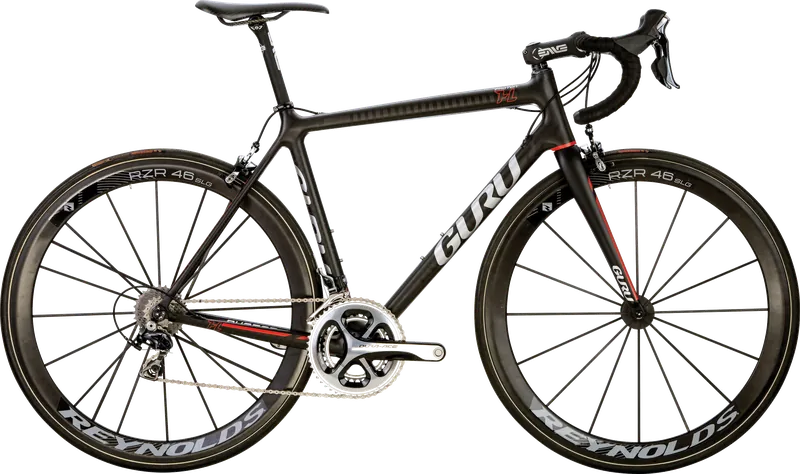
The custom-only flagship: a claimed 670 g tube-to-tube carbon frame launched at NAHBS 2013, with the layup tuned to each rider's height and weight.
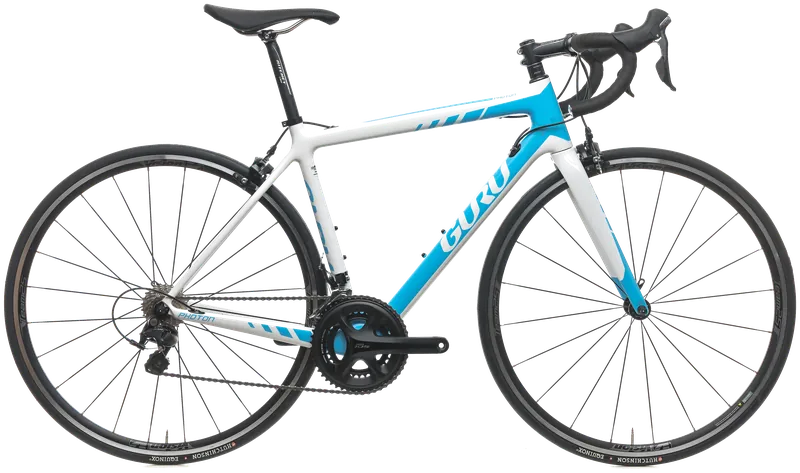
The sub-800 g all-rounder of the Photon line, about 15% stiffer than the 2010 original, in stock or custom geometry.
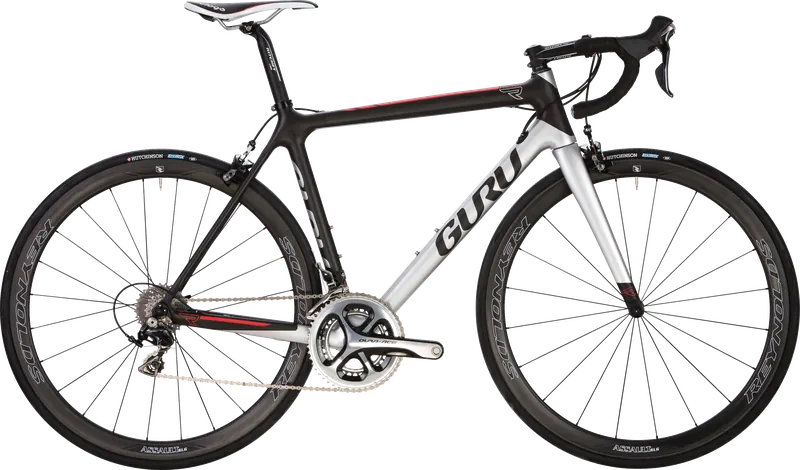
The race Photon: under 800 g with a bottom bracket 30% stiffer than the original, full carbon dropouts, and Fast Forward Race stock geometry or full custom.
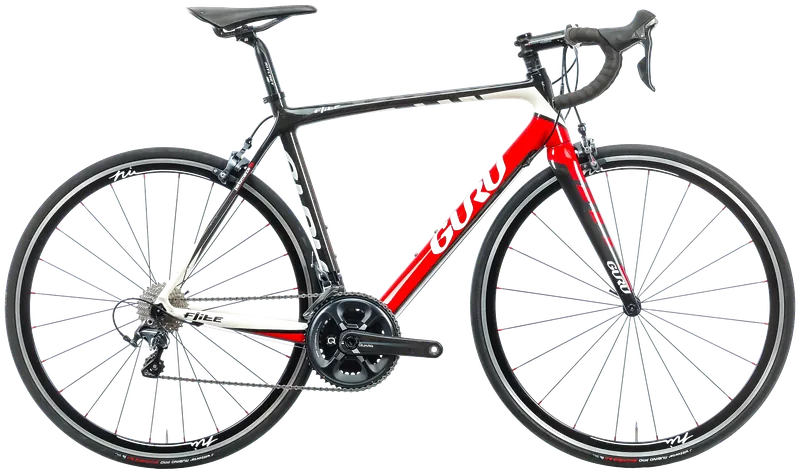
Guru's entry carbon road frame with aluminum dropouts; the $3,100 Ultegra build was the cheapest complete bike Guru sold.
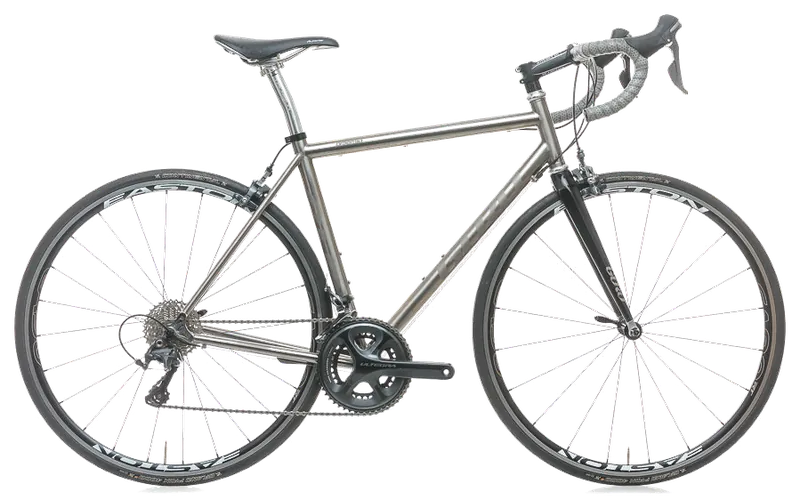
The endurance titanium road frame, in the catalog since 2006: 3/2.5 titanium with rider-matched tubing, also built for cyclocross.
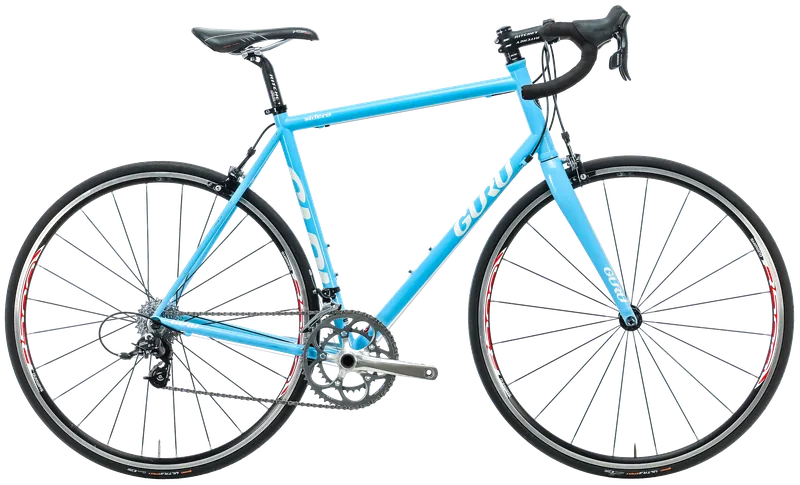
The steel road bike: TIG-welded, butted, air-hardened chromoly with rider-matched tubing for stiffness and compliance.
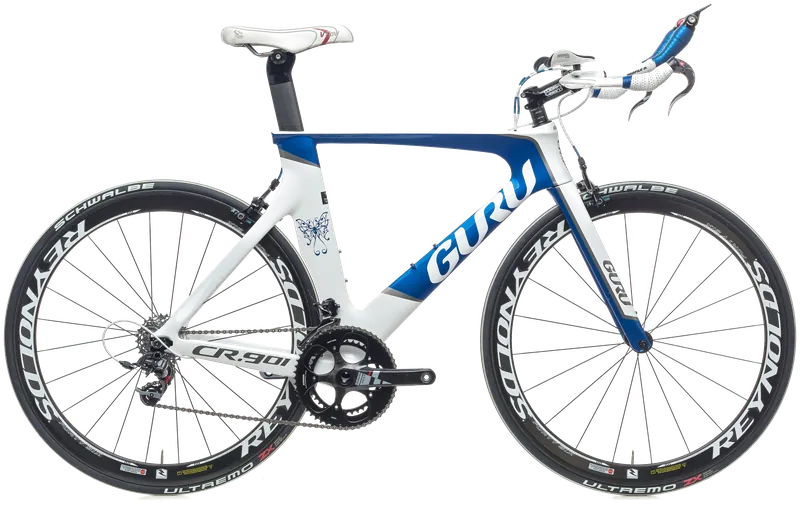
The top triathlon frame: hand-laid aero carbon with carbon dropouts, built in Montreal in stock or custom geometry.
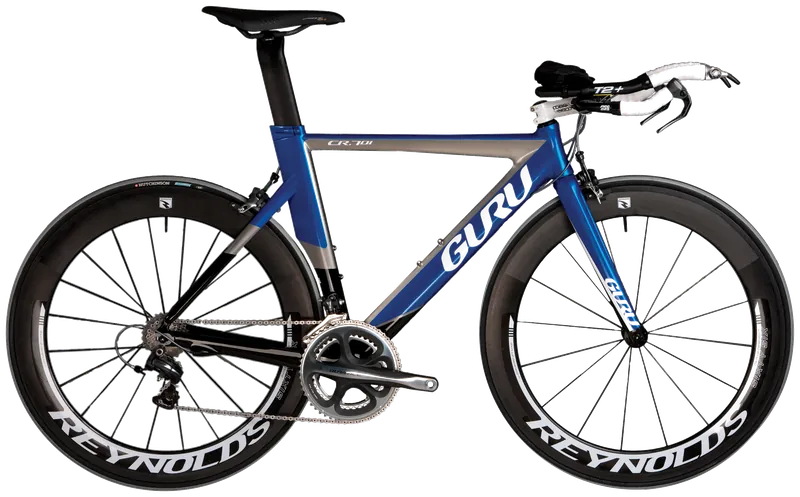
The mid-range tri frame that replaced the original Crono, with the same proprietary smooth-aero molding and aluminum dropouts.
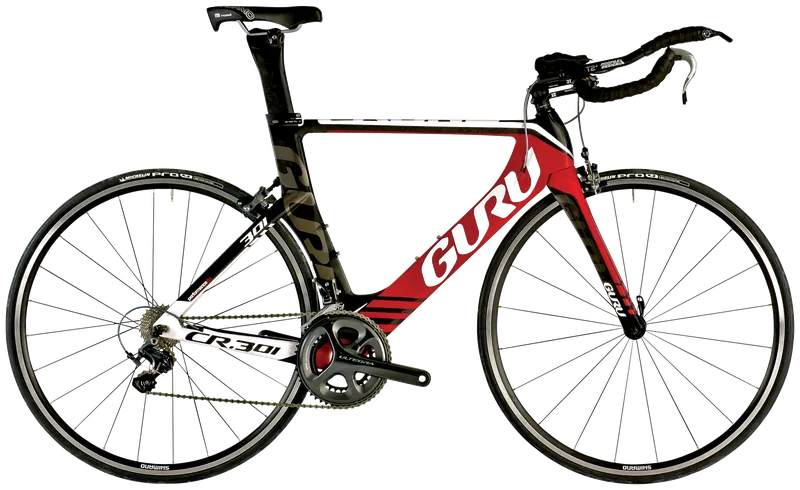
The entry triathlon frame in Guru's Fast Forward stock geometry, carbon with aluminum dropouts.
Guru's Warranty: What It Covered and Where It Stops
Guru Cycles closed in 2016, so the factory warranty that came with every frame has no one left to honor it. Five points decide what that means for you.
The warranty ended with the company
Guru filed for bankruptcy in December 2015 with CA$1.1 million in debt, let its remaining staff go in January 2016, and sold its model-name trademarks and factory equipment at auction that February. No successor took on its warranty obligations.
In-house repair and refinishing are gone
Guru repaired and refinished frames in its own Montreal plant, and the paint booth went to auction with the rest of the equipment. A cracked Photon or Praemio today goes to an independent carbon or titanium repair shop at the owner's cost.
The Guru name belongs to Dorel, not the bike business
Dorel Industries bought the Guru trademark and fit technology in 2012 and licensed the bicycle brand back for a nominal fee. The bike business stayed independent of Dorel, and the Guru name was not part of the auction.
Components keep their own makers' warranties
Shimano, SRAM, Enve, FSA, and Reynolds parts on a Guru build are warranted by those manufacturers under their own terms, not by Guru. Keep the original receipt for those claims.
No warranty means every loss is the owner's
With no factory behind the frame, a crash, a theft, or airline damage is paid in full by the owner. Those are the losses a Velosurance policy is built for, at the value you set.
Summary of the Bicycle Retailer and Industry News report on the Guru Cycles bankruptcy and asset auction (January 27, 2016), reviewed October 15, 2026. Applies to every Guru frame and complete bike, whichever year it was built. The company that issued the warranty filed for bankruptcy in Montreal in December 2015 and its remaining assets were auctioned in February 2016. The manufacturer decides every warranty claim, and its full published terms govern.
More Brands We Insure
Any brand of conventional or Class 1, 2, or 3 electric bike: theft, crash damage, and transit at stated value.



Why Velosurance is best for your Guru
Velosurance is a stand-alone policy that covers theft and accidental damage and can be optioned to create a comprehensive umbrella of protection for your cycling lifestyle.
Protect your Guru in under 2 minutes
Get a no-commitment price for any current Guru model. Pay monthly, cancel anytime.
Get my free quote →