TL;DR:
Chain lube is the cheapest performance and durability product in cycling, and most riders use the wrong one, apply too much of it, and put it in the wrong place. Wet lubes are for genuinely wet climates, dry lubes are a fair-weather compromise, and wax, either drip-on or hot melt, is the cleanest, fastest, and cheapest option over the long run for most riders. Whatever you choose, the rules are the same: lube goes inside the chain, not on it, a clean chain matters more than an expensive bottle, and once a chain measures 0.5 percent worn, no lubricant can save it.
Why a few drops matter more than most upgrades
A bicycle chain is one of the most efficient machines humans have built, transferring up to 98 to 99 percent of your effort to the rear wheel when it is clean and properly lubricated. Let it run dirty and dry and that changes fast. Independent friction testing consistently shows a spread of roughly 5 to 10 watts between a freshly waxed chain and a neglected, wet-lubed one carrying 500 km of road grit. For context, riders pay thousands of dollars for aero wheels that save less.
The bigger cost is wear. A chain running on contaminated lube grinds a paste of oil and grit through every one of its roughly 220 bearing surfaces, and that paste eats the chain, then the cassette, then the chainrings. Zero Friction Cycling, an Australian outfit that has run the most exhaustive independent lube testing to date, calculates drivetrain running costs over 10,000 km at around $100 for the best immersion waxes and well over $1,000 for the worst-performing oily lubes on the same groupset. The difference is not the bottle price. It is the parts the lube did or did not protect.
What chain lube actually does
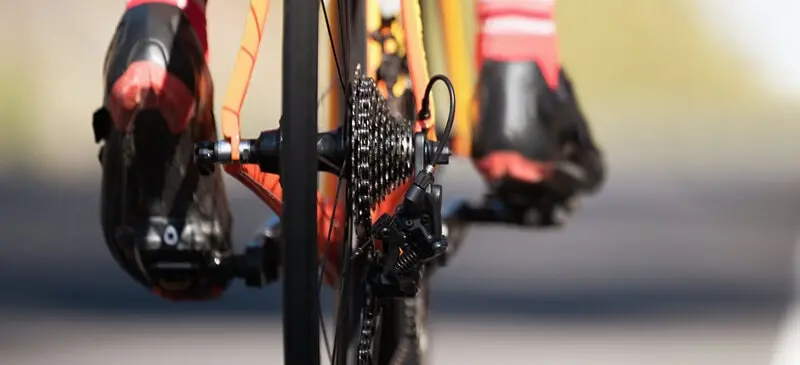
It helps to know what you are lubricating. The parts of a chain that need lubricant are the ones you cannot see: the pins, the inside of the rollers, and the link plates they rotate between. That is where metal slides against metal every time the chain bends around a cog. The outside of the chain needs almost nothing. Lube sitting on the outer plates does not reduce friction; it just collects dust and sand and funnels it inward.
Every chain lube is a compromise between three jobs: reducing friction inside the links, resisting being washed off by water, and refusing to hold onto dirt. No product does all three perfectly, which is why several families of lube exist and why the right answer depends on where and how you ride.
The four families of chain lube
Wet lube
Wet lubes are oil-based blends that stay liquid on the chain. They penetrate well, silence a drivetrain instantly, and shrug off rain better than anything else, which makes them the default for winter riders, wet climates, and anyone logging miles through slush and road spray. The trade-off is severe: the same stickiness that keeps wet lube on the chain in a downpour also glues grit to it in the dry. A wet-lubed chain that is not wiped down and refreshed regularly becomes a grinding paste applicator. Expect to pay $8 to $15 for a 4 oz bottle from brands like Finish Line, Muc-Off, or Rock N Roll, and plan to wipe and reapply every 100 to 150 miles, or after every properly wet ride.
Dry lube
Dry lubes go on as a thin liquid carrier that evaporates, leaving a light film of lubricant, often with PTFE or wax particles. They attract far less dirt than wet lube, which makes them a reasonable choice for dry, dusty conditions. Their weakness is staying power: rain flushes them off almost immediately, and even in dry weather most need reapplication every 100 miles or so. In lab friction testing they typically land between wet lubes and true waxes. Pricing is similar to wet lube, $8 to $13 for a small bottle. If your area sees fewer than a handful of wet rides per year, a dry lube is a low-effort, reasonably clean option.
Drip wax
Drip waxes, sometimes called wax emulsion lubes, are the fastest-growing category and the sweet spot for most riders. Products like Squirt, Smoove, and Silca Super Secret carry wax and friction modifiers in a liquid that you apply from a bottle like any other lube. Once the carrier evaporates, the chain runs on a dry, hard wax film that dirt struggles to stick to. The results in independent testing are striking: top drip waxes run within a watt or two of hot melt wax and produce several times less chain wear than typical wet lubes in dirty conditions. The catches are cost, $12 to $25 a bottle, a cure time of several hours between application and riding, and one non-negotiable chore: drip wax only works on a chain that has been stripped of factory grease and old oil first. Dripped over existing oil, it just makes an expensive mess.
Hot melt (immersion) wax
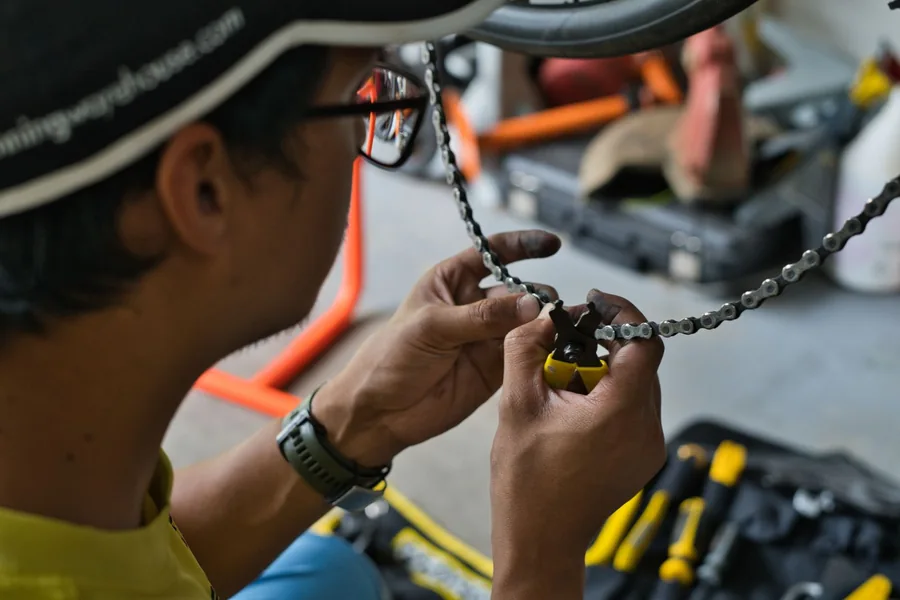
The gold standard. The chain comes off the bike and goes into a pot of molten paraffin-based wax, usually in a $20 to $40 slow cooker, so the wax penetrates every roller and pin, then hardens into a completely dry solid. A hot-waxed chain is the fastest, cleanest, and longest-wearing setup you can run. Your drivetrain stays clean enough to touch in dress clothes, and chains routinely last two to three times longer than on oil. A bag of wax, roughly $25 to $45 from Molten Speed Wax or Silca, treats a chain dozens of times, which is how the cost per kilometer ends up the lowest of any option. The price is ritual: initial chain stripping, then a rewax roughly every 300 to 1,000 km depending on conditions, with quick drip-wax top-ups in between. A quick-link and a spare pre-waxed chain in rotation make the routine painless.
A word on ceramic lubes
Walk into any bike shop and you will see bottles labeled ceramic at a premium price, from brands like Muc-Off and Finish Line. Despite the shelf placement, ceramic is not a fifth category of lube. These are ordinary wet or dry lubes with microscopic ceramic particles added, usually boron nitride, which the marketing credits with dramatic friction reductions. Independent testing has been unkind to those claims. Zero Friction Cycling has called out ceramic marketing specifically, and some of the most heavily advertised ceramic lubes have landed near the bottom of its wear rankings, with running costs several times higher than a basic bag of paraffin wax. The starkest example is Finish Line Ceramic Wax, a product whose label combines both of the most appealing words in the category. In ZFC testing the chain ran dry within about 70 km, was squeaking by 100 km, and the lube recorded nearly double the wear rate of the previous worst performer ever measured, earning it a place at the very bottom of the test database. That does not make every ceramic-labeled bottle bad; a few are decent wet or dry lubes on their own merits. It means you should judge them as the wet or dry lube they actually are, ignore the word ceramic on the label, and never pay double for it. If you want a genuinely faster chain, the money is better spent on any of the wax options above.
How to choose
Ride mostly in the rain, or through winter salt and slush, and cannot commit to frequent cleaning? Use a wet lube and wipe the chain down after every ride. Live somewhere dry and want minimum fuss? A dry lube or, better, a drip wax will keep your drivetrain clean with one application every week or two. Care about watts, component life, or simply hate cleaning cassettes? Go to drip wax or full hot melt waxing and never look back. The one honest rule of thumb from all the independent testing: unless you ride in genuinely wet conditions most of the time, some form of wax will cost you less, wear less, and run cleaner than any oil.
E-bike riders should weight this advice even more heavily. Mid-drive motors multiply the torque running through the chain, which accelerates wear, and a clean waxed drivetrain is one of the few free ways to extend expensive e-bike component life.
How to apply lube the right way
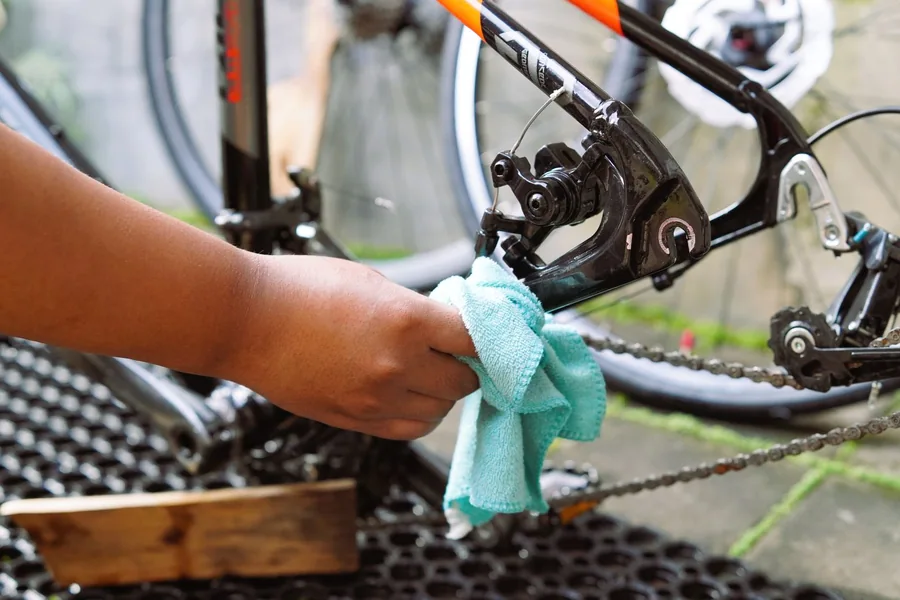
More drivetrains are ruined by bad application than by bad products. The sequence that works for any drip lube is simple. Start clean: wipe the chain thoroughly with a rag, and if it is visibly grimy, degrease it properly and let it dry, because fresh lube over old grit is just grinding paste with better marketing. Apply one drop to each roller along the lower span of the chain while backpedaling, not a stream sprayed across the whole drivetrain. Backpedal for ten or fifteen seconds so the lube works into the rollers. Let it sit, ideally overnight for wet lubes and drip waxes, so the carrier evaporates where it matters. Then, and this is the step most riders skip, wipe the outside of the chain almost dry with a rag. The lube the rag removes was never doing anything except collecting dirt.
One more note on new chains: the sticky factory grease a chain ships with is an excellent lubricant, applied at the factory under ideal conditions. If you run oil-based lubes, ride it until it needs a top-up. If you are switching to wax, strip it completely first, because wax cannot bond to a greasy chain.
What never goes on a chain
WD-40 tops the list. It is a water displacer and light solvent, not a lubricant. Sprayed on a chain it strips what lube is there, evaporates within hours, and leaves the metal drier than before while its residue attracts dust. It is genuinely useful for drying out a chain after a soaking ride, but it must be followed by actual lube. Motor oil and gear oil are too thick to penetrate the rollers and too sticky to stay clean. Cooking oils oxidize and gum up. Grease belongs in bearings, not on chains, because it cannot get inside the links where the wear happens. If a product does not say it is a bicycle chain lubricant, keep it away from your chain.
When no lube can save your chain
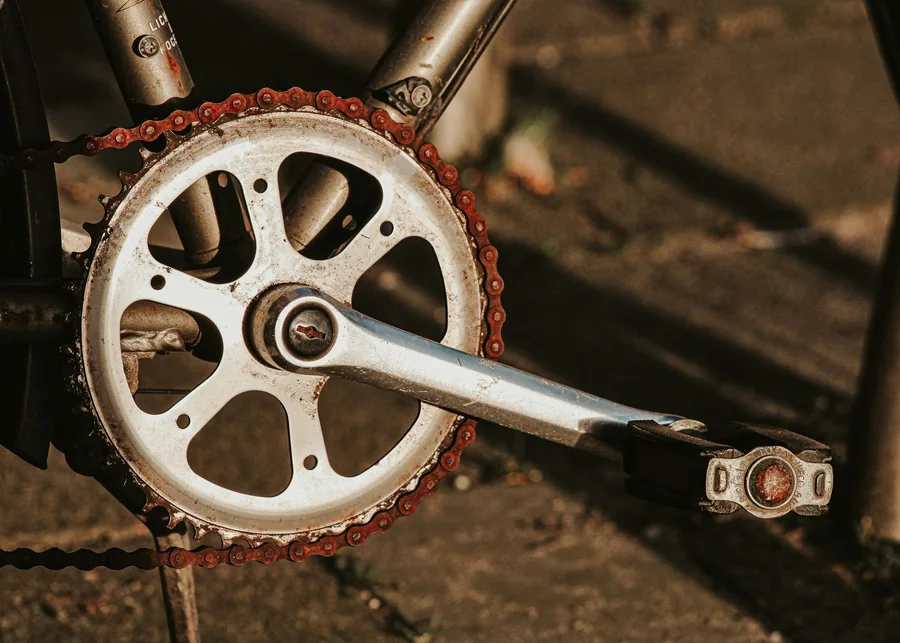
Lubricant slows wear; it does not prevent it. As the pins and rollers wear, the chain effectively lengthens, a condition riders call stretch. A worn chain no longer meshes cleanly with the cassette and chainrings and starts reshaping their teeth to match its new geometry. Catch it early and you replace a $25 to $60 chain. Catch it late and the new chain skips on the old cassette, and you are buying both, which on modern 12-speed groupsets can mean $150 to $500 or more.
The tool that prevents this costs about $10 to $15: a chain checker. Check monthly, or every few hundred miles. Replace the chain at 0.5 percent elongation on 11- and 12-speed drivetrains, or 0.75 percent on older 8- to 10-speed setups. A well-lubed chain checked regularly can run 3,000 to 5,000 miles; a neglected one can be dead in under 1,000. That gap, more than any single product choice, is what chain lubricant is really about.
Frequently Asked Questions
- How often should I lube my chain?
- Wet lube: every 100 to 150 miles, plus after every wet ride. Dry lube: roughly every 100 miles. Drip wax: every 125 to 250 miles. Hot melt wax: every 200 to 600 miles depending on conditions. In every case, sooner if the chain gets loud.
- Is wax really worth the hassle?
- For most riders, yes. Independent testing shows waxed chains save meaningful watts and cut chain wear by multiples, and the running cost over 10,000 km is the lowest of any lube family. If a slow cooker feels like too much, a drip wax gets you most of the benefit from a bottle.
- Can I just use WD-40?
- No. It is a solvent and water displacer that leaves a chain drier than it found it. Use it to displace water after a rainy ride if you like, then apply real chain lube. WD-40 does sell a separate line of actual bicycle lubes, which are a different product from the classic blue-and-yellow can.
- Do I need to degrease before every application?
- Not every one. Wipe the chain with a rag before each application and do a full degrease only when the chain is visibly dirty or you are switching lube types. The exception is the move to any wax product, which requires a fully stripped, bone-dry chain the first time.
- Does chain lube expire?
- Most bottles last for years if kept sealed and out of the sun, though emulsion-style drip waxes can separate, so shake them well before use. If a lube has visibly separated and will not remix, or smells off, replace the bottle. It is the cheapest part of your drivetrain to renew.
Sources and Further Reading
Zero Friction Cycling, Lubricant Testing, Cost to Run Tables, and Marketing Spotlight: Ceramic Lubricants
CyclingAbout, The Best Bike Chain Lubes According to Science
Cycling Weekly, Best Chain Lubes for Bikes
road.cc, Your Complete Guide to Waxing Your Chain
BikeRadar, Best Chain Lubes Rated and Reviewed
Cyclist, Best Chain Wax: Drip, Immersion and Pre-Waxed Options