
TL;DR:
- Minnesota is a no-fault state: an auto policy pays at least $20,000 in medical bills and $20,000 in lost income and related losses regardless of fault, even if you own no car.
- Suing for pain and suffering requires more than $4,000 in medical expense, a permanent injury or disfigurement, or disability for 60 days or more.
- The fault rule is a 51% bar: at 50% responsible you recover half, and when your fault is greater than the driver's you recover nothing.
- You have six years to sue for injuries or bike damage, 180 days to give notice of a claim against a city, county, or the state, and about six months to notify the no-fault insurer.
- Uninsured and underinsured motorist coverage is mandatory at $25,000 per person and $50,000 per accident, and a hit-and-run claim does not require physical contact.
Who Pays After a Crash in Minnesota
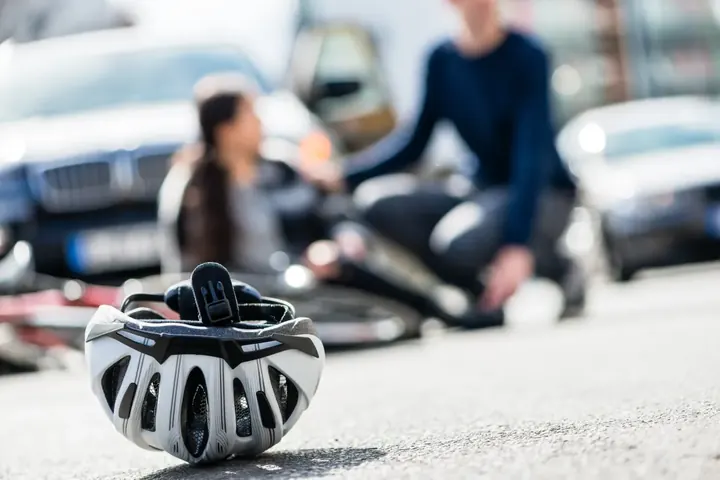
Minnesota is a no-fault state, and the No-Fault Automobile Insurance Act works in a cyclist's favor. Section 65B.46 gives basic economic loss benefits to every person injured in Minnesota through the maintenance or use of a motor vehicle. You do not have to be in the car or prove the driver was at fault.
Section 65B.44 sets the minimum at $40,000 per person in two halves. The first $20,000 is for medical expense. The second $20,000 covers income loss at 85% of your gross income up to $500 a week, replacement services up to $200 a week after the first week, and funeral expense up to $5,000.
Section 65B.47 decides which insurer pays. If you are an insured under an auto policy, that policy pays, and "insured" includes a spouse, relative, or minor living in the named insured's household who has no policy of their own. If no policy covers you, the policy on any motor vehicle involved in the crash pays. If that vehicle is uninsured or cannot be identified, section 65B.64 sends the claim to the assigned claims plan run by the state's auto insurers. The plan turns away anyone who owns a car and failed to insure it.
Benefits are due within 30 days of reasonable proof of the loss, and overdue payments carry 15% interest under section 65B.54.
No-fault pays nothing for the bike. Damage to the bike and gear is a claim against the driver, and section 65B.49 requires that driver to carry only $10,000 for property damage, alongside $30,000 per person and $60,000 per accident for injuries.
A lawsuit against the driver is limited by section 65B.51. You can always sue for economic loss that no-fault did not pay. You can recover for pain and suffering only if your reasonable medical expense exceeds $4,000, not counting diagnostic X-rays, or if the injury causes permanent disfigurement, permanent injury, death, or disability for 60 days or more.
Fault and How It Reduces a Claim

Minnesota's comparative fault statute, section 604.01, lets you recover as long as your fault "was not greater than the fault of the person against whom recovery is sought." At 50% you collect half of your damages. At 51% you collect nothing. Below the line, the award shrinks in proportion: 20% at fault on a $100,000 loss leaves $80,000.
The order of subtraction helps you. Under section 65B.51, no-fault benefits come off the award first, and your fault percentage is applied to what remains.
Where several defendants share the blame, section 604.02 makes each pay its own percentage, except that one whose fault is greater than 50% is liable for the whole award.
The arguments about your share come from section 169.222, which gives a cyclist the rights and duties of a driver. Three of its rules are friendlier than most riders expect:
- Lane position. You must ride as close to the right-hand curb or edge "as the bicycle operator determines is safe." The judgment is yours, and the statute lists exceptions for passing, left turns, hazards, and narrow lanes. No more than two abreast.
- Stop signs. Since 2023, a rider approaching a stop sign must slow to a speed that allows stopping, and may proceed without stopping when no vehicle is in the vicinity.
- Sidewalks and crosswalks. A rider lawfully on a sidewalk or in a crosswalk has a pedestrian's rights and duties, and must yield to people on foot.
Minnesota has no bicycle helmet law. Whether riding without a helmet can be argued as fault is an open question: no statute or appellate decision on the point was found.
Hit-and-Run and Uninsured Drivers
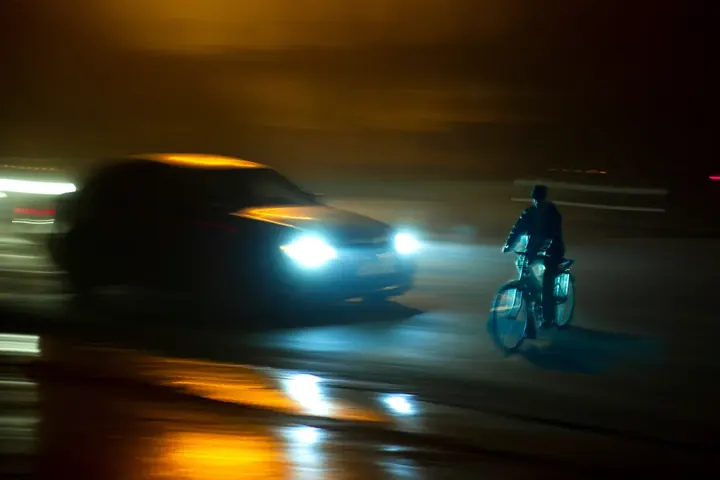
Section 65B.49 makes uninsured and underinsured motorist coverage mandatory on every Minnesota auto policy, each at no less than $25,000 per person and $50,000 per accident.
The coverage is not tied to being in the car. The same section says that a person who was not occupying a motor vehicle at the time of the crash may select any one limit for any one vehicle on a policy under which they are insured. Limits are never stacked: two cars on the policy do not double the coverage.
For a driver who flees, Minnesota is generous. Section 65B.43 defines uninsured motorist coverage to include hit-and-run motor vehicles, and in Halseth v. State Farm the Minnesota Supreme Court struck down a policy clause that demanded physical contact. A car that forces you off the road without touching you still counts. The statute sets no reporting deadline, so your policy's deadline controls. Call police from the scene.
Three limits are in the text. The coverage pays for bodily injury only, never the bike. It does not pay again for losses that no-fault benefits covered. And it comes from a policy that insures you: a rider with no auto policy in the household still has no-fault benefits, but has no uninsured motorist coverage to claim.
Two things to check in a bike insurance policy: whether it offers uninsured motorist coverage of its own, and whether crash damage to the bike is covered no matter who hit you.
Dooring and Passing Laws
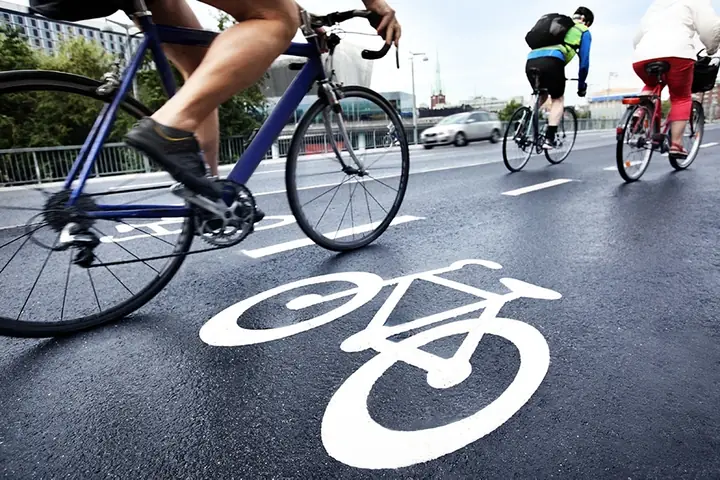
Section 169.315 is Minnesota's dooring statute, and it reaches every door, not only the one on the traffic side. No person may open any door on a motor vehicle unless and until it is reasonably safe to do so and can be done without interfering with the movement of other traffic. Nor may a door on the side next to moving traffic stay open longer than necessary to load or unload passengers. That covers passengers as well as drivers.
The passing law has a number in it. Under section 169.18, a driver overtaking a bicycle must leave a safe distance, "but in no case less than three feet clearance," and hold that clearance until safely past. A driver who crosses a no-passing centerline to get around you must leave the greater of three feet or one-half the width of the vehicle, or move completely into the left lane. For a truck eight feet wide, that is four feet.
E-bikes
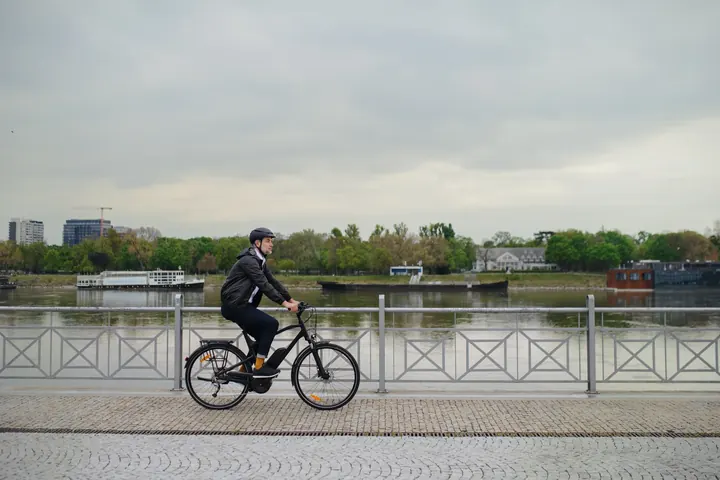
Section 169.011 defines an electric-assisted bicycle as a bike with two or three wheels, a saddle, fully operable pedals, and a motor of not more than 750 watts. Class 1 assists only while you pedal and stops at 20 mph. Class 2 can move the bike without pedaling and stops at 20 mph. Class 3 assists only while you pedal and stops at 28 mph. A multiple mode e-bike switches between classes.
The statute counts an e-bike as a bicycle, section 168.012 exempts it from registration, and section 169.222 lets you ride it wherever a bicycle may go on the road. Riders must be at least 15. There is no helmet requirement for any class.
The insurance question e-bike riders usually cannot get answered has an answer in Minnesota's statute. The No-Fault Act denies benefits to anyone injured while on a motorcycle, and section 65B.43 says its definition of motorcycle "does not include an electric-assisted bicycle." On a qualifying e-bike, you stand where any cyclist stands. No appellate decision applying that language was found, so get your insurer's position in writing.
The protection ends at the edge of the definition. A machine sold to be unlocked past its class is not an electric-assisted bicycle, and one that counts as a motorized bicycle is a motorcycle under the No-Fault Act.
Deadlines

Minnesota gives you six years to sue, and that long period hides two short deadlines: six months for the no-fault insurer and 180 days for a government body.
- At the scene
Notify Police
Section 169.09 requires the driver of a vehicle in a collision that injures someone to notify police, the State Patrol, or the sheriff by the quickest means of communication. The investigating officer files a crash report with the commissioner of public safety within 10 days.
- 72 hours
Driver's Insurance Details
If the driver did not name an insurer at the scene, section 169.09 requires it within 72 hours of the crash, on request.
- Six months
Notice to the No-Fault Insurer
Section 65B.55 lets a policy require notice of the crash within a period of no less than six months, and the Department of Commerce tells consumers to make no-fault claims within six months. Late notice costs you benefits only to the extent the insurer shows actual prejudice.
- 180 days
Notice of Claim Against a Government Body
A claim against a city, county, town, or school district requires notice to its governing body within 180 days after the loss or injury is discovered, under section 466.05. A claim against the state goes to the attorney general on the same 180-day clock under section 3.736. The notice states the time, place, circumstances, and compensation demanded. Time during which the injury leaves you incapacitated does not count.
- Three years
Wrongful Death Lawsuit
Section 573.02 allows three years from the date of death, and no more than six years from the act that caused it.
- Six years
Injury and Bike Damage Lawsuit
Section 541.05 gives six years for an injury to the person not otherwise listed, which the Minnesota Supreme Court applied to negligence claims in D.M.S. v. Barber, and six years for injury to personal property such as the bike. A rider injured as a minor must sue within one year after turning 18 or within the six years, whichever is later.
Recovery from government is capped. Sections 466.04 and 3.736 limit liability to $500,000 per claimant and $1,500,000 per occurrence.
For a dispute over the bike alone, conciliation court hears claims up to $20,000 under section 491A.01.
Evidence to Preserve
A Minnesota claim runs on two tracks, no-fault first and the driver second. Build the file for both.
- Every auto policy in your household, including a resident relative's. It decides who pays no-fault and whether you have uninsured motorist coverage.
- The driver's plate number and insurer. Section 169.09 requires the driver to give a name, date of birth, address, and plate number at the scene, and the insurer's name within 72 hours on request.
- The police report number. The crash report is released on written request to anyone involved.
- A running total of medical bills, kept apart from diagnostic X-rays, to show when you pass $4,000.
- A dated record of the days you could not manage your usual activities. Sixty of them clear the threshold.
- Pay stubs. No-fault replaces 85% of gross income up to $500 a week, and the wages above that are a claim against the driver.
- Your front lamp and rear reflector, photographed on the bike after a night crash.
- The e-bike label showing class, top assisted speed, and wattage.
- The damaged bike, unrepaired, with receipts. The driver's property coverage may stop at $10,000.
Coverage for Minnesota Riders

No-fault does a lot for a Minnesota cyclist, and it stops at fixed points: $20,000 of medical expense, $500 a week of lost income, and nothing for the bike. Behind it sit a driver who may carry $10,000 of property coverage, a mandatory uninsured motorist limit of $25,000 that exists only if someone in your household insures a car, and a 51% bar. The Velosurance policy offers the coverages discussed above.
Uninsured Motorist covers losses beyond medical bills, such as lost wages, when the at-fault driver cannot pay. For a rider with no auto policy in the household, it fills a gap Minnesota's mandatory coverage leaves.
Medical Payments covers the deductible and out-of-pocket costs your health plan leaves. Choose a limit close to your plan's out-of-pocket deductible.
Liability is for the crash where the percentages run against you. If you injure someone or damage their property while riding, it pays covered settlements or judgments and the cost of defending a covered lawsuit, with limits from $25,000 to $500,000.
Crash damage to the bike, the loss no-fault ignores, is part of the policy itself: stated value with no depreciation, subject to the deductible, whoever was at fault. Class 1, Class 2, and Class 3 e-bikes are covered like conventional bikes.
For any of these coverages to apply, it must be on the policy before the crash. Get a quote before the next ride.
Frequently Asked Questions
- Who pays medical bills for a cyclist hit by a car in Minnesota?
- An auto policy pays under Minnesota no-fault, with at least $20,000 for medical expense and $20,000 for lost income and related losses, regardless of fault. Your own policy or a resident relative's pays first, then the policy on the car that hit you, then the assigned claims plan. One thing to watch: no-fault pays nothing for the bike.
- How does the 51% rule work in a Minnesota bicycle accident claim?
- You recover damages in Minnesota as long as your fault is not greater than the driver's, and the award is reduced in proportion to your share. A rider 20% at fault on a $100,000 loss collects $80,000. The caveat worth knowing: at 51% the recovery is zero.
- When can a Minnesota cyclist sue for pain and suffering?
- You can sue for pain and suffering once your reasonable medical expense exceeds $4,000, not counting diagnostic X-rays, or when the injury causes permanent disfigurement, permanent injury, or disability for 60 days or more. Economic loss that no-fault did not pay can be claimed from the driver without meeting that threshold.
- How long do you have to file a bicycle accident claim in Minnesota?
- You have six years to sue in Minnesota for injuries from negligence and for damage to your bike. One thing to watch: a claim against a city, county, or the state needs notice within 180 days, and a no-fault policy can require notice within six months of the crash.
- How are Class 1, Class 2, and Class 3 e-bikes treated after a crash in Minnesota?
- Minnesota counts Class 1, Class 2, and Class 3 e-bikes as bicycles, and its no-fault law says a motorcycle does not include an electric-assisted bicycle, so a rider hit by a car stands where any cyclist stands. Class 1 is pedal assist to 20 mph, Class 2 can move without pedaling to 20 mph, and Class 3 is pedal assist to 28 mph. The caveat worth knowing: a machine sold to be unlocked past its class falls outside the definition.
Sources
- Minnesota Statutes section 604.01 (comparative fault) and section 604.02 (apportionment of damages)
- Minnesota Statutes section 65B.43 (No-Fault Act definitions: insured, motorcycle, uninsured motorist coverage)
- Minnesota Statutes section 65B.44 (basic economic loss benefits)
- Minnesota Statutes section 65B.46 (right to benefits) and section 65B.47 (priority of security)
- Minnesota Statutes section 65B.49 (residual liability insurance; uninsured and underinsured motorist coverages)
- Minnesota Statutes section 65B.51 (deduction of benefits; limitation on damages for noneconomic detriment)
- Minnesota Statutes sections 65B.525, 65B.54, 65B.55 (arbitration, claims practices, claim notification)
- Minnesota Statutes sections 65B.63 and 65B.64 (assigned claims plan)
- Minnesota Statutes section 541.05 (six-year limitations) and section 541.15 (periods of disability)
- Minnesota Statutes section 573.02 (wrongful death)
- Minnesota Statutes sections 466.04 and 466.05 (municipal tort liability: limits, notice of claim)
- Minnesota Statutes section 3.736 (state tort claims: limits, notice)
- Minnesota Statutes section 491A.01 (conciliation court jurisdiction)
- Minnesota Statutes section 169.222 (operation of bicycle)
- Minnesota Statutes section 169.18 (passing; bicycle lanes) and section 169.315 (opening and closing vehicle door)
- Minnesota Statutes section 169.011 (definitions: bicycle, electric-assisted bicycle classes, motorized bicycle)
- Minnesota Statutes section 168.012, subdivision 2d (electric-assisted bicycles exempt from registration)
- Minnesota Statutes section 169.09 (collisions: driver duties, police notice, crash reports)
- Halseth v. State Farm Mutual Automobile Insurance Co., 268 N.W.2d 730 (Minn. 1978)
- D.M.S. v. Barber, 645 N.W.2d 383 (Minn. 2002)
- Minnesota Department of Commerce, Auto Insurance Guide
This guide is general information about Minnesota law as of the review date above. It is not legal or insurance advice, and it does not create an attorney-client relationship. Laws change and every crash turns on its own facts: talk to a licensed Minnesota attorney about your situation.