TL;DR:
The best argument for an e-bike isn't age. It's consistency — and the surprising data on who's actually riding the farthest may change how you think about the question.
- Switching to an e-bike isn't a sign of slowing down; it’s a tool for consistency. Data shows older riders often cycle further than younger ones, and pedal assist helps maintain a regular riding schedule despite the longer recovery times required after age 50.
- An e-bike is most effective when it solves a practical barrier, such as daunting hills, the physical strain of chronic pain, or the frustration of being dropped by faster groups.
- Clinical experts suggest e-bikes can reduce knee joint loading and muscle activation, provided the motor is used to lower effort rather than just increase speed.
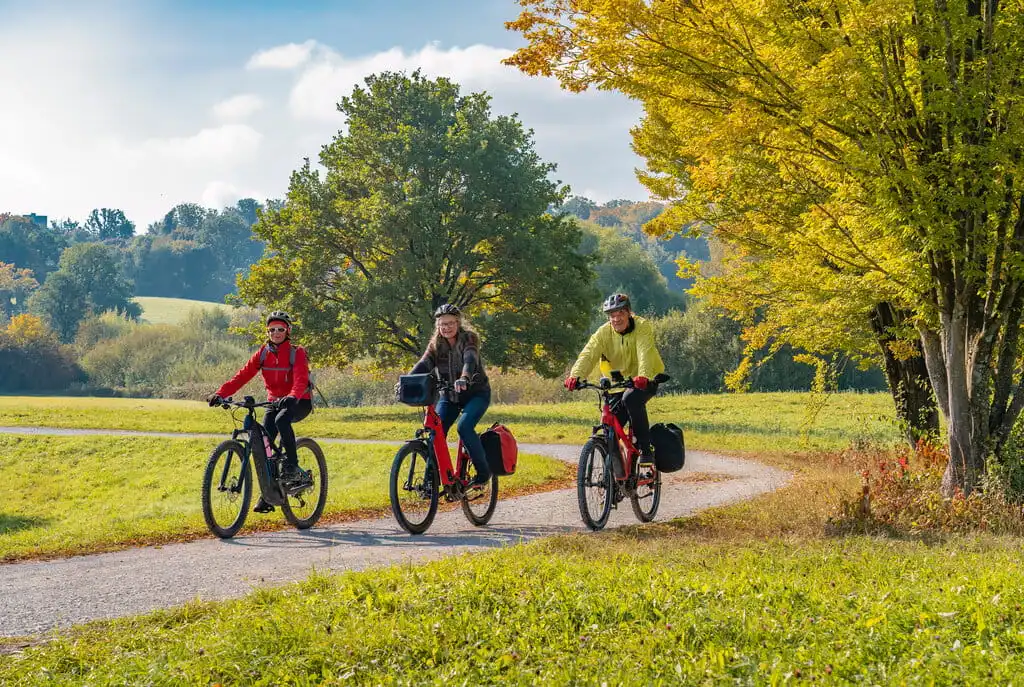
Here is a number that surprises most riders. According to Strava's 2025 Year in Sport Trend Report, the median ride among Boomers (ages 58–76) is 18.8 miles. Among Gen Z (13–26), it is 10.3 miles. On Ride with GPS, the pattern is even clearer: average ride distance climbs with every decade of life, peaking at 21.3 miles for riders in their 80s.
Older cyclists are not riding less. In many cases, they are riding farther than people half their age. And a quiet but meaningful share of the reason is sitting in more and more garages across the country: the e-bike.
If you are in your 50s, 60s, or 70s and have started wondering whether it is time to try one, you are in good company. The question is worth taking seriously — and it deserves a more honest answer than either the cycling purists or the e-bike marketers tend to give.
The Real Question Isn't Your Age
In a recent piece for Bicycling, gear editor Matt Phillips — himself 53 — framed the decision better than any spec sheet ever could. The question isn't whether an e-bike is a surrender to age. It's whether it helps solve the problem you're actually trying to solve.
Phillips talked with clinical exercise physiologist Lenita Anthony of Duke Integrative Medicine, who pushed back on the idea that turning 50 should drive the decision at all. "Performance doesn't necessarily decline just because you've turned 50," she said. "The bigger issue is recovery."
That is the piece most riders miss. Plenty of people maintain endurance and power well past 50 if they train with intention, do some strength work, sleep enough, and recover like adults. What changes is not desire. It's the recovery time. Hard rides linger longer. Back-to-back big days cost more. The margin for error shrinks.
FasCat Coaching founder Frank Overton, also quoted by Phillips, cut straight to what master's riders actually struggle with. It isn't fading VO₂ max. It's consistency. "For athletes over 50, the most important principle isn't 'go harder.' It's 'ride regularly.'" Joe Friel, co-founder of TrainingPeaks and still riding at 82, agreed: "Consistency wins hands down."
That reframes the whole conversation. If consistency is the actual goal, the right question about an e-bike becomes practical rather than philosophical. Does it help you ride more often? Does it keep you on the bike when life, weather, or a cranky knee would otherwise keep you off? If yes, it's doing real work. If no, it's just a gadget.
When an E-Bike Genuinely Helps
Chloë Murdock, a physical therapist and bike fitter interviewed in the same Bicycling piece, sees riders over 50 most often for neck pain, knee pain, lower back pain, and hand numbness. She said pedal assist can "significantly reduce muscle activation and knee joint loading" — but only if the rider uses the motor to reduce effort rather than to go faster. That nuance matters, and we'll come back to it.
Three scenarios where an e-bike is clearly pulling its weight:
- You're riding less because every climb has become a negotiation. The hill on the way home shouldn't be the reason you skip the ride. Pedal assist flattens the terrain enough to get you out the door.
- You're being dropped on group rides. This is the one Phillips's 89-year-old father named plainly. He started getting left behind on climbs, felt embarrassed, and quit his club. Then he got a Specialized Creo 2. "Turbo mode would let me stay with the fittest," he said. "It's like I've discovered the Fountain of Youth." Overton tells a near-identical story about a 79-year-old in his own club: without the e-bike, the rider would be dropped, skip rides, and eventually stop coming. "Participation is the whole game."
- Chronic pain is pushing you off routes you still love. A PT-approved e-bike setup — lower effort, proper cadence, good fit — can keep you riding through conditions that would otherwise end your cycling life.
The common thread isn't speed. It's staying in the game. For a lot of experienced riders, what they really get back from an e-bike is not horsepower but dignity and belonging — the ability to show up without being the burden the group has to manage.
And if an injury does sideline you, an e-bike can help you get back on two wheels sooner than you might expect, letting you rebuild strength and range of motion without overwhelming the healing process. For a deeper look at how pedal assist fits into a structured recovery plan, including which bike types work best for specific conditions, see our guide to using e-bikes for recovery and rehabilitation.
The Honest Warnings
The same Bicycling reporting is refreshingly candid about the risks. An e-bike is not neutral. It changes the ride, the effort, and sometimes the emotional logic of the ride. Used well, it extends your cycling life. Used lazily, it becomes a very expensive way to avoid the work.
Anthony was blunt on this point: "There is absolutely a risk that pedal assist reduces training stimulus. It's too easy to escape the pain and use the motor." Overton agreed, but framed it as a mindset issue more than a hardware issue. Wear a heart rate monitor. Use the motor strategically. Let the data tell you whether you're training or just spinning.
Friel's approach is instructive. Now 82, he rides a road e-bike on easy days "to keep the stress low on hills." On everything else, "the motor is off." His warning: doing every ride on the e-bike is "not necessary and can be detrimental to performance and health. The rides become too easy."
The takeaway: think of the e-bike as one more tool, not a replacement for the bike that keeps you fit. For many riders, the best answer is to own both.
If You're Buying, What Actually Matters
Modern e-bikes are not the clunky cargo-looking machines of a decade ago. Many look and handle like nice road or gravel bikes with a discreet motor and battery. A few features matter more than others when you're shopping after 50:
- Class 1 pedal-assist (up to 20 mph) for most riders; Class 3 (up to 28 mph) if you commute or ride with faster groups. Both are broadly street-legal. Class 2 adds a throttle — handy for some riders, restricted in more places.
- Step-through or mid-step frame. Easier mount and dismount, no machismo penalty. Most premium brands now offer one.
- Mid-drive motor (Bosch, Shimano, Brose, Specialized) for hilly terrain; hub motor for flatter routes. Mid-drives use the bike's gears and climb more efficiently.
- Hydraulic disc brakes. You're moving more weight, often faster, and often with less hand strength than you had at 35. Hydraulic is worth the premium.
- A bike fit. This is the single best investment you can make in staying pain-free. Kristen Phillips, a USA Cycling certified coach, quoted in a companion Bicycling piece, reminds riders that there are only three points of contact — hands, sit bones, and feet. Numbness or discomfort at any of them after 10 miles is a signal, not something to push through.
- A lighter e-bike if you'll be lifting it. A 70-pound e-bike is a completely different object from a 35-pound one when it's going on a hitch rack or up a step. Lightweight e-bikes (35–45 pounds) now exist at most price points.
The Bigger Picture
Return to the data we started with. On Ride with GPS, 80-to-90-year-olds average 21.3 miles a ride. That number is not an accident. It reflects a generation of riders who figured out, one way or another, how to keep riding — with better fit, smarter training, flexible schedules, and yes, in a growing number of cases, a thoughtful use of pedal assist. They did not give up the sport. They adapted to it.
That is the real argument for considering an e-bike after 50. Not that riding should be easy. Not that you have earned a break. But that the best cyclists of any age are the ones who stay cyclists — who keep finding reasons to go out, keep the streak alive, keep showing up on Saturday morning. If an e-bike helps you do that, it is doing serious work. If it just becomes a way to skip the hard parts, it isn't.
Over 50, that is the real decision. Not whether you are old enough for an e-bike, but whether it helps you stay the kind of rider you still want to be.
One Last Thing
A good e-bike is a meaningful investment — often $3,000 to $8,000 for a quality build, sometimes more. It's worth protecting like the investment it is. Most homeowners' and renters' policies cap bicycle coverage well below the replacement value of a mid-range e-bike, and some exclude motorized vehicles entirely, depending on how a given e-bike is classified. How that motor vehicle exclusion reaches an e-bike in your garage is explained in the homeowners insurance e-bike exclusion, explained.
Velosurance offers bicycle and e-bike insurance built specifically for riders, with coverage for theft, crash damage, liability, Uninsured Motorist, and more — whether the bike is locked at home, on a rack, or halfway through a group ride.
Frequently Asked Questions
- How do I keep my fitness when switching to an e-bike?
- Use the motor strategically: on easy days and on hills where you would otherwise blow up, then turn it off for everything else. A heart rate monitor helps tell you whether you are training or just spinning. The caveat worth knowing: pedal assist makes it easy to escape the pain, so doing every ride on the e-bike is not necessary and can be detrimental to performance and health.
- How can an e-bike help with joint, back, or neck pain after 50?
- An e-bike used to reduce effort, rather than to go faster, can significantly reduce muscle activation and knee joint loading. The most common complaints among riders over 50 are neck pain, knee pain, lower back pain, and hand numbness, and a properly set up e-bike with lower effort, the right cadence, and a good fit can keep you riding through conditions that might otherwise end your cycling life.
- What features matter most when buying an e-bike after 50?
- A proper bike fit is the single best investment for staying pain-free, and the three points of contact (hands, sit bones, feet) should not go numb or hurt after 10 miles. Beyond that: a step-through or mid-step frame for easier mount and dismount, a mid-drive motor (Bosch, Shimano, Brose, Specialized) for hilly terrain or a hub motor for flatter routes, hydraulic disc brakes for stopping power with less hand strength, and a lighter build of 35 to 45 pounds if you will be lifting it onto a hitch rack.
- How does an e-bike fit alongside your regular bike?
- For many riders, the best answer is to own both and treat the e-bike as one more tool, not a replacement for the bike that keeps you fit. A practical approach is to use pedal assist on easy days or on hills that would otherwise keep you off the bike, and leave the motor off for everything else, so the e-bike protects your consistency without quietly eroding your training stimulus.
- Which e-bike class works best for older riders: Class 1, Class 2, or Class 3?
- Class 1 pedal-assist (up to 20 mph) suits most riders and is broadly street-legal. Class 2 adds a throttle, which is handy for some riders but restricted in more places. Class 3 (up to 28 mph) is broadly street-legal and makes more sense if you commute or ride with faster groups.