TL;DR:
Smooth gear shifts come from meticulous cleaning, lubrication, and maintenance—focusing on inner cables, front and rear derailleurs, and the cassette ensures your drivetrain performs at its best
- Clean and grease the inner shift cable
- Scrub and lube the front (chainrings & derailleur)
- Detail clean and lubricate the rear derailleur’s jockey wheels
In our last segment we paid attention to a perfectly clean chain. Now we want to make sure your gears work perfectly.
Clean and grease the inner cable
First, remove the outer cable cover from the stops on the frame. This will allow you to slide the outer cover along the cable so you can lubricate the shifting cable. With the outer cable loose take a clean rag coated with degreaser and wipe down all visible section of the inner cable. Any dry section we will rejuvenate with a little cable grease.
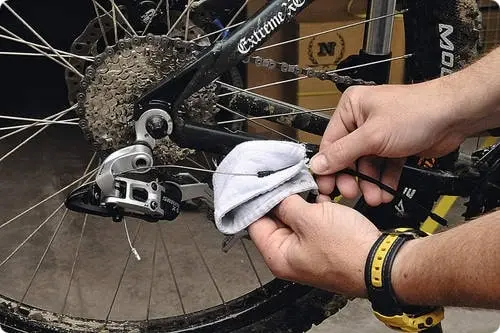
The best way to grease the inner cable is to place the grease on a rag and draw the cable through the rag while holding pressure on the rag with your thumb and finger. We want to avoid any globs of grease on the cable and force as much grease as possible into the strands of the cable.
Repeat this process on each section of cable that you can access.
Clean the front mechanicals
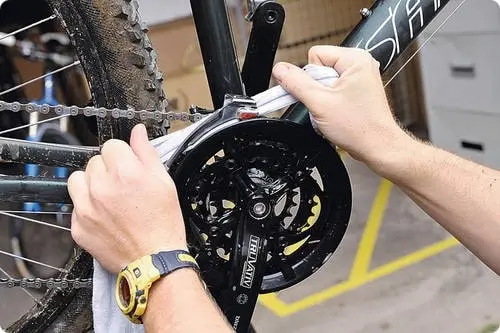
Now spend time cleaning the front mechanicals. First use a small brush such as a tooth brush and plenty of hot soapy water and scrub inside and under and all around the front chainrings and derailleur. There will be plenty of dried grime in here so be diligent. Use a piece of rag to “floss” around the mechanicals and you will have them gleaming in no time. Once the area is dry use a sparingly amount to lubricant on all the joints. This area is under constant stress and really likes to be lubricated to work smoothly.
Clean the rear mechanicals
Next turn your attention to the rear mechanicals and since you now have a bright shiny cable you must make sure the jockey wheels in the rear derailleur are clean and free of the oily gunk that builds up on these parts. Take a small flat head screwdriver and place it on the jockey wheel face while you rotate the cranks to turn the jockey wheels thus allowing the screwdriver to scrape all the oily build up off these parts. Repeat the same process on the inside of the jockey wheels (watch out for spokes on your knuckles).
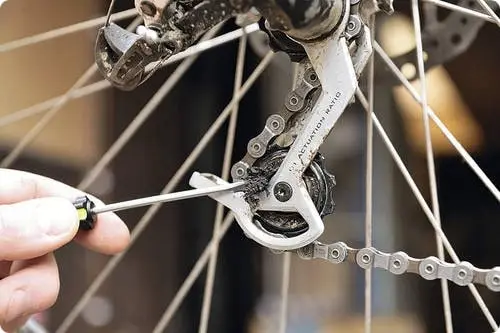
With the serious gunk gone take the toothbrush and some degreaser to clean the jockey wheels and then towel the derailleur dry dry before lubricating the jockey wheels with a very small amount of lube. This area collects lots of dirt and dust so after lubricating use a rag to wipe any excess lubricant away.
Key Takeaways
- Clean and grease the inner shifting cable by sliding it through a rag with a dab of grease to ensure smooth cable movement
- Use a brush and soapy water to scrub the front chainrings and derailleur, then lubricate their pivots lightly to maintain smooth operation
- Clean grime from the rear derailleur jockey wheels—turn the cranks and use a screwdriver or brush, then lube them lightly, wiping off excess
- Remove debris between cassette cogs with a spoke-end or brush, degrease stubborn areas, and floss between rings until clean
- Finish by riding your bike to let the lubrication fully settle and enjoy crisp, well-tuned shifting
Clean the cassette
The cassette is your final stop on the bike maintenance express. The cassette has lots of places for stuff to hide. Using a old spoke end to pick away between each ring until you have all the big stuff out. Now go to work with the hard bristle brush and hot soapy water and scrub the cassette clean of remaining grung. Use a little degreaser to lift stubborn spots. This area see lots of dirt and dust so try your best to clean both inside and outside of the rings.
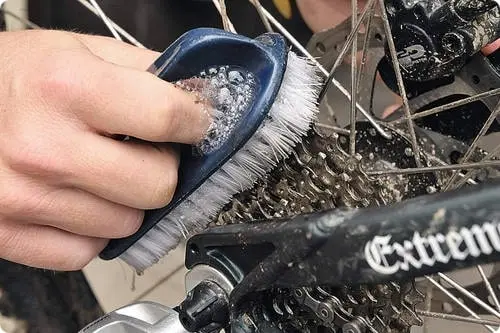
Take your “flossing” rag and run it between all the rings and in no time you will have a nice clean cassette and crisp shifting gears. You’ve been at it for an hour and now it’s time to go for a pedal on your nice clean bike.
Frequently Asked Questions
- Which drivetrain components need attention to keep gears shifting crisply?
- For perfectly smooth shifting, focus on the inner shift cables, the front chainrings and derailleur, the rear derailleur jockey wheels, and the cassette. Each component plays a role: dirty or dry cables create sluggish shifts, grimy jockey wheels cause chain drag, and a clogged cassette prevents clean engagement between the chain and cogs.
- How do you clean and lubricate the inner shift cable?
- Remove the outer cable cover from the frame stops so you can slide it back and expose the inner cable. Wipe all visible sections of the inner cable with a clean rag coated in degreaser. Then place a small amount of cable grease on a rag and draw the cable through it, holding thumb and finger pressure on the rag to force grease into the strands. The goal is a thin, even coat with no globs. Repeat on each accessible cable section.
- What is the best method for cleaning rear derailleur jockey wheels?
- Start by placing a small flat-head screwdriver against the face of each jockey wheel while turning the cranks. This scrapes off the heavy oily build-up. Follow up with a toothbrush and degreaser to clean the wheels thoroughly, then towel the derailleur dry. Apply a very small amount of lube to the jockey wheels and immediately wipe off any excess with a rag to prevent dirt from collecting.
- How do you clean a cassette to restore smooth gear changes?
- Use an old spoke end to pick debris from between each ring until the large chunks are cleared. Then scrub the entire cassette with a hard bristle brush and hot soapy water, applying degreaser to stubborn spots. Finish by running a clean rag between all the rings in a flossing motion. When the rag passes between rings cleanly, the cassette is ready.
- Why do the front derailleur pivots need lubrication during a drivetrain service?
- The front mechanicals are under constant stress during every shift. After scrubbing the chainrings and derailleur with soapy water and flossing the area clean with a rag, apply a sparing amount of lubricant to all the joints. This keeps the pivots moving freely and reduces wear on the parts that handle the most lateral force in the drivetrain.