

ALSO TM-B Test Ride: What an Insurer Notices From the Saddle
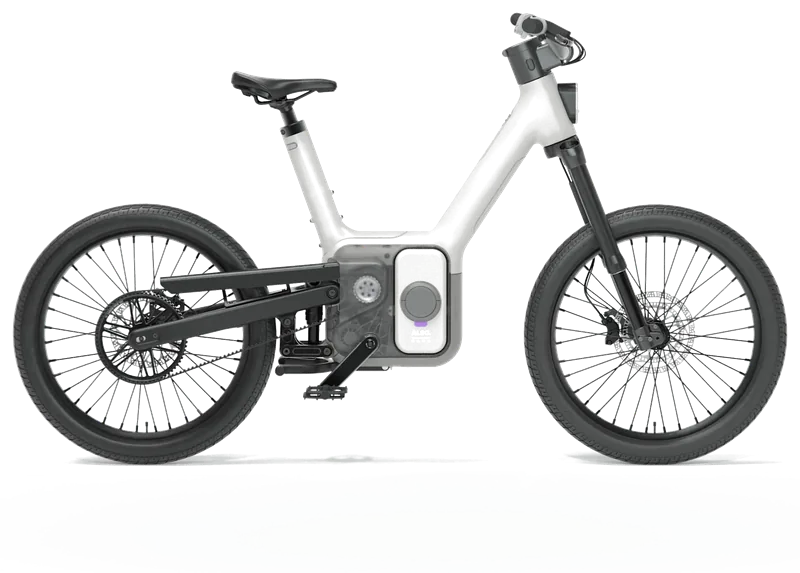
I spent an afternoon on a TM-B Launch Edition borrowed from a friend who was one of the first to plop down $50 on a reservation: a size Large Solo top frame, the 808 Wh battery, road tires, and Sport mode unlocked. About 90 minutes of bike path, a half-mile 12% climb, a stretch of chip-seal, and a short dirt pitch I rode twice because the first time felt like a trick. The insurer’s half of my brain stayed switched on the whole time, and that is the half this write-up is for.
Quick Take
- The drive feels strange for three pedal strokes, then feels better than a chain.
- 180 Nm at the wheel is not a brochure number. The bike launches.
- At just under 90 lb as configured, it is planted in a crosswind and a chore to lift.
- The Portal display and the phone-as-key setup are the best part of the ownership story.
- It is a $4,500 bike before top frames, helmet, and the Connect+ subscription, and that total is what you should insure.
There Is No Chain, and You Stop Noticing in a Block
DreamRide is a series hybrid. Your cranks turn a generator, the generator feeds the battery, and software decides how much of that reaches the rear-wheel motor through a Gates Carbon Drive belt. There is no mechanical link between your feet and the wheel. ALSO quotes 180 Nm of peak wheel torque and 0.3 G of acceleration, with pedal assist to 28 mph and a throttle to 20 mph where Class 3 throttles are legal.
The first few strokes feel like a trainer with the resistance set wrong, because the pedal load is simulated and your legs expect a chain to catch. By the end of the block it felt normal. In auto mode you pick a cadence and the bike holds it like a CVT. In manual mode the Portal shows ten virtual gears and the scroll wheel clicks through them. I rode manual on the climbs and auto everywhere else, and never missed a derailleur.
The Hill Test
The spec sheet claims 30% gradeability and calls it hill flattening. I did not find a 30% grade. I found a half-mile of 12% pavement and rode it seated at assist level 8, holding 17 mph at a heart rate I would call conversational. Level 10 in Sport mode is a party trick I used once on an empty straight to watch 28 mph arrive. It arrives fast enough that the first time you should be looking down the road, not at the Portal.
Regenerative braking is on by default. The first part of each brake lever’s travel is regen, then the Tektro calipers on 203 mm and 180 mm rotors take over. Coming back down the climb I barely touched the hydraulics, and the energy bar on the Portal flipped from orange to green the whole way.
What 88 Pounds Feels Like
ALSO’s spec table puts the bare bike at 70.3 lb without battery or top frame. Add the 13 lb Large battery and the 5.5 lb Large Solo frame and you are at 88.8 lb before fenders or a rack. On the road that mass is an asset: a gust that would have shoved my gravel bike a foot sideways moved the TM-B not at all, and the 24 by 2.6 inch tires with 120 mm of travel at both ends turned the chip-seal into carpet. Off the bike it is a liability. Lifting it onto a hitch rack is a two-person job, or a one-person job after you pull the battery and the top frame, which pop off in seconds and take 18 lb with them.
The Connected Bike
The 2.75-inch Portal touchscreen sits in the stem where a Garmin would go and does what a Garmin does without the mount: speed, assist level, battery, turn-by-turn navigation, and a media controller. Readability in full sun beat my Garmin Edge. Walk up with your phone and the bike wakes, unlocks the wheels and battery, and lights the screen. Walk away and it locks them. The app pushes over-the-air updates and carries the security features covered below. The LTE link that keeps tracking and alerts working when your phone is elsewhere runs on a Connect+ subscription at $15 a month or $120 a year.
The Top Frame Swap Works
Tap the Portal, lift the Solo frame off, drop the Bench or the Utility frame on, ride. ALSO says under three seconds and I believe it. The Utility frame adds a rear rack rated to 77 lb on a bike with a 324 lb total payload, which turns a commuter into a grocery hauler on the same battery and drive. Extra frames run $350 to $500, so budget for the two you will use.
What Gave the Insurer in Me Pause
Replacement cost is the whole package. A Performance or Launch Edition is $4,500. A second top frame, fenders, a rack, and the $250 Alpha Wave helmet push a real build past $5,500. Insure the bike for the number on the invoice, not the number in the headline. A Velosurance policy pays the value you insured it for, with no depreciation, so the number you pick is the number you get.
Everything is proprietary. The fork, shock, wheels, tires, battery, Portal, and connectivity module are ALSO parts, and the owner’s guide says the sealed electronics have no user-serviceable components and that opening them without an ALSO qualified service provider voids the warranty. Crash damage to a proprietary fork on a bike that only started shipping in September 2026 means waiting on one supplier. Crash and accidental damage are core coverage on the policy, subject to the deductible, and the claim pays whether the crash was your fault or not.
It is built to discourage theft, and the jury is still out. Lock it from the Portal or the app and the rear wheel, battery, and top frame immobilize. Then the electronics take over: a bump sends a ping to your phone, movement sets off a loud alarm and a notification with coordinates, and the real-time location shows in the ALSO app. Pull the main battery and a separate stealth power source keeps the GPS alive, for up to a week by ALSO’s account and up to three days by the owner’s guide, depending on its charge. Whether any of that stops a thief with a van remains to be seen, and the same guide says the security features do not guarantee the bike cannot be stolen. Away from home, a theft claim still needs the bike locked to an immovable object with an appropriate security device, subject to the policy’s locking conditions, and a police report filed the same day. The tracker helps the police. The policy replaces the bike.
It is a Class 3. A 28 mph bike that weighs 88 lb and carries a 324 lb payload has a motorcycle’s share of momentum in a bike lane. Liability coverage for injuring someone or damaging their property is optional on the policy, with limits from $25,000 to $500,000, and medical gap covers your own out-of-pocket medical costs after your health plan pays its share. For either coverage to apply, it must be elected before the accident.
What the Warranty Says
ALSO publishes its warranty on its Service page, and there is no standalone warranty document yet. The frame carries a lifetime limited warranty. The battery gets 2 years, capped at 300 recharge cycles, although the same page elsewhere says 300 to 500, so the exact cap is unclear and the FAQ wording is 300. Bicycle components and the drivetrain get 2 years per the FAQ, while the summary table says 1 to 2 years. ALSO-branded accessories get 1 year. Nothing is published on exclusions, transferability, a battery capacity threshold, or commercial use.
Service runs through ALSO-trained Authorized Service Partners, about 139 partners across 175 locations, plus Beeline mobile mechanics, with next-business-day parts shipping. TM-B-specific parts such as the drive unit and the display must go to an official provider.
Two things stand out for a commuter. The 300-cycle battery cap is tight: a daily rider could hit it in about a year. And because the drive unit is proprietary and the belt system is pedal-by-wire, there is no generic replacement path outside ALSO’s network if the company stumbles. The warranty also says nothing about crashes, theft, or transit, which is where the policy starts.
Where I Landed
The drive is strange for a block and then better than a chain. The weight is the price of the battery and the suspension, and on the road you stop minding it. Buy the TM-B for the Portal and the drive, and insure the full build at stated value with liability and medical gap in place before the first commute.