TL;DR:
Golf is not dying. By the numbers, it is having its best run since prime Tiger. But in a specific, influential corner of professional life, the role golf owned for a century, the place where trust gets built and deals get quietly done, is migrating to the bike. The reasons are practical, not fashionable: a hard group ride takes two hours instead of six, doubles as serious training, costs a fraction of a country club, and tells you more about a person than eighteen holes ever will. Here is what is actually driving the shift, what the numbers say, and how to find your way into the paceline.
The Deal Moved Off the Fairway
For the better part of a century, the advice handed to every ambitious young professional was the same: learn to play golf. The course was where relationships were built, where you got unhurried hours with people you could never book a meeting with, and where careers quietly advanced between shots.
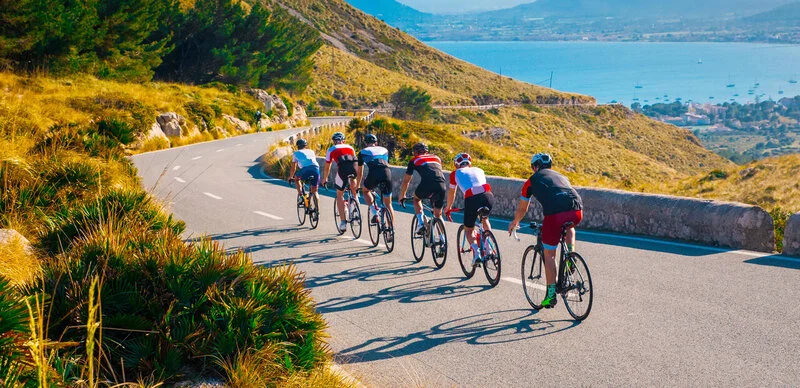
That world still exists. But a parallel one has grown up next to it, and it starts earlier. A group rolls out from a cafe at 6:00 a.m., climbs for two hours, and is back before the first meeting, with espresso, a Strava upload, and a couple of warm introductions already in motion. In Silicon Valley the joke has been running for over a decade: tech deals used to get done at Pebble Beach, and now they get done on Old La Honda, the benchmark climb in the hills above the tech campuses. Affirm founder Max Levchin told Business Insider back in 2015 that the young executive class simply was not interested in walking around slowly when they could be outside, going hard, with numbers to show for it.
That was a decade ago. The trend has only compounded since, and it now has its own infrastructure: business cycling clubs, networking ride series, and charity pelotons where the entry ticket is fitness rather than a member sponsor.
First, an Honest Caveat: Golf Is Doing Fine
Let's kill the strawman before it gets rolling. Golf is not collapsing. The National Golf Foundation counted 29.1 million on-course golfers in the U.S. in 2025, the eighth consecutive year of growth and within reach of the all-time record set during the Tiger Woods boom. Add off-course formats like simulators and Topgolf and the total reaches 48.1 million Americans.
So this is not a story about one sport dying. It is a story about where a specific kind of professional, time-poor, health-obsessed, and data-driven, now chooses to spend the few discretionary hours they have. More and more often, that choice has drop bars.
Cycling's own base numbers help explain why. PeopleForBikes counted a record 112 million Americans, 35 percent of everyone age three and up, who rode a bike at least once in 2024. The pool of potential riding partners has never been deeper.
The Time Math Is Brutal
An eighteen-hole round takes four to four and a half hours on the course. Add the drive out, the warm-up, lunch, and the post-round social hour that is half the point, and you have spent six hours minimum. That is not a hobby, that is a part-time job, and it is why golf has always skewed toward people whose calendars answer to no one.
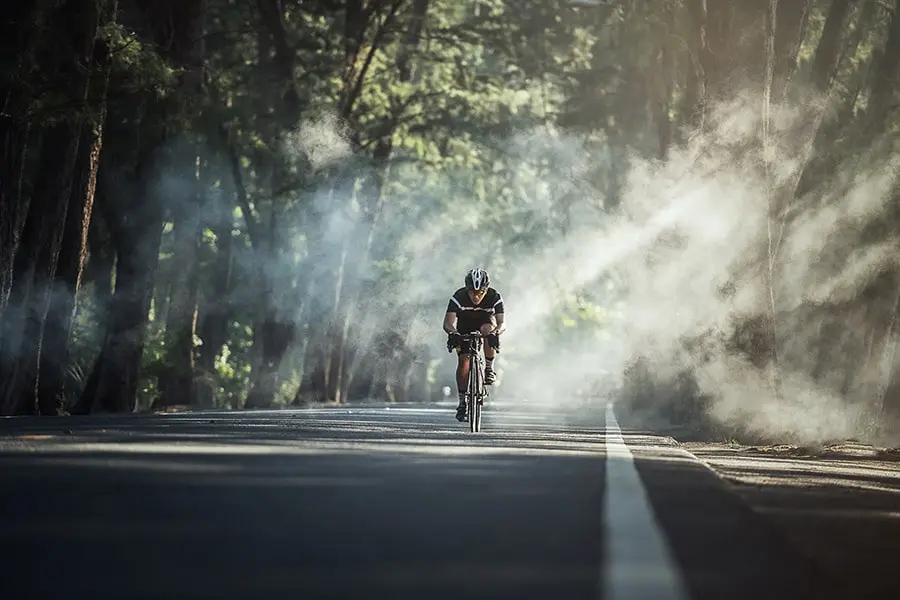
A hard group ride solves the same problem in a third of the time. Meet at 6:00, ride two hours, coffee at 8:15, at your desk by 9:30 with the workout already banked. You get the same unhurried, side-by-side conversation golf is famous for, because riding two abreast at endurance pace is basically a rolling coffee chat, but you get it before the workday instead of in place of one.
For founders, physicians, working parents, and anyone whose time is spoken for, that difference is not marginal. It is the whole game.
Fit Is the New Rich
Golf became the business sport in an era when leisure itself signaled success. The modern signal has inverted: now discipline signals success. The executive class tracks sleep, wears glucose monitors, and talks about zone 2 the way a previous generation talked about the short game.
Cycling fits that value system almost perfectly. It is measurable to the watt. It scales from recovery spin to race effort. And it is brutally honest: a Strava profile functions as the new handicap, except it cannot be flattered by a generous scorecard. Weekly volume, elevation gain, and power numbers say something about consistency and self-discipline that no polo shirt can.
The gear tells the same story. Levchin called high-end bikes “road jewelry,” and he was not wrong: a $12,000 superbike is absolutely a status object. But it is a status object that only works if you ride it. A generation ago the signal was the club membership, the watch, or the second home. Today it is the tan lines.
Unlike golf, riding also pays compounding health dividends. The landmark BMJ commuting study found bike commuters had a 41 percent lower risk of dying from any cause than car commuters, and we dug into the full longevity picture in a separate article. The short version: the science on cycling and lifespan is about as strong as health research gets. Eighteen holes in a cart, whatever its virtues, is not on the same chart.
Shared Suffering Beats Small Talk
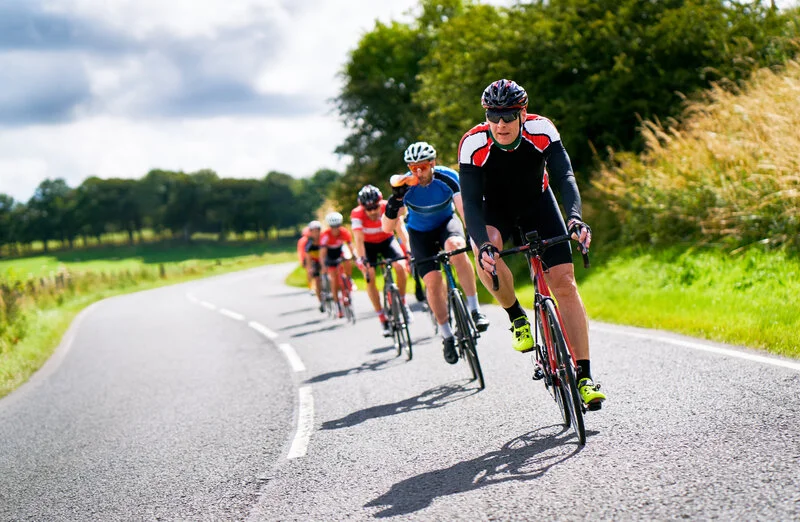
Golf is conversational bonding. Cycling is collaborative bonding, and there is a difference. On a group ride, people take turns in the wind, pace each other on climbs, regroup at the top, and share the collective job of getting everyone home. You learn quickly who does their share of the work, who panics, who stays steady when things get hard, and who waits for the dropped rider. A two-hour ride is a surprisingly complete character reference.
The business world has noticed. Cycling Weekly recently profiled Tullio, a UK company that runs networking rides for businesspeople, whose members describe building contacts on the bike as having no awkwardness: the conversation happens naturally because you are already doing something together. Club Peloton has been doing the same in the property industry for years, most famously with its multi-day Cycle to MIPIM ride, where a peloton of executives rides from London to Cannes and arrives with relationships that would otherwise take years of conference dinners. The hiring stories are real, too: CNN profiled a CEO who found his head of performance marketing on a weekend ride.
The Price of Admission Has Flipped
Here is where the country club comparison gets uncomfortable. Median initiation fees at private clubs jumped from $29,000 to $50,000 between 2019 and 2022, according to Front Office Sports, and annual dues routinely run $5,000 to $20,000 on top. Golf's post-pandemic boom has made the traditional path more expensive and more waitlisted than it has been in decades.
Cycling's cost curve runs the other way. Yes, the superbike exists, and yes, some people spend car money on carbon. But a genuinely excellent road bike costs $3,000 to $5,000, a serviceable used one costs far less, and the ongoing expenses are tires and chains. Club membership, where it exists at all, runs $30 to $60 a year. The Saturday group ride, the actual networking venue, is free and requires no sponsor, no board interview, and no waitlist. You just show up and hold a wheel.
You Cannot Buy Your Way Up a Climb
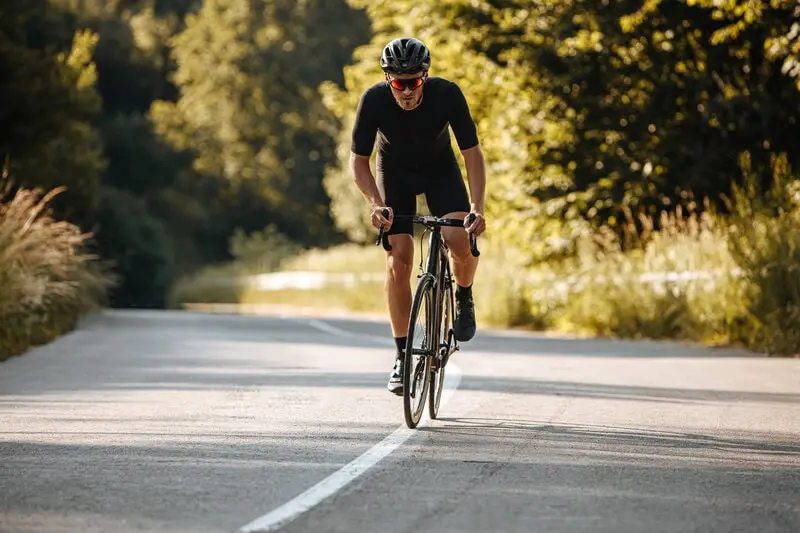
This may be cycling's real advantage as a social arena. The country club filters on money and connections at the door. The group ride filters on fitness and consistency, which money can help with but cannot substitute for. The result is a strangely egalitarian room: on any fast Saturday ride, the person pulling on the front might be a venture partner, a nurse, a bike mechanic, or a retired racer, and for two hours the hierarchy is set by legs, not titles.
That is also what makes the connections durable. Anyone can be charming at a cocktail hour. Showing up at 6:00 a.m. every Saturday for a year says something no business card can.
How to Get In
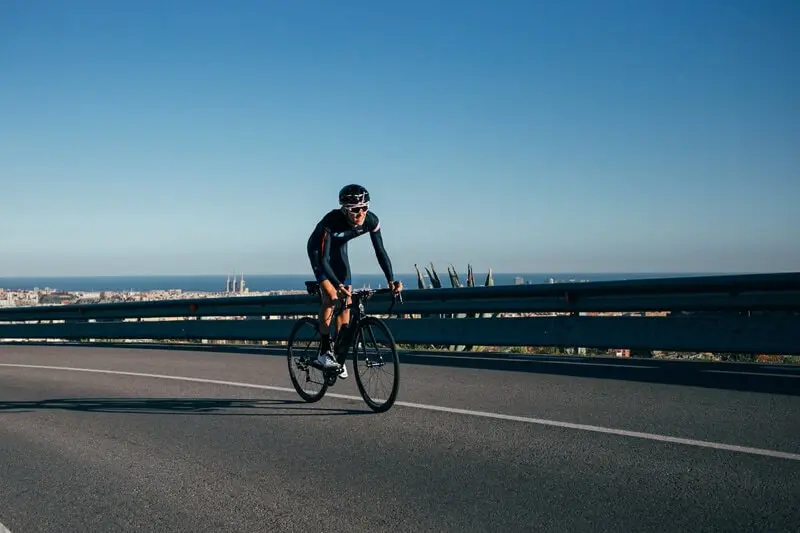
You do not need an invitation, which is rather the point. Find your local shop ride or club ride; most post schedules and pace groups online. Start with the no-drop group even if you think you are fit, because group riding is its own skill. Then learn the etiquette that doubles as reputation-building: hold your line, point out hazards, do your share of the work at the front, do not surge when it is your turn to pull, and wait at the top. Every one of those habits gets noticed, and every one of them is legible as character.
One expectation worth managing: not every group ride is a networking event, and most are not trying to be. The Tuesday night hammerfest is about the hammer, the club century is about the miles, and plenty of Saturday rides are just friends who like riding bikes together. If professional connections are part of what you are after, you may have to seek out the right ride on purpose: the one that leaves from the coffee shop in the business district, the ride organized by an industry group, or the crew that a colleague already rides with. Sometimes that means driving to the next town over, the same way golfers have always traveled to the right course. Ride quality is everywhere; the right room takes a little scouting.
If you do end up with the $12,000 networking tool, treat it like the asset it is. A bicycle that costs as much as a used car deserves its own coverage. Insuring bikes against theft and crash damage is what we do at Velosurance, so a stolen frame does not knock you out of the Saturday ride that has become the most productive hour of your week.
Golf still owns the leisurely afternoon, and it probably always will. But the morning, the hard, measured, social, two-hour morning, increasingly belongs to the bike. That is not a fad. It is a better fit for what success looks like now.
Frequently Asked Questions
- How is golf actually performing right now?
- Golf is having one of its best runs in decades. On-course participation has grown for eight consecutive years and reached 29.1 million American golfers in 2025, within reach of the all-time record, and adding off-course formats such as simulators brings the total to 48.1 million Americans. What is shifting is cultural rather than numerical: in certain professional circles, especially tech, finance, and health-minded leadership, the bike has taken over the networking role golf held for a century.
- What kind of bike do you need to ride with a business crowd?
- A well-maintained bike at any price earns full respect, because group rides filter on fitness and etiquette rather than equipment. Buy the best bike you can comfortably afford and spend the difference on riding it more. One thing to watch: a genuinely excellent road bike runs $3,000 to $5,000 and the high-end machines climb well past $12,000, so if you do end up with an expensive one, insure it against theft and crash damage.
- How does networking actually happen on a group ride?
- Mostly at conversational pace, riding two abreast, and at the cafe stop afterward. Rides create repeated, low-pressure contact with the same people, which is exactly how trust forms, and introductions tend to follow naturally after a few weeks of showing up consistently. The caveat worth knowing: not every ride is a networking venue, so you may have to seek out the right one on purpose, such as the ride that leaves from a business district coffee shop or one organized by an industry group.
- What is the cycling equivalent of a golf handicap?
- Your ride data, which functions as social proof in these circles: weekly hours, elevation gain, and consistency on a public profile. You do not need impressive numbers, you need honest and regular ones. The difference from a scorecard is that ride data cannot be flattered, so consistency over months says more about you than any single big number.
- What does it cost to get into the group ride scene?
- Far less than the traditional alternative, and the Saturday group ride itself is free. Club membership, where it exists at all, runs $30 to $60 a year, there is no sponsor, board interview, or waitlist, and ongoing expenses come down to tires and chains. Compare that with private golf clubs, where median initiation fees climbed from $29,000 to $50,000 between 2019 and 2022 and annual dues routinely run $5,000 to $20,000 on top.