The regulatory landscape for e-bikes is shifting fast, and not all of it is moving in the right direction. What started in New Jersey with S4834 is now rippling outward. Florida just passed a sidewalk-speed bill, Illinois reclassified the highest-powered devices, Washington tightened its definition of an e-bike, Utah expanded helmet rules, and Massachusetts just filed a first-in-the-nation insurance proposal. If you own an e-bike or are thinking about buying one, the next 12 months matter.
New Jersey Drew First Blood
We covered New Jersey's new law in detail in our complete guide to S4834M. The short version: Governor Murphy signed it on his last day in office, reclassifying all e-bikes as motorized bicycles. Registration, licensing, liability insurance, all now required regardless of whether your bike tops out at 15 mph or 28. Riders under 15 are banned outright. New Jersey became the first state to abandon the three-class framework that 45 other states use, and the first to mandate e-bike insurance.
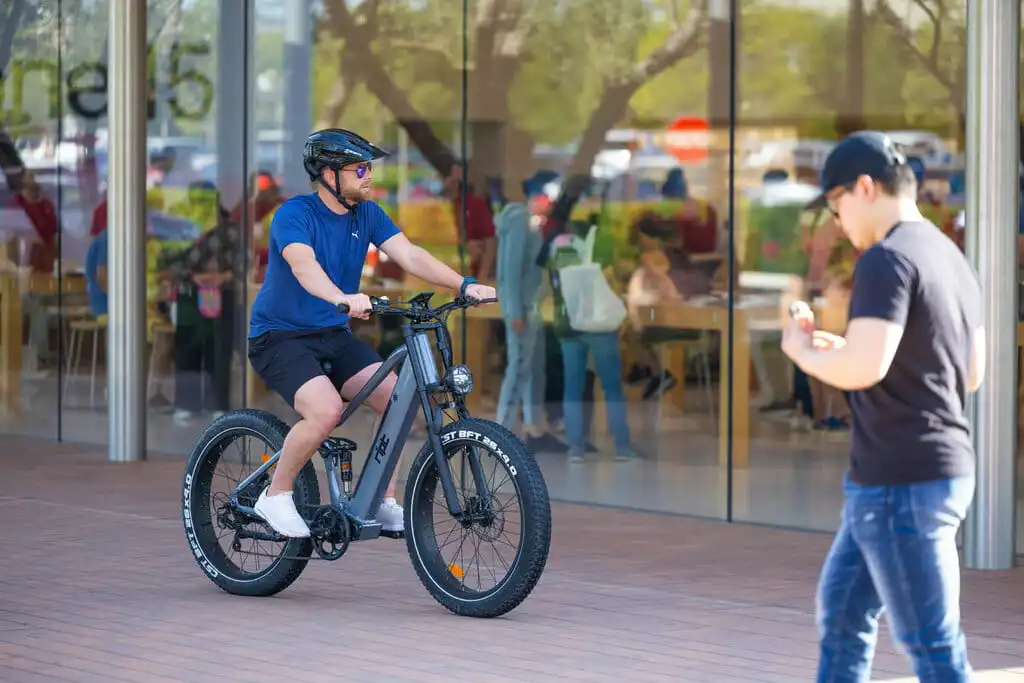
The law was a response to real tragedies, mostly involving high-powered e-motos marketed to teenagers. But it painted every e-bike with the same brush, pulling a commuter on a pedal-assist bike into the same regulatory category as someone on a 50 mph Surron. Other states are now watching, and a few are taking notes.
Where Each State Stands: 2026 Tracker
Here’s a quick read on the bills moving in the states that matter most for e-bike riders. Some go after rider behavior. Some go after manufacturers. A few aim at sidewalks and shared paths specifically. The approaches diverge sharply.
| State | Bill | Status (as of May 2026; California rows updated October 2026) | What it does | Effective date |
|---|---|---|---|---|
| NJ | S4834 | Signed Jan 2026 (Murphy) | Reclassifies all e-bikes as motorized bicycles; requires registration, driver license, and liability insurance; bans riders under 15. First state to abandon the three-class framework. | Law in effect; registration deadline July 19, 2026 |
| CA | AB 1942 | Dead. Stalled in the Assembly after May 14, 2026 and never reached a floor vote before the session ended | Would have required DMV registration and license plates for all Class 2 (throttle, 20 mph) and Class 3 (pedal-assist, 28 mph) e-bikes, with infraction-level fines for non-compliance. | N/A |
| CA | SB 1167 | Signed Sept 30, 2026 (Ch. 846) | Bars anything over 750 W, 20 mph on throttle, or 28 mph on pedal assist from being advertised, labeled, or sold as an e-bike; sellers of those machines must disclose that they need registration and a license. Every e-bike gets an upward-facing frame label with class, top assisted speed, and wattage. Redefines electric mopeds and motor-driven cycles. No new burden on Class 1–3 owners. | Jan 1, 2027 |
| CA | AB 2346 | Signed Sept 30, 2026 (Ch. 842) | Written point-of-sale disclosure of class, top speed, wattage, and age and helmet rules; local authorities may post 10, 15, or 20 mph limits on bike paths and multiuse trails; 10 mph prima facie limit for sidewalk riding. From Jan 1, 2029 every new Class 2 e-bike needs a speedometer and every new e-bike needs integrated lights. | Jan 1, 2027 (equipment rules Jan 1, 2029) |
| CA | AB 2595 | Signed Sept 30, 2026 (Ch. 843) | San Mateo County pilot: the county and its cities may bar riders under 12 from Class 1 and Class 2 e-bikes by local ordinance, after a 30-day public campaign and 60 days of warnings; then a $25 fine, waivable with an approved safety course. Report to the Legislature due Jan 1, 2030. | Jan 1, 2027; repealed Jan 1, 2031 |
| FL | SB 382 | Passed both chambers unanimously Mar 2026; sent to Gov. DeSantis | 10 mph cap on sidewalks and pedestrian areas when a pedestrian is within 50 ft; audible signal and yield required when passing on shared paths; statewide e-bike crash data collection; Micromobility Device Safety Task Force (report due Oct 2026). No license, registration, or helmet mandate. | Penalties effective July 1, 2026 |
| IL | SB 3336 | Senate passed 54–0 Apr 15, 2026; House pending | Reclassifies any e-bike or e-moto over 750 W or 28 mph as a motor-driven cycle requiring license, registration, title, and insurance. Sets minimum age 15 for Class 1 and Class 2 riders. Bans micromobility on sidewalks, interstates, and roads posted above 35 mph (unless a bike lane is present). | Jan 1, 2027 if enacted |
| MA | S.3077 (Ride Safe Act) | Filed by Gov. Healey May 4, 2026; referred to Senate Transportation Committee | Speed-based (not class-based) framework. Minimum age 16 for higher-speed devices; helmet rules including under-16 riders; mandatory lights, reflectors, and brakes; restricts higher-speed devices from sidewalks and bike lanes. Registration and insurance required for the faster device tier. | TBD |
| WA | SSB 6110 | Signed Mar 23, 2026 | Tightens the e-bike definition to exclude any vehicle that can exceed 20 mph on throttle alone; closes loopholes for bikes designed to be reconfigured out of e-bike specs; treats compliant e-motorcycles as motorcycles under existing motor-vehicle law. Companion HB 2374 died at sine die. | June 11, 2026 |
| UT | HB 381 | Signed Mar 24, 2026 | Helmets now required for all e-bike classes for riders under 21 (previously Class 3 only). Riders ages 8–15 must complete an approved online safety course before riding unsupervised on public roads. Additional provisions phased in for 2027. | May 6, 2026 |
| AZ | SB 1008 | Pending (2026 session) | Statewide speed limits on bicycle and multi-use paths: 15 mph maximum when the path is clear, 5 mph when passing pedestrians. No licensing, registration, or insurance changes. | TBD |
| NY | No statewide | Policy shift, NYC | NYC ended criminal enforcement for minor cyclist and e-bike traffic offenses (Mar 2026). State law unchanged: minimum age 16, sidewalk riding prohibited unless locally authorized, NYC-only Class 3 capped at 25 mph. | N/A |
The Data Doesn't Support a Blanket Crackdown
The backlash against e-bikes is running ahead of the evidence. In 2023, cars killed over 40,000 people in the United States. E-bikes were involved in roughly 80 of the year’s 1,166 cycling fatalities, about 7%. Youth account for roughly 20% of e-bike crashes, proportional to their share of the population.
Even those numbers are unreliable. Nearly half of recorded e-bike fatalities don’t specify the bike’s class, lumping legal pedal-assist commuter bikes together with throttle-powered e-motos and mopeds. Researchers have called this “classification chaos.” An observational study at several California schools found that only 12% of the two-wheeled electric devices on campus were actually legal e-bikes. The rest were higher-powered machines that don’t meet the legal definition.
Crash numbers have risen as e-bike sales have surged, but without accurate ridership data it’s impossible to say whether e-bikes are more dangerous per mile ridden or simply more common. That distinction matters enormously when writing policy.
What Actually Makes Streets Safer
The advocacy coalitions in the Bay Area, including Bike East Bay, the San Francisco Bicycle Coalition, Silicon Valley Bicycle Coalition, and the Marin County Bicycle Coalition, have laid out what they think works better than blanket registration mandates.
Enforce truth-in-advertising. The biggest safety gap isn’t legal e-bikes. It’s companies selling machines that exceed legal speed and power limits while calling them e-bikes. California’s attorney general already had the authority to act. California SB 1167, signed September 30, 2026 and effective January 1, 2027, strengthens that hand by barring anything over 750 watts, 20 mph on throttle, or 28 mph on pedal assist from being advertised, labeled, or sold as an e-bike. Washington’s SSB 6110 takes the same approach at the definition level.
Build the infrastructure. Build the infrastructure. Protected bike lanes are a proven way to reduce crashes for everyone: cyclists, pedestrians, and drivers. Many of the communities expressing the greatest concern about e-bike safety are the same ones that lack adequate cycling infrastructure, forcing bikes and cars into the same lanes. For context, about 1 in 100 bike crashes in Alameda County involves a pedestrian. For cars, it’s 1 in 11.
Fund e-bike incentive programs. When riders buy from local shops rather than unvetted online sellers, they’re more likely to end up with a bike that meets legal specifications and a mechanic who can maintain it properly.
Target the actual problem on sidewalks. Florida’s SB 382 is a useful model: it sets a 10 mph cap on sidewalks when pedestrians are nearby and requires an audible signal before passing, without dragging legal pedal-assist riders into the DMV. The bill also funds the data collection that should have come before the regulation, not after.
Don't bring back registration as an enforcement tool. California passed AB 1909 specifically to prohibit local bike registration requirements because they were being used as a pretext for biased stops. Reintroducing plates and registration reopens that door.
What This Means for E-Bike Owners
For riders in New Jersey, the rules are already live. You need liability insurance now, and registration by July 19, 2026. Velosurance offers compliant e-bike liability coverage that meets and exceeds the state minimums.
For riders in Washington and Utah, smaller changes are already in effect. Washington’s tighter e-bike definition (June 11, 2026) won’t affect compliant Class 1–3 owners, but anyone riding a borderline e-moto should re-check the specs. Utah’s helmet expansion took effect May 6, 2026 for riders under 21.
For riders in California, nothing changes for a compliant Class 1–3 e-bike. The three bills signed September 30, 2026 (California SB 1167, AB 2346, and AB 2595) police labels, ads, and the sales counter from January 1, 2027, and the registration-and-plates bill, AB 1942, died without a floor vote. The one rider-facing change: from January 1, 2027, sidewalk riding carries a 10 mph prima facie limit and cities may post 10, 15, or 20 mph limits on bike paths.
For riders in Illinois, Massachusetts, Florida, Arizona, and elsewhere, nothing has changed for licensed Class 1–3 e-bikes yet, but watch closely. Illinois SB 3336 and Massachusetts S.3077 both contemplate insurance and registration for higher-speed devices. Florida’s SB 382 awaits the governor’s signature.
Regardless of where you ride, the trend is clear. States are paying closer attention to e-bikes, and the regulatory window is narrowing. Carrying insurance is already smart policy for any e-bike owner, not because a law requires it, but because a single at-fault accident can produce medical bills and liability claims that dwarf the cost of your bike.
E-bikes remain one of the most efficient, practical, and enjoyable ways to get around. They produce a fraction of the emissions of a car. They make cycling accessible to people who couldn’t otherwise ride, whether due to age, fitness, or distance. The goal of regulation should be to keep dangerous machines off the road while preserving the freedom and accessibility that legal e-bikes provide. So far, some legislators are getting that balance wrong.
The best thing riders can do right now is stay informed, make sure their bike is properly insured, and pay attention to what’s happening in their state legislatures. The laws being written today will determine what riding looks like tomorrow.
Frequently Asked Questions
- Which states have already enacted e-bike laws in 2026, and which are still pending?
- New Jersey, Washington, and Utah have signed e-bike laws that are now in effect, and Florida's SB 382 has passed both chambers unanimously and awaits the governor's signature. New Jersey's S4834 is already live, with a registration deadline of July 19, 2026. Washington's SSB 6110 takes effect June 11, 2026, and Utah's HB 381 took effect May 6, 2026. California signed SB 1167, AB 2346, and AB 2595 on September 30, 2026, all effective January 1, 2027, while California AB 1942 died without a floor vote. Still pending as of this article's May 2026 tracker: Illinois SB 3336, Massachusetts S.3077, and Arizona SB 1008.
- What does New Jersey's S4834 require of Class 1, Class 2, and Class 3 e-bike owners?
- New Jersey's S4834 treats Class 1, Class 2, and Class 3 e-bikes identically: every one is reclassified as a motorized bicycle, so owners need registration, a driver license, and liability insurance regardless of whether the bike tops out at 15 or 28 mph. The deadline to register is July 19, 2026, and Velosurance offers e-bike liability coverage that meets the state minimums. One thing to watch: riders under 15 are banned from operating e-bikes outright, and New Jersey is the first state to abandon the three-class framework that 45 other states still use.
- How do 2026 state laws treat Class 1, Class 2, and Class 3 e-bikes differently?
- Approaches vary sharply by state. New Jersey's S4834 is class-blind, pulling Class 1, Class 2, and Class 3 e-bikes alike into the motorized-bicycle category. California went the other way: AB 1942, which would have added DMV registration and license plates for Class 2 (throttle-assist, 20 mph) and Class 3 (pedal-assist, 28 mph) owners, died without a floor vote, while California SB 1167, signed September 30, 2026, leaves Class 1, Class 2, and Class 3 riders alone and instead bars sellers from advertising, labeling, or selling high-powered e-motos as e-bikes from January 1, 2027. Massachusetts S.3077 skips classes entirely for a speed-based framework, and Washington's SSB 6110 tightens the definition of what qualifies as an e-bike at all.
- What does the crash data show about e-bike safety compared to cars?
- E-bikes were involved in roughly 80 of the 1,166 cycling fatalities in 2023, about 7%. Cars killed over 40,000 people in the United States that same year. For pedestrian risk specifically, about 1 in 100 bike crashes in Alameda County involves a pedestrian, compared to 1 in 11 for cars. The caveat worth knowing: nearly half of recorded e-bike fatalities don't specify the bike's class, lumping legal pedal-assist commuter bikes together with throttle-powered e-motos and mopeds, a problem researchers call "classification chaos."
- What should e-bike owners do right now to stay legal and protected?
- Start by carrying liability insurance, which is already required in New Jersey and is smart policy anywhere, since a single at-fault accident can produce medical bills and liability claims that dwarf the cost of the bike. New Jersey riders need coverage now and registration by July 19, 2026. Riders in Washington and Utah should re-check their bike's specs against the tighter rules taking effect this summer, and riders in Illinois, Massachusetts, Florida, and Arizona should watch their state legislatures as registration and insurance bills move. California riders keep riding paperwork-free: the three laws signed September 30, 2026 target labels, ads, and the sales counter, not the rider. Buying from a local shop rather than an unvetted online seller also makes it more likely the bike meets legal specifications.