


Mississippi cycling in numbers
48%
Bike ownership
475+
Miles of trails
25
State parks
25
Bike friendliness score
Mississippi from a cyclist's perspective
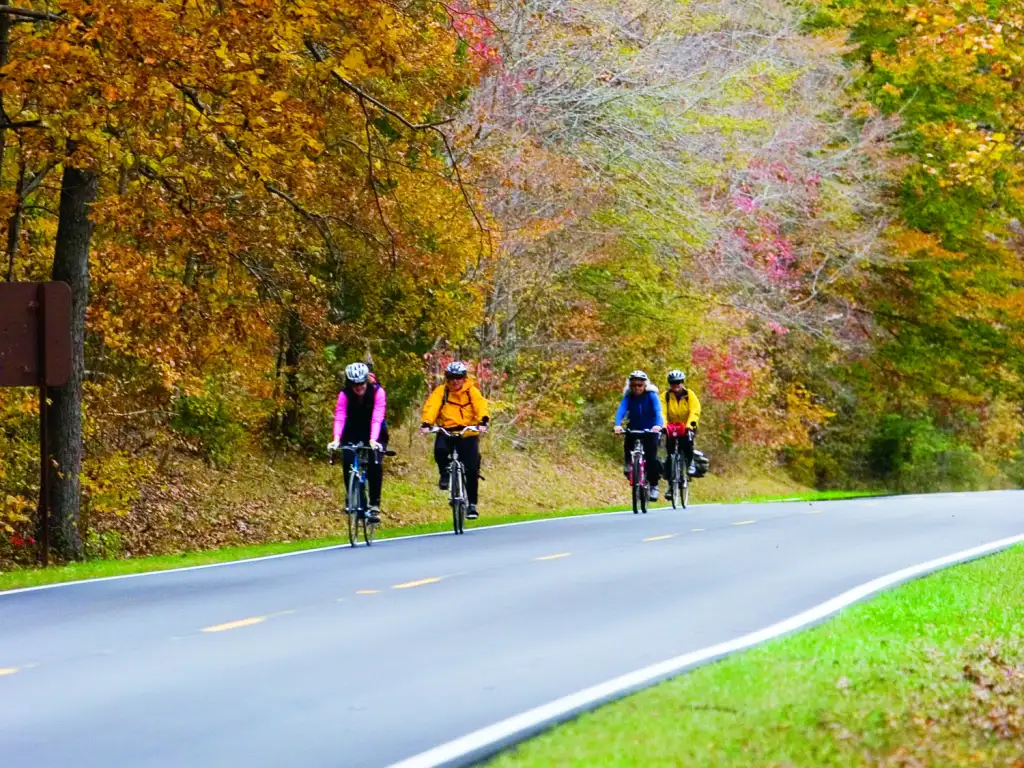
Mississippi owns more miles of America's best-known cycling road than any other state. The Natchez Trace Parkway spends roughly 310 of its 444 miles inside Mississippi, from the river bluffs at Natchez to the Alabama line beyond Tupelo: no commercial traffic, no stop signs, and a National Park Service mandate that makes a bicycle a full, legal user of the lane. Riders who think of the state as a drive-through discover a parkway that strings together cypress swamps, historic stands, and reservoir overlooks on pavement smoother than most city bike lanes.
The rail-trails are the second surprise. The Longleaf Trace runs 44 paved, car-free miles from the University of Southern Mississippi in Hattiesburg to Prentiss, with covered rest stops roughly every two miles, and holds a place in the Rails-to-Trails Conservancy Hall of Fame. In the northern hill country, the Tanglefoot Trail covers 43.6 miles from New Albany to Houston through seven small towns on a railroad corridor built by William Faulkner's great-grandfather. Both are trails a family can ride end to end, and both anchor small towns that have learned to feed and water cyclists.
Off-road riders get more than the map suggests. Clear Springs in the Homochitto National Forest packs about 1,100 feet of climbing into 12 miles of loess-ravine singletrack, terrain that retires the "Mississippi is flat" line on the first switchback. On the coast, the Bethel Bike Trails near Saucier offer some 20 miles of fast, twisty pine-savanna singletrack in the De Soto National Forest, maintained by the Gulf Coast Bicycle Club on corridors that began life as motorcycle trails. Gravel riders may have it best of all: the Mississippi Gravel Cup races four corners of the state every winter while most of the country sits on trainers.
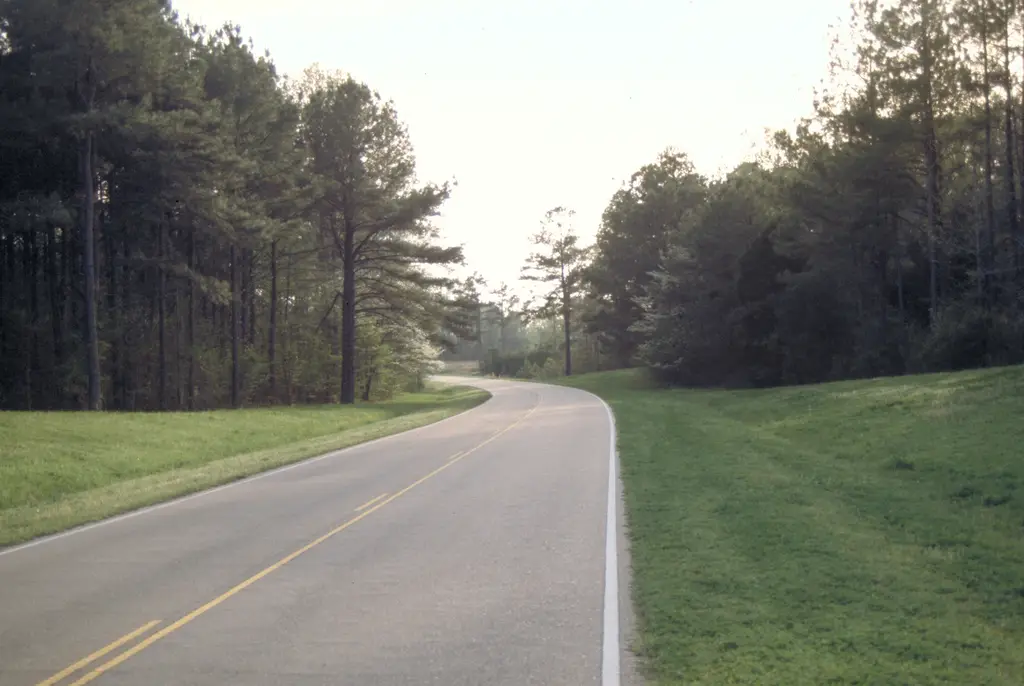 The Gulf Coast adds a different flavor: about 101 miles of beachfront and neighborhood pathways link Bay St. Louis to Pascagoula, and the signed Live Oaks Bicycle Route connects Gulf Islands National Seashore to downtown Ocean Springs under centuries-old oaks. City riding is thinner. Ridgeland has built itself into the state's cycling hub with eight Natchez Trace access points, bike shops, and a 1,000-rider century each May; Oxford and Hattiesburg lean on college-town energy and the trails at their doorsteps.
The honest picture: the League of American Bicyclists ranks Mississippi 50th of 50, rural highways rarely carry a shoulder, and July and August are a sauna. The case for riding here is the flip side of those numbers — empty roads, a September-to-May season most northern states would trade for, and a 444-mile national park you can pedal onto from a Ridgeland neighborhood street. Pick the routes built for bikes, and Mississippi delivers far more than its ranking suggests.
Mississippi E-bike Laws
Three classes, almost no paperwork, and one age rule. Here is where Mississippi stands on e-bikes.
Mississippi adopted the three-class framework with Mississippi HB 1195, effective July 1, 2021, and kept the rulebook short: an e-bike with operable pedals and a motor of less than 750 watts is a bicycle in the eyes of the state. No license, no registration, no insurance, no statewide helmet rule — the few limits that exist target Class 3 and out-of-class machines.
The motor assists only while pedaling and cuts off at 20 mph; legal for all ages.
The motor may propel the bike on throttle alone but cannot assist past 20 mph; legal for all ages.
Assist while pedaling up to 28 mph with a required speedometer; a throttle bike that reaches 28 mph is not a Class 3 in Mississippi (Miss. Code Ann. 63-3-1315(9)).
An e-bike is not a motor vehicle, and riders are expressly exempt from the driver's license chapters (Miss. Code Ann. 63-3-1315(2)).
Compliant e-bikes are exempt from registration, certificates of title, and license plates — no tag, no DMV visit.
Mississippi exempts all three classes from its financial responsibility laws — coverage is on you.
No one under 16 may operate a Class 3, though they may ride as passengers on one designed to carry them (Miss. Code Ann. 63-3-1315(8)); no age floor for Class 1 or Class 2.
Mississippi has no statewide bicycle or e-bike helmet law at any age; a handful of local ordinances set their own rules.
Where You Can Ride
- Roads & bike lanesAll three classes ride where bicycles ride — streets, highways, roadways, and bicycle lanes (Miss. Code Ann. 63-3-1315(7)).
- Bike & multi-use pathsOpen to all classes by default; a local authority may bar Class 1 or Class 2 only after notice and a public hearing, while Class 3 can be excluded without one.
- SidewalksNo statewide ban — state law defers sidewalk rules to cities and counties (Miss. Code Ann. 21-37-3).
- State parks & trailsMDWFP parks treat e-bikes as bicycles on park roads and paved paths; managers of natural-surface trails may set their own e-bike rules, and some rail-trails post class or speed limits — check before you ride.
- Out-of-class e-motos750 watts or more, no operable pedals, or throttle past 20 mph means motorcycle treatment: license, registration, title, insurance, and Mississippi's all-ages motorcycle helmet law (Miss. Code Ann. 63-7-64).
Effective July 1, 2021 under Mississippi HB 1195. Statutes: Miss. Code Ann. 63-3-103(l), 63-3-1315, 21-37-3, 63-7-64; Mississippi HB 1195 (2021), Ch. 355. Cities and park districts can add their own path and trail restrictions — check signage where you ride. Last reviewed June 2026.
Mississippi Cycling Weather
Mississippi flips the riding calendar: a long, mild September-to-May season with 215 days of sunshine a year, while July and August are for dawn starts and shaded trails.
Sunny days a year
Riding season
Sep - May
Mississippi Cycling Destinations
Natchez Trace Parkway
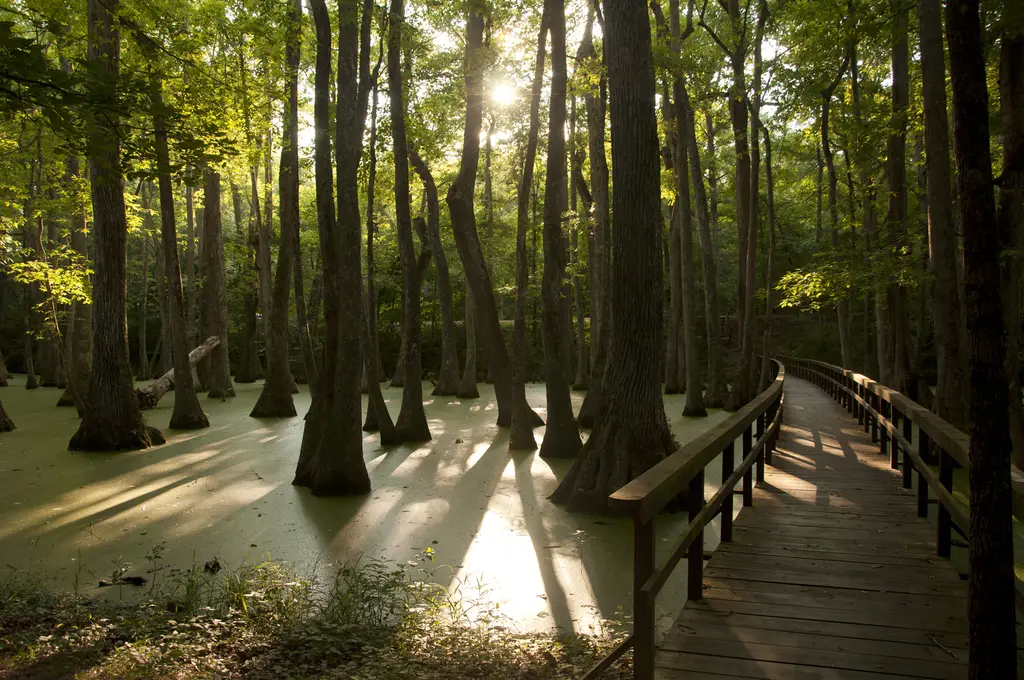
The signature road ride in Mississippi is a national park: 444 miles of parkway with no commercial traffic, no stop signs, and bicycles designated as legal users of the full lane. The classic central segment runs about 81 miles from Ridgeland north to French Camp, rolling past the Ross Barnett Reservoir overlook, the Cypress Swamp boardwalk at milepost 122, and the town of Kosciusko before reaching the 1810 French Camp settlement, where a bed-and-breakfast and cafe sit directly on the parkway. The numbers explain the appeal — 1,600 feet of climbing in 81 miles is barely 20 feet per mile on glass-smooth asphalt. Ridgeland anchors the experience with eight access points, bike shops, and more than 30 free cue-sheet itineraries published for every segment of the Trace. The honest caveat: services on the parkway itself are nearly nonexistent and there is no shoulder, so riders carry food and water between towns. Ambitious tourers ride the entire ~310-mile Mississippi portion from Natchez to the Alabama line in four to five days.
Longleaf Trace
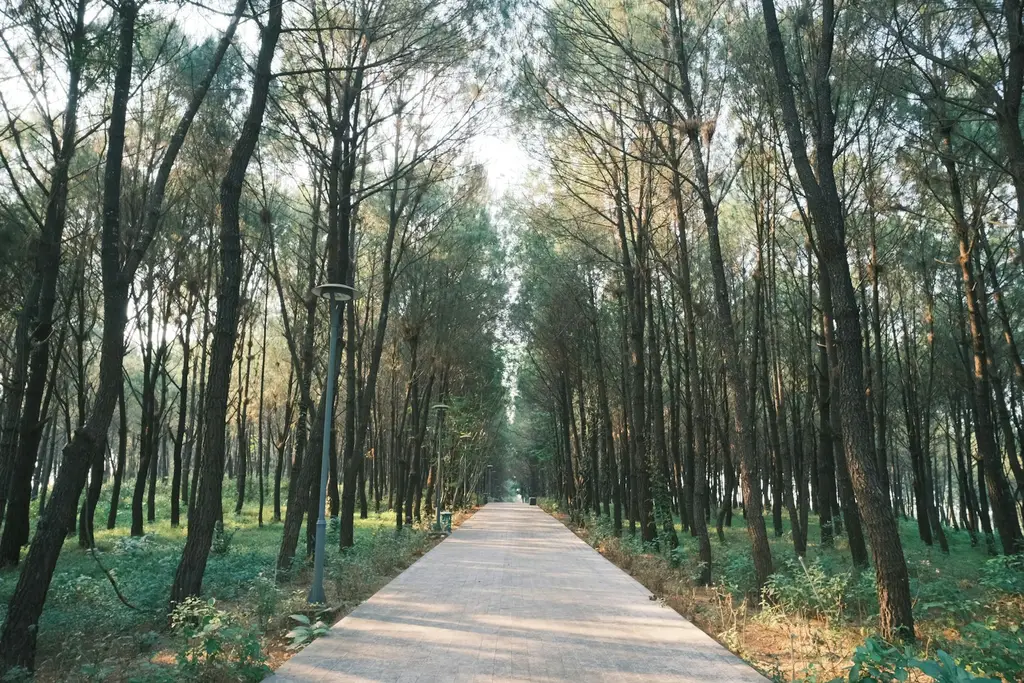
Mississippi's premier rail-trail is a 10-foot-wide paved ribbon on the old Mississippi Central Railroad corridor, running 44 miles from the Gateway trailhead at the University of Southern Mississippi in Hattiesburg through Sumrall, Bassfield, and Carson to Prentiss. The grade is mostly imperceptible, and the service level is unusual for a rural trail: covered rest stops roughly every two miles, water, restrooms, and a 2.2-mile Turtle Loop nature spur. The scenery is south Mississippi at its best — longleaf and loblolly pine corridors, wetlands, and small farms — and Sumrall, at roughly the one-third mark, has cafes and a bike shop at the old depot, making it the natural turnaround for a half-day ride. Car-free for its entire length, the Trace suits everyone from families on cruisers to road riders doing the full 88-mile out-and-back. A parallel 22-mile equestrian path keeps horses off the pavement.
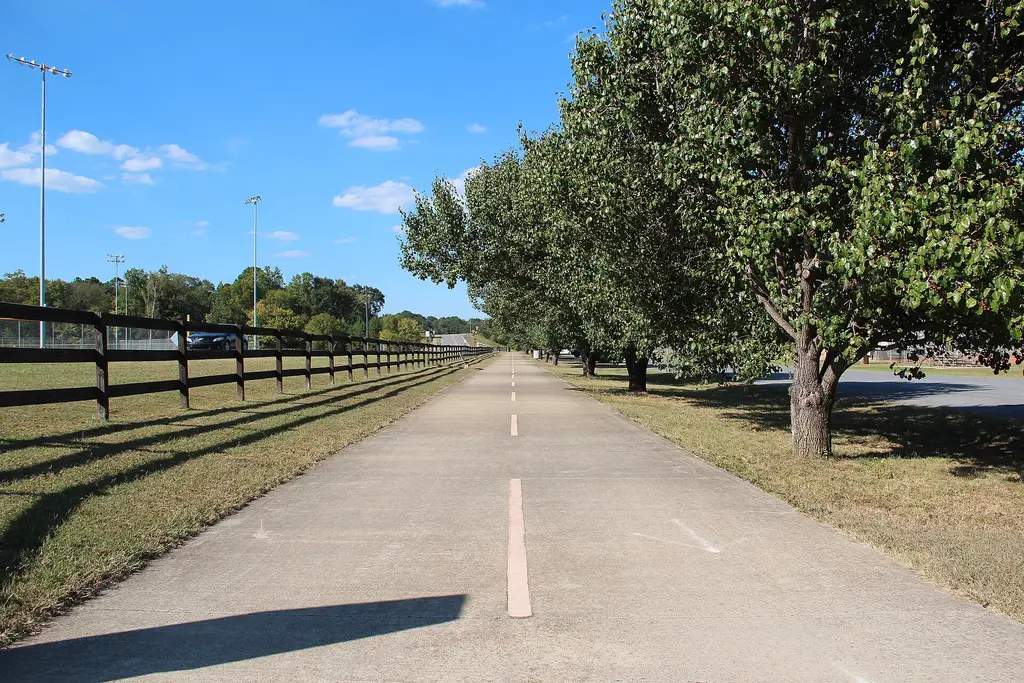
Tanglefoot Trail
The longest single rail-trail in Mississippi and a designated National Recreation Trail: 43.6 miles of smooth asphalt from New Albany south to Houston on a corridor built in 1871 by Colonel William C. Falkner, great-grandfather of novelist William Faulkner, who was born in New Albany. The trail takes its name from the line's wood-burning engine, the "Tanglefoot," and threads seven hill-country towns with whistle-stop rest areas, restrooms, and water along the way; Pontotoc, near the midpoint, is the best lunch stop. The riding is car-free except for quiet road crossings, through kudzu-draped cuts, hardwood bottoms, pastures, and cotton fields on the edge of the Appalachian foothills. New Albany has leaned into trail tourism with bike shops, restaurants, and lodging within a block of the northern trailhead. Surface quality is excellent, though the exposed farm-country stretches reward an early start in summer.

Live Oaks Bicycle Route
The Gulf Coast's defining ride: a 15.5-mile round-trip route marked with green-and-white bike-route signs, connecting the Davis Bayou Area of Gulf Islands National Seashore to downtown Ocean Springs at the 1907 Louisville & Nashville Train Depot. The ride mixes quiet residential streets under centuries-old live oaks, the Davis Bayou park road past salt marsh and alligator habitat, and the Front Beach stretch with open views across Biloxi Bay. Downtown Ocean Springs delivers the payoff — Government Street's restaurants, breweries, and the Walter Anderson Museum of Art sit a block off the route. Riders wanting more distance roll onto the Biloxi Bay Bridge's wide, separated bike lane to the Biloxi Lighthouse, and the route plugs into the larger coastal network of roughly 101 miles of pathways from Bay St. Louis to Pascagoula. Flat and slow-paced, it suits cruisers, families, and vacation riders more than training rides.
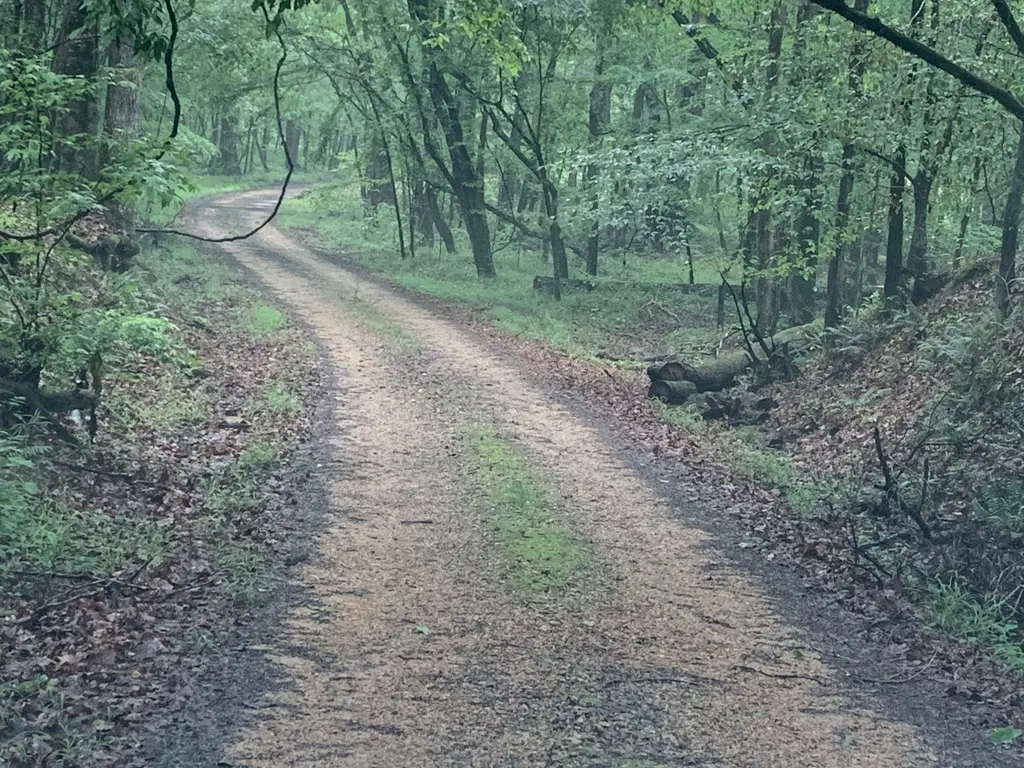
Clear Springs Trail
Southwest Mississippi's best singletrack sits in the Homochitto National Forest between Roxie and Meadville, about 30 miles east of Natchez. The terrain surprises anyone who thinks Mississippi is flat: sustained climbs and fast descents through steep loess ravines, with bridges over Richardson Creek, Tally's Creek, and Mills Branch, all under mature pine and hardwood canopy. The full system runs about 12 miles with roughly 1,100 feet of climbing — real work on a bike with knobby tires — and the loops radiate from the Clear Springs Recreation Area, built around a spring-fed lake with a campground, swimming area, and bathhouse for a small day-use fee. It suits intermediate trail riders and fit beginners willing to walk a few pitches, and it shares the woods with hikers on weekends. The honest caveat: maintenance is volunteer-driven and conditions vary, with a 9-mile outer loop historically the reliably open core, so check current status with the Homochitto ranger district before driving out.
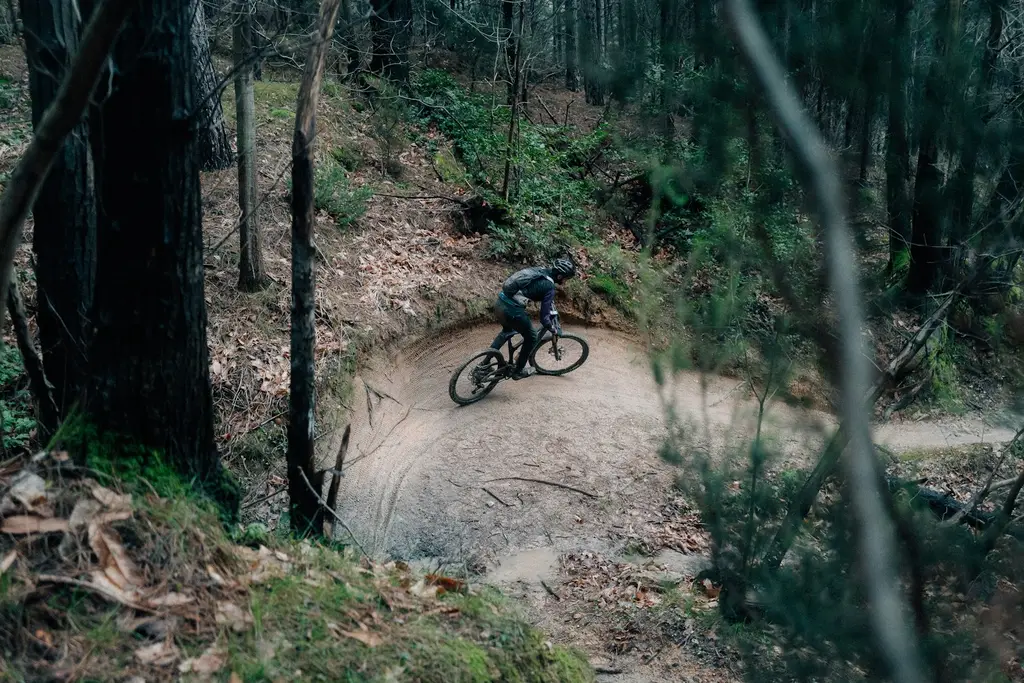
Bethel Bike Trails
The Gulf Coast's hometown singletrack: roughly 20 miles of interconnected trails in the De Soto National Forest near Saucier, eight miles north of I-10 and maintained by the Gulf Coast Bicycle Club. Seven named trails — Pine Lizard, South Pine Lizard, Badlands, Couch, Turtle Back, Briar Patch, and South Bethel — began life as motorcycle trails, which explains their character: fast, twisty, mostly flat riding with moguls, log hops, and rut crossings rather than big climbs. The Couch Trail is the scenic standout, hugging Tuxachanie Creek through bottomland forest, while Badlands and South Bethel deliver the longest continuous stretches through pine savanna. Soils swing from hardpack clay to loose sand, so handling changes mid-ride, and summer humidity is serious. Rated beginner-friendly overall, it is the right introduction to off-road riding for coastal riders, with enough speed and tight tree slaloms to keep veterans entertained. Low-lying sections flood after heavy rain, so check Forest Service status before driving out.
Mississippi Cycling Events
From the Delta's Bikes, Blues & Bayous to winter gravel in the national forests, Mississippi's events deliver supported riding with Southern hospitality in every season.
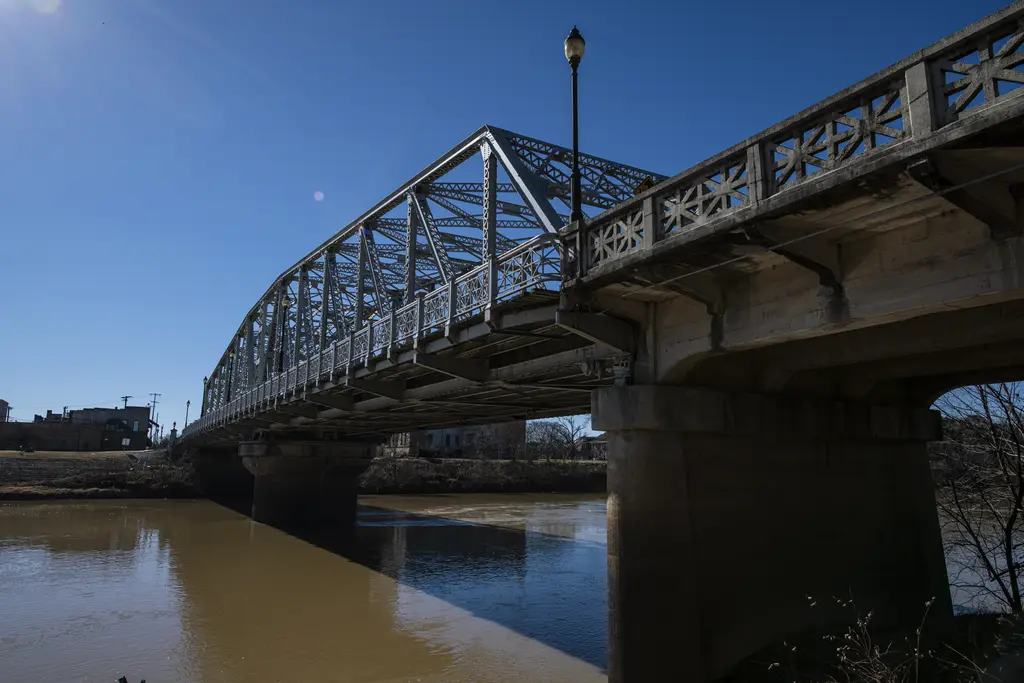
Bikes, Blues & Bayous
Mississippi's largest annual recreational ride rolls out at 7 a.m. from Front Street in historic downtown Greenwood, drawing around 1,000 riders from across the South. Routes of 11 to 66 miles run dead-flat through Delta cotton and soybean country, crossing the bayous and levee roads of Leflore County. The rest stops come with live blues, food, and cold drinks, and the finish line serves barbecue — the whole weekend is built around Delta culture, from Friday packet pickup to the post-ride festivities downtown. The flat terrain makes it one of the most approachable big rides in the South, and the 66-mile route gives stronger riders a honest distance without a single real climb.
Event website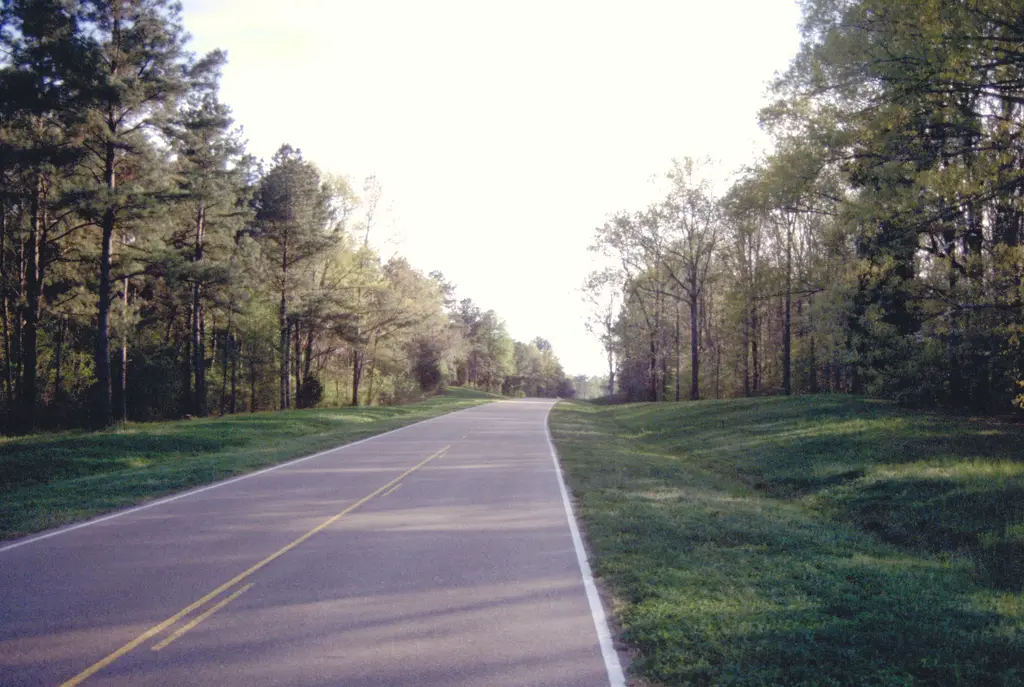
Natchez Trace Century Ride
One of the largest spring rides in Mississippi, capped at 1,000 riders, leaving the Ridgeland Recreational Center at 7 a.m. and heading north onto the Natchez Trace Parkway. The Trace's car-light, commercial-traffic-free pavement and mild rollers make this one of the most beginner-friendly centuries in the South — the 62-mile route logs only about 1,655 feet of gain. Five distances from 8 to 100 miles cover everyone from families to century riders, with stocked rest stops, SAG support, and a post-ride meal. Registration includes a t-shirt and swag bag, there is no ride-day registration, and the event returns each year on the first Saturday of May.
Event website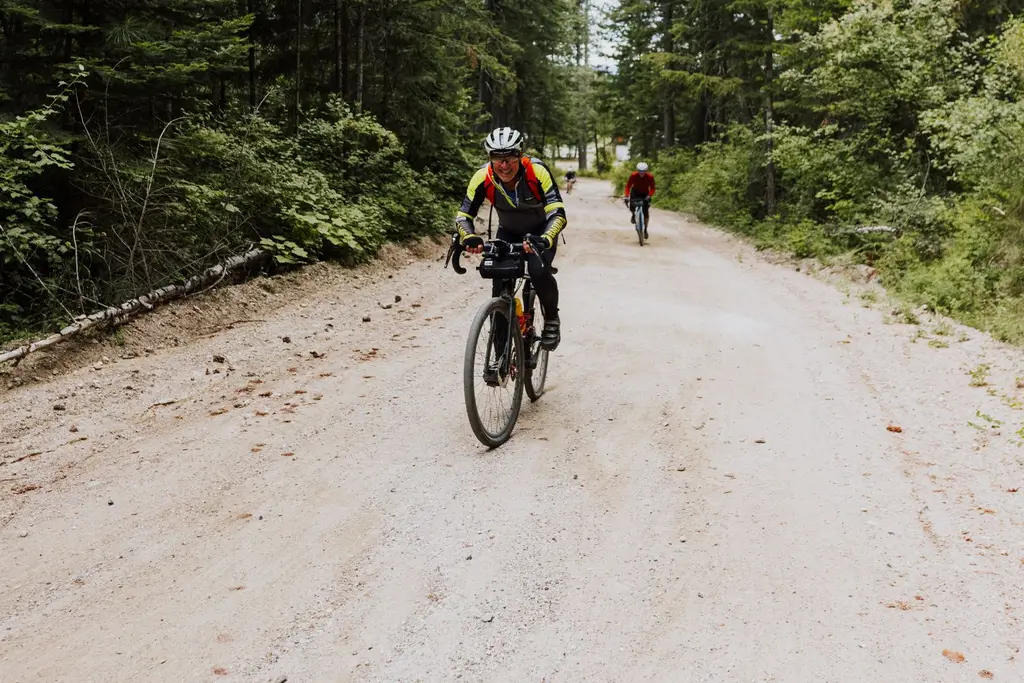
Mississippi Gravel Cup
Mississippi's winter gravel racing series runs four rounds in four corners of the state: OMG in Oxford, the Camp Shelby Gravel Grind near Hattiesburg, the Rockcrusher Challenge in Ackerman, and The Burner in Bentonia. Each round offers competitive 100- and 50-mile distances plus a led 20-mile fun ride for gravel newcomers, and the terrain changes completely round to round — the Oxford 100-miler stacks over 7,000 feet of climbing through the Holly Springs National Forest, while Camp Shelby grinds through the Ragland Hills on active military training land. Series points crown overall champions at season's end. It is the backbone of competitive gravel in the state and pulls riders from across the Southeast during the months most of the country spends indoors.
Event website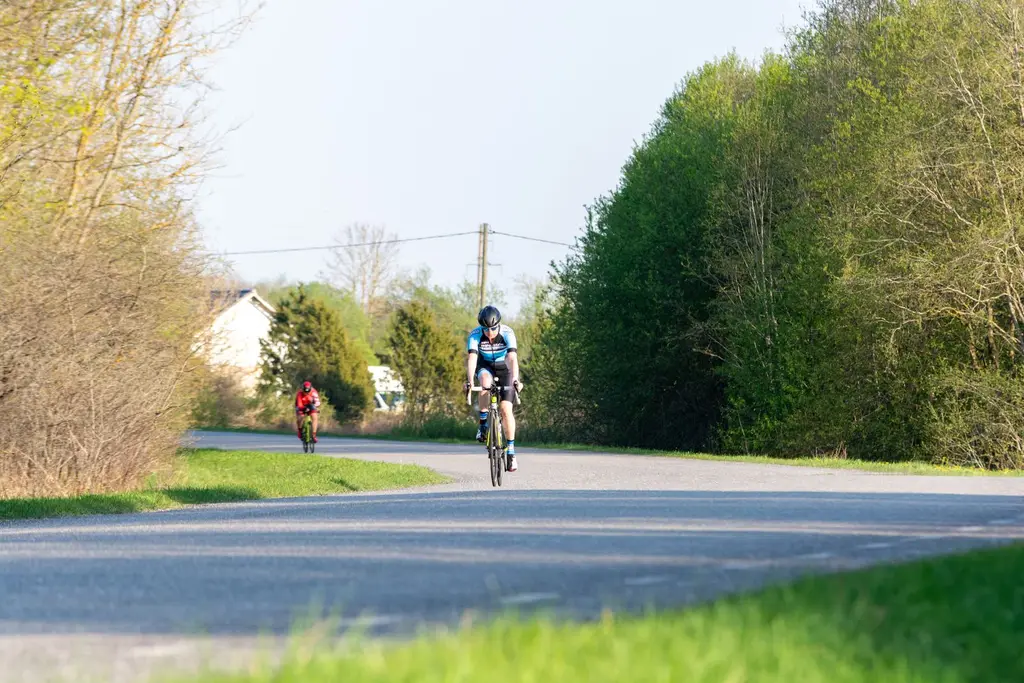
Velvet Ditch Gran Fondo
North Mississippi's premier road event is a non-competitive gran fondo rolling out of Oxford — William Faulkner's hometown and home of Ole Miss — capped at 325 riders. Three routes of 20, 45, and 70 miles wind through the relentless rollers of Lafayette County, with the long course banking over 3,000 feet of short, steep climbing. No timing, no podiums: every bike is welcome, from road and gravel bikes to e-bikes, tandems, and commuters, on marked courses with stocked rest stops. The finish lands within walking distance of the Square's restaurants and bars. The name is Oxford's old nickname — the "Velvet Ditch," a place so comfortable you never climb out.
Event website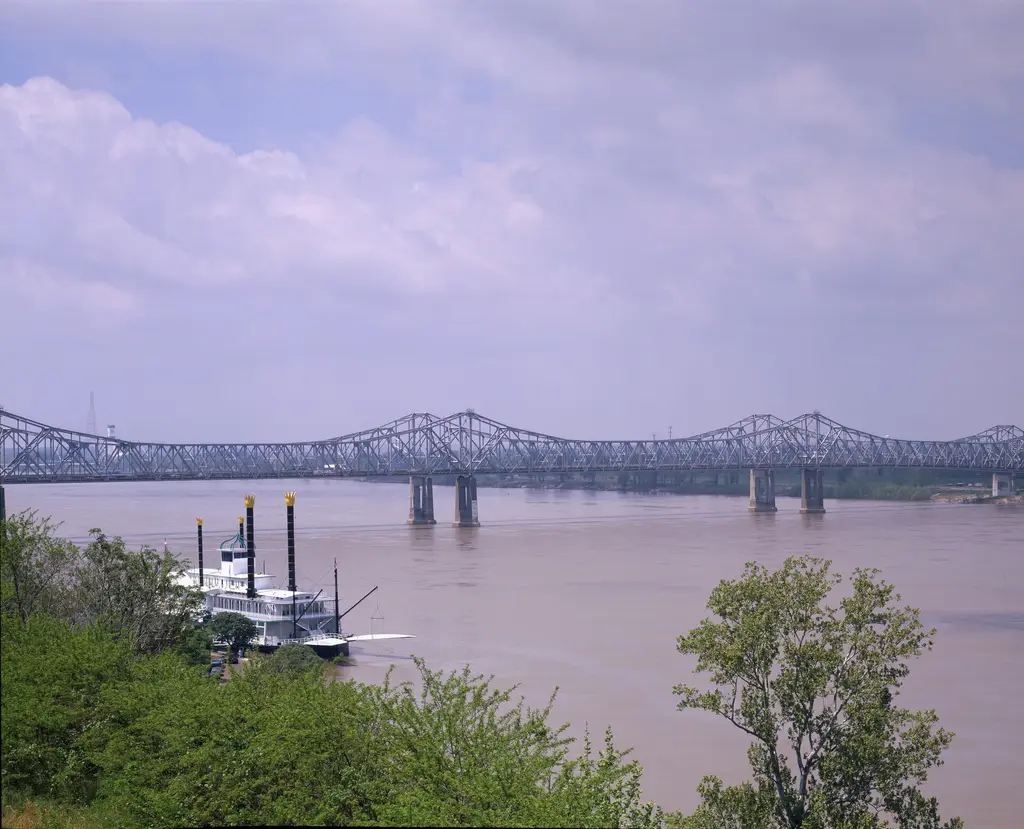
YP Natchez Bicycle Classic
A festive late-May ride that starts at 7:30 a.m. on Broadway Street in front of the Natchez Grand Hotel, on the bluffs above the Mississippi River. Five route choices — paved rides from 15 to 62 miles plus a 48.5-mile multi-surface gravel option — all touch the southern terminus section of the Natchez Trace Parkway. Riders go at their own pace with no time cutoffs, and stocked stops along every route keep them fed and watered. The tagline is "Come for the Ride, Stay for the Party": the ride feeds into a weekend in one of the South's best-preserved river towns, and it now draws cyclists from Texas, Arkansas, Florida, and Louisiana alongside the home crowd.
Event website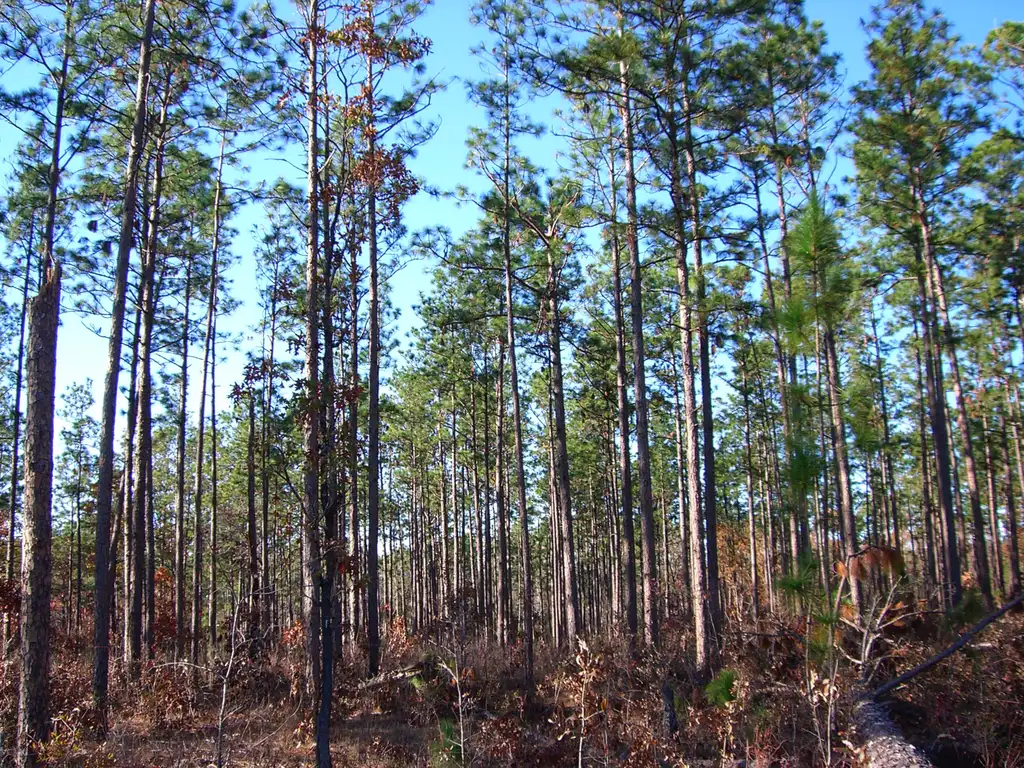
Rattlesnake Rumble
South Mississippi's marquee gravel race runs on some of the best gravel roads in the Southeast, through the De Soto National Forest's vast forest-road network and the punchy Ragland Hills. The 100-mile course crosses Perry, Greene, and Forrest counties, passing through the Leaf River Wildlife Management Area and the Camp Shelby Joint Forces Training Area while packing roughly 4,500 feet of climbing; the 100K version carries about 2,800. Wildlife sightings are part of the deal — deer, turkeys, wild hogs, and the namesake Eastern Diamondback. Organized by two Hattiesburg-area cycling nonprofits as a fundraiser for local trail work, it is timed, scored gravel racing with a distinctly piney-woods South Mississippi character.
Event websiteMississippi E-bike Law and Insurance FAQ
- What are the e-bike laws in Mississippi?
- Mississippi HB 1195 adopted the three-class framework effective July 1, 2021, and kept the rulebook short: an e-bike with operable pedals and a motor of less than 750 watts is a bicycle in the eyes of the state. No license, no registration, no insurance, no statewide helmet rule. The few limits target Class 3, which requires riders 16 and older, and out-of-class machines.
- Do Class 1, Class 2, and Class 3 e-bikes need insurance in Mississippi?
- Insurance is your call in Mississippi: all three classes are exempt from the state's financial responsibility laws. That covers Class 1 (pedal assist only, cutting off at 20 mph), Class 2 (throttle-capable to 20 mph), and Class 3 (pedal assist only to 28 mph, speedometer required, no throttle). Coverage is on you, and a standalone Velosurance policy handles theft, damage, and optional liability from around $9 per month.
- What does bicycle and e-bike insurance cover in Mississippi?
- A standalone Velosurance policy covers theft, accidental and crash damage, and damage in transit, with optional liability and medical payments coverage. Mississippi requires no e-bike insurance, so a policy like this is how Mississippi riders protect the bike itself and their own exposure after a crash. Policies start around $9 per month.
- Does Mississippi require helmets for e-bike riders?
- Helmet choice belongs to the rider in Mississippi: the state has no statewide bicycle or e-bike helmet law at any age, and only a handful of local ordinances set their own rules. The line that matters: a machine of 750 watts or more, without operable pedals, or with a throttle past 20 mph gets motorcycle treatment, including Mississippi's all-ages motorcycle helmet law plus license, registration, title, and insurance.
Mississippi e-bike laws explained: classes, age limits, and what changes next.



Why Velosurance is best for your bicycle
Not all types of insurance are created equal. Velosurance levels the playing field by offering stand-alone bicycle coverage, where claims won't affect your homeowner's or renter's policy premiums.
| Policy Coverage |  | Homeowner/Renters Policy |
|---|---|---|
| Insured at Full Value | Yes | Possibly |
| Crash Damage | Yes | No |
| Theft Coverage | Yes | Limited |
| Theft by Force | Yes | No |
| Theft of Accessories | Yes | Limited |
| Theft Away From Home | Yes | Possibly |
| Uninsured Motorist | Yes | No |
| Personal Liability | Yes | Possibly |
| Permissive Use Policy | Yes | No |
| Replacement Rental | Yes | No |
| Event Fee Return | Yes | No |
| Cycling Apparel Coverage | Yes | No |
| Medical Payments | Yes | Possibly |
| Racing Coverage | Yes | No |
| E-bikes | Yes | No |
| Coverage in-transit | Yes | No |
| USAC, USAT and IMBA Member Discount | Yes | No |
| FREE INSTANT QUOTE |
Not all insurance policies provide the same level of protection, and many people only discover gaps in their coverage after filing a claim. We’ve done the hard work of reviewing the fine print. To see how plans compare, check out our insurance comparison.
Client satisfaction is our #1 goal. Here's what our clients say about Velosurance


Velosurance really stepped up and put me at ease. The claim was fast and easy. I am insuring all my bikes now.

Check out Velosurance reviews to see what people are saying about us.
Mississippi's best bicycle and e-bike insurance
No matter where your adventures take you, protect your bicycle and yourself from the unexpected with America's best bike insurance.