


Louisiana cycling in numbers
34%
Bike ownership
500+
Miles of trails
21
State parks
40th
Bike friendliness score
Louisiana from a cyclist's perspective
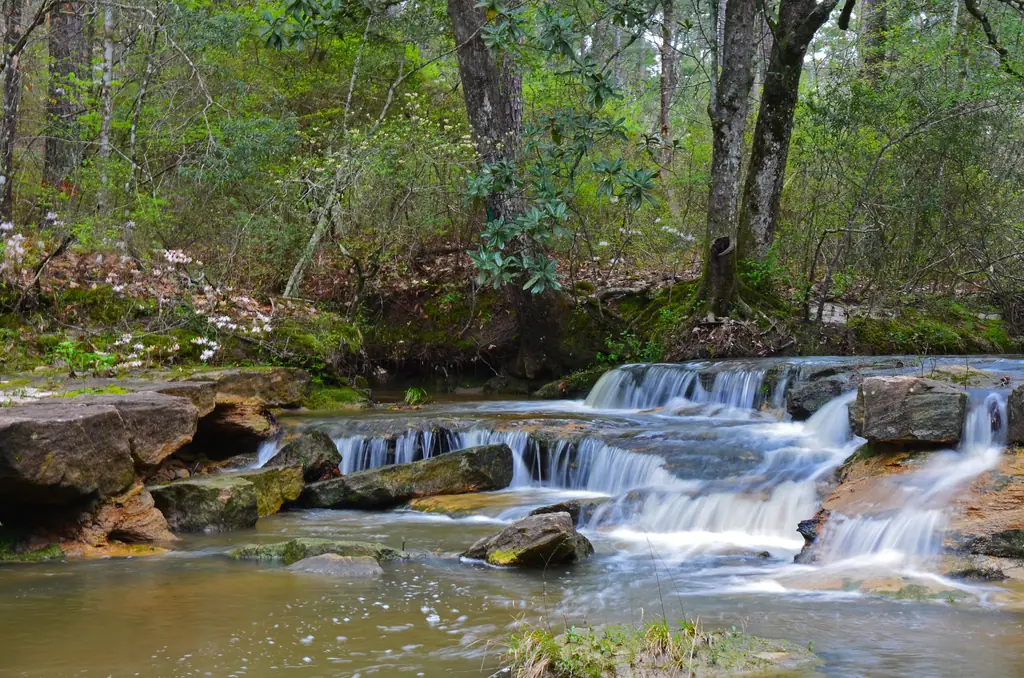
Louisiana rides on top of its levees. One of the flattest states in the country put its best cycling where the land meets the water: paved paths along the crown of the Mississippi River levee, 31 miles of rail-trail through the Northshore pines, and bayou-top gravel through cypress swamp. The season is the inverse of the North's — October through May is prime, and June through September is for dawn raids only, when the heat index settles into the 90s by breakfast.
The marquee trails are real infrastructure. The Tammany Trace, Louisiana's first rails-to-trails conversion and a Rails-to-Trails Conservancy Hall of Fame inductee, runs 31 paved miles from Covington to Slidell through Abita Springs, Mandeville and Lacombe. The Mississippi River Trail adds about 22 levee-top miles from New Orleans's Audubon Park to the Bonnet Carre Spillway, and Baton Rouge's levee path runs 13 paved miles from the downtown promenade past LSU. In New Orleans, the 2.6-mile Lafitte Greenway carries roughly 375,000 people a year between the French Quarter's edge and City Park.
Road riders sort into three camps. River Road threads the plantation corridor past Oak Alley and Houmas House on dead-flat rural pavement. Cajun Country spins out of Lafayette and Breaux Bridge through rice fields and crawfish farms. And the Felicianas hide the state's only real climbing: the loess bluffs around St. Francisville, where the Rouge-Roubaix race stacks more than 5,500 feet of gravel-and-pavement suffering — hors-category by Louisiana standards. Mountain bikers get more than the map suggests: Lincoln Parish Park in Ruston has drawn national attention since 1992, Bogue Chitto State Park carries 25 miles of purpose-built singletrack, and the Wild Azalea Trail rolls 24 remote miles through Kisatchie National Forest.
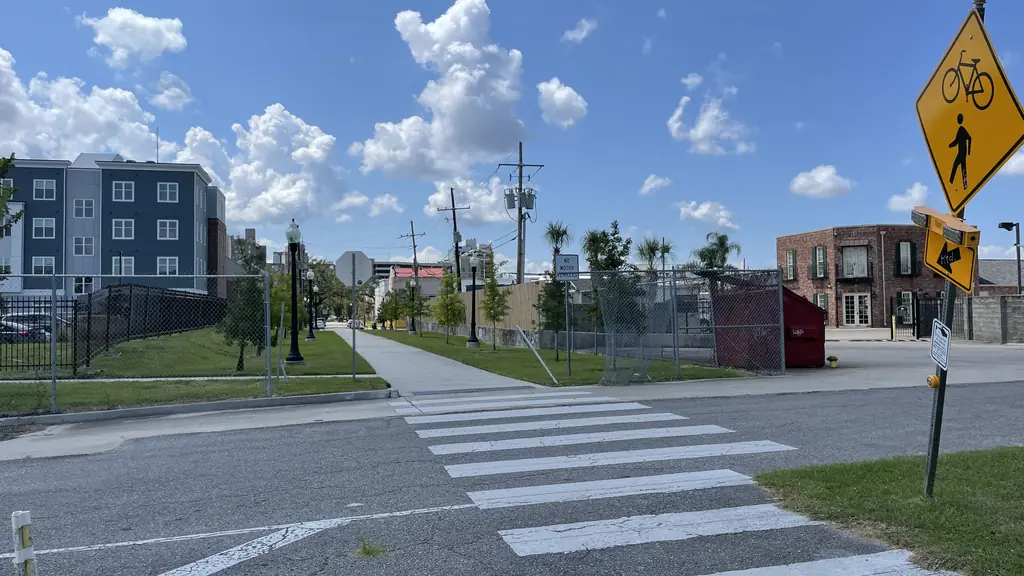 City riding is improving fast from a rough baseline. New Orleans grew from 8 miles of bike lanes to about 130 after its Complete Streets ordinance, holds a Silver-level Bicycle Friendly Community award, and runs the nonprofit Blue Bikes fleet of more than 850 pedal-assist e-bikes across the French Quarter, Marigny, Mid-City and beyond. Baton Rouge holds Bronze, and its bike commuters more than quadrupled in recent counts. The state itself ranks 40th in the League of American Bicyclists' standings — the infrastructure is concentrated where the riders are.
The honest caveats deserve respect here. Louisiana routinely ranks second in the nation for cyclist deaths per capita, and New Orleans carries the highest fatal-crash rate of any major US metro — ride lit, ride visible, and pick protected corridors when you can. Hurricane season runs June through November, shade disappears on the levee tops, and on a pancake-flat course the wind is the hill. Respect all of it, and Louisiana pays you back with twelve months of riding, food stops worth the trip on their own, and scenery no other state can fake.
Louisiana E-bike Laws
No license, no registration, no insurance — Louisiana Act 152 made e-bikes bicycles. The quirks: a 12-year age floor for Class 3, and helmets for every Class 3 rider.
Louisiana folded e-bikes into its bicycle rules with Louisiana Act 152 of 2020: three classes, less than 750 watts, and no license, registration, or insurance for any of them. The quirks are an under-12 floor for Class 3 instead of the usual 16, and a helmet rule that covers every Class 3 rider of every age.
The motor assists only while pedaling and cuts off at 20 mph; no age limit, and it rides wherever bicycles do.
The motor may propel the bike on throttle alone up to 20 mph; no age limit (La. R.S. 32:1).
Assist while pedaling up to 28 mph with a required mph speedometer (La. R.S. 32:204); a Louisiana Class 3 may not carry a throttle.
E-bikes carry the rights and duties of bicycles (La. R.S. 32:204) and sit outside the motor vehicle definition; a license applies only to mopeds and e-motos above 750 watts.
Compliant Class 1, Class 2 and Class 3 e-bikes are exempt from OMV registration and titling; no plate, no paperwork.
Louisiana's compulsory liability law reaches registered motor vehicles only (La. R.S. 32:861); compliant e-bikes are statutorily not motor vehicles.
No one under 12 may operate a Class 3, though they may ride as passengers on one built to carry them (La. R.S. 32:204); no age floor for Class 1 or Class 2.
Every Class 3 operator and passenger wears an approved helmet regardless of age (La. R.S. 32:204); children under 12 helmet up on any bicycle (La. R.S. 32:199). Violations carry a flat $50 fine, waived with proof of helmet purchase.
Where You Can Ride
- Roads & bike lanesAll three classes ride streets, highways and bike lanes with the rights and duties of bicycles (La. R.S. 32:204, 32:203).
- SidewalksNo statewide ban; cities set the rules. New Orleans bars riders 15 and older from sidewalks, and most business districts prohibit sidewalk riding outright.
- Multiuse trails & leveesLegal by default wherever bicycles are; an agency may restrict Class 1 and Class 2 only after a public hearing but may ban Class 3 outright (La. R.S. 32:204). The Tammany Trace welcomes e-bikes at the posted 15 mph limit.
- State parksLouisiana State Parks treats compliant e-bikes like bicycles on park roads and bike trails; check posted rules on natural-surface trails.
- Out-of-class e-motosOver 750 watts means moped or motorcycle rules: OMV registration and title, a licensed rider of 15 or older, and a helmet (La. R.S. 32:198, 32:190); most e-motos lack the equipment to be registered at all.
Effective August 1, 2020 under Louisiana Act 152. Statutes: La. R.S. 32:1(25), 32:204, 32:203, 32:199, 32:198; Louisiana Act 152 of 2020. Cities and park districts can add their own path and trail restrictions — check signage where you ride. Last reviewed June 2026.
Louisiana Cycling Weather
Louisiana's riding calendar runs upside down: September through May is prime, while high summer belongs to dawn starts and shade.
Sunny days a year
Riding season
Sep - May
Louisiana Cycling Destinations
Tammany Trace
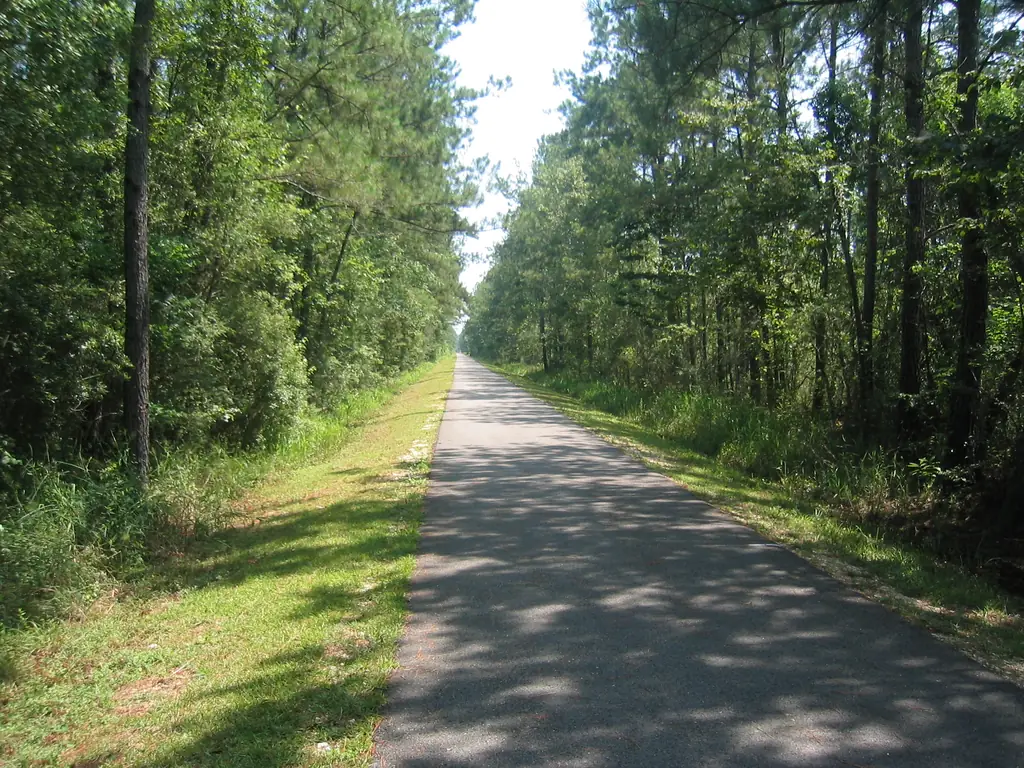
Louisiana's first and only rails-to-trails conversion follows the old Illinois Central line for 31 paved miles across the Northshore, linking Covington, Abita Springs, Mandeville, Lacombe and Slidell. The trail crosses 31 bridges built on the original railroad trestles, runs almost 2.5 miles through Fontainebleau State Park on Lake Pontchartrain, and skirts the wetlands of Bayou Lacombe. The Covington trailhead is a replica railroad station; in Abita Springs the trailhead pavilion sits a block from Abita Brewery, which settles most lunch debates. Flat, shaded, and family-friendly, it earned induction into the Rails-to-Trails Conservancy Hall of Fame in 2017 — and since 2022 it welcomes e-bikes at the posted 15 mph limit.
Mississippi River Levee Bike Path
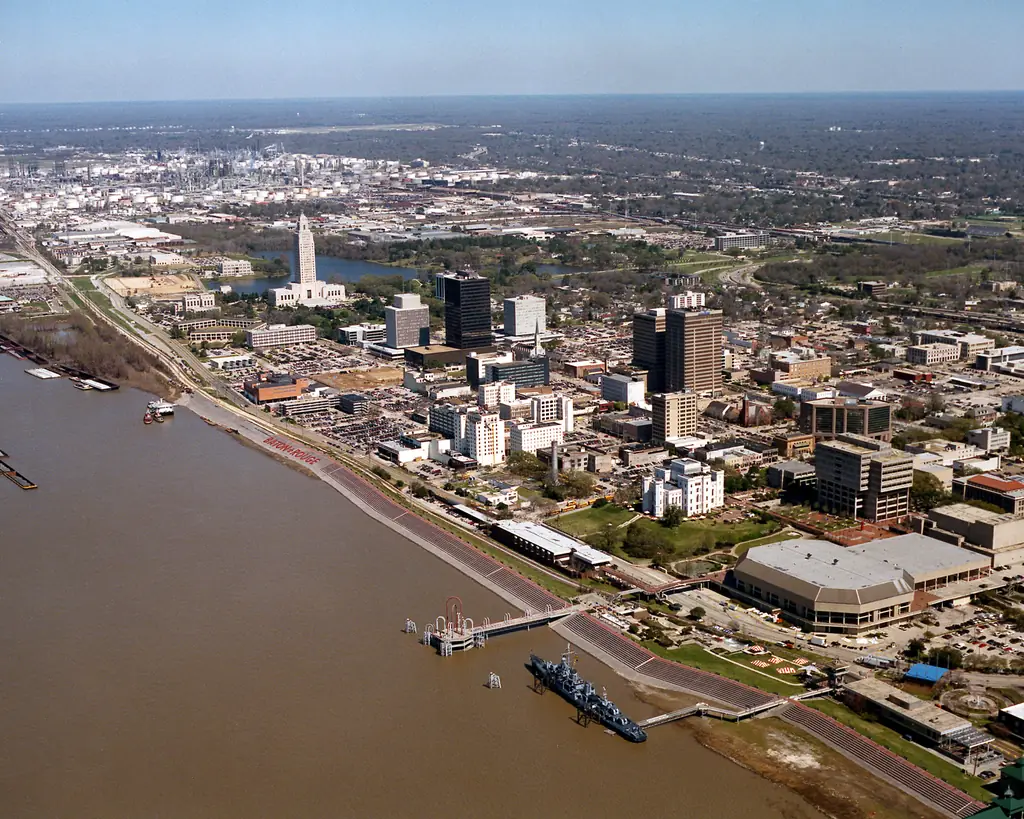
Baton Rouge put a 15-foot-wide paved path with separate bike and pedestrian lanes on top of the Mississippi River levee, running 13 miles from the downtown riverfront promenade past Skip Bertman Drive at LSU to the Farr Park Equestrian Center and L'Auberge Casino. The riding is dead flat with continuous views of barge traffic on one side and the Baton Rouge skyline on the other; lighting, seating and water fountains line the downtown miles. Road riders use it for out-and-back training blocks, LSU students commute on it, and the levee continues unpaved toward St. Gabriel for a 27.7-mile point-to-point. It is the best single answer to the question of where to ride in the capital.
Lafitte Greenway
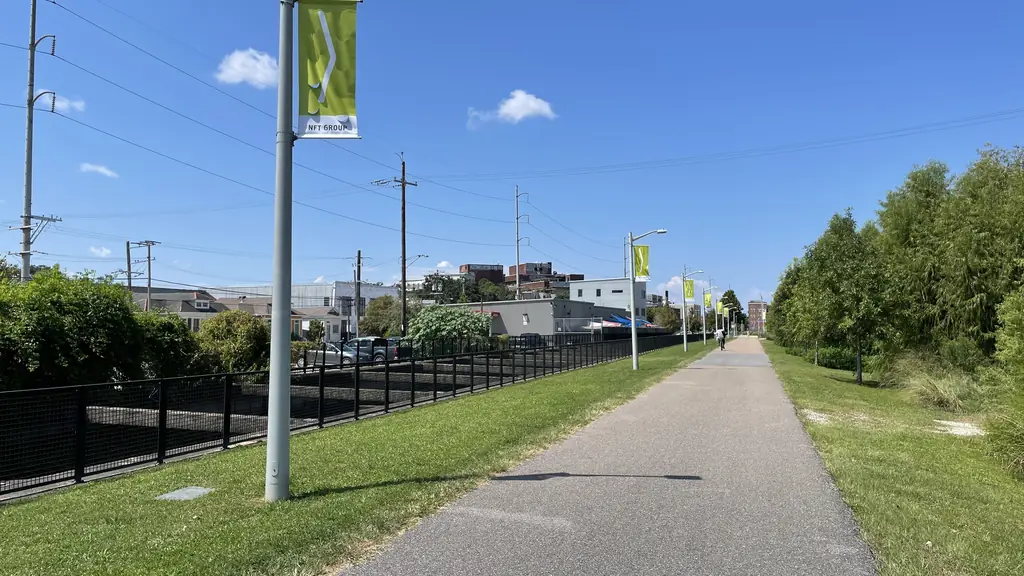
The spine of New Orleans cycling is a 12-foot-wide asphalt corridor opened in 2015 along the old Carondelet Canal right-of-way, connecting Basin Street at the edge of the French Quarter to Mid-City near Bayou St. John and City Park. Roughly 500 shade trees, native meadows and stormwater bioswales line the route, and breweries and coffee shops have grown up along it the way businesses once followed the railroad. About 375,000 people use it each year, making it the safest car-free link between the Quarter and City Park, where the Wisner Trail along Bayou St. John extends the ride. It is short, but it is the connective tissue everything else in the city hangs from — cruisers, commuters, Blue Bikes and all.
St. Francisville Tunica Hills Loop
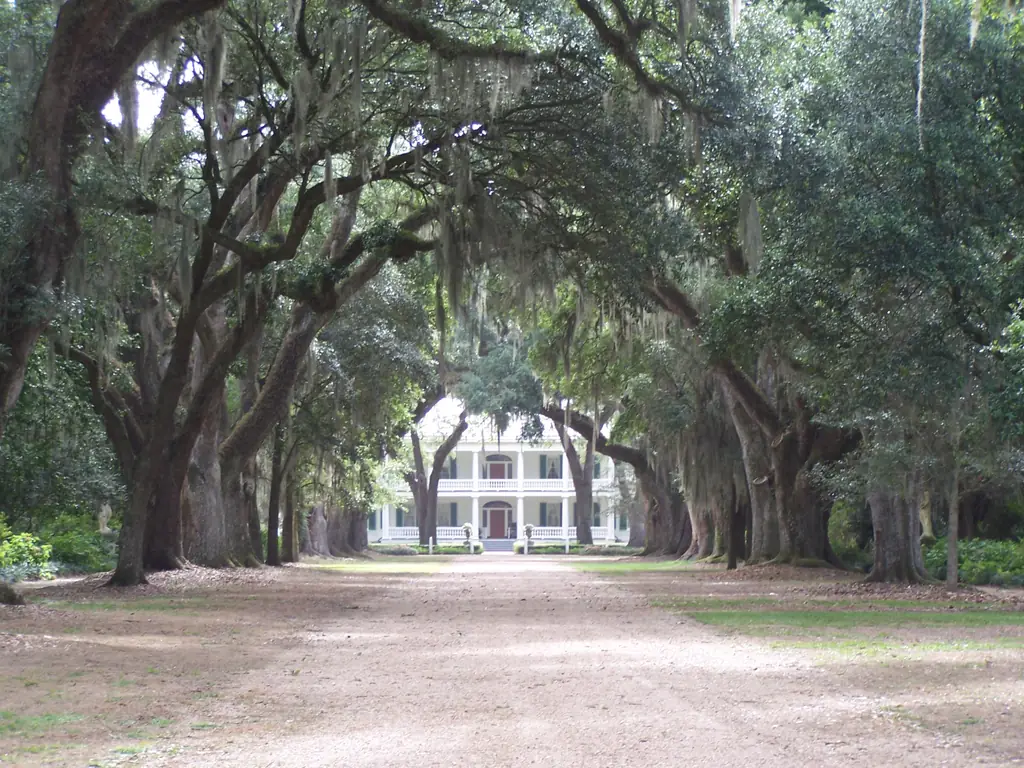
The loess bluffs of West Feliciana Parish are the closest thing Louisiana has to real climbing, and the 28.5-mile loop out of St. Francisville is the way most riders meet them. Lightly trafficked rural roads thread Tunica Street, Solitude Road and LA 66 past Greenwood and Rosedown plantations, cattle pasture, and a low-water bridge over Bayou Sara, stacking about 1,000 feet of punchy, rolling gain; Old Tunica Road adds a steep extension for riders who want more. This is the terrain that hosts the Rouge-Roubaix and the Louisiana Hills & Hollows Tour with marked routes up to 65 miles. One watch-out: a degraded, potholed stretch of Greenwood Road rewards wider tires and attention.
Lincoln Parish Park Mountain Bike Trail
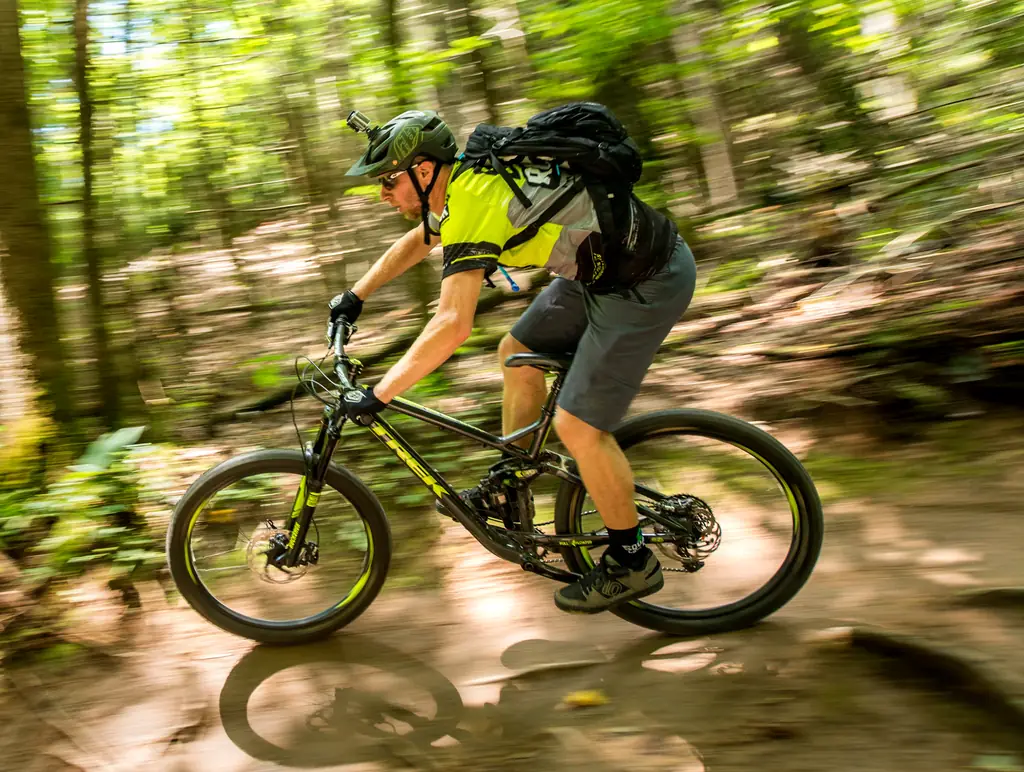
Louisiana's benchmark mountain bike venue has been drawing riders across state lines since 1992: a roughly 10-mile purpose-built loop inside a 260-acre forested parish park in the north Louisiana hill country, routinely ranked among the best trails in the South. The loop packs jumps, switchback climbs, creek crossings and fast descents — including the well-known Tomac Hill — into pine and hardwood terrain the rest of the state simply does not have, with about 650 feet of gain per lap and beginner bypass lines around the technical features. In 2024 the park opened a waterfall trail hub feeding five new flow trails. A lake with a swimming beach and campsites round out the weekend; riders come from Shreveport, Monroe and east Texas.
Wild Azalea Trail
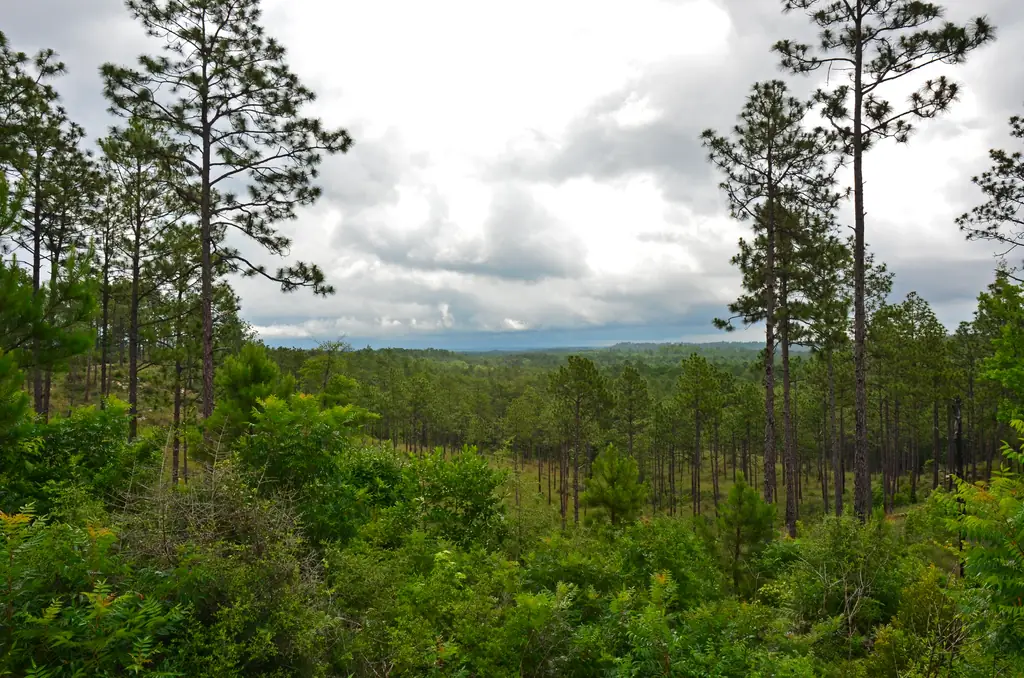
The longest continuous trail in Louisiana runs 24 miles of natural-surface singletrack through Kisatchie National Forest between Valentine Lake and Woodworth Town Hall, open to foot and mountain bike traffic only. The trail rolls between longleaf pine uplands and hardwood creek bottoms with multiple stream crossings, accumulating about 1,800 feet of gain — real work by Gulf South standards. It takes its name from the native wild azaleas that bloom along the route in March and April, and hosts the Wild Azalea Trail Challenge endurance races each January. This is remote riding by Louisiana measures: carry water and a map, and start from the trailheads just south and west of Alexandria inside the 600,000-acre forest.
Louisiana Cycling Events
From a five-day Cajun food-and-music tour to the South's oldest gravel sufferfest, Louisiana's calendar rides from the prairie to the end of the road.
Cycle Zydeco
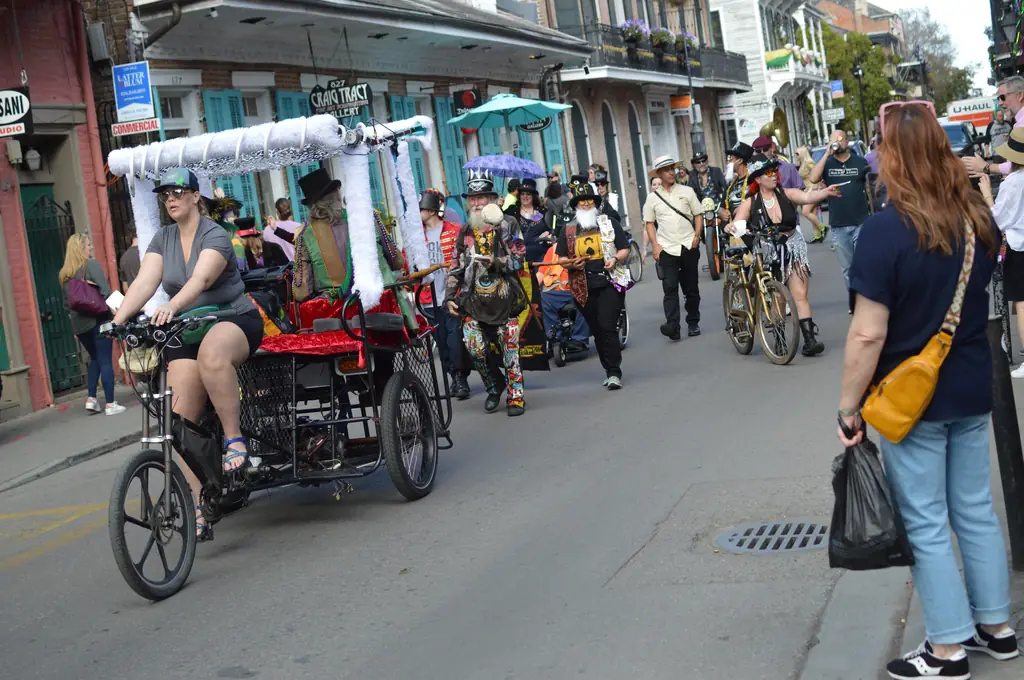
Louisiana's Cajun and Creole cycling celebration is a five-day rolling festival through the heart of Acadiana, held the week after Easter — 50 days after Mardi Gras, by design. Lafayette hosts the bookend days while Thursday through Saturday ride out of Breaux Bridge, the crawfish capital of the world, with daily choices between casual 38-mile routes and 62-plus-mile Centennial loops past rice fields and crawfish farms. Every day pairs the riding with live zydeco, restaurants, breweries, swamp tours and crawfish boils; the VIP package even covers bike assembly for riders who ship their machines. The Lafayette trails nonprofit TRAIL produces it, and dates are published years ahead.
Event website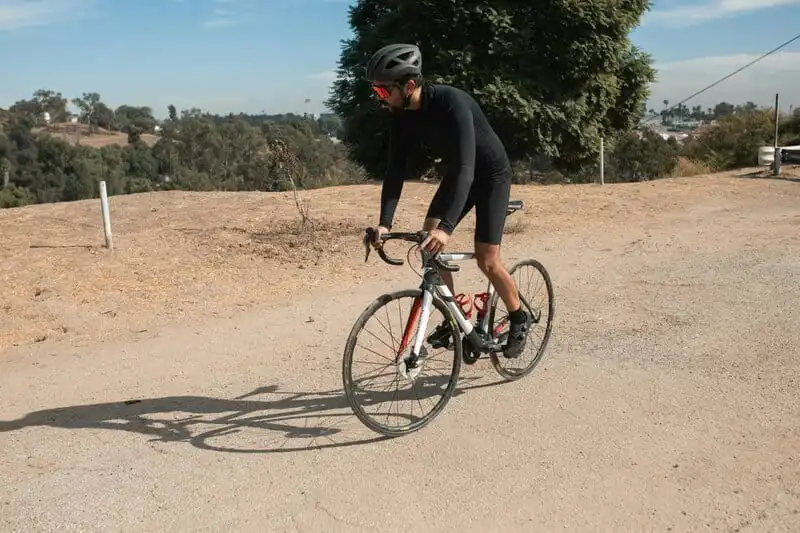
Rouge-Roubaix
The South's spring classic has run 24 editions and earned its reputation the honest way: 30 to 40 miles of undulating gravel, dirt and "Louisiana cobblestone" mixed into a 93-mile course through the back roads of West Feliciana Parish and across the Mississippi line into Wilkinson County. The Tunica Hills section serves six miles of steep, unrelenting climbing that the race bills as hors-category, and February weather can swing from freezing to swamp-grade humidity in one edition. Named climbs like Block House Hill and Old Tunica Road have ended plenty of races early. A 52-mile short course offers mercy; the full distance offers a story.
Event website
Bike MS: Dat's How We Roll
Louisiana's stop on the national Bike MS series rolls two days out of Southeastern Louisiana University in Hammond, with 25-, 50- and 75-mile options on Saturday and 30- or 60-mile routes on Sunday — riders pick their distance each morning. The course rolls gently through Tangipahoa Parish with rest stops, medical support and SAG vehicles throughout, built to carry everyone from casual charity riders to century-fit cyclists. Every rider commits to a $275 fundraising minimum for the National MS Society, which runs the largest fundraising cycling series in the country. It is the biggest charity ride on the Louisiana calendar.
Event website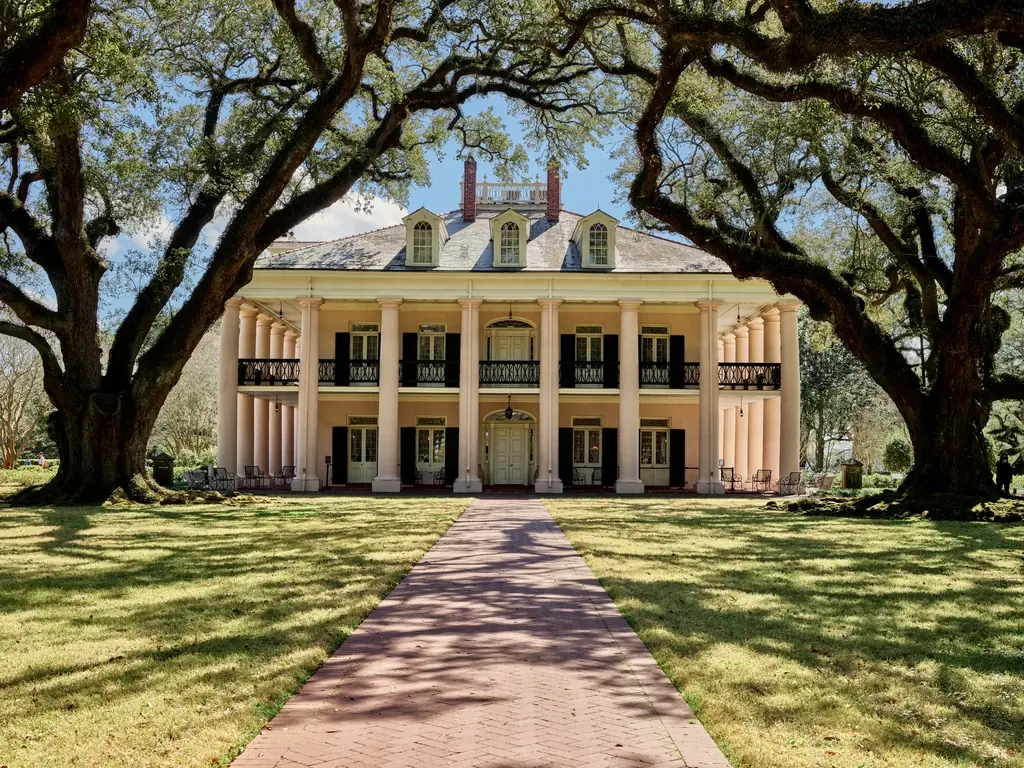
Le Tour de Bayou
Central Louisiana's biggest ride starts and finishes on the grounds of the circa-1800 Kent Plantation House on Bayou Rapides Road, and the 2026 edition is the 15th annual. Six routes run from a 2-mile family fun ride to a full 101-mile century through the bayous and wooded backroads of Rapides Parish — some of the most scenic quiet pavement in the center of the state. The ride is the primary fundraiser for the historic house, which interprets Creole plantation life from 1795 to 1855, and the day ends the Louisiana way: Cajun food, beer and live music on the plantation grounds. GPS maps are published for every distance.
Event website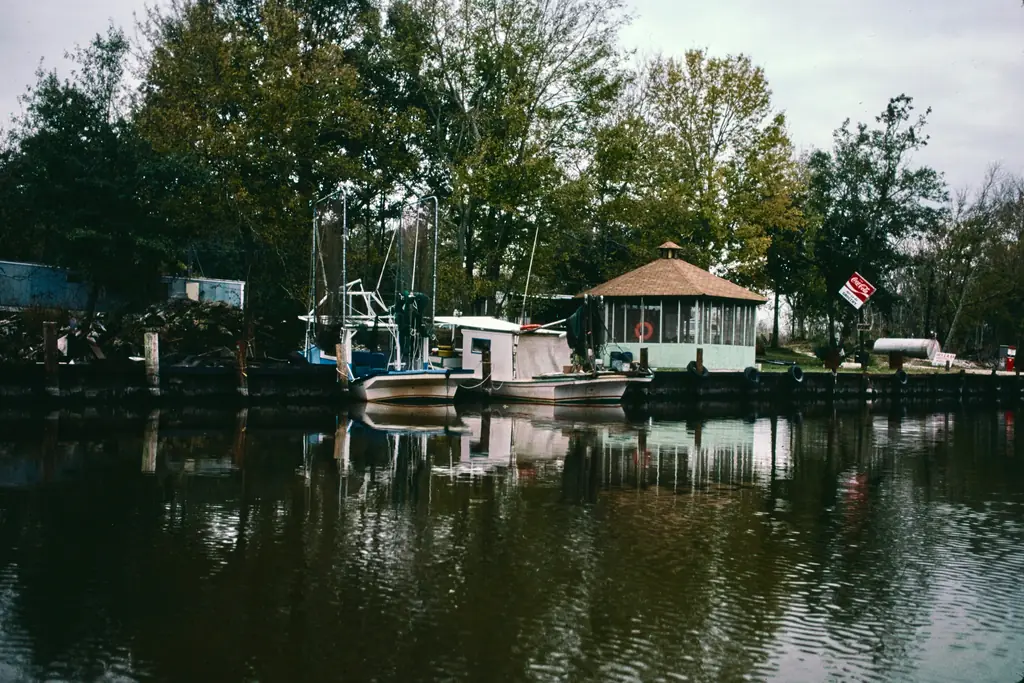
Tour da Parish
St. Bernard Parish's signature ride rolls out of the Los Islenos Heritage Site at 7:30 sharp and heads for the marsh, through the working fishing villages of Yscloskey and Delacroix to the spot locals market, accurately, as the End of the World. Four course options top out at 51 pancake-flat miles past shrimp boats, bayous and the open wetlands of the Mississippi River delta — the most scenic flatland riding in the New Orleans orbit. More than 400 riders made the 2025 edition, and everyone lands back at the End of the World Finish Fest for food, drinks and live music. The parish Chamber of Commerce produces it; 2026 marks the 12th edition.
Event website
Tour de Jefferson
Jefferson Parish's social ride has rolled since 2006, and the 2025 edition was its 19th: four route options from 11 to 50 miles starting at Estelle Playground on the Leo Kerner Lafitte Parkway in Marrero, on the West Bank near the Barataria Preserve's swamps and palmetto bottoms. The course is flat, police-covered, and open to every experience level, which is why past editions have drawn more than 600 cyclists. Entry includes a T-shirt, a participant medal and refreshments, with LCMC Health presenting and the parish tourism board producing. It is the easiest way to see the wild side of the New Orleans metro from a saddle.
Event websiteLouisiana E-bike Law and Insurance FAQ
- What are the e-bike laws in Louisiana?
- Louisiana Act 152 of 2020 folded e-bikes into the state's bicycle rules effective August 1, 2020: three classes, motors of less than 750 watts, and no license, registration, or insurance for any of them. The quirks are an under-12 operating floor for Class 3 instead of the usual 16, and a helmet rule covering every Class 3 rider of every age.
- Do Class 1, Class 2, and Class 3 e-bikes need insurance in Louisiana?
- Insurance is optional in Louisiana: the compulsory liability law reaches registered motor vehicles only, and compliant e-bikes are statutorily not motor vehicles. That covers Class 1 (pedal assist only, cutting off at 20 mph), Class 2 (throttle-capable up to 20 mph), and Class 3 (pedal assist only to 28 mph with a required speedometer and no throttle). A standalone Velosurance policy starts around $9 per month.
- What does bicycle and e-bike insurance cover in Louisiana?
- A standalone Velosurance policy covers theft, accidental and crash damage, and damage in transit, with optional liability and medical payments coverage. Louisiana mandates no e-bike coverage, so a policy like this is how Louisiana riders protect the bike and their own liability after a crash. Policies start around $9 per month.
- What are the age and helmet rules for a Class 3 e-bike in Louisiana?
- Riders 12 and older may operate a Class 3, the pedal-assist-only class that assists up to 28 mph with a required speedometer; younger kids may still ride as passengers on one built to carry them. Every Class 3 operator and passenger wears an approved helmet regardless of age (La. R.S. 32:204). Skipping it costs a flat $50 fine, waived with proof of helmet purchase.
Louisiana e-bike laws explained: classes, age limits, and what changes next.
Keep Riding: Nearby States
Cross a border and the trails, the weather, and the e-bike laws all change. See how Louisiana's neighbors compare.


Why Velosurance is best for your bicycle
Not all types of insurance are created equal. Velosurance levels the playing field by offering stand-alone bicycle coverage, where claims won't affect your homeowner's or renter's policy premiums.
| Policy Coverage |  | Homeowner/Renters Policy |
|---|---|---|
| Insured at Full Value | Yes | Possibly |
| Crash Damage | Yes | No |
| Theft Coverage | Yes | Limited |
| Theft by Force | Yes | No |
| Theft of Accessories | Yes | Limited |
| Theft Away From Home | Yes | Possibly |
| Uninsured Motorist | Yes | No |
| Personal Liability | Yes | Possibly |
| Permissive Use Policy | Yes | No |
| Replacement Rental | Yes | No |
| Event Fee Return | Yes | No |
| Cycling Apparel Coverage | Yes | No |
| Medical Payments | Yes | Possibly |
| Racing Coverage | Yes | No |
| E-bikes | Yes | No |
| Coverage in-transit | Yes | No |
| USAC, USAT and IMBA Member Discount | Yes | No |
| FREE INSTANT QUOTE |
Not all insurance policies provide the same level of protection, and many people only discover gaps in their coverage after filing a claim. We’ve done the hard work of reviewing the fine print. To see how plans compare, check out our insurance comparison.
Client satisfaction is our #1 goal. Here's what our clients say about Velosurance


Velosurance really stepped up and put me at ease. The claim was fast and easy. I am insuring all my bikes now.

Check out Velosurance reviews to see what people are saying about us.
Louisiana's best bicycle and e-bike insurance
No matter where your adventures take you, protect your bicycle and yourself from the unexpected with America's best bike insurance.