TL;DR:
Most homeowners and renters insurance policies offer limited or narrow coverage for bicycles—so before assuming you're protected, ask your agent these 10 critical questions to uncover gaps and ensure you’re not caught off guard
- Does coverage extend beyond your doorstep to theft or damage that occurs anywhere else?
- Some policies cap individual items to as little as $500–$1,000, far below many bike values
- If someone borrows your bike and it gets damaged or stolen—does your policy cover that?
When bicycle insurance is discussed, the most common question that arises is “isn’t my bike covered by my home insurance?” The answer is: possibly, but not very effectively. Home or renter’s insurance are good at covering things like furniture, valuables and electronics but are often limited when trying to insure a bicycle. Unlike a piece of furniture, such as a couch, your bicycle is technically a vehicle and is subject to a significantly broader set of risks, well beyond the usual floods, fires and earthquakes.
With over 15 years experience in general insurance we found that homeowner and renters policies do a terrible job at insuring high-value bikes. After running through countless use cases and hypothetical situations, we knew there had to be a better way.
Your bike is an integral part of your lifestyle and if it disappeared, you would probably want to replace it with one of equal caliber as quickly as possible. The decision whether to buy insurance or “self-insure” by setting aside a pool of money that would allow you to replace your bike, is driven by a variety of factors ranging from disposable income to assertion of the risk you take on when riding your bike.
PolicyGenius tip: An actual cash value renters or homeowners policy covers what the item is worth now, not what it was worth at the time you purchased it. A replacement cost value policy, a common option among renters insurance, conversely pays out the amount it would cost to replace an insured item if you had to buy it again. Replacement cost value policies generally cost more than actual cash value policies.
Many people assume their bikes are covered by homeowner’s or renter’s insurance. That assumption if often correct, but the devil is in the details: for how much and for what kind of losses? If you’re going rely on insurance to protect yourself from financial loss, education is your best bet. Before you assume your bike is covered by your home policy, give your agent a call and ask the following questions:
1. Is the bike insured away from my home?
Many policies only cover the contents of your home. If your bike is stolen outside of the house, is it still covered?

2. What is the maximum value my bike is insured for?
You don’t want to find out that your italian mechanical carbon fiber steed is worth $500 to your insurance company because nobody in their right mind would spend $7000 on a bicycle. Many home/renter’s policies limit the value of any one item to $500 or $1,000.
3. Is the bike’s value depreciated year by year?
If your two year-old bike that you paid $5000 for is depreciated by 20% the first year and 15% the following year, you will be getting $3000 for it if it was stolen. Would you be content with a $3000 bike after riding a $5000 one? While some home policies do not depreciate assets, others do.
4. What is the deductible?
Some home insurance policies have very low premiums but carry significant deductibles. While having to pay a $1000 deductible in case of fire damage might not seem all that bad, a $1000 deductible on a $3000 bike will feel significant.
5. Is the bike insured for crash damage?
If you were to crash your bike while riding, would it be covered? What if you got hit by a car while riding? The question here is; “is my bike insured away from my home?”
6. Is the bike insured for racing or riding in organized events?
If you crashed your bike in a race or an organized event such as a Gran Fondo, would it be covered?
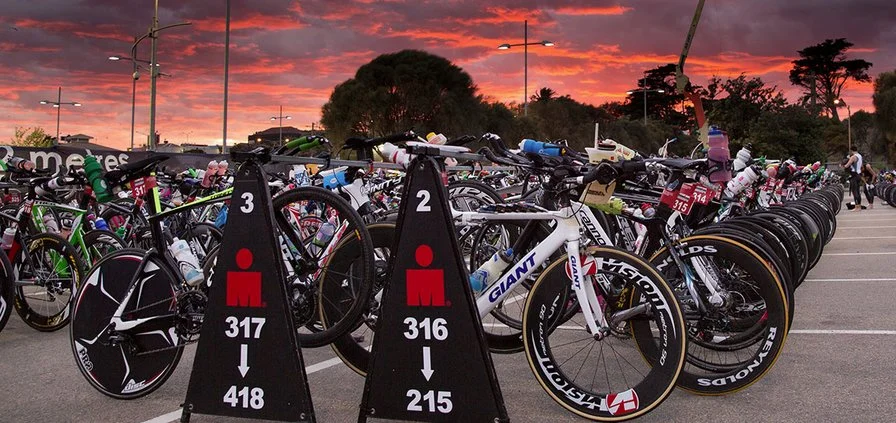
7. Is the bike insured if I lend it to a friend?
If your friend borrowed your bike and then crashed it, would it be covered? What if it was locked in your friend’s car and it was stolen from the car, is it covered?
8. Is my bike insured when transported by an airline or falls off a car?
It’s surprising how often bikes get damaged when being transported. If an airline damaged your bike, would your home insurance company send you back to the airline? What if the bike falls off your car, or you get rear-ended by a car that has no insurance.
Key Takeaways
- Ask if your bike is covered when it’s away from home, since many policies only protect items inside your house
- Check the maximum insured value for your bike—standard policies often cap high-value items at just $500–$1,000
- Understand whether depreciation applies—some policies reduce your payout year over year, so a $5K bike might be valued much less after a few seasons
- Find out the deductible amount, as a high deductible (e.g., $1,000) on a modest claim can make filing it a poor return
- Confirm if crashes, racing events, bike loans, and transport mishaps (like airline damage) are covered—many standard policies exclude these scenarios
9. What if only my wheels are stolen?
If the wheels of your bicycle were stolen while it was locked up, would your home insurance cover such partial claim? Would they charge you a full deductible? A high deductible would make such claim futile.
10. Will a claim affect my home insurance premium or availability?
Your bicycle is only a fraction of the total assets covered by your home policy. Statistically, a typical homeowner has one claim every ten years. Home insurance policies are designed to cover major losses and the underwriters like policyholders who make fewest claims. Insurance companies rarely think in claim dollar amounts but rather claims frequency. Filing a claim on a stolen bike might cause your policy premiums to increase. If you make more than one claim in three years, you might get dropped by the company at the time of renewal. In some markets finding another insurance company might get tricky, if impossible.
11. Bonus question: This is an electric assist bicycle, do you insure bikes with an electric motor?
As electric-assist bicycles are gaining popularity, regulators and insurance underwriters struggle to understand how they fit into their guidelines. Since e-bikes have motors, they are considered full-fledged motor vehicles by some states, which makes them uninsurable by home insurers. To make things worse, they turn out to be impossible to insure with auto-insurers too! The policy language that excludes them is walked through in the homeowners insurance e-bike exclusion, explained.
When you have answers to these questions you should allow you to make an informed decision. If you believe that your bike is not covered well by your home policy, you’re a prime client for a Velosurance electric bike insurance policy. Our policy covers all the situations described above and almost anything else that can happen to your bike.
How does Velosurance compare?
To paint a fuller picture, here’s an example of a typical claim: A 5 year old $3,100 bicycle is stolen and a claim placed with the insurance company.
| Home Insurance | Velosurance | |
|---|---|---|
| Asset value | $3,100 | $3,100 |
| Depreciation | $1,550 (50% over 5 years) | $0 |
| Deductible | $1,000 | $300 |
| Claim payment | $550 | $2,800 |
| Savings | $0 | $2,250 |
That’s a $2,250 difference of out of pocket expense, or 12 years of Velosurance premiums at $186 a year.
Frequently Asked Questions
- What coverage gaps are most likely to affect a cyclist with a high-value bike?
- The most common gaps are value caps, depreciation, and away-from-home exclusions. Standard policies often limit any single item to $500 or $1,000, well below the value of a modern performance bike. A two-year-old $5,000 bike depreciated by 20% the first year and 15% the second is worth only $3,250 at claim time. Add a $1,000 deductible and the payout drops to $2,250. Crash damage, racing incidents, and transport losses are also routinely excluded.
- How does a claimed bicycle theft affect an insurance policy's long-term cost?
- Insurance companies track claims frequency, and even a modest bicycle claim can raise premiums for up to five years or trigger a non-renewal if more than one claim is filed in a short period. A 10% claim-free discount on a $2,000 annual premium held for five years totals $1,000 in lost savings. That amount must factor into any decision to file. The math makes a strong case for specialized bicycle insurance, where a claim stays separate from your primary coverage entirely.
- What happens when a cyclist files a partial theft claim, such as stolen wheels, under a standard policy?
- Partial theft, such as wheels removed while the frame remains locked, may still trigger the full deductible under a standard policy. A high deductible applied to a partial claim often makes the exercise financially futile. A stand-alone bicycle insurance policy is designed to cover partial theft as its own event, with a deductible calibrated to the coverage, not to the value of an entire household of possessions.
- What makes e-bike coverage a specific challenge for standard insurance policies?
- E-bikes have motors, which leads some state regulators and insurance underwriters to classify them as full-fledged motor vehicles. This can make them ineligible for standard property coverage while also being uninsurable under most auto policies, leaving the owner in a gap between two categories. Specialized e-bike insurance, such as the policy Velosurance offers, is built to address exactly this classification problem and covers the bike regardless of motor-assist class.
- What does the comparison between a standard claim and a dedicated bicycle policy actually look like in dollars?
- For a 5-year-old $3,100 bicycle stolen and claimed against a standard policy at 50% depreciation and a $1,000 deductible, the payout is $550. The same bike claimed under a Velosurance policy with a $300 deductible pays out $2,800. The difference is $2,250, equivalent to 12 years of Velosurance premiums at $186 per year.