
TL;DR:
- Wyoming is an at-fault state with a 51% bar: at 50% of the fault you recover half, at 51% you recover nothing, and each defendant pays only its own share.
- Minimum auto liability limits are $25,000 per person, $50,000 per accident, and $20,000 for property. Wyoming has no personal injury protection.
- You have four years to sue for injuries or bike damage and two years for a wrongful death. A claim against a governmental entity needs a sworn written claim within two years.
- Wyoming auto policies include uninsured motorist coverage of $25,000 and $50,000 unless the named insured rejected it. It covers bodily injury only, and no statute requires underinsured motorist coverage.
- Drivers must leave three feet when passing a bicycle or e-bike when space allows, section 31-5-121 bans opening a door into traffic, and there is no statewide bicycle helmet law.
Who Pays After a Crash in Wyoming
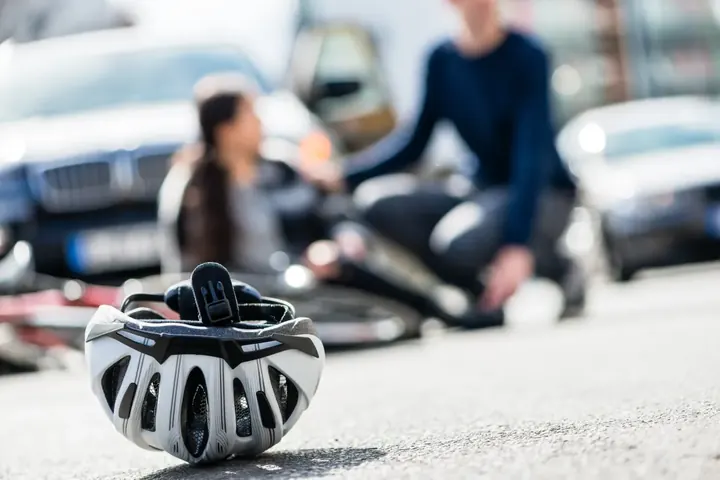
Wyoming is an at-fault state. The driver who caused the crash pays for your losses, and Wyoming Statutes section 31-4-103 requires the owner of every registered vehicle to carry a liability policy in the amounts set by section 31-9-405: $25,000 for one person's injuries, $50,000 when two or more people are hurt, and $20,000 for property damage.
There is no injury threshold to clear before you can bring a claim, and no personal injury protection either: the Wyoming insurance and motor vehicle codes do not contain it. Your bike and gear are paid from the driver's $20,000 property limit and your injuries from the $25,000 bodily injury limit.
The one first-party auto benefit that may exist is medical payments coverage, which is optional in Wyoming. The Wyoming Department of Insurance describes it as paying medical and funeral expenses for people in your car and adds that it often extends to pedestrians. Whether a cyclist counts depends on the policy wording, so ask your insurer in writing.
If nobody in your household owns a car, no auto policy pays you directly. What remains is the driver's liability coverage, your health plan, and whatever you carry on the bike itself.
Fault and How It Reduces a Claim
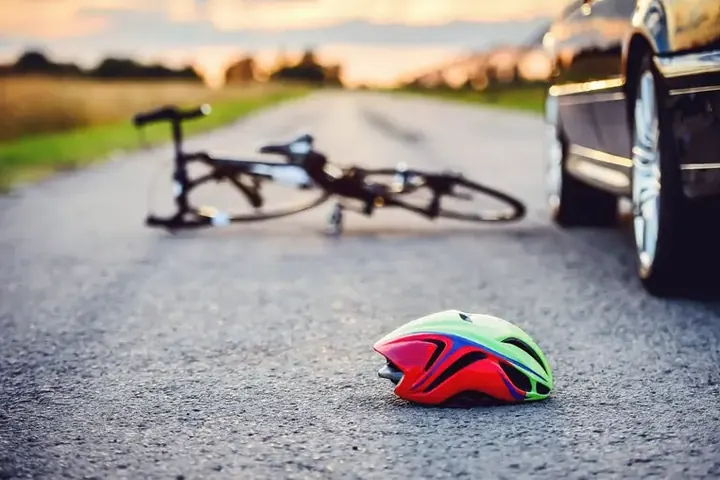
Wyoming's comparative fault statute, section 1-1-109, sets the line at 51%. You recover as long as your fault is not more than 50% of the total, and your damages are cut in proportion to your share. A rider 50% at fault for a $100,000 loss collects $50,000. At 51%, the same rider collects nothing.
Two features of the statute work against an injured rider. Fault is divided among every "actor" who contributed to the crash, whether or not that person is part of the lawsuit. And under subsection (e), each defendant is liable only for its own percentage. If 30% lands on a second driver who was never identified, that 30% goes unpaid.
The arguments about your share come from the traffic code. Section 31-5-702 gives a person riding a bicycle or e-bike all the rights and all the duties of a driver. The rules most likely to be raised:
- Lane position. Section 31-5-704 requires you to ride as near to the right side of the roadway as practicable. Two abreast is legal if you do not impede traffic and stay within a single lane.
- Lights. Section 31-5-706 requires a white front lamp visible from 500 feet at night and a red rear reflector visible from 600 feet.
Helmets are an open question. Wyoming has no bicycle helmet law, and section 31-5-1402 bars evidence of an unfastened seat belt from any civil action, but no statute says the same about a helmet. Expect the other side to raise it.
Hit-and-Run and Uninsured Drivers

Section 31-10-101 requires every auto liability policy on a vehicle registered or principally garaged in Wyoming to include uninsured motorist coverage unless the named insured rejects it. The limits match the liability minimums for injury: $25,000 per person and $50,000 per accident.
The statute protects insured people who are legally entitled to recover from the owner or operator of an uninsured vehicle, and it does not say you must be inside a car. Who is covered away from the car is set by the policy form, so confirm with your insurer that the coverage follows you onto a bike, and check the declarations page to see that it was never rejected.
Three gaps are specific to Wyoming:
- The bike is left out. The required coverage is for bodily injury, sickness, disease, or death. It does not include property damage.
- Hit-and-run terms are in the policy, not the statute. The Department of Insurance describes uninsured motorist coverage as applying when a hit-and-run driver injures you, but no statute says whether the car must have touched you or how fast you must report it. Read those conditions in your own policy.
- Underinsured motorist coverage is optional. No Wyoming statute requires an insurer to include it. Look for it by name on the declarations page.
Report the crash yourself. Section 31-5-1101 requires a driver in an injury crash to stop and remain at the scene, and leaving carries up to a year in jail and a $5,000 fine. Section 31-5-1105 requires immediate notice to the local police inside a municipality, and otherwise to the Wyoming Highway Patrol or the county sheriff.
Two things to check in a bike insurance policy: whether it offers uninsured motorist coverage of its own, and whether crash damage to the bike is covered no matter who hit you.
Dooring and Passing Laws
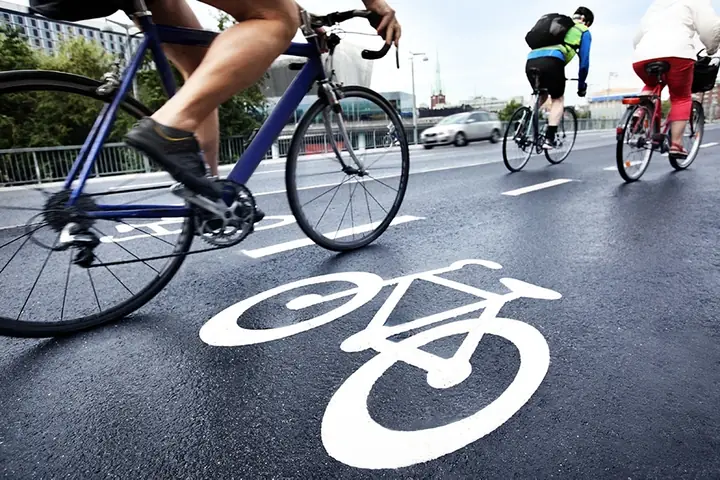
Section 31-5-121 covers dooring. No person may open any door on a motor vehicle "unless and until it is reasonably safe to do so" and it can be done without interfering with the movement of other traffic. Nor may anyone leave a door open on the traffic side longer than necessary to load or unload passengers.
Wyoming has a three-foot passing law with two qualifiers. Under section 31-5-203(c), a driver overtaking a bicycle or e-bike must keep at least three feet between the bike and the right side of the vehicle, measured from mirrors and anything else that sticks out. The duty applies "when space allows," and it protects a bike "which is operating lawfully."
Expect both phrases to be used against you: the road left no room, or your light was out. Photographs of the road width and of your equipment answer both.
Section 31-5-109 lets cities and towns regulate bicycles and e-bikes on their own streets and even require registration. Read the local code for the place you crashed.
E-bikes
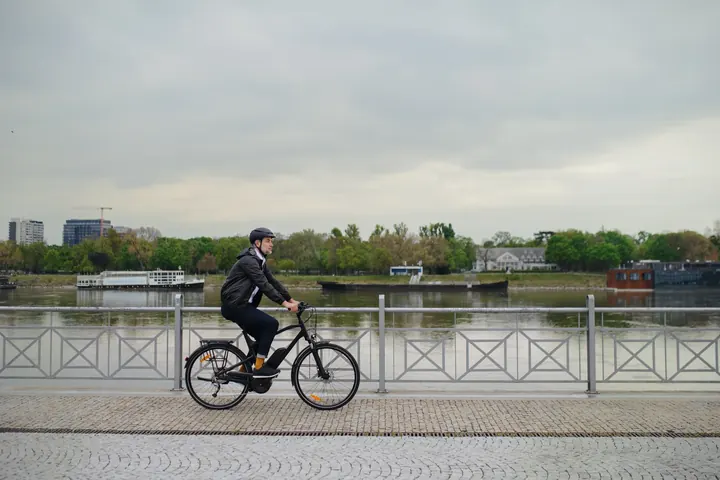
Section 31-1-101 defines an electric bicycle as a bicycle or tricycle with fully operable pedals, a seat or saddle, and an electric motor of less than 750 watts. Class 1 assists only while you pedal and stops assisting at 20 mph. Class 2 can move the bike without pedaling and stops at 20 mph. Class 3 assists only while you pedal and stops at 28 mph.
Section 31-5-707 says an electric bicycle "shall not be a motor vehicle." Its rider has the rights and duties of any cyclist and is exempt from Wyoming's financial responsibility, driver's license, registration, and title laws. No plate, no license, no compulsory insurance. After a crash you stand where any cyclist stands: the same 51% bar, the same four-year deadline, and the three-foot passing law, which names electric bicycles.
Wyoming sets no helmet requirement for any class.
Every e-bike sold since January 1, 2020 must carry a permanent label showing its class, top assisted speed, and motor wattage. Photograph it. A machine with a motor of 750 watts or more falls outside the definition and loses the exemptions.
One question has no answer in Wyoming statute or Department of Insurance guidance: whether an auto policy's uninsured motorist or medical payments coverage applies to you on an e-bike. Get your insurer's position in writing.
Deadlines

Wyoming's four-year filing period is long, but two shorter clocks run inside it: two years for a wrongful death, and two years to put a sworn claim in front of a government body.
- At the scene
Notify Police Immediately
Section 31-5-1105 requires the driver in a crash with an injury or death to notify police immediately by the quickest means of communication. Since July 1, 2025, the duty no longer turns on a dollar amount of damage. An officer who investigates an injury crash must report to the Wyoming Department of Transportation within 10 days.
- Two years
Wrongful Death Action
Section 1-38-102 requires a wrongful death action to be started within two years after the death.
- Two years, then one
Claim Against a Governmental Entity
A claim against the state, a county, a city or town, a school district, or the University of Wyoming falls under the Wyoming Governmental Claims Act. Section 1-39-113 requires an itemized written claim within two years, stating the time, place, and circumstances, your name and address, and the amount demanded, signed under oath before a notarial officer. A claim against the state goes to the general services division of the Department of Administration and Information. A claim against a county, city, or town goes to its clerk. Under section 1-39-114 the lawsuit must then be filed within one year after the claim is filed.
- Four years
Injury and Bike Damage Lawsuit
Section 1-3-105 gives you four years after the cause of action accrues to sue for personal injury, and the same four years for damage to the bike. For a rider who is a minor at the time of the crash, section 1-3-114 allows suit within three years after the rider is no longer a minor or within the regular four-year period, whichever is longer.
The Governmental Claims Act limits what you can recover and what you can sue for. Section 1-39-118 caps liability at $250,000 per claimant and $500,000 for all claimants from one occurrence, and bars punitive damages and attorney's fees. Section 1-39-105 allows a claim for a public employee's negligent driving, but section 1-39-120 excludes damages caused by the design, construction, or maintenance of a highway, street, or sidewalk. A pothole claim faces a barrier that a crash with a city truck does not.
For a dispute over the bike alone, the small claims procedure in circuit court handles claims up to $6,000 under section 1-21-201.
Evidence to Preserve
With a 51% bar and each defendant paying only its own share, evidence in Wyoming does two jobs: it keeps your percentage down and it puts the rest on someone who can pay.
- The officer's crash report. An officer who investigates an injury crash must send a written report to the Wyoming Department of Transportation within 10 days. Get the report number at the scene.
- The driver's details. Section 31-5-1103 requires the driver to give you a name, address, and registration number, and to show a license on request. It does not list insurance details, so ask for them and photograph the card and the plate.
- Road width and your position on it, photographed, for the "when space allows" and "as near to the right side as practicable" arguments.
- Your front lamp and rear reflector, photographed on the bike, if the crash happened after dark.
- The e-bike label showing class, top assisted speed, and wattage.
- Your auto policy's declarations page, showing that uninsured motorist coverage was not rejected and whether underinsured motorist and medical payments coverage were bought.
- The damaged bike, unrepaired, with receipts.
Coverage for Wyoming Riders

Wyoming law leaves a rider exposed in four places: a driver carrying the $25,000 minimum with no duty to carry more, required uninsured motorist coverage that leaves out the bike, underinsured motorist coverage that nobody has to buy, and a fault rule under which each defendant pays only its own share. The Velosurance policy offers the coverages discussed above.
Uninsured Motorist covers losses beyond medical bills, such as lost wages, when the at-fault driver cannot pay.
Medical Payments covers the deductible and out-of-pocket costs your health plan leaves, regardless of the driver's insurance. Wyoming has no personal injury protection to soften those costs, so choose a limit close to your plan's out-of-pocket deductible.
Liability is the coverage for the day the percentages run against you. If you are held responsible for a crash, it covers injury to other people and damage to their property, including the cost of defending a covered lawsuit, with limits from $25,000 to $500,000.
Crash damage to the bike is part of the policy itself: stated value with no depreciation, subject to the deductible, whoever was at fault. Class 1, Class 2, and Class 3 e-bikes are covered like conventional bikes.
For any of these coverages to apply, it must be on the policy before the crash. Get a quote before the next ride, not after it.
Frequently Asked Questions
- How does the 51% rule work in a Wyoming bicycle accident claim?
- You recover damages in Wyoming as long as your share of the fault is not more than 50%, and the award is reduced by that share. A rider 50% at fault for a $100,000 loss collects $50,000. The caveat worth knowing: at 51% the recovery is zero, and each defendant pays only its own percentage.
- How long do you have to file a bicycle accident lawsuit in Wyoming?
- You have four years to file suit in Wyoming for injuries and for damage to your bike. One thing to watch: a wrongful death action must start within two years of the death, and a claim against a governmental entity needs a sworn written claim within two years, followed by a lawsuit within one year of that filing.
- What does uninsured motorist coverage pay for a cyclist in Wyoming?
- Uninsured motorist coverage on a Wyoming auto policy pays for bodily injury caused by a driver with no insurance, with limits of $25,000 per person and $50,000 per accident, and every auto policy includes it unless the named insured rejected it. One thing to watch: the required coverage leaves out the bike, and whether it follows you onto a bicycle depends on the policy form.
- What should a cyclist do after a hit-and-run in Wyoming?
- Call the police from the scene: the local police department inside a municipality, and otherwise the Wyoming Highway Patrol or the county sheriff. Then read the hit-and-run conditions in your auto policy, because Wyoming statute leaves the contact and reporting rules to the policy. With one wrinkle: underinsured motorist coverage is optional in Wyoming, so check that it is listed on your declarations page.
- How are Class 1, Class 2, and Class 3 e-bikes treated after a crash in Wyoming?
- Wyoming treats Class 1, Class 2, and Class 3 e-bikes as bicycles, so the same 51% rule, four-year deadline, and three-foot passing law apply. Class 1 is pedal assist that stops at 20 mph, Class 2 can move without pedaling up to 20 mph, and Class 3 is pedal assist that stops at 28 mph. The caveat worth knowing: a motor of 750 watts or more puts the bike outside the definition.
Sources
- Wyoming Statutes title 1 (Code of Civil Procedure): section 1-1-109 (comparative fault); sections 1-3-105 and 1-3-114 (limitations, legal disabilities); section 1-21-201 (small claims); section 1-38-102 (wrongful death)
- Wyoming Governmental Claims Act, Wyoming Statutes sections 1-39-103, 1-39-105, 1-39-113, 1-39-114, 1-39-118, 1-39-120
- Wyoming Statutes section 31-1-101(a)(xxxiv) (electric bicycle classes) and section 31-5-707 (electric bicycles)
- Wyoming Statutes sections 31-4-103, 31-9-102(a)(xi), 31-9-405 (compulsory liability coverage and minimum limits)
- Wyoming Statutes sections 31-10-101 through 31-10-104 (uninsured motorist coverage)
- Wyoming Statutes sections 31-5-109, 31-5-121, 31-5-203(c) (local authorities, vehicle doors, passing a bicycle)
- Wyoming Statutes sections 31-5-701 through 31-5-706 (bicycles) and section 31-5-1402(f) (seat belt evidence)
- Wyoming Statutes sections 31-5-1101, 31-5-1103, 31-5-1105, 31-5-1106 (duties and reports after an accident)
- 2025 Wyoming House Bill 25, House Enrolled Act 1 (vehicle accident reporting amendments, effective July 1, 2025)
- Wyoming Department of Insurance, Insurance Topics
- Commercial Union Insurance Co. v. Stamper, 732 P.2d 534 (Wyo. 1987), discussing Ramsour v. Grange Insurance Association, 541 P.2d 35 (Wyo. 1975)
This guide is general information about Wyoming law as of the review date above. It is not legal or insurance advice, and it does not create an attorney-client relationship. Laws change and every crash turns on its own facts: talk to a licensed Wyoming attorney about your situation.