
TL;DR:
- West Virginia is an at-fault state with a 51% bar: at 50% responsible you recover half, at 51% you recover nothing, and each defendant pays only its own share.
- Minimum auto liability limits are $25,000 per person, $50,000 per accident, and $25,000 for property, unchanged since January 1, 2016.
- You have two years to sue for injuries or bike damage, including against a city or county. A suit against a state agency needs certified-mail notice at least 30 days before filing.
- Uninsured motorist coverage is mandatory on every auto policy. A hit-and-run claim needs a police report within 24 hours and notice to the insurer within 60 days.
- Drivers must give a bicycle at least three feet when passing. Helmets are required under 15, and breaking that rule cannot be used against the rider in a civil case.
Who Pays After a Crash in West Virginia
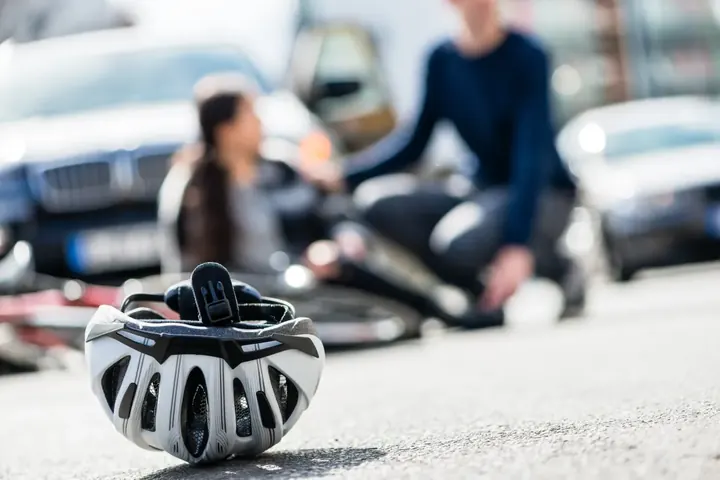
West Virginia is an at-fault state. The driver who caused the crash pays for your losses, and Code section 17D-4-2 requires that driver to carry at least $25,000 for one person's injuries, $50,000 for everyone hurt in the accident, and $25,000 for property damage. Those limits took effect on January 1, 2016.
There is no injury threshold to clear before you bring a claim and no personal injury protection system. The Offices of the Insurance Commissioner says so in its annual automobile report: the code mandates liability and uninsured motorist coverage only. Medical payments coverage, which pays medical expenses regardless of fault, is optional.
Your bike and gear come out of the driver's $25,000 property limit and your injuries out of the bodily injury limit. If someone in your household has an auto policy with medical payments coverage, ask the insurer in writing whether it pays when you are struck on a bike. The Supreme Court of Appeals has allowed those benefits for an insured hit as a pedestrian, but each policy's wording controls.
If nobody in your household owns a car, you are left with the driver's liability coverage, your health plan, and whatever you carry on the bike itself.
Fault and How It Reduces a Claim

West Virginia rewrote its fault rules in 2015, and the line sits at 51%. Under Code section 55-7-13c, your own fault bars recovery only when it is greater than the combined fault of everyone else responsible. Below that line, the award shrinks in proportion to your share. A rider found 50% at fault for a $100,000 loss collects $50,000. At 51%, the same rider collects nothing.
The same section ended joint liability. Each defendant pays only its own percentage, so if a driver is 60% at fault and a second driver 40%, you collect from each separately. The exceptions are narrow: a drunk driver, a defendant whose conduct was criminal, and defendants who conspired remain liable for the whole.
Section 55-7-13d adds a trap. A defendant who gives notice within 180 days of being served can blame someone outside the lawsuit, such as a driver who was never identified, and any fault assigned to that absent party comes off your recovery.
The arguments about your percentage come from chapter 17C. Section 17C-11-2 gives a cyclist on a roadway the rights and duties of a driver. The rules most likely to be raised:
- Lane position. Section 17C-11-5 requires a rider slower than traffic to use a marked bike lane or, without one, keep as close as practicable to the right edge. The exceptions cover passing, left turns, and hazards, including a "substandard-width lane" too narrow to share with a vehicle.
- Lights. Section 17C-11-7 requires a white front lamp visible from 500 feet at night and a red rear reflector.
Helmets are the exception to all of this. The Child Bicycle Safety Act requires a helmet for riders and passengers under 15, and section 17C-11A-6 says a violation is not admissible as evidence of negligence or comparative negligence and cannot be used to reduce damages. No statute addresses riders 15 and older, who are not required to wear one.
Hit-and-Run and Uninsured Drivers

Every West Virginia auto policy carries uninsured motorist coverage. Code section 33-6-31 forbids issuing a liability policy without it, at limits no lower than $25,000, $50,000, and $25,000, and requires insurers to offer up to $100,000, $300,000, and $50,000. The policy may exclude the first $300 of property damage.
The statute's definition of who is insured helps a cyclist. It covers the named insured, a spouse in the same household, and resident relatives of either "while in a motor vehicle or otherwise."
When the driver flees, the statute treats the vehicle as uninsured and sets three conditions:
- Report within 24 hours. You or someone acting for you must report the crash to a police, peace, or judicial officer within 24 hours of discovering it, unless an officer already investigated.
- Notify the insurer within 60 days, stating that you have a claim against an unknown person and the facts behind it.
- Show physical contact between the unknown vehicle and you or your property.
The third condition has been softened by the Supreme Court of Appeals. In Hamric v. Doe, decided in 1997, the court held that a claim can go forward without contact when independent third-party evidence from disinterested witnesses shows that contact would have occurred but for your evasive action. Your own account is not enough, so get witness names before they leave.
Underinsured motorist coverage is optional, and insurers must offer it up to your liability limits. A vehicle counts as underinsured only when its liability limits are lower than your underinsured limit or have been drained below it by payments to others.
Two things to check in a bike insurance policy: whether it offers uninsured motorist coverage of its own, and whether crash damage to the bike is covered no matter who hit you.
Dooring and Passing Laws
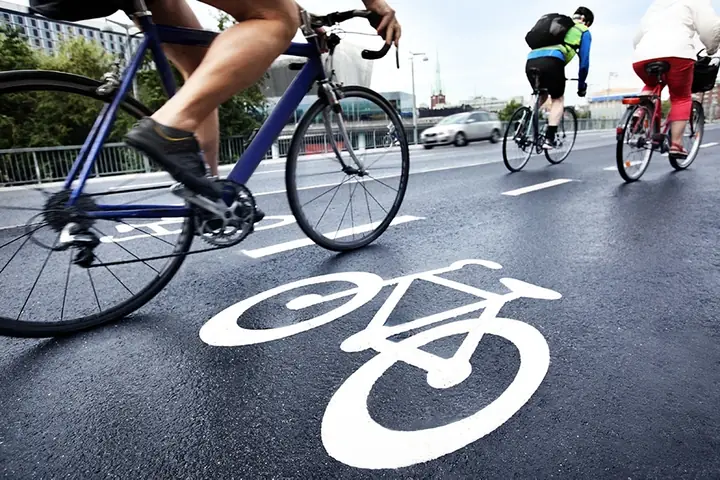
West Virginia puts a number on a safe pass. Code section 17C-7-3 requires a driver overtaking a bicycle to pass on the left "at a distance of not less than three feet at a careful and reduced speed" and to stay out of the right side of the roadway until safely clear. The fine for a first conviction tops out at $100, but in a civil claim a measurable rule replaces an argument about what was reasonable.
Dooring is different. The traffic code's articles on bicycles, parking, and miscellaneous rules contain no provision written for a car door opened into traffic. A dooring claim in West Virginia therefore rests on ordinary negligence. Expect the other side to cite section 17C-11-5 and ask why you were riding within reach of parked cars. That section's hazard exception is your answer.
E-bikes
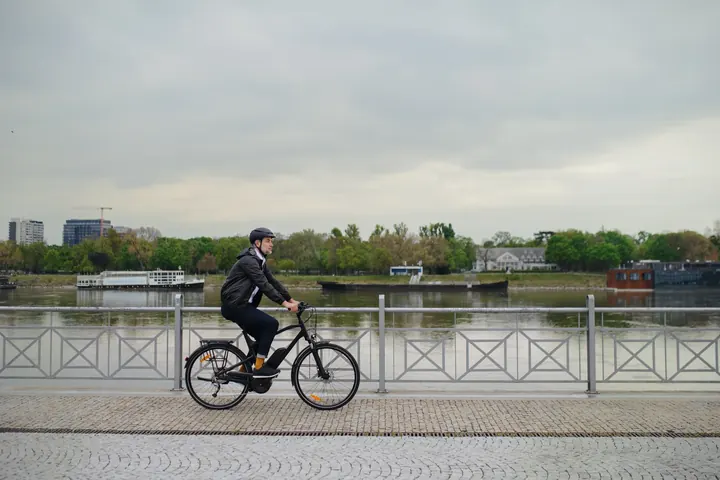
Code section 17C-1-70 defines an electric bicycle as a two- or three-wheeled vehicle with fully operable pedals and an electric motor of fewer than 750 watts. Class 1 assists only while you pedal and stops at 20 mph. Class 2 has a motor that can propel the bike on its own and gives no assistance at 20 mph. Class 3 assists only while you pedal, stops at 28 mph, and must have a speedometer.
Section 17C-11-8 gives an e-bike rider the rights and duties of a driver and exempts the bike from the state's registration, title, driver's license, and financial responsibility laws. After a crash you stand where any cyclist stands: the same 51% bar, the same two-year deadline, the same claim against the driver.
Where you were riding can surface in a claim: a Class 3 may not be ridden on a bicycle path or trail unless the path is within a highway or roadway or the local authority allows it.
The tampering rule matters most. If a motor is modified so that a limit in section 17C-1-70 is exceeded, the statute says the vehicle "is no longer an electric bicycle," and the exemptions go with it.
One question has no answer in the statutes or the Insurance Commissioner's report: whether an auto policy's uninsured motorist or medical payments coverage applies to you on an e-bike. Get your insurer's position in writing. In a bike insurance policy, check that your e-bike's class is covered.
Deadlines

West Virginia gives you two years to sue, but the deadlines that undo a claim come much sooner: 24 hours and 60 days after a hit-and-run.
- At the scene
Notify Police Immediately
Section 17C-4-6 requires the driver in a crash with an injury, a death, or $1,000 or more in apparent damage to notify police immediately by the quickest means: city police inside a municipality, otherwise the county sheriff or the West Virginia State Police.
- 24 hours
Hit-and-Run Police Report
For an uninsured motorist claim against an unknown driver, section 33-6-31 requires a report to a police, peace, or judicial officer within 24 hours of discovering the crash, once you are physically able, unless an officer already investigated.
- 60 days
Hit-and-Run Notice to the Insurer
The same section requires notice to the insurance company within 60 days of the crash, stating that you have a claim against an unknown person and setting out the facts.
- 30 days before filing
Notice Before Suing a State Agency
Section 55-17-3 requires written notice of the claim and the relief you want, sent by certified mail to the agency's chief officer and the Attorney General at least 30 days before you file. Mailing it pauses the limitation period for 30 days. A claim against the state that cannot be brought in court goes to the Legislative Claims Commission, which section 14-2-21 holds to the same limitation period.
- Two years
Injury and Bike Damage Lawsuit
Code section 55-2-12 gives you two years to sue for personal injury and the same two years for damage to the bike. A wrongful death claim runs two years from the death. Section 29-12A-6 sets the same two years for a suit against a city, county, or other political subdivision, with no separate notice-of-claim step. For a child, section 55-2-15 allows the same period after reaching full age, and never more than 20 years from the crash.
A claim against a city or county comes with limits of its own. Section 29-12A-7 bars punitive damages against a political subdivision and caps noneconomic damages at $500,000 per person. Economic losses are not capped. Section 29-12A-5 grants immunity for snow, ice, and other weather conditions on a public way unless the political subdivision's own negligence caused them.
For a dispute over the bike alone, magistrate court hears civil claims up to $20,000.
Evidence to Preserve
With a 51% bar and no joint liability, evidence in West Virginia does two jobs: it keeps your percentage down and it pins the rest on a defendant who can pay.
- The driver's details. Section 17C-4-3 requires a driver in an injury crash to give you a name, a working phone number, the vehicle's year, make, model, and the last four digits of its VIN, and proof of insurance.
- Insurance information from the officer. Under section 17C-4-7, the investigating officer must provide owner, operator, and insurance information on request within 24 hours of the crash, at no cost.
- Passing distance. Camera footage or a witness, measured against three feet.
- Lane width and hazards. Photos of a narrow lane, parked cars, or debris support the exceptions in section 17C-11-5.
- Independent witnesses. People with no stake in the outcome, essential if the driver fled without touching you.
- Proof of your 24-hour police report and your dated notice to the insurer.
- The e-bike's motor rating and anything showing it is unmodified.
- The declarations page of every auto policy in your household, showing uninsured, underinsured, and medical payments limits.
- The damaged bike, unrepaired, with receipts.
Coverage for West Virginia Riders

West Virginia law leaves a rider exposed in four places: a driver carrying the $25,000 minimum, uninsured motorist coverage that exists only if someone in your household owns a car, a 51% bar that can turn a claim into a defense, and medical costs no law requires anyone to pay up front. The Velosurance policy offers the coverages discussed above.
Uninsured Motorist covers losses beyond medical bills, such as lost wages, when the at-fault driver cannot pay.
Medical Payments covers the deductible and out-of-pocket costs your health plan leaves, regardless of the driver's insurance. West Virginia has no personal injury protection to do that job, so choose a limit close to your plan's out-of-pocket deductible.
Liability is the coverage for the day the percentages run against you. If you are held responsible for a crash, it covers injury to other people and damage to their property, including the cost of defending a covered lawsuit, with limits from $25,000 to $500,000.
Crash damage to the bike is part of the policy itself: stated value with no depreciation, subject to the deductible, whoever was at fault. Class 1, Class 2, and Class 3 e-bikes are covered like conventional bikes.
For any of these coverages to apply, it must be on the policy before the crash. Get a quote before the next ride, not after it.
Frequently Asked Questions
- How does the 51% rule work in a West Virginia bicycle accident claim?
- You recover damages in West Virginia as long as your fault is not greater than the combined fault of everyone else responsible, and the award is reduced by your share. A rider 50% at fault for a $100,000 loss collects $50,000. The caveat worth knowing: at 51% the recovery is zero, and each defendant pays only its own percentage.
- How long do you have to file a bicycle accident lawsuit in West Virginia?
- You have two years to file suit in West Virginia for injuries and for damage to your bike, and the same two years apply to a claim against a city or county. One thing to watch: before suing a state agency you must send written notice by certified mail to its chief officer and the Attorney General at least 30 days ahead.
- What makes a hit-and-run claim work for a cyclist in West Virginia?
- Uninsured motorist coverage is on every West Virginia auto policy, and it treats a driver who flees as uninsured. Report the crash to police within 24 hours and notify the insurer within 60 days. With one wrinkle: the statute asks for physical contact, and a no-contact claim needs independent witnesses with no stake in the outcome.
- How does West Virginia's helmet law affect an injury claim?
- Your claim is protected by statute: a violation of West Virginia's helmet rule is not admissible as evidence of negligence or comparative negligence and cannot be used to reduce damages. The rule itself requires helmets for riders and passengers under 15. One thing to watch: no statute addresses riders 15 and older, who are not required to wear one.
- How are Class 1, Class 2, and Class 3 e-bikes treated after a crash in West Virginia?
- West Virginia gives riders of Class 1, Class 2, and Class 3 e-bikes the rights and duties of a driver, so the same 51% rule and two-year deadline apply. Class 1 is pedal assist that stops at 20 mph, Class 2 has a motor that can propel the bike on its own up to 20 mph, and Class 3 is pedal assist that stops at 28 mph. The caveat worth knowing: a motor modified past those limits is no longer an electric bicycle under the statute.
Sources
- West Virginia Code sections 55-7-13a, 55-7-13c, 55-7-13d (modified comparative fault, several liability, nonparty fault)
- West Virginia Code sections 55-2-12 and 55-2-15 (limitations; persons under disability)
- West Virginia Code section 55-7-6 (wrongful death, period of limitation)
- West Virginia Code sections 17D-4-2 and 17D-2A-3 (minimum liability limits, required security)
- West Virginia Code section 33-6-31 (uninsured and underinsured motorist coverage)
- Hamric v. Doe, No. 23964 (W. Va. Dec. 5, 1997)
- West Virginia Code sections 29-12A-4, 29-12A-6, 29-12A-7 (Governmental Tort Claims and Insurance Reform Act)
- West Virginia Code sections 55-17-2 and 55-17-3 (notice before suing a state agency)
- West Virginia Code sections 14-2-13, 14-2-14, 14-2-21 (Legislative Claims Commission)
- West Virginia Code section 17C-7-3 (overtaking and passing a bicycle)
- West Virginia Code sections 17C-11-2, 17C-11-5, 17C-11-7 (bicycles: traffic laws, riding on roadways, lamps)
- West Virginia Code sections 17C-1-70 and 17C-11-8 (electric bicycles)
- West Virginia Code sections 17C-11A-3, 17C-11A-4, 17C-11A-6, 17C-11A-7 (Child Bicycle Safety Act)
- West Virginia Code sections 17C-4-1, 17C-4-3, 17C-4-6, 17C-4-7 (duties and reports after a crash)
- West Virginia Code section 50-2-1 (magistrate court civil jurisdiction)
- West Virginia Offices of the Insurance Commissioner, 2024 Annual Automobile Report
This guide is general information about West Virginia law as of the review date above. It is not legal or insurance advice, and it does not create an attorney-client relationship. Laws change and every crash turns on its own facts: talk to a licensed West Virginia attorney about your situation.