
TL;DR:
- Vermont is an at-fault state with a 51% bar: at 50% negligent you recover half, at 51% you recover nothing.
- Minimum auto liability limits are $25,000 per person, $50,000 per crash, and $10,000 for property, with no increase enacted in 2025 or 2026.
- You have three years to sue for injuries or bike damage and two years for wrongful death. A bridge or culvert claim against a town needs written notice within 20 days.
- Uninsured motorist coverage is mandatory on every Vermont auto policy at $50,000/$100,000 or more, and the statute sets no physical contact rule for a hit-and-run.
- Drivers must give a cyclist at least four feet under 23 V.S.A. section 1033, section 1119 bans opening a door into traffic, and Vermont has no bicycle helmet law.
Who Pays After a Crash in Vermont
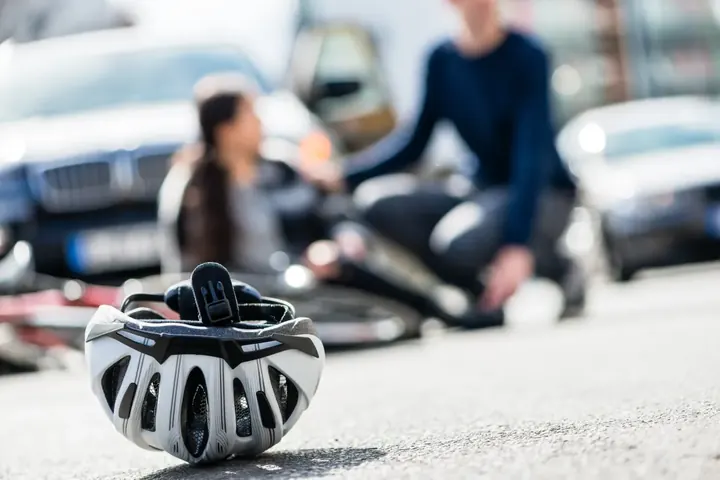
Vermont is an at-fault state. The driver who caused the crash pays for your losses, and 23 V.S.A. section 800 requires that driver to carry at least $25,000 for one person's injuries, $50,000 for two or more people hurt in the crash, and $10,000 for property damage. The Legislature left those numbers alone in 2025 and 2026, and there is no injury threshold to clear before you bring a claim. The $10,000 property limit is the thin spot: your bike, wheels, and electronics all come out of it.
Vermont gives you two tools for finding out what the driver carries. Under 23 V.S.A. section 1129, the owner and the operator of an insured vehicle must send you the names and addresses of their liability insurers and the policy numbers within five days of the injury or damage. Under section 941, an insurer that may owe on the claim must give you a statement of its liability limits within 30 days of your written request.
There is no personal injury protection in Vermont. The Department of Financial Regulation's consumer guide lists liability and uninsured motorist coverage as the two mandatory auto coverages and medical payments coverage as optional. Where a household bought it, the guide says it pays regardless of fault, with no deductible, and covers household members struck as pedestrians. The guide is silent on bicycles, so ask your insurer in writing.
With no car in the household, the list is short: the driver's liability coverage, your health plan, and whatever you carry on the bike itself.
Fault and How It Reduces a Claim

Vermont's comparative negligence statute, 12 V.S.A. section 1036, lets you recover as long as your negligence "was not greater than" the combined negligence of the defendants. Your award is cut by your share. A rider found 50% negligent in a $100,000 loss collects $50,000. At 51%, the same rider collects nothing.
The arguments about your share come from Title 23. Section 1136 gives a cyclist the rights and duties of a vehicle operator, and these are the rules the driver's insurer will reach for:
- Lane position. Section 1139 says to ride as near to the right side of the improved area as is safe. You may move left to avoid hazards, a list that names parked cars, surface conditions, and narrow roads.
- Riding two abreast. Legal, provided you do not impede traffic and you stay within a single lane.
- Lights. Section 1141 requires a white front lamp visible from 500 feet at night, plus a red rear lamp or at least 20 square inches of rear-facing reflective material visible from 300 feet.
- Signals. Since July 1, 2026, a rider facing a walk signal may proceed in the direction of the signal after yielding to vehicles and pedestrians already in the intersection.
Young riders get a protection of their own. Under section 1143, a violation of those bicycle rules by anyone under 16 is not negligence and is not evidence of negligence.
Helmets are an open question. Vermont's bicycle statutes contain no helmet requirement, and no statute says whether riding without one can be used to reduce your recovery. Section 1259 bars that kind of evidence for seat belts, and nothing equivalent exists for a bicycle helmet.
Hit-and-Run and Uninsured Drivers

Uninsured motorist coverage is not optional in Vermont. Under 23 V.S.A. section 941, no auto liability policy may be issued for a vehicle registered or garaged in the state without coverage against uninsured, underinsured, and hit-and-run drivers, and the statute has no rejection form. The floor is $50,000 for one person and $100,000 for two or more, double the liability minimum.
The Vermont Supreme Court reads that coverage as portable. In Hubbard v. Metropolitan Property and Casualty Insurance Co. (2007), restating its 1992 Monteith decision, the court said the coverage attaches to the insured person and not to the vehicle, and protects an insured who is driving, riding, or on foot. Neither opinion involved a bicycle, so confirm it with your insurer in writing.
The same line of cases lets you stack: a clause that stops you from combining the uninsured motorist coverage on separate policies is unenforceable.
For a driver who flees, section 941 names hit-and-run vehicles and says nothing about physical contact or a reporting deadline. Those conditions, if any, sit in your policy, so read its hit-and-run definition and call the police from the scene. Under section 1128, a driver who leaves without stopping and identifying faces up to two years in prison, or five when the crash causes serious bodily injury.
The underinsured half works on the gap. A vehicle is underinsured to the extent its liability limits are lower than your own uninsured motorist limits, or have been used up by payments to other people hurt in the crash.
Property damage is covered up to $10,000 per claim with a $150 deductible, though whether a bicycle counts as covered property is a policy question. Two things to check in a bike insurance policy: whether it offers uninsured motorist coverage of its own, and whether crash damage is covered whoever hit you.
Dooring and Passing Laws

Vermont's dooring statute, 23 V.S.A. section 1119, has two parts. No person may open a motor vehicle door on the side nearest moving traffic unless it is reasonably safe and can be done without interfering with traffic. And no person may leave a door on that side open longer than necessary to load or unload passengers. "No person" covers passengers as well as drivers.
Passing is measured in feet. Section 1033 requires a driver approaching or passing a vulnerable user to exercise due care, which the statute says includes slowing down and increasing clearance to at least four feet. Title 23 defines a vulnerable user to include anyone operating a bicycle, an e-bike, or a motor-assisted bicycle. A violation carries a civil penalty of at least $200.
Section 1039 fills in the rest. A driver may not, in a careless or imprudent manner, approach, pass, or hold speed unnecessarily close to a vulnerable user, and nobody in the vehicle may throw anything at one.
E-bikes
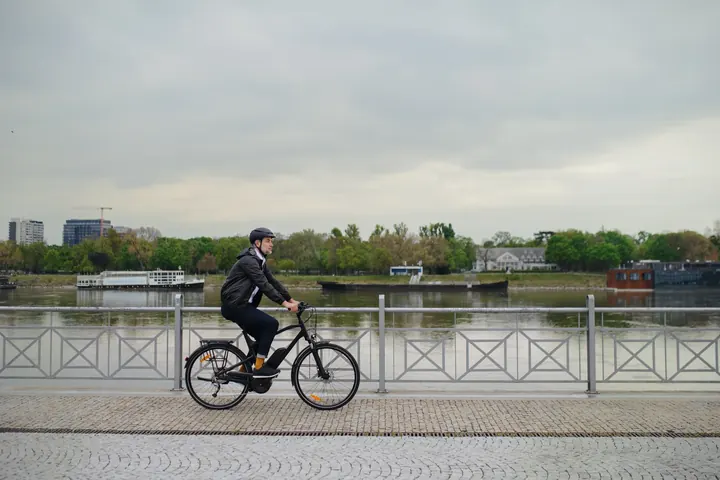
Vermont defines an electric bicycle in 23 V.S.A. section 4 as a bike with fully operable pedals, a saddle, and an electric motor of less than 750 watts. Class 1 assists only while you pedal and stops assisting at 20 mph. Class 2 has a motor that can propel the bike on its own and cannot assist at 20 mph or above. Class 3 assists only while you pedal, up to 28 mph, and must have a speedometer.
The same definition says an e-bike is not a motor vehicle. Section 1136a governs it as a bicycle and exempts it from registration, inspection, title, operator's license, and financial responsibility requirements. After a crash you stand where any cyclist stands: the same 51% bar, three-year deadline, and four-foot passing rule.
Three details matter in a claim. Nobody under 16 may operate a Class 3. Every e-bike must carry a permanent label with its class, top assisted speed, and motor wattage. And a town or state agency may bar e-bikes from a bike path, so check the path's rules if that is where you were hit.
One question stays open: neither section 941 nor the Department of Financial Regulation's consumer guide says whether an auto policy's uninsured motorist or medical payments coverage applies on an e-bike. In a bike insurance policy, check that your e-bike's class is covered and that the motor matches its label.
Deadlines

Vermont gives you three years to sue, but a claim against a town over a bridge or culvert can be lost in 20 days.
- At the scene
Driver Must Stop and Identify
Under 23 V.S.A. section 1128, a driver involved in a crash that injures you or damages your property must stop immediately and give you a name, residence, license number, and the vehicle owner's name.
- 72 hours
Driver's Crash Report to the DMV
Section 1129 requires the operator of a motor vehicle in a crash with an injury or $3,000 or more in total property damage to mail a written report to the Commissioner of Motor Vehicles within 72 hours. The form is VC-004.
- Five days
Driver's Insurance Details
The owner and operator of an insured vehicle must send you the names and addresses of their liability insurers and the policy numbers within five days of the injury or damage.
- 20 days
Notice to a Town: Bridge or Culvert
If an insufficient or unrepaired town bridge or culvert caused the crash, 19 V.S.A. section 987 bars any action unless you first give written, signed notice to a selectboard member of that town within 20 days. The notice must state the time and place, say how the bridge or culvert was out of repair, and describe the injury. Section 985 caps the town's liability at $75,000 or its insurance policy limits, whichever is greater.
- Two years
Wrongful Death Lawsuit
Under 14 V.S.A. section 1492, the personal representative must file a wrongful death action within two years from the discovery of the death.
- Three years
Injury and Bike Damage Lawsuit
12 V.S.A. section 512 gives you three years to sue for personal injury, counted from the discovery of the injury, and three years for damage to the bike. Under section 551, a minor may sue within that period after turning 18.
A claim against the State, for a state truck or plow, falls under 12 V.S.A. section 5601. The State is liable as a private person would be, and recovery is capped at $500,000 per person and $2,000,000 per occurrence. The chapter sets no separate notice-of-claim deadline in its text. When a town employee's driving caused the crash, 24 V.S.A. section 901a puts the action against the municipality, not the employee.
For a dispute over the bike alone, Vermont small claims court hears claims up to $10,000.
Evidence to Preserve
With a 51% bar, evidence in Vermont does one job above all: it keeps your share of the negligence at or below the driver's.
- The police report number and the driver's name, residence, license number, and the vehicle owner's name, which section 1128 requires the driver to give you.
- Passing distance. Camera footage, a witness, or marks on the bike that show the car was inside four feet.
- Your lamp and rear reflector or light, photographed on the bike, if the crash happened between a half hour after sunset and a half hour before sunrise.
- Road conditions that explain your lane position: parked cars, broken pavement, a narrow road.
- The exact location, including whether a bridge or culvert was involved and which town maintains it.
- The e-bike label showing class, top assisted speed, and wattage.
- Every auto policy in your household, with its uninsured motorist limits and any medical payments coverage.
- The damaged bike, unrepaired, with receipts for the bike and gear.
Coverage for Vermont Riders

Vermont law leaves a rider exposed in four places: a driver insured for only $25,000 of injury and $10,000 of property damage, mandatory uninsured motorist coverage that helps only when an auto policy covers you, a 51% bar, and no personal injury protection. The Velosurance policy offers the coverages discussed above.
Uninsured Motorist covers losses beyond medical bills, such as lost wages, when the at-fault driver cannot pay. With no auto policy in the household, it stands in for the section 941 coverage you lack.
Medical Payments covers the deductible and out-of-pocket costs your health plan leaves, regardless of the driver's insurance. Choose a limit close to your plan's out-of-pocket deductible.
Liability is the coverage for the day the percentages run against you. If you are held responsible for a crash, it covers injury to other people and damage to their property, including the cost of defending a covered lawsuit, with limits from $25,000 to $500,000.
Crash damage to the bike is part of the policy itself: stated value with no depreciation, subject to the deductible, whoever was at fault. Class 1, Class 2, and Class 3 e-bikes are covered like conventional bikes.
For any of these coverages to apply, it must be on the policy before the crash. Get a quote before the next ride, not after it.
Frequently Asked Questions
- How does the 51% rule work in a Vermont bicycle accident claim?
- You recover damages in Vermont as long as your negligence is not greater than the driver's, and the award is reduced by your share. A rider found 50% negligent in a $100,000 loss collects $50,000. The caveat worth knowing: at 51% the recovery is zero, so the evidence that sets your share decides the claim.
- How long do you have to file a bicycle accident claim in Vermont?
- You have three years to file suit in Vermont for injuries and for damage to your bike, and two years for a wrongful death claim. One thing to watch: a claim against a town over an insufficient bridge or culvert needs written notice to a selectboard member within 20 days.
- How does uninsured motorist coverage help a Vermont cyclist?
- Every Vermont auto policy carries uninsured motorist coverage of at least $50,000 for one person and $100,000 for two or more, and the Vermont Supreme Court treats it as coverage that follows the insured person and not the car. It also applies to hit-and-run vehicles, and the statute sets no physical contact rule. With one wrinkle: the court's opinions did not involve a bicycle, so confirm with your insurer in writing.
- What passing distance do Vermont drivers owe a cyclist?
- Vermont drivers must slow down and leave at least four feet when approaching or passing a cyclist, and a violation carries a civil penalty of at least $200. The rule protects riders of bicycles, e-bikes, and motor-assisted bicycles. Camera footage or a witness who can place the car inside four feet makes the violation part of your claim.
- How are Class 1, Class 2, and Class 3 e-bikes treated after a crash in Vermont?
- Vermont governs Class 1, Class 2, and Class 3 e-bikes as bicycles, so the same 51% rule, three-year deadline, and four-foot passing rule apply. Class 1 assists only while you pedal to 20 mph, Class 2 has a motor that can propel the bike on its own to 20 mph, and Class 3 assists only while you pedal to 28 mph and is limited to riders 16 and older. The caveat worth knowing: the motor must be less than 750 watts, and the label must match the bike.
Sources
- 12 V.S.A. section 1036 (contributory and comparative negligence)
- 12 V.S.A. sections 512 and 551 (three-year limitation; minority)
- 14 V.S.A. section 1492 (wrongful death action)
- 12 V.S.A. chapter 189, sections 5601 to 5606 (tort claims against the State)
- 12 V.S.A. section 5531 (small claims limit)
- 19 V.S.A. sections 985, 987, 988 (town liability for bridges and culverts; 20-day notice)
- 24 V.S.A. section 901a (tort claims against municipal employees)
- 23 V.S.A. section 800 (minimum liability limits)
- 23 V.S.A. section 941 (uninsured, underinsured, and hit-and-run motorist coverage)
- 23 V.S.A. section 4 (definitions: motor vehicle, electric bicycle, vulnerable user)
- 23 V.S.A. sections 1033 and 1039 (passing vulnerable users; crowding and harassment)
- 23 V.S.A. section 1119 (opening and closing vehicle doors)
- 23 V.S.A. sections 1128 and 1129 (duty to stop; crash reports; insurer notification)
- 23 V.S.A. chapter 13, subchapter 12, sections 1136 to 1143 (operation of bicycles and electric bicycles)
- 23 V.S.A. section 1259 (safety belts; evidence in civil proceedings)
- 2025 Vermont Acts and Resolves No. 66 (S.123), sections 41, 42, and 46 (bicycle operation; walk signal rule effective July 1, 2026)
- Hubbard v. Metropolitan Property & Casualty Insurance Co., 2007 VT 121
- Progressive Casualty Insurance Co. v. MMG Insurance Co., 2014 VT 70
- Vermont Department of Financial Regulation, Consumer's Guide to Auto Insurance (revised May 22, 2019)
- Vermont Department of Motor Vehicles, crash reporting requirements and form VC-004
- Vermont Office of Legislative Counsel, Electric Bicycles in Vermont Law (January 14, 2026)
This guide is general information about Vermont law as of the review date above. It is not legal or insurance advice, and it does not create an attorney-client relationship. Laws change and every crash turns on its own facts: talk to a licensed Vermont attorney about your situation.