
TL;DR:
- Tennessee is an at-fault state with a 50% bar: at 49% at fault you recover 51% of your losses, and at 50% you recover nothing.
- You have one year to sue for injuries and three years for damage to the bike. A suit against a city or county must be filed within 12 months.
- Minimum auto liability limits are $25,000 per person, $50,000 per accident, and $25,000 for property damage.
- Tennessee auto policies include uninsured motorist coverage unless it was rejected in writing. A hit-and-run claim needs physical contact or independent proof, and a police report.
- Drivers must leave at least three feet when passing a bicycle, and riding without a helmet cannot be used as evidence in a civil trial.
Who Pays After a Crash in Tennessee
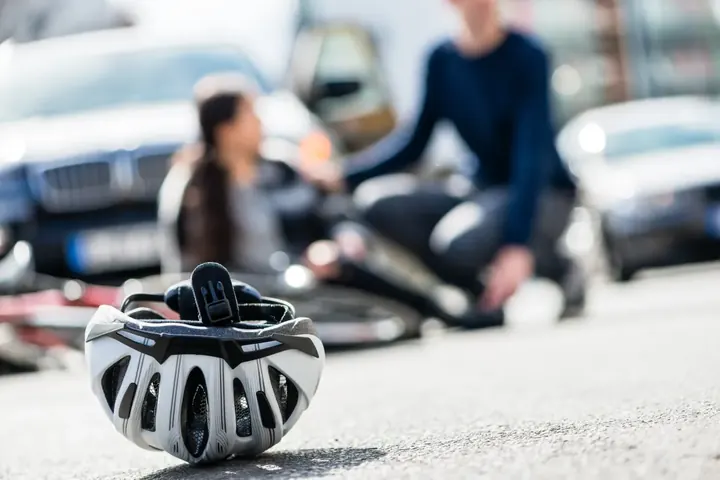
Tennessee is an at-fault state. The driver who caused the crash owes you for your losses, and the Financial Responsibility Law, at Tennessee Code section 55-12-102, sets what that driver must carry: $25,000 for one person's injuries, $50,000 for everyone hurt in the accident, and $25,000 for property damage. The property figure was $15,000 until the end of 2022, and the legislature raised none of the three in 2025 or 2026.
There is no no-fault system here and no injury threshold to clear before you can bring a claim. There is also no first-party auto benefit waiting for you: the coverage Tennessee requires is liability only, and personal injury protection is not part of it. Your health plan pays the first bills, and the claim against the driver catches up later.
Tennessee also caps part of a large claim. Section 29-39-102 limits noneconomic damages, the money for pain and suffering, to $750,000 for each injured person, or $1,000,000 for a catastrophic injury such as paraplegia.
One change is coming. Public Chapter 1077 of 2026 requires proof of insurance at first registration and raises the fee for an uninsured vehicle from $25 to $500, starting July 1, 2027.
Fault and How It Reduces a Claim

Tennessee's fault rule comes from a court decision, not a statute. In McIntyre v. Balentine, decided in 1992, the Tennessee Supreme Court threw out the old all-or-nothing rule and adopted what it called the 49% rule: you recover so long as your negligence is less than the defendant's, and your damages are reduced by your percentage.
A rider found 49% at fault for a $100,000 loss collects $51,000. A rider found 50% at fault collects nothing. When more than one party caused the crash, your share is measured against their combined fault, and because the same decision ended joint and several liability, each defendant pays only its own percentage.
The driver's insurer will build your percentage from Title 55. Section 55-8-172 gives a cyclist the rights and duties of a driver, and two rules come up most:
- Lane position. Section 55-8-175 requires a rider slower than traffic to keep as close as practicable to the right-hand curb or edge. The exceptions: passing, preparing for a left turn, avoiding hazards, and any lane too narrow for a bicycle and another vehicle to travel safely side by side.
- Lights. Section 55-8-177 requires a white front lamp visible from 500 feet at night and a red rear reflector or lamp visible from 500 feet.
Helmets are the exception. Section 55-52-106 says failure to wear a bicycle helmet is not admissible as evidence in a trial of any civil action. The sentence sits in the helmet law for riders under 16, but its wording is not limited to children.
Hit-and-Run and Uninsured Drivers

Section 56-7-1201 requires every Tennessee auto liability policy to include uninsured motorist coverage, with limits equal to the policy's bodily injury liability limits, unless a named insured rejects it or selects lower limits in writing. The floor is the state minimum of $25,000 per person and $50,000 per accident.
The statute expects the coverage to follow you out of the car. Subsection (b) sets the rule for an insured who is hurt while not occupying a vehicle: the policy with the highest limits applies, and only that one. Stacking is out: two policies cannot be added together. Who counts as an insured is set by the policy form, so check your own policy and any policy in your household.
For a driver who flees, subsection (e) sets three conditions. First, either actual physical contact between the unknown vehicle and you or your property, or clear and convincing evidence that the vehicle existed, from a source other than the occupants of the insured vehicle. Second, a report to the appropriate law enforcement agency within a reasonable time. Third, no negligence on your part in failing to identify the driver.
A car that forces you off the road without touching you can still support a claim, but not on your word alone. Get every witness's name and number and ask nearby businesses for video the same day.
The coverage also works as underinsured motorist coverage, with a catch. Section 56-7-1202 treats a vehicle as uninsured when its liability limits are lower than your own uninsured motorist limits, and subsection (d) then subtracts what the driver's policy pays. A $25,000 limit against a driver carrying $25,000 adds nothing.
Two things to check in a bike insurance policy: whether it offers uninsured motorist coverage of its own, and whether crash damage is covered no matter who hit you.
Dooring and Passing Laws
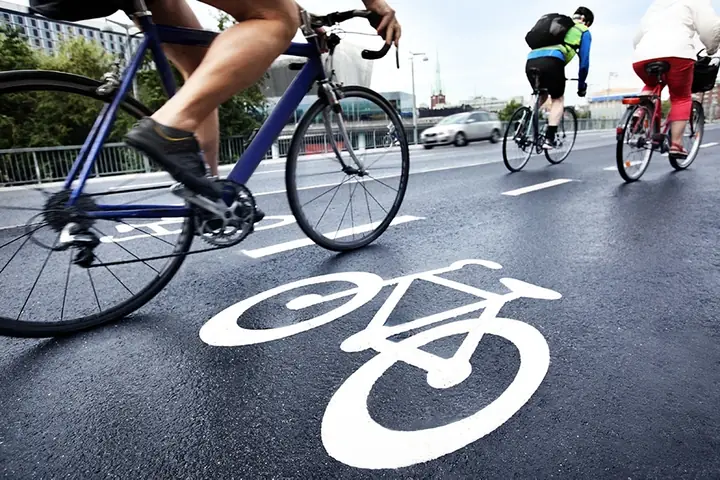
Tennessee puts a number on passing. Section 55-8-175(c), the Jeff Roth and Brian Brown Bicycle Protection Act of 2007, requires a driver overtaking a bicycle to leave a safe distance of not less than three feet and to hold it until safely past. A violation is a Class C misdemeanor.
The stakes rise with the injury. Under section 55-8-197, a driver whose unsafe pass, failure to yield, or failure to use due care causes a crash with serious bodily injury commits a Class B misdemeanor, and a Class A misdemeanor if someone dies. A criminal charge of this kind can also affect your filing deadline, covered below.
Dooring is an open question. The Tennessee Department of Transportation's published list of state bicycle laws contains no rule on opening a car door into traffic, and this guide could not confirm one elsewhere in Title 55. A dooring claim rests on ordinary negligence and on section 55-8-136, which requires every driver to keep a safe lookout and give full time and attention to avoid endangering people on the roadway, its bicycle lanes, and its shoulders.
E-bikes
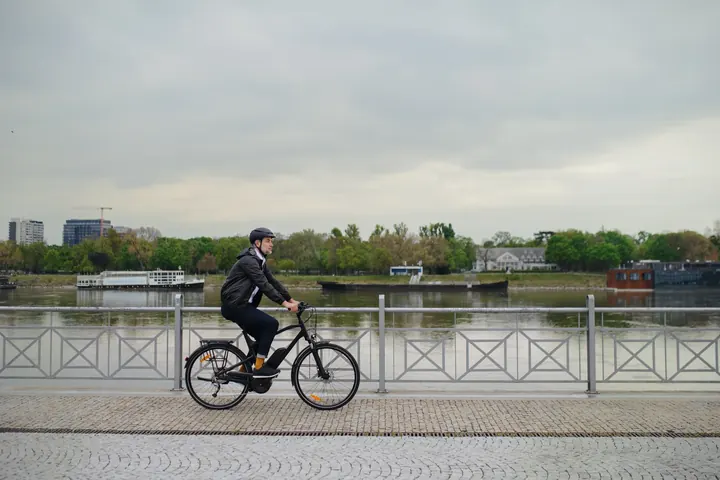
Section 55-8-301 defines an electric bicycle as a bike with fully operable pedals and an electric motor of less than 750 watts that fits one of three classes. Class 1 assists only while you pedal and stops assisting at 20 mph. Class 2 has a motor that can propel the bike on its own, up to 20 mph. Class 3 assists only while you pedal and stops at 28 mph.
Section 55-8-302 exempts an e-bike and its rider from the Financial Responsibility Law, driver licensing, and title and registration. The bicycle rules apply instead, so in a crash you stand where any cyclist stands: the same 50% bar and the same one-year deadline.
Class 3 carries extra rules. The operator and every passenger must wear a helmet at any age under section 55-8-307, and the bike needs a speedometer under section 55-8-305. Public Chapter 651 of 2026 raised the minimum age to operate a Class 3 from 14 to 16 on July 1, 2026.
The same act, in force since April 2026, lets a local government or state agency regulate or prohibit Class 1 and Class 2 e-bikes on streets, bike lanes, and paths, and keeps Class 3 off paths and trails unless the path adjoins the road or local rules permit it. Riding where your class is banned raises your percentage, so read the local ordinance.
Section 55-8-303 requires a permanent label showing the class, top assisted speed, and motor wattage. Photograph it. A motor of 750 watts or more falls outside the definition, and the exemptions go with it.
One question has no answer in the statutes or decisions read for this guide: whether an auto policy's uninsured motorist coverage applies to you on an e-bike. Get your insurer's position in writing.
Deadlines

Tennessee gives you one year to sue for injuries, and a claim against a city, a county, or the state runs on the same short clock with extra steps.
- At the scene
Notify Police Immediately
Section 55-10-106 requires immediate notice, by the quickest means of communication, of any accident with an injury or death: to the local police inside a municipality, otherwise to the county sheriff or the nearest Highway Patrol office. Make the call yourself.
- 20 days
Written Report to the Department of Safety
Section 55-10-107 requires a written report to the Department of Safety within 20 days of an accident that causes injury, death, or more than $1,500 in damage to one person's property.
- One year
Injury Lawsuit
Section 28-3-104 gives you one year from the crash to sue for injuries. The period becomes two years only if criminal charges are brought against the person who caused the injury, the prosecution is commenced within one year by a law enforcement officer, a district attorney general, or a grand jury, and your suit is against the party prosecuted. The extension is strictly construed, and whether a traffic citation qualifies is a question for a lawyer. Plan on one year.
- 12 months
Suit Against a City or County
The Governmental Tort Liability Act removes a local government's immunity for an employee's negligent driving on the job, such as a city bus or a county truck. Section 29-20-305 requires the action to be commenced within 12 months after the cause of action arises. Do not let a wait for the government's answer run past it.
- One year
Notice of a Claim Against the State
Claims over a state employee's driving go to the Tennessee Claims Commission, not to a court. Section 9-8-402 makes written notice to the Division of Claims and Risk Management a condition of recovery. It must name the state entity, the time and place, and the injury, and it is due within the period a court would apply to a similar claim: one year for injuries.
- Three years
Bike Damage Lawsuit
Section 28-3-105 allows three years to sue for damage to personal property, which covers the bike and gear.
Recovery from the government is limited. Section 29-20-403 sets the figures for a city or county at $300,000 for one person, $700,000 for one accident, and $100,000 for property. Section 9-8-307 limits a claim against the state to $300,000 per claimant and $1,000,000 per occurrence.
For a rider under 18, section 28-1-106 lets the claim be brought after the 18th birthday, within the same one-year period.
Evidence to Preserve
With recovery cut off at 50% and a one-year deadline, gather evidence fast and aim it at your percentage.
- The police report number and the name of the agency that took it.
- Any citation or criminal charge against the driver, with the date it was issued. It bears on fault and on the two-year filing period.
- Witness names and video. They prove a three-foot violation, and in a hit-and-run with no contact they are the independent proof the uninsured motorist statute requires.
- Lane width, road edge, and your lights. Photos of a lane too narrow to share, debris at the edge, or your lamp and reflector answer the usual fault arguments.
- The driver's name, address, and registration number, which section 55-10-103 requires a driver to give the person struck. Insurance details are not on that list, so ask.
- Your auto policy's declarations page and any household policy, to show uninsured motorist coverage was never rejected.
- The damaged bike, unrepaired, with receipts for the bike and gear.
Coverage for Tennessee Riders

Tennessee law leaves a rider exposed in four places: a driver carrying the $25,000 minimum or nothing, an uninsured motorist claim that cannot be stacked and shrinks by what the driver's policy pays, medical costs with no personal injury protection behind them, and a 50% bar that can turn a shared-fault crash into a claim against you. The Velosurance policy offers the coverages discussed above.
Uninsured Motorist covers losses beyond medical bills, such as lost wages, when the at-fault driver cannot pay.
Medical Payments covers the deductible and out-of-pocket costs your health plan leaves, regardless of the driver's insurance. Choose a limit close to your plan's out-of-pocket deductible.
Liability is the coverage for the day the percentages run against you. If you are held responsible for a crash, it covers injury to other people and damage to their property, including the cost of defending a covered lawsuit, with limits from $25,000 to $500,000.
Crash damage to the bike is part of the policy itself: stated value with no depreciation, subject to the deductible, whoever was at fault.
For any of these coverages to apply, it must be on the policy before the crash. Get a quote before the next ride.
Frequently Asked Questions
- How does the 49% rule work in a Tennessee bicycle accident claim?
- You recover damages in Tennessee as long as your share of fault is less than the driver's, and the award is reduced by your percentage. A rider 49% at fault for a $100,000 loss collects $51,000. The caveat worth knowing: at 50% the recovery is zero, so the evidence that sets your percentage decides the claim.
- How long do you have to file a bicycle accident claim in Tennessee?
- You have one year to file suit in Tennessee for injuries and three years for damage to your bike. One thing to watch: a suit against a city or county must be filed within 12 months, and a claim against the state needs written notice to the Division of Claims and Risk Management within the same year.
- What makes a hit-and-run claim work for a cyclist in Tennessee?
- Uninsured motorist coverage on a Tennessee auto policy can pay when the driver flees, and it is included in every auto policy unless it was rejected in writing. The claim needs either physical contact with you or your bike, or clear and convincing proof of the other vehicle from an independent source. Report the crash to police within a reasonable time, ideally from the scene.
- How does Tennessee's three-foot passing law help after a crash?
- Tennessee requires a driver overtaking a bicycle to leave at least three feet and hold that gap until safely past, so a close pass is a violation you can point to when fault is divided. Camera footage or a witness who can describe the gap is the strongest support. A violation is a Class C misdemeanor, and a more serious charge applies when it causes serious bodily injury.
- How are Class 1, Class 2, and Class 3 e-bikes treated after a crash in Tennessee?
- Tennessee treats Class 1, Class 2, and Class 3 e-bikes under its bicycle rules, so the same 50% bar and one-year deadline apply. Class 1 is pedal assist to 20 mph, Class 2 has a motor that can propel the bike on its own to 20 mph, and Class 3 is pedal assist to 28 mph with a helmet at any age and operators 16 and older. The caveat worth knowing: a motor of 750 watts or more puts the bike outside the definition.
Sources
- McIntyre v. Balentine, 833 S.W.2d 52 (Tenn. 1992) (comparative fault, the 49% rule)
- Tennessee Code Annotated section 28-3-104 (one-year limitation for injuries to the person)
- Tennessee Code Annotated section 28-3-105 (three-year limitation for injuries to property)
- Tennessee Code Annotated section 28-1-106 (persons under 18)
- Tennessee Code Annotated sections 29-20-202, 29-20-305, 29-20-403 (Governmental Tort Liability Act)
- Tennessee Code Annotated sections 9-8-307 and 9-8-402 (Tennessee Claims Commission, notice of claim)
- Tennessee Code Annotated section 29-39-102 (noneconomic damages)
- Tennessee Code Annotated section 55-12-102 (Financial Responsibility Law, minimum limits)
- Tennessee Code Annotated sections 56-7-1201 and 56-7-1202 (uninsured motorist coverage)
- Tennessee Code Annotated sections 55-8-172, 55-8-175, 55-8-177 (bicycles: rights and duties, lane position, passing, lights)
- Tennessee Code Annotated sections 55-8-136 and 55-8-197 (due care; serious bodily injury or death)
- Tennessee Code Annotated sections 55-8-301 to 55-8-307 (electric bicycles)
- Public Chapter 651 of 2026 (Senate Bill 1782: local e-bike regulation, Class 3 minimum age of 16)
- Public Chapter 1077 of 2026 (Senate Bill 1667: motor vehicle financial responsibility, effective July 1, 2027)
- Tennessee Code Annotated sections 55-10-103, 55-10-106, 55-10-107 (duties and reports after an accident)
- Tennessee Department of Transportation, Tennessee Bicycle Laws (text of sections 55-52-105, 55-52-106, 55-8-171, 55-8-172)
- Tennessee Department of Revenue, Financial Responsibility Law
- Tennessee Department of Commerce and Insurance, Insurance Made Simple consumer calendar (2023)
This guide is general information about Tennessee law as of the review date above. It is not legal or insurance advice, and it does not create an attorney-client relationship. Laws change and every crash turns on its own facts: talk to a licensed Tennessee attorney about your situation.