
TL;DR:
- Pennsylvania is a choice no-fault state: an auto policy pays the first $5,000 of your medical bills regardless of fault, including the policy on the car that hit you if you have none.
- Fault follows modified comparative negligence. Your share of the blame reduces your recovery, and at 51% you recover nothing.
- Minimum auto liability limits are $15,000 per person, $30,000 per accident, and $5,000 for property damage.
- You have two years to sue for injuries or bike damage, and six months to give written notice of a claim against a government unit.
- Drivers must pass a bicycle with at least four feet of room, and riding without a helmet cannot be used against you in a civil trial.
Who Pays After a Crash in Pennsylvania
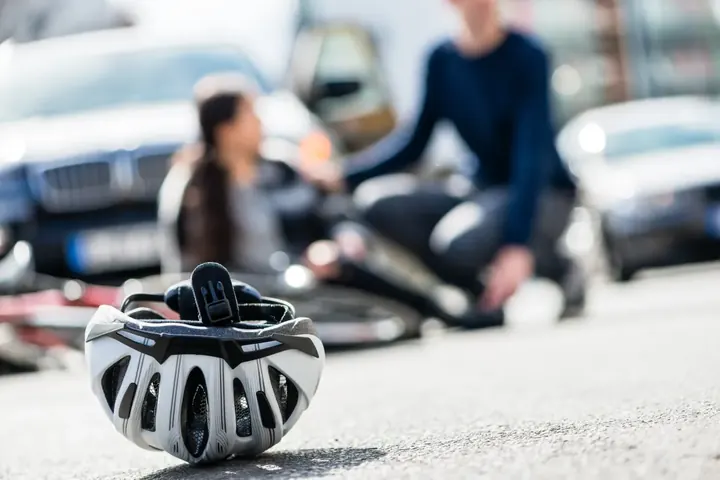
Pennsylvania is a choice no-fault state, and the first money after a crash does not depend on who caused it. Section 1711 of the Motor Vehicle Financial Responsibility Law puts a $5,000 medical benefit in every auto policy covering a registered vehicle.
Section 1713 sets the order in which policies pay. If you are the named insured on an auto policy, yours pays, even though you were on a bike. If not, a household relative's policy pays. If neither exists, the statute sends a person who was not the occupant of a motor vehicle to the policy on any motor vehicle involved in the accident. A cyclist with no car claims the $5,000 from the insurer of the car that hit them.
When no policy applies at all, the Assigned Claims Plan is the backstop. Under section 1752 it is open to a Pennsylvania resident hurt in a crash in the state who owns no registered vehicle, and section 1753 caps its medical benefit at the same $5,000.
Then the $5,000 runs out. Collarbone surgery costs $11,000 to $17,000. The rest goes to your health plan, with its deductible and copays, and to a claim against the driver.
That driver may be carrying very little. Section 1702 defines financial responsibility as $15,000 for one person's injuries, $30,000 for everyone hurt in the crash, and $5,000 for property damage. Section 1722 also bars you from recovering from the driver the medical bills that first-party benefits paid or should have paid.
One more choice matters if you insure a car: limited tort. Under section 1705, a person bound by a limited tort election cannot claim pain and suffering unless the injury is a serious injury: death, serious impairment of body function, or permanent serious disfigurement. The Pennsylvania Supreme Court ruled in 2005, in L.S. v. David Eschbach, Jr., Inc., that section 1705 does not apply to pedestrians. The opinion does not mention cyclists, so put the question to a Pennsylvania attorney if your auto policy is limited tort. A rider who owns no registered car and is covered by no auto policy keeps full rights under section 1705(b)(3).
Fault and How It Reduces a Claim
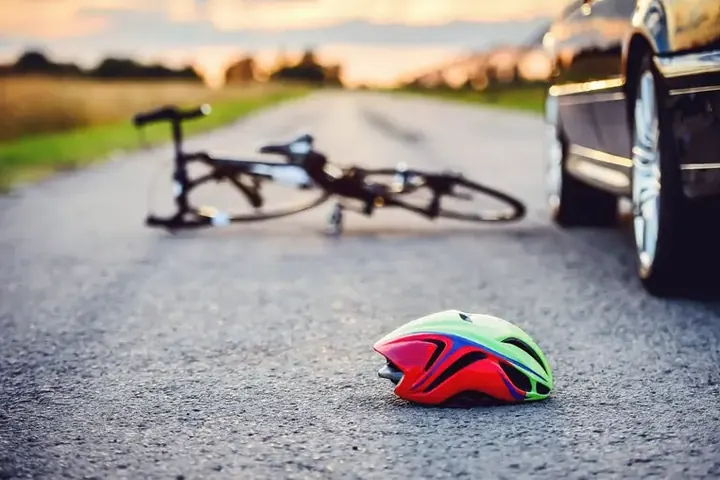
Pennsylvania's comparative negligence statute, 42 Pa.C.S. section 7102, lets you recover as long as your negligence was "not greater than" the negligence of the people you are suing. Your damages are then cut by your percentage. A rider found 30% at fault for a $100,000 loss collects $70,000. A rider found 50% at fault collects half. At 51% the claim is barred.
That makes the percentage the fight, and an insurer will read the Vehicle Code looking for a rule you broke. Section 3501 gives a person riding a pedalcycle, the Code's word for a bicycle, all the rights and duties of a driver. The rules most often raised are specific:
- Lane position. Section 3301(c) requires a bike moving slower than traffic to use the right-hand lane or ride as close as practicable to the right edge. It does not apply on a road with one lane in each direction, or where the surface makes the edge unsafe.
- Riding abreast. No more than two abreast on a roadway under section 3505(e).
- Lights. Between sunset and sunrise, section 3507 requires a white front lamp visible from 500 feet, a red rear reflector visible from 500 feet, and an amber reflector on each side.
Helmets are the exception, and the statute is blunt about it. Section 3510 requires a helmet only for riders and passengers under 12. Subsection (c) then says that failure to use a helmet cannot be considered contributory negligence and cannot be admitted as evidence in the trial of any civil action.
Hit-and-Run and Uninsured Drivers
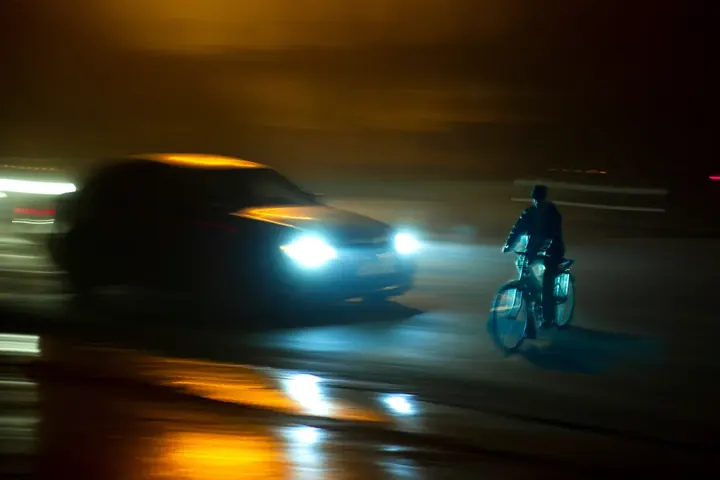
Uninsured and underinsured motorist coverage must be offered with every Pennsylvania auto policy under section 1731, but buying it is optional. A named insured can reject either one by signing the waiver printed in the statute, and that waiver binds every relative in the household. If the insurer cannot produce a valid signed form, the coverage exists at the policy's bodily injury limits.
The statute protects people who suffer injury "arising out of the maintenance or use of a motor vehicle," wording that is not limited to people inside a car.
Stacking is the default. Under section 1738, the limits for each insured vehicle add together unless the named insured signed a stacking waiver in exchange for a lower premium.
A hit-and-run qualifies through the definition of an uninsured motor vehicle in section 1702. An unidentified vehicle counts when the accident is reported to the police and you notify your insurer within 30 days, or as soon as practicable after that. The definition does not mention physical contact.
Two limits apply. A rider bound by limited tort cannot collect pain and suffering from this coverage either, under section 1731(d)(2). And the coverage pays for injury, which section 1702 defines as bodily harm. It does not pay for the bike.
Two things to check in a bike insurance policy: whether it offers uninsured motorist coverage of its own, and whether crash damage is covered no matter who hit you.
Dooring and Passing Laws
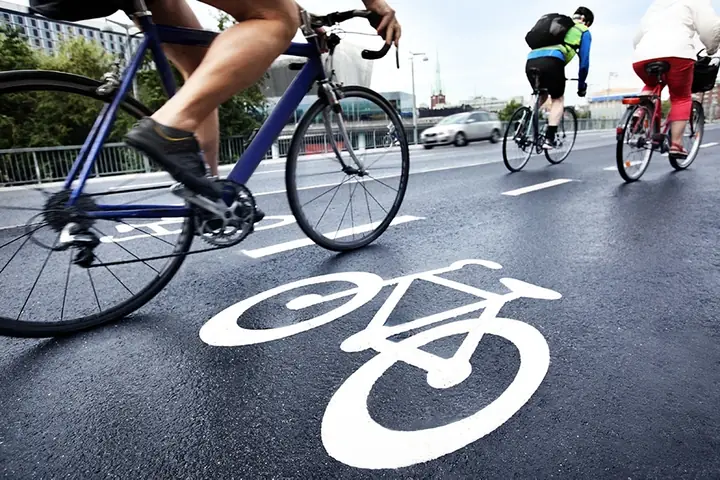
Section 3705 of the Vehicle Code is the dooring statute. No person may open any door on a motor vehicle unless and until it is reasonably safe to do so and it can be done without interfering with the movement of other traffic. Nor may anyone leave a door open on the traffic side longer than necessary to load or unload passengers. "No person" reaches the passenger getting out of a rideshare, and PennDOT's Bicycle Driver's Manual calls it a summary offense.
Section 3303(a)(3) requires a driver overtaking a pedalcycle to pass on the left with not less than four feet of room, at a careful and prudent reduced speed. Section 3307(b.1) lets the driver cross into a no-passing zone to do it when the way is clear.
Two more rules cover common crashes. Section 3331(e) says no turn by a driver may interfere with a pedalcycle proceeding straight, the rule behind every right-hook claim. And since June 5, 2025, section 3316.1 has prohibited drivers from using a handheld phone or other interactive mobile device while driving.
E-bikes
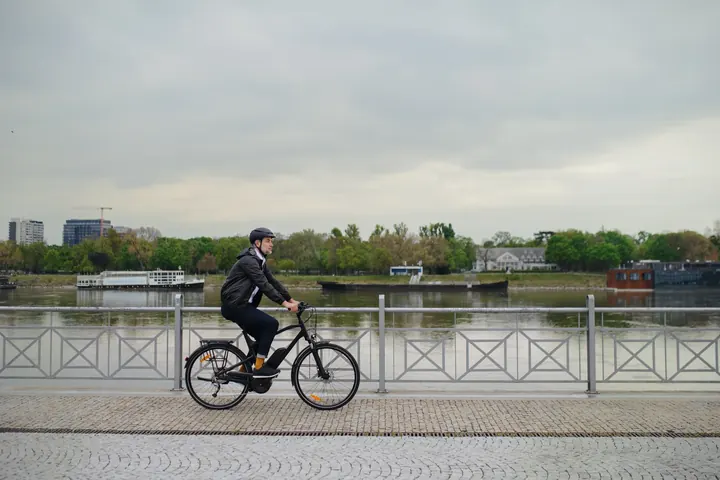
Pennsylvania has no three-class system. Section 102 of the Vehicle Code recognizes one kind of e-bike, a "pedalcycle with electric assist": no more than 100 pounds, two or three wheels more than 11 inches in diameter, operable pedals, a motor rated at no more than 750 watts, and a top speed of no more than 20 mph on a level surface on motor power alone. Section 3514 sets the minimum age at 16.
A bike that fits is a bicycle. PennDOT's February 2025 fact sheet says it needs no title, no registration, and no insurance, and the rider needs no driver's license.
The trouble is at the edges. A cargo e-bike that weighs more than 100 pounds falls outside the definition, and so does a motor above 750 watts or a throttle that pushes past 20 mph. The statute measures speed on motor power alone and says nothing about pedal-assist speed, so whether a model that assists to 28 mph qualifies is not answered in the text.
A machine outside the definition can land in the moped category, which PennDOT says requires a registration plate, insurance information, and a Class C license. Section 1714 bars the operator of a motorized pedalcycle from collecting first-party benefits.
Senate Resolution 322, introduced on May 20, 2026, would direct a study of updated e-bike rules. It has not been adopted.
One question has no clear answer in published Pennsylvania authority: whether the $5,000 medical benefit or uninsured motorist coverage follows a rider onto an e-bike. Get your auto insurer's position in writing. In a bike insurance policy, check that your e-bike's weight, wattage, and top assisted speed are covered.
Deadlines

Pennsylvania's main filing deadline is two years, but a hit-and-run or a claim against a government body puts much shorter clocks in front of it.
- Immediately
Police Notice of the Crash
Section 3746 requires the driver to notify the nearest police department at once when a crash injures anyone. If the driver fled, report it yourself: a police report is a condition of a hit-and-run uninsured motorist claim.
- 5 days
Driver's Written Report to PennDOT
When police do not investigate a crash that involved an injury, section 3747 gives the driver five days to send a written report to PennDOT.
- 30 days
Hit-and-Run Notice to Your Insurer
Notify your auto insurer of a hit-and-run within 30 days, or as soon as practicable, to bring an unidentified vehicle within uninsured motorist coverage under section 1702.
- Six months
Notice to a Government Unit
If a government vehicle or agency is involved (a township truck, a state agency car, a PennDOT crew), 42 Pa.C.S. section 5522 requires a signed written statement within six months of the injury, filed in the office of the government unit and, for a Commonwealth agency, also with the Attorney General. A court will excuse a late notice on a showing of reasonable excuse, but do not plan on it. Damages are capped at $250,000 per plaintiff against the Commonwealth and $500,000 in total against a local agency.
- Two years
Injury, Wrongful Death, and Bike Damage Lawsuit
42 Pa.C.S. section 5524 gives you two years to file a lawsuit for injuries, for a death, or for damage to the bike and gear.
- Four years
Lawsuit for Unpaid Medical Benefits
A suit against an auto insurer for unpaid first-party benefits must start within four years of the crash under section 1721.
For a child, the two-year clock does not start until age 18 under 42 Pa.C.S. section 5533(b). Section 5522 does not mention minors, so send the six-month government notice on time whatever the rider's age.
Evidence to Preserve
Pennsylvania claims turn on a handful of statutes. Collect the evidence each one calls for.
- The police report number and, in a hit-and-run, the time you reported it.
- The plate, driver's license, and insurer of the car that hit you. That insurer may owe your $5,000 medical benefit.
- Every auto policy in your household, with its declarations page: the tort option, any uninsured or underinsured motorist rejection forms, and any stacking waiver.
- The scene: lane count, the door position of a parked car, and anything showing how much room the driver left. Four feet is the measure.
- Your bike as it was: front lamp, rear and side reflectors, working brakes. For an e-bike, the weight, motor wattage, and speed settings. Do not repair the bike until the claim is settled.
- Medical records from the first visit onward, with every bill and a record of which insurer paid it.
- Proof of filing for a government notice: dated copies and certified mail receipts for the government unit and the Attorney General.
Coverage for Pennsylvania Riders

Pennsylvania's gaps are easy to list: a medical benefit that stops at $5,000, drivers who may carry only $15,000 for your injuries and $5,000 for your bike, uninsured motorist coverage that either side may have rejected, and a fault rule that erases the claim at 51%. The Velosurance policy offers the coverages discussed above.
Uninsured Motorist covers losses beyond medical bills, such as lost wages, when the at-fault driver cannot pay.
Medical Payments covers the deductible and out-of-pocket costs your health plan leaves once the $5,000 auto benefit is spent. Choose a limit close to your plan's out-of-pocket deductible.
Liability answers the other side of comparative negligence. If you are blamed for a share of a crash, it covers injury to other people and damage to their property, including the cost of defending a covered lawsuit, with limits from $25,000 to $500,000.
Crash damage to the bike is part of the policy itself. The bike is insured at stated value with no depreciation, subject to the deductible, whoever caused the crash and however small the driver's property limit. Class 1, Class 2, and Class 3 e-bikes are covered like conventional bikes.
For any of these coverages to apply, it must be on the policy before the crash. Get a quote and add them before your next ride.
Frequently Asked Questions
- Who pays medical bills for a cyclist hit by a car in Pennsylvania?
- An auto policy pays the first $5,000 of your medical bills regardless of fault: your own policy if you have one, a household relative's next, and otherwise the policy on the car that hit you. With no policy available, a resident who owns no registered vehicle can claim up to $5,000 from the Assigned Claims Plan. One thing to watch: costs beyond $5,000 fall to your health plan and to the claim against the driver.
- How does fault affect a bicycle accident claim in Pennsylvania?
- You recover damages in Pennsylvania as long as your negligence was not greater than the driver's, with the award reduced by your percentage. A rider 30% at fault for a $100,000 loss collects $70,000, and a rider 50% at fault collects half. The caveat worth knowing: at 51% the claim is barred.
- How long do you have to file a bicycle accident claim in Pennsylvania?
- You have two years to file a lawsuit for injuries or for damage to your bike. One thing to watch: a claim against a government unit needs written notice within six months, filed with the unit and, for a Commonwealth agency, with the Attorney General as well.
- How does uninsured motorist coverage work for a Pennsylvania cyclist in a hit-and-run?
- Uninsured motorist coverage on a Pennsylvania auto policy treats an unidentified driver as uninsured once the crash is reported to the police and your insurer is notified within 30 days, or as soon as practicable. The coverage is optional, so confirm that it was never rejected in writing. With one wrinkle: it pays for bodily injury only, so the bike needs separate crash coverage.
- What to know about helmets and a bicycle injury claim in Pennsylvania?
- Your claim is protected whether or not you wore a helmet. Section 3510 of the Vehicle Code says failure to use a helmet cannot be considered contributory negligence or admitted as evidence in a civil trial. The helmet requirement itself applies only to riders and passengers under 12.
Sources
- 42 Pa.C.S. section 7102 (comparative negligence, apportionment among defendants)
- 42 Pa.C.S. sections 5522, 5524, and 5533 (six-month notice to government units, two-year limitation, minors)
- 42 Pa.C.S. sections 8522, 8528, 8542, and 8553 (claims against the Commonwealth and local agencies, damage limits)
- 75 Pa.C.S. Chapter 17, Motor Vehicle Financial Responsibility Law: sections 1702, 1705, 1711 to 1714, 1721, 1722 (minimum limits, tort options, first-party benefits)
- 75 Pa.C.S. sections 1731, 1733, 1734, 1736, and 1738 (uninsured and underinsured motorist coverage, stacking)
- 75 Pa.C.S. sections 1752 to 1754 and 1757 (Assigned Claims Plan)
- 75 Pa.C.S. section 102 (definitions: pedalcycle, pedalcycle with electric assist, motorized pedalcycle)
- 75 Pa.C.S. sections 3301, 3303, 3307, 3316.1, and 3331 (lane position, four-foot passing, handheld devices, turns)
- 75 Pa.C.S. sections 3501, 3505, 3507, 3508, 3510, and 3514 (pedalcycle rights and duties, equipment, sidewalks, helmets, e-bike age)
- 75 Pa.C.S. sections 3705, 3746, and 3747 (vehicle doors, police notice, driver's written report)
- L.S. v. David Eschbach, Jr., Inc., Supreme Court of Pennsylvania, May 25, 2005 (limited tort and pedestrians)
- PennDOT fact sheet, Mopeds, Motor-Driven Cycles and Motorcycles (February 2025)
- PennDOT Publication 380, Pennsylvania Bicycle Driver's Manual
- Pennsylvania Senate Resolution 322 (2025-2026 session), electric bicycle study
This guide is general information about Pennsylvania law as of the review date above. It is not legal or insurance advice, and it does not create an attorney-client relationship. Laws change and every crash turns on its own facts: talk to a licensed Pennsylvania attorney about your situation.