
TL;DR:
- New Jersey no-fault runs through your own household: the auto policy of the car owner you live with pays your medical bills, not the policy of the driver who hit you.
- With no auto policy in the household, the Unsatisfied Claim and Judgment Fund pays up to $250,000 in medical expenses. Notice is due within 180 days.
- You recover as long as you are no more than 50% at fault, with the award cut by your share. At 51% you recover nothing.
- Deadlines: 90 days for a notice of claim against a public entity, two years to sue for injuries, six years for the bike.
- Standard auto policies issued or renewed since January 1, 2026 carry at least $35,000/$70,000 for injuries and $25,000 for property. A basic policy can carry $5,000 for property and nothing for injuries.
Who Pays After a Crash in New Jersey
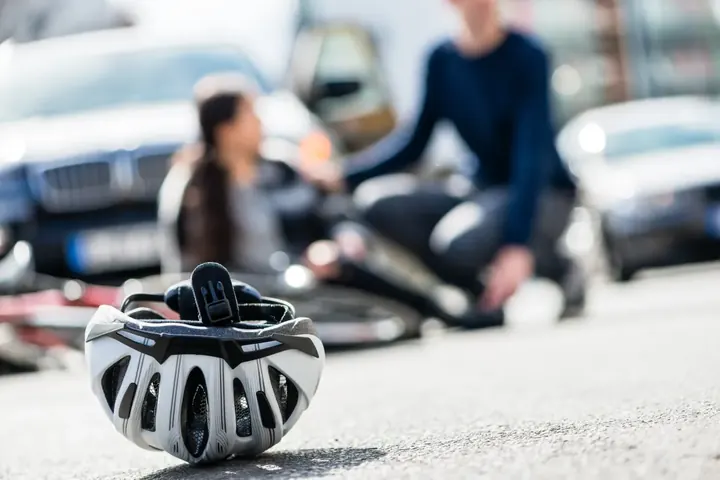
New Jersey is a no-fault state, but its no-fault money does not come from where most riders expect. Under N.J.S.A. 39:6A-4, personal injury protection (PIP) on a standard auto policy pays the named insured and family members living in the household when a car injures them "as a pedestrian." Section 39:6A-2 defines a pedestrian as anyone not occupying a vehicle propelled by something other than muscular power, and a bicycle runs on muscle. Your medical bills go first to your own household's auto policy, not the driver's.
How much it pays depends on choices made when that policy was bought. Medical coverage is $250,000 per person unless the policyholder picked $150,000, $75,000, $50,000, or $15,000 under section 39:6A-4.3. The same section lets a policyholder make health insurance primary, in which case your health plan pays first and PIP picks up what it leaves. Lost income is paid at up to $100 a week, capped at $5,200. A basic policy pays $15,000 in medical expenses, with up to $250,000 for certain severe injuries.
No auto policy in the household? Section 39:6-86.1 sends you to the Unsatisfied Claim and Judgment Fund, administered by the New Jersey Property-Liability Insurance Guaranty Association (PLIGA). The Fund pays medical expenses up to $250,000, after a $250 deductible and a 20% copayment on bills between $250 and $5,000.
Pain and suffering is a separate fight. Section 39:6A-8 offers every policyholder a "limitation on lawsuit option," and anyone who never chooses gets it by default. If it applies to you, you can sue for pain and suffering only after a death, dismemberment, significant disfigurement or scarring, a displaced fracture, loss of a fetus, or a permanent injury, backed by a physician's certification within 60 days of the driver's answer. The option binds the named insured and the spouse and children in the household. For a person eligible for benefits who has no policy and is not one of those family members, the statute applies the no limitation option. That reading comes from the statute's text; have a New Jersey attorney confirm it for your household.
PIP pays nothing for the bike. That claim goes against the driver. P.L.2022, c.87 raised the minimums on standard policies issued or renewed on or after January 1, 2026 to $35,000 per person and $70,000 per accident for injuries, with $25,000 for property damage. A basic policy is thinner: $5,000 for property and no injury liability at all unless the driver bought an optional $10,000.
Fault and How It Reduces a Claim
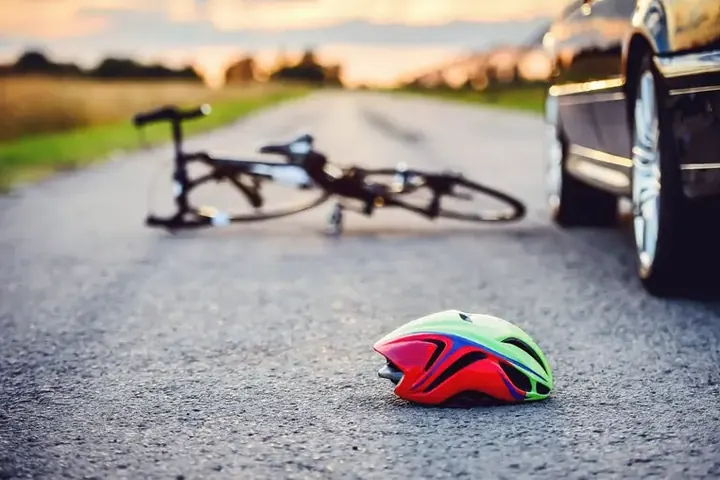
New Jersey applies modified comparative negligence. N.J.S.A. 2A:15-5.1 lets you recover as long as your negligence "was not greater than" the negligence of the person you are suing, or the combined negligence of everyone you are suing. Your damages are cut by your percentage. At 50% you collect half. At 51% you collect nothing.
The rule covers injury and property alike, so the same percentage decides the claim for your body and the claim for your bike. It does not touch PIP, which is paid without regard to fault.
Percentages get assigned by measuring each side against the traffic code. Section 39:4-14.1 gives a person riding a bicycle on a roadway all the rights and all the duties of a driver. Section 39:4-14.2 requires you to ride as near to the right side of the roadway as practicable, and then lists when you may move left: to turn left from a left-turn lane, to avoid debris, drains, or other hazards, to pass slower traffic, or to occupy any available lane when you are moving at the speed of traffic. Two abreast is legal when traffic is not impeded.
Helmets are required for riders under 17 by section 39:4-10.1. The helmet statutes say nothing about whether riding without one can be used against you in an injury claim. Treat that question as open.
Hit-and-Run and Uninsured Drivers

N.J.S.A. 17:28-1.1 puts uninsured motorist coverage in every standard auto policy, and it applies to hit and run vehicles as well as uninsured ones. On plans issued or renewed since January 1, 2026 the floor is $35,000 per person and $70,000 per accident. Higher limits are optional, up to the policy's own liability limits, and insurers must offer up to $250,000 and $500,000. Limits are never stacked: with two policies in play, recovery stops at the higher limit.
Nothing in the section restricts the coverage to people riding in a car, but the policy's own terms decide who is insured. Read the household policy. The section also carries your lawsuit option over: if the limitation on lawsuit option binds you, it limits pain and suffering under uninsured motorist coverage too.
Two gaps are written into the statute. A basic policy includes no uninsured motorist coverage. And an automobile covered by a basic policy is excluded from the definition of an uninsured motor vehicle, even though it may carry no injury liability coverage.
Neither section 17:28-1.1 nor the hit and run section of the Fund law, 39:6-78, states a physical contact requirement. Policy conditions still apply, so check yours for reporting rules. With no auto policy in the household, the claim runs through the Fund: section 39:6-78 requires proof that all reasonable efforts were made to identify the vehicle, and section 39:6-65 requires notice to PLIGA within 180 days.
None of this pays for the bike after a hit and run. The property damage part of uninsured motorist coverage, $25,000 less the first $500, excludes hit and run vehicles. In a bike insurance policy, check whether crash damage is covered no matter who hit you.
Dooring and Passing Laws
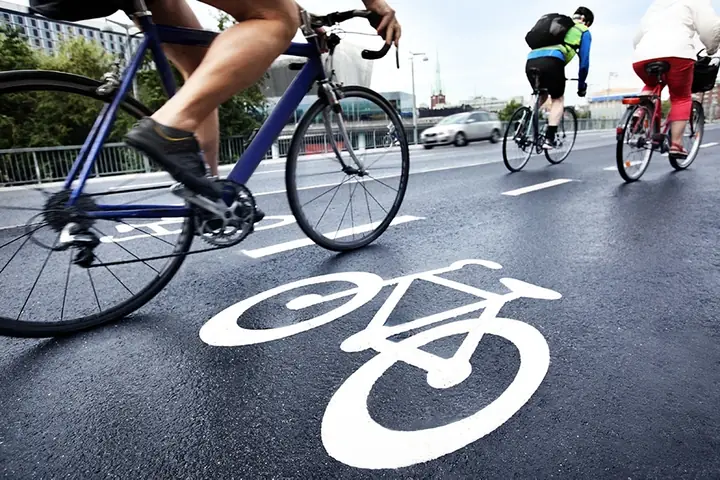
New Jersey's Safe Passing Law, N.J.S.A. 39:4-92.4, works as a three-step rule. A driver approaching a person on a bicycle must move into a non-adjacent lane when that is possible. If not, the driver must leave at least four feet and hold it until safely past. If neither is possible or legal, the driver must slow to 25 mph or a lower posted speed and be prepared to stop, and may pass only if it endangers no one.
A violation that causes bodily injury carries a $500 fine and two points. Without injury the fine is $100. The law protects riders of low-speed e-bikes by name, as "personal conveyances." If you can document how close the car came, do it: passing distance feeds the fault comparison.
Dooring is a different story. This guide could not confirm a New Jersey statute written for opening a car door into a rider's path. Until an attorney tells you otherwise, expect a dooring claim to be argued as ordinary negligence under the comparative rule.
E-bikes
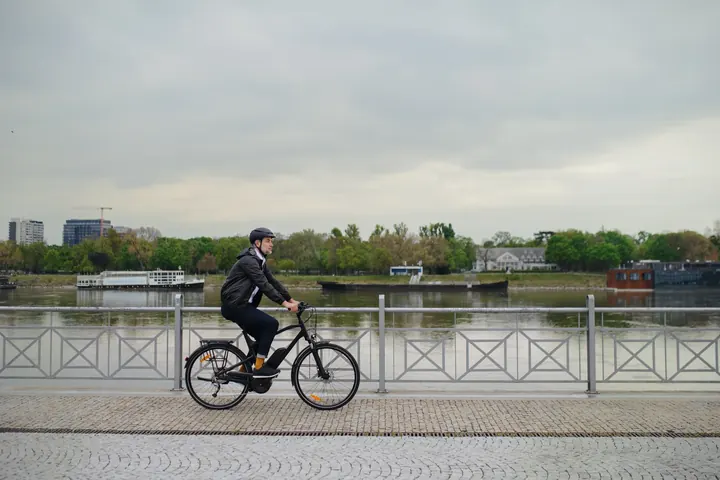
New Jersey rewrote its e-bike law in P.L.2025, c.285, approved January 19, 2026, and the old class numbers are gone from the statute. N.J.S.A. 39:1-1 now sorts machines three ways. A low-speed electric bicycle has pedals and a motor that helps only while you pedal and quits at 20 mph. A motorized bicycle has a throttle, or pedal assist that runs between 21 and 28 mph. An electric motorized bicycle, over 750 watts and faster than 28 mph, is a motorcycle.
The first two need a registration and a licensed rider at least 15 years old under sections 39:4-14.3 and 39:4-14.3i. The act gave owners six months to comply, and that window closed on July 19, 2026. Insurance is where they split. Section 39:4-14.3e requires liability insurance on motorized bicycles only, and the Motor Vehicle Commission's 2026 manual gives the minimums as $15,000 per person, $30,000 per accident, and $5,000 for property. Section 39:4-14.3q requires a helmet on a motorized bicycle at any age.
For injury claims the split continues. A new section, 39:6A-4.8, names a person on a bicycle or a low-speed electric bicycle as a pedestrian covered by their own PIP, for standard policies issued or renewed on or after January 1, 2027. It does not mention motorized bicycles, and whether PIP reaches their riders is an open question. A bill introduced in October 2026, S4830, would change the rules again and is pending.
Deadlines

New Jersey gives you two years to sue, but the deadlines that end claims come much earlier, and one of them is 90 days.
- 10 days
Driver's Written Crash Report
A driver in a crash with an injury, a death, or more than $500 in property damage must send a written report to the Motor Vehicle Commission under section 39:4-130, unless a police officer files one.
- 90 days
Notice of Claim Against a Public Entity
Under the Tort Claims Act, N.J.S.A. 59:8-8, a claim against a public entity or public employee must be presented no later than the 90th day after it accrues. You cannot sue until six months after the notice is received, and you are barred two years after accrual. Section 59:8-9 lets a Superior Court judge accept a late notice within one year, but only on affidavits showing extraordinary circumstances.
- 180 days
Notice to PLIGA for a Fund Claim
Section 39:6-65 makes notice of your intention to claim on the Unsatisfied Claim and Judgment Fund a condition of payment, on the association's form.
- Two years
Injury Lawsuit
Under N.J.S.A. 2A:14-2. A wrongful death action must be started within two years of the death under section 2A:31-3.
- Two years
Lawsuit Over Unpaid PIP Benefits
Section 39:6A-13.1 counts two years from when you suffer the loss or incur the expense, and no more than four years from the crash.
- Six years
Property Damage Lawsuit
Damage to the bike and gear, under N.J.S.A. 2A:14-1.
Claims against public entities are limited in a second way. Section 59:9-2 allows pain and suffering damages only for a permanent loss of a bodily function, permanent disfigurement, or dismemberment, and only when medical treatment expenses exceed $3,600.
For a child, section 2A:14-21 holds the two-year and six-year periods until age 18. The 180-day Fund notice has its own escape valve for a person physically unable to give it, but the statute's wording for hit and run cases is not clean. Do not wait on either one.
Evidence to Preserve
A New Jersey claim turns on insurance paperwork as much as on the crash.
- The declarations page of every auto policy in your household. It shows the PIP medical limit, whether health insurance is primary, and which lawsuit option was chosen.
- The driver's insurance card. Whether the policy is standard or basic decides how much liability coverage exists.
- The police report number. Section 39:4-130 requires the driver to notify police by the quickest means after an injury crash.
- Records of a displaced fracture, scarring, or a permanent injury, and a treating physician willing to certify it.
- Fault evidence: video, witnesses, your lane position, and passing distance. The 50% line decides whether you recover at all.
- Dated proof of any notice sent to a public entity or to PLIGA.
- For an e-bike: the manufacturer's label with top assisted speed and wattage, your registration, and your insurance card if it is a motorized bicycle.
- The damaged bike, unrepaired, with receipts.
Coverage for New Jersey Riders

New Jersey's system leaves specific holes for a cyclist: PIP pays nothing for the bike and at most $100 a week for lost income, a driver on a basic policy may carry $5,000 for property and nothing for your injuries, and at 51% fault you recover nothing. The Velosurance policy offers the coverages discussed above.
Uninsured Motorist covers losses beyond medical bills, such as lost wages, when the at-fault driver cannot pay. It does not depend on anyone in your household holding a standard auto policy.
Medical Payments covers the deductible and out-of-pocket costs your health plan leaves. In a household where health insurance is primary over PIP, that gap is yours. Choose a limit close to your plan's out-of-pocket deductible.
Liability covers the claims made against you. If you injure a pedestrian or damage someone's property while riding, it pays covered settlements or judgments and the cost of defending a covered lawsuit, with limits from $25,000 to $500,000.
Crash damage to the bike is part of the policy itself. The bike is insured at stated value with no depreciation, subject to the deductible, regardless of fault.
For any of these coverages to apply, it must be on the policy before the crash. Get a quote and have them in place before you need them.
Bicycle Accident Attorneys in New Jersey
Velosurance legal partners who represent injured cyclists in New Jersey.

Frequently Asked Questions
- Who pays medical bills for a cyclist hit by a car in New Jersey?
- Your own household's auto policy pays first, through personal injury protection, up to the medical limit the policyholder chose. With no auto policy in the household, the Unsatisfied Claim and Judgment Fund pays medical expenses up to $250,000. One thing to watch: notice to the association that runs the Fund is due within 180 days of the crash.
- How does fault affect a bicycle accident claim in New Jersey?
- You recover as long as your negligence is not greater than the driver's, with your damages reduced by your percentage of fault. At 50% you collect half. The caveat worth knowing: at 51% you collect nothing, and the same percentage applies to the claim for your bike.
- When can a New Jersey cyclist sue for pain and suffering?
- You can sue for pain and suffering after a displaced fracture, significant scarring or disfigurement, dismemberment, or a permanent injury, even when the limitation on lawsuit option applies to you. That option binds the named insured on an auto policy and the spouse and children in the household. One thing to watch: a physician's certification is due within 60 days of the driver's answer.
- How long do you have to file a bicycle accident claim in New Jersey?
- You have two years to sue for injuries and six years to sue for damage to your bike. One thing to watch: a claim against a public entity needs a notice of claim by the 90th day, and a claim on the Unsatisfied Claim and Judgment Fund needs notice within 180 days.
- What does New Jersey require to ride an e-bike legally?
- You need to be at least 15, hold a license, and register the bike, whether it is a low-speed electric bicycle that assists to 20 mph or a motorized bicycle that reaches up to 28 mph. Motorized bicycles also need a helmet at any age and liability insurance of at least $15,000 per person, $30,000 per accident, and $5,000 for property.
Sources
- N.J.S.A. 2A:15-5.1 (comparative negligence)
- N.J.S.A. 2A:14-1, 2A:14-2, 2A:14-21, 2A:31-3 (limitation periods, minors, wrongful death)
- N.J.S.A. 39:6A-2, 39:6A-4, 39:6A-4.3 (pedestrian definition, personal injury protection, coverage options)
- N.J.S.A. 39:6A-3.1 (basic automobile insurance policy)
- N.J.S.A. 39:6A-8, 39:6A-8.1 (limitation on lawsuit option, election of tort option)
- N.J.S.A. 39:6A-13.1 (two-year limit on actions for PIP benefits)
- N.J.S.A. 39:6A-4.8 (bicycle and low-speed electric bicycle riders as pedestrians, effective January 1, 2027)
- N.J.S.A. 39:6-62, 39:6-65, 39:6-78, 39:6-86.1 (Unsatisfied Claim and Judgment Fund)
- N.J.S.A. 17:28-1.1 (uninsured and underinsured motorist coverage) and 17:28-1.3 (PIP for pedestrians)
- P.L.2022, c.87 (minimum liability and uninsured motorist limits for 2023 and 2026)
- New Jersey Department of Banking and Insurance, Basic Policy and Standard Policy comparison
- N.J.S.A. 39:4-14.1, 39:4-14.2 (rights and duties of bicycle riders, keeping right)
- N.J.S.A. 39:4-92.4 (Safe Passing Law)
- N.J.S.A. 39:4-10.1, 39:4-10.2, 39:4-14.3q (helmets)
- N.J.S.A. 39:4-129, 39:4-130 (duties after a crash, notice and written report)
- N.J.S.A. 59:8-8, 59:8-9, 59:9-2 (New Jersey Tort Claims Act: notice of claim, late notice, damages limits)
- P.L.2025, c.285 (low-speed electric bicycles and motorized bicycles), approved January 19, 2026
- New Jersey Motor Vehicle Commission, E-bike Requirements
- New Jersey Motor Vehicle Commission, E-bike and Moped Manual 2026
- New Jersey Senate Bill S4830 (introduced October 15, 2026, pending)
This guide is general information about New Jersey law as of the review date above. It is not legal or insurance advice, and it does not create an attorney-client relationship. Laws change and every crash turns on its own facts: talk to a licensed New Jersey attorney about your situation.