
TL;DR:
- Montana is an at-fault state with a 51% bar: at 50% negligent you recover half, at 51% you recover nothing.
- Minimum auto liability limits are $25,000 per person, $50,000 per accident, and $20,000 for property damage.
- You have three years to sue for injuries and two years for damage to the bike. A claim against the state goes to the Department of Administration first.
- Uninsured motorist coverage is in every Montana auto policy unless rejected, for injuries only. The hit-and-run conditions come from the policy, not the statute.
- Montana has no passing distance in feet and no state helmet law, and the Montana Supreme Court has held that riding without a helmet is not evidence of negligence.
Who Pays After a Crash in Montana
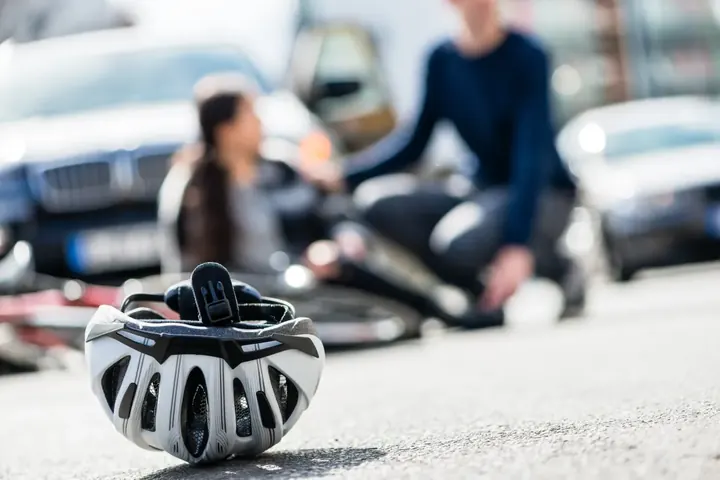
Montana is an at-fault state. The driver who caused the crash pays for your losses, and section 61-6-103 of the Montana Code Annotated sets the least that driver can carry: $25,000 for one person's injuries, $50,000 for everyone hurt in the accident, and $20,000 for property damage. There is no injury threshold to clear before you can bring a claim.
Montana requires no personal injury protection. Section 61-6-301 obliges vehicle owners to carry liability coverage and nothing else, so there is no no-fault benefit waiting for you, with or without a car in the household.
What Montana has instead is a rule from its Supreme Court. In Ridley v. Guaranty National Insurance Co., decided in 1997, the court read section 33-18-201 of the insurance code to require the at-fault driver's insurer to pay an injured person's medical expenses before any final settlement, once liability is reasonably clear. It can still dispute a particular bill if the link between the crash and that expense is not reasonably clear.
A second Montana rule shrinks the medical part of the claim. Section 27-1-308, rewritten in 2021, limits recovery for medical care to amounts actually paid, amounts still owed, and amounts needed for future treatment. A jury must disregard charges wiped out by a contractual discount or write-off. If the hospital billed $40,000 and your health plan settled it for $12,000, the claim is built on the $12,000.
Your bike and gear come out of the driver's $20,000 property limit.
Fault and How It Reduces a Claim

Montana uses modified comparative negligence, and the line sits at 51%. Under section 27-1-702, your own negligence does not bar recovery as long as it is not greater than the combined negligence of the people you are claiming against. Your damages are reduced by your percentage. A rider 50% negligent on a $100,000 loss collects $50,000. At 51%, nothing.
The percentages are argued from the traffic code. Section 61-8-602 gives a person on a bicycle all the rights and all the duties of the driver of any other vehicle. The rules most likely to be raised against you:
- Lane position. Section 61-8-605 tells a rider moving slower than traffic to use the right-hand lane or a paved shoulder that offers a reasonable margin of safety. How far right is "as judged safe by the bicyclist," and the statute says you are not expected to ride over hazards at the edge or through narrow lanes. A 2025 amendment, House Bill 43, confirmed that riding two abreast on a paved shoulder is legal.
- Lights and brakes. Section 61-8-607 requires a white front lamp and a red rear lamp or reflector, each visible from 500 feet, plus reflective material visible from both sides, at dawn, dusk, and night. Your brake must stop the bike within 25 feet from 10 mph.
Helmets are settled. In Walden v. State, a 1991 case over a bicycle crash on an Interstate 15 ramp near Great Falls, the Montana Supreme Court held that because Montana law does not require bicyclists to wear helmets, riding without one is not negligence, and the evidence was not admissible on negligence or on damages.
Section 27-1-703 decides who pays when more than one party is at fault. A defendant whose negligence is 50% or less owes only its own share. A defendant above 50% is liable for the whole award, less your percentage.
Hit-and-Run and Uninsured Drivers

Section 33-23-201 bars insurers from issuing an auto liability policy on a vehicle registered and principally garaged in Montana without uninsured motorist coverage, unless the named insured rejects it.
The coverage is narrow. It must match the bodily injury minimums of $25,000 per person and $50,000 per accident, and the statute covers bodily injury, sickness, disease, and death. Damage to your bike is not part of it.
The statute protects "persons insured" under the policy and does not say they must be inside a car. Who qualifies away from the vehicle depends on the policy form, so ask your insurer in writing whether the coverage follows you onto a bike.
For a driver who flees, the Montana statute is silent. It defines an uninsured vehicle as one that is not insured or bonded, and it says nothing about unidentified vehicles, physical contact, or a deadline for reporting. Those conditions live in your policy, so read them before you need them and report the crash to police at once.
Section 33-23-201 does not mention underinsured motorist coverage, so against a driver carrying the $25,000 minimum you have it only if you bought it. If your household insures several vehicles, section 33-23-203 lets an insurer refuse to add their limits together when the premiums reflect that and the rates are filed with the commissioner. The insurer must tell you in writing whether your coverages can be added together.
Two things to check in a bike insurance policy: whether it offers uninsured motorist coverage of its own, and whether crash damage to the bike is covered no matter who hit you.
Dooring and Passing Laws
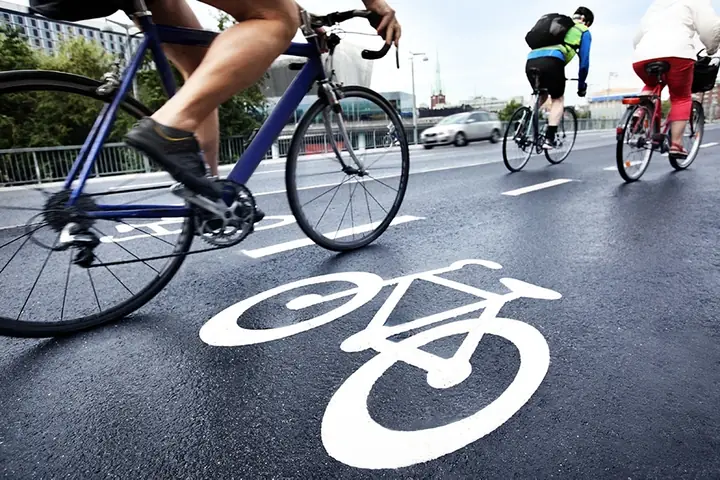
Section 61-8-368 covers dooring in two sentences. A person may not open the door of a motor vehicle unless it is reasonably safe to do so without interfering with the movement of other traffic. And a person may not leave a door open on the side next to moving traffic longer than necessary to load or unload passengers.
Passing is where Montana law is thin. No statute sets a distance in feet. Section 61-8-320 says a driver may not overtake and pass a bicyclist unless it can be done "safely without endangering the person riding the bicycle," and section 61-8-323 requires a "safe distance" when passing any vehicle on the left. The Montana Department of Transportation advises drivers to leave at least three feet, but that is guidance, not a rule you can cite as a violation.
Section 61-8-320 adds two protections that are easier to prove than a vague passing standard. A driver may not intentionally interfere with a person lawfully riding a bicycle, and a driver must yield the right-of-way to a rider in a designated bicycle lane.
E-bikes
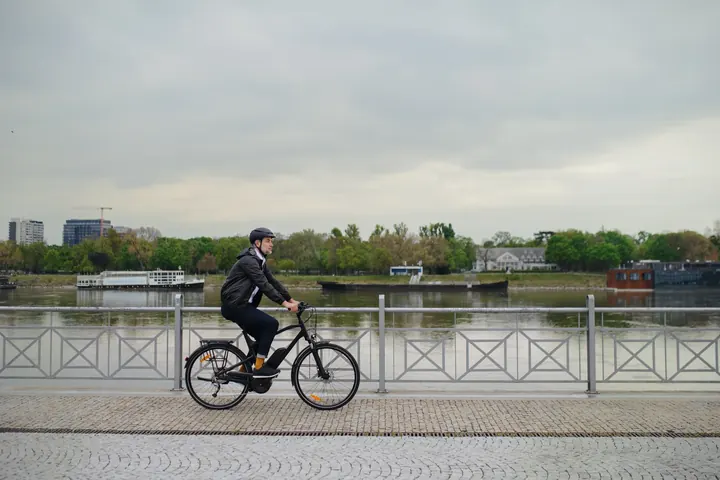
Montana has no three-class e-bike system. Section 61-8-102 defines an "electrically assisted bicycle" as a vehicle with two tandem wheels and an electric motor capable of propelling it and a 170-pound rider no faster than 20 mph on a paved, level surface. It names no wattage and draws no line between pedal assist and throttle.
The same section says the term "bicycle" includes an electrically assisted bicycle, and section 61-1-101 excludes a bicycle from the definition of motor vehicle. The compulsory liability insurance law in section 61-6-301 applies to motor vehicles, so an e-bike inside the definition needs no auto policy. In a crash you stand where any cyclist stands.
The hard question is the bike whose motor can exceed 20 mph. It falls outside the statutory definition, and Montana law does not say plainly what it becomes. The moped definition in the same section covers a pedal-equipped machine with a power source of no more than 2 brake horsepower that cannot exceed 30 mph. Keep the manufacturer's speed and motor specifications, because the other side's insurer will test which definition your bike meets.
House Bill 588, passed in 2025, added motorized scooters to the bicycle chapter and says a scooter is not an electrically assisted bicycle. Montana has no state helmet requirement for either.
One question is open: no Montana statute or regulator guidance located for this guide says whether an auto policy's uninsured motorist coverage applies to you on an e-bike. Get your insurer's position in writing, and check that a bike insurance policy covers your e-bike's top assisted speed.
Deadlines

Montana gives you three years to sue for injuries but only two for the bike, and a claim against the state has to pass through a state agency before a court will hear it.
- At the scene
Notify Police Immediately
Section 61-7-108 requires immediate notice, by the quickest means of communication, of any accident involving injury, death, or apparent property damage of $1,000 or more. Inside a municipality the notice goes to the local police department; anywhere else, to the county sheriff or the nearest Montana Highway Patrol office.
- 120-day review
Claim Against the State
A claim against the state (a Department of Transportation truck, a state agency vehicle) must be presented in writing to the Department of Administration under section 2-9-301. You cannot file in district court until the department denies the claim. It has 120 days to decide, and silence counts as a denial. The limitation period is paused for those 120 days. A claim against a city or county is presented to its clerk or secretary.
- Two years
Bike Damage Lawsuit
Section 27-2-207 gives you two years to sue for injury to personal property, which is your bike and gear. Riders miss it because the injury deadline is longer.
- Three years
Injury Lawsuit
Section 27-2-204 gives you three years to sue for personal injury, and three years for wrongful death. For a rider who is a minor when the crash happens, section 27-2-401 does not count the time of minority.
Montana has no short notice-of-claim trap for government defendants: section 2-9-302 says a claim against the state or a political subdivision is subject to the ordinary limitation periods. Recovery is capped, though. Section 2-9-108 limits government tort liability to $750,000 for each claim and $1.5 million for each occurrence.
For a dispute over the bike alone, justice court hears claims up to $15,000 under section 3-10-301.
Evidence to Preserve
With a 51% bar, evidence in Montana does one job above all: it keeps your percentage at 50% or below.
- The law enforcement report number and the agency that took it: city police inside a municipality, otherwise the county sheriff or the Montana Highway Patrol.
- The driver's name, address, and registration number, which section 61-7-105 requires a driver to give. That section does not mention insurance, so ask for the insurer and policy number yourself and photograph the plate.
- The road edge. Photos of the shoulder, debris, rumble strips, or a narrow lane show why your lane position was the one "judged safe by the bicyclist" under section 61-8-605.
- Your lights and reflective material, photographed on the bike, if the crash happened at dawn, dusk, or night.
- The e-bike's specifications: top assisted speed and motor rating from the manufacturer.
- Medical bills as they arrive, sent to the driver's insurer with a written request for payment under Ridley.
- Explanation-of-benefits statements from your health plan. Under section 27-1-308 the amounts actually paid are the medical claim.
- Your auto policy's declarations page, showing uninsured motorist coverage was not rejected.
- The damaged bike, unrepaired, with receipts for the bike and gear.
Coverage for Montana Riders

Montana law leaves a rider exposed in four places: a driver carrying the $25,000 minimum, uninsured motorist coverage that pays for injuries only and leaves hit-and-run conditions to the policy, medical costs your health plan passes on to you, and a 51% rule that can turn you into the defendant. The Velosurance policy offers the coverages discussed above.
Uninsured Motorist covers losses beyond medical bills, such as lost wages, when the at-fault driver cannot pay.
Medical Payments covers the deductible and out-of-pocket costs your health plan leaves, regardless of the driver's insurance. Choose a limit close to your plan's out-of-pocket deductible.
Liability is the coverage for the day the percentages run against you. If you are held responsible for a crash, it covers injury to other people and damage to their property, including the cost of defending a covered lawsuit, with limits from $25,000 to $500,000.
Crash damage to the bike is part of the policy itself: stated value with no depreciation, subject to the deductible, whoever was at fault. In Montana the driver's property limit is $20,000 and auto uninsured motorist coverage does not pay for a bike at all.
For any of these coverages to apply, it must be on the policy before the crash. Get a quote before the next ride, not after it.
Frequently Asked Questions
- How does the 51% rule work in a Montana bicycle accident claim?
- You recover damages in Montana as long as your share of the negligence is 50% or less, and the award is reduced by that share. A rider 50% negligent on a $100,000 loss collects $50,000. The caveat worth knowing: at 51% the recovery is zero, so the evidence that sets your percentage decides the claim.
- How long do you have to file a bicycle accident claim in Montana?
- You have three years to file suit in Montana for injuries from a bike crash. One thing to watch: the deadline for damage to the bike itself is two years, so a claim that includes the bike should be filed inside the shorter period.
- How can a Montana cyclist get medical bills paid before the claim settles?
- Send each medical bill to the at-fault driver's insurer with a written request for payment. The Montana Supreme Court has held that the insurer must pay an injured person's medical expenses before any final settlement once liability is reasonably clear. With one wrinkle: the insurer can still dispute a bill when its link to the crash is not reasonably clear.
- What should Montana cyclists know about helmets and a crash claim?
- Your claim stands on the same footing in Montana with or without a helmet. Montana has no state helmet requirement for bicycles, and the Montana Supreme Court held in a 1991 bicycle case that riding without a helmet is not negligence and that the evidence was not admissible on negligence or on damages.
- How are e-bikes treated after a crash in Montana?
- An e-bike that fits Montana's definition is treated as a bicycle, so the same 51% rule and the same deadlines apply. The definition covers a two-wheeled bike whose electric motor can propel it and a 170-pound rider no faster than 20 mph on a paved, level surface. The caveat worth knowing: a motor that can exceed 20 mph puts the bike outside the definition, and Montana law does not say plainly what it becomes.
Sources
- Montana Code Annotated 27-1-702 (comparative negligence)
- Montana Code Annotated 27-1-703 (multiple defendants, several and joint liability)
- Montana Code Annotated 27-1-308 (recovery for medical services limited to amounts paid or owed)
- Montana Code Annotated 27-2-204 (three-year limitation, tort and wrongful death)
- Montana Code Annotated 27-2-207 (two-year limitation, injury to property)
- Montana Code Annotated 27-2-401 (tolling for minors)
- Montana Code Annotated 2-9-108 (limits on governmental liability)
- Montana Code Annotated 2-9-301 and 2-9-302 (filing claims against the state and political subdivisions)
- Montana Code Annotated 3-10-301 (justice court civil jurisdiction)
- Montana Code Annotated 33-18-201 (unfair claim settlement practices)
- Montana Code Annotated 33-23-201 (uninsured motorist coverage)
- Montana Code Annotated 33-23-203 (limitation of liability, adding coverages together)
- Montana Code Annotated 61-1-101 (definitions, motor vehicle)
- Montana Code Annotated 61-6-103 (minimum liability limits)
- Montana Code Annotated 61-6-301 (required motor vehicle insurance)
- Montana Code Annotated 61-7-105 and 61-7-108 (duties and notice after an accident)
- Montana Code Annotated 61-8-102 (definitions: bicycle, electrically assisted bicycle, moped, motorized scooter)
- Montana Code Annotated 61-8-320 and 61-8-323 (right-of-way for bicycles, overtaking on the left)
- Montana Code Annotated 61-8-368 (opening and closing vehicle doors)
- Montana Code Annotated Title 61, chapter 8, part 6 (bicycles: sections 61-8-602, 61-8-605, 61-8-607, 61-8-608)
- House Bill 43, 69th Montana Legislature (chapter 23, Laws of 2025), enrolled text
- House Bill 588, 69th Montana Legislature (chapter 693, Laws of 2025), enrolled text
- Ridley v. Guaranty National Insurance Co., No. 96-697 (Mont. Dec. 24, 1997)
- Walden v. State, No. 90-322 (Mont. Oct. 2, 1991)
- Montana Commissioner of Securities and Insurance, auto insurance
- Montana Department of Transportation, Staying Safe During National Bicycle Safety Month (May 7, 2026)
This guide is general information about Montana law as of the review date above. It is not legal or insurance advice, and it does not create an attorney-client relationship. Laws change and every crash turns on its own facts: talk to a licensed Montana attorney about your situation.