
TL;DR:
- Michigan no-fault covers a cyclist hit by a car. Your own auto policy, or a spouse's or resident relative's, pays first; the insurer of the car that hit you is not in line.
- With no auto policy in the household, the Michigan Assigned Claims Plan pays, and medical benefits stop at $250,000.
- Pain and suffering requires a death, a serious impairment of body function, or permanent serious disfigurement, and a rider more than 50% at fault gets none.
- Deadlines: 120 days for a road defect notice, six months for a claim against the State, one year for no-fault notice, three years to sue.
- Uninsured motorist coverage is optional on Michigan auto policies, and drivers may choose bodily injury limits as low as $50,000 per person.
Who Pays After a Crash in Michigan
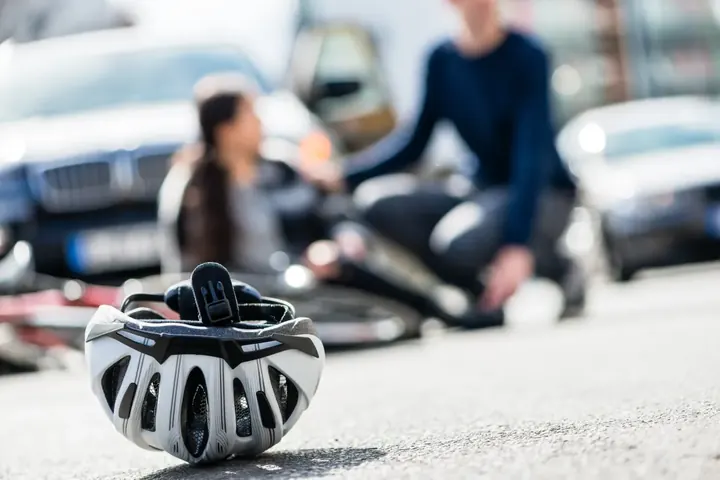
Michigan is a no-fault state, and a cyclist hit by a car is inside the system even though a bicycle needs no insurance. Section 3105 of the Insurance Code requires personal protection insurance (PIP) benefits for an injury arising out of the use of a motor vehicle, without regard to fault. A solo fall or a collision with another rider is outside no-fault.
Section 3114 puts your own auto policy first, along with the policy of your spouse or of a relative living in your household. If none exists, section 3115 sends a person injured outside a vehicle to the Michigan Assigned Claims Plan, run by the Michigan Automobile Insurance Placement Facility. The insurer of the car that hit you is not on the list.
Under section 3107c, a household policy carries the limit its owner selected: $250,000, $500,000, or unlimited, with a $50,000 option for Medicaid enrollees. Through the Assigned Claims Plan, section 3172 caps medical benefits at $250,000.
Section 3107 lists the benefits: reasonable charges for your care and rehabilitation, lost income for the first three years (reduced 15%, up to a monthly maximum adjusted each year), and up to $20 a day for household services.
The bike has its own no-fault claim. Property protection insurance under section 3121 pays for damage to tangible property without regard to fault, up to $1 million, and section 3125 directs the claim to the insurer of the vehicle involved. The exclusion in section 3123 covers vehicles driven by power other than muscular power, which on its face leaves a pedal bicycle in. Two cautions: that is a reading of the statute to confirm with the insurer, and the benefit is the lesser of repair cost or replacement cost less depreciation.
A lawsuit against the driver is limited by section 3135. Pain and suffering requires a death, a serious impairment of body function, or permanent serious disfigurement. A serious impairment must be objectively manifested, involve an important body function, and affect your general ability to lead your normal life. Medical bills and lost income can be claimed from the driver only above your PIP limits. Under section 3009 the driver's bodily injury limits default to $250,000 per person and $500,000 per accident, but a driver may choose as little as $50,000 and $100,000.
Fault and How It Reduces a Claim

Michigan draws its fault line at 50%, and it cuts only one kind of damages. Under section 2959 of the Revised Judicature Act, your damages are reduced by your percentage of fault. If your fault is greater than the combined fault of everyone else, your economic damages are still reduced by your share, but noneconomic damages are not awarded at all. Section 3135 repeats the bar for motor vehicle cases: no pain and suffering for a party more than 50% at fault.
At exactly 50% you still collect half. At 51% the pain and suffering claim is gone.
No-fault benefits sit outside that fight: a rider who caused the crash keeps the medical coverage.
The duties an insurer will measure you against are in the Vehicle Code. Section 657 gives a cyclist all the rights and duties of a driver. Section 660a requires a rider moving slower than traffic to keep as close as practicable to the right-hand curb or edge, with exceptions for passing, left turns, and conditions that make the edge unsafe, including a lane too narrow to share. Section 660b allows no more than two abreast. Section 662 requires a white front light visible from 500 feet and a red rear reflector from half an hour after sunset to half an hour before sunrise.
Helmets are a gap in the statutes. Section 658, the helmet section, covers motorcycles, mopeds, and electric skateboards and never mentions bicycles. Whether riding without one can reduce an adult cyclist's damages is an open question for a Michigan attorney.
Hit-and-Run and Uninsured Drivers

When the driver flees, the medical side of a Michigan claim barely changes. Your own or your household's auto policy pays, and if there is none, section 3172 opens the Assigned Claims Plan to anyone for whom no applicable insurance can be identified. Section 3174 requires notice to the plan within one year of the crash.
Pain and suffering is the hard part, because there is no one to sue. Uninsured motorist coverage is the usual answer, and in Michigan it is optional. The Department of Insurance and Financial Services lists it among the coverages a driver can choose to add. No statute sets its terms. Whether it demands physical contact with the fleeing car, how fast you must report, and whether it follows you onto a bike are questions of policy wording. Ask the insurer in writing.
Section 617 of the Vehicle Code requires a driver involved in a crash to stop and stay at the scene, and leaving a crash that caused serious impairment or death is a felony carrying up to five years. Section 622 requires an immediate police report of any crash with an injury, a death, or $1,000 or more in apparent property damage. Call the police yourself.
The property protection claim runs to the insurer of a vehicle involved, and an unidentified driver leaves no insurer to bill. Two things to check in a bike insurance policy: whether it offers uninsured motorist coverage of its own, and whether crash damage is covered no matter who hit you.
Dooring and Passing Laws
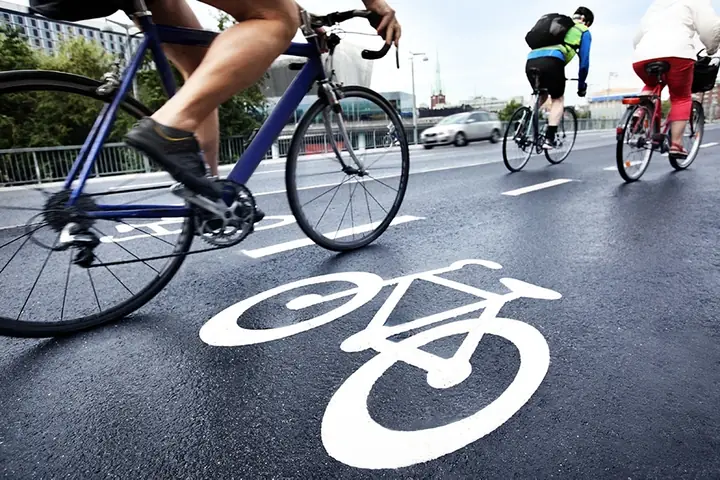
Michigan's passing law has a number. Section 636 of the Vehicle Code requires a driver overtaking a bicycle to pass at a safe distance of at least 3 feet to its left. If 3 feet is impracticable, the driver must pass at a safe distance and a safe speed. A driver may cross into a no-passing zone to do it when that is safe, and a violation is a civil infraction.
Some communities demand more. The Michigan State Police lists nine with 5-foot ordinances as of October 1, 2019: Ann Arbor, Dearborn, Grand Rapids, Kalamazoo, Kalamazoo Township, Muskegon, Norton Shores, Oshtemo Township, and Portage.
Dooring is thinner ground. No section of the Vehicle Code found for this guide addresses opening a door into traffic. The rule that exists is Rule 498 of the State Police's Uniform Traffic Code for Cities, Townships, and Villages: a person shall not open a door of a vehicle in a manner that interferes with or impedes the flow of traffic. It is a civil infraction, and it applies only where a city, township, or village has adopted the code under section 951 of the Vehicle Code.
E-bikes
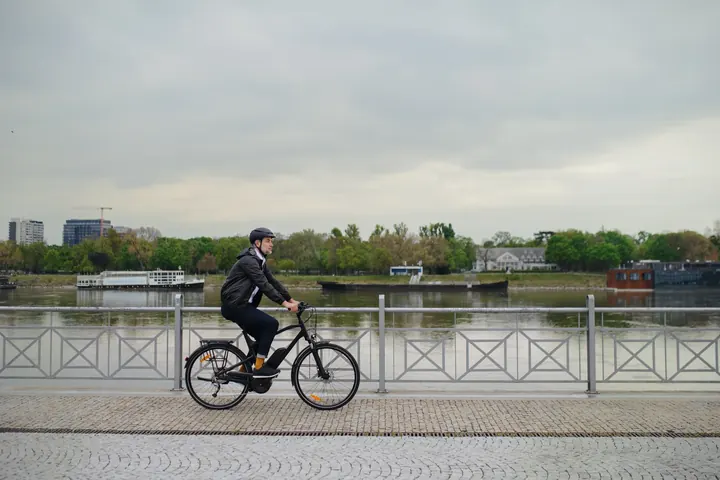
Michigan defines an electric bicycle in section 13e of the Vehicle Code: a seat or saddle, fully operable pedals, and an electric motor of no more than 750 watts. Class 1 assists only while you pedal and stops at 20 mph. Class 2 can propel the bike without pedaling, up to 20 mph. Class 3 assists only while you pedal and stops at 28 mph.
Section 662a sets the rules. An e-bike rider has the same duties as any cyclist. No one under 14 may operate a Class 3, and riders and passengers under 18 on a Class 3 must wear a helmet.
The same section holds the trap. A bike whose motor is modified beyond the section 13e criteria, or exceeds 750 watts, is not an electric bicycle.
That matters for insurance because section 3101 of the Insurance Code expressly excludes an electric bicycle from the definition of a motor vehicle. An e-bike needs no no-fault policy, and on the statute's text its rider, hit by a car, is a person outside a vehicle like any other cyclist. No appellate decision confirms it, and two questions stay open: where a machine outside the definition lands, and whether the muscular-power wording of the property protection exclusion reaches an e-bike. In a bike insurance policy, check that your e-bike's class and wattage are covered.
Deadlines

Michigan's three-year statute of limitations is the last deadline, not the first. The clocks that end claims are the 120-day road defect notice and the one-year no-fault rules.
- Immediately
Driver's Police Report
A driver in a crash with an injury, a death, or $1,000 or more in apparent property damage must report it to the nearest police at once under Vehicle Code section 622.
- 120 days
Road Defect Notice to a Government Agency
When a defect in the road caused the crash, section 1404 of the governmental liability act requires notice to the agency within 120 days of the injury, served in person or by certified mail. It must state the exact location and nature of the defect, the injury, and the names of known witnesses. A rider under 18 has 180 days. The County Road Law still prints 60 days for county roads; the Michigan Supreme Court held in 2021 that the 120-day rule governs.
- Six months
Claim Against the State
A personal injury or property damage claim against the State requires a signed, verified claim or notice of intention filed with the Court of Claims clerk within six months, under section 6431 of the Revised Judicature Act.
- One year
No-Fault Notice of Injury
Give the insurer written notice of the injury within one year of the crash, or a lawsuit for PIP benefits is barred under section 3145. A claim through the Assigned Claims Plan needs notice to the placement facility in the same year.
- One year
Property Protection Lawsuit for the Bike
A lawsuit for property protection insurance benefits must be started within one year after the accident.
- Three years
Injury, Death, and Property Damage Lawsuit
Measured from the injury or death, under section 5805 of the Revised Judicature Act.
Notice does not keep a no-fault claim alive forever. Under the one-year-back rule in section 3145, a lawsuit for unpaid PIP benefits cannot recover any loss incurred more than one year before the suit was filed. The clock pauses from the date you make a specific claim for payment until the insurer formally denies it, provided you pursue the claim with reasonable diligence.
Evidence to Preserve
A Michigan claim is built on insurance paperwork. Collect it early.
- Every auto policy in your household: yours, your spouse's, and those of relatives living with you. The declarations page shows the PIP medical level.
- The driver's insurer and plate number. That insurer is where the property protection claim for the bike goes.
- A dated copy of your written notice of injury to the no-fault insurer or the Assigned Claims Plan.
- Medical records that show the impairment objectively and a record of how your daily life changed.
- Evidence on fault: video, witness contacts, your lane position, your front light and rear reflector after dark, and how much room the driver left. The 50% line decides pain and suffering.
- For a road defect: photos, measurements, and the exact location for the 120-day notice.
- The damaged bike, unrepaired, with purchase receipts and a repair estimate.
Coverage for Michigan Riders

The Assigned Claims Plan ends medical benefits at $250,000, the property protection benefit for the bike is reduced by depreciation, pain and suffering disappears past 50% fault, and Michigan drivers may carry no uninsured motorist coverage and as little as $50,000 in bodily injury liability. The Velosurance policy offers the coverages discussed above.
Uninsured Motorist covers losses beyond medical bills, such as lost wages, when the at-fault driver cannot pay.
Medical Payments covers the deductible and out-of-pocket costs your health plan leaves. Choose a limit close to your plan's out-of-pocket deductible.
Liability covers the claims made against you. A crash between your bike and a pedestrian involves no motor vehicle, so no-fault benefits are not triggered. It pays covered settlements or judgments and the cost of defending a covered lawsuit, with limits from $25,000 to $500,000.
Crash damage to the bike is part of the policy itself. The bike is insured at stated value with no depreciation, subject to the deductible, regardless of fault and whether or not the driver is ever found. Class 1, Class 2, and Class 3 e-bikes are covered like conventional bikes.
For any of these coverages to apply, it must be on the policy before the crash. Get a quote and have them in place before you need them.
Bicycle Accident Attorneys in Michigan
Velosurance legal partners who represent injured cyclists in Michigan.
-

-
-

Law Offices of Jason A. Waechter
19080 W. Ten Mile Rd.
Southfield, MI 48075(248) 281 - 0006
Frequently Asked Questions
- Who pays medical bills for a cyclist hit by a car in Michigan?
- Michigan no-fault pays your medical bills without regard to fault. Your own auto policy, or the policy of your spouse or a relative living in your household, pays first, and with no policy in the household the Michigan Assigned Claims Plan pays medical benefits up to $250,000. One thing to watch: written notice of the injury is due within one year of the crash.
- How does fault affect a bicycle injury claim in Michigan?
- You recover damages reduced by your percentage of fault, and at 50% or less you keep your claim for pain and suffering. No-fault benefits are paid without regard to fault. The caveat worth knowing: a rider more than 50% at fault is awarded no pain and suffering, although economic damages are still paid with a reduction.
- When can a Michigan cyclist sue a driver for pain and suffering?
- You can sue for pain and suffering when the crash caused a serious impairment of body function, permanent serious disfigurement, or a death. A serious impairment must be objectively manifested, involve an important body function, and affect your general ability to lead your normal life. One thing to watch: medical bills and lost income can be claimed from the driver only above your no-fault limits.
- How long do you have to file a bicycle accident claim in Michigan?
- You have three years to sue for injuries and for damage to your bike in Michigan. One thing to watch: the early deadlines are much shorter, with 120 days for a road defect notice to a government agency, six months for a claim against the State, and one year for written notice of a no-fault claim.
- How are Class 1, Class 2, and Class 3 e-bikes defined in Michigan?
- Michigan recognizes three classes of e-bike with fully operable pedals and a motor of no more than 750 watts. Class 1 assists only while you pedal and stops at 20 mph, Class 2 can propel the bike without pedaling up to 20 mph, and Class 3 assists only while you pedal and stops at 28 mph. The caveat worth knowing: a bike modified beyond those criteria is not an electric bicycle under Michigan law.
Sources
- Michigan Insurance Code, MCL 500.3101 (required security; definitions of motor vehicle and electric bicycle), as amended by 2024 PA 224
- MCL 500.3105 and 500.3107 (personal protection insurance benefits)
- MCL 500.3107c and 500.3107d (PIP medical coverage levels and opt-out)
- MCL 500.3114 and 500.3115 (order of priority; persons not occupants of a vehicle)
- MCL 500.3121, 500.3123, 500.3125 (property protection insurance)
- MCL 500.3135 (tort liability, serious impairment of body function, mini-tort)
- MCL 500.3145 (notice and limitation periods for no-fault benefits)
- MCL 500.3171, 500.3172, 500.3174 (Michigan Assigned Claims Plan)
- MCL 500.3009 (residual liability limits)
- 2024 Public Act 224 (effective October 17, 2025)
- Revised Judicature Act, MCL 600.2959 (comparative fault)
- MCL 600.5805 and 600.5851 (limitation periods; minors)
- MCL 600.6431 (Court of Claims notice)
- Governmental liability act, MCL 691.1402 and 691.1404 (highway exception; 120-day notice)
- County Road Law, MCL 224.21
- Estate of Pearce v Eaton County Road Commission, Michigan Supreme Court, Docket Nos. 158069 and 158304 (June 4, 2021)
- Michigan Vehicle Code, MCL 257.636 (overtaking and passing; 3 feet for bicycles)
- MCL 257.657, 257.658, 257.660a, 257.660b, 257.660c, 257.662 (bicycle rights, duties, and equipment)
- MCL 257.13e and 257.662a (electric bicycles)
- MCL 257.617 and 257.622 (duty to stop; crash reports)
- MCL 257.951 and Michigan Administrative Code R 28.1498 (Uniform Traffic Code, Rule 498)
- Michigan Department of Insurance and Financial Services, Purchasing Auto Insurance FAQ
- Michigan State Police, Office of Highway Safety Planning, Bicyclist Safety
This guide is general information about Michigan law as of the review date above. It is not legal or insurance advice, and it does not create an attorney-client relationship. Laws change and every crash turns on its own facts: talk to a licensed Michigan attorney about your situation.