
TL;DR:
- Maryland uses contributory negligence: a rider whose own negligence contributed to the crash, however slightly, recovers nothing from the driver.
- Minimum auto liability limits are $30,000 per person, $60,000 per crash, and $15,000 for property damage.
- The personal injury protection on the car that hit you pays at least $2,500 of medical bills and lost income regardless of fault, unless it was waived in writing.
- You have three years to sue for injuries or bike damage, one year to notify the State or a local government, and 180 days to notify the Maryland Automobile Insurance Fund.
- Drivers must pass a bicycle at not less than three feet, and opening a door into traffic violates Transportation Article section 21-1105.
Who Pays After a Crash in Maryland
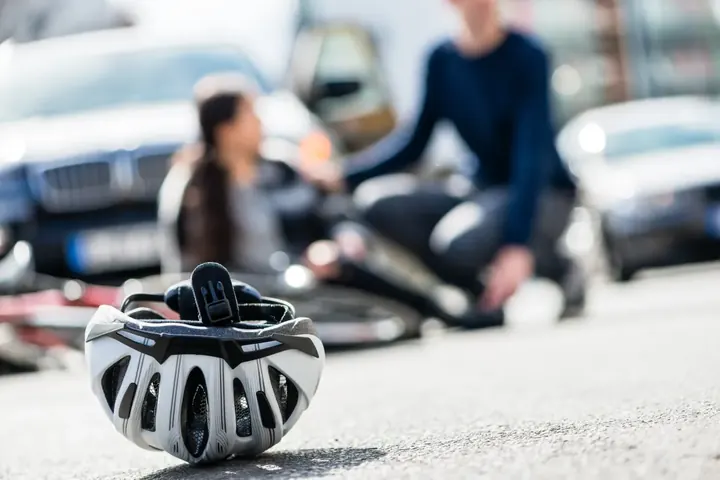
Maryland is a fault state with a thin no-fault layer on top. The driver who caused the crash pays, through the liability insurance that Transportation Article section 17-103 requires: at least $30,000 for one person's injuries, $60,000 for everyone hurt in the crash, and $15,000 for property damage. No injury threshold stands between you and a claim.
The no-fault layer is personal injury protection, or PIP. Insurance Article section 19-505 puts it in every auto policy unless the first named insured waived it in writing, with a minimum of $2,500 for medical expenses and 85% of lost income incurred within three years of the crash. The section reaches you by description: benefits go to a person hurt in a crash involving the insured car "while in, on, or alighting from a vehicle that is operated by animal or muscular power." That is a bicycle.
So the PIP on the car that hit you pays first, even if you have never owned a car. Section 19-507 makes it payable whoever was at fault, and bars the insurer from recovering it from anyone. If that car has no PIP in effect, section 19-513 sends you to the PIP on your own or your household's auto policy, if it was not waived.
Then run the numbers. Collarbone surgery costs $11,000 to $17,000, so $2,500 covers the ambulance and part of the emergency room. Your health plan pays the rest as bills arrive, and you carry its deductible and copays until the driver's insurer settles.
Fault and How It Reduces a Claim

Maryland still uses contributory negligence. If your own carelessness contributed to the crash, even slightly, you recover nothing. The state's highest court was asked to replace the rule in Coleman v. Soccer Association of Columbia in 2013 and declined, leaving the change to the General Assembly.
The General Assembly has not made it. House Bill 466 of 2026 would have let cyclists, pedestrians, and other vulnerable road users recover reduced damages unless their fault exceeded the defendants' combined fault. The House Judiciary Committee referred it to interim study on March 19, 2026. As of November 2026, the old rule stands.
One doctrine softens it. Under last clear chance, a driver who had a fresh opportunity to avoid the collision after your mistake, and failed to take it, is liable despite your negligence.
That makes every traffic rule you might have broken a complete defense for the driver's insurer. Section 21-1202 gives you the rights and duties of a driver, and these three rules are the usual candidates:
- Lane position. Section 21-1205 requires a rider slower than traffic to keep as near the right side as practicable and safe, with exceptions for left turns, one-way streets, passing, hazards, right-turn-only lanes, and lanes too narrow to share.
- Bike lanes. Where a smooth paved bike lane exists, section 21-1205.1 requires you to use it, except to pass, turn left, or avoid debris.
- Lights. Section 21-1207 requires a white front lamp visible from 500 feet and a red rear reflector or lamp whenever people and vehicles are not clearly visible at 1,000 feet.
Helmets are an open question. Section 21-1207.1 requires one for riders under 16, is enforced by a warning only, and says nothing about whether riding without one can be used against an adult's claim.
Hit-and-Run and Uninsured Drivers

Uninsured motorist coverage is not optional on a Maryland auto policy. Insurance Article section 19-509 requires it in every policy at no less than $30,000 per person, $60,000 per crash, and $15,000 for property damage, and at the policy's full liability limit unless the first named insured signed a waiver under section 19-510. Nothing in the section requires you to be in a car when you are hurt.
A second version arrived on July 1, 2024. New private passenger policies now carry enhanced underinsured motorist coverage under section 19-509.1 unless it was waived in writing. The difference is arithmetic. Standard coverage subtracts what the at-fault driver's insurer paid: carry $30,000, get hit by a driver with $30,000, and it pays nothing. Enhanced coverage pays your limit with no such reduction. Stacking is out either way: section 19-513 bars recovery from more than one auto policy.
No auto policy in the household? Maryland has a backstop. Under section 20-601, a resident can claim against the Maryland Automobile Insurance Fund's Uninsured Division when the driver is uninsured or the vehicle cannot be identified after all reasonable efforts. The section lists no physical contact condition. The Fund pays up to $30,000 per person and $15,000 for property, less $250, and property claims must exceed $250. Notice is due within 180 days of the crash.
Two things to check in a bike insurance policy: whether it offers uninsured motorist coverage of its own, and whether crash damage is covered no matter who hit you.
Dooring and Passing Laws
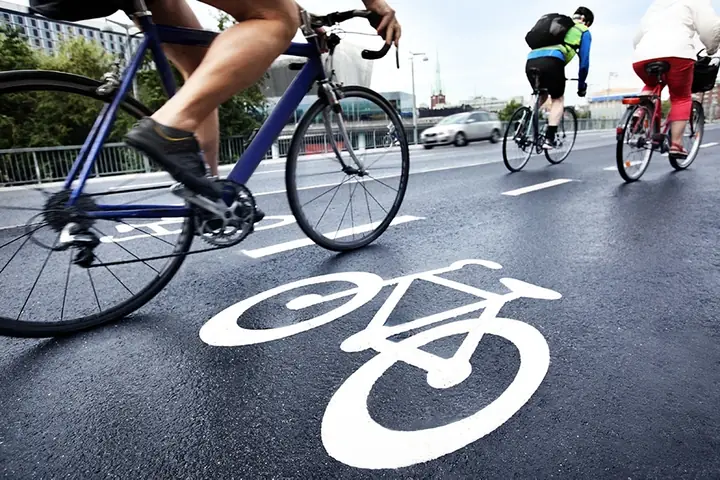
Transportation Article section 21-1105 is the dooring statute. A person may not open a motor vehicle door on a side available to moving traffic unless it is reasonably safe and can be done without interfering with other traffic, or leave it open longer than it takes to load or unload passengers. It says "person," so passengers are covered too. Section 21-1209 adds a separate offense for opening a door with intent to strike or interfere with a rider.
Section 21-1209 also sets the passing rule: a driver overtaking a bicycle must pass at not less than three feet. Read the exceptions, because under contributory negligence each one is a defense. The three-foot rule does not apply when you are not keeping right or using a required bike lane, when the narrow gap was caused solely by your failure to hold a steady course, or when the highway is not wide enough to pass lawfully at three feet. The duty of due care to avoid hitting you has no exceptions.
The same section protects you in a bike lane or on a shoulder. A driver about to enter or cross it must yield, and a violation that contributes to serious injury or death carries up to two months in jail and a $2,000 fine.
Sidewalks changed in 2025. Under Chapter 558, effective October 1, 2025, you may ride on a sidewalk anywhere in Maryland unless a local ordinance prohibits it. On a sidewalk or in a crosswalk you have a pedestrian's rights, must yield to people on foot, and must obey traffic signals.
E-bikes
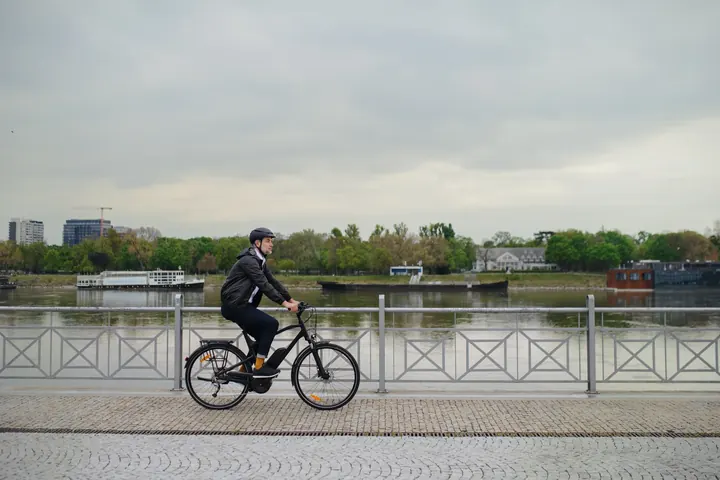
Transportation Article section 11-117.1 defines an electric bicycle as a vehicle with two or three wheels, fully operable pedals, and a motor rated at 750 watts or less. Class 1 assists only while you pedal and stops at 20 mph. Class 2 assists whether or not you pedal and stops at 20 mph. Class 3 assists only while you pedal and stops at 28 mph.
Section 11-104 makes an e-bike a bicycle, and section 11-135 says it is not a motor vehicle. In a crash you are a cyclist: the same contributory negligence rule, the same three-year deadline, the same claim against the driver. A 2025 bill that would have required e-bikes to be titled, registered, and insured, Senate Bill 14, was withdrawn by its sponsor.
Section 21-1205.2 lets e-bikes go where bicycles go, with limits. A Class 3 e-bike is barred from a bicycle path unless the path is within or next to a highway right-of-way or the local authority allows it, and nobody under 16 may operate one on a public highway.
One question is open. The PIP statute covers a rider on a vehicle "operated by animal or muscular power." Whether that describes an e-bike, above all a Class 2 running on its throttle, is not answered in the statute. Get the insurer's position in writing before you count on it. In a bike insurance policy, check that your e-bike's class is covered.
Deadlines

Maryland's general deadline is a generous three years, but the clocks that catch riders are shorter: 180 days for the Fund and one year for any government claim.
- 15 days
Driver's Written Crash Report
The driver in a crash that injures anyone must report it in writing to the Motor Vehicle Administration within 15 days, with evidence of insurance, under Transportation Article section 20-107. No report is needed when a police officer investigated and filed one.
- 180 days
Notice to the Uninsured Division
A claim against the Maryland Automobile Insurance Fund needs notice within 180 days of the crash under Insurance Article section 20-603. The notice must include police reports, medical records and expenses, an employer's certification of lost wages, and evidence that no uninsured motorist coverage is available in your household.
- 12 months
PIP Claim to the Auto Insurer
An auto policy may set its own deadline for the first PIP claim, but section 19-508 does not let it be shorter than 12 months after the crash.
- One year
Notice to the State or a Local Government
For a county, city, or other local government (a transit bus, a road defect), Courts and Judicial Proceedings section 5-304 requires written notice of the time, place, and cause of the injury within one year, delivered in person or by certified mail. For a State agency, State Government section 12-106 requires a written claim to the State Treasurer within one year. Recovery is capped at $400,000 per claimant.
- Three years
Injury, Wrongful Death, or Bike Damage Lawsuit
Courts and Judicial Proceedings section 5-101 gives you three years to file a lawsuit for injuries or for damage to the bike and gear. A wrongful death action must be filed within three years of the death under section 3-904.
For a child, section 5-201 starts the three-year clock at age 18. Bike-only losses up to $5,000 can go to the District Court as a small claim under section 4-405.
Evidence to Preserve
Under contributory negligence, your evidence has two jobs: prove what the driver did, and prove you did nothing wrong.
- The police report number and the responding agency.
- The driver's license, plate, and insurance card, photographed. The insurer's name tells you where to send the PIP claim.
- Your lane position: lane width, bike lane markings and surface, shoulder condition, debris, and parked cars. These answer sections 21-1205 and 21-1205.1.
- Your bike as it was: front lamp, rear reflector or light, working brakes, and for an e-bike the class label. Do not repair or discard it until the claim is settled.
- Video from your own camera, nearby businesses, doorbells, and buses.
- Witness names and numbers. An independent account of who had the last chance to avoid the crash can decide the claim.
- Medical records and bills from the first visit, plus an employer's certification of lost wages, which a Fund claim requires.
- Certified mail receipts for any notice sent to a government body.
Coverage for Maryland Riders

Maryland's gaps are specific: a fault rule that can reduce the driver's payment to zero, $2,500 of PIP against a five-figure hospital bill, a driver carrying $30,000, and a Fund that takes $250 off a bike claim. The Velosurance policy offers the coverages discussed above.
Crash damage to the bike is part of the policy itself, and it does not depend on proving you were blameless. The bike is insured at stated value with no depreciation, subject to the deductible, whoever caused the crash. Class 1, Class 2, and Class 3 e-bikes are covered like conventional bikes.
Medical Payments covers the deductible and out-of-pocket costs your health plan leaves, whatever the driver's insurer decides about fault. Choose a limit close to your plan's out-of-pocket deductible.
Uninsured Motorist covers losses beyond medical bills, such as lost wages, when the at-fault driver cannot pay. It is on the bike policy itself, so it does not depend on a household auto policy.
Liability covers injury to other people and damage to their property if you are blamed for a crash, including the cost of defending a covered lawsuit, with limits from $25,000 to $500,000.
For any of these coverages to apply, it must be on the policy before the crash. Get a quote and add them before your next ride.
Frequently Asked Questions
- How does fault affect a bicycle accident claim in Maryland?
- You can recover from the driver in Maryland when the driver was negligent and you were not, so the strongest claim is one that shows you followed every rule of the road. The state uses contributory negligence, and the last clear chance doctrine still holds a driver liable who could have avoided the crash after your mistake. The caveat worth knowing: without that exception, any negligence on your part, however slight, bars the claim entirely.
- How long do you have to file a bicycle accident claim in Maryland?
- You have three years to file a lawsuit in Maryland for injuries or for damage to your bike and gear. One thing to watch: a claim against the State or a local government needs written notice within one year, and a claim against the Maryland Automobile Insurance Fund needs notice within 180 days of the crash.
- How does personal injury protection work for a cyclist hit by a car in Maryland?
- The personal injury protection on the car that hit you pays at least $2,500 toward your medical expenses and 85% of lost income, whoever was at fault and even if you own no car. If that car has no personal injury protection in effect, the coverage on your own or your household's auto policy applies. With one wrinkle: the coverage can be waived in writing, so it is not on every policy.
- What can a Maryland cyclist claim after a hit-and-run or a crash with an uninsured driver?
- Uninsured motorist coverage is required on every Maryland auto policy, at no less than $30,000 per person, $60,000 per crash, and $15,000 for property damage. A resident with no auto policy in the household can claim against the Maryland Automobile Insurance Fund's Uninsured Division instead, up to $30,000 per person and $15,000 for property, less $250. One thing to watch: the Fund needs notice of the claim within 180 days of the crash.
- How are Class 1, Class 2, and Class 3 e-bikes treated after a crash in Maryland?
- Maryland treats Class 1, Class 2, and Class 3 e-bikes as bicycles and not as motor vehicles, so the same fault rule and three-year deadline apply. Class 1 assists only while you pedal and stops at 20 mph, Class 2 assists whether or not you pedal and stops at 20 mph, and Class 3 assists only while you pedal and stops at 28 mph. The caveat worth knowing: nobody under 16 may operate a Class 3 e-bike on a public highway, and a Class 3 e-bike is barred from a bicycle path unless the path is next to a highway or the local authority allows it.
Sources
- Coleman v. Soccer Association of Columbia, 432 Md. 679 (2013) (contributory negligence retained)
- House Bill 466 (2026), bill history and Fiscal and Policy Note (comparative negligence for vulnerable individuals; referred to interim study)
- Maryland Code, Transportation Article section 17-103 (minimum liability limits)
- Maryland Code, Insurance Article sections 19-505 to 19-508 (personal injury protection, waiver, payment)
- Maryland Code, Insurance Article sections 19-509, 19-509.1, and 19-510 (uninsured and enhanced underinsured motorist coverage)
- Maryland Code, Insurance Article section 19-513 (priority of coverage, no duplicate recovery)
- Maryland Code, Insurance Article sections 20-101 and 20-601 to 20-603 (Maryland Automobile Insurance Fund, Uninsured Division claims)
- Maryland Code, Courts and Judicial Proceedings Article sections 5-101, 5-201, and 3-904 (filing deadlines, minors, wrongful death)
- Maryland Code, Courts and Judicial Proceedings Article sections 5-303 and 5-304 (Local Government Tort Claims Act limits and notice)
- Maryland Code, State Government Article sections 12-104 and 12-106 (Maryland Tort Claims Act limits and claim to the Treasurer)
- Maryland Code, Courts and Judicial Proceedings Article section 4-405 (small claims)
- Maryland Code, Transportation Article sections 21-1202, 21-1205, 21-1205.1, and 21-1207 (bicycle rights, duties, lane rules, equipment)
- Maryland Code, Transportation Article section 21-1209 (three-foot passing, bike lane right-of-way)
- Maryland Code, Transportation Article section 21-1105 (opening vehicle doors)
- Maryland Code, Transportation Article sections 21-1103 and 21-1202(b); House Bill 375, Chapter 558 of 2025 (sidewalk riding)
- Maryland Code, Transportation Article section 21-1207.1 (bicycle helmets)
- Maryland Code, Transportation Article sections 11-104, 11-117.1, 11-135, and 21-1205.2 (electric bicycles)
- Senate Bill 14 (2025), bill history (e-bike title, registration, and insurance; withdrawn)
- Maryland Code, Transportation Article sections 20-102 and 20-107 (duty to remain at the scene, driver's written report)
This guide is general information about Maryland law as of the review date above. It is not legal or insurance advice, and it does not create an attorney-client relationship. Laws change and every crash turns on its own facts: talk to a licensed Maryland attorney about your situation.