
TL;DR:
- Louisiana moved to a 51% bar on January 1, 2026: at 50% responsible you recover half, at 51% you recover nothing.
- Minimum auto liability limits are $15,000 for one person, $30,000 for two or more, and $25,000 for property, unchanged since 2011.
- You have two years from the crash to sue for injuries or bike damage, and a suit against a public body must be served within 90 days of filing.
- Auto policies include uninsured motorist coverage unless it was rejected on the state form, and a no-contact hit-and-run claim needs an independent and disinterested witness.
- Drivers must leave at least three feet when passing a bicycle, R.S. 32:283 bans careless door opening, and helmets are required under 12 and on every Class 3 e-bike.
Who Pays After a Crash in Louisiana
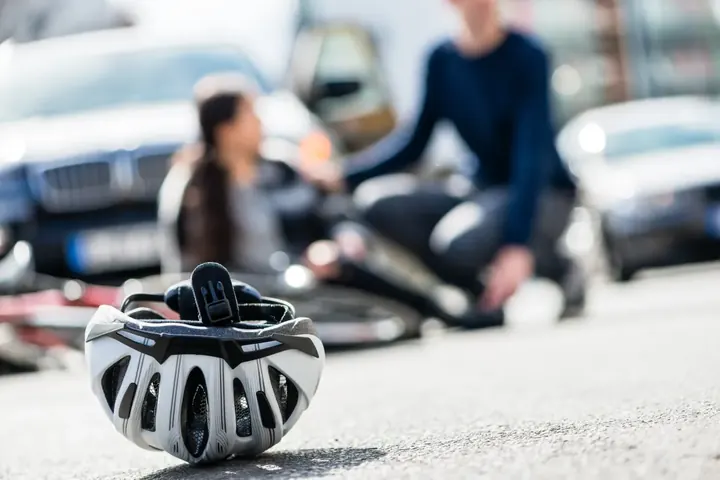
Louisiana is an at-fault state. The driver who caused the crash owes you for your losses, and R.S. 32:900 requires that driver's policy to carry at least $15,000 for one person's injuries, $30,000 when two or more people are hurt, and $25,000 for property damage. The statute was last amended in 2011.
There is no personal injury protection here and no injury threshold to clear before you bring a claim. Your bike and gear are paid from the driver's $25,000 property limit and your injuries from the bodily injury limit. The Louisiana Department of Insurance describes medical payments coverage as an optional auto coverage that pays medical and funeral expenses regardless of fault for you, your family, and passengers in your car. Whether it pays when you are hit on a bike turns on the policy wording, so ask your insurer in writing.
Louisiana also trims the medical part of a claim. Under R.S. 9:2800.27, as amended effective January 1, 2026, when a health insurer or Medicare paid your bills, you can recover the amount actually paid to the provider plus the cost sharing you paid or owe, not the amount billed. If the hospital billed $40,000 and your plan settled it for $12,000, the claim is built on the smaller figure.
One Louisiana rule sounds alarming and is aimed elsewhere. R.S. 32:866, the "no pay, no play" law, wipes out the first $100,000 of bodily injury and the first $100,000 of property damage for the owner or operator of a motor vehicle involved in the accident who lacked compulsory insurance. Act 16 of 2025 raised those figures from $15,000 and $25,000. The text speaks of motor vehicles, a term R.S. 32:1 does not extend to an e-bike, but no court decision applying it to a rider was reviewed for this guide.
Fault and How It Reduces a Claim

Louisiana used to let an injured person recover something at any level of fault. That ended on January 1, 2026. Act 15 of 2025 rewrote Civil Code article 2323: if your share of the negligence is 51% or more, you recover nothing. Below 51%, your damages are reduced by your percentage. A rider found 50% responsible for a $100,000 loss collects $50,000. At 51%, the same rider collects zero. The Act does not say how it treats crashes from before 2026, so ask a lawyer if yours was earlier.
Article 2324 adds a second limit. Liability among several wrongdoers is joint and divisible, so each one pays only its own percentage.
The percentages are argued from the Highway Regulatory Act. R.S. 32:194 gives a person on a bicycle the rights and duties of a driver. The rules most often raised against a rider:
- Lane position. R.S. 32:197 requires riding as near the right side as practicable, with exceptions for passing, left turns, and hazards, including a lane too narrow to share side by side with a vehicle. Riding the shoulder is allowed.
- Lights. R.S. 32:329.1 requires a white front lamp and a red rear lamp, each visible from 500 feet, plus a red rear reflector and side reflectors, when lights are required.
Helmets can enter the argument. R.S. 32:199 says a helmet citation is not prima facie evidence of negligence, then adds that Louisiana's comparative negligence statutes apply as in all other negligence cases. Nothing in the statute keeps a missing helmet away from the judge or jury.
Hit-and-Run and Uninsured Drivers

R.S. 22:1295 puts uninsured motorist coverage into every Louisiana auto liability policy, at limits no lower than the policy's bodily injury limits, unless a named insured rejected it, chose lower limits, or chose economic-only coverage. Any of those choices must be made on a form prescribed by the commissioner of insurance. Economic-only coverage costs less because it excludes all noneconomic loss, which means nothing for pain and suffering. The same statute treats a driver whose coverage is smaller than your damages as uninsured.
The statute protects insured persons who are legally entitled to recover from the owner or operator of an uninsured vehicle, and it does not require that you be in a car. Who counts as an insured away from the car is set by the policy form, so confirm in writing that the coverage follows you onto a bike.
For a driver who flees, the rule is generous. Under R.S. 22:1295(1)(f), a policy must cover bodily injury caused by a vehicle that never touched you, provided you prove through an independent and disinterested witness that the unknown driver's actions caused the injury. Get names and phone numbers from bystanders before they leave.
Limits do not stack across several cars or several policies. And the property damage version of the coverage, with its $250 deductible, is written around the covered motor vehicle, so do not count on it for a bicycle.
Two things to check in a bike insurance policy: whether it offers uninsured motorist coverage of its own, and whether crash damage to the bike is covered no matter who hit you.
Dooring and Passing Laws
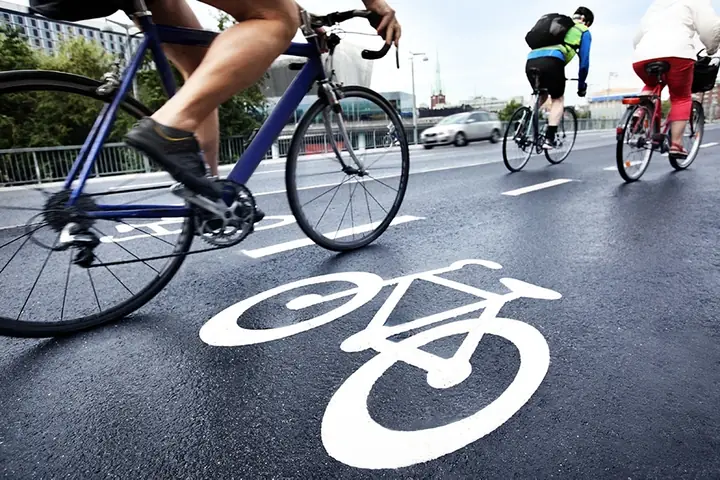
Louisiana's passing law has a name. R.S. 32:76.1, the Colin Goodier Protection Act, requires a driver overtaking a bicycle headed the same direction to exercise due care, leave not less than three feet, and hold that distance until safely past. The fine is up to $250.
R.S. 32:283 covers dooring. No one may open a door of a motor vehicle on a highway without first taking due precaution that it will not interfere with traffic or endanger a person or vehicle, and no one may leave a door open longer than needed to load or unload passengers.
R.S. 32:203 keeps motor vehicles out of bicycle lanes except to prepare for a turn within 200 feet of an intersection, use a driveway or alley, or reach a parking space, and a driver doing so must yield to bicycles in the lane. R.S. 32:201 makes it unlawful to harass, taunt, or maliciously throw objects at a person riding a bicycle, with a fine of at least $200 or up to 30 days in jail.
E-bikes
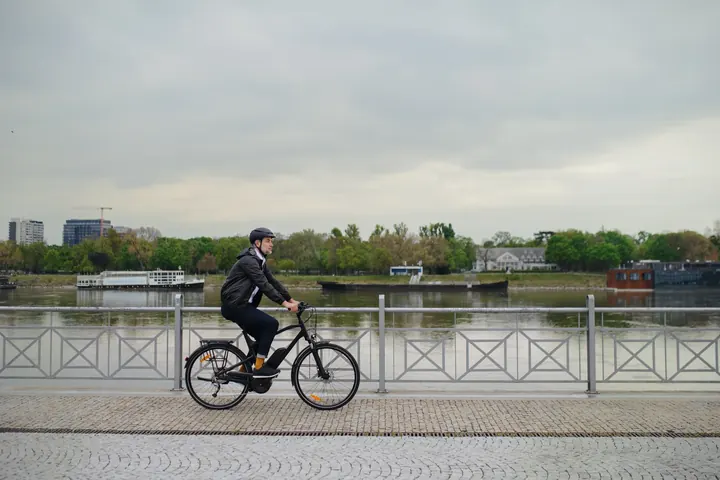
R.S. 32:1 defines an electric-assisted bicycle as a bicycle with fully operable pedals and an electric motor of less than 750 watts that fits one of three classes. Class 1 assists only while you pedal and stops at 20 mph. Class 2 has a motor that can propel the bike by itself and stops assisting at 20 mph. Class 3 assists only while you pedal and stops at 28 mph.
The same section excludes an electric-assisted bicycle from the definition of motor vehicle, and R.S. 32:861, the compulsory insurance statute, is written for registered motor vehicles. Under R.S. 32:204, an e-bike rider has the rights and duties of a bicycle rider. After a crash you stand where any cyclist stands: the same 51% bar, the same two-year deadline, the same claim against the driver.
Class 3 carries extra rules. No one under 12 may operate one, every operator and passenger must wear an approved helmet, and the bike needs a speedometer. The helmet fine is $50, and section 32:204 repeats that the comparative negligence statutes apply.
Photograph the label. Section 32:204 requires a permanent label showing the class, top assisted speed, and motor wattage. A motor of 750 watts or more falls outside the definition, and the other side's insurer will ask which side of that line you were on.
One question has no answer in Louisiana statute, or the Department of Insurance guidance reviewed for this guide: whether an auto policy's uninsured motorist or medical payments coverage applies to you on an e-bike. Get your insurer's position in writing. In a bike insurance policy, check that your e-bike's class is covered.
Deadlines

Louisiana calls its filing deadline liberative prescription. Since July 1, 2024, it gives you two years, and a suit against a public body adds a 90-day service trap after filing.
- At the scene
Notify Police Immediately
R.S. 32:398 requires the driver of a vehicle in a crash with injury, death, or more than $500 in property damage to notify police immediately: the city police inside city limits, otherwise the nearest sheriff's office or State Police station. Under R.S. 14:100, a driver who intentionally fails to stop, give identity, and render reasonable aid commits hit-and-run driving.
- 90 days after filing
Service on a Public Body
A suit against the state, a state agency, or a political subdivision (a city bus, a parish road crew) is filed like any other, and the sections of the Louisiana Governmental Claims Act reviewed for this guide set no separate notice of claim. The trap comes after filing. R.S. 13:5107 requires you to request service of citation within 90 days of starting the action. Miss it and the action is dismissed without prejudice, and the filing does not interrupt prescription against the dismissed defendant.
- Two years
Injury and Bike Damage Lawsuit
Civil Code article 3493.1 gives delictual actions, Louisiana's term for tort claims, a liberative prescription of two years from the day the injury or damage is sustained. It covers your injuries and your bike alike, and it applies to crashes on or after July 1, 2024, when Act 423 of 2024 replaced the old one-year period. A wrongful death action under article 2315.2 prescribes one year from the death or two years from the injury, whichever is longer.
Suing a public body changes the trial as well as the calendar. R.S. 13:5105 bars a jury in a suit against a political subdivision, and R.S. 13:5106 caps damages against the state and its subdivisions at $500,000 per person, not counting property damage, medical care, and lost earnings.
Evidence to Preserve
Since January 2026, evidence in Louisiana does one job above all: it keeps your share of fault under 51%.
- The crash report number and the name of the agency that took it: city police, the sheriff's office, or Louisiana State Police.
- Independent witnesses. Names and phone numbers of bystanders with no stake in the outcome. In a no-contact hit-and-run, R.S. 22:1295 makes such a witness a condition of the claim.
- Passing distance. Camera footage or photos that show the three feet were not there.
- Lane width and hazards. A photo with a reference object shows the lane was too narrow to share, which is when R.S. 32:197 let you move left.
- Your lamps, reflectors, and helmet, photographed and kept as they are.
- The e-bike label showing class, top assisted speed, and wattage.
- Your auto policy's declarations page and uninsured motorist form, showing the coverage was not rejected and whether it is economic-only.
- Explanation-of-benefits statements from your health plan. Under R.S. 9:2800.27, the amounts actually paid are the medical claim.
- The damaged bike, unrepaired, with receipts.
Coverage for Louisiana Riders

Louisiana law leaves a rider exposed in four places: a driver carrying a $15,000 injury limit, a driver who flees with no independent witness in sight, medical costs your health plan passes on to you, and a 51% line that can turn you from claimant into defendant. The Velosurance policy offers the coverages discussed above.
Uninsured Motorist covers losses beyond medical bills, such as lost wages, when the at-fault driver cannot pay.
Medical Payments covers the deductible and out-of-pocket costs your health plan leaves, regardless of the driver's insurance. Choose a limit close to your plan's out-of-pocket deductible.
Liability is the coverage for the day the percentages run against you. If you are held responsible for a crash, it covers injury to other people and damage to their property, including the cost of defending a covered lawsuit, with limits from $25,000 to $500,000.
Crash damage to the bike is part of the policy itself: stated value with no depreciation, subject to the deductible, whoever was at fault. Class 1, Class 2, and Class 3 e-bikes are covered like conventional bikes.
For any of these coverages to apply, it must be on the policy before the crash. Get a quote before the next ride, not after it.
Frequently Asked Questions
- How does the 51% rule work in a Louisiana bicycle accident claim?
- You recover damages in Louisiana as long as your share of the negligence stays below 51%, and the award is reduced by that share. A rider 50% responsible for a $100,000 loss collects $50,000. The caveat worth knowing: at 51% the recovery is zero, a rule in force since January 1, 2026.
- How long do you have to file a bicycle accident lawsuit in Louisiana?
- You have two years from the day of the crash to file suit in Louisiana for injuries and for damage to your bike, for crashes on or after July 1, 2024. One thing to watch: in a suit against a public body, service must be requested within 90 days of filing or the action is dismissed.
- What makes a hit-and-run claim work for a cyclist in Louisiana?
- Uninsured motorist coverage on a Louisiana auto policy can pay when the driver flees, even with no physical contact, when an independent and disinterested witness proves the unknown driver caused your injury. Collect bystanders' names and phone numbers at the scene. With one wrinkle: whether the coverage follows you onto a bike depends on your policy form.
- What does Louisiana require of drivers passing or parking near cyclists?
- Louisiana drivers must leave not less than three feet when overtaking a bicycle and hold that distance until safely past, with a fine of up to $250. R.S. 32:283 also requires anyone opening a vehicle door on a highway to first take due precaution that it will not endanger a person or vehicle.
- How are Class 1, Class 2, and Class 3 e-bikes treated after a crash in Louisiana?
- Louisiana gives riders of Class 1, Class 2, and Class 3 e-bikes the rights and duties of bicycle riders, so the same 51% rule and two-year deadline apply. Class 1 is pedal assist to 20 mph, Class 2 has a motor that can propel the bike by itself to 20 mph, and Class 3 is pedal assist to 28 mph with a helmet for every rider. The caveat worth knowing: a motor of 750 watts or more puts the bike outside the definition.
Sources
- Louisiana Civil Code article 2323 (comparative fault), as amended by Acts 2025, No. 15, effective January 1, 2026
- Acts 2025, No. 15 (House Bill 431), enrolled text
- Louisiana Civil Code article 2324 (joint and divisible liability)
- Louisiana Civil Code article 3493.1 (two-year prescription for delictual actions, Acts 2024, No. 423, effective July 1, 2024)
- Louisiana Civil Code article 2315.2 (wrongful death action)
- La. R.S. 9:2800.27 (recoverable medical expenses), as amended by Acts 2025, No. 466, effective January 1, 2026
- La. R.S. 13:5105 (jury trial in suits against the state and political subdivisions)
- La. R.S. 13:5106 (limits on damages against the state and political subdivisions)
- La. R.S. 13:5107 (service of citation on governmental defendants)
- La. R.S. 14:100 (hit-and-run driving)
- La. R.S. 22:1295 (uninsured motorist coverage)
- La. R.S. 32:1 (definitions: bicycle, electric-assisted bicycle, motor vehicle)
- La. R.S. 32:76.1 (Colin Goodier Protection Act, passing bicycles)
- La. R.S. 32:194 (traffic laws apply to persons riding bicycles)
- La. R.S. 32:197 (riding on roadways and bicycle paths)
- La. R.S. 32:199 (bicycle helmets)
- La. R.S. 32:201 (harassment of bicyclists)
- La. R.S. 32:203 (motor vehicles in bicycle lanes)
- La. R.S. 32:204 (electric-assisted bicycles)
- La. R.S. 32:283 (opening vehicle doors)
- La. R.S. 32:329.1 (bicycle lamps and reflectors)
- La. R.S. 32:398 (crash reports)
- La. R.S. 32:861 (compulsory motor vehicle liability security)
- La. R.S. 32:866 (limitation of damages for uninsured owners and operators), as amended by Acts 2025, No. 16
- La. R.S. 32:900 (minimum motor vehicle liability policy limits)
- Louisiana Department of Insurance, Consumer's Guide to Auto Insurance
This guide is general information about Louisiana law as of the review date above. It is not legal or insurance advice, and it does not create an attorney-client relationship. Laws change and every crash turns on its own facts: talk to a licensed Louisiana attorney about your situation.