
TL;DR:
- Kentucky is a choice no-fault state: the insurer of the car that hit you pays up to $10,000 in medical bills and lost income regardless of fault, even if you own no car.
- Fault is pure comparative under KRS 411.182. Your percentage reduces your recovery from the driver and never bars it.
- Pain and suffering requires more than $1,000 in medical expenses or a listed injury such as a fracture. A cyclist in a household with no motor vehicle is outside that limit.
- You have two years to sue after a motor vehicle crash, one year for other injuries, and 90 days to give a city notice of a street defect claim.
- Drivers must give a bicycle three feet when passing. Kentucky has no dooring statute, no statewide bicycle helmet law, and no e-bike classes.
Who Pays After a Crash in Kentucky
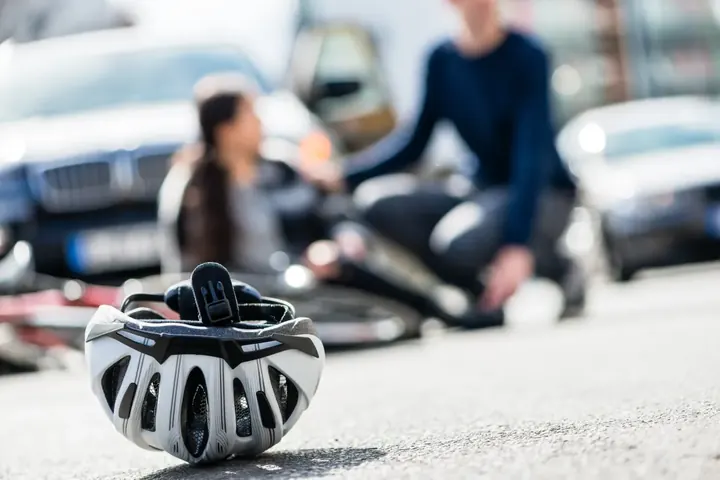
Kentucky runs a choice no-fault system under the Motor Vehicle Reparations Act, and it reaches cyclists. KRS 304.39-030 gives every person injured by the use of a motor vehicle here a right to basic reparation benefits, paid without regard to fault.
KRS 304.39-050 treats anyone not using a motor vehicle as a pedestrian, which takes in a rider on a bicycle, and makes the insurance on the vehicle that struck you the first payer. You do not need to own a car. If that vehicle was uninsured, an auto policy that covers you applies, your own or a relative's in your household. With no policy to apply, KRS 304.39-160 sends the claim to the state's assigned claims plan.
The benefit is small: $10,000 per person for medical expenses, lost income, and replacement services. House Bill 627 of 2026 raised two inner limits for coverage issued or renewed on or after July 15, 2026. The weekly cap on lost income went from $200 to $500 and the funeral allowance from $1,000 to $5,000. Nothing is paid for the bike.
No-fault comes at a price. KRS 304.39-060 abolishes the driver's liability for losses those benefits cover and limits pain and suffering claims to cases where medical expenses exceed $1,000 or the injury includes a fracture, permanent disfigurement, loss of a body member, a permanent injury, permanent loss of bodily function, or death.
That limit binds people who own, operate, maintain, or use a motor vehicle, and the Act counts as a user anyone living in a household where one is owned. A cyclist in a car-free household is outside it. Anyone else can opt out by filing a rejection with the Department of Insurance before a crash, which restores full tort rights and, unless the coverage is bought back, gives up the benefits.
Everything past the $10,000 comes from the at-fault driver. KRS 304.39-110 sets minimum liability coverage at $25,000 per person and $50,000 per accident for bodily injury and $25,000 for property damage, which is where the bike is paid from.
Fault and How It Reduces a Claim

Kentucky uses pure comparative fault. The Supreme Court of Kentucky adopted it in Hilen v. Hays in 1984, and the General Assembly wrote the rule into KRS 411.182 in 1988. The jury finds your total damages, then assigns each party a percentage of the fault. Your award is reduced by your share, and no percentage shuts the door. A rider 80% at fault for a $100,000 loss still collects $20,000.
The conduct an insurer will point to is in 601 KAR 14:020, the Transportation Cabinet's bicycle regulation, which says a bicycle is operated in the same manner as a motor vehicle. The parts most likely to be raised:
- Lane position. Keep to the right unless you are turning left, passing, avoiding a hazard, or moving at the speed of traffic. In a lane under 14 feet wide you may ride far enough left to stop passing within the lane.
- Lights. From half an hour after sunset you need a front light and a red rear light, each visible from 500 feet.
- Sidewalks. Legal unless a local ordinance says otherwise. You must slow to walking speed where pedestrians are present and when approaching a driveway or crosswalk where a motor vehicle is expected.
Breaking the regulation carries a fine of $10 to $100 under KRS 189.990 and hands the other side an argument for a larger share of the fault.
Kentucky has no statewide bicycle helmet law, and no statute says whether riding without one can be counted against you. Treat that question as open.
Hit-and-Run and Uninsured Drivers

KRS 304.20-020 requires every auto liability policy on a vehicle registered or garaged in Kentucky to include uninsured motorist coverage unless a named insured rejected it in writing. The limits are $25,000 per person and $50,000 per accident. A rejection binds everyone insured under the policy and carries into renewals. The coverage is for bodily injury and pays nothing for the bike.
The statute does not say you must be in a car. Whether the coverage follows you onto a bike is set by the policy, so confirm it with your insurer.
The statute is also silent on drivers who flee. Hit-and-run coverage exists on the policy's own terms, and Kentucky courts enforce them. In Burton v. Farm Bureau in 2003, a driver forced off the road by a car that never touched him lost his claim despite an independent eyewitness, and the Supreme Court of Kentucky held the policies' contact requirement is not against public policy. A car that clips you supports a claim. A car that runs you into the ditch without touching you may not.
No-fault fills part of the gap. When the vehicle's insurance cannot be identified, KRS 304.39-160 lets you claim basic reparation benefits through the assigned claims plan.
Underinsured motorist coverage is a separate purchase that KRS 304.39-320 requires insurers to offer on request. Before you settle with the driver's insurer, the statute requires written notice to your underinsured motorist insurer by certified or registered mail, and that insurer has 30 days to respond.
Two things to check in a bike insurance policy: whether it offers uninsured motorist coverage of its own, and whether crash damage is covered no matter who hit you.
Dooring and Passing Laws
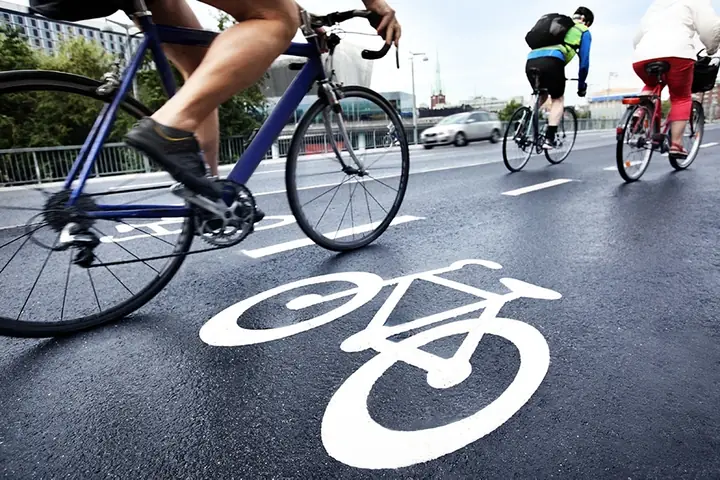
Under KRS 189.340, in force since July 14, 2018, a driver overtaking a bicycle on a road with more than one lane in the same direction must move to the immediate left lane if it is available and safe. On a one-lane road the driver must leave at least three feet between any portion of the vehicle and the bicycle and hold that distance until safely past.
A driver may cross the center line to pass a cyclist, even in a marked no-passing zone, if the other side is clear. The statute also contains an escape hatch: where the roadway has no room for three feet, the driver must use "reasonable caution" instead.
Kentucky has no dooring statute: KRS Chapter 189 contains no rule on opening a vehicle door into traffic. A dooring claim rests on ordinary negligence, with fault divided by percentage.
The bicycle regulation gives you one useful line. It lets you leave a marked bike lane to avoid "the door zone of a parked vehicle," so riding a door's width from parked cars is permitted lane position, not a violation the driver can cite.
E-bikes
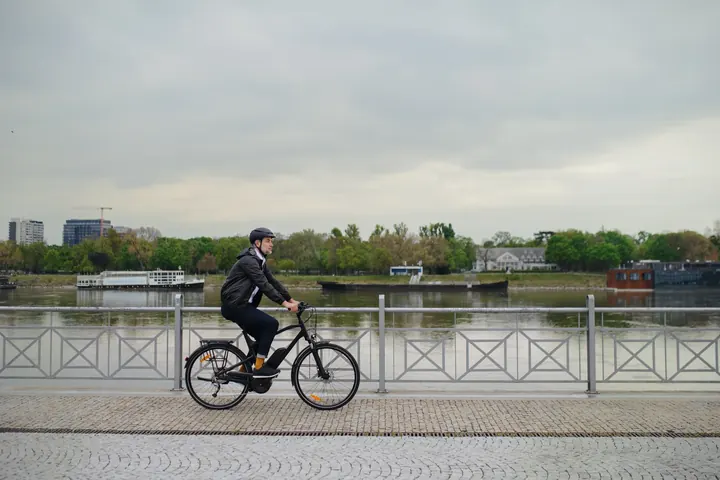
Kentucky has no e-bike law. KRS Chapter 189 defines no electric bicycle and no Class 1, Class 2, or Class 3, and the label on your frame has no legal meaning here.
What exists is a definition of a bicycle. 601 KAR 14:020 calls it a device with an attached seat "propelled primarily by human power," and KRS 189.010 leaves vehicles propelled by muscular power out of the traffic code's motor vehicles. A pedal-assist bike fits that wording far better than a throttle bike ridden without pedaling.
For a crash claim, the harder question sits in the no-fault Act. KRS 304.39-020 defines a motor vehicle as one that carries people on public highways and is "propelled by other than muscular power." It excludes mopeds and electric low-speed scooters by name and says nothing about e-bikes. If your e-bike is a bicycle, you are a pedestrian under the Act and the car's insurer owes you basic reparation benefits. If it is a motor vehicle, the answer changes. The statute does not settle it.
Treat the point as open and get your auto insurer's position in writing. In a bike insurance policy, check that your e-bike's motor and assisted speed are covered.
Deadlines

Kentucky runs two clocks for an injury lawsuit, and the one you get depends on whether a motor vehicle was involved. Shorter notice rules come first.
- At the scene
Notify Law Enforcement
KRS 189.635 requires the operator of a vehicle in a crash with any injury to notify law enforcement immediately. The investigating agency files its report with the Kentucky State Police within 10 days.
- 10 days
Written Report if No Officer Investigates
A crash with more than $500 in property damage that no officer investigated must be reported in writing to the Kentucky State Police.
- 90 days
Notice to a City for a Street Defect
If a pothole, broken pavement, or another defect in a city street, sidewalk, bridge, or alley caused the crash, KRS 411.110 bars the lawsuit unless written notice reaches the mayor, the city clerk, or the clerk of the board of aldermen within 90 days. It must state the time, place, and circumstances of the injury and that you will claim damages.
- One year
Injury With No Motor Vehicle Involved
KRS 413.140 allows one year for a personal injury action. A crash with another cyclist, a pedestrian, or a road hazard has no motor vehicle to bring it under the no-fault Act's longer period.
- One year
Claim Against the Commonwealth
A negligence claim against the Commonwealth or one of its agencies or employees goes to the Board of Claims. KRS 49.120 requires filing within one year of accrual.
- Two years
Injury Lawsuit After a Motor Vehicle Crash
KRS 304.39-230 allows two years from the injury, the death, or the last basic or added reparation payment, whichever is later. In Troxell v. Trammell in 1987, the Supreme Court of Kentucky applied this period, not the one-year statute, to motor vehicle accident victims whether or not they carried no-fault coverage.
- Two years
Bike Damage Lawsuit
KRS 413.125 allows two years for injury to personal property, which covers the bike and gear.
A dispute over the no-fault benefits themselves has its own limit. If no benefits have been paid, KRS 304.39-230 allows two years from the time you suffer the loss and know the crash caused it, and never more than four years from the crash.
The Board of Claims is a narrow door. KRS 49.040 caps an award at $250,000 per claim and $400,000 for all claims from one negligent act. A child gets no extra time there: a guardian must file within the same period.
Evidence to Preserve
Pure comparative fault makes every percentage point worth money, and the no-fault Act adds paperwork of its own. Collect with both in mind.
- The driver's insurer and policy number. That company pays your basic reparation benefits, whoever was at fault.
- Medical bills from the first visit on. Crossing $1,000 in medical expenses, or imaging that shows a fracture, opens the claim for pain and suffering.
- The date of every no-fault payment. The two-year filing period can run from the last one.
- Lane and shoulder width, photographed with a reference object. It decides the three-foot argument.
- Where the contact was in a hit-and-run: paint transfer, a broken mirror, damage to the bike. Physical contact may decide the uninsured motorist claim.
- Every auto policy in your household, showing whether uninsured motorist coverage was rejected.
- The damaged bike, unrepaired, with receipts.
Coverage for Kentucky Riders

Kentucky leaves a rider short in specific places: no-fault benefits stop at $10,000 and pay nothing for the bike, a driver may carry as little as $25,000 for your injuries, uninsured motorist coverage can be rejected in writing, and under pure comparative fault your own share of the blame comes off the check. The Velosurance policy offers the coverages discussed above.
Uninsured Motorist covers losses beyond medical bills, such as lost wages, when the at-fault driver cannot pay.
Medical Payments covers the deductible and out-of-pocket costs your health plan leaves. Choose a limit close to your plan's out-of-pocket deductible.
Liability matters where fault is divided by percentage. If you injure a pedestrian or damage someone's property while riding, it pays covered settlements or judgments and the cost of defending a covered lawsuit, with limits from $25,000 to $500,000.
Crash damage to the bike, the loss no-fault ignores, is part of the policy itself. The bike is insured at stated value with no depreciation, subject to the deductible, whoever was at fault.
For any of these coverages to apply, it must be on the policy before the crash. Get a quote and have them in place before the next ride.
Frequently Asked Questions
- Who pays medical bills for a cyclist hit by a car in Kentucky?
- The insurer of the car that hit you pays basic reparation benefits, up to $10,000 for medical expenses, lost income, and replacement services, regardless of fault and even if you own no car. If the vehicle was uninsured, an auto policy in your household applies, and after that the state's assigned claims plan. One thing to watch: these benefits pay nothing for the bike.
- How does fault affect a bicycle accident claim in Kentucky?
- You recover from the driver even when you share the blame, because Kentucky uses pure comparative fault and no percentage bars a claim. A rider 80% at fault for a $100,000 loss still collects $20,000. The caveat worth knowing: every point of fault assigned to you comes off the award, so lane position, lights, and sidewalk rules all carry a price.
- How long do you have to file a bicycle accident lawsuit in Kentucky?
- You have two years to sue after a crash with a motor vehicle, counted from the injury or the last no-fault payment, whichever is later, and two years for damage to the bike. One thing to watch: an injury with no motor vehicle involved has a one-year deadline, and a claim against a city over a street defect needs written notice within 90 days.
- When can a Kentucky cyclist sue for pain and suffering?
- You can sue for pain and suffering once your medical expenses exceed $1,000 or your injury includes a fracture, permanent disfigurement, loss of a body member, a permanent injury, or permanent loss of bodily function. A cyclist living in a household with no motor vehicle is outside that limit altogether. With one wrinkle: the first $10,000 of medical bills and lost income comes from no-fault benefits, not from the driver.
- How does Kentucky law treat an e-bike after a crash?
- Kentucky's bicycle regulation defines a bicycle as a device propelled primarily by human power, and a pedal-assist e-bike fits that wording far better than a throttle bike ridden without pedaling. State law sets no e-bike classes. The caveat worth knowing: the no-fault Act covers vehicles propelled by other than muscular power and says nothing about e-bikes, so get your auto insurer's position in writing.
Sources
- KRS 411.182 (allocation of fault in tort actions)
- Hilen v. Hays, 673 S.W.2d 713 (Ky. 1984) (adoption of pure comparative negligence)
- KRS 304.39-020 (Motor Vehicle Reparations Act definitions, basic reparation benefits)
- KRS 304.39-030 and 304.39-040 (right to basic reparation benefits, paid without regard to fault)
- KRS 304.39-050 (priority of security; pedestrian defined)
- KRS 304.39-060 (partial abolition of tort liability, threshold, rejection)
- KRS 304.39-110 (required minimum tort liability insurance)
- KRS 304.39-130 (weekly limit on benefits)
- KRS 304.39-160, 304.39-170, 304.39-180 (assigned claims plan)
- KRS 304.39-230 (limitations of actions under the Motor Vehicle Reparations Act)
- KRS 304.39-320 (underinsured motorist coverage)
- KRS 304.20-020 (uninsured vehicle coverage)
- 2026 Ky. Acts ch. 149 (House Bill 627), amending KRS 304.39-020, 304.39-130, 304.39-210
- Troxell v. Trammell, 730 S.W.2d 525 (Ky. 1987) (two-year period applies to motor vehicle accident victims)
- Burton v. Farm Bureau Insurance Co., 116 S.W.3d 475 (Ky. 2003) (hit-and-run physical contact requirement)
- Hamilton v. Allstate Insurance Co., 789 S.W.2d 751 (Ky. 1990) (stacking of uninsured motorist coverage)
- KRS 413.140 (actions to be brought within one year) and KRS 413.125 (personal property, two years)
- KRS 411.110 (notice to a city of injury from a defect in a thoroughfare)
- KRS 49.040, 49.060, 49.120, 49.130, 49.180 (Board of Claims)
- KRS 189.340 (overtaking bicycles, three-foot passing distance, two abreast)
- KRS 189.010 (traffic code definitions: vehicle, motor vehicle, electric low-speed scooter)
- KRS 189.030 (time when lights must be on), KRS 189.287 (bicycle safety regulations), KRS 189.990(21) (penalty)
- KRS 189.635 (vehicle accident reports)
- KRS Chapter 189 (traffic regulations), table of sections
- 601 KAR 14:020 (bicycle safety standards)
This guide is general information about Kentucky law as of the review date above. It is not legal or insurance advice, and it does not create an attorney-client relationship. Laws change and every crash turns on its own facts: talk to a licensed Kentucky attorney about your situation.