
TL;DR:
- Kansas is a no-fault state: personal injury protection pays at least $4,500 of medical bills and up to $900 a month of lost earnings regardless of fault, and a resident cyclist with no car collects from the insurer of the car that struck them.
- Pain and suffering can be claimed from the driver only when medical treatment is worth $2,000 or more or the injury is on the list in K.S.A. 40-3117.
- The fault rule has a 50% bar: you recover only if your negligence was less than the driver's. At 49% you collect 51% of your damages; at 50% you collect nothing.
- You have two years to sue for injuries or bike damage. A claim against a city, county, or school district needs written notice before suit and up to 120 days for an answer.
- Drivers must give a bicycle at least three feet when passing. Uninsured motorist coverage is mandatory at $25,000 per person and $50,000 per accident, and it pays nothing for the bike.
Who Pays After a Crash in Kansas
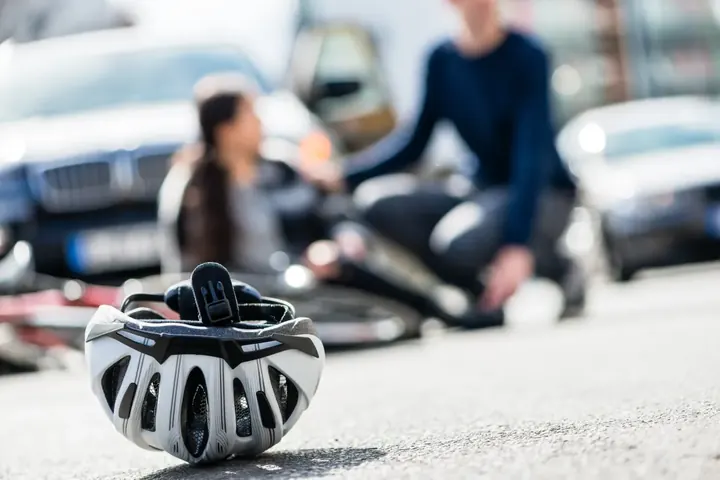
Kansas is a no-fault state, and the first payer after a car hits you is personal injury protection, not the driver's liability coverage. K.S.A. 40-3107 requires every auto liability policy to carry PIP for the named insured, relatives in the household, and "other persons struck by such motor vehicle" while not occupying a motor vehicle. A cyclist is in that last group.
K.S.A. 40-3109 decides which policy pays. If you own a car, your own policy pays, provided the injury was caused by physical contact with a motor vehicle. If you own no car and live in Kansas, the insurer of the car that struck you pays. If no insurance can be identified, the Kansas Automobile Assigned Claims Plan pays the same benefits.
The benefits are modest. K.S.A. 40-3103 sets them at no less than $4,500 for medical care, another $4,500 for rehabilitation, lost earnings up to $900 a month for as long as one year, $25 a day for household services for up to 365 days, and $2,000 for a funeral. One emergency room visit can use up the medical benefit.
Past PIP, the claim goes against the driver. K.S.A. 40-3107 sets minimum liability limits at $25,000 per person, $50,000 per accident, and $25,000 for property damage, and the same section orders a legislative study of those limits beginning with the 2026 interim. PIP pays nothing for the bike, which comes out of the driver's $25,000 property limit.
The no-fault trade is the threshold in K.S.A. 40-3117. You can recover for pain and suffering only if your treatment has a reasonable value of $2,000 or more, or the injury is a permanent disfigurement, a fracture to a weightbearing bone, a compound, comminuted, displaced or compressed fracture, loss of a body member, a permanent injury, or a permanent loss of bodily function. Medical bills and lost income beyond PIP face no threshold.
Fault and How It Reduces a Claim
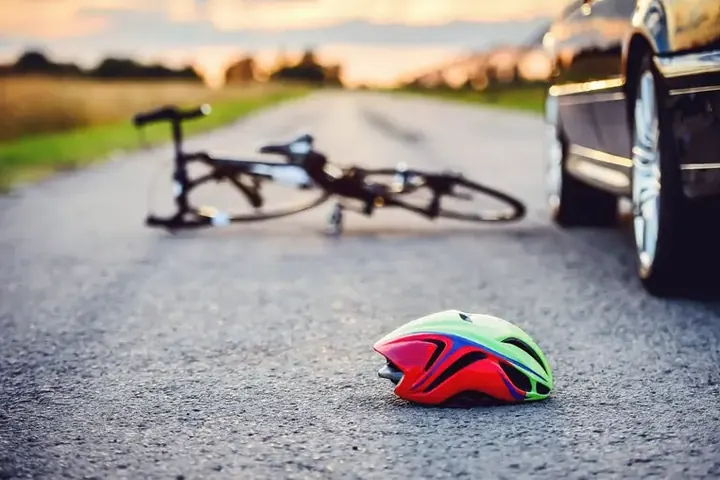
Under K.S.A. 60-258a you recover only if your negligence was less than the causal negligence of the party or parties you are claiming against, and the award is cut by your percentage. A rider found 49% at fault for a $100,000 loss collects $51,000. At 50%, an even split, the same rider collects nothing.
The statute also makes each defendant liable only for its own share of the damages. None of this touches PIP, which is paid without regard to fault.
K.S.A. 8-1587 gives a rider on the roadway the rights and duties of a driver, and three bicycle statutes supply most of the arguments about your percentage:
- Lane position. K.S.A. 8-1590 requires a rider slower than traffic to keep as near the right side as practicable, except when passing, preparing for a left turn, or avoiding hazards, including a lane too narrow to share side by side with a vehicle. No more than two abreast.
- Adjacent paths. The same section says that where a usable bicycle path runs next to a roadway, riders must use the path.
- Lights. K.S.A. 8-1592 requires a white front lamp visible from 500 feet between sunset and sunrise, plus a red rear reflector, a red rear lamp, or a red or amber light worn by the rider.
Helmets are an open question. Kansas has no statewide bicycle helmet law, and no statute says whether riding without one can be used to raise your percentage. Research for this guide found no appellate decision on it either.
Hit-and-Run and Uninsured Drivers
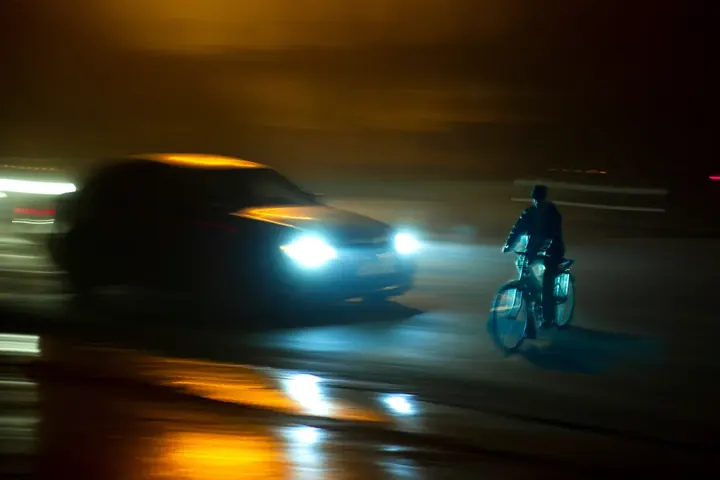
Uninsured motorist coverage is not optional in Kansas. K.S.A. 40-284 requires every auto liability policy to include it, with an underinsured motorist provision, at limits equal to the policy's own bodily injury limits. A policyholder can reject in writing only the part above the $25,000 and $50,000 minimums, so every Kansas auto policy carries at least that much.
The statute covers bodily injury "sustained by the insured" and does not require the insured to be in a car. Who counts as an insured is set by the policy, so confirm with your insurer that the coverage follows you onto a bike.
For a driver who flees, section 40-284(e)(3) lets an insurer deny the claim only when there is no evidence of physical contact with the uninsured vehicle and also no reliable, competent evidence from a disinterested witness who is not claiming under the policy. A car that forces you off the road without touching you can still support a claim if an independent witness saw it.
The statute sets no deadline for reporting a hit-and-run. Your policy will, so call police from the scene and notify your insurer the same day.
Section 40-284 adds limits. Coverage cannot be stacked: with several policies in play, the most available is the highest limit of any single policy. Underinsured coverage pays only to the extent your limit exceeds the other driver's bodily injury limit, so a $25,000 policy adds nothing against a driver carrying $25,000. And the coverage is for bodily injury only. It pays nothing for the bike.
PIP survives a hit-and-run. If you own no car and the driver cannot be identified, the claim goes to the Kansas Automobile Assigned Claims Plan, which the Kansas Department of Insurance says is administered by AIPSO.
Two things to check in a bike insurance policy: whether it offers uninsured motorist coverage of its own, and whether crash damage to the bike is covered no matter who hit you.
Dooring and Passing Laws
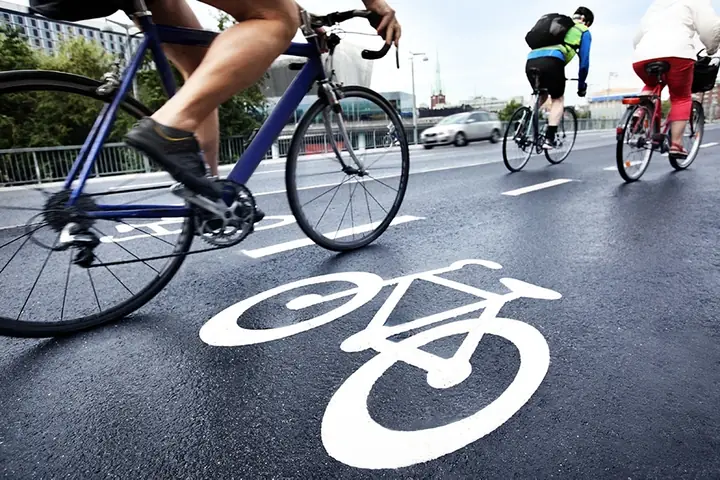
K.S.A. 8-1577 is the Kansas dooring statute. No person may open the door of a motor vehicle on the side available to moving traffic unless and until it is reasonably safe to do so and can be done without interfering with the movement of other traffic. Nor may anyone leave a door open on that side longer than necessary to load or unload passengers.
Passing has a number in Kansas. K.S.A. 8-1516 requires a driver overtaking a bicycle to pass on the left "at a distance of not less than three feet" and to stay left until safely clear. The same subsection allows a driver to pass a bicycle in a no-passing zone when it is safe to do so.
Both statutes matter under the 50% bar. A driver who passed inside three feet or opened a door into your path broke a rule written for that situation.
E-bikes
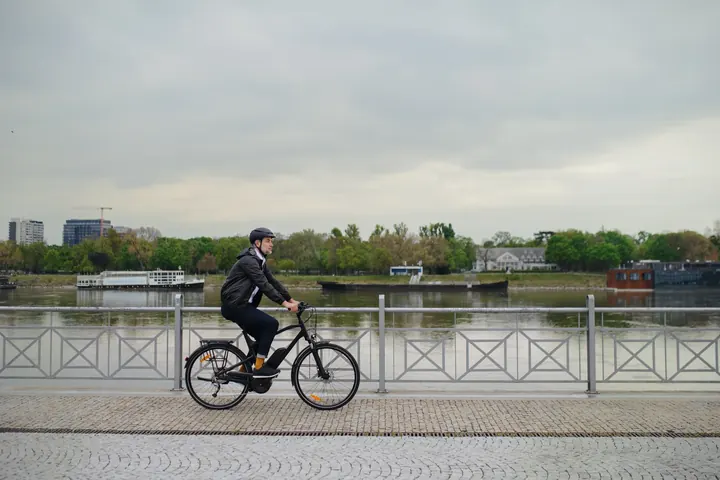
Kansas adopted the three-class system in 2022. K.S.A. 8-1489 defines an electric-assisted bicycle as a bike with two or three wheels, a saddle, fully operative pedals, and a motor of less than 750 watts. Class 1 assists only while you pedal and stops at 20 mph. Class 2 has a motor that can propel the bike on its own and stops assisting at 20 mph. Class 3 assists only while you pedal and stops at 28 mph.
K.S.A. 8-1592b gives an e-bike rider the rights and duties of any cyclist, and says an electric-assisted bicycle "shall not be considered a motor vehicle." No liability insurance, driver's license, registration, title, or plate is required. Nobody under 16 may operate a Class 3. Cities may regulate e-bikes on their streets and sidewalks.
There is no state helmet requirement for any class. House Bill 2459, which would have required one for e-bike riders 17 and under, died in the 2026 session.
The label is evidence. Since January 1, 2023, every e-bike must carry a permanent label showing its class, top assisted speed, and motor wattage, and section 8-1592b prohibits modifying the speed capability unless the label is replaced. A motor of 750 watts or more falls outside the definition.
For insurance, the statutes point one way without settling it. Because an e-bike is not a motor vehicle, its rider reads as a person "not an occupant of a motor vehicle" under the PIP statute, the same as any cyclist. Research for this guide found no appellate decision or Department of Insurance guidance confirming it, and uninsured motorist coverage turns on your policy's wording. In a bike insurance policy, check that your e-bike's class is covered.
Deadlines

Kansas gives you two years for almost everything, but a PIP insurer and a city government each run a shorter clock inside it.
- At the scene
Report the Crash
K.S.A. 8-1604 requires a crash with an injury or apparent property damage of $1,000 or more to be reported to police immediately when no officer is present. Under K.S.A. 8-1611 the investigating officer sends a report to the Kansas Department of Transportation within 10 days.
- As soon as practicable
Notice to the PIP Insurer
K.S.A. 40-3110 lets the insurer require written notice as soon as practicable after the crash. No PIP claim may be made more than two years after the injury.
- 18 months
PIP Insurer Can Take Over Part of the Claim
If you have not sued the driver within 18 months of the crash, K.S.A. 40-3113a assigns to the PIP insurer your claim for the damages that duplicate the benefits it paid.
- 120 days before suit
Notice of Claim to a Municipality
A claim against a county, township, city, school district, or other political subdivision requires written notice under K.S.A. 12-105b before you sue. File it with the clerk or governing body, stating the date, time, place and circumstances, the injury, and the amount requested. You cannot sue until the claim is denied or 120 days pass. The two-year deadline still applies, with at least 90 days to sue after a denial.
- Two years
Injury, Bike Damage, and Wrongful Death Lawsuit
K.S.A. 60-513 gives you two years to sue for personal injury, two years for damage to the bike, and two years for wrongful death. For a rider under 18, K.S.A. 60-515 allows suit within one year after the 18th birthday, but never more than eight years after the crash.
Recovery from a government body is capped. K.S.A. 75-6105 limits liability under the Kansas Tort Claims Act to $500,000 for all claims arising from a single occurrence.
Evidence to Preserve
A Kansas claim runs on two numbers: your percentage of fault, which must stay under 50, and the value of your medical treatment, which must reach $2,000 unless the injury is on the statutory list. Collect for both.
- The driver's insurer and policy number. K.S.A. 8-1604 requires the driver to give them, with name, address, and registration number. If you own no car, that insurer is where your PIP claim goes.
- The police report number and the officer's agency.
- An independent witness. In a hit-and-run without contact, a disinterested witness is what keeps an uninsured motorist claim alive.
- Every medical bill and record, including imaging that shows a displaced, compound, or weightbearing-bone fracture. They decide whether you clear the threshold.
- Passing distance and door position: video, photos, lane width.
- Whether a bike path ran beside the road, and its condition. A path that was not usable is your answer to K.S.A. 8-1590.
- The e-bike label and every auto policy in your household, for PIP and uninsured motorist limits.
- The damaged bike, unrepaired, with receipts for the bike and gear. PIP and uninsured motorist coverage will not pay for it.
Coverage for Kansas Riders
Kansas no-fault leaves a cyclist short in specific places: a $4,500 medical benefit, a driver carrying the $25,000 minimum, uninsured motorist coverage that pays nothing for the bike, and a fault rule that takes everything at 50%. The Velosurance policy offers the coverages discussed above.
Uninsured Motorist covers losses beyond medical bills, such as lost wages, when the at-fault driver cannot pay.
Medical Payments covers the deductible and out-of-pocket costs your health plan leaves once the bills run past PIP. Choose a limit close to your plan's out-of-pocket deductible.
Liability is for the crash where the percentages run against you. It covers injury to other people and damage to their property, pays covered settlements or judgments, and includes the cost of defending a covered lawsuit, with limits from $25,000 to $500,000.
Crash damage to the bike, which neither PIP nor uninsured motorist coverage pays for, is part of the policy itself. The bike is insured at stated value with no depreciation, subject to the deductible, whoever was at fault. Class 1, Class 2, and Class 3 e-bikes are covered like conventional bikes.
For any of these coverages to apply, it must be on the policy before the crash. Get a quote and have them in place before the next ride.
Frequently Asked Questions
- Who pays medical bills for a cyclist hit by a car in Kansas?
- Personal injury protection pays first in Kansas, regardless of fault, with at least $4,500 for medical care and up to $900 a month for lost earnings. If you own a car, your own policy pays. If you own no car and live in Kansas, the insurer of the car that struck you pays. One thing to watch: the medical benefit can be used up in a single emergency room visit.
- How does the 50% rule work in a Kansas bicycle accident claim?
- You recover damages in Kansas when your negligence was less than the driver's, and the award is reduced by your percentage. A rider 49% at fault for a $100,000 loss collects $51,000. The caveat worth knowing: at 50% the recovery is zero, so the evidence that sets your percentage decides the claim.
- When can a Kansas cyclist claim pain and suffering from the driver?
- You can claim pain and suffering in Kansas once your medical treatment has a reasonable value of $2,000 or more. Certain injuries qualify on their own, including a fracture to a weightbearing bone, a compound, comminuted, displaced or compressed fracture, permanent disfigurement, and permanent injury. Keep every medical bill and record, because they prove the threshold.
- How long do you have to file a bicycle accident claim in Kansas?
- You have two years to sue in Kansas for injuries and for damage to your bike. One thing to watch: a claim against a city, county, or school district needs written notice first and up to 120 days for an answer, and a PIP insurer can take over part of your claim if you have not sued within 18 months.
- How are Class 1, Class 2, and Class 3 e-bikes treated after a crash in Kansas?
- Kansas gives riders of Class 1, Class 2, and Class 3 e-bikes the rights and duties of any cyclist, so the same 50% rule and two-year deadline apply. Class 1 is pedal assist to 20 mph, Class 2 has a motor that can propel the bike on its own to 20 mph, and Class 3 is pedal assist to 28 mph with no operator under 16. The caveat worth knowing: a motor of 750 watts or more falls outside the definition.
Sources
- K.S.A. 60-258a (comparative negligence)
- K.S.A. 60-513 (two-year limitation periods) and K.S.A. 60-515 (persons under legal disability)
- K.S.A. 40-3103 (Kansas Automobile Injury Reparations Act, definitions and benefit amounts)
- K.S.A. 40-3107 (required policy contents, minimum liability limits, personal injury protection, 2026 interim study)
- K.S.A. 40-3109 (injuries for which personal injury protection benefits are paid; primary policy)
- K.S.A. 40-3110 (primary status of benefits, notice, two-year claim limit, overdue payments)
- K.S.A. 40-3113a (personal injury protection insurer's lien and 18-month assignment)
- K.S.A. 40-3116 (assigned claims plan)
- K.S.A. 40-3117 (conditions for recovering pain and suffering damages)
- K.S.A. 40-284 (uninsured and underinsured motorist coverage)
- K.S.A. 12-105a and 12-105b (notice of claim against a municipality)
- K.S.A. 75-6105 (Kansas Tort Claims Act, maximum liability)
- K.S.A. 8-1516 (overtaking and passing; three feet for bicycles)
- K.S.A. 8-1577 (opening and closing vehicle doors)
- K.S.A. 8-1587, 8-1590, 8-1592 (bicycle rights and duties, lane position, lamps)
- K.S.A. 8-1489 and 8-1592b (electric-assisted bicycles)
- K.S.A. 8-1602, 8-1604, 8-1611 (duties and reports after an accident)
- Kansas Legislature, 2026 House Bill 2459 (e-bike helmet bill, not enacted)
- Kansas Office of Revisor of Statutes, 2026 composite listing of new, amended and repealed statutes
- Kansas Department of Insurance, Auto Insurance Shopper's Guide
- Kansas Legislative Research Department, Kansas Laws on Bicycle, E-bike, and Scooter Operation (January 13, 2026)
This guide is general information about Kansas law as of the review date above. It is not legal or insurance advice, and it does not create an attorney-client relationship. Laws change and every crash turns on its own facts: talk to a licensed Kansas attorney about your situation.